Augustin Kelava is a Professor at the Department of Quantitative Methods, Eberhard Karls University of Tübingen. He has held this position since 2018 and leads the Methods Center as Managing Director. Previously, he was Professor at the Hector Institute for Empirical Educational Research (2013-2018) and Junior Professor at Technical University of Darmstadt (2011-2013). PhD in Psychology (Goethe University Frankfurt, 2009) Diploma in Psychology (Goethe University Frankfurt, 2004) Kelava specializes in latent variable modeling, machine learning in social sciences, and educational research. His work spans dynamic latent class models, Bayesian regularization techniques, and prediction of human behavior using intensive longitudinal data. He contributes to psychometric theory (e.g., item response theory extensions) and applies these methods to diverse fields including sports science and emotion regulation. Editor of "Testtheorie und Fragebogenkonstruktion" (3rd ed., Springer, 2020) Key researcher in the Cluster of Excellence "Machine Learning in Science" Active in methodological conferences (FGME 2017, SEM 2019) Review activities for 20+ journals and foundations including Psychometrika, DFG, and SNSF His recent publications focus on integrating machine learning with psychometrics, addressing identifiability in complex models, and evaluating personality assessment validity for large language models. He collaborates with researchers across psychology, education, and computational fields.
Dr. Daniel Leyhr is a researcher at the Institute of Sports Science and Methods Center of the Eberhard Karls University of Tübingen. He serves as Head of the junior research group 'Data Science in Sports' since 2021 and is a habilitation candidate at the Faculty of Economics and Social Sciences since 2020. His work bridges sports psychology, biomechanics, and data science, focusing on talent development, biological maturation, and motor performance in youth athletes. First State Examination for secondary school teaching (2014) Diploma in Mathematics (2014) Promotion/PhD (2019) Habilitation candidate (2020–present) Dr. Leyhr's research examines the predictive validity of talent characteristics in youth soccer, biological development in youth competitive sports, and data-driven approaches to performance assessment. He has co-authored studies on relative age effects, maturity-related selection biases, and the intersection of psychological need satisfaction in NCAA student-athletes. His publications span high-impact journals like European Journal of Sport Science and Journal of Sports Sciences , with methodological expertise in longitudinal studies, MRI diagnostics, and deep learning-based factor analysis. Current projects include integrating data science into sports talent identification and refining maturity assessment protocols. Dr. Leyhr serves as a reviewer for journals such as PLoS One , Frontiers in Psychology , and Annals of Human Biology . He has presented at major conferences including the European College of Sport Science (ECSS) and World Conference on Science and Soccer (WCSS). As Equal Opportunities Officer (2023) and member of the Methods Center Advisory Board (since 2019), he contributes to academic governance and diversity initiatives.
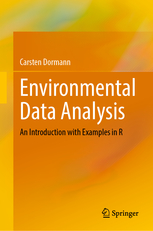
Carsten Dormann is a Full Professor at the University of Freiburg since 2011, working in the Department of Biometry and Environmental System Analysis within the Faculty of Biology. His work bridges statistical methodology with ecological applications, focusing on improving analytical approaches in environmental science. He leads research on statistical ecology, species distribution modeling, and plant-pollinator interactions, with a strong emphasis on methodological rigor and evidence-based environmental science. Professor Dormann completed his Diploma (equivalent to an MSc) in Biology at the University of Kiel (1996), followed by a PhD in Plant Ecology from the University of Aberdeen (2001) under Dr. Sarah Woodin and Prof. Steve Albon. He earned his Habilitation at the University of Göttingen (2008), and worked as a PostDoc and Senior Research Scientist at the Helmholtz Center for Environmental Research-UFZ (2002-2011) before joining Freiburg. Dr. Dormann's research focuses on comparing, challenging and improving the toolbox of statistical ecology . He investigates how ecological datasets, often small but complex, can be properly analyzed when common statistical approaches may fail. His work emphasizes formal statistical integration of ecological models and data , advocating for rigorous representation of ecological understanding through quantitative predictions. He champions an evidence focus in environmental science , drawing parallels with evidence-based medicine to promote transparent evaluation of causal mechanisms. Specific areas include spatial autocorrelation, null models, collinearity, species distribution modeling, and plant-pollinator interactions. His recent publications reveal a strong focus on ecological network analysis, species distribution modeling under climate change, and methodological improvements in ecological statistics. The research spans theoretical developments in network topology and practical applications in conservation, with increasing integration of machine learning approaches while maintaining ecological interpretability. A notable trend is the emphasis on temporal dynamics in ecological systems and developing more robust methods for predicting ecological responses to environmental change. Professor Dormann currently supervises twelve PhD students across various ecological and statistical topics, with an extensive record of past supervision spanning over thirty doctoral candidates. His teaching contributions include authoring the textbook Environmental Data Analysis: An Introduction with Examples in R (2017) and developing statistics courses for environmental sciences. He maintains an active scholarly blog discussing methodological challenges in ecology, with recent posts addressing species richness metrics, bias-variance trade-offs, and the relationship between ecological science and policy. His work bridges theoretical statistical development with practical ecological applications, emphasizing scientific credibility and methodological rigor throughout.
Andreas Wagner is a researcher affiliated with Helmholtz-Zentrum Dresden-Rossendorf , with a focus on interdisciplinary research spanning computational biology, systems biology, computer science, and materials science. His work explores genotype-phenotype mappings, evolutionary innovation, and robustness in biological systems, while also contributing to machine learning, numerical methods, and positron annihilation spectroscopy in physics. Wagner collaborates internationally, with co-authors from institutions in Germany, Austria, Finland, and beyond. Research Interests : Wagner's research bridges computational biology and systems biology, analyzing evolutionary processes through genotype networks, metabolic innovation, and gene regulatory circuits. He applies machine learning techniques to energy systems, such as solar power forecasting in federated learning frameworks. His physics work involves positron annihilation spectroscopy for material defect analysis, particularly in alloys and thin films. Publications & Data Science : He has published extensively on topics like robust numerical algorithms, adaptive cruise control optimization, and data-driven approaches for systematic reviews. His recent work includes matrix-free preconditioning methods and physics-regularized multi-modal image assimilation for medical imaging. Wagner contributes to open data initiatives, including datasets on radiation damage and material porosity via RODARE.
Valérie de Lapparent is a senior researcher at the Paris Institute of Astrophysics (IAP) , a joint research unit of Sorbonne University and CNRS. Her work focuses on galaxy evolution, large-scale cosmic structure, and data analysis techniques. Education Baccalauréat, Série C (1979) Preparatory Classes, Lycée Louis le Grand (1979-1981) École Normale Supérieure, Physics Section (1981-1985) Licence in Physics, Univ. Paris VI (1982) Master's in Physics, Univ. Paris VI (1982) DEA in Astronomy & Space Techniques, Univ. Paris VII (1983) PhD, Univ. Paris VII (1986) Research Expertise Valérie de Lapparent investigates galaxy evolution, large-scale distribution, morphometry, spectroscopy, and collective properties like luminosity functions. Her methods include optical/infrared observations, redshift measurements, Bayesian inference, and neural networks. Scientific Contributions 1988 CNRS Bronze Medal for discovering the cosmic 'honeycomb' structure Leadership in ESO and CFHT surveys Creation of IAP's 'Origin and Evolution of Galaxies' research group Editorial direction of IAP's website Outreach through public lectures and the 'Harmonia Celestis' educational platform
Kristin Jankowsky is a Researcher in Psychological Diagnostics at the University of Kassel . She earned her Dr. phil. in Psychology (2024) with a dissertation on "Promises and Pitfalls of Machine Learning Modeling in Psychological Research", following an M.Sc. (2018) and B.Sc. (2016) in Psychology, and a B.A. (2014) in Sociology. Email: jankowsky@psychologie.uni-kassel.de Office: Room 3309A, Holländische Straße 36-38, 34127 Kassel Research Interests: Kristin specializes in applying Machine Learning to psychological research, focusing on predictive modeling for psychotherapy outcomes and suicide risk. She develops psychometric short scales using metaheuristics like Ant Colony Optimization, ensuring cross-cultural validity. Her work bridges personality measurement , scale construction , and longitudinal study design . Scientific Contributions: Her recent publications analyze: Machine learning's role in predicting psychotherapy dropout Algorithmic validation for cross-cultural personality scales Machine learning in clinical treatment response prediction She received the Open Science Preis (2024) and Pearson Preis (2019) for her work. Projects: Kristin leads the DFG-funded project "Bewältigung der Replikationskrise in der Machine Learning Modellierung" (2025-2028) and contributes to the DFG's Personality Computing Netzwerk (since 2023).
Judith Tonhauser is a Full Professor in the Department of English Linguistics at the University of Stuttgart, where she also serves as Vice Rector for Early Career Researchers and Diversity. She holds a Ph.D. in Linguistics from Stanford University (2006) and a Diploma in Computational Linguistics from the University of Stuttgart (2000). Previously, she held academic positions at The Ohio State University and fellowships at leading research institutions including the Center for Advanced Study at Stanford. Her research investigates natural language meaning through theoretical, experimental, and computational approaches, focusing on projective content, prosody, temporal reference, and social meaning. She conducts cross-linguistic fieldwork on Paraguayan Guaraní and other understudied languages, employing methods like native speaker elicitation, corpus mining, and psycholinguistic experiments. Her work bridges semantics, pragmatics, sociolinguistics, and cognitive science. Awarded the Linguistic Society of America's Early Career Award (2016) and Best Paper in Language (2014), she also received Humboldt and Burkhardt Fellowships. She teaches courses in semantics, pragmatics, psycholinguistics, and sociolinguistics, and actively advises bachelor/master theses with experimental components.
Christian A. Naesseth is an Assistant Professor of Machine Learning at the University of Amsterdam, where he is a member of the Amsterdam Machine Learning Lab and serves as lab manager of the UvA-Bosch Delta Lab 2. He is also an ELLIS member, actively contributing to the European AI research community. His work bridges theoretical machine learning with practical applications across scientific domains. University of Amsterdam - Faculty of Science Amsterdam Machine Learning Lab (AMLab) UvA-Bosch Delta Lab 2 (Lab Manager) ELLIS Institute member Naesseth's research focuses on generative modeling, uncertainty quantification, and probabilistic machine learning. His work spans diffusion models, flow matching techniques, stochastic differential equations, and their applications in scientific domains. He has made significant contributions to simulation-free training frameworks like SDE Matching, which eliminates the need for discretization and simulation when fitting latent SDE models to data. His research also addresses critical challenges in uncertainty quantification, including conformal prediction, risk monitoring in test-time adaptation, and multiple hypothesis testing. His recent publications demonstrate a consistent focus on improving efficiency and reliability in generative modeling while maintaining theoretical rigor. The work on SDE Matching represents a major advancement in training efficiency for latent stochastic differential equations, achieving speed improvements of several orders of magnitude. His research on risk monitoring and conformal prediction addresses practical deployment challenges for AI systems operating under distribution shift. Best Workshop Paper Award at AABI 2025 for SDE Matching 100% acceptance rate across major ML conferences in the 2024-2025 cycle (5/5 NeurIPS, 2/2 AISTATS, 2/2 ICML, 1/1 UAI) Naesseth actively mentors PhD students and postdocs, including Grigory Bartosh, Hany Abdulsamad, and several visiting researchers from institutions worldwide. He serves as program chair for AABI 2024 and has been involved in organizing multiple workshops at major conferences including ICML and NeurIPS. His lab has secured funding through collaborations with Bosch and likely other industry partners, supporting postdoctoral researchers and PhD students working at the intersection of theory and applications. He leads the UvA-Bosch Delta Lab 2, which focuses on advancing the theoretical foundations of machine learning while developing practical applications. The lab maintains strong connections with the broader Amsterdam Machine Learning ecosystem, including collaborations with ELLIS units in Amsterdam, Delft, and Nijmegen.
Henryk Zähle is a Full Professor of Stochastics at Saarland University's Department of Mathematics, where he has held a W3 position since 2014. He previously served as a W2 Professor (2013-2014) and W1 Junior Professor (2010-2012) at Saarland, and earlier at TU Dortmund University (2007-2010). He earned his Ph.D. in Mathematics from Technical University Berlin (2004) and a Diploma in Mathematics from University of Göttingen (2000). His research focuses on statistical robustness of risk measures asymptotic theory for empirical processes quantitative risk management Markov decision models insurance and financial mathematics with methodological contributions to bootstrapping, quasi-Hadamard differentiability, and sensitivity analysis. Article trends show sustained engagement with stochastic process theory nonparametric estimation robust statistical functionals applications to insurance and finance asymptotic error distributions time series analysis spanning both theoretical and applied domains. Scientific awards include Marie Curie Fellowship (University of Warwick, 2001) DFG Fellowship (2000-2003) He has supervised numerous Ph.D., Master's, and Bachelor's theses on topics like risk measure asymptotics empirical process convergence copula robustness Markov decision sensitivity nonparametric risk estimation statistical bootstrap methods and serves as Associate Editor for Metrika .
Jörg Breitung is a Professor of Econometrics and Statistics at the Institute of Econometrics and Statistics within the Faculty of Management, Economics and Social Sciences (WiSo Faculty) at the University of Cologne since 2014. He also serves as a Research Professor of the German Bundesbank in Frankfurt since 2002. Research Focus: Panel Data Analysis Time Series Analysis Forecasting Financial Econometrics Scientific Contributions: Developed advanced GMM estimators for spatial regression models Innovative approaches for assessing causality in frequency domains Created robust tests for slope homogeneity in panel data Pioneered methods for serial correlation testing in fixed effects models Contributed to nonlinear panel data modeling and bootstrap techniques Honors and Editorial Roles: Associate Editor of International Journal of Forecasting (2019-) Associate Editor of Journal of Business and Economic Statistics (2017-) Associate Editor of Econometric Reviews (2014-) Contributed to leading journals like Econometrica and Journal of Econometrics
Yannick Rudolph, M.Sc., is a Research Associate at the Institute for Business Information Systems (IIS) within Leuphana University of Lüneburg. His work focuses on Machine Learning , Artificial Intelligence , and Data Science , with particular emphasis on multiagent systems, explainability, and network modeling. His research interests span Temporal and spatiotemporal modeling of complex systems Deep learning architectures (CNNs, VAEs, GNNs) Information propagation analysis in neural networks AI applications in sports analytics and digital transformation Recent publications highlight trends in masked autoencoders , event classification in soccer , and conditional dependency modeling , reflecting his expertise in integrating theoretical machine learning with real-world application domains. Contact: yannick.rudolph@leuphana.de | Office: C 4.318b, Universitätsallee 1, Lüneburg, Germany
Professor Michael Matschiner at Ludwig-Maximilians-Universität München's Faculty of Biology leads research in systematic zoology, focusing on biodiversity origins through molecular analyses. His work bridges phylogenetics and population genetics, with a specialization in rapid adaptive radiations. Key research groups: East African cichlids, Indo-Pacific eels, Antarctic notothenioids Methodological expertise: Hybridization detection, museum specimen genomics, bioinformatics Recent studies explore Antarctic icefish diversification, hybridization dynamics, and genomic adaptations to extreme environments. His methodological contributions include tools like Dsuite and Hapsolutely for analyzing admixture and haplotype networks. Research spans evolutionary mechanisms, conservation genomics, and paleobiogeography.
Christopher Adolph is a Professor of Political Science at the University of Washington, Seattle, with additional appointments as Adjunct Professor of Statistics and Associate Director of the Center for Statistics and the Social Sciences. His research spans comparative politics, political economy, and political methodology, with a specialization in data visualization and statistical analysis. His substantive research interests include the politics of monetary policy, bureaucratic power, budget trade-offs, domestic impact of international trade, and comparative study of institutions governing health. He has made significant contributions to the visual display of scientific information, particularly illustrating findings from statistical models. His methodological expertise focuses on statistical inference for data with logical bounds, including political rank, compositional data, and ecological inference. Adolph's recent research has focused extensively on policy responses to the COVID-19 pandemic across US states, where he serves as faculty lead for a team collecting and analyzing data on state-level social distancing policies. His publications on pandemic politics have examined partisan patterns in social distancing mandates, mask mandates, and the easing of restrictions. International Political Science Association's Charles H. Levine Prize for best contribution in comparative public policy and administration Ranked 1st globally among political scientists for 'recent impact' (2025) Ranked 3rd globally for overall impact (2025) Former Robert Wood Johnson Scholar in Health Policy Research As an expert witness, he has consulted on statistical methods for contested elections and provides expertise on statistical methodology and data visualization. His book 'Bankers, Bureaucrats, and Central Bank Politics: The Myth of Neutrality' (Cambridge University Press, 2013) received significant recognition in the field.
Jan Schymik is an Acting Professor of Economics (W3 fix-term) at the University of Mannheim and an affiliated member of the Bonn-Mannheim Center for Collaborative Research CRC TR 224. His research focuses on International Economics, Macroeconomics, and Organizational Economics, with significant contributions to understanding trade policy, firm organization, and macroeconomic spillovers in currency unions since joining the university in 2018. His educational background includes: PhD in Economics from Ludwig Maximilian University of Munich Diploma in Business Economics from University of Mannheim Schymik's research agenda bridges theoretical modeling and empirical analysis across three core domains. In international economics, he examines how trade policies reshape global supply chains and industrial structures, particularly through directed technological change in critical resources. His macroeconomic work analyzes structural reforms in currency unions and pandemic-era labor market dynamics. Organizational economics research investigates how managerial incentives affect capital allocation and firm structure under globalization. Recent projects integrate these threads to study industrial policy in global value chains. Analysis of his 15 most recent publications reveals accelerating focus on supply chain resilience (2025), with rare earth elements research demonstrating how export restrictions spur global innovation. Earlier work establishes foundational links between trade liberalization, corporate governance, and income inequality. Methodologically, he combines structural modeling with novel datasets including patent classifications, administrative records, and input-output tables. His scientific recognition includes: FIW International Economics Conference Best Paper Award Walther-Rathenau Best Paper Award Schymik actively supervises Bachelor and Master theses on International Trade, Macroeconomics, and Firm Organization, with all Spring 2025 slots filled. He secured German Research Foundation (DFG) funding for his 2025 project 'The New Economics of Industrial Policy in a Global Economy'. Additional support includes a 2022 Fulbright fellowship for visiting research at Harvard Business School. His teaching portfolio spans graduate-level International Macroeconomics and undergraduate Organizational Economics. He contributes to the Bonn-Mannheim Center for Collaborative Research CRC TR 224, focusing on competition microstructure, and maintains active collaborations with institutions including the World Bank, ECB, and Banque de France as evidenced by recent speaking engagements.
Prof. Dr. Carsten Duch is a Full Professor (W2) for Neurobiology at the Institute of Zoology, Johannes Gutenberg-University Mainz, Germany. His research focuses on the molecular mechanisms regulating neuronal properties and their functional consequences in health and disease, using Drosophila melanogaster as a model organism. 1990-1994: Biology study at Free University Berlin 1998: PhD in Neurobiology (Free University Berlin) 1998-2000: Postdoc in Neuroscience, University of Arizona 2005: Habilitation in Zoology His work bridges neurophysiology, developmental biology, and evolutionary genetics. Current projects investigate synaptic integration, ion channel regulation, and metamorphosis-related neural plasticity. Recent publications highlight his contributions to evolutionary biology, phylogenetics, and genomics, particularly in fireflies, Drosophila , and plant reproductive strategies. Contact: cduch@uni-mainz.de