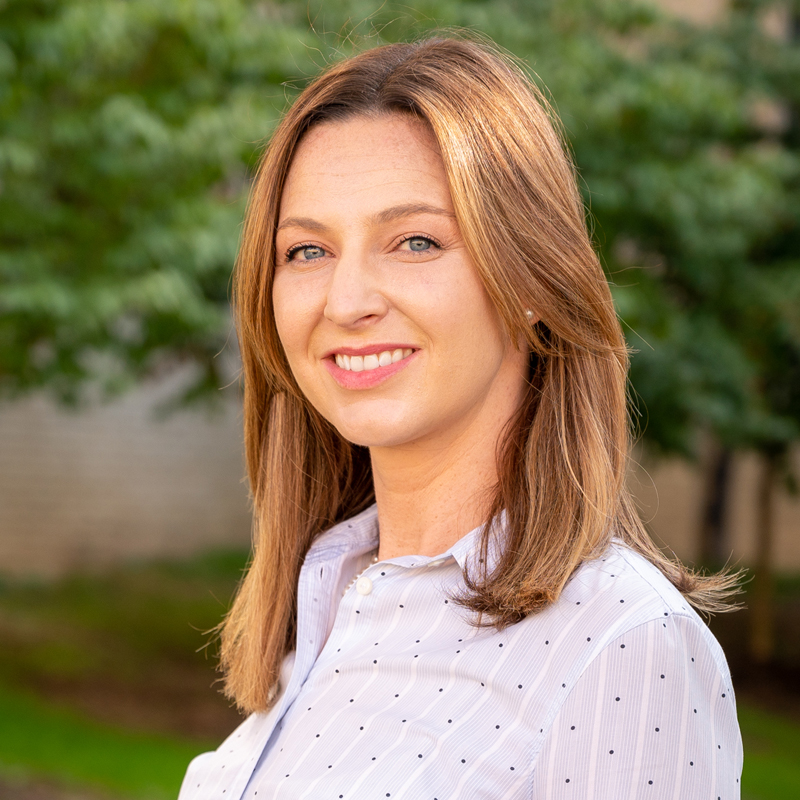
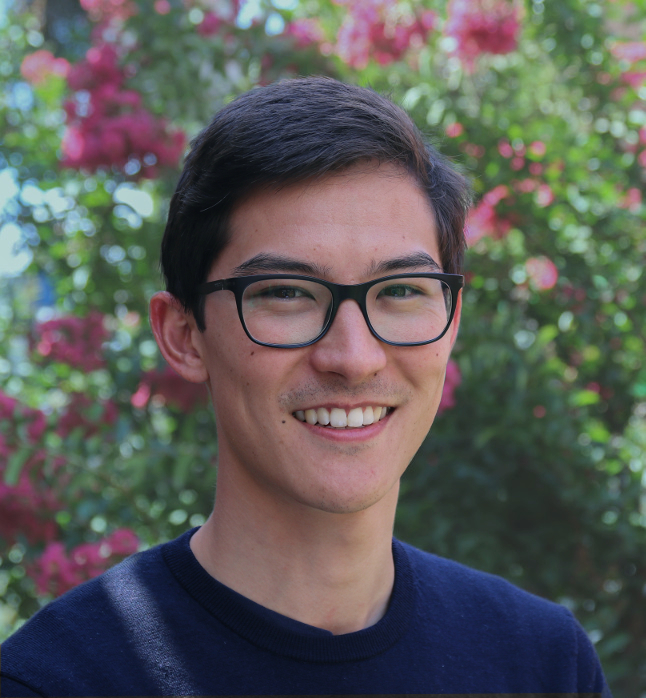
Robin Neumayer is an Assistant Professor in the Department of Mathematical Sciences at Carnegie Mellon University. Her research focuses on the intersection of calculus of variations, partial differential equations (PDE), and geometric analysis, with a particular emphasis on stability and regularity in geometric inequalities. Education: Ph.D. in Mathematics, University of Texas at Austin, supervised by Alessio Figalli and Francesco Maggi. Her work explores problems related to Sobolev inequalities, isoperimetric problems, scalar curvature, and free boundary phenomena. Recent publications highlight collaborations with leading researchers and address topics such as quantitative stability, anisotropic geometries, and nonlinear PDE. Scientific Awards and Fellowships: NSF Grant DMS-2155054 (2022-2025) RTG Postdoctoral Fellow at Northwestern University (2017-18, 2019-21) Institute for Advanced Study member (2018-19) She teaches courses such as Introduction to Differential Equations and maintains active research collaborations with institutions like the Center for Nonlinear Analysis.
Michal Engelman is a Professor of Sociology at the University of Wisconsin–Madison and serves as the Director of the Center for Demography of Health & Aging (CDHA) and the Wisconsin Longitudinal Study (WLS). She is also the Director of a doctoral/postdoctoral training program in Population, Life Course, and Aging. Engelman holds a PhD in Population & Health and MHS in Biostatistics from Johns Hopkins, along with an AB in History from Harvard. Her research bridges sociology and public health, focusing on social determinants of health and longevity, particularly how socioeconomic status, race/ethnicity, nativity, and geography shape health inequities. Current projects include NIH-funded studies on epigenetic aging and neighborhood disadvantage (REWARD) and early/midlife exposures influencing cognitive health in later life (ILIAD). Engelman’s academic affiliations include the Center for Demography and Ecology and CDHA. She teaches courses such as Sociology of Aging, Population Problems, and Population Economics. Her work addresses critical topics like mortality disparities, immigrant health, and the interplay between social context and health outcomes.
Aryeh Kontorovich is a Professor in the Computer Science Department at Ben-Gurion University. His research primarily focuses on theoretical machine learning, with expertise in probability, statistics, Markov chains, and metric spaces. His research interests span theoretical machine learning, with particular emphasis on: Probability theory and concentration inequalities Statistical learning theory Markov chains and mixing time estimation Metric space learning Kernel methods Sample compression schemes Professor Kontorovich's recent publications (2021-2025) demonstrate a continued focus on theoretical foundations of machine learning. His work shows strong trends in statistical estimation for Markov processes, distribution learning, metric space analysis, and sample compression. Many papers explore the intersection of probability theory and machine learning, particularly examining concentration inequalities, minimax optimality, and theoretical guarantees for learning algorithms. His research consistently bridges abstract mathematical theory with practical machine learning applications. Scientific awards and recognitions: Distinguished contribution award at MLG 2007 for "A Universal Kernel for Learning Regular Languages" Professor Kontorovich has advised numerous students and collaborated extensively with researchers in theoretical machine learning. His work spans both theoretical foundations and practical applications, with significant contributions to understanding the mathematical limits of learning algorithms. While specific grant information isn't provided in the source material, his extensive publication record in top venues suggests successful funding for his research programs. He maintains active collaborations with researchers worldwide, including prominent names like L. Gottlieb, D. Berend, and S. Hanneke.
Andrea Pinamonti is an Associate Professor at the University of Trento. His research focuses on geometric analysis, partial differential equations, calculus of variations, and functional analysis in metric measure spaces, particularly in sub-Riemannian and Carnot group settings. He frequently collaborates with researchers from institutions such as the Universities of Pisa, Jyväskylä, and others, addressing topics like geometric measure theory, regularity of solutions, and nonlocal functionals. His recent work examines structures in Heisenberg groups, such as perimeter minimization, CR geometry, and differentiability theorems. He has also explored equations involving the p-Laplacian, fractional operators, and universal differentiability sets in non-Euclidean spaces. These studies reflect a sustained engagement with the interplay between geometry and analysis in sub-Riemannian frameworks. Events and Contributions: Speaker at Warsaw Analysis Days Event WADE25 (2025), Summer school in fluid dynamics (2024), and Workshop on Synthetic Curvature Bounds (2024). Organizer of Three days between Analysis and Geometry in Trento (2025, 2024) and EUregio School on Control Theory and Applications (2024). He has maintained a prolific publication record across high-impact journals such as Journal of Geometric Analysis , Advances in Mathematics , and Communications in Contemporary Mathematics . His academic activities include promoting collaborative research through workshops and open positions at his institution.
Mengni Chen is a Tenure Track Assistant Professor at the Department of Sociology , University of Copenhagen , affiliated with the Faculty of Social Sciences . She holds a PhD from the University of Hong Kong and previously worked as a research scientist at institutions including the University of Cologne (Germany), Catholic University of Louvain (Belgium), and Vienna University of Economics and Business (Austria). Her research focuses on marriage/family dynamics, gender inequality, intergenerational relationships, socioeconomic development, and population dynamics. She teaches courses such as 'Population and Society,' 'Social Problems,' 'Family Sociology of a Changing Society,' and 'Advanced Quantitative Data Analysis.' Recent Research Highlights: - Analyzes late parenthood trends in East Asia. - Explores intergenerational emotional dynamics in aging Chinese families. - Investigates gender equality in household labor via Hong Kong case studies. - Examines spatial-temporal suicide determinants in China. - Compares life expectancy between Hong Kong and Japan. Professional Contributions: - Authored/edited 27 peer-reviewed publications since 2015. - Research spans sociology, demography, public health, and policy analysis. - Collaborations with international institutions in Europe, Asia, and beyond. - Active in policy-relevant demographic studies addressing societal challenges.
Giorgio Ferrari is a Full Professor for Mathematical Finance at the Institute for Mathematical Economics (IMW), Faculty of Economics, Bielefeld University. His research bridges stochastic control theory with applications in economics, finance, actuarial science, and epidemiology. Education: B.Sc. and M.Sc. in Physics and Mathematical Physics from the University of Rome La Sapienza, Ph.D. in Mathematics for Economic-Financial Applications (2012). Academic Appointments: Post-Doctoral Researcher (2012–2015), Substitute Full Professor (2015), Junior Professor (W1) (2016–2017), Associate Professor (2017–2023), and Full Professor (2023–present) at Bielefeld University. Research Interests focus on Singular Stochastic Control , Optimal Stopping , and Stochastic Games , with applications to economic policy, financial markets, and epidemic modeling. His work extends to Mean-Field Games for large-scale strategic interactions and Free-Boundary Problems for investment decision-making under uncertainty. Scientific Contributions include groundbreaking publications in Stochastic Processes and their Applications , Mathematical Finance , and SIAM Journal on Control and Optimization . His research projects, such as the DFG SFB 1283 subproject C4 and the Research Training Group 2865 , address uncertainty in dynamic economies through game-theoretic and stochastic frameworks. Notable Awards: AMASES Best Young Researcher Paper (2014), YITP Research Prize (2017), and multiple research fellowships from the University of Padova. Leadership: Director of the Bielefeld Graduate School in Theoretical Sciences (2023–present) and Principal Investigator in major DFG-funded initiatives.
Alexander Nabutovsky is a Professor in the Department of Mathematics at the University of Toronto. His research focuses on the intersection of Geometric Calculus of Variations and Quantitative Aspects of Manifold Topology , with particular emphasis on Global Riemannian Geometry . He works on problems involving geodesics, minimal surfaces, and algorithmic methods in topology. His publications explore topics such as curvature-free bounds for minimal surfaces, complexity of Riemannian structures, and logic phenomena in geometric functionals. Key themes in his work include the study of geodesic nets, quantitative Morse theory, and the interplay between metric geometry and topological invariants. He has collaborated extensively with Regina Rotman and Shmuel Weinberger, producing foundational results in metric geometry and computational topology. Dr. Nabutovsky's work often bridges pure mathematics with applications in quantum gravity and algorithmic unsolvability problems. He has contributed to understanding the fractal nature of moduli spaces of Riemannian metrics and developed methods for estimating geodesic lengths under various topological constraints.
Matthew K. Tam is an Associate Professor at the School of Mathematics and Statistics, The University of Melbourne, specializing in Operations Research. He is also an investigator at the Melbourne Centre for Data Science and an associate investigator in the ARC Training Centre OPTIMA. PhD in Mathematics (2016) from University of Newcastle under Jonathan Borwein Postdoctoral research at University of Göttingen with RTG-2088 and Alexander von Humboldt Foundation Junior Professor at University of Göttingen (2017-2020) His research focuses on continuous optimization, monotone operator theory, and variational analysis, with applications in wavelet construction and inverse problems. Key trends include distributed algorithms, resolvent splitting, and convergence analysis for feasibility problems. Discovery Early Career Researcher Award (DECRA) Alexander von Humboldt Fellowship He collaborates with institutions like ANZIAM, Springer, and IEEE, with publications spanning mathematical optimization, harmonic analysis, and computational mathematics. His work emphasizes algorithmic design for complex data systems and real-world applications in imaging and industrial modeling.
Dr. Giang Tran is an Associate Professor in the Department of Applied Mathematics at the University of Waterloo, where she leads research in sparse modeling and computational mathematics. She holds a PhD from UCLA and previously served as a Bing Instructor at the University of Texas at Austin. Her research explores sparse optimization techniques with applications in medical imaging, dynamical systems, and data science. Recent publications focus on developing novel algorithms for sparse random feature expansions and dynamical system identification. She mentors numerous graduate and undergraduate researchers through projects on neural networks, transformers, and epidemic forecasting. Awards include the NSERC Discovery Grant and SIAM Student Paper Prize. Dr. Tran teaches advanced courses in numerical methods and functional analysis, contributing to curriculum development in computational mathematics.
Pengfei Guan is a Distinguished James McGill Professor in the Department of Mathematics and Statistics at McGill University. He specializes in geometric analysis and nonlinear partial differential equations, with a focus on curvature flows, prescribed curvature problems, and fully nonlinear PDEs. His research bridges differential geometry and analysis, addressing topics such as the Christoffel-Minkowski problem, quermassintegral inequalities, and geometric flows in warped product spaces. Notable contributions include advancements in curvature estimates for hypersurfaces, entropy analysis in Gauss curvature flows, and proofs of uniqueness theorems for convex surfaces. Guan's work often appears in top-tier journals like Duke Math Journal, Inventiones Mathematicae, and Communications on Pure and Applied Mathematics. He maintains active collaborations in geometric analysis and hosts the Geometric Analysis Seminar at McGill. His research interests are reflected in publications spanning geometric flows, curvature equations, and the interplay between PDE theory and geometric structures.
Ryan Murray is an Assistant Professor in the Department of Mathematics at North Carolina State University (NC State). His research focuses on developing mathematical tools to address problems in applied analysis, including calculus of variations, partial differential equations (PDEs), and their applications to machine learning, fluid dynamics, and control theory. He holds a PhD in Mathematics from Carnegie Mellon University (2016). His expertise spans regularization methods for machine learning, singular perturbations in materials science, algorithms for distributed optimization, and singularity formation in fluid dynamics. His work is supported by the National Science Foundation (NSF) and the Simons Foundation. He actively collaborates with researchers in data science, PDE analysis, and optimization. Key research areas include adversarial training in classification, geometric data analysis via statistical depths, and the analysis of vortex sheet singularities. His teaching experience includes courses on partial differential equations, optimal control theory, and linear control systems. Ryan has published extensively in journals such as SIAM Journal on Mathematics of Data Science , Archive for Rational Mechanics and Analysis , and Journal of Machine Learning Research . His articles explore topics ranging from graph-based learning to fluid dynamics instabilities.
Tianyi Lin serves as an Assistant Professor in the Department of Industrial Engineering and Operations Research (IEOR) at Columbia Engineering, Columbia University, a position he assumed in 2024. He holds dual affiliations as a verified Data Science Institute (DSI) Member and an Affiliated Member of both the Financial and Business Analytics Center and the Foundations of Data Science Center. His academic credentials include: Ph.D. in Electrical Engineering and Computer Science, UC Berkeley Postdoctoral Researcher, Laboratory for Information & Decision Systems (LIDS), MIT (2023-2024) M.S. in Operations Research, UC Berkeley M.S. in Pure Mathematics and Statistics, University of Cambridge B.S. in Mathematics, Nanjing University Dr. Lin's research spans optimization theory , game-theoretic models , and machine learning algorithms , with emphasis on nonconvex minimax problems , variational inequalities , and data science applications . His work bridges theoretical guarantees with practical implementations in high-dimensional settings, particularly focusing on convergence properties and computational efficiency in complex systems. Analysis of his 15 most recent publications (2022-2025) reveals dominant themes in high-order optimization methods , no-regret learning in games , and optimal transport algorithms . His contributions demonstrate consistent innovation in developing doubly optimal algorithms for monotone games, spectral regularization techniques for policy optimization, and structure-driven approaches for nonconvex problems, reflecting strong interdisciplinary connections between operations research, computer science, and applied mathematics. No scientific awards or honors were documented in the provided source material. Information regarding student advising and research grants remains unspecified in the current documentation, though his center affiliations suggest active participation in collaborative research initiatives. Dr. Lin maintains significant interdisciplinary engagement through his affiliations with Columbia's Data Science Institute and specialized research centers, positioning his work at the intersection of theoretical optimization and real-world data science applications.
Borjan Geshkovski is a Researcher affiliated with the Universidad Autónoma de Madrid (UAM) under a Marie Skłodowska-Curie fellowship at the Conflex Project. He has been associated with institutions such as FAU Erlangen-Nürnberg, University of Deusto, and the DyCon team during his academic journey. PhD in Control Theory (2021, UAM) MSc in Applied Mathematics (2016–2018, University of Bordeaux) BSc in Applied Mathematics and Computer Science (2012–2016, University of Bordeaux) His research focuses on the intersection of Control Theory and Free Boundary Problems in fluid mechanics, with recent explorations into Deep Learning from a mathematical control perspective. Key contributions include work on turnpike properties, optimal actuator design, and controllability of nonlinear PDEs. Scientific awards include the Best Review and Presentation Prize at the 2nd ConFlex workshop (2019). His publications span topics like neural ODEs, porous medium flows, and obstacle problems, reflecting collaborations with the DyCon team and ConFlex consortium.
Professor Guoyin Li is a faculty member at the School of Mathematics & Statistics , University of New South Wales (UNSW Sydney). He holds a Ph.D. from The Chinese University of Hong Kong (2007) and has been at UNSW since 2011, currently serving as Professor and Research Director. Research Interests His work spans optimization , variational analysis , and multilinear algebra , with applications in robust optimization , structural engineering , and machine learning . He specializes in nonconvex nonsmooth optimization , tensor eigenvalue problems , and exact semi-definite programming relaxations . Recent Publications His articles focus on robust optimization for structural design, nonlinear approximation techniques, and conic programming for uncertain data. Key journals include Foundations of Computational Mathematics , Mathematical Programming , and Computer Methods in Applied Mechanics and Engineering . Awards and Grants Fellow of the Australian Mathematical Society (2023) 2022 AustMS Medal 2024 Marguerite Frank Award ARC Discovery Grants (2021-2023, 2025-2027) ARC Research Hub Project (2017-2021) Professional Roles He serves on editorial boards of SIAM Journal on Optimization , Optimization Letters , and Journal of Optimization Theory and Applications , and has delivered plenary lectures at international conferences in Austria, Spain, and Canada.
Ali Maalaoui is a Professor of Mathematics at Clark University, specializing in geometric analysis and calculus of variations, with a focus on conformal and CR geometries. He holds a Ph.D. from Rutgers University (2013) and a prior Ph.D. from the University of Tunis (2010). Before Clark, he was an Associate Professor at the American University of Ras Al Khaimah in the UAE and a postdoctoral fellow at the University of Basel, Switzerland. His research explores critical geometric partial differential equations (PDEs) involving energy concentration and bubbling phenomena, particularly in contexts like Dirac-Einstein equations, fractional Yamabe problems, and CR manifolds. Key contributions include studies on Q’-curvature flows, singular solutions in geometric PDEs, and functional inequalities in non-Euclidean settings. Maalaoui’s work combines analytical techniques from functional analysis, geometric measure theory, and Morse-Floer homology. Recent trends in his publications focus on fractional operators, spin geometry, and applications of conformal invariance principles. His articles span high-impact journals such as Mathematische Nachrichten , Journal of Differential Equations , and Calculus of Variations and Partial Differential Equations . No scientific awards or grants are explicitly listed in the provided information. He has advised no listed students but has contributed to collaborative projects with institutions worldwide. His research often involves international co-authors, reflecting a global network in geometric analysis.