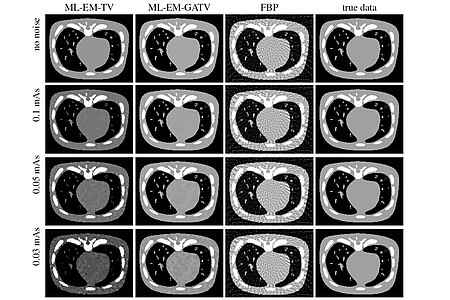
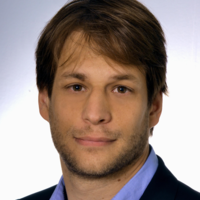
Jürgen Hesser is a Professor at the Mannheim Medical Faculty , Heidelberg University, specializing in Experimental Radiotherapy and Medical Imaging . His research focuses on solving inverse problems in imaging, particularly for CT reconstruction , brachytherapy planning , and low-dose imaging . Current affiliations: Clinic for Radiotherapy and Radiooncology, Mannheim University Hospital Collaborative ties: Interdisciplinary Center for Scientific Computing (IWR) and Center for Bioinformatics (ZITI) at Heidelberg University Research interests center on anisotropic total variation techniques for medical and industrial applications, including MR-guided interventions and real-time radiation therapy . His work has led to a 1000x speed improvement in brachytherapy planning algorithms. Recent publications highlight expertise in image reconstruction (CT/X-ray), noise optimization , machine learning for cancer classification, and big data management solutions. His methods are applied to both clinical and industrial imaging challenges. Additional contributions include scientific data infrastructure development and variance stabilization techniques for medical sensors. The research group maintains strong interdisciplinary links with Physics, Mathematics, and Computer Science faculties.
Claudia Friedrich is a Professor of Developmental Psychology at the University of Tübingen, Faculty of Mathematics and Natural Sciences, Department of Psychology, where she has held her position since April 2013. Her research focuses on the cognitive processes underlying language development in children, with particular emphasis on speech processing, word recognition, and the acquisition of linguistic structures. Her educational background includes a doctorate in Psychology from the University of Leipzig (2003) and undergraduate studies in Psychology at the Technical University of Berlin (1993-1999). Professor Friedrich's research examines how children process speech sounds, word stress patterns, and develop the ability to understand language in context. Her work investigates cognitive and neural mechanisms involved in language acquisition across different age groups, with special attention to how first and second language learners process linguistic information. Through eye-tracking, ERP, and behavioral experiments, her research explores how children develop the ability to take perspectives during communication, process prosodic features of speech, and build lexical representations. She has made significant contributions to understanding how literacy acquisition shapes speech processing and how cross-modal influences affect language development. Her recent publications reveal a consistent focus on developmental trajectories in language processing, with increasing attention to cross-linguistic comparisons and multimodal aspects of language acquisition. The research demonstrates sophisticated methodological approaches combining behavioral, eye-tracking, and neurophysiological measures to investigate language processing from infancy through childhood. Professor Friedrich leads several major research projects including Project A6 "The Development of Common Ground in First and Second Language Acquisition" (2025-2029), a DFG-funded project on "Stress processing at the word level in children with different language backgrounds" (2024-2027), and previously led Project B1 on modal and amodal cognition (2020-2023). Her research has been consistently supported by prestigious funding bodies including the European Research Council (ERC) and the German Research Foundation (DFG). She heads the Developmental Psychology workspace at the University of Tübingen, where her research group investigates cognitive prerequisites for perspective-taking in language comprehension and the influence of perspective taking during language processing through memory experiments and eye movement studies.
Prof. Yu Kang is a Professor of Precision Agriculture at the TUM School of Life Sciences, Technische Universität München (TUM). His research focuses on integrating imaging, sensing, and computational methods to study plant-environment interactions. He aims to enhance resource efficiency and reduce environmental impact through precision crop management. Prior to TUM, he held positions at China Agricultural University (CAU) and conducted postdoctoral research at ETH Zurich and KU Leuven. Prof. Yu's career includes roles such as Associate Professor of Crop Science at CAU and postdoctoral fellowships in physical geography. His educational background includes a doctoral degree from the University of Cologne (2014) and undergraduate studies at China Agricultural University. Key research areas include remote sensing for crop health monitoring, hyperspectral imaging for disease detection, and machine learning applications in agriculture. His work has led to innovations in crop nitrogen management and precision phenotyping. Awards include the Innovation Team Award (2019) from the Crop Science Society of China and the GSGS Fellowship (2014) from the University of Cologne.
Pauline Larrouy-Maestri is a Senior Researcher at the Max Planck Institute for Empirical Aesthetics in Frankfurt/Main, Germany, where she has been working since 2019 after serving as a Postdoctoral Researcher in the Neuroscience Department from 2014-2019. Her interdisciplinary research focuses on how humans categorize acoustic information that unfolds over time to make sense of sounds, working at the intersection of music, speech, and neuroscience. Dr. Larrouy-Maestri holds a PhD in Psychology from the University of Liège (2009-2013) and has an unusually diverse educational background including a Bachelor in Music (Piano) from the Royal Conservatory of Mons, a Master in Speech Therapy from the University of Brussels, additional studies in Psychology, Pedagogy, and Music Therapy, and research stays at McGill University and SUNY Buffalo. This multidisciplinary foundation informs her unique approach to studying sound perception. Her research examines how we process ambiguous auditory material that sits at the boundaries between music and speech categories, such as sprechgesang and West-African talking drums. She investigates auditory sequence processing in music, particularly how continuous streams of sound are parsed into meaningful units, and has made significant contributions to understanding the perception of correctness in singing. Her work on vocal communication explores how pitch, timing, and other acoustic features contribute to our interpretation of emotional content and meaning in both music and speech. Analysis of her recent publications reveals a sophisticated integration of behavioral, electrophysiological, and computational approaches to study music-speech interactions, with growing emphasis on cross-cultural perspectives, individual differences, and neural mechanisms. Her work increasingly examines how subtle acoustic variations influence aesthetic judgments and emotional responses to vocalizations. 2023: €20,000 research scholarship for "Humanity of Speech" project 2017: Selected for "Sign Up! Careerbuilding for outstanding female post docs in the MPG" 2016: Young Investigator Award from SEMPRE and ICMPC14 2015: PBEEE Merit scholarship from Fonds de recherche du Québec 2013: Patrimoine de l'Université de Liège and FNRS fundings 2011: Grant from French Community of Belgium Dr. Larrouy-Maestri currently supervises multiple researchers including Camila Bruder, Madita Hoerster, and Zofia Hobubowska. Her research is supported by competitive grants including the recent Imminent scholarship and previous funding from Belgian and Canadian sources. She maintains extensive international collaborations with researchers including David Poeppel, Melanie Wald-Fuhrmann, Marc Pell, and others across neuroscience, psychology, and musicology disciplines. Her work is conducted within the Neuroscience Department at the Max Planck Institute for Empirical Aesthetics, where she contributes to the institute's interdisciplinary mission of studying aesthetic experiences through multiple methodological approaches. She participates in research groups focusing on auditory perception, music cognition, and the neural mechanisms underlying language and music processing, helping bridge traditionally separate fields through innovative experimental designs.
Stefan Bruckner is a Professor at the University of Rostock , leading the Chair of Visual Analytics within the Institute of Visual and Analytic Computing. His work bridges Visual Analytics , Biomedical Visualization , and Interactive Systems , with a focus on translating complex datasets into actionable insights. Role: Chair of Visual Analytics Key Affiliations: Eurographics Executive Committee, IEEE VGTC Editorial Leadership: Associate Editor, IEEE Transactions on Visualization and Computer Graphics Research spans Medical Visualization , Immersive Analytics , and Proteogenomic Data Exploration . Recent work includes: ProHap Explorer for haplotype analysis Line Harp sonification techniques Narrative visualization frameworks His publications reveal trends in interactive data exploration , multi-omics visualization , and user behavior analysis within medical contexts. Awards include contributions to the Dirk Bartz Prize in 2019. He actively collaborates with international institutions and maintains memberships in ACM, IEEE, and GI.
Prof. Dr.-Ing. Joachim Denzler is a Professor leading the Chair for Digital Image Processing (Lehrstuhl für Digitale Bildverarbeitung) at Friedrich-Schiller-Universität Jena. His research spans computer vision, machine learning, medical imaging, and remote sensing applications across diverse domains including biomedical analysis, environmental monitoring, and facial recognition systems. His research interests focus on explainable AI, causal discovery, physics-informed neural networks, and bias mitigation in deep learning models. He has made significant contributions to fine-grained classification, concept activation vectors, and privacy-preserving techniques in facial recognition. His work often bridges theoretical computer vision with practical applications in medical diagnostics, environmental science, and infrastructure monitoring. His recent publications demonstrate a strong trend toward causal discovery methods, physics-informed neural networks, and addressing bias in machine learning systems. His work spans both theoretical advancements in model interpretability and practical applications in medical imaging, environmental monitoring, and infrastructure safety. The interdisciplinary nature of his research is evident from collaborations with ecologists, neuroscientists, and civil engineers. Best Paper Award at International Conference on Pattern Recognition (ICPR) 2024 Prof. Denzler actively mentors numerous PhD students and postdoctoral researchers, with frequent co-authors including Maha Shadaydeh, Niklas Penzel, Gideon Stein, and Tim Büchner appearing as first authors on significant publications. His laboratory has secured research funding across multiple domains including medical imaging, environmental monitoring, and AI safety. His work on CausalRivers represents a major contribution to benchmarking causal discovery methods with real-world time series data. The Chair for Digital Image Processing maintains strong industry and clinical partnerships, particularly in medical imaging applications for facial palsy analysis and neonatal care. Prof. Denzler's team has developed novel techniques for dam deformation monitoring using remote sensing data and created advanced methods for analyzing plant diversity effects on ecosystem functioning.
Bo Wang is an active academic researcher primarily affiliated with multiple Chinese institutions, with strong connections to Tsinghua University, Beijing Jiaotong University, and other leading Chinese universities. His research spans artificial intelligence, machine learning, computer vision, medical image analysis, and intelligent control systems, demonstrating significant interdisciplinary work across computer science, engineering, and biomedical applications. Primary institutional affiliation: School of Computer Science and Technology at multiple Chinese universities Active research areas: AI/ML applications in healthcare, computer vision, federated learning, and intelligent control systems Extensive publication record across top-tier venues in multiple disciplines Wang's research interests focus on the intersection of artificial intelligence and practical applications. His work demonstrates strong expertise in developing novel machine learning architectures for medical image analysis, including applications in CT imaging, MRI, and sperm tracking. He has made significant contributions to federated learning approaches for large language models, sliding mode control systems, and molecular optimization frameworks. His research consistently bridges theoretical advances with practical implementations across healthcare, manufacturing, and environmental monitoring domains. Analysis of Wang's recent publications reveals a strong trend toward interdisciplinary AI applications, particularly in medical imaging and bioinformatics. His work on VAE-GANMDA for microbe-drug association prediction, ACE-QSM for accelerating MRI acquisition, and text-guided molecular optimization demonstrates innovative approaches at the intersection of AI and life sciences. Wang also maintains active research in industrial applications including digital twin technology for energy systems and robust scheduling approaches for multi-factory production. Notable research contributions include: FLFT: A Large-Scale Pre-Training Model Distributed Fine-Tuning Method with Federated Learning VAE-GANMDA: Microbe-drug association prediction model ACE-QSM: Accelerating quantitative susceptibility mapping using diffusion models Digital twin-empowered power consumption prediction systems Wang actively collaborates with researchers across China and internationally, with publications spanning computer science, engineering, medical imaging, and environmental science journals. His work demonstrates strong technical depth across multiple AI methodologies while maintaining focus on practical applications that address real-world challenges in healthcare, manufacturing, and environmental monitoring.
Nori Jacoby is an Assistant Professor in the Department of Psychology at Cornell University and a Research Group Leader at the Max Planck Institute for Empirical Aesthetics in Frankfurt. Her research bridges cognitive science, neuroscience, and machine learning to explore how internal representations shape sensory and cognitive abilities, with a focus on universality/diversity in perception and collective behavior. Education: PhD from Hebrew University of Jerusalem (ELSC), postdocs at MIT, UC Berkeley, and Columbia University Lab: Directs the CoCoCo Lab (Cornell Computational Cognition Lab) Funding: NSF-funded postdoctoral program collaborating with UC Davis, CUNY, and Princeton Research interests include: High-dimensional perceptual spaces using adaptive sampling (e.g., Gibbs sampling with people) Cross-cultural studies of music and perception via global experiments Human-AI hybrid systems for collective creativity and decision-making Recent work explores mechanisms of cultural diversity in urban populations, neural correlates of rhythm in stroke patients, and LLM alignment with human sensory judgments. Current projects include large-scale music evolution experiments and NSF-funded studies on collective intelligence. Recruitment: Actively hiring postdocs and PhD students for interdisciplinary work.
Dr. Niklas Schandry is a Researcher at the Institute of Genetics, Ludwig Maximilian University of Munich (LMU), within the Faculty of Biology. He leads the Becker research group, focusing on plant-microbe interactions, plant secondary metabolites, and microbial ecology. His work integrates genetics, biochemistry, and computational methods to understand how plants and microbes communicate and adapt chemically. Dr. Schandry's research explores the genetic basis of allelopathic interactions, leveraging tools like the 1001G+ project for Arabidopsis genome analysis and automated phenotyping workflows (e.g., ARADEEPOPSIS). His team investigates bacterial responses to plant-derived compounds such as benzoxazinoids and diterpenes, with implications for agriculture and synthetic biology. Key Projects: Allelochemical networks, bacterial community dynamics, and plant-pathogen effector systems. Lab Members: Includes doctoral candidate Liza Rouyer and postdoc Duncan B. Crosbie. Technical Expertise: Genomics, transcriptomics, and CRISPR-based knockout systems. Recent studies highlight his focus on TNL receptors in microbiome feedback mechanisms, flagellin epitope evolution, and the antibiotic role of plant metabolites. His work bridges fundamental biology with applied challenges in sustainable agriculture and disease resistance.
Michel Besserve is a Senior Research Scientist in the Empirical Inference department at the Max Planck Institute for Intelligent Systems in Tübingen, Germany. His research bridges machine learning theory with applications in neuroscience and complex systems analysis. He leads a research group focused on developing causal machine learning tools to uncover the internal structure and transformations of complex artificial, physical, and socioeconomic systems. Dr. Besserve's primary research interests center on causal machine learning and its applications to understanding complex systems. His work investigates how causality can provide principled ways to study and improve AI algorithms, particularly focusing on the identifiability of causal models and the principle of Independence of Causal Mechanisms (ICM). He develops theoretical frameworks and practical tools for causal inference in complex equilibrium systems, neural circuits, and socioeconomic contexts. His research has significant implications for building trustworthy and interpretable AI systems that can reliably handle real-world complexity. Analysis of Dr. Besserve's recent publications reveals a strong focus on causal representation learning, with significant contributions to independent mechanism analysis and the identifiability of nonlinear generative models. His work spans both theoretical foundations and practical applications, connecting machine learning with neuroscience to understand brain function through causal inference. The interdisciplinary nature of his research is evident in publications spanning top machine learning conferences (NeurIPS, ICML, ICLR) and leading neuroscience journals (Nature, PLOS Biology). Dr. Besserve has established productive collaborations across multiple institutions, particularly with researchers at the Max Planck Institute and ETH Zurich. His work demonstrates how integrating causal principles with machine learning can address fundamental challenges in AI robustness and interpretability, with applications ranging from brain network analysis to economic modeling. His research group focuses on developing the Causal Computational Model (CCM) framework, which aims to create digital representations of real-world systems that integrate data, domain knowledge, and interpretable causal structure. This work has potential applications in climate modeling, industrial digital twins, and economic simulation.
Yubao Liu is a Professor at Sun Yat-sen University's School of Data and Computer Science, Department of Computer Science, with a prolific research career spanning over two decades in computer science. His work demonstrates significant contributions to database systems, data mining, and spatio-temporal analysis. Professor Liu's research interests focus on Data Mining , Database Systems , Traffic Flow Prediction , and Graph Neural Networks . His recent work has concentrated on developing advanced techniques for large-scale traffic flow prediction, crowd flow analysis, and spatio-temporal modeling using deep learning approaches. His research bridges theoretical computer science with practical applications in transportation systems and urban computing. Liu's publication record shows consistent high-impact contributions, with recent work emphasizing graph-based neural network architectures for traffic forecasting problems. His research demonstrates a clear evolution from foundational database work to cutting-edge applications of deep learning in transportation and social network analysis. Professor Liu has collaborated extensively with researchers including Weiyang Kong, Kaiqi Wu, Sen Zhang, Genan Dai, and Youming Ge, indicating a strong research group focused on spatio-temporal data analysis and deep learning applications. His academic advising is evident through publications where his students appear as first authors, suggesting an active mentorship role in training the next generation of computer scientists specializing in data-intensive applications.
Bert Stegemann is a Professor at HTW Berlin - University of Applied Sciences , affiliated with the Department of Engineering I. His research focuses on Photovoltaics , Lasers , and Materials Science , with specialization in Perovskite solar cells , CIGSe solar cells , and monolithic interconnection schemes . Department: Engineering I Research Clusters: Climate-friendly energy systems, Laser patterning, Tunnel oxide passivation Research Trends (2014-2025): Stegemann has published extensively on laser patterning techniques for photovoltaic modules, particularly analyzing nanosecond vs. picosecond pulse effects on perovskite and CIGSe materials. His work explores interface passivation methods for silicon and chalcopyrite semiconductors, aiming to reduce recombination losses and improve industrial scalability of solar cell fabrication. Collaborative Networks: Stegemann collaborates with institutions like the Helmholtz-Zentrum Berlin and the German-American Fulbright Commission . His publications involve co-authors such as Christian Schultz , Eva Unger , and Markus Fenske . Advising & Institutional Roles: He has supervised 2 doctorates and participates in departmental governance as a member of the Department Council and Renewable Energies committees.
Dr. Philip Bittihn serves as Group Leader and Scientist at the Max Planck Institute for Dynamics and Self-Organization in Göttingen, Germany, heading the Emergent Dynamics in Living Systems research group within the Department of Living Matter Physics. His work bridges physics and biology to decipher complex emergent behaviors in biological systems through innovative interdisciplinary approaches. His research spans nonlinear dynamics in biological systems , initially focusing on cardiac arrhythmia mechanisms where he identified novel termination strategies for life-threatening rhythms through topological defect analysis. Current work centers on growth-driven phenomena in cellular active matter , investigating mechanical interactions, expansion flows, orientational order, and shape development coupled with gene regulation and metabolism. He employs reaction-diffusion modeling, synthetic biology, and microfluidic experimentation to study pattern formation in microbial colonies and cardiac tissue. Analysis of recent publications reveals a dominant trend toward active matter physics in multicellular systems , particularly geometry-induced nematic order, phase separation in proliferating matter, and nutrient-mediated antibiotic responses. His group consistently explores how non-equilibrium growth processes generate complex patterns, with increasing emphasis on mechanical stress anisotropy and motility-induced transitions in confined cellular environments. The Emergent Dynamics in Living Systems group operates at the physics-biology interface, utilizing genetically engineered E. coli models (as demonstrated in their Nature Microbiology 2020 work on oscillating growth patterns), advanced microfluidic chambers, and computational frameworks to investigate fundamental principles of biological organization with potential biomedical applications.
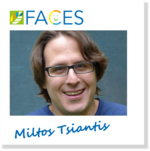
Professor Miltos Tsiantis serves as Director of the Department of Comparative Development and Genetics at the Max Planck Institute for Plant Breeding Research in Cologne, Germany. Originally from the United Kingdom, he has built an international career spanning Greece, England, and the United States before settling at the Max Planck Institute. His research program, which began at this institution in 2013 after relocating from the University of Oxford where he worked for over 20 years, focuses on fundamental questions in plant biology regarding morphogenesis and evolutionary diversity. Dr. Tsiantis's research centers on understanding how genotypes translate into organismal forms through morphogenesis and how conservation versus divergence in morphogenetic networks yields different forms during evolution. His lab has pioneered the use of Cardamine hirsuta (hairy bittercress), an Arabidopsis thaliana relative, as a model system for comparative evolutionary developmental studies. This approach allows his team to investigate key morphological differences between species, particularly in leaf shape, shoot branching, floral structure, and fruit development. His work integrates genetics with biological imaging, genomics, and computational modeling to develop predictive frameworks for understanding plant form. Analysis of his recent publications (2019-2024) reveals a strong focus on leaf morphogenesis, with particular attention to genetic modules involving transcription factors like RCO (REDUCED COMPLEXITY), CUC (CUP-SHAPED COTYLEDON), and KNOX genes, as well as hormonal signaling pathways involving auxin and cytokinin. His research increasingly incorporates advanced computational approaches, including deep learning for 3D image analysis and growth modeling. A consistent theme across his work is the investigation of how small genetic changes can generate significant morphological differences between closely related species. Dr. Tsiantis leads a vibrant research group comprising numerous PhD students, postdocs, and technicians working across two main subgroups: Organ Development and Morphogenesis, and Natural Variation. His lab has developed extensive experimental tools for C. hirsuta , including genome assemblies, mutant populations, and gene expression systems, supporting their comparative work with A. thaliana .
Zhangming Zhu is a Professor at Xidian University in the School of Microelectronics . He specializes in Microelectronics and Circuit Design , with a focus on Analog-to-Digital Converters (ADCs) , CMOS Technology , and Low-Power Electronics . His work addresses challenges in high-speed, high-precision, and energy-efficient circuit design. Research Interests: His publications highlight expertise in ADCs, PLLs, energy harvesting, biomedical sensors, and RF systems. Recent Publications: 2025 papers include a 12-bit 1.5-GS/s ADC , a 5-18-GHz Quadrature Receiver , and 20-bit SAR ADC with thermal error suppression. Collaborations: Frequently co-authors with Shubin Liu, Yi Shen, Ruixue Ding, and others. Applications: Work spans consumer electronics, IoT, biomedical devices, and energy-efficient systems.