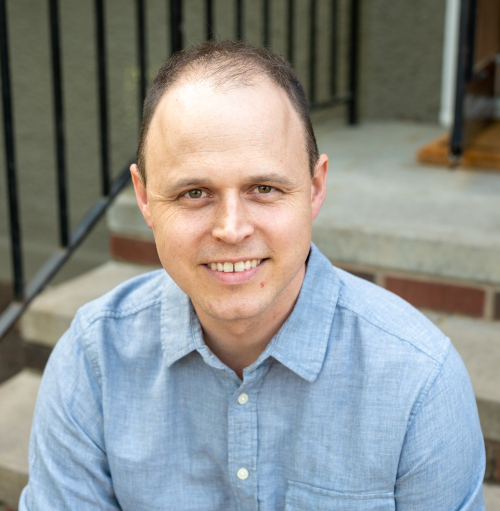
Dr. Eng. Igor Kossowski is an Assistant Professor at the Department of Mathematical Modeling, Faculty of Technical Physics, Information Technology and Applied Mathematics, Lodz University of Technology. His research focuses on nonlinear differential equations, fractional calculus, and nonlocal boundary conditions. He has published extensively in journals such as Advances in Nonlinear Analysis and Discrete and Continuous Dynamical Systems - Series B . Contact: igor.kossowski@p.lodz.pl. Research Trends: Generalized fractional Laplacian operators, (p,q)-Laplacian systems, radial solutions for elliptic equations, and stability analysis of nonlinear Dirichlet problems. Methodologies: Fixed point theorems, variational principles, spectral theory, and bifurcation analysis.
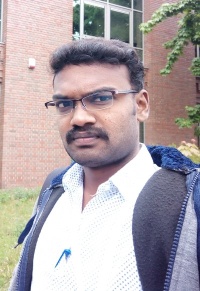
Dr. Leo Kingston is a Research Fellow at the Division of Dynamics, Lodz University of Technology in Poland. He holds a Ph.D. in Physics (Nonlinear Dynamics) and M.Sc. in Physics from Bharathidasan University, India. His research focuses on complex nonlinear phenomena in physical and biological systems. Research Focus Dr. Kingston investigates fundamental aspects of nonlinear dynamics including chaos theory, extreme event prediction, neuronal network behavior, and memristor-based systems. His work bridges theoretical modeling with experimental validation using electronic circuits and laser systems. Primary research domains include: Bifurcation mechanisms in chaotic systems Extreme event formation in coupled oscillators Transient dynamics in neural and laser systems Time-series analysis of complex systems Awards & Recognition UGC Senior Research Fellowship (2016-2018) Max Planck Institute Visiting Fellowship (2016) Experimental Demonstration Prize - IIT Guwahati (2017) UGC Junior Research Fellowship (2014-2016) Publication Trends Dr. Kingston's recent publications demonstrate a strong focus on extreme event mechanisms across physical systems. His 2023-2025 works emphasize machine learning applications in chaos analysis, laser dynamics, and biological networks. Theoretical frameworks frequently incorporate Liénard systems, with experimental validation through laser and circuit implementations.
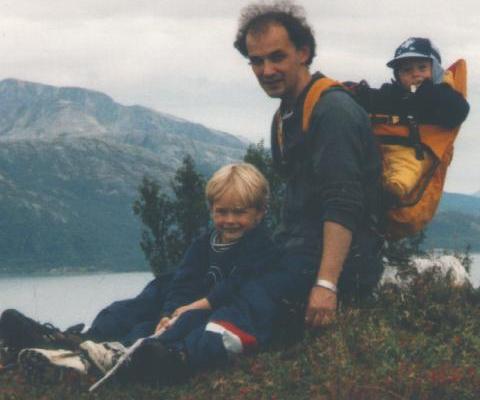
G. Richard Scott, Ph.D., is Foundation Professor of Anthropology at the University of Nevada, Reno, where he teaches and conducts research in physical and dental anthropology. His work integrates skeletal biology, bioarchaeology, and forensic anthropology, focusing on human dental variation and the peopling of the Americas, Arctic, and North Atlantic regions. Education Ph.D., Anthropology – Arizona State University Research Interests Scott’s scholarship centers on dental anthropology and skeletal biology , particularly the analysis of nonmetric crown and root traits to reconstruct population history and migration. He maintains active field and laboratory projects on: Medieval European populations Bioarchaeology of Alaskan Inuit and Greenlandic Norse Forensic ancestry estimation via dental morphology (rASUDAS software) Stable-isotope paleodietary reconstruction from dental calculus Global patterns of dental morphological variation and their evolutionary significance His investigations span the American Southwest, North Atlantic, Arctic, and Iberian Peninsula, combining traditional morphological scoring with cutting-edge 3-D imaging, geometric morphometrics, and genetic inference. Scientific Output Trends Between 2020 and 2025 Scott has published prolifically on: (1) refining dental trait recording protocols for forensic and archaeological applications, (2) testing the Beringian standstill and early peopling models for the Americas, (3) documenting rare dental variants (e.g., three-rooted lower molars, Uto-Aztecan premolar) to illuminate trans-continental population contacts, and (4) developing web-based tools (rASUDAS2) for ancestry estimation from tooth morphology. Laboratory & Collaborations Scott directs ongoing research in the UNR Department of Anthropology’s physical anthropology laboratories, mentoring graduate students in dental morphological analysis, stable-isotope preparation, and comparative skeletal collections. His projects are enriched by collaborations across North America, Europe, South America, and East Asia, and he frequently co-authors with archaeologists, geneticists, and forensic scientists.
Marco Morandotti is an Associate Professor in Mathematics at the Department of Mathematical Sciences (DISMA) of Politecnico di Torino . He is also a member of the Interdepartmental Center IAM@PoliTo - Integrated Additive Manufacturing. Research Interests: Calculus of variations, Applied mechanics, Defects analysis, Multi-agent systems, Mathematical modeling. Teaching: Courses include Sobolev spaces, Gamma-convergence, Asymptotic methods for multi-scale problems, and Mathematical Analysis at both PhD and undergraduate levels. Scientific Contributions: His recent publications focus on structured deformations, microswimmer controllability, and Γ-convergence approaches for stochastic particle aggregation. He has co-edited a didactic book on hands-on mathematics. Scientific Awards: Learning to Teach (L2T) badge from Politecnico di Torino (2023) Conference Roles: Program chair for multiscale multi-agent systems, elasticity challenges, and nonlinear analysis workshops. Academic Collaborations: Has held research and teaching positions at Carnegie Mellon University, University of Lisbon, SISSA Trieste, and TU München.
Denis Pollney is a Professor at the Department of Mathematics, Rhodes University, specializing in theoretical physics and numerical relativity. His research focuses on black hole dynamics, gravitational waves, and computational modeling of Einstein equations. Fields of Interest : Gravitation, Gravitational Waves, Black Holes, Numerical Relativity, High-Performance Computing Teaching : Offers courses in Calculus of Variations, Partial Differential Equations, and Numerical Modeling Pollney develops simulation codes for solving Einstein equations to study astrophysical phenomena like binary black hole/neutron star mergers. His work contributes to gravitational wave astronomy and testing general relativity's predictions through energy loss, spin interactions, and recoil effects. He actively supervises honours projects in applied mathematics and computational modeling across physics, economics, and biology domains, emphasizing high-performance computing applications in algorithms, data visualization, and numerical methods.
Gianluca Orlando is an Assistant Professor in the Department of Mechanics, Mathematics and Management at the Polytechnic University of Bari, Italy. His research focuses on mathematical analysis with applications in materials science and continuum mechanics, as evidenced by his extensive publication record in top-tier journals. His primary research interests include calculus of variations, partial differential equations, spin systems, and fracture mechanics. He specializes in discrete-to-continuum modeling, particularly in crystal defects, antiferromagnetic systems, and elasto-plastic materials. His work bridges theoretical mathematics with physical phenomena like dislocation dynamics and chirality transitions in frustrated magnets. Analysis of his 15 most recent publications (2019-2025) reveals strong trends in variational methods for discrete lattice models, with emphasis on the N-clock model, wave equations with damping, and fatigue effects in damaged materials. Key recurring themes include asymptotic analysis of scaling limits, energy minimization in frustrated systems, and rigorous mathematical treatment of nonlocal phenomena like peridynamics.
Giuseppina Vannella is an Associate Professor at the Department of Mechanics, Mathematics & Management, Polytechnic University of Bari, Italy. Her research focuses on mathematical analysis of quasilinear elliptic systems, p-Laplacian operators, and critical point theory using Morse theory. Field of Study: Mathematical Analysis (MAT/05) Contact: giuseppina.vannella@poliba.it Her research investigates the existence, multiplicity, and qualitative properties of solutions to nonlinear partial differential equations, particularly involving critical exponents and resonance problems. She employs advanced variational methods and Morse theory to analyze these systems. Recent work trends (2007–2024) emphasize applications of Morse theory to p-Laplacian and quasilinear elliptic systems, including critical growth problems, regularity of solutions, and minimax theorems in Banach spaces. Keywords across publications include Partial Differential Equations , Nonlinear Analysis , and Geometric PDEs .
Simone Dovetta is an Associate Professor of Mathematical Analysis at the Department of Mathematical Sciences "GL Lagrange" (DISMA) at the Polytechnic University of Turin. His academic work spans multiple engineering colleges including the College of Electrical and Energy Engineering and the College of Mechanical, Aerospace and Automotive Engineering, where he teaches Mathematical Analysis II and other mathematics courses across various academic years. Dr. Dovetta's primary research focuses on Partial Differential Equations, Variational Methods, and Singular Perturbations in non-standard domains. His work falls under the Mathematical Analysis discipline (MATH-03/A) with expertise in analysis, ODE and dynamical systems, operator algebras, and theoretical aspects of partial differential equations. He is a member of the Nonlinear Analysis and Calculus of Variations research group at DISMA, focusing on the Theoretical Analysis of Mathematical Models with Singularities for Interaction Phenomena. His recent scholarly output demonstrates a concentrated research trajectory in nonlinear Schrödinger equations on metric graphs, exploring ground states, normalized solutions, and singular perturbations. The publications reveal sophisticated mathematical techniques applied to problems with physical relevance, particularly in understanding wave propagation and quantum phenomena on network structures. His work often employs variational methods to establish existence, multiplicity, and qualitative properties of solutions to these challenging nonlinear problems. Dr. Dovetta serves as Scientific Director of the NoDES (Nonlinear dispersive equations in presence of singularities) project, a National Research initiative funded through PRIN (2023-2025). While specific grant details aren't provided in the text, this leadership role indicates significant research funding and collaborative activity in his field. He is actively involved in teaching across multiple engineering disciplines, offering Mathematical Analysis II to students in Mechanical Engineering, Energy Engineering, and Automotive Engineering programs. His teaching portfolio also includes Fundamentals of Mathematics and Linear Algebra and Geometry, demonstrating versatility in delivering mathematical content to diverse engineering audiences.
Xavier Fernandez-Real serves as a Researcher and Lecturer at the Swiss Federal Institute of Technology Lausanne (EPFL), affiliated with the School of Basic Sciences and the Institute of Mathematics. He holds positions in both the Chair of Mathematical Analysis, Calculus of Variations and PDEs (AMCV) and the SMA-ENS teaching unit, maintaining his office at MA C2 567 in Building MA. His research concentrates on Mathematical Analysis with specialized expertise in Calculus of Variations, Partial Differential Equations, and Optimal Transport theory. He investigates fundamental problems including Monge-Kantorovich formulations, Wasserstein metric geometry, and applications to functional inequalities, traffic modeling, and PDE analysis. His work bridges theoretical frameworks with practical implementations across mathematical physics and optimization domains. No scientific awards are documented in the available institutional records. As an academic advisor, he currently supervises PhD candidate Roberto Colombo. His teaching portfolio features the advanced course "Optimal Transport," which systematically covers Monge and Kantorovich problem formulations, Wasserstein distance theory, and applications to partial differential equations, geometric inequalities, and traffic flow modeling. He operates within the AMCV research group, which focuses on advancing methodologies in mathematical analysis, variational principles, and partial differential equations through collaborative theoretical and applied projects.
Pedro Pintado Jorge Gonçalves is a Senior Lecturer at the Faculty of Engineering Sciences at KU Leuven, with primary affiliation in the Department of Electrical Engineering and strong ties to the Department of Computer Science. He leads the Gonçalves lab at the VIB-KU Leuven Center for Neuro Electronics Research Flanders (NERF), and is also a member of the KU Leuven Brain Institute and Leuven.AI Institute for Artificial Intelligence. His educational background includes training as a physicist with a focus on neuroscience applications. His research integrates machine learning with computational neuroscience to develop methods for extracting mechanistic insights from complex neural data. His work specializes in simulation-based inference techniques that bridge data-driven and theory-driven approaches in neuroscience. The publication trends reveal a strong focus on developing and applying machine learning methods to neuroscience problems, with particular emphasis on neural circuit modeling, biophysical simulations, and the development of computational tools like the sbi toolkit. His research spans multiple scales from single neurons to population dynamics and behavior. As an educator, he teaches courses including Calculus and Mathematical Engineering, and mentors numerous students through his lab. His collaborative approach is evident in his extensive co-authorship network across computational neuroscience and machine learning fields. Dr. Gonçalves actively supervises multiple PhD and master's students in his lab, fostering the next generation of computational neuroscientists. His research is supported by multiple ongoing projects including 'Simulation-based inference for mechanistic models of neural dynamics' (2025-2029) and 'Computational research into the principles of robustness in neural systems' (2023-2027). His laboratory focuses on combining theoretical models with advanced machine learning methods to design more accurate neural models, quantitatively test mechanistic hypotheses, and derive experimentally-testable predictions about neural systems in health and disease.
Xukai Yan is an Assistant Professor in the Department of Mathematics at Oklahoma State University . He holds a Ph.D. in Mathematics from Rutgers University (2017) and was previously a postdoctoral researcher at Georgia Tech under the mentorship of Ronghua Pan and Yao Yao. Research Interests : Yan specializes in partial differential equations and nonlinear analysis , with a focus on stationary Navier-Stokes equations, aggregation-diffusion equations, and geometric symmetry in hypersurfaces. His work explores existence, uniqueness, stability, and classification of solutions in fluid dynamics and mathematical physics. Scientific Contributions : His research on homogeneous solutions of Navier-Stokes equations with singularities, asymptotic stability, and sharp stability of interaction energy has been published in top-tier journals like Arch. Ration. Mech. Anal. and J. Differential Equations . Recent projects include symmetry analysis and aggregation-diffusion models. Contact & Teaching : Office hours: Monday & Wednesday 3:30-5:00 p.m. (MSCS 441). Teaching Spring 2022: Math 2233, Differential Equations . Email: xuyan@okstate.edu .
M. Parviainen is a mathematician specializing in nonlinear partial differential equations, with significant contributions to the analysis of $p$-harmonic functions, superparabolic functions, and degenerate parabolic equations. Their work bridges probabilistic interpretations (e.g., tug-of-war games) with rigorous analytical frameworks, focusing on regularity theory, existence/uniqueness proofs, and connections to metric space analysis. Key research areas include viscosity solutions, Sobolev spaces, and potential theory Collaborations with prominent mathematicians like J. Manfredi, Tuomo Kuusi, and J. Kinnunen Publications highlight innovative approaches to nonlinear PDEs, with a blend of stochastic and analytical methods. Recent work emphasizes $C^{1,\alpha}$ regularity for normalized $p$-Laplacian equations and capacity theory for parabolic problems. Their scholarly output spans asymptotic mean value characterizations, weak supersolutions, and global gradient estimates in nonsmooth domains.
Jeff Calder is an Associate Professor in the School of Mathematics at the University of Minnesota. He specializes in interactions between partial differential equations (PDE), numerical analysis, applied probability, and computer science, with applications to machine learning and data analysis. His research has been supported by the National Science Foundation, Alfred P. Sloan Foundation, and McKnight Foundation. Ph.D. in Applied and Interdisciplinary Mathematics (2014, University of Michigan) Morrey Assistant Professor (2014-2016, UC Berkeley) His research interests include: Rigorous analysis of PDEs Algorithm development for machine learning Variational methods in data science Graph-based learning techniques Computational biomedical imaging Interdisciplinary applications in anthropology Recent publications focus on t-SNE improvements, medical imaging segmentation, and variational PDEs for inversion problems. His work spans computer science, applied mathematics, and biomedical engineering. Scientific awards include: NSF Career Award (2020) Sloan Research Fellowship (2020) McKnight Presidential Fellowship (2021) Guillermo E. Borja Award (2021) Albert and Dorothy Marden Professorship (2023-2025) He supervises graduate and undergraduate research projects and co-founded the AMAAZE consortium for mathematics-anthropology collaboration. His GraphLearning Python package provides open-source tools for graph-based machine learning.
Prof. Dr. Theresa Simon is a Professor at the Institute for Analysis and Numerics at the University of Münster, Germany. Her office is located at Orléans-Ring 10, room 130.019 in Münster. She leads the Working Group for Applied Analysis and has been actively teaching and conducting research in mathematical analysis with applications to materials science. Prof. Simon's research focuses on the calculus of variations and nonlinear partial differential equations, with particular emphasis on problems inspired by physics and materials science. Her work spans several key areas including micromagnetism and nonlocal isoperimetric problems, multi-phase mean curvature flow, dimension reduction in thin elastic bodies, and microstructures in shape memory alloys. Her research bridges theoretical mathematics with practical applications in materials science, particularly in understanding magnetic phenomena and phase transformations. Analysis of Prof. Simon's recent publications reveals a strong focus on magnetic skyrmions, which are topological solitons in magnetic materials with potential applications in spintronics. Her work combines rigorous mathematical analysis with physical insights, particularly examining the calculus of variations framework for understanding micromagnetic phenomena. She has made significant contributions to understanding rigidity properties in shape memory alloys and the mathematical foundations of phase transitions. Her more recent work shows increasing focus on higher-degree topological structures in magnetic systems and refined analytical techniques for interface dynamics problems. Prof. Simon regularly teaches advanced courses including Calculus of Variations, Introduction to Geometric Measure Theory, and Advanced Seminars in Applied Mathematics. She frequently collaborates with colleagues across the Institute for Analysis and Numerics on both teaching and research initiatives, particularly with Jun.-Prof. Marlies Pirner, Prof. Dr. Caterina Zeppieri, and other members of the applied mathematics group. Her teaching spans multiple semesters from Winter 2021/22 through upcoming courses scheduled for Winter 2025/26, demonstrating her ongoing active role in the department.
Boris Kruglikov is a Professor of Mathematics at UiT the Arctic University of Norway, Faculty of Science and Technology, Department of Mathematics and Statistics. He is recognized as one of the northernmost mathematicians in the world. Kruglikov has maintained a continuous academic career since 1995, with positions at Moscow State University, Moscow State Technical University, and since 1999 at the University of Tromsø (now UiT). His educational background includes studies at Moscow State University's Mech-Math Department, Differential Geometry Chair from 1985-1992, followed by post-graduate work there from 1992-1995. He completed his PhD in 1995 with a thesis titled "Symplectic geometry of Integrable Hamiltonian Systems" (Diploma KT 016901). Kruglikov's research spans three primary areas of mathematical investigation. In Differential Geometry , he explores local and global analysis of geometric structures on manifolds, focusing on symmetries, equivalences, normal forms, curvature, involutivity, and integrability. His work in Differential Equations employs geometric approaches to integrability and symmetry analysis, particularly examining dispersionless systems, formal theory of PDEs, and compatibility of overdetermined systems. His research in Dynamical Systems investigates Hamiltonian dynamics, topological aspects of integrable systems, geodesic flows, and entropy of smooth and singular systems. His extensive publication record shows a consistent focus on geometric approaches to mathematical physics problems, with recent work emphasizing differential invariants, symmetries of geometric structures, integrable systems, and supergeometry. The publications demonstrate a progression from foundational work in differential geometry and dynamical systems toward increasingly sophisticated applications in mathematical physics, relativity, and supergeometry. Kruglikov has taught a wide range of advanced mathematics courses including Differential Geometry, Complex Analysis, Algebra, Differential Equations, and specialized topics like Tractor Calculus for Conformal and Projective Geometry. He has maintained active research collaborations with mathematicians worldwide, as evidenced by his extensive co-authorship pattern.