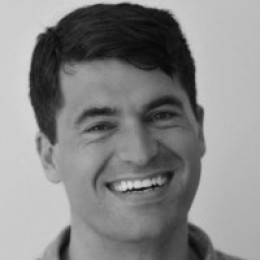
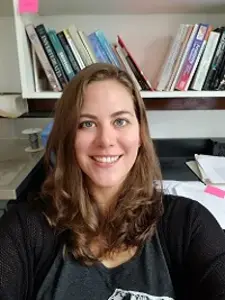
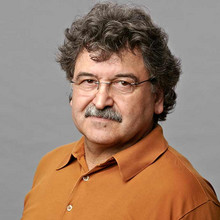
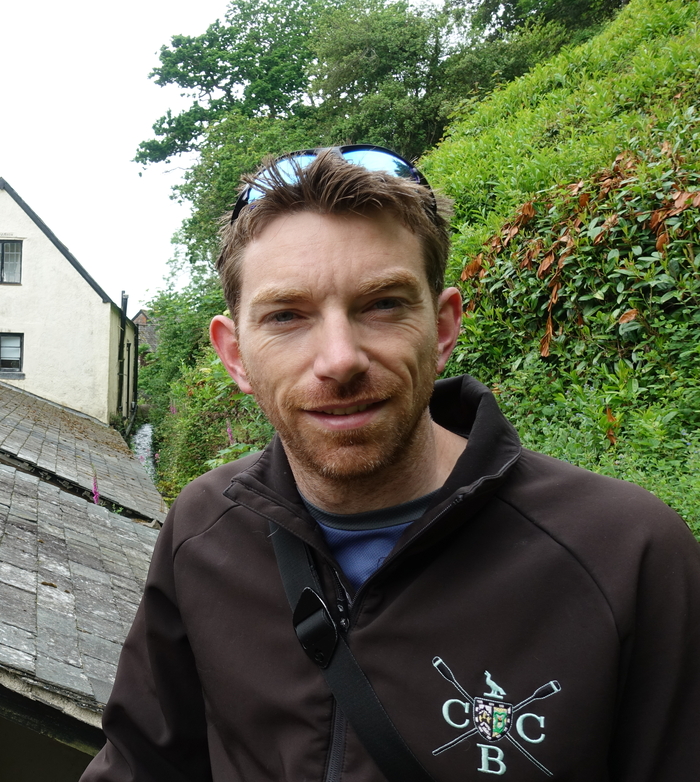
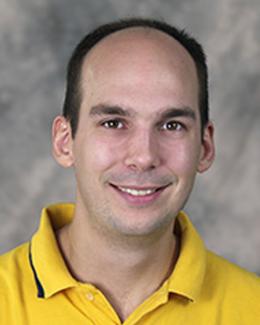
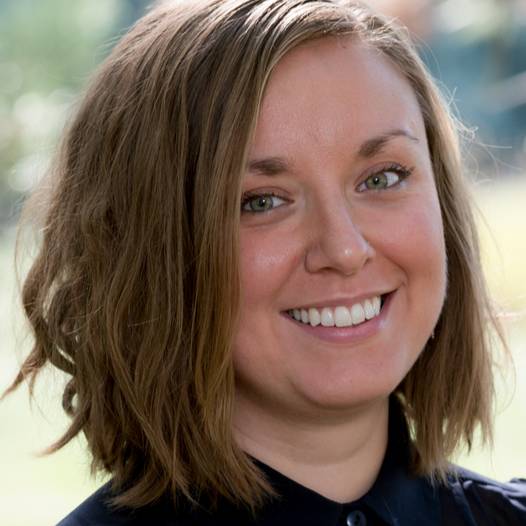
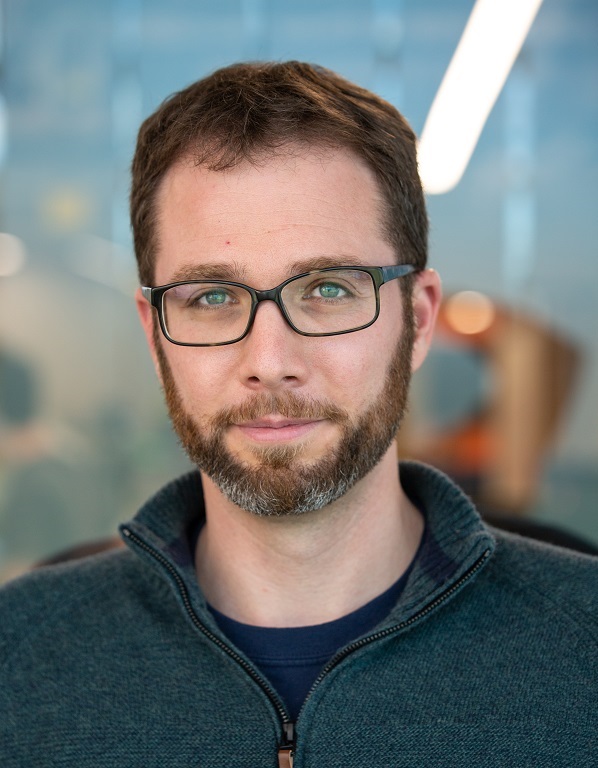
David Kipping is an Associate Professor of Astronomy at Columbia University. His research focuses on exoplanetary systems, particularly the detection of exomoons, stellar dynamics, and astrostatistics. He holds a B.A. and M.Sc. in Natural Sciences from Cambridge University and a Ph.D. from University College London. Before joining Columbia, he was a postdoctoral fellow at Harvard University through the Sagan and Menzel fellowships. His research interests include extrasolar planets, moons, and rings, as well as stellar rotation and granulation. He has pioneered methods for analyzing transit timing variations (TTVs) and detecting exomoons using Kepler and TESS data. Recent work has explored the rapid abiogenesis hypothesis and the orbital stability of planetary systems. Key contributions include the discovery of potential exomoon candidates and the development of tools like the 'Democratic Detrender' for photometric data analysis. His articles emphasize rigorous statistical methods and critique common analytical pitfalls in exoplanet studies. David advises three graduate students: Emily Sanford, Alex Teachey, and Moiya McTier. Though no specific grants or awards are listed, his work is supported through academic and space agency collaborations. His research also touches on SETI and astrobiology, addressing questions about the likelihood of extraterrestrial civilizations.
Jesse Hamilton, Ph.D., is an Assistant Professor in the Department of Radiology and Biomedical Engineering at the University of Michigan. Their research focuses on advancing quantitative Magnetic Resonance Imaging (MRI) methods to improve early detection and monitoring of cardiac diseases. Key projects include development of cardiac MR Fingerprinting for rapid, multi-parametric tissue characterization, low-field MRI applications, and deep learning-enhanced reconstruction algorithms. Research interests emphasize data acquisition innovation, algorithm design, and clinical translation of MRI technologies. The lab validates methods through simulations, phantom studies, and human trials, targeting applications like cardiac amyloidosis diagnosis and cardiomyopathy phenotyping. Recent work highlights MRF's utility in simultaneous T1/T2 mapping, sex-specific cardiac analysis, and low-field imaging. Articles explore artifact correction, multi-contrast imaging, and system optimization. No specific scientific awards are listed, but contributions to MRF methodology are prominent in the field. Advising and grants are not detailed here, but the lab's focus on translational imaging research suggests active grant-funded projects. Collaborations likely span radiology, biomedical engineering, and clinical cardiology departments at the University of Michigan Medical School. Key infrastructure includes advanced MRI systems, computational resources for deep learning, and experimental setups for validating imaging techniques in both phantom and clinical settings.
Stephanie Crofts is an Assistant Professor of Biology at the College of the Holy Cross. Her research focuses on biomechanics and functional morphology, applying principles from physics and engineering to study how organisms adapt their morphology to ecological roles. She earned her Ph.D. from the University of Washington, Seattle, and teaches courses such as Introduction to Mechanisms of Multicellular Life and Comparative Vertebrate Anatomy . Her work investigates functional trade-offs and evolutionary constraints in specialized morphologies, particularly in dentition and defensive structures like spines and fangs. She employs CT scanning, physical specimens, and computational models to explore how morphological changes enable diversification and ecological adaptation. Key research themes include puncture mechanics in snake fangs, sea urchin spine functionality, and the biomechanics of predator-prey interactions in marine species. Crofts’ recent articles span studies on frugivorous fish dentition, sea urchin anatomy under environmental stress, and the biomechanics of defensive spines across taxa. Her interdisciplinary approach bridges comparative anatomy, evolutionary biology, and material science. No scientific awards are explicitly listed, though her active research program includes grants and collaborations in biomechanical modeling and ecological adaptation studies.
Prof. Dr. Anthimos Georgiadis is a faculty member at Leuphana University Lüneburg's Institute for Production Technology and Systems. His research focuses on advanced manufacturing technologies, production systems, and industrial applications. Georgiadis leads projects in areas including material processing, manufacturing optimization, and industrial diagnostics. Recent publications demonstrate strong emphasis on applied engineering solutions, particularly in bearing dynamics diagnostics using machine learning, surface quality optimization, and medical positioning systems. His work consistently integrates theoretical modeling with experimental validation across mechanical, materials, and medical engineering domains. Technical contributions span predictive maintenance algorithms, manufacturing process improvements, metrology innovations, and healthcare technology development, reflecting interdisciplinary approaches to industrial challenges.
Will Hoppitt is a Lecturer in Zoology at the University of Cumbria since 2024, with over 25 years of experience as a zoologist specializing in animal behavior and behavioral ecology. He holds a qualification in statistical modeling, emphasizing its integration into zoological education. Previously lecturing at Anglia Ruskin University and Leeds University, he was drawn to Cumbria’s natural surroundings for field-based teaching opportunities. His research focuses on animal social learning, examining cultural transmission mechanisms across species like humpback whales, chimpanzees, and honeybees. Notable projects include analyzing the spread of novel behaviors and the role of social networks in collective foraging. He teaches modules such as Animal Behaviour, Behavioral Ecology, and Statistical Modelling Techniques, integrating practical fieldwork and computer simulations into teaching methods. His work emphasizes close student interaction through seminars and group discussions, distinguishing Cumbria’s undergraduate programs. The university’s location near the Lake District and Pennines allows frequent fieldwork, such as deer park studies at Levens Hall. Hoppitt’s career includes freelance statistical consulting and safari guiding in Botswana’s Makadikadi region.
Oliver Curnick is an Associate Professor in Electrochemical Power Sources at Coventry University, leading the Hydrogen Energy research theme. His work focuses on advancing hydrogen technologies (production, storage, distribution) and lithium-ion battery diagnostics to support the sustainable energy transition. He is based at the Centre for Advanced Low Carbon Propulsion Systems and the Hydrogen Energy Applications Laboratory, which house facilities for collaborative industrial R&D projects. Research interests include overcoming technical/economic challenges in hydrogen energy systems, novel device/process development, and electrochemical diagnostic techniques for battery degradation assessment. Key areas include PEM fuel cells, lithium-ion battery lifecycle analysis, and integration of green hydrogen into multi-energy systems. Recent publications emphasize real-time battery diagnostics (e.g., non-linear frequency response analysis), hydrogen storage solutions, and system-level optimizations for fuel cell performance. His work aligns with UN Sustainable Development Goals related to affordable clean energy and climate action. Notable outputs include patents on ion exchange membrane fuel cells and peer-reviewed contributions to Journal of Energy Storage and Electrochemistry Communications . Collaborations span academic and industrial partners focused on advancing low-carbon propulsion and energy storage technologies. Ongoing projects include second-life battery applications and thermal management strategies for hydrogen-powered vehicles.
Michael Kaschak is Professor of Psychology at Florida State University, studying language production and comprehension processes. His research examines how social, cognitive, and perceptual factors influence language choices, and how action planning systems interact with linguistic comprehension. Dr. Kaschak leads the Language and Cognitive Processes Laboratory, investigating embodied cognition through experimental paradigms. His research focuses on structural priming effects, action-sentence compatibility, dialogue alignment, and embodied language processing. Recent publications explore hysteresis in spatial language, reproducibility in embodiment research, and structural persistence in conversations. Work consistently integrates psycholinguistic experimentation with theoretical modeling. Dr. Kaschak has contributed methodological advances for studying language embodiment and maintains collaborations through multi-lab replication initiatives. His research received funding from National Science Foundation and National Institutes of Health.
Professor Fred Charles serves as Head of Department for Creative Technology at Bournemouth University, specializing in computational intelligence applied to simulated worlds. His expertise spans artificial intelligence, human-computer interaction, and interactive narrative systems, with significant contributions to virtual reality and brain-computer interface technologies. His research has led to award-winning interactive systems and numerous publications in top-tier conferences and journals. Education: PhD in Computer Science ("Intelligent Virtual Actors in Interactive Storytelling") Master's degree in Computer Aided Graphical Technology Applications BSc in Computer Science Professor Charles' research focuses on the intersection of AI, narrative systems, and immersive technologies. His work explores how computational intelligence can enhance virtual environments, particularly through brain-computer interfaces that enable more natural human-virtual agent interactions. Recent projects investigate social anxiety in VR settings, multimodal interaction frameworks, and personalized dialogue systems for virtual characters. His research bridges theoretical AI concepts with practical applications in healthcare, education, and entertainment domains. His most recent publications demonstrate a clear trend toward applying interactive narrative techniques to real-world problems, particularly in mental health assessment (OCD, social anxiety), responsible gambling initiatives, and educational applications. The work increasingly incorporates multimodal input analysis and neurofeedback mechanisms to create more responsive and adaptive virtual experiences. Scientific Awards: Blue Sky Award (ACM Hypertext, 2018) Best Application (International Conference on Automated Planning and Scheduling, 2013) Professor Charles has successfully supervised numerous PhD students working on topics ranging from crowd simulation to narrative generation systems. His research has been supported by substantial grants from Innovate UK, Economic and Social Research Council, AHRC/EPSRC, and the European Commission, including projects on believable agent behavior in VR, responsible online gambling, and machine understanding for interactive storytelling. He maintains active collaborations with researchers across Europe and has contributed significantly to the development of narrative medicine applications.
Wieland Dietrich is a Researcher and Research Coordinator at the Max Planck Institute for Solar System Research (MPS) , affiliated with the Planetary Science Department. His expertise lies in planetary dynamics, particularly the magnetic fields and atmospheric flows of exoplanets like Hot Jupiters, as well as convection processes in planetary cores and gas giants. Education & Employment : PhD in Physics (2009-2012): IMPRS program at MPS, Katlenburg-Lindau Postdoctoral Research Fellow (2013-2019): University of Leeds (School of Applied Mathematics) and MPS Current roles since 2022: Research Coordinator at MPS Research Focus : Investigates dynamo processes, zonal winds, and satellite measurement correlations with planetary interiors. Recent work emphasizes Hot Jupiter atmospheres and gravity dynamics of gas giants like Jupiter. Publications : Focused on exoplanet magnetism, zonal wind mechanisms, and computational models of planetary convection. Key contributions include studies on KELT-9b's magnetic fields and Jupiter's gravity moments. Awards : None explicitly mentioned in the provided texts. Labs & Teams : Active within the Planetary Science Department at MPS, contributing to interdisciplinary research on solar system and exoplanetary dynamics.
Dr. Chelsea Cook is an Assistant Professor in the Department of Biological Sciences at Marquette University. Her research focuses on understanding social behavior through a holistic lens, integrating neurobiology, behavioral genetics, and ecological context. She uses honey bees as a model system to study collective behaviors like thermoregulation and foraging, as well as the effects of social isolation. Dr. Cook holds a B.S. from SUNY Cortland (2009), a Ph.D. from the University of Colorado Boulder (2016), and completed postdoctoral training at Arizona State University (2016–2020). Key research areas include honey bee thermoregulation—specifically how group dynamics influence fanning behavior—and the physiological impacts of social isolation in bees. She employs advanced techniques like electrophysiology and microbiome analysis to explore these topics. Dr. Cook’s work is supported by grants from the National Science Foundation, USDA, and NIH. Current Funding: NSF Integrative Organismal Systems Grant (2023–2026) Previous Funding: USDA SBIR Grants (2017–2020), NIH Postdoctoral Fellowship (2018–2019) Her lab, the Cook Research Team, emphasizes inclusivity and supports graduate students including Ph.D. candidates Casey Lambert, Rachael Halby, and Justine Nguyen. The lab also develops innovative tools like mobile indoor apiary systems to extend honey bee research seasons. Professional affiliations include the Animal Behavior Society and Entomological Society of America. Her recent publications span topics from microbiome roles in social behavior to neurotransmitter modulation of attention in honey bees.
Ka Ming Tam is a Researcher at Louisiana State University's Department of Physics & Astronomy, College of Science. His work spans condensed matter physics , quantum many-body systems , and machine learning applications in physics . He has contributed to advanced computational methods, including nonequilibrium dynamical mean-field theory , functional renormalization group , and parallel tempering algorithms for studying disordered systems. His research includes Quantum materials with disorder and correlation Hybrid quantum-classical algorithms for phase transitions Epidemiological modeling of social physics Tensor formulations for Anderson-Hubbard models Machine learning in critical phenomena The 15 most recent publications highlight his focus on strongly correlated systems , Anderson localization , quantum computing , machine learning in statistical mechanics , and epidemiological dynamics . Key methodologies include DMFT , RG analysis , and GPU-accelerated simulations . No awards or student advisement details are explicitly mentioned in the provided text.
Dmitry Berenson is an Associate Professor in the Robotics Department and Electrical Engineering and Computer Science Department at the University of Michigan. He holds a B.S. from Cornell University (2005) and a Ph.D. from Carnegie Mellon University (2011). His research focuses on algorithms for robotic manipulation, motion planning, and control, emphasizing integration with real-world systems and open-source distribution. He has received the IEEE RAS Early Career Award and NSF CAREER Award. His academic journey includes postdoctoral work at UC Berkeley (2012) and faculty positions at Worcester Polytechnic Institute (2012-2016). He leads the ARM Lab, exploring topics such as deformable object manipulation, tactile control, and learning-based planning. Teaching responsibilities include courses like ROB 502 (Programming for Robotics), EECS 465 (Algorithmic Robotics), and ROB 520 (Motion Planning). Education: B.S., Electrical and Computer Engineering, Cornell University (2005) Ph.D., Robotics Institute, Carnegie Mellon University (2011) Postdoctoral Research, UC Berkeley (2012) Research Interests: Learning and motion planning for manipulation Control theory and optimization Deformable object interaction Robot perception and tactile systems Key Contributions: Development of algorithms for manipulation under uncertainty Advances in motion planning with contact feedback Integration of learning with classical robotics methods Recent publications emphasize probabilistic modeling, tactile-driven control, and generalization in learned dynamics. His work addresses challenges in cluttered environments, deformable objects, and safe human-robot collaboration.
Dr. Holger Rupp is a Researcher at the Department of Soil Systems Research , Helmholtz Centre for Environmental Research - UFZ , with a career spanning since 1979. His work focuses on soil-water interactions, nutrient dynamics, and environmental pollution assessment. Research Focus: Investigations into water and substance balance of soils, wetland substance dynamics, and diffuse-source water pollution. He contributes to projects like ReKKS (2017-2020), optimizing water supply through soil management in Kazakhstan and Siberia, and the systemic soil model BODIUM for simulating soil functions. Soil hydrological modeling Nutrient leaching analysis Floodplain contamination studies Climate change adaptation in agriculture Publications highlight his expertise in nitrogen/phosphorus leaching, lysimeter methodology, and soil structure dynamics. He collaborates with institutions including Martin Luther University Halle-Wittenberg, Leibniz University Hannover, and Amazonen-Werke. Education: Diploma in land reclamation engineering (University of Rostock, 1983), followed by a PhD (1987). His career includes roles at GKSS Research Centre (1993-1995) before transferring to UFZ in 1995.
Nicolas Hudon is an Assistant Professor in the Department of Chemical Engineering at Queen's University, associated with Smith Engineering and the Faculties & Schools. His research focuses on physics-based modeling, estimation, optimization, and control of nonlinear chemical process systems, particularly integrating non-equilibrium thermodynamics into process systems engineering. Education: B.Ing. (2002) and M.A.Sc. (2004) from Polytechnique Montréal, PhD (2010) from Queen's University. Postdoctoral work included University of New South Wales (2010-2012) and Université catholique de Louvain (2012-2015). Research interests include process control, systems engineering, applied mathematics (calculus of variations), and mathematical physics. His work aims to develop distributed control strategies for chemical systems, with applications in tokamak reactors, multiphase systems, and sustainable processes. Affiliations: Canadian Engineering Education Association, American Society for Engineering Education, Canadian Society for Chemical Engineering, IEEE, and SIAM. Teaches courses like CHEE 905 (Advanced Thermodynamics) and CHEE 210 (Thermodynamics of Energy Conversion). Publications emphasize control design for thermodynamic systems, port-Hamiltonian modeling, and educational strategies in chemical engineering problem-solving.
Nicolae-Viorel Buchete is an Associate Professor of Theoretical & Computational Nano-Bio Physics at University College Dublin's School of Physics within the College of Science. He currently serves as Vice Principal for Graduate Studies for the College of Science and Director of the UCD MSc in Computational Physics Programme. His academic journey includes postgraduate degrees from Boston University (USA) and institutions in the EU (Al. I. Cuza University of Iasi, Romania, and the University of Patras, Greece), with a PhD from Boston University and research fellowships at the National Institutes of Health. His educational background includes: PhD from Boston University Research Fellowships at National Institutes of Health (Bethesda, MD, USA) Postgraduate degrees from Boston University, Al. I. Cuza University of Iasi (Romania), and University of Patras (Greece) Buchete's research focuses on theoretical and computational approaches to understanding biomolecular systems. His work spans theoretical and computational biological physics, chemical physics, and nanoscience , with specific emphasis on statistical mechanics and molecular dynamics of biomolecular systems, systems biology, structural bioinformatics, and multiscale modeling of biomolecules and complex fluids. His group employs advanced computational techniques including Markov State Models, Milestoning, and replica exchange molecular dynamics to study protein conformational dynamics, amyloid formation, and molecular mechanisms relevant to diseases like cancer and Alzheimer's. His research output reveals a progression from fundamental biophysics toward increasingly translational applications. Early work focused on protein conformational dynamics, while more recent publications demonstrate expansion into nanomedicine applications, computational toxicology of nanomaterials, and physics-based modeling frameworks for drug delivery systems. A significant portion of his research involves studying conformational transitions in proteins relevant to cancer (such as K-Ras4B and Abl kinase) and neurodegenerative diseases (particularly amyloid systems), with growing emphasis on computational approaches to nanosafety and sustainability. His scientific contributions have been recognized with numerous awards: Certificate of Appreciation from the American Chemical Society Publications Division (2012) Top 20 JCP Reviewer for 2010 from the American Institute of Physics NIH Fellows Award for Research Excellence (FARE) in 2006 and 2007 ACS Chemical Computing Group Excellence Award (2003) Multiple teaching and research awards from Boston University including the Outstanding Teaching Fellow Award (1998) and Feldman Award (2001) Buchete has mentored numerous graduate students through their MSc and PhD research, with students successfully defending theses on computational physics and biomolecular modeling topics. His teaching philosophy emphasizes "research-oriented teaching," integrating research experiences into undergraduate and taught Master's level education. He has secured research funding including the UCD OBRSS Research Support Scheme (2016-2023) and has directed multiple educational programs including the UCD International Pre-Masters Programme (2013-2022) and served as School Head of Teaching and Learning (2021-2022). His research group is affiliated with the UCD Complex & Adaptive Systems Laboratory (CASL), where they develop and apply advanced computational methods to study complex biomolecular systems. The group has organized multiple CECAM workshops on biomolecular modeling and simulations, demonstrating leadership in the computational biophysics community. They collaborate extensively across disciplines, working with experimentalists to validate computational findings and address challenging problems in biophysics and nanomedicine.