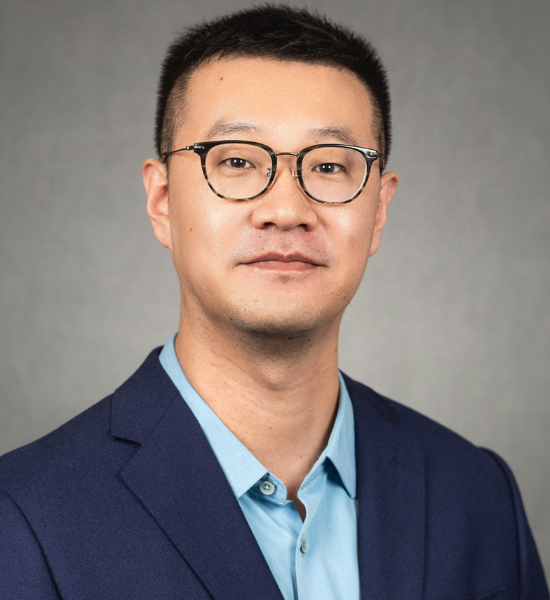
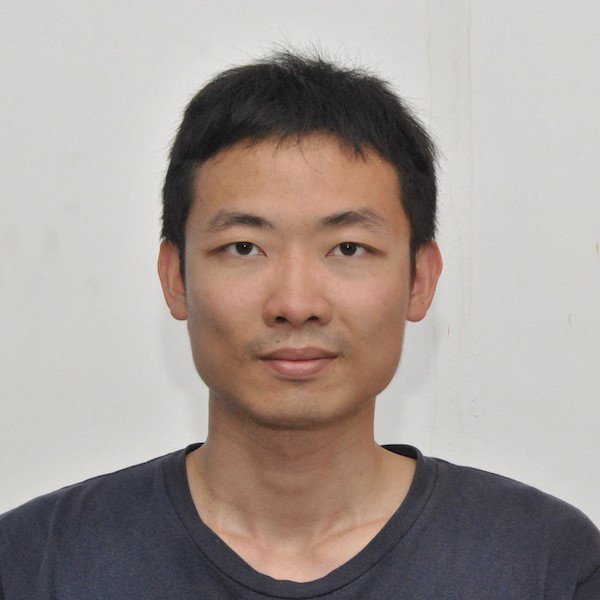
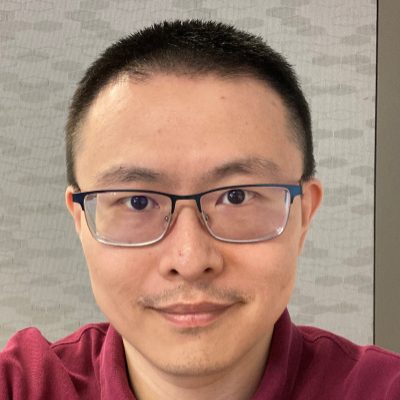
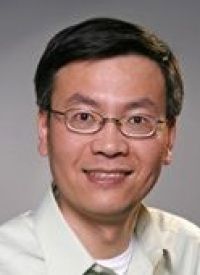
Bikram Karmakar is an Assistant Professor in the Department of Statistics at the University of Florida. His research focuses on causal inference, design and analysis of observational studies, and applications to public policy, health, and social sciences. He holds a Ph.D. from the Wharton School, University of Pennsylvania (2019), and prior degrees from the Indian Statistical Institute, Kolkata (M.Stat, 2013; B.Stat, 2011). His work emphasizes methodological advancements in causal inference, including evidence factors, regression discontinuity designs, and synthetic controls. He serves as an Associate Editor for Sankhya-A and Biometrics (starting July 2025). Key contributions include studies on marijuana legalization impacts, colorectal cancer screening efficacy, and policy evaluation using observational data. Publications highlight innovations in handling confounding variables, sensitivity analyses, and combining randomized/non-randomized studies. His GitHub repositories (e.g., bikram12345k ) include implementation code for proposed methods, demonstrating practical applications of his theoretical work.
Dr. Haipeng Yu is an Assistant Professor in the Department of Animal Sciences at the University of Florida, specializing in Artificial Intelligence applied to Animal Omics Sciences. His research focuses on integrating multi-omics data with machine learning and statistical methods to address agricultural challenges. He leads the Artificial Intelligence in Animal Omics Sciences Lab, developing tools like ShinyAnimalCV and AnimalMotionViz for advanced phenotyping and behavior analysis. Dr. Yu’s expertise includes quantitative genetics, genomic prediction, and high-throughput phenotyping. His work emphasizes solving practical problems in livestock production, such as improving dairy cow health, predicting cattle behavior, and optimizing breeding programs. He has contributed to open-source software solutions and cloud-based applications for animal visualization and data analysis. Research highlights include methodologies for genomic connectedness analysis, machine learning model validation, and multi-trait phenotypic modeling. His interdisciplinary approach bridges computer science, statistics, and biology to advance precision agriculture and animal science.
Yuehaw Khoo is an Assistant Professor in the Department of Statistics at the University of Chicago and a member of the Committee on Computational and Applied Mathematics (CCAM). His research develops computational and data-driven techniques for biological and physical sciences, focusing on many-body physics and protein structure determination from NMR spectroscopy and Cryo-EM. Khoo holds a Ph.D. in Physics from Princeton University (2016) and a B.Sc. in Physics from the University of Virginia (2009). His academic journey included doctoral supervision by Amit Singer at Princeton (2012-2016), postdoctoral mentorship under Lexing Ying at Stanford (2016-2019), and master's thesis guidance from Phuan Ong at Princeton (2010-2012). Ph.D. in Physics, Princeton University (2016) B.Sc. in Physics, University of Virginia (2009) His research integrates convex/non-convex optimization, neural networks, and tensor networks to solve computational structural biology challenges (Cryo-EM, NMR) and quantum many-body physics problems. Key interests include protein structure determination, strongly correlated systems, and matching/registration for medical applications, emphasizing scalable algorithmic solutions. Analysis of his 2024 publications reveals dominant trends in tensor network applications for quantum Monte Carlo, sketching techniques for high-dimensional problems, and optimization-driven approaches to inverse scattering and Cryo-EM reconstruction. These works bridge machine learning, numerical analysis, and domain-specific scientific challenges across physics and biology. Khoo received the prestigious Sloan Fellowship in 2024 for his contributions to computational methods in physics and biology. Sloan Fellowship (2024) As an assistant professor, Khoo advises graduate students in statistics and computational mathematics, guiding research in optimization, tensor methods, and neural networks for scientific applications. His mentorship extends to interdisciplinary projects connecting statistical theory with biological and physical implementations. He actively contributes to the Committee on Computational and Applied Mathematics (CCAM), fostering collaboration between statistics, applied mathematics, and domain sciences through interdisciplinary research initiatives at the University of Chicago.
Christiane Lemieux is a Professor in the Department of Statistics and Actuarial Science at the University of Waterloo and Associate Dean of Operations and Academic for the Faculty of Mathematics. Her research focuses on quasi-Monte Carlo methods, low-discrepancy sequences, and their applications in computational finance, machine learning, and risk management. Education includes a Ph.D. in Computer Science from Université de Montréal (2000), M.Sc. in Mathematics from Université de Montréal (1996), and B.Sc. in Actuarial Science from Université Laval (1994). Her research explores quasi-Monte Carlo methods for multidimensional integration, low-discrepancy sequence constructions, dependence concepts for point set characterization, machine learning-based construction paradigms, and applications in finance and risk management. Recent publications demonstrate strong emphasis on combining quasi-Monte Carlo methods with machine learning techniques, particularly graph neural networks for low-discrepancy point set generation and randomized methods for various computational applications. Awards include the Outstanding Performance Award from University of Waterloo (2012, 2018, 2022) and Journal of Complexity IBC Young Researcher Award (2004). She actively supervises graduate students and postdoctoral researchers, and has led several NSERC and MITACS grants supporting her research program.
Alexander Van Engelen is an Assistant Professor at Arizona State University's School of Earth and Space Exploration. His research focuses on structure formation in the universe, particularly leveraging the cosmic microwave background (CMB) as a probe of cosmic history. He is actively involved in the Atacama Cosmology Telescope (ACT) collaboration, contributing to large-scale cosmological surveys and data analysis. Education: Ph.D. in Astrophysics, McGill University, Canada Research Interests: CMB anisotropies and their cosmological implications CMB lensing and galaxy cross-correlation studies Structure formation in the early universe Large-scale cosmic velocity fields Reionization-era signatures in CMB data Recent Work Trends: Advanced CMB lensing analyses with ACT DR6 data Integration of multi-probe datasets (e.g., DESI, unWISE) Tests of modified gravity and cosmic growth models Development of novel foreground mitigation techniques Awards & Grants: None explicitly listed in provided materials. Advising & Collaborations: No formal advisees listed, but actively collaborates with ACT, DES, and SDSS teams on observational projects. Labs/Teams: Key contributor to the Atacama Cosmology Telescope collaboration, focusing on data analysis and cosmological modeling.
Stuart Geman is the James Manning Professor of Applied Mathematics at Brown University's Division of Applied Mathematics. He holds a Ph.D. from MIT (1977), focusing on stochastic differential equations. His research spans machine and natural vision, statistical theory, neuroscience, financial modeling, and computational linguistics. He has advised numerous students, including Asohan Amarasingham, Lo-Bin Chang, and Ya Jin. His work explores hierarchical models for visual recognition, neural spike train analysis, market dynamics, and generative image modeling. Key contributions include the 'compositionality' framework for efficient learning in biological systems, probabilistic image models with hierarchical structure, and statistical methods for neurophysiological data. He co-developed the Gibbs sampling method for image restoration and pioneered nonparametric statistical estimation via sieves. His recent work addresses scale invariance in natural images and transsaccadic neural coding in macaque V1. Publications span journals like Journal of Neuroscience , Neural Computation , and Proceedings of the National Academy of Sciences . His research integrates computational, statistical, and biological perspectives to address challenges in vision, neuroscience, and financial systems.
Qiong Zhang is an Associate Professor in the Department of Mathematical and Statistical Sciences at Clemson University, part of the College of Science. She specializes in experimental design, statistical modeling, and uncertainty quantification with applications in computer experiments and network analysis. Her work bridges information collection methodologies with advanced statistical techniques. Education: Ph.D. in Statistics, University of Wisconsin-Madison (2014) M.A. in Economics (Statistics specialization), Peking University (2009) B.S. in Statistics, Nankai University (2007) Research Focus: Dr. Zhang's research emphasizes optimal design methodologies for experiments, particularly in network A/B testing, Bayesian preference elicitation, and stochastic simulation calibration. She develops algorithms for efficient data collection under covariate and network dependencies, with applications in engineering, healthcare, and social sciences. Key Achievements: Finalist, INFORMS Simulation Society Best Student Paper Award (2017) IISE Conference Best Paper Award in Operations Research (2022) Over 30 peer-reviewed publications in top journals like Technometrics , Biometrika , and ACM TOMACS Advising and Collaboration: Supervises graduate students in experimental design optimization and statistical computing. Active in collaborative projects with industry partners on 3D printing quality assessment and space weather data assimilation.
Yibo Xu is a Visiting Assistant Professor in the Department of Mathematics & Statistics at the University at Albany, State University of New York , holding this position since August 2024. PhD in Mathematical Sciences (2018) from Clemson University Postdoctoral Fellow at Clemson University (2021-2024) Postdoctoral Research Associate at Rensselaer Polytechnic Institute (2018-2021) His research focuses on continuous optimization , mixed-discrete programming , and large-scale optimization methods for machine learning . He has also explored convex analysis, game theory, computational algebraic geometry, and cryptography. Recent publications highlight trends in stochastic gradient methods , distributed optimization , accelerated algorithms , and polyhedral analysis for nonconvex problems. Teaching : Courses include Optimization Methods, Machine Learning, and Mathematics for Data Science Advising : Mentored PhD students Yuheng Jiang and Tina Yidan Guo Professional Activities : Session chair roles at INFORMS and Continuous Optimization conferences
Naijun Sha is an Associate Professor in the Department of Mathematical Sciences at the University of Texas at El Paso (UTEP). His research focuses on statistical models for survival/reliability analysis, Bayesian inference, multivariate dependence, discriminant analysis, and feature selection, with applications in biomedicine, bioinformatics, and engineering. Education : Ph.D., Statistics, Texas A&M University, 2002 M.S., Statistics, University of Texas at El Paso, 1997 B.S., Mathematics, Fudan University, Shanghai, China, 1985 Research Interests : Classification and Clustering Variable Selection Techniques Reliability Analysis Bayesian Approaches Bioinformatics Applications Sha has been recognized with prestigious awards including membership in Marquis Who's Who in America (2005-2012), Academic Keys Who's Who in Sciences Higher Education (2004), and Phi Kappa Phi (2001). His recent publications emphasize Bayesian methods for accelerated life testing, hybrid systems reliability, and statistical inference for complex distributions. He has contributed to interdisciplinary research, particularly in biomarker identification and high-dimensional data analysis. Professional Affiliations : American Statistical Association Institute of Mathematical Statistics
Xiaojian Xu is a Professor of Mathematics at Brock University, holding a PhD from the University of Alberta. His research focuses on optimal regression designs, robust statistical methods, and reliability engineering, particularly in accelerated life testing. He has published extensively in statistics and interdisciplinary fields such as biomedical engineering and sociology. Education: PhD, University of Alberta Research Interests: Dr. Xu specializes in developing robust statistical methodologies for non-standard data scenarios, including censored data, model misspecification, and heteroscedasticity. His work bridges theoretical statistics and applied problems in engineering, health sciences, and social sciences. Key areas include optimal experimental design, sequential sampling strategies, and mixed-effects modeling. Teaching: Recent courses include Mathematical Statistics I (MATH 2P82), Multivariate Statistics (MATH 5P86), and Linear Models (MATH 5P83). Labs/Teams: Affiliated with Brock University's Department of Mathematics and Statistics, contributing to interdisciplinary research initiatives involving reliability analysis and data science applications.
Dr. Nikolay Nikolaev is Lecturer in Computing at Goldsmiths, University of London. He holds M.S. from University of Baghdad and Ph.D. from University of Texas at Austin. Research develops evolutionary computation methods for neural networks and time-series analysis. Specializes in genetic programming of polynomial networks, regime-switching recurrent models for non-stationary series, and Bayesian kernel methods for financial engineering. Recent work examines cognitive superposition limitations in neural networks (2022). Developed novel EM algorithms for time-dependent variance modeling (2013) and heavy-tailed GARCH formulations for Value-at-Risk estimation. Authored 'Adaptive Learning of Polynomial Networks' textbook (2006).
Dr. Elizabeth King is an Associate Professor in the Department of Biological Sciences at the University of Missouri, affiliated with the College of Arts and Science. Her research focuses on genomic approaches to understand life history evolution, leveraging insect models like Drosophila to explore genetic basis of traits such as longevity, thermal tolerance, and behavioral plasticity. She holds a PhD from the University of California-Riverside (2010). Research Interests Her work integrates quantitative genetics and genomics to study how genetic variation contributes to life history strategies. Key areas include fluctuating selection pressures, recombination landscapes driven by transposable elements, and the genetic underpinnings of learning and memory in Drosophila. Recent studies investigate thermal adaptation and diet-dependent fitness trade-offs in multiparent populations. Awards Associate Professor of the Year Award (2022) Postdoctoral Mentor Award (2021) Dr. Abraham Eisenstark Faculty Fellowship (2020) Shouson & Yunying-Kou Jen Junior Faculty Research Award (2019) Research & Grants Dr. King’s lab emphasizes collaborative projects linking behavior and quantitative genomics. She has pioneered high-throughput methods for fecundity estimation and developed frameworks for analyzing population-level linkage disequilibrium. Ongoing work explores evolutionary potential of diet-lifespan interactions and molecular mechanisms of pathogen defense in insects. Labs/Teams Her lab is part of Missouri’s Biological Sciences department, collaborating with institutions on projects involving Drosophila synthetic population resources and evolve-and-resequence approaches. She mentors students in genomic analysis of complex traits and quantitative genetics methodologies.
Dr. Peng Wang is a Lecturer in the Department of Computing and Mathematics at Manchester Metropolitan University. Previously, he held postdoctoral positions at the University of Sheffield (UK) and University of Technology of Compiègne (France), and served as Deputy Director at a joint laboratory between University of Science and Technology of China and E-THINK. His research spans robotics, machine learning, and sustainability applications. Research Focus: Dr. Wang's work centers on three core areas: Autonomy : Human-robot interaction, autonomous driving in uncertain environments, and LiDAR/vision-based navigation systems Sustainability : Scalable ML models (Gaussian Processes, Deep Learning) for traffic forecasting and air quality monitoring Manufacturing : Digital twins for collaborative manufacturing and IoT solutions for industrial processes Publication Trends: His recent articles (2019-2021) predominantly focus on uncertainty quantification in machine learning, autonomous vehicle localization, robotics navigation, and industrial applications. Key methodologies include Gaussian processes, Bayesian neural networks, and sensor fusion techniques. Projects & Supervision: Currently leads two projects: 3D human modeling for human-robot collaboration and environmental monitoring systems. Accepts student researchers across robotics, ML, and human-robot interaction domains. Teaches graduate courses in Artificial Intelligence Principles and Robotic Science.
Chanaka Edirisinghe serves as the Kay and Jackson Tai '72 Chaired Professor in Quantitative Finance at Renssela Polytechnic Institute's Lally School of Management. His distinguished career focuses on advanced portfolio optimization and risk management systems with applications in financial engineering and operations research. His research integrates stochastic programming, quadratic optimization, and quantitative finance to address portfolio construction under real-world constraints including leverage control, market impact, and economic regime shifts. Recent work explores sparse portfolio selection, credit rating prediction, and index-tracking methodologies through rigorous mathematical frameworks published in premier journals like Management Science and Operations Research. Scientific awards include the Emerald Management Reviews Citation of Excellence (2009) recognizing top global management research and the University of Canterbury Erskine Fellowship. Professor Edirisinghe demonstrates leadership through roles such as General Chair of the 2016 INFORMS Annual Conference (5,000+ attendees) and international panels on Fintech development in Mauritius (2018) and financial services innovation in Milan (2019).
Marvin Nakayama is a Professor of Computer Science at the New Jersey Institute of Technology (NJIT). He holds a Ph.D. and M.S. in Operations Research from Stanford University and a B.A. in Mathematics-Computer Science from UC San Diego. His research focuses on simulation methodologies, including Monte Carlo and quasi-Monte Carlo techniques, quantile estimation, rare-event analysis, and risk assessment with applications in finance and nuclear safety. He has received an NSF CAREER Award and served as the simulation area editor for the INFORMS Journal on Computing and on the editorial board of ACM Transactions on Modeling and Computer Simulation. Education: Ph.D. in Operations Research, Stanford University, 1991 M.S. in Operations Research, Stanford University, 1988 B.A. in Mathematics-Computer Science, UC San Diego, 1986 His research interests emphasize advancing statistical efficiency in simulation, particularly through variance reduction techniques and regenerative processes. He has contributed extensively to quantile estimation methodologies and their applications in high-stakes domains like nuclear safety and financial risk modeling. His work bridges theoretical foundations and practical implementations, addressing challenges in estimating extreme probabilities and tail risks. Scientific Awards: NSF CAREER Award Advising and Grants: While specific grants are not detailed in the provided text, his editorial roles and extensive publication record suggest significant involvement in research leadership and collaborative projects. His teaching includes advanced courses in computer science, such as Foundations of Computer Science II (CS 341). Labs/Teams: The text does not explicitly mention affiliated labs or teams, though his research likely involves collaborations within NJIT’s Computer Science Department and external partnerships in simulation and operations research.