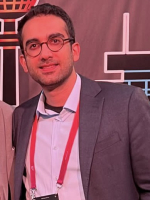
Dr Henry Moss is a Researcher at the Department of Applied Mathematics and Theoretical Physics within the School of Physical Sciences at the University of Cambridge. His work focuses on machine learning applications in climate modeling, Bayesian optimization, and Gaussian processes, bridging computational mathematics with environmental science and chemistry. His research interests include: Bayesian optimization for environmental and chemical systems Reinforcement learning in climate modeling Gaussian processes for molecular property prediction High-throughput machine learning in scientific domains Interpretable AI for coastal flooding prediction Hybrid ML-physics modeling Dr Moss's publications highlight his contributions to federated learning for climate models, sparse Gaussian process techniques, and multi-objective optimization frameworks. These works span applications in weather prediction, chemical engineering, and oceanography. Email: hwm26@cam.ac.uk
Stefano NASINI is an Associate Professor at the University of Lille 3, specializing in Quantitative Methods within the Economics and Mathematics Sciences. He holds a HDR (Habilitation à Diriger des Recherches) from the University of Lille 3 (2021), a Ph.D. in Statistics and Operations Research from the Polytechnic University of Catalonia (2015), and a Master in Statistics (2011). His research focuses on optimization, complex networks, statistical inference, and microeconomic applications. He has held academic positions including a post-doctoral role at IESE Business School (2014–2016) and a visiting researcher role at the University of Lisbon (2014). His work spans scheduling optimization, network analysis, financial contagion modeling, and energy system planning. Key contributions include specialized algorithms for large-scale optimization problems and frameworks for decentralized portfolio management. He is a member of the LEM research group and teaches courses in optimization, econometrics, and social network analysis at the Grande École and MSc levels. Publications highlight interdisciplinary applications, including network-based diffusion models, multi-market financial strategies, and dynamic choice analysis. His research bridges theoretical advancements in operations research with practical challenges in economics, energy, and transportation systems. No scientific awards are explicitly listed in the provided materials. His advising roles and grants are not detailed here, but his extensive publication record reflects active collaboration within academic and applied domains.
Mo Jiang is a Researcher in the Department of Chemical & Life Science Engineering at Virginia Commonwealth University's College of Engineering. His research focuses on advanced crystallization processes for energy storage materials and pharmaceutical manufacturing. He specializes in continuous manufacturing techniques such as slug-flow reactors, aiming to improve material uniformity, scalability, and process efficiency. His work bridges chemical engineering principles with practical applications in battery technology and drug substance development. Research Interests: Continuous crystallization and manufacturing systems Slug-flow synthesis of battery cathode materials Process optimization for pharmaceuticals and energy storage Scalable synthesis of uniform microcrystals His recent articles highlight advancements in low-cobalt/cobalt-free lithium-ion battery cathodes, pharmaceutical crystallization methods, and the application of computational fluid dynamics to enhance manufacturing processes. These studies emphasize improving material performance, reducing costs, and achieving sustainable production methods. While no formal academic awards are listed, his prolific publication record demonstrates expertise in interdisciplinary engineering solutions. He collaborates on projects involving process design, real-time monitoring, and the integration of advanced manufacturing technologies.
Rong Pan is a Professor at the School of Computing and Augmented Intelligence, Arizona State University (ASU). He holds a Ph.D. in Industrial Engineering from Pennsylvania State University (2002), an M.S. from Florida A&M University (1999), and a B.S. in Materials Science from Shanghai Jiao Tong University (1995). His research focuses on quality and reliability engineering, design of experiments, time series analysis, and statistical learning theory. Key projects involve NSF-funded research on reliability prediction, accelerated life testing, and degradation modeling. He serves as an Associate Editor for the Journal of Quality Technology and has authored over 80 publications. Courses taught include Reliability Engineering, Design of Experiments, and Statistics for Data Analysts. His academic service includes roles as a referee for IEEE Transactions and IIE journals. Research interests emphasize statistical methods for reliability improvement, with recent work on Bayesian inference models, optimal experimental design, and machine learning applications in industrial systems. Grants include collaborations with the NSF, Arizona Department of Transportation, and Science Foundation Arizona. His work bridges theoretical advancements and practical applications in manufacturing, energy systems, and semiconductor reliability. Education: Ph.D. (2002), M.S. (1999), B.S. (1995) Key Research Areas: Reliability Engineering, Bayesian Methods, Time Series, DOE Active Grants: NSF CMMI, SUNY IT Visiting Scholar Program Teaching: IEE 573 Reliability Engineering, DSE 501 Statistics Service: Journal of Quality Technology (Associate Editor), IEEE Transactions (Referee)
Prof. Dr. Sandra Transchel is a Full Professor of Supply Chain and Operations Management at Kühne Logistics University (KLU) in Hamburg, Germany. She has held this position since 2019, previously serving as Associate Professor (2011-2019) and Dean of Programs (2014-2015). Her academic journey includes appointments as Assistant Professor at Pennsylvania State University (2008-2011) and Visiting Assistant Professor at Tuck School of Business at Dartmouth (2011). Education includes: PhD in Business Administration, University of Mannheim (2008) Diploma in Business Mathematics, Otto-von-Guericke University Magdeburg (2004) Her research integrates supply chain management, inventory control, and revenue management with a strong focus on retail operations optimization and food supply chain sustainability . Key investigations examine perishable inventory systems, demand-supply synchronization, and substitution behavior. Current projects address food waste reduction through contract-based coordination in fresh food supply chains and development of urban food production networks (FabCity). Publications demonstrate consistent focus on inventory optimization under uncertainty, with recent work extending into pandemic impacts on humanitarian logistics and perishable inventory systems with lead-time variability. Research consistently bridges theoretical models with retail/manufacturing applications. Teaching includes Decision Analysis, Inventory and Warehouse Management, and Warehousing and Intralogistics across BSc, MBA, and MSc programs at KLU.
Ming Lu is a Professor in the Department of Civil and Environmental Engineering at the University of Alberta, Faculty of Engineering. Specializing in Construction Engineering and Management (CEM), he leads the Construction Automation Lab (AutoLab) since 2010, focusing on integration, automation, and optimization in construction. Dr. Lu holds professional engineering licensure (PEng) in Alberta and has extensive academic experience across Canada, Hong Kong, and China. PhD in Civil Engineering (University of Alberta, 2000) B.Eng. in Road & Traffic Engineering (Tongji University, 1994) His research spans Construction Automation , Project Scheduling , and Resource Optimization , with over 150 publications in top journals. Recent work emphasizes model trees , time-window constraints , and labor cost regression . Publications appear in Automation in Construction , Journal of Computing in Civil Engineering , and ASCE Journal of Construction Engineering and Management . Notable awards include the 2022/23 CSCE Stephen G. Revay Award , Fiatech STAR Award (2013) , and multiple Best Paper Awards from ASCE. His software tools like SDESA and S3 revolutionized construction simulation and resource-constrained scheduling. Dr. Lu supervised numerous graduate students in projects involving BIM applications , earthwork optimization , and steel fabrication scheduling . He developed key courses like CIV E 406 (Construction Estimating) and CIV E 607 (Productivity Modeling), integrating simulation-based learning into construction education.
Professor Aris Syntetos is a Distinguished Research Professor and DSV Chair of Logistics and Manufacturing at Cardiff Business School, Cardiff University. He is the founder and Director of the PARC Institute of Manufacturing, Logistics and Inventory, which includes the RemakerSpace, and leads the university’s strategic partnership with DSV. Previously, he held faculty positions at the University of Salford and Copenhagen Business School. His research focuses on the integration of forecasting and inventory optimization, particularly in the context of intermittent demand, spare parts, closed-loop supply chains, and additive manufacturing. He is renowned for the Syntetos-Boylan Approximation and the Syntetos-Boylan-Croston classification method. His work is driven by sustainability and social impact, aiming to reduce inventory obsolescence and support circular economies. The 15 most recent publications highlight a strong trend toward integrating forecasting with inventory and maintenance decisions, with increasing emphasis on sustainability, social good, and advanced analytics. His work spans healthcare, automotive, retail, and humanitarian logistics, often employing machine learning and empirical validation. 2024 Goodeve Medal (Operational Research Society) 2016 Cardiff University Outstanding Doctoral Supervisor Award 2016 & 2019 Cardiff University Innovation and Impact Awards He has secured over £5 million in research funding as Principal Investigator from EPSRC, Innovate UK, and the Welsh Government, leading projects on remanufacturing, 3D printing, and sustainable supply chains. He advises major firms like Ocado, BT, and DSV, and his methods are used in commercial software. He supervises PhD students and actively promotes knowledge transfer. He is Editor-in-Chief of the IMA Journal of Management Mathematics and serves as Vice-President of the International Society for Inventory Research (ISIR). He has taught in the UK, China, Colombia, Denmark, France, Greece, Italy, and Latvia, primarily in Operations Management and Applied Statistics.
Dr. Peyman Badakhshan is a Researcher at the Chair of Information Systems and Business Process Management at the University of Münster. His expertise spans Business Process Management, Process Mining, and Industrial Engineering. Educational background includes a PhD in Business/Managerial Economics from Universität Liechtenstein, an MSc in Information Systems, and an M.Eng. in Industrial Engineering. Research focuses on operationalizing process analytics across domains like supply chain, healthcare, and manufacturing. Recent work develops frameworks for agile BPM and process mining tools, with applications in medical training, emergency services, and industrial process optimization. Publications demonstrate consistent innovation in mapping business process landscapes, developing diagnostic instruments, and creating large-scale datasets for academic use. Research integrates methodologies from decision analysis, fuzzy logic, and pattern recognition to solve complex operational challenges.
Joel E. Cohen is the Abby Rockefeller Mauzé Professor at The Rockefeller University, where he leads the Laboratory of Populations. With over five decades of research experience, Cohen has pioneered innovative mathematical approaches to study biological populations and variability. His work bridges mathematics, biology, and environmental science, fundamentally changing how scientists understand population dynamics and the significance of biological variability. Dr. Cohen's research focuses on developing new mathematical tools to address population problems in demography, epidemiology, and ecology. He has made seminal contributions to the understanding of heavy-tailed distributions that describe extreme events like hurricanes and disease outbreaks, challenging traditional statistical approaches. His laboratory has conducted groundbreaking research on the spatial distribution of human populations in relation to geophysical factors, with unexpected practical applications ranging from soap formulation to semiconductor manufacturing. Cohen has also developed mathematical models for Chagas disease control in rural Argentina and created algorithms to predict international migration patterns. Analysis of Cohen's recent publications reveals a sustained focus on Taylor's law of fluctuation scaling, population dynamics, and ecological statistics. His work consistently demonstrates how abstract mathematical concepts can transform our understanding of biological systems, from cellular processes to global population trends. The research spans theoretical mathematics to practical applications in disease control, conservation biology, and environmental management. Olivia Schieffelin Nordberg Prize for excellence in writing in the population sciences (March 1997) Gheorghe Lazar Prize of Romanian Academy (December 2000) As director of the Laboratory of Populations, Cohen has led research on human population growth, infectious diseases, food webs, and international migration. His methods for assessing the uncertainty of population projections have been applied in court cases for predicting future claimants of asbestos-related diseases. Cohen's laboratory has collaborated with the United Nations Population Division on migration studies and developed mathematical models that account for more than half of the variability in annual migration numbers among 229 countries. Current research directions include understanding how demographic, economic, and cultural changes interact with Earth's physical, chemical, and biological environments. The Laboratory of Populations employs a multidisciplinary approach that combines mathematical modeling, statistical analysis, and field studies to address complex population issues. Their work exemplifies how basic quantitative research on populations frequently yields unexpected practical applications, demonstrating the profound connections between theoretical mathematics and real-world challenges in public health, environmental science, and resource management.
Dr. Michael Charles is an Assistant Professor in the Department of Biological and Environmental Engineering at Cornell University, holding affiliate status in the American Indian and Indigenous Studies Program (AIISP) and serving as a Faculty Fellow at the Cornell Atkinson Center for Sustainability. He is also a Cornell Provost’s New Faculty Fellow (2024) and an Engaged Faculty Fellow (2024). His research focuses on computational sustainability frameworks, integrating dynamic ecological models with community-centered approaches, particularly through partnerships with Indigenous nations. He advocates for Indigenous rights in UN climate negotiations and emphasizes reciprocity and balance in environmental engineering. Charles earned his B.S. in Chemical and Biomolecular Engineering (CBE) from Cornell University and his M.S. and Ph.D. in CBE from The Ohio State University. His postdoctoral work at the Newark Earthworks Center analyzed historical ties between Land Grant Universities and Indigenous dispossession. His lab collaborates on projects such as the NORDvik database in Nunavik and participatory system dynamics modeling to address food systems inequities. He advises graduate students Lesedi Kgatla, Parsa Khayatzadeh, and Ashira Mawji, along with undergraduate researchers Pranati Patnam, Peter Thais, and Jeffrey Wang. Key research themes include spatially explicit nature-based solutions, ecosystem services for public health and well-being, and re-evaluating computing’s sustainability via the Food-Energy-Water nexus. His work bridges institutional science with Indigenous knowledge systems, aiming to transform policy and practice through actionable research. Notable awards include the 2025 Community-Engaged Practice and Innovation Award for his impactful collaborations. Advising and advocacy efforts span mentoring Indigenous STEM students and advancing equity in food systems through initiatives like the Chicago convening on racism in food systems. His lab’s partnerships with Attaniuvik, Laval University, and other institutions exemplify his commitment to community-driven science. Future work involves expanding NORDvik’s consultation workshops and deepening system dynamics models that center racial equity in environmental decision-making.
Dr. Andrés Modesto Alonso is an Associate Professor in the Department of Statistics at Universidad Carlos III de Madrid, affiliated with the Energy Analytics research group and Flores de Lemus Institute. His work spans computer science, economics, and statistics through advanced time series analysis and energy forecasting methodologies. Primary affiliation: Department of Statistics, UC3M Research groups: Energy Analytics, Flores de Lemus Institute His research focuses on time series analysis , energy forecasting , and statistical clustering with applications in electricity markets, smart grids, and environmental data. Recent publications emphasize deep learning models for energy prediction, dynamic factor models, and market-based distance metrics. Scientific output trends show 15 recent articles (2018-2024) covering topics like: Electricity market price forecasting Smart grid optimization through clustering Adaptive control charts for industrial processes Precision matrix estimation in high-dimensional statistics Extreme value analysis for environmental monitoring Dr. Alonso has supervised multiple theses on time series modeling and classification techniques, while collaborating on grants related to stochastic optimization and responsible AI applications in economic forecasting.
Prof. Sea Jin Chang is the Lim Kim San Chair Professor at the National University of Singapore (NUS) Business School , with a career spanning institutions like Wharton, NYU Stern, and KAIST. His research focuses on multinational firm strategy , executive redeployment , and corporate governance in business groups , particularly in East Asia. Education: PhD in Strategic Management from Wharton, MA/BA in Economics from Seoul National University Research: Explores resource allocation , political strategy dynamics , and executive mobility in diversified firms Books: Sony vs. Samsung , Rise and Fall of Chaebols , and Multinationals in China His 15 most recent publications span topics like executive redeployment in Korean business groups , CEO approval ratings , and dynamics of resource allocation in semiconductors . He has held editorial roles at the Strategic Management Journal and Journal of International Business Studies , and his awards include Fellowships from the Strategic Management Society and Academy of International Business.
Philipp Pithan is affiliated with WHU – Otto Beisheim School of Management, where he conducts research in operations and production management. His work focuses on improving efficiency in mixed-model assembly systems through innovative takt time strategies. His research interests lie at the intersection of industrial engineering and lean manufacturing, particularly in managing variance within high-mix production environments. He explores how flexible operational designs—such as variable takt times, circular assemblies, and parallel stations—can enhance line utilization and profitability under conditions of product individualization. The central theme across his recent research is the optimization of manufacturing systems through analytical modeling and practical implementation levers. His work demonstrates the superiority of variable takt over fixed takt under general conditions, contributing to both theoretical understanding and real-world applications in production management. Philipp Pithan actively contributes to academic discourse by presenting at international conferences such as the MSOM Conference. His research is aligned with modern challenges in mass customization and Industry 4.0 production paradigms.
Prof. Dr. Sven Völker is a faculty member at Technische Hochschule Ulm , affiliated with the Faculty of Production Engineering and Production Management and the Institute for Business Organization and Logistics (IBL) . He specializes in technologies for Industry 4.0 , with a focus on material flow simulation, digital factory design, and optimization methods in production planning and control. Teaches Enterprise Information Systems and Digital Factory Planning in the Systems Engineering and Management program. Active in simulation-based optimization and digitalization scenarios for logistics and manufacturing systems. Research Interests: His work bridges industrial engineering and computer science , emphasizing simulation tools, ERP systems, and lifecycle management of digital models. Recent publications explore Machine Learning applications in production planning, OPC UA communication for logistics systems, and augmented reality in manufacturing demonstrations. Publications: His research spans 2010–2023, covering simulation-based optimization of supply networks, discrete-event modeling, and Industry 4.0 integration. Keywords include Operations Research , Robotics , and Digital Twins , with sub-fields like Logistics Automation and Flexible Manufacturing . Memberships: Institute for Higher Education Didactics (IHD) Institute for Applied Research (IAF)
Andrea Barbarulo is a researcher at the University of Paris-Saclay Mechanics Laboratory, specializing in computational mechanics and acoustics. His work focuses on advanced numerical methods such as Proper Generalized Decomposition (PGD), Variational Theory of Complex Rays (VTCR), and finite element methodologies applied to vibration analysis, acoustic modeling, and additive manufacturing. He has pioneered developments in mid-frequency vibration modeling for railway systems and 3D-printed synthetic materials. Key Expertise: PGD-based model order reduction, vibro-acoustic coupling, ultrasonic imaging, and computational material science Lab Affiliation: Paris-Saclay Mechanics Laboratory His research addresses challenges in railway track dynamics, noise propagation, and medical applications of 3D printing through innovative numerical frameworks. Recent work includes open-source software (pyTVRC) for medium-frequency simulations and high-fidelity models for patient-specific anatomy replication. Collaborative projects span disciplines including aeroelastic systems, laser powder bed fusion, and material characterization for biomedical applications. Current focus areas involve advancing digital twin technologies for additive manufacturing and improving accuracy in transient thermal simulations.