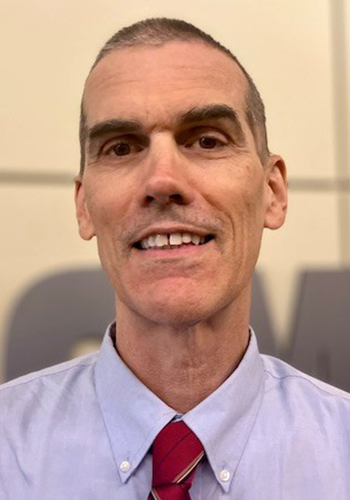
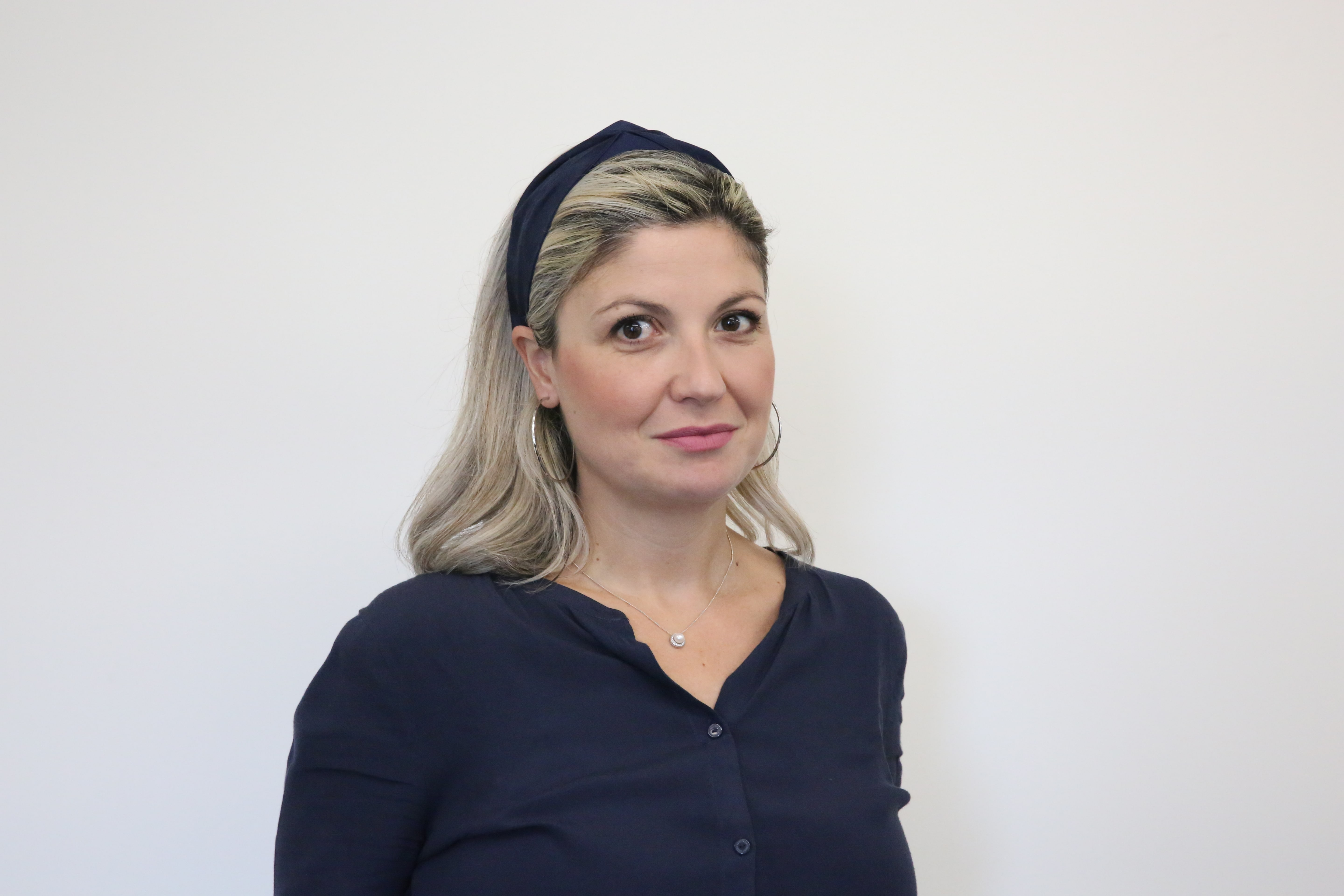
Carly Leonard is Associate Professor of Psychology at the University of Colorado Denver, specializing in cognitive neuroscience within the Department of Psychology. Her research examines visual attention, working memory, and cognitive dysfunction in schizophrenia. Research explores the cognitive neuroscience of visual attention through eye-tracking and ERP studies. Current work investigates saccadic behavior, attentional selection, and working memory distortions across clinical and non-clinical populations. Publications focus on eye movement patterns, attentional mechanisms, and working memory impairments, particularly in schizophrenia. Recent studies examine how attention modulates saccadic behavior during visual search tasks.
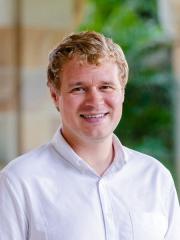
Dr. Ruben Laukkonen is a Senior Lecturer (Associate Professor equivalent) in cognitive science and computational neuroscience at Southern Cross University, with honorary fellowships at Vrije Universiteit Amsterdam and The University of Queensland. His award-winning research integrates neural, psychological, and computational approaches to study meditation, insight, and consciousness. Research highlights: Bayesian models of advanced meditation states Mechanisms of true/false insight experiences Neural correlates of consciousness using EEG/Machine Learning Chief Investigator on Australia's largest psychedelic clinical trial ($4M funding) He publishes in leading journals, speaks internationally, and consults for the OECD on AI and education. His work explores rare states of consciousness across multiple explanatory levels, from neural dynamics to subjective phenomenology. Laukkonen received the 2024 Mid-Career Researcher Award for Research Excellence.
Howard Gifford is an Associate Professor in the Department of Biomedical Engineering at the University of Houston, part of the Cullen College of Engineering. His research focuses on biomedical image formation and system design, particularly in medical imaging technologies such as PET/SPECT and X-ray imaging. He explores how humans extract information from images, emphasizing the optimization of imaging systems for decision-making in clinical settings. Dr. Gifford holds a Ph.D. in Applied Mathematics from the University of Arizona (1997) and a Bachelor’s in Applied Physics from Harvey Mudd College. Before joining UH in 2012, he was an Associate Professor of Radiology at the University of Massachusetts Medical School. His professional affiliations include SPIE and the Medical Imaging Perception Society. His research interests include task-based technology assessment, visual perception variability, and reconstruction algorithms for PET/SPECT. Key areas of application involve optimizing tomographic gamma-ray imaging and x-ray imaging for breast cancer detection. Recent work emphasizes model observers for medical image quality assessment and adaptive feature selection strategies. Dr. Gifford’s publications span model observer development, image reconstruction techniques, and optimization of imaging parameters. He currently offers postdoctoral research opportunities in medical imaging science.
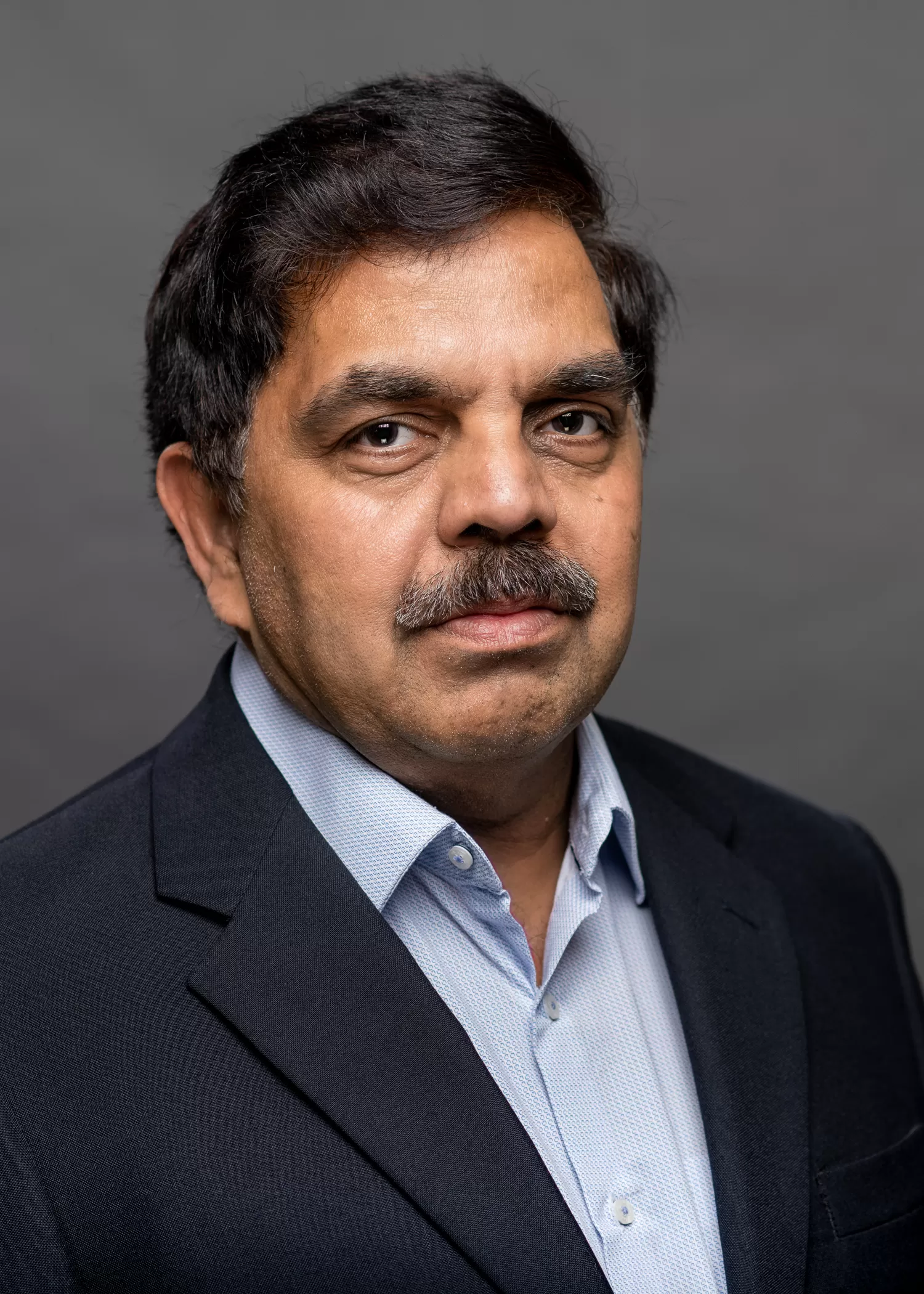
Asokan Variyath is a Professor of Statistics at Memorial University of Newfoundland, specializing in experimental design, statistical process control, and educational statistics. Education: Ph.D. in Statistics, University of Waterloo (2006) S.D.P Fellow (SQC & OR), Indian Statistical Institute (1991) Post Graduate Diploma in SQC & OR, Indian Statistical Institute (1988) M.Sc. Agricultural Statistics, Kerala Agricultural University (1987) Research Interests: Develops novel statistical methods in experimental design, quality control, and multivariate analysis. Applied research spans fisheries management, reliability engineering, and computational statistics. Created educational statistical applets to enhance student learning. Publication Trends: Recent publications focus on Bayesian methods, statistical education tools, and applications in fluid dynamics. Methodological work emphasizes variable selection, longitudinal data analysis, and nonparametric techniques. Leadership: Director of Statistical Consultancy Centre since 2010. Former Chair of Master of Data Science program and Deputy Head for Graduate Studies. Received Dean's Service Awards in 2023 and 2024.
Christine A. Pomeroy is an Associate Professor in the Department of Civil and Environmental Engineering at the University of Utah. She specializes in stormwater management, green infrastructure, and urban watershed sustainability, with a focus on semi-arid climates and hydrologic modeling. B.S., Civil Engineering, Michigan State University (1995) M.S. and Ph.D., Civil Engineering, Colorado State University (2004, 2007) Her research integrates environmental engineering , hydrology , and ecology to address urban water challenges. Key trends in her scholarly work include: Optimizing green infrastructure for semi-arid regions Quantifying stormwater runoff reduction via rainwater harvesting Developing eco-hydrological protocols for urban streams Notable scientific awards include: Educator of the Year (ASCE Utah Section, 2020) Outstanding Faculty Advisor (ASCE, 2019) Outstanding Faculty Award (University of Utah, 2017)
Skyler G. Jennings, Au.D., Ph.D., serves as an Adjunct Professor in the Department of Surgery at the University of Utah. His academic work focuses on auditory neuroscience and audiology, specifically investigating speech perception mechanisms in noisy environments and the role of the medial olivocochlear reflex in auditory adaptation. Dr. Jennings completed his undergraduate education at the University of Utah and Utah State University, followed by graduate studies at Purdue University where he earned his master's degree, clinical doctorate in Audiology (Au.D.), and Ph.D. His research program centers on understanding how the auditory system calibrates to changing acoustic soundscapes, with particular emphasis on why individuals with cochlear hearing impairment struggle to adapt due to compromised outer hair cell function affecting efferent feedback mechanisms. Analysis of his 14 publications (2009-2019) reveals consistent investigation into auditory processing in noise, cochlear mechanics, and hearing loss effects. Key research themes include amplitude modulation detection, overshoot phenomena, auditory filter tuning, and computational modeling of individual differences. His work demonstrates how notched-noise precursors improve low-frequency modulation detection and reveals sharper cochlear tuning in musicians, with significant implications for hearing assistive technologies. Dr. Jennings has contributed to methodological advancements in auditory research through the development of the PsyAcoustX MATLAB toolbox for psychoacoustic experimentation. His collaborative research with investigators including Bidelman, Strickland, and Dubno spans auditory neuroscience, computational modeling, and clinical audiology applications.
Soutir Bandyopadhyay is a Professor in the Department of Applied Mathematics and Statistics at Colorado School of Mines. He holds a PhD in Statistics from Texas A&M University, an M.Stat from the Indian Statistical Institute, and a B.Sc in Statistics from St. Xavier’s College. His research focuses on spatial and environmental statistics, time series analysis, bootstrap methods, and large sample theory, with applications in energy systems, climate science, and machine learning. Recent work includes advancements in spatial extremes modeling using neural networks, risk analysis in oil and gas flowlines, and statistical frameworks for energy load forecasting. He has organized major conferences including the 2023 IISA Annual Conference and the 2024 workshop on uncertainty in civil/environmental systems. As Director of the Data Science Program at Mines since 2025, he leads interdisciplinary initiatives. Key contributions include development of the National Climate Database (NCDB), bias-correction methods for solar radiation data, and R packages like glmfitmiss for handling missing data in GLMs. His students have achieved notable recognitions, including Fulbright awards and ASA competition honors.
Ted Juhl is the O. Maurice Joy Professor and Area Director of Finance at the University of Kansas School of Business. His research focuses on econometric methodologies, particularly in time series analysis, nonparametric models, panel data, and quantile regression. He has contributed to understanding slope heterogeneity in panel data models and testing for structural stability in econometric frameworks. His work bridges theoretical econometrics with practical applications in finance and policy analysis. His research interests emphasize advancing methodologies for analyzing complex economic and financial datasets, including cointegration analysis, predictive regression, and model diagnostics. Notable contributions include addressing issues of heteroskedasticity in fixed effects models and evaluating the impact of R&D funding on scientific productivity in academic chemistry. Recent publications explore topics like rolling regression estimator distributions, policy heterogeneity in corporate finance, and the implications of cross-sectional correlation in panel data. While no specific awards are listed, his extensive publication record reflects sustained scholarly impact in econometric theory and applications. Teaching focuses on econometrics at the graduate level, aligning with his research expertise. His professional address is Capitol Federal Hall, Room 4113, Lawrence, KS. No advising or grant details are explicitly stated in the provided materials.
Ingrid O'Brien is a Lecturer in Marketing at the Murdoch Business School within the College of Business at Murdoch University, Australia. She also serves as Director of Postgraduate Coursework, overseeing advanced degree programs. Her research focuses on marketing management, customer engagement strategies, value co-creation, and the role of business networks in fostering social initiatives. Dr. O'Brien holds a Doctor of Philosophy (2010–2015) and a Master of Commerce (2000–2002) in Marketing from the University of Western Australia. Her work emphasizes the intersection of corporate social responsibility (CSR) and customer relationships, exploring how organizations can leverage CSR initiatives to enhance loyalty through strategic engagement. Her research interests include customer mobilization in CSR programs, utility theory applications for engagement modeling, and the impact of social issue preferences on organizational strategies. Notable contributions include frameworks for integrating social issues into customer loyalty programs and typologies for measuring CSR preferences across industries. In 2023, she received the Vice Chancellor Leadership Excellence Award from Murdoch University for her academic and leadership contributions. Her work frequently examines cross-organizational comparisons of advocacy programs and community initiatives, particularly in sporting and service-oriented contexts. Dr. O'Brien’s research has been published in leading journals, spanning topics from deeper learning expectations in education to fan-base loyalty in sports organizations. Despite no explicitly listed grants or advising roles, her focus on actionable strategies for value co-creation positions her as a key contributor to modern marketing theory.
Professor Jennifer A. Bartz is a faculty member in the Department of Psychology at McGill University, within the Faculty of Science. Her research focuses on the biological and situational factors influencing prosocial behavior, with a particular emphasis on attachment theory, oxytocin mechanisms, and social impairments in psychiatric disorders like autism and borderline personality disorder. She employs interdisciplinary methods from social psychology, neuroscience, and psychopharmacology. Her work explores how neurobiological systems (e.g., opioid and oxytocin pathways) interact with individual differences and environmental contexts to shape empathy, trust, and relationship dynamics. The Bartz Lab investigates topics such as gene-environment interactions in attachment, stress effects on social cognition, and pharmacological interventions for social dysfunction. Notable contributions include studies on oxytocin’s dual role in promoting or hindering cooperation depending on personality traits. Recent research highlights include examining opioid receptor gene (OPRM1) influences on maternal-child attachment, sex-specific effects of stress on empathy, and CD38’s role in communal behaviors. Her findings bridge basic science and clinical applications, aiming to improve treatments for social deficits in psychiatric populations. Collaborations span genetics, neuroimaging, and behavioral experiments, with a focus on translational outcomes. She has published extensively in high-impact journals like Psychological Science , Translational Psychiatry , and Current Directions in Psychological Science , and maintains an active research program supported by grants from Canadian and international funding agencies.
Dr Christiern Rose is a Senior Lecturer in the School of Economics at The University of Queensland (UQ), within the Faculty of Business, Economics and Law. He holds a PhD in Economics from the University of Bristol (2016) and completed a post-doctoral fellowship at Toulouse School of Economics. His research focuses on applied microeconometrics with emphasis on peer effects, high-dimensional econometrics, health economics, and illicit drug markets. He is affiliated with the Centre for Efficiency and Productivity Analysis. Education: PhD in Economics, University of Bristol (2016) Post-doctoral Research, Toulouse School of Economics (2016–2018) Joined UQ in 2017 Research Interests: Dr Rose investigates peer effects in social networks, health economics (including mental health, healthcare utilization, and aging populations), and the economics of illicit drugs. He develops econometric methods for high-dimensional data and network analysis, with applications to policy evaluation and social spillovers. Research Trends: His work bridges theoretical econometrics and empirical policy analysis, often using advanced statistical techniques to address causal questions. Recent studies explore housing insecurity’s mental health impacts, physician networks’ influence on innovation adoption, and the role of social peers in addiction recovery. Grants & Supervision: Leading the ARC Discovery Project Understanding macroeconomic fluctuations with unobserved networks (2022–2025) Available for PhD supervision in health economics, network econometrics, and applied microeconometrics Labs/Teams: Affiliate of the Centre for Efficiency and Productivity Analysis, collaborating on productivity measurement and efficiency analysis methods.
Dr. John Coull is an Associate Professor in the Department of Engineering Science at the University of Oxford. His research focuses on turbine aerodynamics, heat transfer, fluid dynamics, and measurement techniques using MEMS sensors. He holds a PhD from the University of Cambridge and served as a Rolls-Royce Senior Research Fellow at Magdalene College, Cambridge (2010–2019). His educational background includes a BA and MA in Engineering from the University of Cambridge, followed by an MEng and PhD. His doctoral work explored unsteady boundary layer transition in low-pressure turbine engines and its impact on design. Key research interests include turbine blade aerothermal performance, cooling slot design, and the application of MEMS sensors for fluid flow measurement. His work addresses challenges such as manufacturing variability, boundary layer transition, and turbine efficiency optimization. Dr. Coull’s research has been applied to improve turbine blade designs, cooling systems, and sensor technologies. He is affiliated with the Southwell Laboratory at Oxford and collaborates with industry partners like Rolls-Royce.
Natalia Komarova is an Adjunct Professor in the Department of Mathematics at the University of California, Irvine. Her research focuses on applying mathematical and computational methods to biological systems, particularly in evolutionary dynamics, cancer modeling, and viral infections. She holds a faculty position in the mathematics department with affiliations spanning applied mathematics, computational biology, and complex social phenomena modeling. Her academic work integrates mathematical modeling with empirical data to address questions in virology, oncology, and ecology. Notable research interests include the evolutionary spread of advantageous variants in epidemics, spatial population structures, and the role of aspirin in cancer chemoprevention mechanisms. Her studies often involve interdisciplinary collaborations, combining computational simulations with experimental data analysis. Recent publications highlight investigations into HIV persistence, biofilm dispersal mechanisms, and the impact of spatial dynamics on mutant evolution. Her work on viral recombination, cell-to-cell transmission, and cancer stem cell regulation demonstrates a commitment to translating mathematical insights into biomedical applications. Dr. Komarova has contributed to understanding the role of hot zones in SARS-CoV-2 transmission dynamics and developed models for predicting viral strain evolution under human behavioral interventions. Her research bridges abstract mathematical frameworks with concrete biological phenomena, yielding insights into both fundamental science and applied health challenges.
Thomai Filippeli is a Professor in the School of Economics and Finance at Queen Mary University of London since 2013. Previously, she held a lectureship at the University of Buckingham. Her research focuses on international macroeconomics and applied econometrics, particularly examining foreign uncertainty shocks, monetary and fiscal policy implementation, financial frictions, exchange rates, and inflation differentials in monetary unions. Her research interests include macroeconomics, international economics, econometrics, and quantitative methods. Notable work explores how external uncertainties influence policy decisions and the interplay between financial systems and macroeconomic variables like exchange rates. She has contributed to understanding inflation dynamics within the European Monetary Union (EMU) through time-series analysis. Dr Filippeli has published in prestigious journals such as Advances in Econometrics , Econometrics and Statistics , and Empirical Economics , with a focus on Bayesian methods and DSGE/BVAR model integration. While no awards are explicitly listed, her academic contributions reflect significant scholarly impact. Her work often bridges theoretical frameworks with empirical analysis, addressing practical policy questions in global and national economies. Office hours are available by appointment in Room GC519.
Teresa E. Steele is a Professor in the Department of Anthropology at the University of California, Davis. Her research focuses on Middle and Late Pleistocene archaeology, particularly the behavioral evolution of humans and Neandertals in Europe and Africa. She investigates subsistence strategies, technological innovation, and demographic changes using zooarchaeological methods. Key research locations include South Africa, Morocco, and France. Education : Ph.D., Anthropology, Stanford University, 2002 A.M., Anthropology (Human Biocultural Evolution), Stanford University, 1998 B.S., Anthropology & Human Biology, Emory University, 1996 (summa cum laude) Research Interests : Steele explores the emergence of modern human behaviors, including cultural and technological advancements that enabled Homo sapiens to displace Neandertals. Her work combines zooarchaeology with environmental and demographic analyses to understand subsistence patterns and ecological adaptations. She emphasizes the Middle Stone Age in Africa and the Middle Paleolithic in Europe, focusing on faunal remains and shell ornaments as evidence of cognitive and social complexity. Awards : 2020 Graduate Program Advising and Mentoring Award 2014–2019 UC Davis Chancellor’s Fellow 2016–2017 Faculty Development Award 2011 Phi Beta Kappa Excellence in Teaching Award Teaching : Courses include Introduction to Archaeology, European Prehistory, Zooarchaeology, and advanced methodological training in archaeological proposal writing. She emphasizes fieldwork techniques and interdisciplinary approaches in her teaching. Labs/Teams : Leads the UC Davis Paleoanthropology Lab, focusing on faunal analysis and archaeological material studies. Collaborates with international teams on projects in Morocco, South Africa, and France.