
Ken B. Johnson, MD, MS is a Professor in the Department of Anesthesiology at the University of Utah School of Medicine, where he has served on faculty since completing residency in 1999. His clinical expertise spans regional anesthesia, acute pain management, processed electroencephalogram monitoring, and neuromuscular blockade monitoring. His research program focuses on: Genetics and epigenetics of pain pathways Clinical pharmacology of anesthetic agents Medical device development for monitoring and simulation Simulation-based experiential learning for all medical trainees Analysis of his 15 most recent publications reveals dominant themes in pharmacokinetic-pharmacodynamic modeling (40% of works), opioid-related pain management (30%), and innovative monitoring techniques (20%). His work consistently bridges basic science with clinical applications, particularly in trauma scenarios and perioperative optimization. Professional recognition includes: Editorial board membership for Anesthesia and Analgesia Leadership in American Society of Anesthesiologists Simulation Education Role as standardized oral board examiner for American Board of Anesthesiology Dr. Johnson's educational leadership extends to curriculum development for medical students through faculty, with emphasis on simulation-based training for airway management and crisis response. His collaborative research spans multiple departments including Orthopedics and Pharmacology, with recent focus on genetic determinants of pain response in joint replacement patients.
جستوجوی استاد و پژوهشگر
استاد راهنما، استاد دانشگاه یا پژوهشگر مناسب برای مسیر پژوهشیتان را پیدا کنید و با او ارتباط بگیرید.
نمایش ۶۱-۷۵ از ۱٬۶۹۷ استاد راهنما
اطلاعات این پروفایلها از صفحات عمومی دانشگاهها جمعآوری شده و ممکن است بهروز نباشد.
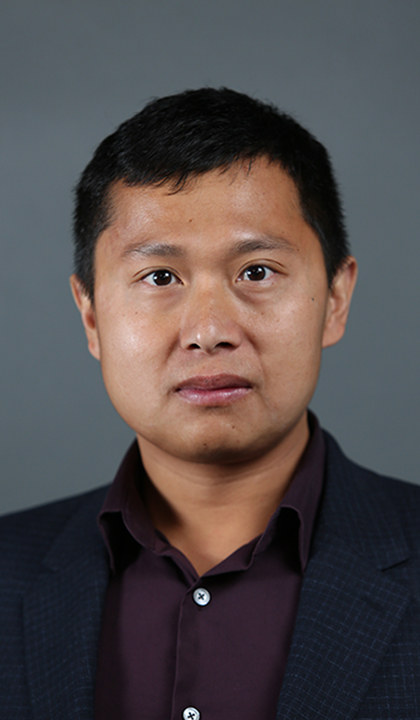
Kenan Liمشاهده پروفایل
دانشیار
Kenan Li, Ph.D., is an Associate Professor in the Department of Epidemiology and Biostatistics at Saint Louis University’s College for Public Health and Social Justice. He joined SLU in August 2022 and teaches courses such as Statistical Learning, R for Spatial Analysis, and Environmental Determinants of Health. His research bridges data science, GIS, and public health, focusing on spatial computation, environmental exposures, and community resilience. Ph.D. in Environmental Sciences, Louisiana State University M.S. in Environmental Sciences, Louisiana State University B.S. in Environmental Sciences and Applied Mathematics, Nankai University, China Dr. Li’s research interests lie at the intersection of spatial computation, environmental health, and community resilience . He develops geo-AI frameworks , integrated geo-cyber-infrastructures , and biostatistics algorithms using big data, deep learning, and sensor data. His work emphasizes understanding human-environment interactions, urban sustainability, and health disparities. His recent publications from 2023 to 2015 reveal a strong trend in spatial modeling of population dynamics , machine learning for environmental exposure analysis , and resilience assessment in vulnerable coastal regions. He has pioneered methods like Dynamic Time Warping Self-Organizing Maps and Wavelet-based Shapelet Discovery to extract meaningful patterns from high-frequency sensor data. His scientific awards include the Taylor Geospatial Institute Seed Grant (2023) , the Saint Louis University 2023 Health Research Grant , and selection for the Scholarly Undergraduate Research Grants and Experiences . He has secured funding from NSF, NIH, USC Keck School of Medicine, and the US Army Corps of Engineers. Dr. Li has advised and collaborated on numerous research projects, particularly in interdisciplinary teams studying the Mississippi River Delta and urban health interventions. He has been involved in NIH/NIBIB-funded projects and led research on emergency management of trail systems in Los Angeles County. He is actively involved in building research labs and teams focused on spatial data science and public health analytics , having previously worked at USC’s Spatial Sciences Institute and Population and Public Health Sciences Department.

Mahmoud Moradi is a Professor of Physical Chemistry at the University of Arkansas, holding the distinguished position of Bruker Analytical Science Professor in the Department of Chemistry & Biochemistry within the College of Arts & Sciences. With a strong background in physics and computational chemistry, he leads the Biomolecular Simulations Lab (BioSimLab) focusing on protein dynamics and membrane transport mechanisms. Education: Ph.D. in Physics from North Carolina State University M.Sc. in Physics from Sharif University of Technology, Iran B.Sc. in Physics from Sharif University of Technology, Iran Postdoctoral Associate at Beckman Institute and Department of Biochemistry, University of Illinois at Urbana-Champaign (2011-2015) Professor Moradi's research centers around two inter-related questions: (i) how do proteins function by changing their conformation and undergoing concerted motions? and (ii) how can we simulate these functionally important conformational changes at an atomic level? His lab develops and employs Molecular Dynamics (MD) based enhanced sampling techniques to tackle both problems. They are particularly interested in the study of large-scale conformational changes of proteins such as those involved in membrane transport and signal transduction. A novel combination of nonequilibrium and equilibrium MD based techniques are employed to reconstruct the slow biomolecular processes such as inward- to outward-facing structural transition of membrane transporters at an atomic level. This research has implications for understanding disease mechanisms at a molecular level and improving computational methodologies for biomedically relevant applications. Professor Moradi's recent publications demonstrate a strong focus on membrane protein dynamics, particularly examining cholesterol-protein interactions, GPCR mechanisms, and membrane transporter functions. His work increasingly integrates experimental and computational approaches, with a notable emphasis on SARS-CoV-2 spike protein dynamics during the pandemic years. The publications consistently apply advanced molecular dynamics techniques to investigate protein conformational changes, with growing applications in drug delivery systems and computational drug design. Scientific Awards: NIH MIRA (R35) Award, 2022-2027 (as PI): Physics-based characterization of functionally relevant protein conformational dynamics NSF I-Corps Award, 2021-2022 (as PI): Physics-Based Binding Affinity Estimator NSF CAREER Award, 2020-2025 (as PI): Riemannian Reformulation of Collective Variable Based Free Energy Calculation Methods NIH R15 Grant, 2020-2023 (as PI): Molecular Characterization of the Influenza Hemagglutinin Mediated Membrane Fusion DOE Grant, 2020-2023 (as co-PI): Protein Targeting to the Chloroplast Thylakoid Membrane NSF HDR Grant, 2019-2022 (as PI): Atomic Level Structural Dynamics in Catalysts Connor Endowed Faculty Fellowship, 2018 Fulbright College Outstanding Researcher Award for 2023/24 academic year Professor Moradi has successfully mentored numerous graduate students through their PhD programs, with recent graduates including Ehsaneh Khodadadi, Shadi Badiee, and Ugochi Isu. His research is supported by substantial grants from NIH, NSF, and DOE, totaling millions of dollars in funding. His NIH MIRA award represents a significant long-term commitment to his research program, while his NSF CAREER award recognizes both research excellence and educational contributions. The Biomolecular Simulations Lab at the University of Arkansas is a vibrant research group that combines computational and experimental approaches to study protein dynamics, maintaining strong collaborations with experimental groups both within the university and at other institutions.

Nate Apathyمشاهده پروفایل
استادیار
Nate Apathy is an Assistant Professor of Health Policy & Management at the University of Maryland School of Public Health and an Affiliated Research Scientist at the Regenstrief Institute. He holds a PhD in Health Policy & Management from Indiana University (2020) and completed a postdoctoral fellowship in health services research at the University of Pennsylvania (2022). His research focuses on health information technology's role in healthcare delivery reform, regulatory impacts on health IT innovation, and the use of EHR metadata to assess care quality. He examines organizational strategies to reduce IT-based burdens, particularly in primary care and specialty settings. His work bridges health policy, services research, and informatics, with emphasis on EHR documentation dynamics, clinician workflows, and interoperability challenges. Notable studies include analyses of physician EHR time allocation, telemedicine integration, and the impact of team-based documentation tools. He has contributed to national discussions on electronic health record legal settlements, opioid prescribing guidelines, and nursing home post-acute care specialization. Nate’s research has been published in journals such as Health Affairs , Annals of Internal Medicine , and Journal of the American Medical Informatics Association . He collaborates with institutions like the Leonard Davis Institute of Health Economics and focuses on translating informatics insights into actionable policy recommendations.
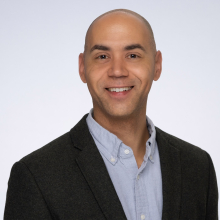
Philippe Dixonمشاهده پروفایل
استادیار
- Biomechanics
- Neuroscience
- Machine Learning
- +۳ مورد دیگر
Dr. Philippe Dixon is an Assistant Professor in the Department of Kinesiology & Physical Education at McGill University, with a division in Biomechanics and Neuroscience. He holds adjunct professor roles at the University of Montreal (School of Kinesiology and Physical Activity Sciences) and the University of Laval (Department of Kinesiology). His research focuses on human movement biomechanics using motion capture systems and wearable sensors, combined with machine learning for health and athletic performance optimization. He has expertise in gait analysis, muscle coactivation patterns in cerebral palsy, and predictive modeling of physiological states. Dr. Dixon earned a Post-doctoral fellowship in Public Health at Harvard University, a PhD in Engineering Science from the University of Oxford, and dual degrees in Biomechanics and Physics from McGill University. His education includes a Bachelor of Education in Mathematics and Physics (McGill), a Master of Science in Biomechanics (McGill), and a PhD in Engineering Science (Oxford). He has received grants such as the NSERC Discovery Grant (2022–2027) and the FRQSC AUDACE Grant (2022). His work emphasizes wearable sensor integration, with contributions to datasets like NACOB and tools like OpenOFM. He currently supervises Master’s and PhD students in biomechanics and machine learning applications. Key research themes include gait adaptations on uneven surfaces, machine learning for cough detection via smart garments, and musculoskeletal coordination in clinical populations. His articles span biomechanical modeling, wearable sensor validation, and neuro-musculoskeletal analysis, reflecting interdisciplinary innovation in human movement science.
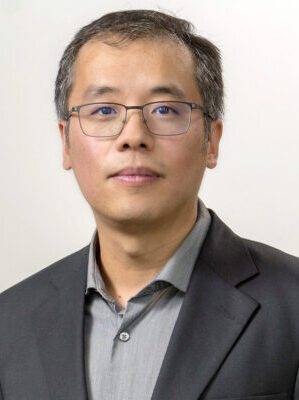
Lexin Li is a Professor in the Department of Biostatistics and Epidemiology at the University of California, Berkeley School of Public Health, with additional affiliations at the Helen Wills Neuroscience Institute, the UC Berkeley-UCSF Joint Program on Computational Precision Health, and the Center for the Theoretical Foundations of Learning, Inference, Information, Intelligence, Mathematics and Microeconomics at Berkeley (CLIMB). He received his BE in Electrical Engineering from Zhejiang University (1998) and PhD in Statistics from the University of Minnesota (2003), followed by postdoctoral training at UC Davis School of Medicine. He joined North Carolina State University as Assistant Professor in 2005, was promoted to Associate Professor in 2011, and served as visiting faculty at Stanford University and Yahoo Research Labs (2011-2013) before joining UC Berkeley as Associate Professor in 2014, where he was promoted to Full Professor in 2018. Dr. Li's research spans statistical methodology development for neuroimaging data analysis, tensor statistics, and machine learning applications to biomedical problems. His work focuses on brain connectivity and network analysis, imaging causal inference, tensor regression, dimension reduction, and statistical machine learning with applications to Alzheimer's disease, Parkinson's disease, and other neurological disorders. His methodological innovations bridge theoretical statistics with practical neuroscience applications, particularly in multimodal neuroimaging analysis and brain network modeling. His recent publications demonstrate a strong trajectory in integrating deep learning with classical statistical inference, particularly in tensor analysis, functional data modeling, and causal inference. The research shows increasing sophistication in handling high-dimensional, complex neuroimaging data while developing rigorous statistical frameworks for inference. His work increasingly focuses on multimodal data integration and developing methods that can handle the complexity of real-world neurological data. Dr. Li has received numerous prestigious honors including being elected as a Fellow of the American Statistical Association (2017), Fellow of the Institute of Mathematical Statistics (2021), Elected Member of the International Statistical Institute, and Fellow of the American Association for the Advancement of Science (2024). Fellow, American Statistical Association (2017) Fellow, Institute of Mathematical Statistics (2021) Elected Member, International Statistical Institute Fellow, American Association for the Advancement of Science (2024) Editor-in-Chief, Annals of Applied Statistics (2025-2027) As an academic leader, Dr. Li serves as Co-Director of the Biostatistics Program (2019-) and Director of Graduate Admissions (2015-) at UC Berkeley. He is an active editor, currently serving as Editor-in-Chief of the Annals of Applied Statistics (2025-2027), and has held associate editor positions at multiple top statistical journals including the Journal of the American Statistical Association and Journal of Computational and Graphical Statistics. He also serves as a Standing Member of the NIH Emerging Imaging Technologies in Neuroscience Study Section (2023-2027). His research has been supported by various NIH grants focused on statistical methodology for neuroimaging analysis. Dr. Li leads a vibrant research group focused on statistical neuroimaging and machine learning methodology, with strong connections to the Helen Wills Neuroscience Institute and collaborations across multiple departments at UC Berkeley. His team develops innovative statistical methods that address real challenges in neuroscience research while maintaining rigorous theoretical foundations. The group maintains active collaborations with neuroscientists and clinicians working on Alzheimer's disease, Parkinson's disease, and other neurological conditions.
Associate Professor Mathias Baumert is affiliated with the University of Adelaide, where he holds a position in the School of Electrical and Mechanical Engineering under the Faculty of Sciences, Engineering and Technology. He leads the Health Technology research theme in the School of Electrical Electronic Engineering and specializes in biomedical signal processing, focusing on dynamic electrocardiography and sleep-related phenomena. His work integrates clinical applications and technological advancements to address challenges in cardiology and sleep disorders. His research interests include the physiological underpinnings of ventricular repolarization variability and its clinical implications, particularly in post-myocardial infarction patients and those with sleep-disordered breathing. He also develops brain-computer interface (BCI) systems for stroke rehabilitation, leveraging real-time EEG analysis and motor function recovery techniques. Collaborations with clinical partners such as the Women’s and Children’s Hospital, Adelaide Institute of Sleep Health, and the Victor Chang Cardiac Research Institute highlight his translational research focus. His recent articles emphasize signal processing applications for risk stratification in cardiovascular disease, sleep apnea, and diabetes. Key themes include nocturnal hypoxemic burden prediction, REM sleep dynamics, and the development of novel diagnostic markers using ECG and EEG data. His work often bridges engineering and medicine, aiming to translate findings into clinical tools like adaptive servo-ventilation treatment optimization and personalized BCI systems. No scientific awards or fellowships are explicitly listed in the provided texts. He is eligible to supervise Masters and PhD students but current advisee names are not available. His research projects are supported by grants such as ARC DP110102049 (as noted in some articles). He teaches courses including Biomedical Instrumentation and Introduction to Medical Technology . His facilities include ECG equipment, polysomnogram repositories, and a BCI workstation with 64-channel EEG capabilities. He collaborates on lab-based and clinical partner studies to advance cardiac sensing algorithms and sleep-related diagnostic technologies.
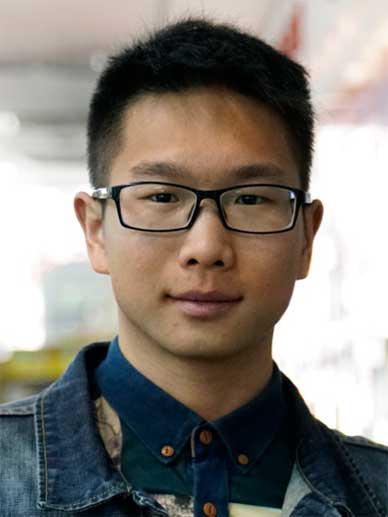
Haibo Yangمشاهده پروفایل
استادیار
Haibo Yang is an Assistant Professor in the Department of Computing and Information Sciences at Rochester Institute of Technology's Golisano College of Computing and Information Sciences. He earned his Ph.D. in Electrical and Computer Engineering from The Ohio State University under the supervision of Prof. Jia (Kevin) Liu. Rochester Institute of Technology , Golisano College of Computing and Information Sciences Ohio State University , Ph.D. in Electrical and Computer Engineering His research focuses on distributed and federated learning systems, examining how statistical and system variability affect algorithm performance under constraints like privacy and communication limitations. Key areas include optimization algorithms, communication-efficient frameworks, Byzantine robustness, and multi-modal adversarial attacks. He is actively involved in developing theoretically grounded solutions for scalable and intelligent distributed learning. Recent publications highlight advancements in multi-objective reinforcement learning, zeroth-order federated optimization, and robustness against heterogeneous client participation. His work has appeared in top venues like UAI, IJCAI, ICLR, AAAI, NDSS, ACM CCS-LAMPS, and ACM MobiHoc, with notable acceptance rates (e.g., 19.3% for IJCAI 2025). Current projects investigate exact convergence mechanisms and adaptive weighting strategies. Dr. Yang received the RIT AI Seed Funding and GWBC Award in February 2024. He supervises funded Ph.D. students and teaches advanced machine learning topics, including CSCI-635: Introduction to Machine Learning.

Tina Shoaمشاهده پروفایل
دانشیار
Tina Shoa is an Associate Professor in the School of Sustainable Energy Engineering at Simon Fraser University. She holds a Ph.D. in Electrical Engineering from the University of British Columbia (2010), an M.Sc. from the University of Manitoba (2004), and a B.Sc. from Iran University of Science and Technology (2000). Her research focuses on battery performance modeling, electrochemical methods for fault detection, sustainable battery manufacturing, and AI-based diagnostics. Education: Ph.D., Electrical Engineering, University of British Columbia, 2010 M.Sc., Electrical Engineering, University of Manitoba, 2004 B.Sc., Electrical Engineering, Iran University of Science and Technology, 2000 Research Interests: Battery performance modeling, analysis, and optimization Electrochemical and ultrasound-based battery fault detection Sustainable battery manufacturing processes AI-driven battery diagnostics Teaching and Courses: Advanced Battery and Fuel Cell Technologies Power Plant Systems Smart Grids Practicum SEE 354 D100 Energy Storage (Summer 2025) Patents: Battery State-of-health Determination upon charging (US Patent 11079437B2, 2022) Battery State-of-health Determination using multi-factor normalization (US Patent 10,302,709, 2019) Apparatus and Method for testing electrochemical systems (US Provisional Patent 62/994687, 2020) Key Contributions: Her work integrates electrochemical principles and AI to advance battery diagnostics and sustainable energy storage solutions. She has authored over 15 publications in top-tier journals and conferences, addressing battery aging, state estimation, and novel manufacturing techniques.
Jeremy I. Borjonمشاهده پروفایل
استادیار
Jeremy I. Borjon is an Assistant Professor in the Department of Psychology at the University of Houston, affiliated with the College of Liberal Arts and Social Sciences. He leads the Developing Systems Laboratory, focusing on infant cognitive, sensorimotor, and autonomic development. His research is supported by an NICHD R00 award and integrates multimodal technologies such as eye-tracking, motion capture, and wireless physiological sensors. Education: A.B. in Psychology and Neuroscience, Princeton University Ph.D. in Psychology and Neuroscience, Princeton University Dr. Borjon's research centers on how infants coordinate internal states with emerging cognitive and motor systems during the first two years of life. He investigates how visual, motor, and autonomic processes interact in real time, particularly during naturalistic caregiver interactions. His work emphasizes ecological validity by studying infants in dynamic, real-world contexts. He is particularly interested in sustained attention, language development, and how caregiver behaviors shape infant cognition. His recent publications reflect a strong trend in using dense, naturalistic behavioral sampling to understand developmental processes. The articles highlight interdisciplinary approaches combining developmental psychology, neuroscience, and engineering to study real-time cognitive and physiological dynamics in infants. Topics include physiological synchrony, attention regulation, and sensorimotor integration. Scientific Awards and Honors: R00 Pathway to Independence Award, NICHD K99 Pathway to Independence Award, NICHD NSF Postdoctoral Research Fellowship NICHD T32 Postdoctoral Fellowship 2019 Small Grant for Early Career Scholars, SRCD NSF Graduate Research Fellowship Princeton President’s Fellowship Simons Fellow in Computational Neuroscience Dr. Borjon has been actively involved in mentoring and is currently reviewing graduate applications for the Developmental, Cognitive, & Behavioral Neuroscience Program. His research is supported by federal grants, indicating active funding and research productivity. He previously held postdoctoral fellowships at Indiana University and positions at Yale and Emory. He directs the Developing Systems Laboratory, which employs cutting-edge technology to study infant behavior in naturalistic settings. The lab integrates head-mounted eye-tracking, wireless cardiorespiratory sensors, motion capture, and audiovisual recording to examine how cognitive achievements emerge within the context of a developing body and social environment.
Bastien Lechatمشاهده پروفایل
پژوهشگر ارشد
Dr Bastien Lechat is a Research Fellow at Flinders Health and Medical Research Institute (FHMRI): Sleep Health, within the College of Medicine and Public Health at Flinders University. He is also a Full Member of the College of Science and Engineering and the Medical Device Research Institute. As an NHMRC Emerging Leadership Fellow, he leads innovative research at the intersection of sleep medicine, artificial intelligence, and wearable technology. Education: PhD in Sleep Health, Adelaide Institute for Sleep Health, Flinders University (2018–2021) Bachelor of Engineering in Engineering Science/Acoustics, Université du Maine, France (2014–2017) Dr Lechat’s research focuses on understanding the physiological mechanisms and consequences of obstructive sleep apnea (OSA), particularly night-to-night variability and patient subtypes. He develops AI-driven tools for efficient and accurate diagnosis using wearables and signal processing. His work aims to create a scalable, low-cost model of care for sleep-disordered breathing, addressing global diagnostic gaps. His recent publications reveal a strong trend in digital health innovation, with a focus on machine learning for OSA detection, circadian rhythm modeling, cardiovascular risk prediction, and climate impacts on sleep. His research has been published in top journals including Nature Communications , Journal of Sleep Research , and Sleep Medicine , demonstrating interdisciplinary reach. Scientific Awards and Recognition: NHMRC Emerging Leadership Fellow (2023) Helen Bearpark Memorial Scholarship (2022) Emerging Research Leader Award, Flinders University (2021) Multiple early-career awards from Sleep Down Under, Australasian Sleep Association, and Adelaide Sleep Retreat Ranked in the top 5% of international authors in sleep apnea by Expertscape Dr Lechat has secured over $2.5 million in competitive research funding and actively supervises and mentors junior researchers. He serves on the program committee of the American Thoracic Society meetings and contributes to clinical guidelines. He collaborates globally with industry and academic partners to translate research into clinical practice. Laboratories and Research Teams: He co-leads the 'Novel use of digital innovations & technology development' theme at FHMRI: Sleep Health, working closely with Professor Danny Eckert. His team integrates expertise in biomedical engineering, data science, and clinical sleep physiology to advance digital sleep medicine.
Iain Spearsمشاهده پروفایل
مدرس ارشد
Iain Spears holds dual academic appointments as Senior Lecturer in Sport & Exercise Science at Newcastle University's Faculty of Medical Sciences (Department of Biomedical Sciences) since May 2020, and as Lecturer in Biomedical/Sports Engineering at Nottingham Trent University's Department of Engineering since August 2019. His interdisciplinary position bridges sports science, biomechanics, and engineering applications in athletic performance. Dr. Spears' research focuses on several interconnected areas: Sports biomechanics and movement analysis Training load monitoring and performance assessment methodologies Injury prevention and rehabilitation strategies Technological applications in sports performance Physiological responses to exercise His publication record demonstrates methodological innovation, with recent work employing point-cloud processing for motion analysis, low-cost depth-sensing camera systems, and exergaming solutions for high-intensity training. Key research themes include differential ratings of perceived exertion, environmental effects on athletic performance, and cooling methodologies for endurance exercise. Dr. Spears' collaborative research network includes frequent co-authors Matthew Weston, Thomas Macpherson, and Sean McLaren, with publications appearing in high-impact journals such as Journal of Biomechanics, Sports Medicine, and Medicine and Science in Sports and Exercise. His work has practical applications across team sports, military training contexts, and rehabilitation programming.
Walter Struhalمشاهده پروفایل
دانشیار
Prim. Assoc. Prof. PD Dr. Walter Struhal MSc FEAN serves as Head of the Clinical Department of Neurology at University Hospital Tulln since 2017 and holds a shared leadership role at the University Clinic for Neurology (Karl Landsteiner Private University of Health Sciences) since 2019. His career bridges clinical neurology and translational research in autonomic nervous system disorders. Research Focus : Struhal specializes in autonomic dysfunction, particularly its role in Alzheimer's dementia, post-COVID-19 neurological sequelae, and neurodegenerative diseases like multiple system atrophy. His work emphasizes modern diagnostic tools such as wearable ECGs and power modulation spectrum algorithms for signal quality control. Recent collaborations include developing the NEUROGED Guidelines for neurogenic urinary/sexual symptoms and mapping autonomic education gaps in European neurology training. Scientific Contributions : As a Fellow of the European Academy of Neurology (FEAN) , he co-led international studies on ECG quality indices (PDQI/MSQI) and participated in the AFFRICATE Project analyzing autonomic impacts of cerebral vascular interventions. His 15 most recent publications (2020-2025) span stroke care economics, dysphagia management, and autonomic testing innovations, reflecting his commitment to clinical-neurological research infrastructure development. Scientific Awards : Metric-based scholarship for Austro-Mir space research Fellow of the European Academy of Neurology (FEAN)

Breffni Nooneمشاهده پروفایل
دانشیار
Breffni Noone serves as an Associate Professor in the School of Hospitality Management within Pennsylvania State University's College of Health and Human Development, specializing in revenue management and profit optimization across hospitality assets including hotels, restaurants, golf facilities, and spas. Her work bridges theoretical research with practical industry applications through data-driven decision frameworks. Dr. Noone earned her Ph.D. in Operations Management from Cornell University (2004), an M.B.S. from Dublin City University, Ireland (1996), and a B.Sc. in Management/Higher Diploma in Hotel & Catering Management from University of Dublin, Trinity College and Technological University Dublin, Ireland (1994). Her academic journey reflects deep integration of operations research and hospitality management. Her research centers on revenue management systems, consumer behavior in pricing contexts, and sustainable profit optimization. Key investigations include scarcity-based promotions, menu engineering, online booking psychology, and non-traditional revenue applications in golf. She emphasizes data visualization and operational design to balance profitability with social and environmental responsibility, examining how non-price information shapes consumer decisions across service encounters. Analysis of her 15 most recent publications reveals expanding research scope from core hotel revenue management into crisis resilience, social inclusion, and cross-industry applications. Recent work addresses waiting-time psychology, employment biases against houseless individuals, and AI-driven commercial talent development, demonstrating adaptation to contemporary industry challenges while maintaining methodological rigor in experimental and field studies. No scientific awards were documented in the provided materials, though her consistent publication record in top-tier journals like Journal of Hospitality and Tourism Research and International Journal of Hospitality Management indicates significant scholarly impact. Dr. Noone's grant-funded research focuses on pricing strategy effectiveness, non-price information processing in consumer decisions, service encounter management frameworks, and revenue management decision tools. Her projects generate actionable insights for hospitality operators through empirical analysis of consumer responses to scarcity cues, photograph content, and cultural variables in booking behavior, directly informing industry revenue optimization practices.
- Physical Activity
- Sport Sciences
- Martial Arts
- +۷ مورد دیگر
José Morales Aznar is a Full Professor in the Department of Physical Activity and Sport Sciences and Sports Management at the Faculty of Psychology, Educational Sciences and Sports, Ramon Llull University (Blanquerna). His academic work focuses on the intersection of physical activity, sport sciences, and adapted physical education, with a particular emphasis on judo applications for diverse populations. Dr. Morales Aznar's research interests span Physical Activity, Sport Sciences, Martial Arts (particularly judo), Adapted Physical Activity for people with disabilities, Autism Spectrum Disorders, Intellectual Disabilities, Physical Education, Motor Skills, and Heart Rate Variability. His work demonstrates a strong commitment to applying sport science principles to improve quality of life across different demographic groups, especially those with special needs. Analysis of his recent publications reveals a clear trend toward adapted judo programs, particularly for individuals with autism spectrum disorders and intellectual disabilities. His research combines practical applications with theoretical frameworks to develop evidence-based approaches in adapted physical activity. The publications also show growing interest in technology integration in physical education and the physiological aspects of martial arts training. Dr. Morales Aznar is actively involved in multiple research projects including KATAUTISM (Judo program for autistic children), JUDODI (Effects of judo for adolescents with intellectual disabilities), JIDP (Judo for Intellectual Disability Project), SAFE (Health, Physical Activity and Sports), and AUTJUDO (Adapted Judo for Children with Autistic Spectrum Disorders). These projects demonstrate his leadership in developing and implementing specialized physical activity programs for vulnerable populations while securing significant research funding from various agencies including the EACEA Education, Audiovisual and Culture Executive Agency and Agència de Gestió d'Ajuts Universitaris i de Recerca.