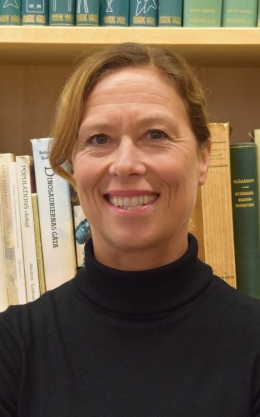
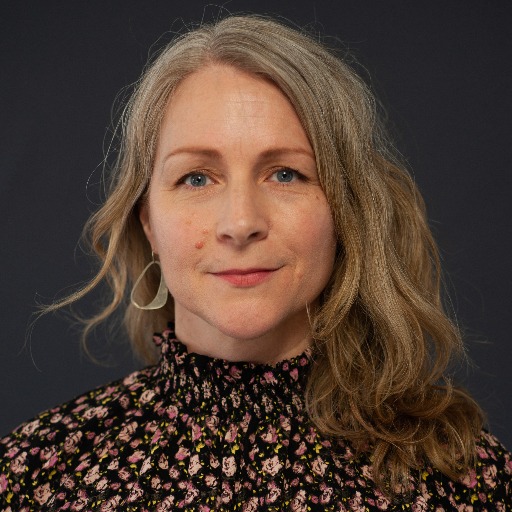
Dr. Angelika Lindstrand serves as the Academic Director of SSE Executive Education and the Academic Director of the SSE MBA program at the Stockholm School of Economics (SSE). She holds a Ph.D. in International Business from Uppsala University and is a Docent (Senior Lecturer/Associate Professor) at SSE. Her research focuses on leveraging global networks to enhance firm performance, particularly in the biotechnology industry. She led a project creating a database tracking Swedish biotech firms’ networks from 2004–2021, analyzing factors influencing network development and commercial success. Her academic roles include program design, faculty oversight, and executive team membership. Key projects include Sustainable Finance Solutions in Biotech (Vinnova), Global Network Evolution (Handelsbankens), and The International Life of Biotech (Ragnar Söderbergs Stiftelse). Her work addresses financial networks, knowledge transfer, and institutional challenges in global business. Contact: Angelika.Lindstrand@hhs.se
Manya Sundström is an Associate Professor at Umeå University's Department of Science and Mathematics Education, with affiliations to the Department of Mathematics and Mathematical Statistics and the Umeå Mathematics Education Research Centre (UMERC). Her research focuses on the history of school mathematics (1880–1920), mathematical beauty, and innovative teaching methods for pre-service teachers. She developed the Royal Road to Calculus project, a historical analysis of mathematics curriculum evolution, and created educational videos to foster metacognitive skills in undergraduate proof-based courses. Her work bridges mathematics education, philosophy, and cognitive science, exploring how aesthetic judgments shape mathematical understanding in both adults and children. Her research spans historical pedagogical analysis, such as the pedagogical history of compactness, and empirical studies on mathematical aesthetics in proofs. She collaborates with institutions like Curiosum Science Center to design hands-on activities for K-12 students. Sundström has contributed to international conferences and journals, focusing on themes like proof evaluation, mathematical value, and interdisciplinary approaches to education. Her current projects include a popular article on the origins of school mathematics, building on her prior work on the history of compactness. Teaching areas include mathematics for K-3 pre-service teachers, emphasizing foundational numeracy and pedagogical innovation. She co-leads research initiatives on mathematical beauty and participates in national and international educational policy discussions.
Young Suk Lee is a Postdoctoral Fellow at the Umeå Institute of Design (UID), Umeå University, holding the UmArts WASP-HS Art and AI Postdoctoral Research Fellowship. Their work investigates poetic embodiments of artificial intelligence and machine learning, seeking to incorporate human values often overlooked in mainstream AI development. Education: PhD in Engineering Technology, University of Twente, The Netherlands (Thesis: 'Expressive Entities: An Exploration and Critical Reflection on Poetic Engagements with Technology') Master of Fine Arts (MFA) in Fine Art Master of Fine Arts (MFA) in Digital Art Master of Science (MS) in Human-Computer Interaction Lee's research focuses on designing human-technology relations through expressive aesthetics and a humanistic lens. They explore how delicate human values can be integrated into AI systems by creating poetic experiences that defamiliarize everyday interactions with technology. This is achieved through a hybrid methodology combining traditional craftsmanship, digital manufacturing, and physical computing. Their practice-driven research aims to re-imagine design scenarios and reconnect ordinary artifacts to reflective and imaginative engagements, fostering a critical perspective on technology in daily life. Lee's publication record includes work on mediating human-human interaction through poetic engagements, as presented at the 2024 International Conference on Social Robotics. Their research consistently bridges the fields of social robotics, interactive art, and critical design, with an emphasis on embodied and meaningful interactions. Scientific Awards: No scientific awards were mentioned in the provided information. Lee is currently leading the UmArts Art & AI research project (2023-2028), funded by the Wallenberg AI, Autonomous Systems and Software Program for Humanities and Society (WASP-HS). There is no mention of graduate student advising in the available materials.
Esteban Guerrero Rosero is an Associate Professor in Social-Aware Artificial Intelligence at the Department of Computer Science, Umeå University (Sweden). His work bridges multi-agent systems , knowledge representation , and neuro-symbolic methods to develop trustworthy hybrid intelligence systems. He has co-led multidisciplinary projects in Sweden and Finland, focusing on AI applications in health , economics , and sports . Education: Ph.D. in Computer Science, Umeå University M.Sc. in Computer Science, Malmö University B.Eng. in Electronics and Telecommunications, University of Cauca (Colombia) His research emphasizes software agents and non-monotonic reasoning to model human activities in domains like health informatics and ambient intelligence . By integrating argumentation frameworks and neuro-symbolic approaches , he develops systems that adapt to social and behavioral contexts, with applications in digital coaching and behavior change interventions . Recent publications highlight trends in value-based decision-making , financial robo-advisors , and AI regulations , reflecting his focus on trustworthy AI and ethical reasoning . His work often involves cross-disciplinary collaboration , particularly in healthcare and personalized systems. Guerrero Rosero has led the Formal Methods for Trustworthy Hybrid Intelligence research group since 2019. He is involved in projects like STAR-C (2018–2024), Socially Intelligent Autonomous Systems (2017–2019), and NTC - Nordic Telemedicine Center (2015–2018), aiming to create AI systems that support human activities in complex social contexts.
Lili Jiang is an Associate Professor at the Department of Computing Science, Umeå University, where she serves as Director of Studies and Programme Director for the MSc in Computing Science. She holds a PhD in Computer Science with expertise in AI trustworthiness, data mining, and natural language processing. Her research bridges computer science and artificial intelligence, focusing on privacy, fairness, and federated learning systems. Her research interests center on: Developing trustworthy AI systems with emphasis on privacy-preserving techniques Ensuring algorithmic fairness in socio-technical decision-making Advancing few-shot learning methods for NLP tasks Creating robust data federation frameworks for cross-database analysis Recent publications demonstrate strong focus on few-shot learning (particularly in NLP), privacy-preserving AI , and applied data mining for industrial/environmental systems. Her work consistently addresses real-world challenges through multimodal learning and explainable AI techniques. She leads the Deep Data Mining research group and collaborates with the Interpresence institute. Key projects include: Explainable, Safe, Contact-Aware Planning for Heavy Machinery (XSCAVE, 2024-2028) Assessment and Engineering of Equitable AI Systems (2022-2024) Privacy-aware Federated Database Infrastructure for Micro-Data Analysis (2018-present)
Thomas Hahn is an Associate Professor and principal researcher at Stockholm Resilience Centre , affiliated with Stockholm University. His work bridges ecological economics and environmental social science , focusing on ecosystem services , climate action , and adaptive governance of social-ecological systems. PhD in environmental social science from Swedish University of Agricultural Sciences (2001) Experience at University of Wisconsin-Madison (supervised by Prof. Daniel Bromley) Hahn’s research explores post-growth economics , equitable climate policies , and stakeholder legitimacy in biodiversity conservation. Recent work includes developing an indicator for carbon accountability to address global mitigation gaps and analyzing values frameworks for IPBES assessments. His studies span forest resilience , hydropower governance in Laos, and conservation payment schemes for carnivores in Sweden. Scientific honors include Fellow of KSLA and leadership roles in major research programs such as FAIRTRANS (Mistra/Formas, 40 MSEK). He serves as a lead author for IPBES assessments and contributes to national climate policy through presentations to Swedish Parliament, business leaders, and NGOs. Hahn has directed studies and taught ecological economics at five universities for 30 years, influencing thousands of students. His advisory roles span Sveaskog AB (Europe’s largest forest owner) and the Swedish Nuclear Waste Fund, integrating transdisciplinary stakeholder collaboration into governance challenges.
Martin Lackéus is a researcher at Chalmers University of Technology, focusing on entrepreneurship education and value-creating learning. His work addresses critical challenges in the education sector through collaborations with over 200 schools and preschools. Key Research Areas: Entrepreneurship education, value-creating pedagogy, school leadership development, and teacher autonomy. Tools & Methods: Developed the VV method (value-creating science) for teacher-led research and the digital tool Loopme for school development analysis. Global Reach: Pedagogical frameworks adopted by thousands of teachers worldwide and endorsed by Sweden’s National Board of Education. Publications: Focus on entrepreneurship education theory, value creation in schools, and systemic challenges like neoliberalism, standardization, and emotional dynamics.
Kerstin Danckwardt-Lillieström is a researcher at the Department of Teaching and Learning at Stockholm University , Sweden. She leads the Drama for Learning research group, focusing on drama-based pedagogical methods in science education. Research Focus: Combines creative drama with chemistry education to enhance understanding of abstract concepts like electronegativity and chemical bonding. Investigates participatory methodologies, semiotic resource utilization, and ethical frameworks in teacher-researcher collaborations. Explores sustainable development teaching through interactive drama workshops. Key Publications: 2020 chapter on participatory research ethics; 2020 article on drama-based chemistry instruction; 2019 licentiate thesis on drama in chemistry classrooms; 2018 study on multimodal learning in NorDiNa journal. Projects: Leads the ongoing initiative Explorative Drama workshops for Sustainability in Higher Education , aiming to create interactive, values-based learning experiences.
Camilla Löf is a Lecturer at Malmö University's Department of Childhood, Education and Society, Faculty of Learning and Society. She actively contributes to two interdisciplinary research groups: Sociological-Childhood Sociological Studies of Childhood, Education and Society, and Didactic Studies of Childhood, Education and Society. Her research centers on childhood development, educational didactics, and innovative pedagogy, with specialized expertise in circus pedagogy . She investigates how circus arts create unique childhood experiences and facilitate social inclusion for displaced youth. Additional foci include values-based teaching methodologies in preschools and pragmatic approaches to early childhood education. Analyzing her publication trends (2021-2025), three dominant themes emerge: 1) Theoretical frameworks for polyphonic didactics in education, 2) Circus pedagogy as a tool for trauma-informed interventions with refugee children, and 3) Practical dilemmas in implementing values-focused curricula in preschool settings. Her work consistently bridges sociological perspectives with applied educational practices. No information is available regarding student advising, research grants, or laboratory facilities. Similarly, no scientific awards are documented in the source materials.
Malin Holzmann is an Adjunct Senior Lecturer and Docent at Karolinska Institutet, working within the Department of Women's and Children's Health, Division for Neonatology, Obstetrics, Gynaecology and Reproductive Health. She is also a senior consultant at the delivery unit at Karolinska University Hospital in Stockholm. Her work bridges clinical practice and academic research in obstetrics, with a focus on improving fetal monitoring techniques during pregnancy and labor. Dr. Holzmann completed her medical degree at Karolinska Institutet in 1996, became a specialist in Obstetrics and Gynecology in 2008, and earned her PhD in Medical Science from KI in 2014 with her thesis "Lactate as an early marker of intrapartum fetal hypoxia." In 2019, she completed a course in Teaching and Learning in Higher Education, and was appointed Docent in 2022 before becoming an Adjunct Senior Lecturer in Obstetrics and Gynecology in 2024. Dr. Holzmann's primary research focus is on electronic and biochemical fetal surveillance during pregnancy and labor. Her current projects investigate computerized cardiotocography (cCTG) in collaboration with researchers at KTH (Royal Institute of Technology). One significant aspect of her work examines whether cCTG can improve the objectivity and reliability of intrapartum fetal surveillance for early detection of fetal hypoxia. Another project investigates the potential of cCTG to identify signs of infection after preterm prelabor rupture of membranes (PPROM). She also explores noninvasive methods to measure fetal acid-base status during labor. Her research aims to reduce both under- and over-diagnosis in fetal monitoring, which can lead to serious complications or unnecessary interventions. Dr. Holzmann's extensive publication record demonstrates a consistent focus on improving fetal monitoring techniques, particularly through computerized analysis of cardiotocography. Her research trajectory shows an evolution from studying basic relationships between fetal heart rate patterns and outcomes toward developing and validating more sophisticated computerized monitoring systems. Recent work increasingly involves collaborative, technology-driven approaches with engineering researchers to create more objective and reliable monitoring tools for clinical use. Dr. Holzmann currently supervises two doctoral students: Tinna Birgisdóttir, who is researching premature rupture of membranes and risk of uterine inflammation, and Erika Gyllencreutz, who is investigating computerized CTG interpretation. She has been actively involved in medical education since 2009, serving as a clinical teacher, course leader, and examiner for medical students at Karolinska Institutet. From 2017-2021, she led an annual course in fetal surveillance for residents in Obstetrics and Gynecology. Dr. Holzmann leads a research group focused on coordinating clinical obstetrics research and leveraging team members' competencies to optimize research outcomes. The group's overall purpose is to improve diagnostics, monitoring methods, and treatments in pregnancy and childbirth care through clinical research, ultimately enhancing health outcomes for pregnant women and their children.

 (6).jpg)