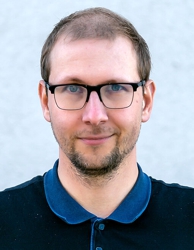
Leonid Bovkun is a Research Fellow in the Department of Technical Physics at the University of Würzburg. His research focuses on quantum materials, topological insulators, and semiconductor physics, with a particular emphasis on HgTe-based quantum wells. He has contributed to seminal studies on band structure engineering, magnetospectroscopy, and the development of computational tools like kdotpy for simulating semiconductor properties. Research Interests: Dr. Bovkun’s work explores topological phase transitions in quantum wells, cyclotron resonance phenomena, and the interplay between symmetry breaking and electronic properties. His research bridges experimental magnetospectroscopy with theoretical modeling, addressing questions in condensed matter physics and optoelectronics. Key Contributions: His recent work (2025) includes mapping topological phase diagrams of mercury cadmium telluride systems and developing the kdotpy code for band structure simulations. He has also investigated optically induced effects in quantum wells and the role of electron-electron interactions under high magnetic fields. Labs/Teams: Bovkun is part of the Technical Physics research group at Würzburg, collaborating on projects involving quantum well heterostructures and terahertz spectroscopy. His work aligns with institutional initiatives in quantum materials and topological insulators.
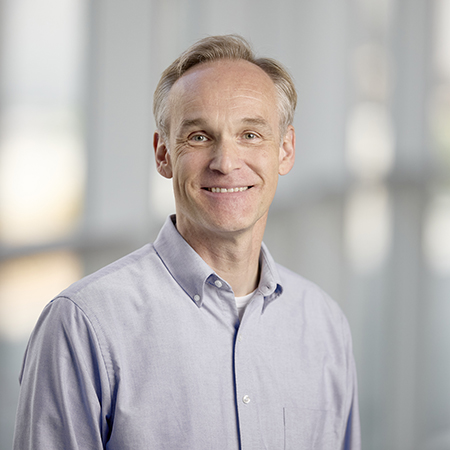
Dr. Clemens Heske is a Professor of Materials Chemistry in the Department of Chemistry and Biochemistry at the University of Nevada, Las Vegas (UNLV). His research focuses on the electronic and chemical properties of surfaces and interfaces using advanced spectroscopic techniques to investigate energy conversion devices. Dr. Heske's research expertise spans multiple areas of materials science for energy applications. His group studies surface and interface characterization, materials for energy conversion, synchrotron radiation techniques, photovoltaics, photoelectrochemistry, water splitting, fuel cells, light-emitting devices, nuclear fuel, and hydrogen storage. They utilize a unique tool chest of experimental methods to investigate thin-film solar cells, fuel cells, and other devices for energy conversion, collaborating with partners from academia, national labs, and industry. His recent publications (2023-2025) demonstrate a strong focus on thin-film photovoltaic materials, particularly copper indium gallium selenide (CIGS) solar cells. The research examines interface properties, surface treatments (especially alkali post-deposition treatments), and electronic structures using advanced spectroscopic techniques including X-ray and electron spectroscopy. Much of this work involves international collaboration with institutions in Germany. Dr. Heske's laboratory is located in the Science and Engineering Building at UNLV (rooms 1123/1124) as part of the Inorganic Materials & Nanomaterials program group. His team conducts experiments both at UNLV and at the Advanced Light Source at Lawrence Berkeley National Laboratory, as well as at partner institutions in Germany including the Karlsruhe Institute of Technology, University of Wuerzburg, and Helmholtz-Zentrum for Materials and Energy.
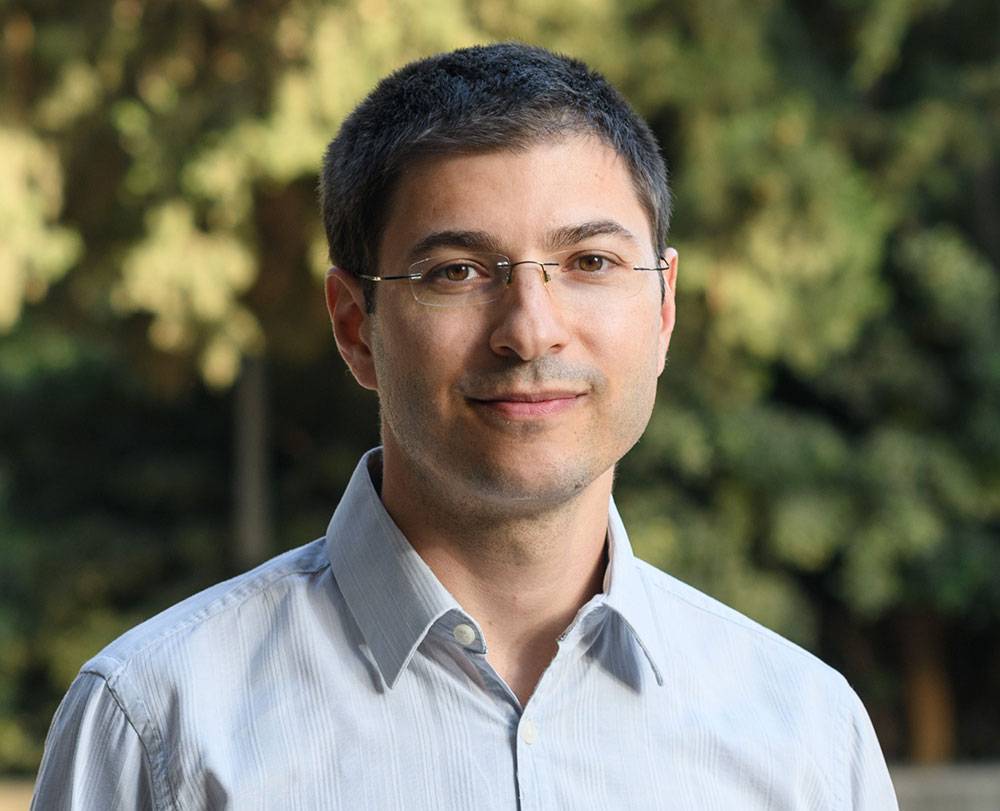
Dr. Andrius Džiaugys is a Senior Research Fellow at the Institute of Applied Electrodynamics and Telecommunications (IAET) , Vilnius University. His work focuses on solid state physics , particularly structural phase transformations , electrical conductivity , and properties of semiconductors and dielectrics . Scientific Interests: His research explores layered ferroelectric and antiferroelectric materials like CuInP2S6 and CuBiP2Se6, examining domain walls, defect mechanisms, and dielectric behavior under varying conditions. He investigates material synthesis, crystal growth, and applications in ultrasonic transducers. Publications: His 15 most recent works span topics in ferroelectrics , condensed matter physics , and nanotechnology , with a focus on piezoelectricity , antiferroelectricity , and structural defects in van der Waals materials. Education & Supervision: He supervised PhD student Ilona Zamaraitė and contributed to studies on crystallography and material science. His work aligns with collaborations across Europe and institutions like CERN.
Hans Op de Beeck is a full professor at KU Leuven's Faculty of Psychology and Educational Sciences. He chairs the Brain and Cognition research unit within the Laboratory for Biological Psychology and is a member of the KU Leuven Brain Institute. His work bridges cognitive neuroscience, visual perception, and computational modeling approaches to understand human visual cognition. Professor Op de Beeck's research focuses on visual cognition, particularly object recognition, category selectivity, and the neural organization of the visual system. His work combines multiple methodologies including fMRI, computational modeling, and behavioral experiments to investigate how the brain processes visual information. His research spans basic visual neuroscience to applied domains like aesthetic appreciation and social scene processing. His recent publications demonstrate a strong trend toward integrating computational approaches with human neuroscience. The research spans visual category representation, social cognition, aesthetic processing, and cross-modal plasticity. A notable pattern is the increasing use of artificial neural networks to model and understand human visual processing, as well as the exploration of visual expertise in various domains including Braille reading and chess expertise. Professor Op de Beeck is actively involved in numerous research projects as both promotor and co-promotor, with ongoing work spanning from 2022 to 2030. His laboratory, the Brain and Cognition unit, investigates the fundamental principles of visual processing and their applications in understanding both typical and atypical cognitive functioning.
Mihael Grbić is an Associate Professor at the Department of Physics , Faculty of Science , University of Zagreb , Croatia. He leads research at the laboratory for solid-state NMR and high-frequency measurements (Room 010). Graduated in 2005, earned PhD in 2011, and has been with the institute since 2006 Research Interests His work focuses on high-temperature superconductivity in cuprates and pnictides, quantum magnetism in low-dimensional systems, and heavy fermion materials . He specializes in solid-state NMR/NQR and microwave conductivity measurements to probe quantum criticality and phase transitions. Projects Quantum CoreS CeNIKS (Center for Advanced Research in Complex Systems) MicroS - Croatian Science Foundation INSPINOR Instrumentation Expertise Developed advanced equipment for NMR experiments including: Two-axis goniometer for precise crystal orientation Elliptical cylindrical resonant cavity systems Optimized NMR antenna-receiver chains Microwave surface impedance measurement tools
Emmanuel Levy is a Full Professor at the Department of Molecular and Cellular Biology, University of Geneva. His research focuses on the self-organization of proteins, integrating computational and experimental approaches such as structural biology, proteomics, and synthetic biology. Using budding yeast as a model organism, his lab investigates principles of protein assembly, phase separation, and evolutionary constraints. Full Professor University of Geneva Department of Molecular and Cellular Biology Research interests include: Protein Structure and Assembly Synthetic Biology applications Proteomics and Evolutionary Biology Biomolecular Condensates Structural and Computational Biology Recent publications highlight work on: Protein complex alignment Co-translational assembly Evolution of oligomeric states Coiled coil analysis Stickiness and condensate recruitment Phase separation dynamics Laboratory name: Explorers and Architects of Cells' Proteome
Anton Antonov is a Lecturer in Japanese Linguistics at the National Institute of Oriental Languages and Civilizations (INALCO), affiliated with the Department of Japanese Studies. He is a research member of the Center for Linguistic Research on East Asia (CRLAO), focusing on the 'Sino-Tibetan and its East Asian Context' team. His professional address is CRLAO, INALCO, 2 rue de Lille, 75007 Paris. He obtained his PhD from INALCO in 2007 with a dissertation titled 'Le rôle des suffixes en /+rV/ dans l'expression du lieu et de la direction en japonais et l'hypothèse de leur origine altaïque' (The role of /+rV/ suffixes in expressing location and direction in Japanese and the hypothesis of their Altaic origin). Antonov's research centers on: Historical and comparative linguistics of Japanese, Korean, and Altaic languages (Turkic, Mongolic, Tungusic) Diachronic and diatopic variations of Japanese Accent reconstruction in Japanese, Korean, and Basque Direct/inverse systems and allocutive phenomena cross-linguistically His publications (2011-2022) demonstrate consistent focus on linguistic typology, historical reconstruction, and language contact in East Asia. Recent work challenges the Transeurasian hypothesis while maintaining expertise in Altaic-Japonic-Korean connections. Articles frequently address grammaticalization, verb systems, and pragmatic marking across diverse language families. Antonov participates in research projects including: Creation of a database of phonogram-notated ancient Japanese texts with glosses/translations Compilation of a dictionary of ancient Japanese He collaborates internationally through conferences like the Paris Meeting on East Asian Linguistics and Phon-UDL workshops. His lab affiliation is CRLAO (CNRS-EHESS-Inalco joint research unit) at Campus Condorcet.
Michael Yeomans is an Assistant Professor in Strategy and Organisational Behaviour at Imperial College Business School , Imperial College London. His research focuses on conversational decision-making, exploring how language technology can enhance social and organizational interactions through computational analysis of dialogue dynamics. Current faculty member; not part-time, retired, or former staff Research Interests span: Organizational Behavior: Conflict resolution, leadership communication, and team dynamics Psychology of Communication: Conversational receptiveness, perspective-taking, and question-asking behaviors Natural Language Processing: Development of computational tools (politeness, doc2concrete, DICE-M packages) for linguistic analysis Prosocial Behavior: Energy-efficient investments, charitable giving, and social norms The scientific awards section contains no specific honors based on available text. No student advising details found in provided materials. His work bridges behavioral science with educational technology interventions for improved learning outcomes.
Dr. Hans-Hermann Ritze is a theoretical researcher at the Max Born Institute for Nonlinear Optics and Short Pulse Spectroscopy (MBI) in Berlin, Germany, where he leads the Attosecond Theory Group (T1) from House A, room 2.09. Contact is available via hans-hermann.ritze@mbi-berlin.de or +49 30 6392 1239. His work bridges quantum chemistry and ultrafast laser physics with experimental collaborators. His research centers on theoretical modeling of excited-state dynamics in biomolecules and nanostructures using attosecond spectroscopy techniques. Key focus areas include hydration effects on DNA base photostability (thymine, guanosine, adenine), proton transfer mechanisms, and fragmentation dynamics under intense laser fields. He integrates quantum simulations with time-resolved photoelectron spectroscopy to unravel non-adiabatic processes at femtosecond timescales. Analysis of his 2009-2015 publications reveals consistent investigation of photophysical relaxation pathways in aqueous environments, particularly how solvent interactions modulate excited-state lifetimes in nucleobases. His group specializes in simulating liquid-jet photoelectron spectra and modeling laser-induced dynamics in clusters like hydrated adenine and C60 fullerenes. Dr. Ritze has no listed scientific awards in the provided materials. While student advising isn't documented, his collaborative publications span multiple institutions including Fritz Haber Institute and University of Tokyo. He directs the Attosecond Theory Group at MBI, focusing on computational frameworks for electron-nuclear dynamics in photoionization and dissociation processes.
Steve Guglielmo is an Associate Professor in the Department of Psychology at Macalester College, where he conducts research on moral judgment and social cognition. His work examines how mental state inferences shape moral evaluations, with particular focus on asymmetries between blame and praise. His educational background includes a BA from SUNY Geneseo, an MS from the University of Oregon, and a PhD in Social Psychology from Brown University (2012). After his PhD, he served as a Lecturer in the Cognitive Science Program at Yale University before joining Macalester in Fall 2013. Research Interests Guglielmo's research centers on moral psychology and social cognition , specifically investigating how people interpret behavior through mental state judgments (knowledge, desire, intention) to form moral evaluations. His work challenges traditional views by examining whether morality influences intentionality judgments rather than vice versa. Key areas include blame-praise asymmetries (where negative moral judgments show greater differentiation and extremity), timing of moral judgments , and applications of Moral Foundations Theory to political and media contexts. Analysis of his 15 most recent publications reveals consistent focus on moral judgment mechanisms, with increasing attention to political applications and cross-cultural dimensions. His work frequently employs experimental methods to dissect cognitive processes underlying moral evaluations. As Principal Investigator of the Morality and Social Cognition (MASC) Lab , he mentors undergraduate research assistants. Current lab members include Robert Reiss (focusing on moral/political psychology), Ruby Rogers (interested in clinical applications), and Kaiyuan Yang (exploring AI-cognition connections). The lab has trained numerous alumni who have pursued psychology careers.
Professor Igor Konovalov is a distinguished academic specializing in photovoltaics and semiconductor technology at Ernst Abbe University of Applied Sciences Jena, where he has served as Professor for Photovoltaics and Semiconductor Technology since January 2010. His academic journey began with undergraduate studies in physics at Shevchenko University in Kiev (1990-1995), followed by doctoral research at Martin Luther University Halle-Wittenberg executed at Max Planck Institute for Microstructure Physics (1997-2000), and culminated with his habilitation at Leipzig University in 2009. Prior to his current position, he worked as a Research Scientist at the Institute of Solar Technologies in Frankfurt (2000-2002) and at Universität Leipzig's Wilhelm Ostwald Institute for Physical and Theoretical Chemistry (2002-2009). Professor Konovalov's research focuses on third-generation photovoltaics, particularly hot carrier solar cells which promise very high energy conversion efficiency. His work spans semiconductor heterostructures, thin film technology, and novel characterization methods for photovoltaic materials. He has developed innovative approaches for measuring hot carrier temperature under natural sunlight and has extensive expertise in sputtering deposition and electrochemical methods for semiconductor structure fabrication. His research group maintains a well-equipped laboratory with specialized instrumentation for photovoltaic research and development. Professor Konovalov has received notable recognition for his work, including a silver medal at iENA in Nürnberg in 2013 for his patent 'Hot carrier Solarzelle'. His publication record spans from 1995 to 2019, with recent work focusing on hot carrier extraction mechanisms, energy selective contacts, and novel semiconductor heterostructures for next-generation solar cells. His research demonstrates consistent innovation in pushing the boundaries of solar energy conversion efficiency. Among his significant contributions are: Development of methods for measuring hot carrier temperature under natural sunlight Research on energy selective contacts using nanostructured materials Investigation of heterostructures like ZnTe/PbSe and CuI/indium sulfides Patents related to hot carrier solar cell technology Electrochemical methods for semiconductor structure fabrication Professor Konovalov actively mentors students through research projects and has supervised multiple Bachelor theses and doctoral work. His laboratory provides students with hands-on experience using advanced photovoltaic research equipment while contributing to cutting-edge solar technology development. He maintains an open invitation for research collaboration in thin-film photovoltaics, reflecting his commitment to advancing the field through shared knowledge and expertise.
Dr. Ruxandra Costescu is a Scientific Researcher II at the National Institute for Materials Physics (NIMP) in Romania, where she works in the Laboratory of Surface and Interface Science. She has been part of NIMP since early 2010, contributing to in-depth studies of interfaces between ferromagnetic layers and semiconductor substrates, and specializing in X-ray Photoelectron Spectroscopy (XPS) analysis. Prior to joining NIMP, she held post-doctoral positions between 2004 and 2008 at Max-Planck-Institut für Festkörperforschung in Germany and the Leibniz Institute for Solid State and Materials Research. Dr. Costescu completed her doctoral research program in Materials Science and Engineering at University of Illinois Urbana-Champaign in 2006, with a dissertation on 'Thermal transport on the nanometer scale and the effect of microstructure and interface resistance.' Her academic journey demonstrates a strong foundation in materials characterization and thin film technology. Her research focuses on materials science, particularly in the areas of thin film deposition and characterization techniques, molecular beam epitaxy (MBE), and interface science. She has made significant contributions to understanding the properties of TiO2-based materials, ferromagnetic-semiconductor interfaces, and the development of advanced characterization techniques. Her work spans multiple disciplines including nanotechnology, photocatalysis, ferroelectric materials, and semiconductor physics, with applications ranging from environmental remediation to spintronics. Analysis of her publication record reveals a consistent focus on developing and characterizing novel materials for applications in environmental remediation, energy conversion, and spintronics. A notable trend in her recent work is the investigation of doped TiO2 nanostructures for enhanced photocatalytic activity in water purification, as well as studies of magnetic properties at interfaces between different materials for potential spintronic applications. Dr. Costescu has received several prestigious awards for her research: 'IN HOC SIGNO VINCES' award (in Math and Natural Sciences) from the Romanian National Council of Scientific Research in Higher Education (CNCSIS) in 2010 Award for Best Young Researcher in 2010 from the State Department of Education, the Romanian Research and Design Patronage and the Romanian Academy She has secured significant research funding, including a CNCSIS reintegration grant for young researchers between 2010 and 2012, which enabled her to purchase and implement a new MBE chamber at NIMP. Since 2018, she has served as the NIMP coordinator for European Commission 'Horizon 2020' science popularization projects, working in partnership with other research institutes and universities. She also coordinates science education activities and outreach at NIMP. At NIMP, Dr. Costescu is one of the responsible persons for a Complex Surface Science System (included in the Special Systems and Objectives of National Interest 'IOSIN' program) and administers an XPS system with spatial resolution. Her laboratory work involves both fundamental research on material interfaces and practical applications in areas such as water purification and antimicrobial coatings, demonstrating her commitment to both theoretical understanding and real-world impact.