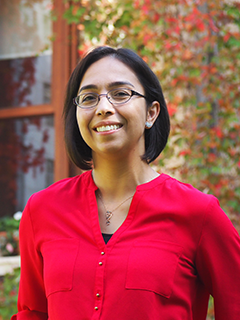
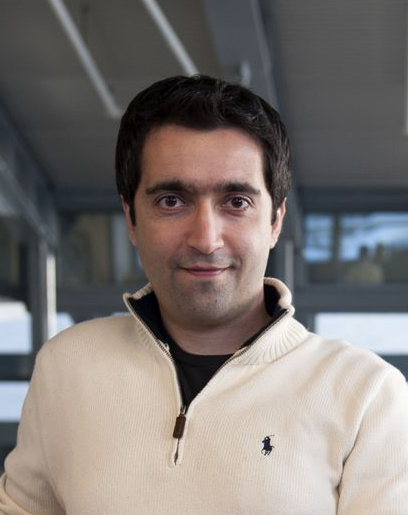
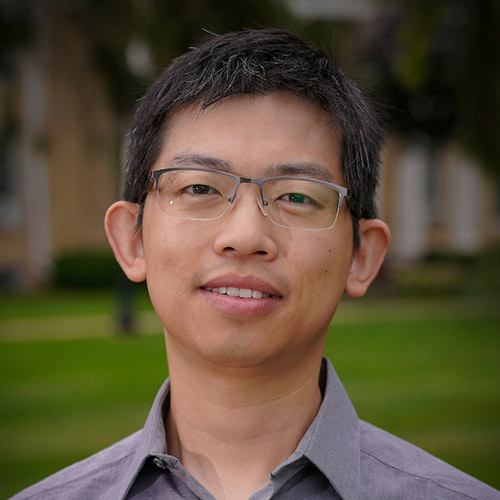
Nurcin Celik is a Professor in the Department of Industrial Engineering at the University of Miami's College of Engineering. Their research focuses on integrating machine learning with dynamic systems for applications in smart grids, urban air mobility, and advanced manufacturing. University of Miami, College of Engineering Industrial Engineering Department Research interests include: Dynamic Data Driven Applications Systems (DDDAS) Deep reinforcement learning for network slicing Computer vision in surgical skill assessment Resilience modeling for environmental systems Machine learning applications in energy systems Recent publications highlight: Smart grid resource allocation using deep learning Generative AI for disaster evacuation planning Microgrid optimization with particle swarm algorithms DDDAS frameworks for 5G/6G network management Contamination prediction in recycling systems No scientific awards or students information were found in the provided text.
Navarajah Subramaniam serves as a Research Fellow at the Institute for Rotorcraft and Vertical Flight, Technical University of Munich (TUM), where he contributes to advanced rotorcraft research and education in vertical flight technologies. His research focuses on: Rotorcraft Comprehensive Analysis and Simulation VTOL Aircraft Design and Sizing Helicopter Flight Dynamics, Stability, and Control Rotorcraft Systems and Components Engineering Aircraft Safety and Certification Dr. Subramaniam actively participates in ongoing research projects including ENGEL (Energy Efficient Flight Guidance), VARI-SPEED II, ARCTIS, LaBouR, VaMEx, NANNY, and HyDDEn, addressing challenges in energy efficiency, high-speed flight, and novel rotorcraft configurations. He teaches courses spanning Rotorcraft and VTOL Design Basics, Engineering Mechanics III, Helicopter Flight Dynamics, Safety and Certification of Aircraft, and specialized labs including VTOL Sizing and Design. The institute's facilities—Whirl Tower, Flight Simulator Facilities, Unmanned Rotorcraft Testbed (AREA), and GPU/CPU clusters—support his experimental and computational work. Contact is available via navarajah.subramaniam@tum.de .
Daniel Dollinger is a researcher at the Institute of Flight System Dynamics at the Technische Universität München (Technical University of Munich). His work focuses on embedded systems and safety critical avionics development , with a particular emphasis on human-machine interface design for unmanned aircraft systems (UAS) and future air mobility solutions . He contributes to research in nonlinear and adaptive flight control , flight safety protocols , and trajectory optimization for advanced aerial vehicles. Embedded Systems & Safety Critical Avionics Human-Machine Interface for UAS Flight Control Systems Nonlinear and Adaptive Flight Control Simulation and Flight Safety Sensors and Data Fusion Daniel Dollinger has authored or co-authored multiple publications in prestigious conferences like AIAA AVIATION FORUM, AIAA SciTech, and IEEE/DASC. His research spans topics from control inceptor design for transition VTOL aircraft to model-based systems engineering integration into agile environments. He actively supervises student theses on subjects like hybrid fly-by-wire systems, UAV control protocols, and flight simulation toolchains. His recent work explores urban air mobility and eVTOL aircraft handling qualities , with a focus on simulator-based testing and operator situational awareness . He also investigates digital twin approaches for airborne software certification and lean development methodologies in avionics systems.
Dr. Leonard Felicetti is a Senior Lecturer in Space Engineering at Cranfield University, UK, where he leads research and teaching in guidance, navigation, and control (GNC) of space systems. Previously, he held positions at Luleå University of Technology (2015–2018) and the University of Glasgow (2015). He holds a Ph.D. in Space Systems from Sapienza University of Rome (2013) and an M.Sc. in Aerospace Engineering (2008). His research focuses on spacecraft control systems, space robotics, and space debris surveillance. Key areas include orbital/attitude control, formation flying, reusable launch vehicle landing, and optical sensor constellations for debris tracking. He has pioneered the OnOrbitROS framework for space robotics simulations, integrating ROS/Gazebo for realistic orbital conditions. Notable contributions include: Design of model predictive control strategies for reusable launchers Development of visual servoing algorithms for on-orbit robotics Optimization of Martian aerobot configurations Debris removal mission concepts for mega-constellations He has authored over 50 peer-reviewed articles and serves as a reviewer for journals like Acta Astronautica and the Journal of Guidance, Control, and Dynamics. His work bridges theoretical control systems with practical space mission applications.
Sertac Karaman is a Professor in the Department of Aeronautics and Astronautics at the Massachusetts Institute of Technology (MIT). He serves as the Director of the Laboratory for Information and Decision Systems (LIDS), an interdepartmental research center focused on information sciences and decision-making. Additionally, he is Faculty Co-Director of Mission Innovation Experimental (MIx) and Faculty Director of the Amazon MIT Science Hub. His affiliations underscore leadership in cross-disciplinary research initiatives bridging academia and industry. Karaman holds a B.S. in Mechanical Engineering and Computer Engineering from Istanbul Technical University (2007), an S.M. in Mechanical Engineering from MIT (2009), and a Ph.D. in Electrical Engineering and Computer Science from MIT (2012). His research spans mobile robotics, autonomous vehicles, and embedded systems, with emphasis on aerospace applications. Key areas include: Algorithmic Foundations : Probability theory, stochastic processes, optimization, and formal methods. Technological Applications : Self-driving cars, UAVs, consumer robotics, and extended reality. Interdisciplinary Integration : Combines machine learning, computer vision, and hardware design for energy-efficient autonomy. Karaman's recent publications (2020–2023) focus on high-speed autonomous navigation, energy-efficient computing, and robust control systems. Trends include trajectory optimization for agile vehicles, AI-driven perception, and sustainability in autonomous systems. Machine learning (especially reinforcement/imitation learning) and hardware-software co-design are recurring themes. No scientific awards are explicitly mentioned in the provided text. Karaman advises a large cohort of doctoral and master's students (45+ listed), spanning robotics, control theory, and computer vision. His research is supported by collaborations with entities like the Amazon MIT Science Hub. He leads two primary research groups: AREA (Autonomy and Embedded Systems Accelerated): Focuses on high-speed autonomous navigation. LEAN (Low-Energy Autonomy and Navigation): Specializes in energy-efficient hardware-algorithm co-design.
Professor Ozan Tekinalp serves as the Department Head of Aerospace Engineering at Middle East Technical University (METU). His research focuses on spacecraft control systems, orbital mechanics, and advanced aircraft dynamics, with particular expertise in solar sail technology and lunar mission navigation. His recent publications demonstrate strong emphasis on orbit determination methods, attitude control systems for satellites, and innovative approaches to spacecraft trajectory optimization. Research trends show consistent focus on applying computational methods to solve complex aerospace engineering challenges.
Dr. Oscar De Silva is an Assistant Professor in the Department of Mechanical Engineering at Memorial University of Newfoundland. He holds a B.Sc. from the University of Moratuwa, Sri Lanka, and a PhD from Memorial University. His expertise spans instrumentation, controls, mechatronics, and robotics, with a focus on sensor design, state estimation, and navigation systems. Dr. De Silva's research interests include state estimation, control systems, nonlinear dynamics, navigation systems, sensor design, localization, mapping, and intelligent prosthetics. He has contributed to projects such as ice detection systems for marine safety and computer vision for robotics applications. Before his current role, he worked as a research fellow at the American Bureau of Shipping-Harsh Environment Technology Centre and taught at Memorial University as a sessional instructor. His work emphasizes practical applications in autonomous systems, industrial inspection, and environmental monitoring. Notable achievements include the IMechE UK Award for Outstanding Achievement and a Gold Medal in Mechanical Engineering. His research trends focus on integrating AI, LiDAR, and radar technologies for navigation and safety systems in robotics and marine environments. Awards: IMechE UK Award for Outstanding Achievement Gold Medal in Mechanical Engineering (University of Moratuwa) Fellow of Graduate Studies (Memorial University) Advising and Grants: While no specific student names are listed, his role as an Assistant Professor involves academic supervision. His grants and collaborations likely align with his research in robotics and sensor systems, though specific details are not provided here. Labs: He is associated with the Intelligent Systems Lab at Memorial University and previously contributed to the ABS HETC. His work often involves multidisciplinary teams focused on real-world engineering challenges.
Dr. Chao Shen is an Assistant Professor at the Department of Systems and Computer Engineering, Carleton University, within the Faculty of Engineering and Design. His research focuses on control theory, machine learning, and optimization applied to robotics systems, autonomous underwater vehicles (AUVs), and intelligent control of mechatronic systems. He leads the Robotics Control and Optimization Laboratory and has supervised multiple capstone projects, including a winning team in the 2022 departmental competition. Dr. Shen holds a PhD from the University of Victoria. He has been appointed as a Technical Editor for IEEE/ASME Transactions on Mechatronics (2023) and Associate Editor for IEEE Canadian Journal of Electrical and Computer Engineering (2022). He also served as Technical Program Chair for the 2022 IEEE Electrical Power and Energy Conference. His research interests include perception and navigation for robotics, cooperative control of multi-agent systems, and distributed model predictive control (MPC) for large-scale systems. Notable contributions include a recently published Springer book on 'Advanced Model Predictive Control for Autonomous Marine Vehicles' (2023) and award-winning work funded by NSERC Discovery Grants. Dr. Shen actively mentors graduate and undergraduate students in topics like robust MPC for visual servoing, UAV coordination, and energy-optimal control strategies. His lab offers funded PhD and MASc positions focusing on control theory applications in robotics and autonomous systems.
Robert Niemiec is a Lecturer in the Department of Mechanical, Aerospace, and Nuclear Engineering at Rensselaer Polytechnic Institute (RPI). He holds a B.S. (2014) and Ph.D. (2018) in Aerospace Engineering from RPI. His research focuses on multicopter dynamics, flight control systems, urban air mobility (UAM), and the integration of machine learning into aerospace engineering. Key areas include rotor fault diagnosis, noise reduction, and aerodynamic optimization for multirotor aircraft. His work emphasizes improving the efficiency, safety, and scalability of unmanned aerial systems (UAS), particularly for urban applications. Notable contributions include developing physics-based simulation tools like the Rensselaer Multicopter Analysis Code (RMAC) and exploring hybrid control strategies for VTOL aircraft. Recent publications (2020–2023) highlight advancements in vibration minimization, nonlinear system identification, and multi-fidelity aerodynamic modeling. No scientific awards are explicitly listed, though his research aligns with cutting-edge trends in autonomous flight and aerospace innovation. Advising and grant details are not provided in the text, but his teaching and research roles suggest involvement in student mentorship and collaborative projects. His work contributes to foundational and applied studies in multicopter design and urban air mobility systems.
Hang Li is an Assistant Professor of Engineering and Co-Coordinator of the Engineering Program at Ripon College. He holds a B.E. and M.E. from Beihang University, China, and an M.S. and Ph.D. from the University of Tennessee, Knoxville. His research focuses on computational fluid dynamics (CFD), aeroelasticity, and numerical methods for aerodynamic modeling. Key areas include wind noise prediction in vehicles, biomedical applications of CFD (e.g., nasal airflow analysis), urban air mobility vehicle aerodynamics, and advanced harmonic balance techniques for flutter and limit cycle oscillation modeling. Recent work emphasizes efficient computational methods like the one-shot approach for aeroelastic simulations and pseudo-spectral harmonic balance techniques. His studies bridge mechanical/aerospace engineering with biomedical applications, leveraging CFD to solve real-world challenges in both engineering and healthcare. No scientific awards or grants are explicitly mentioned. He currently advises no listed students. His teaching and coordination roles include the Engineering Program at Ripon College.
Mark Cannon is an Associate Professor in the Department of Engineering Science at the University of Oxford and a Tutorial Fellow at St John's College. He holds degrees from the University of Oxford (MEng in Engineering Science, DPhil) and MIT (SM). His research focuses on advanced control strategies, particularly Model Predictive Control (MPC), with applications in aerospace, biomedical systems, and energy management. He leads the Oxford Control Group, emphasizing robust and stochastic MPC, adaptive systems, and optimization under uncertainty. Notable contributions include works on deep learning integration in MPC for Parkinson’s disease treatment and energy-efficient hybrid electric aircraft. His teaching includes courses on nonlinear systems, MPC, and dynamical systems. He has developed software like COSMO, an ADMM-based solver for convex optimization. Recent research highlights include publications on safe adaptive NMPC, robust MPC for VTOL aircraft, and data-driven control strategies. Mark Cannon's work bridges theoretical control advancements with practical applications in engineering and healthcare, supported by collaborations in academia and industry.
Dr. Moble Benedict is an Associate Professor of Aerospace Engineering at Texas A&M University and a Chancellor EDGES Fellow. He leads the Advanced Vertical Flight Laboratory (AVFL), focusing on vertical takeoff and landing (VTOL) systems, autonomous UAVs, and energy-efficient aviation. His research spans bio-inspired flight, cycloidal rotor design, and electric propulsion. He advises numerous students who have won prestigious awards, including Vertical Flight Foundation scholarships and U.S. Army fellowships. Education: PhD (Aerospace Engineering, University of Maryland, 2010); M.Tech and B.Tech (Aerospace Engineering, Indian Institute of Technology Bombay, 2004/2003). Research highlights include development of the 'Aria' personal flying device for Boeing's GoFly Prize, quiet rotor technology commercialized via Harmony Aeronautics, and innovations in amphibious UAVs. Awards include the 2022 Texas A&M Research Impact Award and Dean’s Excellence Award. Labs/Teams: AVFL specializes in novel aircraft concepts, including planetary exploration vehicles and space debris removal systems. Collaborations include the Army Research Lab and Air Force Agility Prime Program.
Dr. Farrokh Janabi-Sharifi is a Professor and Associate Chair in Mechatronics at the Department of Mechanical, Industrial, and Mechatronics Engineering, Toronto Metropolitan University. He is a leading researcher in robotics and automation, with a focus on medical robotics, opto-mechatronics, and vision-based control systems. He leads the Robotics, Mechatronics, and Automation Laboratory (RMAL) and actively collaborates with cardiologists and industry partners. Education: PhD, University of Waterloo, 1995 MASc, University of Toronto, 1990 BSc, Middle East Technical University, 1987 His research interests center on the development of intelligent robotic systems for medical and industrial applications. He specializes in visual servoing, image-guided navigation, and continuum robots, aiming to enhance precision in surgical procedures such as atrial fibrillation correction. His work bridges engineering and healthcare, creating robots that are both technically advanced and human-centric. The recent articles highlight his expertise in vision-based robot control, medical device automation, and cooperative robotics. His publications emphasize robust programming by demonstration, force estimation in catheters, and multi-camera pose estimation, reflecting a strong trend in integrating computer vision with mechatronic control for real-world applications. Scientific Awards and Honors: Life Fellow of Canadian Academy of Engineering (FCAE) Fellow of Engineering Institute of Canada (FEIC) Fellow of Canadian Society for Mechanical Engineering (FCSME) Elsevier Certificate of Recognition for Most Cited Papers SPIE Best Conference Paper Awards Dr. Janabi-Sharifi supervises graduate students and serves as a research consultant for national and international companies such as CVSDI, Medmectron, Magnum Integrated Manufacturing, NDI, and Vibra Finish. He holds several patents and has secured funding through industry collaborations and academic grants. He is actively involved in professional service as associate editor for IEEE/ASME Transactions on Mechatronics and editorial board member for multiple robotics journals. He leads the Robotics, Mechatronics, and Automation Laboratory (RMAL) , where interdisciplinary teams develop next-generation robotic systems for healthcare and industrial automation. The lab fosters innovation in aerial manipulation, surgical robotics, and human-robot collaboration.
Asad Rehman, Ph.D., is a faculty member in the Department of Mathematics and Computer Science at Saint Louis University-Madrid (SLU-Madrid), part of the College of Arts and Sciences. His research focuses on next-generation networking technologies, including software-defined networking, cloud and edge computing, 5G/B5G networks, and fault-tolerant systems. Research Interests: Software-defined networking (SDN) and Network Functions Virtualization (NFV) Fault-tolerance and reliability in future networks Cloud and Edge Computing Service Assurance in virtualized environments 5G and Beyond 5G (B5G) Networks Generative AI for urban air mobility and disaster response His recent publications, primarily in IEEE Access and major telecommunications conferences, reflect a strong trend toward resilient, intelligent, and cloud-native network architectures. His work integrates AI-driven solutions with critical communications, particularly in disaster response and public safety. Many of his studies evaluate real-world implementations, performance comparisons (e.g., containers vs. unikernels), and experimental testbeds for 5G applications. Scientific Awards and Recognition: 2024 Research and Conference Travel Grant – SLU-Madrid FCT Ph.D. Research Grant (2015–2019), Portugal Visiting Scholar Grant from Telenor and FCT (2019) TÜBİTAK Project Grant (2013–2014) University of Sunderland International Scholarship (2010–2011) Multiple Certificates of Excellence from Elsevier and IEEE in ethics, research data management, social impact, funding, and industry collaboration Advising and Grants: While no formal students are listed, Dr. Rehman has been supported by significant research funding from national and international bodies, including the EU’s Horizon 2020 program (e.g., 5G-EPICENTRE, DARLENE, AC3, FIDAL, SOCA, 5GO), TÜBİTAK (Turkey), and FCT (Portugal). He has contributed to large-scale collaborative projects focused on public protection, disaster relief, and cognitive cloud-edge systems. Professional Engagement: Dr. Rehman actively contributes to the scientific community as a peer reviewer for IEEE, Springer, Wiley, and Oxford journals. He is a member of several IEEE communities, including IEEE Communications Society, IEEE Future Networks, Cloud Computing, and Smart Cities.
Prof. Ilkay Yavrucuk holds a professorship in Helicopter Technology and VTOL systems at the TUM School of Engineering and Design, Technical University of Munich. Her research focuses on advanced rotorcraft technologies and vertical takeoff/landing systems. No specific educational background, awards, or advised students are detailed in the provided text.