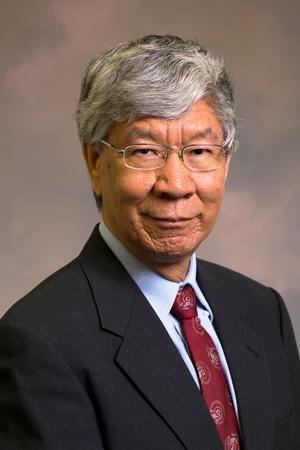
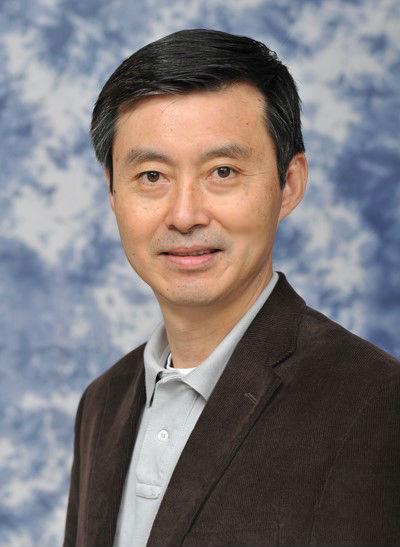
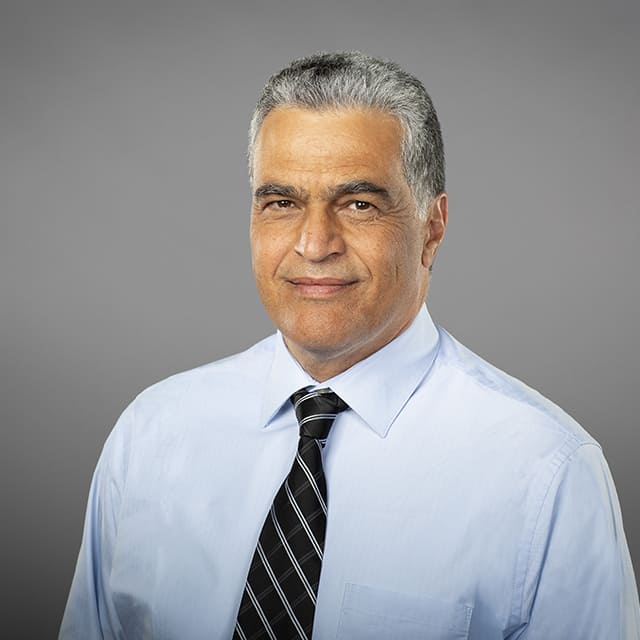
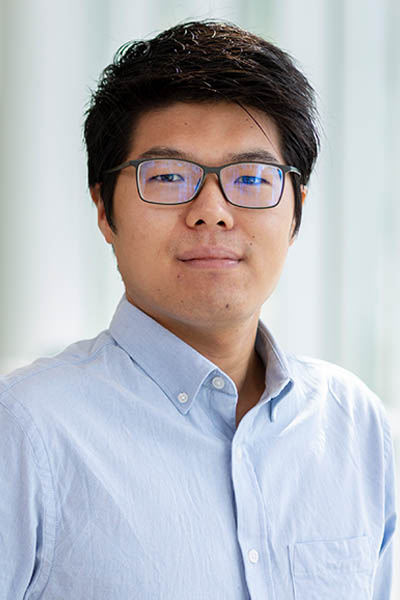
Dr. J. Jim Zhu is a Professor in the School of Electrical Engineering and Computer Science at Ohio University, where he has been since 2000. His primary research focuses on nonlinear and linear time-varying systems theory with applications to flight control systems and robotics. He received his Ph.D. from the University of Alabama in Huntsville in 1989 and has conducted over $6M in sponsored research for NASA, US Air Force, and NSF, including a $4.3M contract for NASA's 2nd-Generation Reusable Launch Vehicle guidance and control systems. His research develops advanced control algorithms for autonomous vehicles including unmanned aircraft, drones, marine vehicles, and reusable space launch vehicles. Key innovations include trajectory tracking controllers, loss-of-control prevention systems, and singular perturbation methods for stability analysis. He holds multiple US and international patents for flight control systems and robotic designs. Dr. Zhu is an Associate Fellow of AIAA and IEEE Senior Member. His honors include NSF Research Initiation Award, NASA Summer Research Fellowship, and service on IEEE Control Systems Society's Board of Governors. He has published over 150 papers and served in editorial roles for IEEE Control Systems Magazine.
YangQuan Chen is a Professor in the Department of Mechanical Engineering at the University of California, Merced. His research focuses on unmanned aircraft systems, mechatronics, renewable energy systems, cyber-physical systems, and applied fractional calculus. He leads multiple labs, including locations at SE2-273 and 4225 N. Hospital Rd., Atwater, CA. His work integrates advanced control theory, robotics, and digital twin frameworks for applications in environmental monitoring, precision agriculture, and energy systems. Education: PhD (1998) from Nanyang Technological University, Singapore; M.S. (1989) and B.S. (1985) from Chinese institutions. His research emphasizes interdisciplinary approaches, combining fractional calculus with machine learning for real-world challenges like pandemic modeling, UAV-based emission tracking, and smart agriculture. Key research areas include: Unmanned Aircraft Systems (UAS) for environmental and agricultural applications Cyber-physical systems and digital twin frameworks Applied fractional calculus in control systems and epidemiology Machine learning for soil carbon sensing and crop monitoring Recent work explores UAV swarms for methane emission quantification, battery health-aware mission planning, and physics-informed neural networks for state estimation. His lab develops innovative solutions for renewable energy systems, such as adaptive controllers for proton exchange membrane electrolyzers and robust consensus strategies for multi-agent systems. Awards and recognition include prominent citations on Google Scholar and ResearchGate. Ongoing projects involve collaboration with industry and government agencies on smart agriculture, environmental sensing, and energy efficiency.
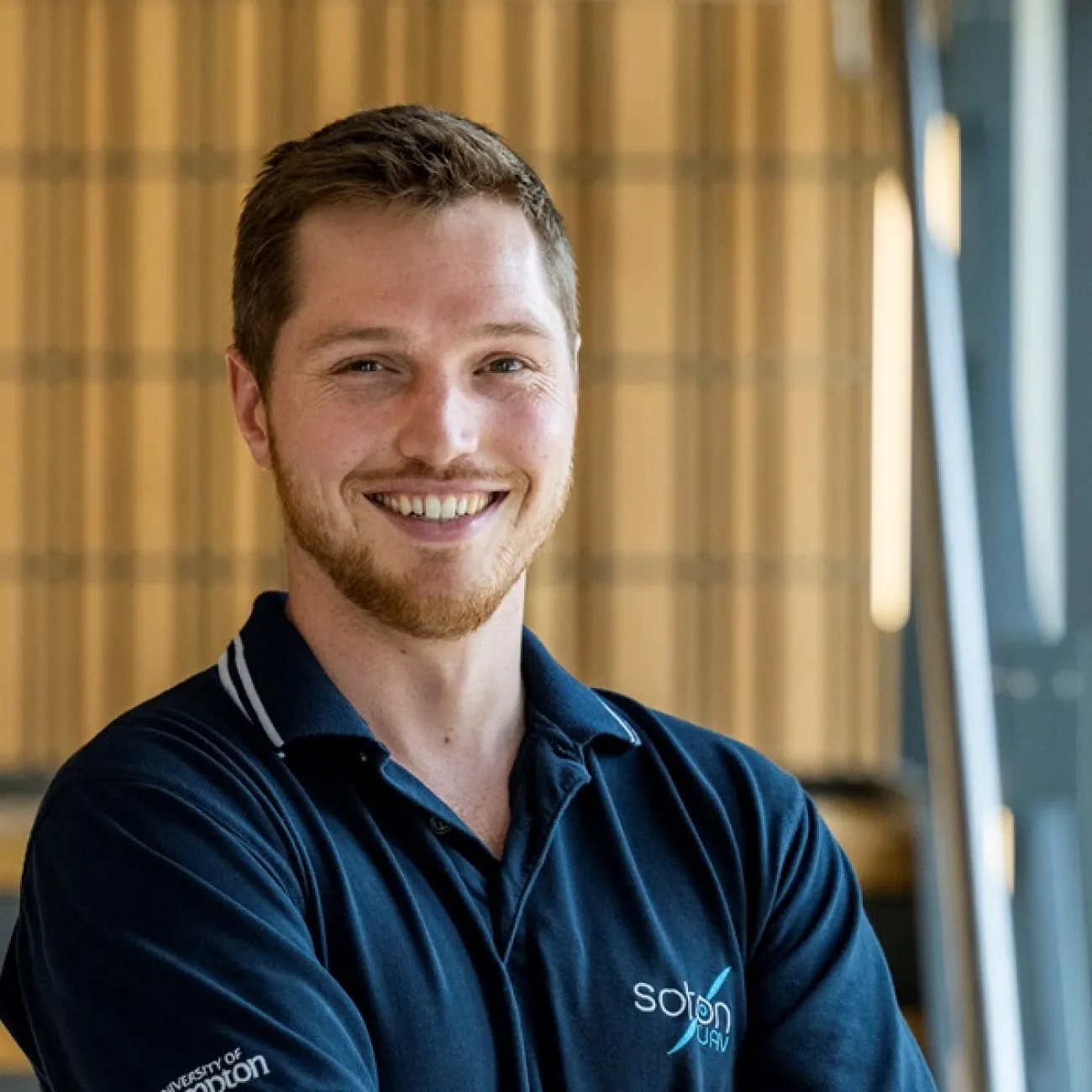
Dr Bob Entwistle serves as Principal Enterprise Fellow at the University of Southampton, affiliated with the Soton UAV research group. He specializes in advanced aerospace engineering with a focus on unmanned aerial vehicle (UAV) systems. His work spans aerodynamic performance optimization, electric vertical takeoff and landing (VTOL) systems, and noise modeling for UAV applications. He contributes to the Solent Future Transport Zone (FTZ) research initiative alongside senior academics like Professors John Preston and Tim Waters. His current projects include the CASCADE Open Aircraft Project, developing innovative VTOL drone technologies. Research interests emphasize practical aerospace applications, combining theoretical aerodynamics with experimental validation. Key areas include motor-rotor geometry optimization for electric propulsion systems, noise reduction strategies, and hybrid fixed-wing/VTOL configurations. Recent publications (2021-2023) focus on UAV wing performance, noise modeling, and electric propulsion systems. Collaborators include Mario Ferraro and Oliver Westcott from the Southampton aerospace team.
Dr. Aykut Tamer is a Lecturer in the Department of Mechanical Engineering at the University of Bath, affiliated with the IAAPS and Centre for Integrated Materials, Processes & Structures (IMPS). He holds a PhD in Aerospace Engineering from Politecnico di Milano (2015), and MSc and BSc degrees from Middle East Technical University (2011, 2007). His research focuses on rotorcraft dynamics, vibration control, and aeroelastic stability, with applications in novel aircraft architectures and hydrogen integration. He is an Associate Editor at the Journal of Aerospace Engineering and coordinates the Mechanical Engineering Research Staff. Dr. Tamer’s research interests include predicting novel aircraft behaviors, improving human-machine interaction in VTOL aircraft, and enhancing aeroelastic stability through nonlinear dynamics analysis. His work combines experimental and numerical methods, with recent contributions to vibration attenuation in helicopters and structural analysis of additive-manufactured materials. He has held external roles as a Research Associate at Imperial College London (2019–2023) and a Research Fellow at Politecnico di Milano (2015–2019), and previously worked as a Loads and Aeroelasticity Engineer at Turkish Aerospace (2007–2011). He teaches advanced helicopter dynamics and aerospace design projects, emphasizing practical applications of theoretical concepts. Dr. Tamer actively supervises doctoral students and offers funded PhD opportunities in rotorcraft performance. His research spans multidisciplinary topics such as laser powder bed fusion, Lyapunov stability analysis, and urban air mobility comfort assessment.
Dr. Martin Lindner is a Researcher at TU Dresden’s Chair of Air Transport Technology and Logistics, specializing in aircraft performance and trajectory optimization for sustainable aviation since 2015. He leads interdisciplinary collaborations within the RTG AirMetro program and heads the Skylab, focusing on drone/VTOL aircraft technology, logistics, and sensor systems. Research Interests: Aircraft performance modeling, trajectory optimization, sustainable aviation, urban air mobility, and air traffic planning. Projects: RTG AirMetro (AAM), Air-Take-Off (drone-manned collision avoidance), SmartFly (sustainable transport), RescueFLY (water rescue drones), ReMAP (conflict resolution), ProfiFuel (fuel-efficient trajectories), MEFUL (emission reduction). Publication Trends: His work emphasizes multi-criteria trajectory optimization, integrating environmental efficiency, noise reduction, and operational safety. Recent articles address urban air mobility infrastructure, fleet optimization, and AI-driven air traffic simulations. Teaching: Co-teaches Air Transport Systems and leads Airline Management , blending technical innovation with strategic thinking. Labs: Heads Skylab, a hub for experimental research in drone logistics, sensor systems, and advanced flight planning tools.
Chunhua Sheng is a Professor in the Department of Mechanical, Industrial and Manufacturing Engineering at The University of Toledo, where he also serves as Director of the High-Performance Computing Laboratory. His office is located in Nitschke Hall. Education: Doctor of Philosophy, Aerospace Engineering - Mississippi State University Master of Science, Jet Propulsion - Nanjing University of Aeronautics and Astronautics Bachelor of Science, Jet Propulsion - Nanjing University of Aeronautics and Astronautics Research interests focus on advanced computational methods in fluid dynamics, including: Development of numerical algorithms for structured and unstructured grids Turbulence modeling and transition prediction Fluid-structure interaction phenomena Applications in rotorcraft aerodynamics and renewable energy systems He directs the High-Performance Computing Laboratory, which supports computational research in fluid dynamics and related engineering fields through advanced simulation capabilities.
Petros Voulgaris is the Victor LaMar Lockhart Professor and Chair of the Mechanical Engineering Department at the University of Nevada, Reno (UNR), where he also directs the Founding Aerospace Program. He is affiliated with the College of Engineering and leads the Learning Autonomy and Control Systems Laboratory. His work focuses on advanced control methodologies for engineering systems, including autonomous vehicles, cyber-physical systems, and resilient networks. Research Interests: Optimal, robust, and distributed control; networked control systems; autonomous systems cybersecurity; and applications in aerospace, robotics, and power systems. His lab explores cutting-edge solutions for challenges like adversarial attacks on autonomous systems and GPS-denied navigation. Prospective Students: Openings for Ph.D. candidates and postdocs with control systems or decision-making expertise. Contact via pvoulgaris@unr.edu for application details. Labs: Learning Autonomy and Control Systems Laboratory Contact: PE Building 204C | (775) 682-5725
Dr. Tianyi He is Assistant Professor in Mechanical and Aerospace Engineering at Utah State University. His research focuses on robust and learning-based control methods for autonomous systems, with applications to unmanned aerial vehicles, electric vertical take-off and landing (eVTOL) aircraft, and autonomous ground vehicles. Key research areas include Linear Parameter Varying (LPV) systems, Model Predictive Control (MPC), and reinforcement learning applications. Recent publications demonstrate innovations in disturbance rejection control for urban air mobility, hybrid physics-data modeling, and vehicle dynamics control. Dr. He teaches courses in mechatronics, vibrations, and optimization methods. He currently advises graduate students working on aerospace control systems and autonomous vehicle applications.
Louis Gagnon is a Professor at Queen's University's Smith School of Business, specializing in financial economics and risk management. With a PhD from the University of Toronto, his research examines capital markets, derivatives, and international finance through both theoretical and empirical approaches. His primary research explores risk-assessment methodologies, market volatility, and financial instruments in global contexts. Recent work includes analyses of corporate governance impacts on equity markets and pandemic-related economic behaviors. Dr. Gagnon's publications demonstrate cross-disciplinary integration, spanning financial theory, aerodynamics, and public health. His aerodynamics research focuses on cycloidal rotor efficiency and computational fluid dynamics, while financial studies address governance structures and market behaviors. He maintains active industry engagement through consulting and executive education programs. Professional affiliations include editorial roles at the Canadian Journal of Administrative Services and investment committee membership at the Community Foundation of Greater Kingston.
Professor Gokhan Inalhan is a faculty member at Istanbul Technical University's Department of Aeronautical Engineering. His research focuses on autonomous systems, UAV technology, and AI applications in aerospace engineering. He leads multiple projects on trustworthy AI systems and intelligent decision-making funded by the Engineering and Physical Sciences Research Council. His primary research interests include: Unmanned Aerial Vehicle engineering Reinforcement learning systems Urban air mobility solutions Artificial intelligence for aerospace Autonomous path planning Certifiable AI control frameworks His recent publications demonstrate strong focus on AI-driven aerospace solutions, including multi-agent conflict resolution, UAV safety systems, and digital twin applications. Article analysis reveals recurring themes of autonomous decision-making, air traffic optimization, and machine learning applications in aviation safety. Awards and Honors: Best Paper Award (2015) Research Projects: AI-driven Intelligent Decision Making (2022-2026) Trustworthy AI-driven Autonomous Systems (2021-2025) Persistent Decoy Teams with AI (2022-2025) UKRI Trustworthy Autonomous Systems Node in Security (2020-2024) SESAR WP-E SCLOUD (2013-2017) He currently supervises 33 graduate theses and maintains collaborations with international research teams in autonomous systems development.
Dr. Chris J. Nicholls is a Senior Research Associate and Junior Research Fellow at Trinity College, University of Oxford, affiliated with the Oxford Thermofluids Institute. He holds a DPhil in Active Flow Control from Lincoln College (2016) and an MEng from Hertford College (2016). His research bridges fluid mechanics and control theory, focusing on fluidic devices, acoustically-excited flows, and aerodynamic control. Notable projects include fluidic oscillator development for aerospace applications, boundary layer control in wind tunnel experiments, and hydrogen-fuelled aviation technologies through the £31.4M Liquid Hydrogen Gas Turbine (LH2GT) project. He collaborates with industry partners like Rolls-Royce and Reaction Engines. Current projects involve acoustic modulation of fluid jets, stall prevention via flow injection, and sensor-integrated fluidic oscillators. He contributes to the Active Flow Control Group and Thermal Propulsion Systems initiatives. Recent work explores closed-loop control methodologies and nonlinear flight control systems for tiltwing VTOL aircraft. Affiliated with multiple colleges (Pembroke, St Catherine’s, Trinity, Jesus College), his work addresses challenges in thermal propulsion and zero-carbon aviation. Publications span Physics of Fluids , AIAA Journal , and other journals/conferences, emphasizing analytical modeling and experimental validation of fluid dynamics phenomena.
Dr. Dmitry Ignatyev is a Senior Lecturer in Flight Dynamics and Control at Cranfield University's Centre for Autonomous and Cyberphysical Systems. With a PhD in Physics and Mathematics from Moscow Institute of Physics and Technology (2013), he previously spent eight years at Russia's Central Aerohydrodynamic Institute. His research spans aeronautical systems, autonomous vehicles, and structural dynamics. Education: PhD in Physics and Mathematics (2013) from Moscow Institute of Physics and Technology Affiliation: Cranfield University, School of Aerospace, Transport and Manufacturing Ignatyev's expertise includes Autonomous Systems , Flight Physics , and Computational Modeling . His work focuses on advanced control strategies and aerodynamic modeling to enhance vehicle performance and safety. Notable projects include developing autonomous emergency-responder aircraft with Cranfield's CraneAero team. His recent publications highlight trends in UAV control algorithms , Loewner framework applications for structural health monitoring, and Martian aerobot design . Awards include Fellowships in the Higher Education Academy (FHEA) and Royal Aeronautical Society (FRAeS). Scientific Recognition: Fellow of the Higher Education Academy (FHEA) Fellow of the Royal Aeronautical Society (FRAeS) Leadership: Deputy Course Director for the Autonomous Vehicle Dynamics and Control MSc program
Afzal Suleman is a Professor of Mechanical Engineering at the University of Victoria. His research focuses on multidisciplinary design optimization, computational/experimental mechanics, and aerospace structures. He holds a BSc (Honours), MS from Imperial College, and a PhD from UBC, with professional engineer (P.Eng) certification. Education: BSc (Honours) MS (Imperial College) PhD (UBC) Research interests include active aeroelastic structures, morphing wing design for UAVs, fluid-structure interaction, topology optimization, and hybrid-electric propulsion systems. His work emphasizes smart materials, nonlinear aeroelasticity, and sustainable aviation solutions. Notable projects include developing a multidisciplinary design optimization (MDO) tool for morphing wings and pioneering studies on pH-responsive polymers. His articles span aeroelastic control strategies, topology optimization methodologies, and UAV propulsion systems. He collaborates with the University of Victoria's Centre for Aerospace Research (CfAR), advancing technologies like CubeSats and unmanned systems for commercial and defense applications. Academic contributions include flight-tested aircraft prototypes for active control strategies and innovations in SPH boundary treatments for fluid-structure interaction simulations. His research bridges theory and practice, addressing challenges in aerospace efficiency and sustainability.
Dr. Zafer ÖZNALBANT serves as an Assistant Professor in the Department of Aircraft Engineering at Eskisehir Osmangazi University's Faculty of Engineering and Architecture since 2020, specializing in aerospace systems development and flight dynamics research. His academic foundation includes: Postdoctoral Research at University of Texas at Arlington (2019-2020) PhD in Aircraft Body Engine Maintenance from Anadolu University (2016) MS in Aeronautical Engineering from Istanbul Technical University (2008) BS in Aeronautical Engineering from Istanbul Technical University (2005) His research centers on VTOL UAV design , flight control systems , and aerodynamic optimization , with significant contributions to tilt-propeller mechanisms and autonomous navigation. His work bridges theoretical modeling with practical flight testing, emphasizing real-world applications in drone technology and composite manufacturing. Analysis of his 15 most recent publications (2015-2023) reveals a clear trajectory from fundamental UAV control systems toward advanced topics like inverse simulation techniques and space project quality assurance. The research demonstrates consistent progression from fixed-wing UAVs to hybrid VTOL systems, with increasing focus on autonomous decision-making and industrial standardization. His scholarly recognition includes: TUBITAK Postdoctoral Research Scholarship (2019-2020) TUBITAK 1001 Project Doctoral Scholarship (2014-2016) Dr. ÖZNALBANT has secured four major research grants including TUBITAK-funded VTOL UAV development and autonomous ISR systems projects, advising five postgraduate theses. His industry collaborations with TUSAŞ, ATARD, and infoTRON focus on drone design, navigation systems, and composite manufacturing, with specific expertise in tilt-propeller VTOL aircraft and carbon/glass composite production techniques. His laboratory work encompasses VTOL UAV prototyping, flight testing facilities, and composite material workshops, supporting both academic research and industrial consulting projects in unmanned systems development.
Mehmet Hanifi Doğru is an Associate Professor at Gaziantep University, Faculty of Aviation and Aeronautics, Department of Pilotage. He has been serving in this position since 2020, following his appointment as Doctor Lecturer (2016-2020) and Lecturer (2014-2016) at the same institution. Prior to that, he worked as a Research Assistant in the Department of Mechanical Engineering at Gaziantep University's Faculty of Engineering (2011-2014). Dr. Doğru has held significant administrative roles including Department Chair (2016, 2018-2019, 2020) and Vice Dean (2016) at Gaziantep University. He is also a member of the Chamber of Mechanical Engineers since 2009. His educational background includes: Doctorate (2012-2015) from Gaziantep University, Institute of Science, Department of Mechanical Engineering Master's degree (2008-2012) from Gaziantep University, Institute of Science, Mechanical Engineering (With Thesis) Bachelor's degree (2004-2008) from Atatürk University, Faculty of Engineering, Department of Mechanical Engineering Dr. Doğru's research spans multiple areas in aerospace engineering and materials science. His primary focus is on composite materials, particularly their behavior under ballistic impact and various loading conditions. He has conducted extensive research on aerodynamics, including airfoil optimization, morphing wings, and VTOL aircraft design. His work also encompasses structural analysis of aircraft components, rotorcraft design, and propulsion systems. His approach typically combines experimental testing with computational analysis to address complex engineering problems. His publication record shows a strong emphasis on practical applications of aerospace engineering principles. Recent works focus on improving the performance of composite materials for aerospace applications, optimizing aircraft components for better aerodynamic efficiency, and developing control systems for VTOL aircraft. His research often bridges theoretical concepts with practical implementation, demonstrating a commitment to real-world engineering solutions. Dr. Doğru has received several academic awards: 2017 Best Reviewer Award from Osmaniye Korkut ATA University 2017 Best Presentation Award from Selçuk University 2017 Best Paper Award from Selçuk University As an advisor, Dr. Doğru has supervised 14 master's theses on diverse topics including single-seat aircraft design, VTOL systems, rotorcraft design, composite structures, and missile aerodynamics. His teaching portfolio includes courses on rotorcraft design, computer programming (C and Matlab), and statics. He has led three research projects related to projectile impact analysis and multicopter design and control. His work demonstrates a strong commitment to both theoretical understanding and practical application in aerospace engineering. Dr. Doğru is a prolific inventor with 13 patents to his name, primarily focused on aircraft components, landing gear systems, and rotor designs. His patent portfolio includes innovations in thermal fatigue devices, cervical dislocators, wing profiles, walking orthoses, ducted fan systems, and specialized landing gear for various aircraft types. These inventions reflect his comprehensive understanding of aerospace engineering challenges and his ability to develop innovative solutions.