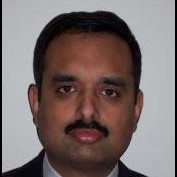
Giuseppe Roberto Pisaturo is a researcher at the Free University of Bozen-Bolzano , affiliated with the Faculty of Engineering . His work focuses on hydraulic modeling , sediment dynamics , and hydropower systems , with particular emphasis on ecological impacts and sustainable management strategies in Alpine environments. Research interests: Hydropeaking effects on river ecosystems Reservoir sedimentation and flushing operations 3D hydraulic modeling for ecological assessment Water distribution system optimization Pumps-as-Turbines energy recovery Gravel bed flow dynamics His methodological expertise spans experimental techniques (PIV, LDA), numerical simulations (Navier-Stokes solvers), and data-driven modeling applied to environmental systems. He contributes to the development of tools like QEPANET plugin for QGIS and applies genetic algorithms for optimal hydraulic infrastructure placement.
Prof. Edin Berberović is a faculty member at the Faculty of Mechanical Engineering, University of Zenica, Bosnia and Herzegovina. His research focuses on computational fluid dynamics (CFD), heat transfer, and energy efficiency. Computational modeling of fluid flows Numerical simulations using finite volume method OpenFOAM software development Renewable energy systems Droplet impact and phase change phenomena His recent work explores nano-fluid dynamics , cooling tower efficiency , and supercooled water modeling . Publications span high-impact journals and international conferences. He teaches courses in hydromechanics, computer programming for engineers, and power engineering technologies. Prof. Berberović actively contributes to academic quality standards in Bosnia and Herzegovina's higher education system.
Hans Kuerten is a Full Professor and Chair of Computational Multiphase Flow at the Department of Mechanical Engineering, Eindhoven University of Technology (TU/e). He is also a part-time professor in Computational Multiscale Methods at the Faculty EEMCS, University of Twente. His work focuses on numerical simulation methods for single-phase turbulent flows, particle-laden flows, and phase-transitional flows, with applications in process technology including particle separation, steam injection, boilers, and inkjet printing. MSc in Theoretical Physics, University of Utrecht PhD, Eindhoven University of Technology Hans collaborates with institutions like ETH Zurich, Ohio State University, and Politecnico di Torino. He has held sabbaticals at these institutions and is affiliated with organizations including ERCOFTAC and the J.M. Burgerscentrum, where he serves as local director at TU/e. Hans's research spans multiscale problems in two-phase flows, particularly turbulence-particle/droplet/bubble interactions. His key areas include subgrid modeling in LES, DNS of particle-laden flows with evaporation/condensation, diffuse interface models for phase transition, and droplet dynamics on porous substrates. His work integrates spectral and finite volume methods with experimental research. His recent articles emphasize DNS and LES of multiphase flows, complex network theory for turbulence analysis, phase transition modeling, and industrial applications like inkjet printing and quenching. Techniques range from stochastic-deconvolution models to novel numerical methods for Navier-Stokes-Korteweg equations. ERCOFTAC Da Vinci Prize (Jury Member) ERCOFTAC Special Interest Group on Large-Eddy Simulation Physics Board, Lorentz Center Scientific Committee, ETMM Workshop Series International Organizing Committee, Direct and Large Eddy Simulation Workshops Hans supervises numerous research projects and students, including the active FIP 2.0: Complex Fluids on Complex Substrates (2020–2026). He has contributed to 215 research outputs and 91 supervised works, including PhD theses and datasets. His lab collaborates with semi-industry partners such as Océ, AkzoNobel, and TNO, focusing on sustainable technologies aligned with UN SDGs.
Hans Kuerten is a Full Professor holding the Chair of Computational Multiphase Flow at the Department of Mechanical Engineering , Eindhoven University of Technology (TU/e) . Additionally, he serves as a part-time professor in Computational Multiscale Methods at the Faculty EEMCS, University of Twente . His research spans numerical simulation techniques for turbulent and multiphase flows, with applications in process technology and fluid mechanics. Academic Background: MSc in Theoretical Physics from the University of Utrecht, PhD from TU/e. International Collaborations: Partnerships with institutions like Ohio State University, ETH Zurich, and Politecnico di Torino. Projects: Leads the FIP 2.0: Complex Fluids on Complex Substrates project (2020–2026). Research Focus: Multiscale problems in two-phase flows, particularly turbulence-particle interactions, phase transitions, and computational methods like spectral and finite volume techniques. Applications include particle separation, steam injection, boilers, and inkjet printing. Scientific Contributions: Over 200 research outputs, including influential reviews on point-particle methods and DNS/LES techniques. Collaborates with semi-industry partners like Océ, AkzoNobel, NRG, and TNO. Advising: Supervised student theses, including M.H.M. Lemmens 's 2007 Master's work on 3D particle tracking in turbulent pipe flow.
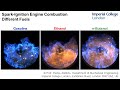
Professor Pavlos Aleiferis holds the Chair in Thermofluids in the Department of Mechanical Engineering, Faculty of Engineering at Imperial College London. He serves as Head of the Thermofluids Section and Member of the Departmental Management Committee. Previously, he was Professor of Thermofluids at University College London (2015-2016), Reader at UCL (2011-2015), and Lecturer at UCL (2003-2011). He earned his PhD from Imperial College (2000) after completing an MSc in Thermal Power and Fluids Engineering and a Diploma in Mechanical Engineering from the University of Manchester. Research focuses on fundamental fluid mechanics applied to sustainable energy and propulsion systems, employing laser diagnostics and numerical modeling. Key areas include: Turbulence and cyclic variations Hydrogen/ammonia engine flows Flash boiling and supercritical sprays Battery thermal management Underexpanded jets Lubrication film dynamics Sustainable fuel properties Research is sponsored by EPSRC, Jaguar Land Rover (including Centre of Excellence in engine flows), Shell, MAHLE Powertrain, BP, Lotus, Ford, and Delphi. Recent publications demonstrate strong focus on experimental and computational analysis of fuel sprays (ethanol, hydrogen), combustion phenomena, nozzle flow dynamics, and engine optimization. Trends include advanced optical diagnostics (PLIF, schlieren), multi-physics modeling (LES, VOF), and sustainable fuel applications across extreme thermodynamic conditions. Awards include: Dugald Clerk Prize (Institution of Mechanical Engineers) Sugden Award (Combustion Institute) Prizes from Institute of Physics International Centre for Heat and Mass Transfer awards Society of Automotive Engineers honors Teaching responsibilities include leadership of Computational Fluid Dynamics (MECH70015) and co-leadership of Environmental and Applied Fluid Dynamics (MECH70027). Editorial duties encompass boards of Fuel (Elsevier) and Fuels (MDPI).
Mikhael Gorokhovski is a Professor at École Centrale de Lyon within the Department of Fluid Mechanics, Acoustics, and Energy, and a member of the Laboratory of Fluid Mechanics and Acoustics (LMFA-UMR5509). His research focuses on turbulence modeling, spray dynamics, cavitation, and multiphase flows. He has held academic positions since 1982, including Professorships at École Centrale de Lyon (2006–present) and the University of Rouen (1995–2006). He has supervised 22 PhD students across multiple institutions. His work integrates computational methods like LES (Large Eddy Simulation) with stochastic modeling to address complex fluid dynamics challenges. Research interests include fragmentation processes, Lagrangian turbulence analysis, and atomization mechanisms. He has contributed to advancing stochastic subgrid-scale models for droplet motion, turbulent dispersion, and cavitation effects. His studies often involve high-Reynolds-number flows, air-blast atomization, and diesel spray combustion. He collaborates with institutions like Stanford University (CTR) and Japan’s National Aerospace Laboratory. Key publications (2017–2025) focus on stochastic models for under-resolved simulations, LES applications in spray dynamics, and turbulent acceleration statistics. His work bridges theoretical fluid mechanics with computational engineering, addressing challenges in energy systems, aerospace, and environmental flows. He serves on editorial boards and national committees, including the Annual Review of Fluid Mechanics and French computing evaluation board (GENCI). Gorokhovski has mentored 22 PhD students, with 12 at the University of Rouen, 4 at École Centrale de Lyon, and 6 in Kazakhstan. His academic activities include leadership roles in conferences, editorial work, and national research evaluation. He leads the EM³ team at LMFA, focusing on multi-physical, multi-phase, and multi-scale flows.
Prof. Paul Yecko is a faculty member at the Albert Nerken School of Engineering, part of The Cooper Union for the Advancement of Science and Art. His research focuses on fluid dynamics, particularly in geophysical flows, magnetic fluids, and computational modeling. He co-authored the Vofi library for fluid interface volume fraction calculations and has published extensively on topics like ferrofluid behavior, machine learning in ocean circulation, and passive ventilation systems. Research Trends: Recent publications emphasize Multiscale modeling of magnetic fluids Machine learning integration in geophysical flow prediction Volume fraction analysis in multiphase systems Nonlinear dynamics in shear and pulsatile flows Bio-inspired fluid transport mechanisms Optimal disturbance tracking in rotating boundary layers
Mohmood Mousvi, Ph.D., is an Assistant Teaching Professor at Bowling Green State University's School of Engineering in the College of Technology Architecture and Applied Engineering. His expertise spans combustion, fluid dynamics, and advanced computational methods. He holds a Ph.D. in Aerospace Engineering from Shiraz University (Iran) in collaboration with Queen Mary University of London (UK). His research focuses on combustion science, multiphase flow, flow control, and CFD modeling, with notable contributions to droplet dynamics, microgravity phenomena, and energy systems. Dr. Mousvi has held research positions at prestigious institutions including the University of Texas at Austin (Reactive Flow Modeling Lab), Texas A&M University (Computational Thermo-Fluids Lab), and Seoul National University (Institute of Advanced Aerospace Technology). He collaborates globally with institutions like Queen Mary University of London’s Centre for Sustainable Engineering. His research has produced over 40 peer-reviewed articles and garnered awards such as Best Postdoctoral Researcher at Seoul National University and multiple Teaching Excellence recognitions. He has secured research grants as PI/Co-PI in South Korea, China, and the U.S., emphasizing international collaboration. Dr. Mousvi actively serves on editorial boards and has reviewed over 300 papers for top journals. His work bridges theoretical research and industrial applications, including aero-hydrodynamic analyses and large-scale equipment design.
Stefano Passoni is a Researcher at Politecnico di Milano's NRGroup, focusing on nuclear engineering and computational fluid dynamics (CFD). His R&D spans since 2016, covering fuel performance modeling, GenIV reactors (e.g., MSR, LFR), compact heat exchangers, and reduced-order models. He holds a PhD (2018) and MSc (2013) from Politecnico di Milano, with thesis topics on nuclear fuel behavior and lead-cooled fast reactors. His research interests emphasize CFD applications in multiphase flow analysis, nuclear reactor thermal-hydraulics, and energy systems optimization. Recent work involves machine learning integration for void fraction estimation and experimental validation of compact heat exchangers. He advises multiple PhD/MSc students and collaborates on projects like the ELSMOR initiative. No scientific awards explicitly mentioned. His contributions include prototyping oxygen separation membranes and advancing wind turbine aerodynamics through CFD modeling. Active in NRGroup's R&D since 2016, he leads teams in GenIV reactor modeling and computational methods development.
Dr. Stefano Brizzolara is a Professor in the Kevin T. Crofton Department of Aerospace and Ocean Engineering at Virginia Tech and serves as Co-director of the Center for Marine Autonomy and Robotics (CMAR) and Director of the Innovative Ship Design Lab (i-SHIP). He holds the Crofton Faculty Fellow title and is Assistant Department Head for Graduate Studies. His research focuses on advanced marine vehicle design, hydrodynamics, CFD, and autonomous systems. Ph.D., Naval Architecture, University Federico II, Naples, Italy (2000) M.S. and B.S., Naval Architecture and Marine Engineering, University of Genoa, Italy (1994) Dr. Brizzolara's research interests center on numerical hydrodynamics , innovative ship design , high-speed marine vehicles , and marine renewable energy . His lab develops advanced CFD tools and design methodologies for autonomous underwater and surface vehicles, with applications in naval and commercial sectors. He specializes in turbulence modeling , propulsor optimization , and fluid-structure interaction . His recent publications (2020–2025) emphasize maneuvering and seakeeping models for shallowly submerged AUVs, CFD validation of high-speed hulls, transition modeling , and wave energy conversion . These works demonstrate a strong trend toward integrating multi-physics simulations , nonlinear dynamics , and energy-efficient marine systems . 2021 Chair, SNAME H-11 CFD Committee 2020 Crofton Faculty Fellow 2018 Calder Prize for best paper on high-speed crafts 2016 IEEE Excellence in Review Award 2015 Mandel’s Prize (as advisor) 2011 Best Paper Award, Journal of Ships and Offshore Structures Dr. Brizzolara has advised numerous PhD and master’s students, including Luca Bonfiglio and Taylor Njaka. His research is supported by grants from ONR, DARPA, DoE , and industry partners. He has served on editorial boards of major journals and led professional committees in SNAME and ISSC. He leads the Innovative Ship Design Lab (i-SHIP) , which conducts cutting-edge research in marine autonomy, hydrodynamics, and sustainable marine technologies. The lab fosters collaboration with MIT, industry, and international institutions.
Gerd Mutschke is a researcher at the Helmholtz-Zentrum Dresden-Rossendorf (HZDR) within the Fluid Dynamics division and the Resource Technology Processes department. His work focuses on advanced fluid dynamics and electrochemical processes, leveraging numerical methods and magnetic field control to address complex industrial and scientific challenges. Phone: +49 351 260 2480 Email: g.mutschke@hzdr.de Address: Bautzner Landstraße 400, Building/Office 250/217, 01328 Dresden Research Interests Multiphase flow and interfacial phenomena Gas evolution in electrochemical processes Control of electrochemical processes via magnetic fields Numerical methods: phase-field, spectral elements, VOF, Level-Set Magnetohydrodynamics in liquid metals and melts Electromagnetic boundary layer control Current Projects MADAGAS : Capillary and electrical effects on gas evolution in electrolysis SineWave/OxySep : Nucleation, growth, departure, and coalescence of gas bubbles ALKALIMIT : Euler-Euler modeling of alkaline electrolysis NanoCones : Electrodeposition of metal towards nano-structured surfaces Project Management Helmholtz Alliance LIMTECH (2012–2017) Helmholtz ENERGY Alliance (2012–2015) Research Field ENERGY of HZDR (2019) Student Engagement Dr. Mutschke actively encourages committed students to apply for project work, emphasizing hands-on research opportunities in computational fluid dynamics and electrochemical systems.
Wonjae Choi is an Associate Professor and Program Coordinator of Mechanical Engineering and Mechanical Engineering Technology at the Gildart Haase School of Computer Science and Engineering, Fairleigh Dickinson University (FDU), New Jersey. He holds a PhD in Mechanical Engineering from the Massachusetts Institute of Technology (MIT), with a focus on oil-repelling surfaces, and earned his BS and MS from Seoul National University. Prior to FDU, he served as an Assistant Professor at the University of Texas at Dallas and as a Research Fellow at Harvard University. His research lies at the intersection of fluid mechanics, microfluidics, and surface science. Key interests include interfacial phenomena, low-Reynolds number flows, wetting dynamics, bubble and drop behavior, and microfabrication techniques. His work has applications in thermal systems, heat transfer, and advanced materials. The 15 most recent articles reflect a consistent focus on microscale fluid dynamics, surface engineering, and thermal-fluid systems. Broad keywords include Mechanical Engineering, Fluid Mechanics, Microfluidics, Heat Transfer, and Materials Science. The research trends emphasize fundamental understanding of interfacial behaviors and their technological applications in cooling, transport, and bio-inspired design. Oil-Repelling Surfaces: Design and Applications (2023) Dynamics of Bubbles in Microconfined Geometries (2023) Low-Reynolds Number Hydrodynamics in Bio-Inspired Microfluidic Devices (2023) Wetting Transitions on Hierarchical Microstructured Surfaces (2022) Thermal Management Using Microfluidic Evaporative Cooling (2022) Dr. Choi has published 30 journal papers and 9 conference papers. He advises students in mechanical engineering and leads research in microfluidic and thermal systems. There is no mention of external grants in the provided texts. He is associated with the Mechanical Engineering and Mechanical Engineering Technology program at FDU, contributing to both education and research in thermal sciences and fluid dynamics.
Raja Banerjee is a Professor in the Department of Mechanical & Aerospace Engineering at the Indian Institute of Technology Hyderabad . He holds a PhD from the University of Missouri Rolla (2001), an MTech from IIT Kharagpur (1998), and a BE from Govt. Engineering College, Rewa (1995). Research Interests include: Multiphase and interfacial flows Spray and atomization dynamics Turbulent combustion modeling High Performance Computing (HPC) for CFD Fluid-structure interaction in industrial systems His publications focus on: Coal/water slurry atomization LNG storage tank stratification Alternative fuel combustion (butanol, ethanol) Sloshing noise prediction in automotive systems GPU-accelerated CFD solvers Micro-scale cavitating flows Labs & Facilities under his leadership include: 3D Phase Doppler Particle Analyzer (PDPA) Constant Volume Spray Chambers Schlieren/Shadowgraph imaging setup High-end computational clusters with K80/P100 GPUs Optical engine for combustion visualization