Ismail Serdar Ozoguz is a Professor at Istanbul Technical University, Department of Electronics and Communication Engineering. With over 163 publications and 3020 citations, his work spans oscillator engineering, neural networks, and RF/wireless systems. Institution : Istanbul Technical University Department : Electronics and Communication Engineering Rank : Professor Research interests focus on oscillator engineering , current mode circuits , and chaotic oscillators . Recent work emphasizes neural network applications in filter optimization, antenna modeling, and stochastic computing. Scientific awards include: GEBIP Award (2002) Mustafa Parlar Foundation Research Incentive Award (2003) Research Incentive Award (2004) Projects highlight nonlinear optimization in GaN amplifiers, fractional-order neural networks, and spintronics for communication/memory systems. Collaborations span biomedical engineering, wireless networks, and AI-driven optimization.
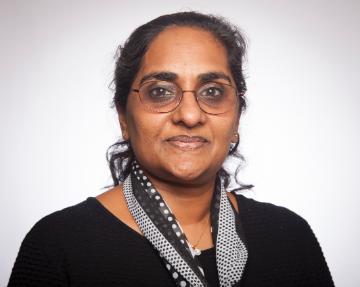
Shoba Krishnan is a Professor in the Department of Electrical and Computer Engineering at Santa Clara University's School of Engineering. Her work spans analog and mixed-signal integrated circuit design, carbon nanotube interconnect modeling, and engineering education initiatives. Education: B. Tech., Jawaharlal Nehru Technological University (1987) M.S., Michigan State University (1990) Ph.D., Michigan State University (1993) Her research focuses on high-speed data communication ICs, particularly clock/data I/O circuits, and explores carbon nanotubes as interconnect materials. She's expanding into bio-engineering instrumentation and renewable energy power electronics. Publications highlight work on low-power high-speed drivers, carbon nanotube via resistance analysis, microwave frequency modeling, and BIST structures for transceivers. She advises IEEE and Engineers Without Borders chapters at SCU.
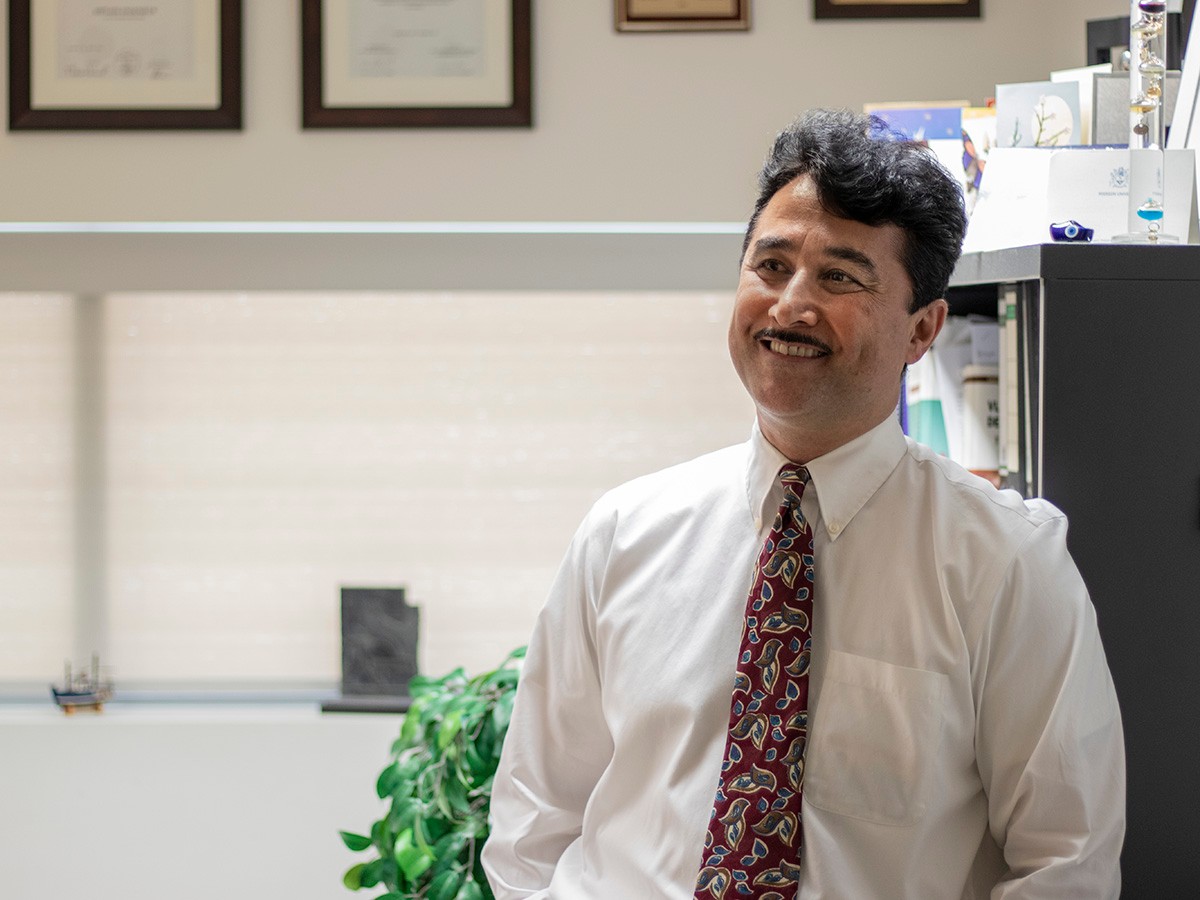
Dr. Reza Sedaghat is a Professor in the Department of Electrical, Computer, and Biomedical Engineering at Toronto Metropolitan University. He holds a PhD in Electrical Engineering from the University of Hannover (1999), an MASc (1994), and BSc (1992) from the University of Kassel. His research focuses on optimization problems, VLSI design, and cross-layer modeling of IoT systems. Professional Engineer (P.Eng) in Ontario IEEE Senior Member Reviewer for IEEE Transactions and Elsevier journals Research interests include: Single/Multi-objective optimization Quadratic assignment problems Security architecture for ciphers Design automation and FPGA systems Scientific contributions highlighted in articles from 2018-2019 demonstrate expertise in swarm computation, hardware security, and IoT optimization frameworks.
Danny Chen is a Professor in the Department of Computer Science and Engineering at the University of Notre Dame, with a concurrent appointment in the Department of Applied and Computational Mathematics and Statistics. His research focuses on algorithm design, computational geometry, biomedical imaging, and machine learning. Ph.D., Computer Science, Purdue University (1992) M.S., Computer Science, Purdue University (1988) B.S., Computer Science and Mathematics, University of San Francisco (1985) Dr. Chen has developed over 330 publications and 5 U.S. patents, with applications in radiation therapy, biomedical imaging, and VLSI design. His recent work explores advanced deep learning architectures for medical image segmentation and tabular data analysis. Key awards include the NSF CAREER Award, Kaneb Teaching Award, James A. Burns Award, and Computerworld Honors Program Laureate. He is an IEEE Fellow and ACM Distinguished Scientist. Visiting Professor at HKUST (2003), Tsinghua University (2012), and Zhejiang University (2012) Research funded by NSF and NIH Active in program committees and NSF review panels
Uğur ÇİNİ is an Associate Professor in the Department of Electronics Engineering at Uskudar University, where he has served as faculty since 2019. Previously, he worked as a research assistant at Boğaziçi University and Southern Methodist University, and gained industry experience as an R&D engineer at İsbak Inc. and Anka Mikroelektronik Inc. His educational background includes: Undergraduate Degree in Electronics and Communications Engineering from Yıldız Technical University (1999) Master's Degree in Electrical and Electronics Engineering from Boğaziçi University (2003) Doctorate in Electrical and Electronics Engineering from Boğaziçi University (2010) Dr. ÇİNİ's research spans VLSI Design, Digital Arithmetic, Analog IC Design, Circuit Design for Biomedicine, and Embedded Systems. He specializes in CMOS circuit design, biomedical instrumentation, and FPGA-based implementations, with recent projects focusing on energy harvesting converters and high-speed logic circuits for practical applications. His publication record (2017-2023) demonstrates expertise in analog/digital circuit design for biomedical instrumentation, display technologies, and reconfigurable systems. Key trends include low-power optimization, precision amplifier development, and current-mode circuit innovations addressing real-world engineering challenges in medical devices and display drivers. No scientific awards are listed in the available information. He has supervised graduate theses on energy harvesting converters (2024), source-coupled logic (2023), and FPGA implementations (2022). Administratively, he advises 100-150 students, served as Deputy Head of Department (2021-2024), and participates in Quality, Internship, Erasmus, and International Students committees. As laboratory responsible since 2020, he led the 2024 establishment of the Power Systems and Electrical Machines Laboratory, demonstrating hands-on leadership in educational infrastructure development.
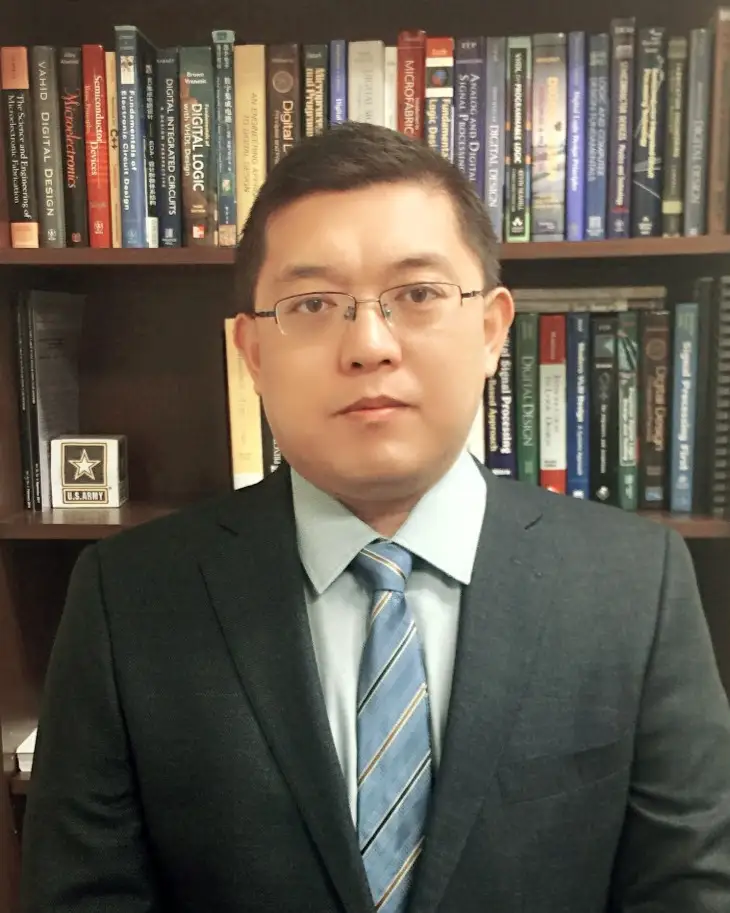
Xiaolong Liu serves as Assistant Professor at Southern University of Science and Technology's School of Microelectronics. His academic journey includes a Ph.D. from Hong Kong University of Science and Technology (2019), M.E. from Tsinghua University (2014), and B.E. from Beijing University of Aeronautics and Astronautics (2010). Prior to his current position, he worked as Staff Engineer at eTopus Technology in Silicon Valley (2019-2021) and completed a postdoc at HKUST. Ph.D. in Electronic and Computer Engineering, Hong Kong University of Science and Technology (2019) M.E. in Microelectronics, Tsinghua University (2014) B.E. in Electronic Engineering, Beijing University of Aeronautics and Astronautics (2010) Dr. Liu's research spans cutting-edge RF/mm-Wave/THz integrated circuit design, focusing on high-performance signal generators , ultra-wideband transceivers , and low-power frequency synthesis . His work addresses critical challenges in 5G/6G communications, terahertz spectroscopy, and high-speed wireline interfaces through innovative CMOS architectures. Technical emphases include varactor-less VCOs, harmonic enhancement techniques, and magnetic tuning mechanisms for millimeter-wave systems. His publication portfolio demonstrates consistent leadership in IEEE flagship journals/conferences (JSSC, TMTT, ISSCC, VLSI), with recent work advancing Class-F oscillators, sub-sampling PLLs, and sub-THz synthesizers. Notable trends include migration toward sub-THz frequencies (2023-2025) , multi-core oscillator architectures , and elimination of harmonic tuning for simplified design. IEEE VLSI Paper Technical Highlights (2019) IEEE CICC Invited Talk (2019) IEEE TVLSI 2023 Best Reviewer Award Top 4 Most Downloaded Paper in TCAS-II (July 2022) Dr. Liu actively mentors students through SUSTech's graduate programs, with advisees consistently earning university-level thesis awards and conference recognitions. His lab maintains strong industry ties through silicon validation and collaborates on cutting-edge tapeouts in 7nm/16nm nodes. Current projects focus on cryo-CMOS interfaces for quantum computing and ultra-wideband transceivers for 6G applications. His research group operates within SUSTech's state-of-the-art microelectronics facility, specializing in mm-Wave/THz characterization and high-speed SerDes validation. The team maintains partnerships with semiconductor foundries for advanced-node prototyping and collaborates with industry leaders on real-world implementation challenges.
Xin Geng is an Associate Professor in the Department of Management at the Miami Herbert Business School, University of Miami. Their research spans operations management, supply chain dynamics, and game theory, with a focus on strategic decision-making in complex systems. Research Interests: Xin's work addresses challenges in supply chain risk mitigation , price competition , and inventory optimization . They also explore human-centered design in extended reality (XR) virtual displays for workplace metaverse applications, alongside algorithmic advancements in congestion prediction for integrated circuit design. Article Trends: Recent publications emphasize exogenous lead times in assemble-to-order systems, strategic postponement in decentralized supply chains, and label-correlation modeling for hardware design. Their studies integrate mathematical rigor with real-world applications in logistics, pricing, and XR technologies. Advising and Grants: While specific advisees are not listed, Xin collaborates with scholars like Huiqi Guan and Nan Yang. Research is supported by grants from the Research Grants Council of Hong Kong and the National Natural Science Foundation of China.
Jinhui Wang is a Professor in the Department of Electrical and Computer Engineering at the University of South Alabama's College of Engineering. His research focuses on cutting-edge technologies in Artificial Intelligence , VLSI Circuits , and Neuromorphic Computing . Education: Postdoctoral work in VLSI Design at University of Rochester, NY, USA; Ph.D. and B.S. in Electrical Engineering from Beijing University of Technology and Hebei University, China. His work addresses 3D IC Design , Emerging Memory Systems , and Cooling Techniques for Electronic Devices , with recent publications emphasizing privacy-preserving AI hardware and intelligent memory architectures for mobile and embedded systems. Collaborative projects span applications in Wireless Sensor Networks , IoT , and UAV Electronic Subsystems .
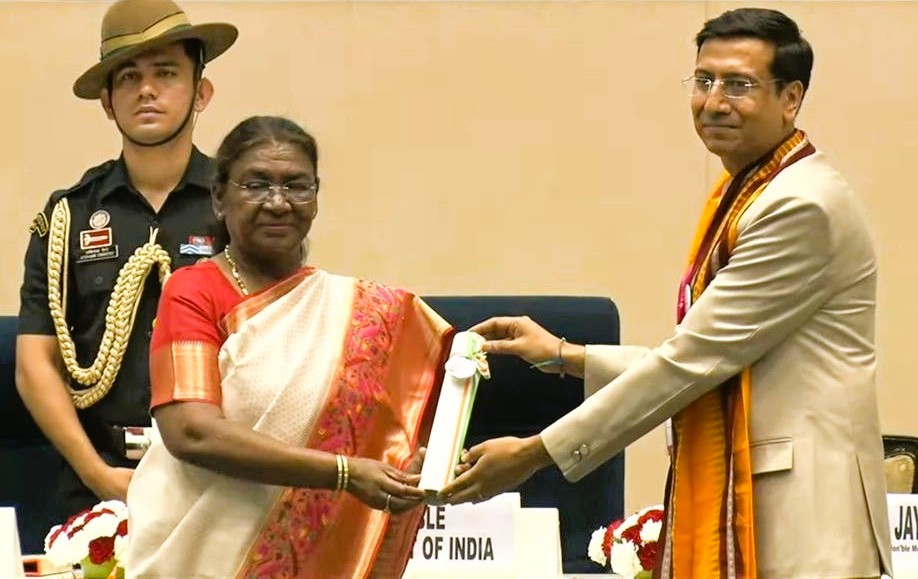
Prof. Kapil Ahuja is a Full Professor in the Department of Computer Science & Engineering at the Indian Institute of Technology Indore (IIT Indore), where he heads the Mathematics of Data Science and Simulation (MODSS) research lab. After completing dual Master's degrees and a Ph.D. from Virginia Tech (USA) followed by postdoctoral work at the Max Planck Institute in Germany, he has held visiting positions at UT Austin, IMT Atlantique, Sandia National Labs, TU Dresden, and TU Braunschweig. His administrative roles include founding Dean of International Affairs and former Head of Computer Science & Engineering at IIT Indore. Education: Ph.D. in Mathematics, Virginia Tech (2011) M.S. in Mathematics, Virginia Tech (2009) M.S. in Computer Science, Virginia Tech (2007) B.Tech. in Mechanical Engineering, IIT (BHU) Varanasi (2001) Research Focus: Prof. Ahuja's work bridges theoretical advances with real-world applications, emphasizing machine learning algorithms for plant/cancer studies, game-theoretic poverty reduction models, exascale climate modeling solvers, and drone trajectory optimization. His interdisciplinary approach integrates numerical linear algebra with network science to solve complex systems problems across healthcare, agriculture, and climate science, supported by 4.85 Crores INR in external funding. Publication Trends: Recent work demonstrates growing emphasis on AI-driven optimization for physical systems (drones, climate models) and biomedical applications (cancer classification). His publications increasingly feature cross-disciplinary collaborations between computer science, biology, and economics, with notable contributions in explainable AI for healthcare and resource allocation algorithms for social networks. Scientific Recognition: National Teacher's Award (2024) from the President of India Five-time recipient of IIT Indore's Best Teacher Award (2013-2023) Best Poster Award at International Workshop on Game Theory & Networks (2019) Steeneck Graduate Research Fellowship (Virginia Tech, 2011) Multiple SIAM travel awards for international conferences Mentorship & Service: Prof. Ahuja has graduated 5 Ph.D. and 4 M.S. (Research) students while mentoring 75 B.Tech. projects. He serves as Associate Editor for Applied Intelligence Journal (Springer Nature) and Knowledge and Information Systems, organizes international conferences, and reviews for 35+ academic sources. His administrative leadership significantly expanded IIT Indore's global partnerships through the Research Park initiative. Research Infrastructure: The MODSS lab maintains active collaborations with Oak Ridge National Lab, Sandia National Labs, and European institutions. Current projects include AI-optimized drone swarms for agricultural monitoring and game-theoretic models for poverty intervention, utilizing high-performance computing resources for large-scale simulations.
Hayssam El-Razouk serves as Associate Professor in the Electrical and Computer Engineering Department at California State University, Fresno within the Lyles College of Engineering. He holds a PhD in Electrical and Computer Engineering from Western University (2015) and maintains active industry connections through prior roles at IBM Canada and RedIron Technologies. Education: PhD in Electrical and Computer Engineering, Western University, London, Ontario, Canada (2015) MESc in Electrical and Computer Engineering, Western University, London, Ontario, Canada (2006) BEng in Electrical and Computer Engineering, Beirut Arab University, Beirut, Lebanon (2002) - First Rank Research Focus: Dr. El-Razouk's work centers on Hardware Security and Cryptographic Hardware , with significant contributions to VLSI Circuits Design for finite field arithmetic. His research bridges theoretical cryptography with practical implementations, emphasizing defect tolerance in digital circuits, data compression techniques, and pseudo-random sequence generation for secure communications. Current projects address emerging threats in embedded systems and IoT security. Publication Trends: Analysis of his 15 most recent publications (2025-2016) reveals consistent specialization in GF(2^m) arithmetic optimization using Gaussian Normal Basis and Polynomial Basis representations. His work demonstrates progressive refinement from foundational finite field operations (2016-2019) toward integrated security solutions (2020-2025), with increasing focus on side-channel attack resistance and hardware-software co-design for real-world applications including automotive systems and smart homes. Scientific Recognition: Natural Sciences and Engineering Research Council (NSERC) Canada Graduate Scholarship-Doctoral (2011-2015) Best Presenter Award, IEEE CCWC 2023 Best Paper Award, IEEE CCWC 2021 Outstanding Faculty Publication Award, CSU Fresno (2019, 2020) Jamal Abdul Nassir Golden Medal Distinction Award (2002) Research Funding and Mentorship: Dr. El-Razouk secured a $378,002 Department of Defense grant (W911NF-21-1-0210) in 2021 for hardware security research. He teaches core courses including ECE 150 (Cloud and Cybersecurity) and ECE 156 (Cryptography), supervising senior design projects on topics like RFID security and temperature monitoring systems. As an IEEE and ASEE member, he actively contributes to conference program committees and journal reviews.
Fereydoun Daneshgaran is a Professor and Chairman of the Electrical & Computer Engineering Department at California State University, Los Angeles, where he has served since 2006. He also directs the fiber and nonlinear optics research laboratory and has held various academic leadership positions including chairman of the Communications group and acting chairman of the ECE Department. Dr. Daneshgaran's educational background includes: Ph.D. in Communications, VLSI, and Optimization from UCLA (1992) M.S. (Magna Cum Laude) in Communications, Solid State Electronics, and Control Systems from Cal State LA (1985) B.S. (Magna Cum Laude) in Electrical and Mechanical Engineering from Cal State LA (1983) Dr. Daneshgaran's primary research interests focus on wireless communications, digital communications, and information theory. His work spans multiple specialized areas including coding theory (particularly Turbo Codes and LDPC codes), quantum key distribution, cognitive radio, and network localization. His research has significant applications in wireless networking protocols, particularly IEEE 802.11 standards, with numerous publications analyzing throughput performance under various network conditions. He has also made substantial contributions to optical communications and signal processing techniques. Dr. Daneshgaran's publication record shows a progression from foundational work in Viterbi decoding and turbo codes to more recent applications in quantum communications and advanced wireless network protocols. His research consistently bridges theoretical communications theory with practical implementations, as evidenced by both his extensive journal publications and industry experience. His scientific achievements include: Best Paper Award at First International Conference on Advances in Satellite and Space Communications (SPACOMM 2009) U.S. Patent No. US 2007/0079223 A1 for "A method and system for Information processing" Dr. Daneshgaran has supervised numerous Ph.D. students and visiting scholars, primarily from Politecnico University of Turin (POLITO), Italy, fostering international research collaborations. His academic leadership extends to developing and teaching the entire graduate sequence in digital communications at Cal State LA, along with specialized courses in wireless communications, cognitive radio, and optical communication systems. He has also maintained industry connections through various consulting roles and entrepreneurial ventures in communications technology. As director of the fiber and nonlinear optics research laboratory from 1994 to 2015, Dr. Daneshgaran led research in optical communications and related technologies. His work has bridged theoretical communications research with practical implementations, as evidenced by both his academic publications and industry experience founding companies like EuroConcepts S.r.l. and Quantum Bit Communications, LLC.
Takanobu Watanabe is a Professor at the Faculty of Science and Engineering , Waseda University , specializing in Electronic materials , Computational physics , and Nanotechnology . With a career spanning over two decades at Waseda and affiliations with institutions like the Japan Science and Technology Agency , his work focuses on thermal management and thermoelectric devices for next-generation electronics. PhD in Engineering from Waseda University Professional memberships: IEEE, Japan Society of Applied Physics, Japan Physical Society His research explores phonon transport , thermal boundary resistance , and nanoscale thermoelectric generators , with significant contributions to GaN-based semiconductor thermal management and SiGe/GeSn alloy properties . His recent work leverages machine learning molecular dynamics for interface analysis. Key trends in his publications include: Thermal boundary resistance optimization across metal-dielectric interfaces Advancements in cavity-free thermoelectric architectures Phonon lifetime and dispersion studies in SiGe alloys Surface and interface engineering for power generation enhancement Scientific awards: Waseda Research Award (2018) Waseda Teaching Award (2016) JSAP Young Scientist Presentation Award (2000) Inoue Research Award (1999) His team has demonstrated scalable thermoelectric power densities up to 27.9 nW/cm² and 4.2 mW/cm² through CMOS-compatible fabrication techniques. Collaborative projects span institutions like JST , University of Tokyo , and Osaka University . Current research at his lab explores anisotropic conductivity control in carbon nanotubes, interface bonding mechanisms in GaN-diamond systems, and strain engineering in silicon nanowires. Future work targets autonomous IoT energy harvesting and self-powered wearable devices .
Sabih H. Gerez is an Assistant Professor specializing in Computer Architecture Design and Test for Embedded Systems , affiliated with the Digital Society Institute . With an ORCID ID of 0000-0003-4576-121X, his work focuses on low-power hardware design and energy-efficient computing. Research Interests : Energy efficiency, near-threshold voltage (Near-Vth) computing, flip-flop design, and optimization of digital circuits for embedded systems. Key Contributions : Development of ultra-low-voltage flip-flops, glitch-optimized Booth multipliers, and standard-cell libraries for Near-Vth systems. His work addresses power dissipation, noise margins, and performance metrics. Collaborations : Collaborated with researchers like Anuradha Chathuranga Ranasinghe and Muhammad Adeel Shafique on topics such as approximate MAC accelerators and power-efficient circuit design.
François-Raymond Boyer is an Associate Professor in the Department of Computer Engineering and Software Engineering at Polytechnique Montréal. He holds a B.Sc. and Ph.D. from Université de Montréal and teaches courses in programming and digital audio. His research spans: Computer architecture and VLSI systems Network processing and traffic management Digital audio signal processing Hardware acceleration and optimization He is affiliated with ReSMiQ (Strategic Cluster for Microsystems) and OICRM (Music Research Observatory). Recent publications focus on 5G network processing, modular programming frameworks, and high-speed traffic management architectures, primarily in IEEE Access and IEEE Transactions on VLSI Systems. Professor Boyer has supervised 3 PhD and 6 Master's students, with research topics including network architecture, audio processing, and hardware design. No scientific awards are mentioned in the available records.
Graziano Vernizzi serves as Professor in the Department of Physics and Astronomy at Siena University (formerly Siena College) since 2016, having previously held Associate Professor (2013-2016) and Assistant Professor (2010-2013) positions at the same institution. His academic journey includes a Research Professor role at Northwestern University (2006-2010) and prestigious postdoctoral appointments at the Niels Bohr Institute, University of Oxford, CEA/Saclay, Spinoza Institute, and Northwestern University. His educational background includes: B.S. in Physics, University of Parma, Italy (1995) Ph.D. in Physics, University of Parma, Italy (2000) Vernizzi's research integrates computational and theoretical physics to address nanoscale phenomena, with core interests in Random Matrix Theory, biophysics (RNA/ssDNA structures and membrane theory), soft condensed matter physics, and nanoscale science. He develops computational models to analyze complex systems where theoretical frameworks are essential for interpreting experimental data, driving technological innovation and expanding career opportunities in emerging scientific fields. His methodology frequently bridges mathematical rigor with physical applications across disciplinary boundaries. Analysis of his publication trends reveals consistent interdisciplinary work connecting mathematics, physics, and engineering. Key recurring themes include topological constraints in biological and electronic systems, statistical mechanics approaches to soft matter, and algorithmic innovations for verification problems. His research demonstrates particular strength in applying abstract mathematical concepts like random matrix theory to concrete biophysical and engineering challenges, resulting in publications spanning Physical Review journals, Soft Matter, and specialized engineering conferences. His scientific recognition includes: Trust-Co Excellence Honor for advancing the mission of Siena College (Trustco Bank, 2015) No information regarding student advising, research grants, or dedicated laboratory facilities was provided in the source material. His professional activities focus on computational research, course development in nanoscale physics, and interdisciplinary collaboration without mention of specific research teams or experimental facilities.