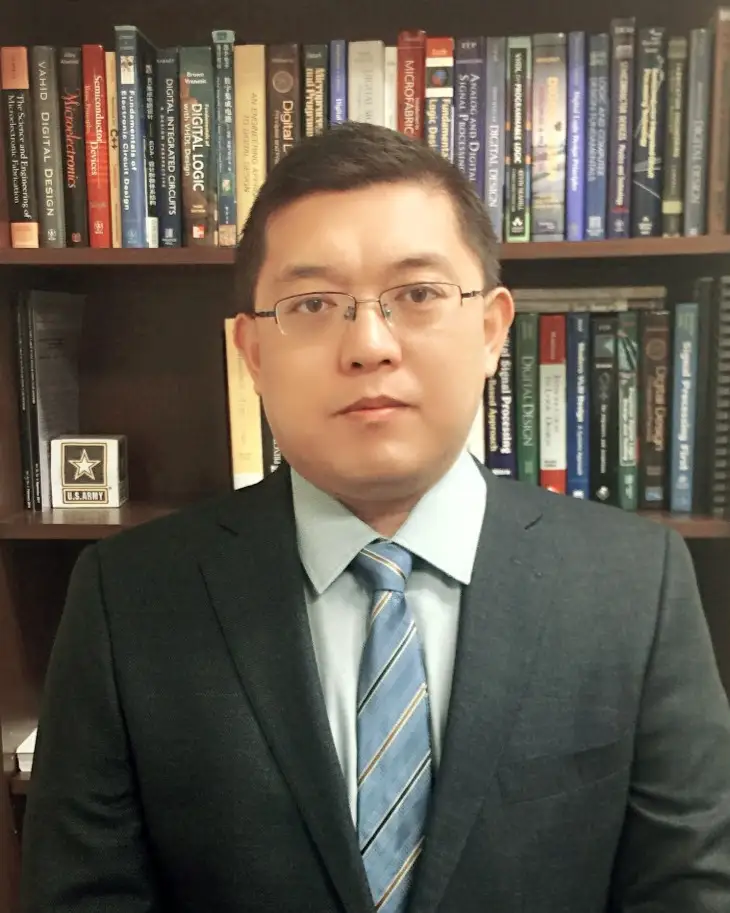
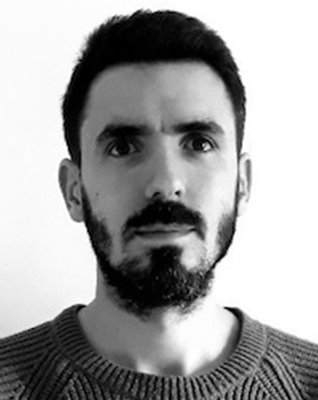
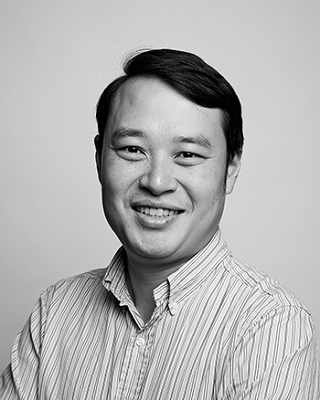
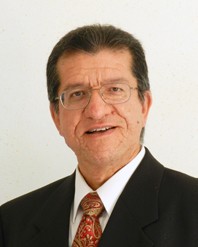
Jinhui Wang is a Professor in the Department of Electrical and Computer Engineering at the University of South Alabama's College of Engineering. His research focuses on cutting-edge technologies in Artificial Intelligence , VLSI Circuits , and Neuromorphic Computing . Education: Postdoctoral work in VLSI Design at University of Rochester, NY, USA; Ph.D. and B.S. in Electrical Engineering from Beijing University of Technology and Hebei University, China. His work addresses 3D IC Design , Emerging Memory Systems , and Cooling Techniques for Electronic Devices , with recent publications emphasizing privacy-preserving AI hardware and intelligent memory architectures for mobile and embedded systems. Collaborative projects span applications in Wireless Sensor Networks , IoT , and UAV Electronic Subsystems .
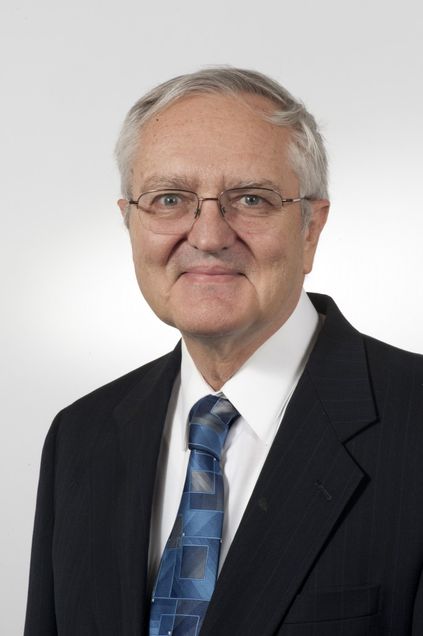
Allyn Hubbard is a Professor at Boston University's Department of Electrical and Computer Engineering. His research spans auditory physiology, computational modeling, and neurocomputing, focusing on the electromechanical properties of the cochlea and microcircuit technology applications. Education: PhD, University of Wisconsin-Madison, 1977 Email: aeh@bu.edu Research interests include: Electromechanical cochlear properties Neuromorphic computing architectures Biological auditory system modeling Smart sensor development for medical/environmental use His work shows a strong emphasis on VLSI design for neural networks, cochlear wave propagation, and biomimetic acoustic threat detection systems.
Dimitrios Soudris is a Professor at the School of Electrical and Computer Engineering, National Technical University of Athens (NTUA), leading the Microprocessor and Digital Systems Lab (MicroLab). Previously, he served as Lecturer, Assistant, and Associate Professor at Democritus University of Thrace from 1995 to 2008. Diploma in Electrical Engineering (1987), University of Patras PhD in Electrical Engineering (1992), University of Patras His research focuses on Embedded Systems , Reconfigurable Architectures (FPGAs) , Hardware Accelerators for data centers/space/cloud, Edge Computing , and Low Power VLSI Design . Recent publications highlight trends in: AI/ML acceleration for edge and space applications Secure FPGA architectures for 6G networks Energy-efficient heterogeneous memory systems Approximate computing techniques Transformer optimization for low-power contexts Scientific Awards: INTEL and IBM awards (project LPGD #25256) HiPEAC, DAC, and ISCA awards (2010–2024) XILINX Open Hardware Design Contest (2017, 2019, 2021) He has coordinated >70 R&D projects funded by the European Commission, ENIAC-JU, ESA, and industry partners. As Associate Editor of ACM TODAES and conference chair (PATMOS, VLSI-SOC), he contributes to academic leadership. His lab, MicroLab, specializes in hardware-software co-design for emerging computing paradigms.
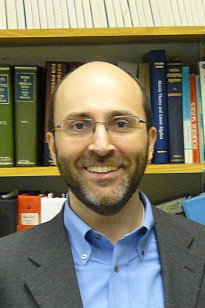
Sivakumar S A is a researcher actively contributing to the fields of low-power electronics and network security. His work spans affiliations with institutions such as Dr. N.G.P. Institute of Technology, Kalaignarkarunanidhi Institute of Technology, and Karpagam College of Engineering, focusing on cutting-edge applications in digital VLSI systems and wireless sensor networks. Research interests include: Low-energy operation in wireless sensor nodes Subthreshold circuit design for biomedical applications Energy-efficient security protocols for resource-constrained networks Optimization of firewall policies in wireless environments Recent publications highlight his expertise in subthreshold level shifters and energy-aware security frameworks. Notable journals include Analog Integrated Circuits and Signal Processing and Security and Privacy .
Felipe Gohring de Magalhaes is an Assistant Professor in the Department of Computer Engineering and Software Engineering at Polytechnique Montréal, where he has been working since July 2018 and assumed his current position in October 2024. He holds a dual doctorate from PUC-RS (Brazil) and Polytechnique Montréal (2016), with degrees in both computer science and computer engineering. His research spans embedded system architectures, real-time systems, avionics, and cybersecurity for emerging technologies. He is affiliated with the Microelectronics and Microsystems Research Group and the Multidisciplinary Institute for Cybersecurity and Cyber Resilience, reflecting his focus on integrated circuits, microelectronics, and system security. Professor Gohring de Magalhaes has published over 40 articles in international journals and conferences, with recent work focusing on photonic integrated circuits security, optical neural networks, and post-quantum cryptography for avionic systems. His publication trend shows consistent output with increasing focus on security aspects of emerging computing technologies. He has supervised at least one PhD student to completion and teaches courses including Introduction to Programming and Operating System Kernel. His research interests align with NSERC topics in integrated circuits, microelectronics, computer systems organization, and VLSI systems.
François-Raymond Boyer is an Associate Professor in the Department of Computer Engineering and Software Engineering at Polytechnique Montréal. He holds a B.Sc. and Ph.D. from Université de Montréal and teaches courses in programming and digital audio. His research spans: Computer architecture and VLSI systems Network processing and traffic management Digital audio signal processing Hardware acceleration and optimization He is affiliated with ReSMiQ (Strategic Cluster for Microsystems) and OICRM (Music Research Observatory). Recent publications focus on 5G network processing, modular programming frameworks, and high-speed traffic management architectures, primarily in IEEE Access and IEEE Transactions on VLSI Systems. Professor Boyer has supervised 3 PhD and 6 Master's students, with research topics including network architecture, audio processing, and hardware design. No scientific awards are mentioned in the available records.
Graziano Vernizzi serves as Professor in the Department of Physics and Astronomy at Siena University (formerly Siena College) since 2016, having previously held Associate Professor (2013-2016) and Assistant Professor (2010-2013) positions at the same institution. His academic journey includes a Research Professor role at Northwestern University (2006-2010) and prestigious postdoctoral appointments at the Niels Bohr Institute, University of Oxford, CEA/Saclay, Spinoza Institute, and Northwestern University. His educational background includes: B.S. in Physics, University of Parma, Italy (1995) Ph.D. in Physics, University of Parma, Italy (2000) Vernizzi's research integrates computational and theoretical physics to address nanoscale phenomena, with core interests in Random Matrix Theory, biophysics (RNA/ssDNA structures and membrane theory), soft condensed matter physics, and nanoscale science. He develops computational models to analyze complex systems where theoretical frameworks are essential for interpreting experimental data, driving technological innovation and expanding career opportunities in emerging scientific fields. His methodology frequently bridges mathematical rigor with physical applications across disciplinary boundaries. Analysis of his publication trends reveals consistent interdisciplinary work connecting mathematics, physics, and engineering. Key recurring themes include topological constraints in biological and electronic systems, statistical mechanics approaches to soft matter, and algorithmic innovations for verification problems. His research demonstrates particular strength in applying abstract mathematical concepts like random matrix theory to concrete biophysical and engineering challenges, resulting in publications spanning Physical Review journals, Soft Matter, and specialized engineering conferences. His scientific recognition includes: Trust-Co Excellence Honor for advancing the mission of Siena College (Trustco Bank, 2015) No information regarding student advising, research grants, or dedicated laboratory facilities was provided in the source material. His professional activities focus on computational research, course development in nanoscale physics, and interdisciplinary collaboration without mention of specific research teams or experimental facilities.
Clément QUINTON is an Associate Professor at the University of Lille, affiliated with both Inria and the CRIStAL laboratory (Centre de Recherche en Informatique, Signal et Automatique de Lille). He is an elected member of the laboratory council and maintains offices in both the Inria building (Room B312) and the M3 building (Room 224) at the Cité Scientifique campus. Dr. QUINTON is a member of the Spirals research team and holds the HDR (Habilitation à Diriger des Recherches), a French academic qualification that allows him to supervise PhD students. Dr. QUINTON's research spans several areas within computer science, with a primary focus on parallel computing, polyhedral models, and hardware acceleration. His work bridges theoretical computer science with practical applications in embedded systems and biomedical monitoring. He has made significant contributions to the fields of: Polyhedral compilation and loop optimization techniques High-level synthesis for FPGA-based hardware acceleration Systolic array design and parallel architectures Disruption-tolerant wireless sensor networks for biomedical applications Sustainable software engineering and cloud configuration Application of Large Language Models to software development Analysis of Dr. QUINTON's publication history reveals a consistent research trajectory that began with foundational work in parallel algorithms and systolic arrays, evolving toward more contemporary applications involving FPGA acceleration, polyhedral compilation, and biomedical sensor networks. His recent work shows increasing interest in sustainable computing, cloud architectures, and the application of Large Language Models to software engineering challenges. This evolution demonstrates his ability to adapt theoretical computer science concepts to address emerging technological challenges. Dr. QUINTON has supervised numerous PhD students whose research aligns with his expertise: Virginie Amand: Sustainable software services using large-scale models Alexandre Bonvoisin: Frugal software architectures for cloud-native microservices Tristan Coignion: Energy impact of Large Language Models for code Edouard Guegain: Software optimization through configuration (defended September 2023) Brell Péclard Sanwouo Chekam: Automatic detection and correction of side-channel vulnerabilities in cryptographic libraries Nada Zine: Complex and self-adaptive software systems Maxime Huyghe: Sustainable software services development based on Language Models (LLM) As a member of the Spirals research team at Inria and CRIStAL, Dr. QUINTON contributes to a collaborative environment focused on software engineering, system architecture, and sustainable computing. His work bridges theoretical computer science with practical applications in healthcare monitoring, cloud computing, and energy-efficient software development.
Dr Runchun Mark Wang is a Researcher at the International Centre for Neuromorphic Systems (ICNS) at Western Sydney University, specializing in hardware acceleration for neural systems. He develops FPGA and mixed-signal analog VLSI platforms capable of simulating human-brain-scale neural networks and leads hardware design for the Neuromorphic Imager for Space Situational Awareness, providing open-source software tools for broader research access. His educational background includes: PhD from Western Sydney University (2013) MSEE from Shanghai Jiaotong University (2008) BSEE from East China University of Science and Technology (2003) Wang's research spans neuromorphic engineering, computational neuroscience, and hardware implementation of deep learning systems. His work bridges theoretical neural models with practical electronic systems, emphasizing scalable architectures for cognition simulation and space applications through integrated circuit design. Key recognitions include: Australian Research Council Postdoctoral Research Fellowship (2014–2017) Australian Postgraduate Research Award (2009–2013) Prior to academia, Wang worked as an industry SoC/ASIC design engineer, bringing practical hardware expertise to his current research leadership at ICNS. His projects focus on open-source neuromorphic tools and space-imaging technology with real-world deployment potential.
Fereydoun Daneshgaran is a Professor and Chairman of the Electrical & Computer Engineering Department at California State University, Los Angeles, where he has served since 2006. He also directs the fiber and nonlinear optics research laboratory and has held various academic leadership positions including chairman of the Communications group and acting chairman of the ECE Department. Dr. Daneshgaran's educational background includes: Ph.D. in Communications, VLSI, and Optimization from UCLA (1992) M.S. (Magna Cum Laude) in Communications, Solid State Electronics, and Control Systems from Cal State LA (1985) B.S. (Magna Cum Laude) in Electrical and Mechanical Engineering from Cal State LA (1983) Dr. Daneshgaran's primary research interests focus on wireless communications, digital communications, and information theory. His work spans multiple specialized areas including coding theory (particularly Turbo Codes and LDPC codes), quantum key distribution, cognitive radio, and network localization. His research has significant applications in wireless networking protocols, particularly IEEE 802.11 standards, with numerous publications analyzing throughput performance under various network conditions. He has also made substantial contributions to optical communications and signal processing techniques. Dr. Daneshgaran's publication record shows a progression from foundational work in Viterbi decoding and turbo codes to more recent applications in quantum communications and advanced wireless network protocols. His research consistently bridges theoretical communications theory with practical implementations, as evidenced by both his extensive journal publications and industry experience. His scientific achievements include: Best Paper Award at First International Conference on Advances in Satellite and Space Communications (SPACOMM 2009) U.S. Patent No. US 2007/0079223 A1 for "A method and system for Information processing" Dr. Daneshgaran has supervised numerous Ph.D. students and visiting scholars, primarily from Politecnico University of Turin (POLITO), Italy, fostering international research collaborations. His academic leadership extends to developing and teaching the entire graduate sequence in digital communications at Cal State LA, along with specialized courses in wireless communications, cognitive radio, and optical communication systems. He has also maintained industry connections through various consulting roles and entrepreneurial ventures in communications technology. As director of the fiber and nonlinear optics research laboratory from 1994 to 2015, Dr. Daneshgaran led research in optical communications and related technologies. His work has bridged theoretical communications research with practical implementations, as evidenced by both his academic publications and industry experience founding companies like EuroConcepts S.r.l. and Quantum Bit Communications, LLC.