Vladimir Stojanović is an Adjunct Professor in the Department of Electrical Engineering and Computer Sciences at the University of California, Berkeley. His research focuses on integrated electronic-photonic systems-on-chip, emerging technologies, and VLSI design. He has held positions at MIT (2005–2013) and Rambus, Inc. (2001–2004). Stojanović leads research initiatives in the Berkeley Deep Drive (BDD), Berkeley Emerging Technologies Research (BETR), and Center for Energy Efficient Electronics Science (E3S). Education: Ph.D. (2005, Stanford), M.S. (2000, Stanford), and Dipl. Ing. (1998, University of Belgrade). Awards include the IEEE Fellow (2024), NSF CAREER Award (2009), and multiple best-paper recognitions. He co-founded Ayar Labs, Numericcal, and MaxLinear (formerly NanoSemi). Key research areas include silicon photonics integration, nanoelectromechanical systems (NEMS), and energy-efficient computing architectures. His work spans optical interconnects, quantum photonics, and biomedical sensors, with emphasis on co-design of electronics and photonics in advanced CMOS processes.
Jens Lienig has been a Professor at Technische Universität Dresden since 2002, where he directs the Chair of Development and Design of Precision Engineering and Electronics. His research spans Electronic Design Automation (EDA), electromigration analysis, 3D IC design, constraint-driven methodologies, and precision device development. He holds memberships in IEEE, VDE/VDI GMM, and technical committees, and has led conferences like ISPD 2021 as General Chair. Research interests focus on: Reliability Engineering : Electromigration-aware IC design, thermal/stress modeling in interconnects. Advanced Design Automation : 3D physical design algorithms, analog layout generators, constraint propagation. Precision Devices : MEMS sensors, peristaltic pumps, SAW motors, pyroelectric detectors. Recent articles (2019–2025) emphasize electromigration robustness, aerosol sensor signal processing, and open-source EDA tools. Over 15 doctoral students have completed under his supervision, including dissertations on electromigration, MEMS, and infrared sensors.
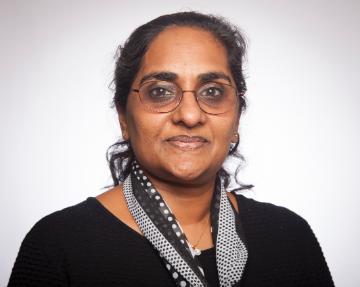
Shoba Krishnan is a Professor in the Department of Electrical and Computer Engineering at Santa Clara University's School of Engineering. Her work spans analog and mixed-signal integrated circuit design, carbon nanotube interconnect modeling, and engineering education initiatives. Education: B. Tech., Jawaharlal Nehru Technological University (1987) M.S., Michigan State University (1990) Ph.D., Michigan State University (1993) Her research focuses on high-speed data communication ICs, particularly clock/data I/O circuits, and explores carbon nanotubes as interconnect materials. She's expanding into bio-engineering instrumentation and renewable energy power electronics. Publications highlight work on low-power high-speed drivers, carbon nanotube via resistance analysis, microwave frequency modeling, and BIST structures for transceivers. She advises IEEE and Engineers Without Borders chapters at SCU.
Prof. Arie Ruzin is a faculty member at the School of Electrical Engineering, Tel Aviv University, affiliated with the Department of Physical Electronics. His research focuses on semiconductor detectors for radiation and particle detection, with applications in medical imaging, non-destructive testing, and high-energy physics experiments. Research Interests Prof. Ruzin's work spans several key areas: Development of compound semiconductor detectors (CdZnTe, InSb, SiGe) for X-ray, gamma-ray, and particle detection Investigation of radiation-induced defects in semiconductors and radiation-hardness enhancement techniques Device simulation (1D/2D/3D) of novel semiconductor structures Nano-contact physics and atomic force microscopy (AFM) characterization Novel semiconductor materials including 2D materials and compensated semiconductors His research often involves collaborations with international institutions like CERN's RD50 Collaboration. Publications Overview Recent publications (2010-2015) demonstrate a strong focus on semiconductor contact physics, radiation detector optimization, and nano-scale characterization. Key themes include modeling of ohmic/Schottky contacts, radiation damage simulations in CdZnTe/SiGe, and nano-contact behavior. The work consistently applies advanced simulation techniques alongside experimental validation. Student Advising Prof. Ruzin actively recruits graduate students (M.Sc./D.Sc.) for research projects involving: Radiation detector development and characterization Semiconductor device simulation AFM-based nano-scale measurements VLSI circuit design for detector systems He also mentors undergraduate students in projects related to LabVIEW programming, electronic measurements, and VLSI design. Laboratory Activities He leads a research laboratory equipped for semiconductor device characterization, including atomic force microscopy (AFM), deep-level transient spectroscopy (DLTS), and radiation testing capabilities. The group participates in the CERN RD50 collaboration focusing on radiation-hard semiconductor detectors for high-energy physics experiments.
Xiaolong Liu serves as Assistant Professor at Southern University of Science and Technology's School of Microelectronics. His academic journey includes a Ph.D. from Hong Kong University of Science and Technology (2019), M.E. from Tsinghua University (2014), and B.E. from Beijing University of Aeronautics and Astronautics (2010). Prior to his current position, he worked as Staff Engineer at eTopus Technology in Silicon Valley (2019-2021) and completed a postdoc at HKUST. Ph.D. in Electronic and Computer Engineering, Hong Kong University of Science and Technology (2019) M.E. in Microelectronics, Tsinghua University (2014) B.E. in Electronic Engineering, Beijing University of Aeronautics and Astronautics (2010) Dr. Liu's research spans cutting-edge RF/mm-Wave/THz integrated circuit design, focusing on high-performance signal generators , ultra-wideband transceivers , and low-power frequency synthesis . His work addresses critical challenges in 5G/6G communications, terahertz spectroscopy, and high-speed wireline interfaces through innovative CMOS architectures. Technical emphases include varactor-less VCOs, harmonic enhancement techniques, and magnetic tuning mechanisms for millimeter-wave systems. His publication portfolio demonstrates consistent leadership in IEEE flagship journals/conferences (JSSC, TMTT, ISSCC, VLSI), with recent work advancing Class-F oscillators, sub-sampling PLLs, and sub-THz synthesizers. Notable trends include migration toward sub-THz frequencies (2023-2025) , multi-core oscillator architectures , and elimination of harmonic tuning for simplified design. IEEE VLSI Paper Technical Highlights (2019) IEEE CICC Invited Talk (2019) IEEE TVLSI 2023 Best Reviewer Award Top 4 Most Downloaded Paper in TCAS-II (July 2022) Dr. Liu actively mentors students through SUSTech's graduate programs, with advisees consistently earning university-level thesis awards and conference recognitions. His lab maintains strong industry ties through silicon validation and collaborates on cutting-edge tapeouts in 7nm/16nm nodes. Current projects focus on cryo-CMOS interfaces for quantum computing and ultra-wideband transceivers for 6G applications. His research group operates within SUSTech's state-of-the-art microelectronics facility, specializing in mm-Wave/THz characterization and high-speed SerDes validation. The team maintains partnerships with semiconductor foundries for advanced-node prototyping and collaborates with industry leaders on real-world implementation challenges.
Dimitrios Soudris is a Professor at the School of Electrical and Computer Engineering, National Technical University of Athens (NTUA), leading the Microprocessor and Digital Systems Lab (MicroLab). Previously, he served as Lecturer, Assistant, and Associate Professor at Democritus University of Thrace from 1995 to 2008. Diploma in Electrical Engineering (1987), University of Patras PhD in Electrical Engineering (1992), University of Patras His research focuses on Embedded Systems , Reconfigurable Architectures (FPGAs) , Hardware Accelerators for data centers/space/cloud, Edge Computing , and Low Power VLSI Design . Recent publications highlight trends in: AI/ML acceleration for edge and space applications Secure FPGA architectures for 6G networks Energy-efficient heterogeneous memory systems Approximate computing techniques Transformer optimization for low-power contexts Scientific Awards: INTEL and IBM awards (project LPGD #25256) HiPEAC, DAC, and ISCA awards (2010–2024) XILINX Open Hardware Design Contest (2017, 2019, 2021) He has coordinated >70 R&D projects funded by the European Commission, ENIAC-JU, ESA, and industry partners. As Associate Editor of ACM TODAES and conference chair (PATMOS, VLSI-SOC), he contributes to academic leadership. His lab, MicroLab, specializes in hardware-software co-design for emerging computing paradigms.
Kees Goossens is Full Professor of Real-time Embedded Systems in the Electronic Systems group at Eindhoven University of Technology (TU/e). He leads the CompSOC Lab focused on predictable and composable embedded systems. His research spans composable virtualization, real-time systems, low-power design, and FPGA-based dynamic partial reconfiguration. Previously at NXP Semiconductors, he pioneered networks-on-chip research including the Aethereal NoC architecture. His research interests include: Composable and predictable embedded systems Real-time networks-on-chip (NoC) Memory management and controllers FPGA reconfiguration Hardware verification Low-power electronic design Publication analysis shows consistent focus on real-time systems, networks-on-chip, memory controllers, and embedded systems design, with recent expansion into machine learning applications for networking and error-correction coding. His work frequently addresses automotive and industrial control applications. Editorial contributions include: ACM TODAES editorial board (since 2009) Associate editor for Springer DAEM journal (since 2006) Guest editor for multiple NoC special issues He leads the CompSOC laboratory developing virtualized execution platforms for mixed-criticality systems. Current educational activities include courses on Systems-on-Chip, Embedded Systems, and Computer Architecture.