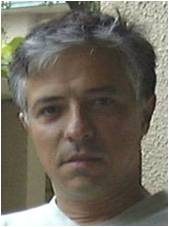
Grzegorz Blakiewicz serves as an Associate Professor at the Department of Microelectronic Systems within the Faculty of Electronics, Telecommunications and Informatics at Gdańsk University of Technology, where he maintains an active academic position in Building A of the faculty complex. His research expertise spans core areas of Microelectronics with specialized focus on: Integrated Circuit Design VLSI Architecture Semiconductor Device Physics Embedded System Development Microelectronic System Optimization Telecommunications Hardware Implementation Contact is available via institutional email at grzblaki@pg.edu.pl .
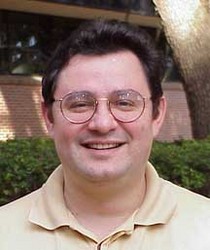
Wayne Burleson is a Professor in the Department of Electrical and Computer Engineering at the University of Massachusetts Amherst, affiliated with the Manning College of Information and Computer Sciences. His research focuses on embedded security, hardware security, VLSI circuit design, and VLSI architectures for digital signal processing (DSP), cryptography, and graphics. He has pioneered work on physically unclonable functions (PUFs), remote power attacks on FPGAs, and thermal management strategies in chip multiprocessors. He holds a B.S. and M.S. from MIT (1983) and a Ph.D. from the University of Colorado (1989). His honors include the 2011 IEEE Fellow distinction and the 1999 Ben Dasher Award for Best Paper. He is actively involved in IEEE, ACM, ASEE, and Sigma Xi societies. Burleson’s recent work addresses grand challenges in embedded security, including IoT device vulnerabilities, medical device cybersecurity, and mitigation of hardware Trojans. His lab explores novel approaches in reconfigurable hardware security, energy-efficient asynchronous interconnects, and adaptive systems-on-chip.
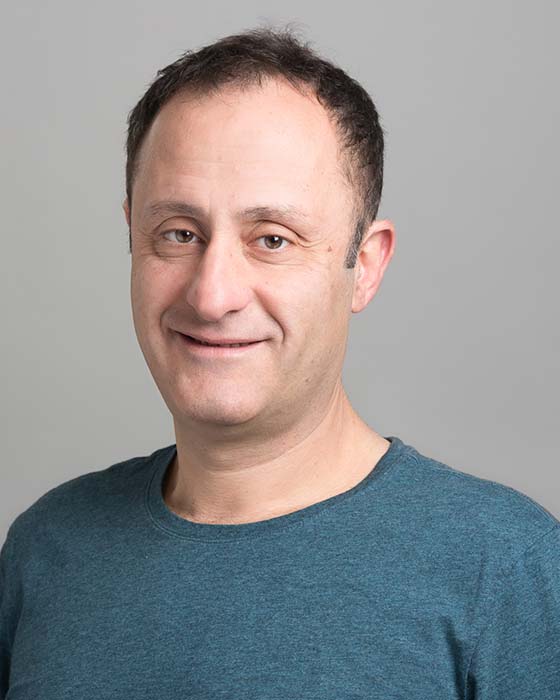
Gu-Yeon Wei is the Robert and Suzanne Case Professor of Electrical Engineering and Computer Science at Harvard University's John A. Paulson School of Engineering and Applied Sciences. He also serves as Area Chair for Electrical Engineering and Director of Undergraduate Studies for the department. His research focuses on sustainable computing, VLSI systems, hardware-software co-design, and quantum computing. Wei leads initiatives like the NSF-funded $12M sustainable computing project to reduce computing's carbon footprint by 45% within a decade. His work emphasizes energy-efficient architectures, fault-tolerant systems, and emerging memory technologies. Education details are not explicitly listed, but his academic roles suggest advanced qualifications in electrical engineering. Research interests include computer architecture, AI accelerators, and environmental impact analysis of computing systems. Recent projects explore carbon-efficient design frameworks, PFAS material modeling, and quantum computing performance modeling. Notable grants include multi-institution NSF funding for sustainability in computing. He advises on heterogeneous SoC design, edge AI inference, and noise-resilient systems. His lab (vlsiarch.eecs.harvard.edu) develops agile design methodologies for custom hardware, including open-source tools like SODA for accelerating chip development. Future work targets scalable machine learning inference, cryogenic memory systems, and end-to-end system resilience in autonomous machines.
Seda Ogrenci is a Professor of Electrical and Computer Engineering and Computer Science at Northwestern University. She holds affiliations with the McCormick School of Engineering and leads the Ogrenci-Memik Lab. Her research focuses on thermal-aware design, edge AI/ML acceleration, and energy-efficient computing systems. She teaches courses like EECS 303 (Advanced Digital Design), EECS 355 (FPGA Design), and EECS 459 (VLSI Algorithmics). Education includes a PhD in Computer Science from UCLA, MS in Electrical and Computer Engineering from Northwestern, and BS from Bogazici University. Her work spans thermal management, 3D stacked memory systems, and reconfigurable architectures. She authored the book Heat Management in Integrated Circuits (2016) and holds patents on thermal sensors and energy harvesting. Recent projects include ML-based real-time control at the edge, FPGA-accelerated ML monitoring, and in-pixel AI for X-ray detectors. Awards include the NSF CAREER Award (2006) and EECS Best Teacher Award (2013). She advises students like Dawei Li and Yingyi Luo and contributed to grants on thermal-aware HPC systems.
Dr. Dhananjay Phatak is an Associate Professor in the Department of Computer Science and Electrical Engineering at the University of Maryland, Baltimore County (UMBC). He joined UMBC in 2000 and previously served as faculty at SUNY Binghamton. He holds a Ph.D. in Computer Engineering from the University of Massachusetts and a B.Tech. from IIT Bombay. His research focuses on Cyber Security, Computer Arithmetic, Cryptology, and Networking, with notable projects including the SMartER Power Grid and the Spread Identity paradigm. His research interests span Cyber Security (including DDoS defense, hardware security, and SCADA systems), Network Architecture (e.g., dynamic address remapping), and VLSI implementations of cryptographic algorithms. He has received the NSF Career Award (1999) and led grants from NSF, GE, and Aether Systems. He collaborates with the Cyber Defense Laboratory (CDL) and has patented innovations in secure communications over power grids and network identity management.
Prof. Dr. Barış Bayram is a faculty member at Middle East Technical University (College of Engineering, Department of Electrical and Electronics Engineering). His research focuses on microelectromechanical systems (MEMS), diamond-based ultrasonic transducers, and medical imaging technology. He supervises the ULTRAMEMS research laboratory, which has secured multiple patents and produced numerous high-achieving students pursuing advanced degrees at institutions like Stanford, ETH Zurich, and Georgia Tech. Key research areas: MEMS, CMUT arrays, diamond electronics, acoustic crosstalk reduction Notable projects: ULTRALIGHT business idea, fiber optic MEMS microphone Major achievements: TÜBA GEBIP Award (2011), 4 US/EU/TR patents issued
Dr. Sridhar Ramalingam is an Associate Professor in the Department of Computer Science and Engineering and an Adjunct Associate Professor in the Department of Electrical Engineering at the University at Buffalo , part of the School of Engineering and Applied Sciences. He leads the High Performance VLSI Systems and Architecture Laboratory . He earned his PhD in Computer Engineering from Washington State University in 1987. His research focuses on computer architecture , embedded systems , VLSI circuit design , and wireless network security , with an emphasis on low-power solutions and reliability optimization for modern microprocessors and mobile devices. Research Trends: His recent work addresses aging-aware register file optimization, secure encryption architectures, and physical layer security in wireless networks. Notable contributions include energy-efficient ALU design methodologies and cross-layer approaches to jamming detection in ad hoc networks. Advising & Labs: While specific student advisees are not listed, his laboratory focuses on cutting-edge VLSI design and secure embedded systems. He collaborates extensively in domains such as mobile energy management and cybersecurity protocols. Professional Contributions: Dr. Ramalingam’s work is reflected in his roles at the university, his laboratory leadership, and contributions to conferences like IEEE International SOC and VLSI Design symposia.
Antonio Rubio Solá is a Full Professor at the Universitat Politècnica de Catalunya (UPC), affiliated with the High Performance Integrated Circuits and Systems Design (HIPICS) group. He holds an M.S. in Industrial Engineering (1977) and a Ph.D. in Electronic Engineering (1982), both from UPC. His research focuses on semiconductor technology evolution, integrated circuit design, and memristor-based neuromorphic systems. Key interests include nanoelectronics, energy-efficient computing, and biomimetic circuits. Rubio has contributed to advancements in memristive logic, graphene nanoribbon devices, and fault-tolerant circuit architectures. His work bridges theoretical research and practical implementation, with notable contributions in neuromorphic hardware, in-memory computing, and radiation-hardened electronics. Recent publications emphasize memristor applications in biological systems emulation, stochastic resonance phenomena, and energy-efficient data processing. Rubio actively participates in Spain’s neuromorphic technology initiatives and promotes sustainable microelectronics education through digital tools. Publications are accessible via UPC FenixDoc and the HIPICS e-prints repository. His research is driven by interdisciplinary collaboration, addressing challenges in next-generation computing paradigms and emerging technologies.
Michael Mascagni is a Professor at Florida State University with joint appointments in the Department of Computer Science, Department of Mathematics, Department of Scientific Computing, and the Graduate Program in Molecular Biophysics. He holds courtesy affiliations with the Department of Chemical and Biomedical Engineering, and maintains collaborative roles as a Guest Researcher at NIH's Laboratory for Biological Modeling and Faculty Appointee at NIST's Applied and Computational Mathematics Division. His academic credentials include a Ph.D. in Mathematics from NYU (1987), and dual B.S. degrees in Mathematics and Biomedical Engineering from the University of Iowa. His research integrates computational science, Monte Carlo methods, and parallel computing to solve complex problems in biophysics, materials science, and numerical analysis. Key interests include scalable random number generation, stochastic PDE solvers for electrostatics (Poisson-Boltzmann), computational neuroscience, and high-performance algorithm design. His work emphasizes applications in molecular biophysics, financial modeling, and fault-tolerant computing. Recent publications demonstrate a strong focus on advancing Monte Carlo techniques, including novel algorithms for matrix computations, discrepancy estimation, and biomolecular electrostatics. His articles frequently intersect computational mathematics, parallel architectures, and biological applications, with emerging themes in randomized linear algebra, quasirandom methods, and neural network reproducibility. Scientific Awards & Honors: Fulbright Senior Specialist Roster (2008) FSU Developing Scholar Award (2001) NAS/NRC Postdoctoral Fellowship (1988-1989) ACM Distinguished Scientist (2011-Present) ACM Senior Member (2009-Present) He directs research in scalable algorithms and collaborates with national labs including NIH and NIST. His computational infrastructure contributions include the SPRNG library and ZENO software for biomolecular properties. Current projects explore Grid-based Monte Carlo, randomized linear solvers, and actomyosin ring modeling in cellular division.
Georgios Panagopoulos is an Assistant Professor at the School of Electrical and Computer Engineering (ECE) of the National Technical University of Athens (NTUA). He earned his Diploma in Computer and Communication Engineering from the University of Thessaly in 2006 (with honors) and his Ph.D. in Electrical and Computer Engineering from Purdue University in 2012, focusing on variability and reliability modeling of CMOS and SPIN-based devices. His research spans analog, RF, and mmWave circuit design for communication systems, with expertise in wireless front-end modules, device characterization, variability modeling, and spin-based devices for machine learning. Recent work includes III-V material components, buried power rail applications, and tunable transmission lines. Key Trends: Advanced semiconductor structures, reliability in sub-terahertz communication, and co-design for energy-efficient RF systems. He has received awards including the Bakalas Scholarship and Technical Chamber of Greece Award. At NTUA, he teaches courses on VLSI design, analog circuits, and digital systems.
Syed Rafay Hasan is a Professor in the Department of Electrical and Computer Engineering at Tennessee Tech University , Cookeville, TN. He holds a Ph.D. in Electrical Engineering (2009) and M.Eng. (2002) from Concordia University, Montreal, Canada, and a B.Eng. (1997) from NED University, Karachi, Pakistan. Research Focus: Hardware Security , Deep Learning , Internet of Things , Edge Intelligence , and Digital VLSI Design Current Projects: Center for Agile and Intelligent Power Systems (CAIPS) cybersecurity research (subcontractor role with Florida International University, $160,000 budget) Key Contributions: 15+ years of continuous NSF REU Site leadership (2016–2019, renewed 2018) for cybersecurity-focused undergraduate research His recent work examines edge computing vulnerabilities , including adversarial attacks on CNN inference ( StAIn , 2023), hardware intrinsic attacks ( SoWaF , 2021), and runtime Trojan detection ( MacLeR , 2020). Publications span hardware security in 3D ICs, formal verification techniques, and FPGA-based neural network implementations. Scientific Recognition : Best Paper Award (Honorable Mention) in Multimedia Systems and Applications at VTC-2024 Research Trends : 15 most recent articles (2021–2025) analyze edge intelligence security (60%), collaborative CNN models (45%), and hardware Trojan detection (35%) using machine learning and formal verification Students under his supervision have secured positions at Intel , Georgia Tech Research Institute , and Whirlpool Inc . He teaches core courses in computer design (ECE 4120/5120, 11 years), Digital VLSI (ECE 4130, 10 years), and deep learning implementation (ECE 6900). Collaborations include institutions in Canada, UAE, Pakistan, and industry partners like Intel and Air Force Research Lab .
Julio Ricardo Garcia is a Professor in the Technology department at San José State University. With a PhD from the University of Northern Iowa (1988), he has established expertise in electronics education, industrial technology, and computer simulation applications. His work bridges theoretical concepts with practical industrial applications. Education: Doctor of Philosophy, University of Northern Iowa (1988) Research Focus: Investigates innovative approaches to technology education, particularly in electronics and digital systems. His scholarship emphasizes practical laboratory methodologies, distance learning frameworks, and curriculum development for industrial technology programs. Research extends to computer simulation applications in physics and electronics education. Publications Focus: Garcia's extensive publication record centers on educational methodologies in technology fields. Recent works demonstrate consistent focus on circuit design pedagogy, simulation tools, and international technology education. Articles frequently address practical implementation challenges in academic and industrial training contexts. Professional Service: Contributed as a translator (English/Spanish) for electronics communications and quality control documentation (2004).
Gautami Alagarsamy is a Research Fellow at Heriot-Watt University’s Institute of Photonics and Quantum Sciences within the School of Engineering & Physical Sciences. She holds a PhD in Machine Learning and IoT from Anna University, India, and has over 10 years of experience in academia and startups. Her current research focuses on automating precision optical systems using AI/ML, funded by the UK’s EPSRC. Previously, she served as an Assistant Professor at SNS College of Technology and a Startup Mentor at SNS Innovation Hub, contributing to innovation policies and collaborations with institutions like IIT-Palakkad. Education: Bachelor’s Degree (Electrical & Electronics Engineering), Anna University (2010) Master’s in VLSI Design Engineering, Anna University (2013) MSc in Robotics, Heriot-Watt University (2024) PhD in Machine Learning & IoT, Anna University (2022) Research Interests: Her work spans AI-driven robotics, IoT applications, optical system automation, and cybersecurity. She emphasizes cross-disciplinary collaboration to address challenges in Industry 4.0 and sustainable energy solutions. Key projects include AI-based intrusion detection systems and organic solar cell material analysis. Publications: Over 15 Scopus-indexed articles and 5 book chapters, focusing on neural networks, smart city IoT systems, and renewable energy materials. Recent work highlights include efficient intrusion detection frameworks and reviews on organic photovoltaic materials. Awards & Grants: EPSRC Grant (EP/V054497/1) for AI-driven optical alignment systems 2018 India Innovation Challenge Design Contest Award Advising & Collaboration: Advised initiatives like NIRF, NBA, and NAAC at SNS College. Collaborates with Leonardo UK, University of Edinburgh, and IIT-Palakkad on innovation projects. Holds a design patent in India and actively mentors startups in technology commercialization. Labs/Teams: Part of the Institute of Photonics and Quantum Sciences, leading multidisciplinary teams in applied AI and IoT. Engaged in cross-university collaborations to advance Industry 4.0 technologies.
Prof. Dr.-Ing. Georg Sigl is a Professor of Information Technology Security at the Technical University of Munich (TUM) and Director of the Fraunhofer Institute for Applied and Integrated Security (AISEC). His research focuses on hardware security, including secure embedded systems design and hardware attack analysis. He holds a doctorate in design automation from TUM (1992) and has extensive industry experience at Siemens and Infineon, where he led chip card platform development. Notable achievements include award-winning chip card controllers (SLE88/SLE78) and foundational contributions to tamper-resistant hardware. Education: Doctorate in Design Automation, Technical University of Munich (1992) Diploma in Electrical Engineering, Technical University of Munich Research interests include hardware security, cryptographic implementations, physical unclonable functions (PUFs), post-quantum cryptography, and defense against invasive/side-channel attacks. His work bridges academic research and industrial applications, emphasizing practical security solutions for embedded systems and IoT. Awards: Best Paper Award at IEEE HOST 2018 Sesames Award 2008 (SLE78 chip card) Sesames Award 2001 (SLE88 chip card) Rohde & Schwarz Prize 1993 (Dissertation) Leadership: Founded TUM's Chair of Information Security (2010) Director of Fraunhofer AISEC Labs/Teams: Chair of Information Security at TUM collaborating closely with Fraunhofer AISEC, focusing on advanced security research and industry partnerships.
Professor Andreas Veneris, currently at the University of Toronto , holds cross-appointments in the Edward S. Rogers Sr. Department of Electrical & Computer Engineering , Department of Computer Science , and the Munk School of Global Affairs & Public Policy . He earned his Diploma in Computer Engineering from the University of Patras (1991), M.S. in Computer Science from USC (1992), and Ph.D. in Computer Science from UIUC (1998). AAAS ACM Fellow IEEE Fellow Professional Engineers of Ontario Technical Chamber of Greece Planetary Society NSERC COHESA Network Director His research spans two decades of CAD/VLSI design automation followed by blockchain technology focusing on CBDCs , smart contract verification , DeFi mechanisms , and techno-legal Web3.0 policy . Recent work includes ASTRAEA decentralized oracle , DeFi insurance protocols , and privacy-preserving CBDC architectures . Award highlights: ACM SIGSOFT Distinguished Paper (ICSE 2024) IEEE Best Paper Awards (2024, 2022, 2020) ACM SIGARCH Maurice Wilkes Award MICRO Hall of Fame He advises Ph.D. candidates in blockchain and machine learning while leading research sponsored by Ripple (UBRI) , Huawei , and IBM . His group develops value-based accelerators for deep learning and formal verification frameworks for smart contracts. Selected projects include: HEMVM (Interoperable Blockchain VMs) BAKUP (DeFi Insurance Protocol) SigVM (Event-Driven Smart Contracts) CnvluTin (Ineffectual Neuron-Free CNNs) Stripes (Precision-Variable DL Accelerators)