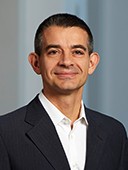
Luca Benini is a Full Professor at the Department of Information Technology and Electrical Engineering at ETH Zurich. He works at the Institute for Integrated Systems, located at Gloriastrasse 35, 8092 Zurich, Switzerland. His contact number is +41 44 632 66 64. Research Interests: Focus on VLSI design and FPGA-based systems development. Teaching: Offers the course VLSI 1: HDL Based Design for FPGAs in the Fall semester 2025. Contact: lbenini@iis.ee.ethz.ch
Swiss Federal Institute of Technology in LausanneSwitzerland
Giovanni De Micheli is a Full Professor at École Polytechnique Fédérale de Lausanne (EPFL), holding appointments in both the School of Computer and Communication Sciences (IC) and the School of Engineering (STI). He is affiliated with the Integrated Systems Laboratory (LSI) and serves as Scientific Director of EcoCloud. His primary office is located in INF 341 building at EPFL's Lausanne campus where he conducts research and teaching activities. Professor De Micheli's research spans multiple domains in electronic design automation and integrated circuit design. His primary interests include: Integrated Circuit Design and Hardware Synthesis Logic Optimization and Boolean Methods Nanoelectronics and 2D Electronics Quantum Computing and Emerging Technologies Low-Power Electronics and Energy-Efficient Systems Electronic Design Automation for Novel Computing Paradigms His recent publications demonstrate a strong focus on advancing logic synthesis techniques for both conventional and emerging technologies. Professor De Micheli's work bridges theoretical foundations with practical applications, particularly in adapting traditional EDA methods to novel computing paradigms like quantum computing and superconducting electronics. His research group has made significant contributions to the development of efficient algorithms for circuit optimization across multiple technology domains, with particular emphasis on area, power, and delay optimization while maintaining functional correctness. Professor De Micheli has supervised numerous doctoral students throughout his career at EPFL, mentoring over 40 PhD candidates whose research spans various aspects of electronic design automation, circuit design, and emerging technologies. His students have gone on to make significant contributions in both academia and industry. As Scientific Director of EcoCloud, Professor De Micheli leads research initiatives focused on energy-efficient computing systems and sustainable cloud infrastructure. His laboratory, the Integrated Systems Laboratory, serves as a hub for interdisciplinary research connecting computer science, electrical engineering, and materials science, with particular focus on next-generation computing technologies.
Swiss Federal Institute of Technology in LausanneSwitzerland
Edoardo Charbon is a Full Professor at École Polytechnique Fédérale de Lausanne (EPFL) in the School of Engineering, where he leads the Advanced Quantum Architecture Lab (AQUA). He also serves on the School Council STI and is Co-Director of STI-SSIQ Administration. Previously, he was a full professor and chair at Delft University of Technology from 2008 to 2016. Charbon received his Elektrotechnik Diploma from ETH Zurich, M.S. from UC San Diego, and Ph.D. from UC Berkeley, all in electrical engineering. His career spans industry experience at Cadence Design Systems and Canesta Inc. before joining EPFL in 2002. His research focuses on ultra high-speed and 3D optical sensors, with applications in LiDAR, FLIM (Fluorescence Lifetime Imaging Microscopy), PET (Positron Emission Tomography), FCS (Fluorescence Correlation Spectroscopy), and NIROT (Near-Infrared Optical Tomography). He has pioneered deep-submicron CMOS SPAD technology, which is now mass-produced and used in smartphones, telemeters, and medical diagnostics. His recent work bridges cryo-CMOS circuits for quantum computing with advanced optical sensing techniques. Analysis of his recent publications reveals a strong trend toward integrating quantum technologies with practical imaging applications. His work spans from fundamental device development (SPAD sensors, cryo-CMOS circuits) to applied systems (LiDAR engines, medical imaging devices), with increasing integration of machine learning techniques for real-time processing. 2023 IISS Pioneering Achievement Award Fellow of the IEEE Distinguished visiting scholar, W. M. Keck Institute for Space at Caltech Fellow, Kavli Institute of Nanoscience Delft Distinguished lecturer, IEEE Photonics Society Professor Charbon has authored or co-authored over 500 papers and two books, and holds 27 patents. His research has been supported by collaborations with organizations including Bosch, X-Fab, Texas Instruments, Maxim, Sony, Agilent, and the Carlyle Group. He has driven significant innovation in CMOS SPAD technology, which is now commercially deployed in various applications. He leads the Advanced Quantum Architecture Lab (AQUA) at EPFL, which focuses on the development of advanced sensor systems combining quantum technologies with conventional electronics. The lab has been instrumental in creating SPAD-based imaging systems that push the boundaries of time-resolved optical detection.
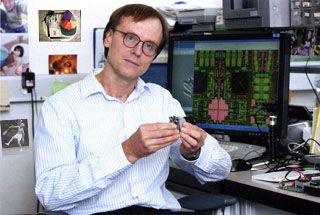
Tobi Delbruck is a titular professor of physics and electrical engineering at ETH Zurich, where he leads the Sensors Group at the Institute for Neuroinformatics (INI) in Zurich, Switzerland. He collaborates closely with Shih-Chii Liu and Giacomo Indiveri as part of the 'hardware groups' at INI. Delbruck has also served as visiting faculty at Caltech and is a Fellow of the IEEE. His work focuses on bio-inspired and neuromorphic event-based sensory processing systems. Professor Delbruck's research spans multiple areas of neuromorphic engineering, with particular emphasis on event-based vision systems and low-power analog VLSI circuits. His work has significantly advanced the field of Dynamic Vision Sensors (DVS), which mimic the human retina's response to changes in brightness rather than capturing full frames. This approach enables extremely low-latency vision processing with minimal power consumption, making it ideal for high-speed applications and robotics. His research has applications in robotics, autonomous systems, and low-power embedded vision. Delbruck is an active contributor to the neuromorphic engineering community, co-organizing the annual Telluride Workshop on Neuromorphic Engineering and serving in leadership roles with IEEE. He has authored numerous influential publications and co-authored books including "Event-Based Neuromorphic Systems" and "Analog VLSI: Circuits and Principles." His jAER (Java Address-Event Representation) project provides open-source tools for real-time event-based sensory processing. Analysis of his recent publications shows a clear trend toward integrating event-based vision with deep learning techniques and applying these systems to practical robotics problems. His scientific achievements have been recognized with multiple awards including: IEEE Fellow Winner of Best Live Demonstration award at ISCAS 2012 Honorable Mention Award from Sensory Systems Technical Committee at ISCAS 2012 Overall Best Student Paper Award and Best Paper Award from Sensory Systems Technical Committee at ISCAS 2010 Winner of the 2006 ISSCC Jan Van Vessem Outstanding European Paper Award Professor Delbruck actively mentors students and has supervised numerous PhD and Master's theses in the areas of neuromorphic engineering and event-based vision systems. His group has secured significant research funding from various sources to support their innovative work in bio-inspired sensory processing. He teaches courses on "Electronics for Physicists II (Digital)" and "Neuromorphic Engineering," helping to train the next generation of researchers in this field. The Sensors Group at INI, which Delbruck leads, operates state-of-the-art facilities for designing and testing neuromorphic vision systems. The group maintains close collaborations with researchers worldwide and has developed several important open-source resources including the jAER project and bias generator design kits. Their work continues to push the boundaries of what's possible with event-based sensory processing, with applications ranging from high-speed robotics to low-power embedded vision systems.
Swiss Federal Institute of Technology in LausanneSwitzerland
Andreas Peter Burg is a Tenured Associate Professor at the École Polytechnique Fédérale de Lausanne (EPFL), where he leads the Telecommunications Circuits Laboratory (TCL) within the School of Engineering. He holds multiple academic and administrative roles at EPFL including Associate Professor in Teaching (SEL, EDMI, EDEE), Director of SEL Management, and Member of the Doctoral Program Committee for Electrical Engineering. Dr. Burg received his Dipl.-Ing. degree in 2000 and Dr. sc. techn. degree in 2006 from ETH Zurich. His academic career includes positions as SNF Assistant Professor at ETH Zurich (2009-2011) before joining EPFL in January 2011 as a Tenure Track Assistant Professor, where he was promoted to Tenured Associate Professor in June 2018. His research focuses on circuits and systems for telecommunications , with particular expertise in silicon implementation of communication technologies, communication algorithms optimization for hardware, low-power VLSI signal processing, and digital integrated circuits. His work bridges theoretical communication concepts with practical circuit implementations, addressing challenges in wireless and wired communication systems. His recent publications (2024-2025) demonstrate a strong focus on next-generation communication technologies including 6G systems, advanced error correction coding, wireless sensing applications, and ultra-low power circuit design. These works span multiple subfields from LDPC and polar code decoding to RF signal processing and machine learning applications in wireless systems. Willi Studer Award (2000) ETH Medal for diploma thesis (2000) ETH Medal for Ph.D. dissertation (2006) Swiss National Science Foundation Assistant Professorship grant (2008) Dr. Burg has been involved in the development of more than 25 ASICs throughout his career and co-founded Celestrius, an ETH spinoff in MIMO wireless communication. His laboratory work focuses on practical implementations of communication algorithms with emphasis on power efficiency and hardware optimization. Current research directions include 6G technologies, wireless sensing applications, and novel error correction techniques for next-generation communication systems.
Swiss Federal Institute of Technology in LausanneSwitzerland
Andrea Costamagna is a researcher affiliated with the École Polytechnique Fédérale de Lausanne (EPFL), working within the School of Computer and Communication Sciences and the Department of Communication Systems. His research focuses on logic synthesis, digital circuit design, and the intersection of machine learning with hardware implementation. His work includes optimizing digital circuits using techniques like resynthesis, resubstitution, and decomposition, with applications in FPGA design and low-power systems. Recent publications explore symmetry-based synthesis, glitch-aware power minimization, and the use of resistive switching devices in machine learning hardware. His research also extends to quantum physics modeling with deep learning.
Swiss Federal Institute of Technology in LausanneSwitzerland
Xuming He is an Associate Professor at the School of Information Science and Technology (SIST), ShanghaiTech University, where he leads the PLUS Lab. His research spans computer vision and machine learning with a focus on developing algorithms that operate effectively under limited supervision and evolving data conditions. His core research interests include weakly-supervised and few-shot learning for scenarios with sparse annotations, continual learning frameworks for knowledge retention during sequential task acquisition, semantic segmentation techniques for scene understanding, and multimodal vision-language representations. He emphasizes interpretable machine learning to build transparent AI systems capable of human-understandable reasoning, addressing critical challenges in model trustworthiness and deployment reliability. Recent publications reveal strong trends toward novel class discovery in long-tailed recognition scenarios, physics-informed generative modeling for scientific applications, and robust segmentation under distribution shifts. His work increasingly integrates large language models for multimodal reasoning while maintaining focus on efficiency in resource-constrained environments like robotic grasping and medical imaging analysis. He actively mentors students, having supervised Qian He to PhD completion and Chuanyang Hu to Master's degree in 2023. He welcomes prospective graduate students through ShanghaiTech's Computer Science & Technology program and offers undergraduate research projects requiring minimum six-month commitments. The PLUS Lab under his direction drives innovation in learning under supervision constraints, with recent work spanning medical tumor analysis, cross-view geolocation, photonic computing, and semiconductor design verification. The lab's research bridges theoretical advances with practical applications across healthcare, robotics, and scientific discovery domains.
University of Applied Sciences and Arts LucerneSwitzerland
Jürgen Wassner is a Professor of Edge Computing and Co-Head of the Competence Center for Intelligent Sensors and Networks at the Lucerne School of Engineering and Architecture (HSLU T&A). He holds a master's degree from Technical University of Dresden and a PhD from ETH Zurich. His career spans industry roles in Silicon Valley Group Inc. and telecommunication R&D before joining academia in 2007. His research focuses on embedded systems, AI at the edge, FPGA/VHDL design, real-time systems, and powerline communication . He leads projects such as 'Visual-Servoing Testbed with AI-Hardware in the Loop' and 'Low-Cost High-Performance Intelligent Camera for Space Debris Mitigation,' collaborating with companies like Diehl Aerospace. Recent publications emphasize wire fault detection using powerline communication, AI-based odor classification systems, and hardware acceleration for CNNs. His work bridges theoretical research with practical applications in avionics, rail freight, and space debris mitigation. Wassner advises Master of Science in Engineering students and has been recognized for his media engagement including a feature in the Luzerner Zeitung. He teaches Digital Design (FPGA, VHDL) and Digital Signal Processing , emphasizing hands-on implementation of cutting-edge systems.
Oscar Castañeda Fernández is a Lecturer at the Department of Information Technology and Electrical Engineering at ETH Zurich, affiliated with the Institute for Integrated Systems . He teaches advanced digital circuit design courses and contributes to research in VLSI systems. Research Interests Custom Digital Circuit Design Very Large Scale Integration (VLSI) Systems Electrical Engineering Computer Engineering Contact Information Email: caoscar@iis.ee.ethz.ch Office: ETZ J 71.2, Gloriastrasse 35, 8092 Zurich, Switzerland Personal Website: ofcastaneda.github.io ORCID: 0000-0001-5778-182X Teaching Fall Semester 2025: VLSI 3 - Full Custom Digital Circuit Design (Course No. 227-0147-10L)
Swiss Federal Institute of Technology in LausanneSwitzerland
Seyed Armin Tajalli is a Visiting Professor at the École polytechnique fédérale de Lausanne (EPFL), affiliated with the School of Engineering (STI), Institute of Electrical Engineering (IEM), and Integrated Neurotechnologies Laboratory (INL). He has extensive experience in ultra-low power integrated circuit design and high-speed serial communication systems. Dr. Tajalli received his B.S.E.E. and M.S.E.E. degrees (with honors) from Sharif University of Technology, Tehran, and Tehran Polytechnic University in 1997 and 1999, respectively. He earned his Ph.D.E.E. on low-power integrated circuit design techniques in 2010 from EPFL. Prior to his academic career, he worked with Emad Semicon from 1998-2006 as a senior analog/RF design engineer and technical manager. His research focuses on ultra-low power circuit design, including subthreshold source-coupled logic, analog/mixed-signal circuits, data converters, and serial data transceivers. His work addresses critical challenges in low-power design, high-speed communication, and energy-efficient circuit implementations. Recent publications demonstrate his expertise in spectrum shaping techniques, crosstalk reduction, and high-speed serial links for memory interfaces and multi-drop communication systems. Dr. Tajalli's publications span high-impact journals and conferences including IEEE Journal of Solid-State Circuits, IEEE Transactions on Circuits and Systems, and major conferences like ISSCC, ISCAS, and VLSI Symposium. His research demonstrates consistent innovation in low-power circuit techniques with practical applications in high-speed communication systems. Kharazmi Award on Research and Development, 2000 Outstanding Design Engineer, Emad Semicon, 2001 Presidential Award of the best Iranian researchers, 2003 ACM/CICC Award, 2009 EPFL Prime Special Award, 2009 Dr. Tajalli has advised PhD students including Kiarash Gharibdoust, whose thesis focused on Hybrid NRZ/Multi-Tone Signaling for High-Speed Low-Power Wireline Transceivers. His collaborative work with the ALGO team has resulted in significant contributions to high-speed serial data transceiver architectures. His research has been supported by various academic and industrial partnerships focused on advancing integrated circuit design techniques. His work is primarily conducted within EPFL's Integrated Neurotechnologies Laboratory (INL) and previously with the Microelectronic Systems Laboratory (LSM). These labs provide state-of-the-art facilities for mixed-signal IC design, characterization, and testing, supporting his research in ultra-low power circuits and high-speed communication systems.
Swiss Federal Institute of Technology in LausanneSwitzerland
Alexandre Sébastien Julien Levisse is a Lecturer at the Institute of Electrical Engineering within EPFL's School of Engineering, with additional roles as System Specialist in PAT/SEL departments and Scientist in IEM. His work centers on energy-efficient hardware architectures for edge computing and AI applications. Research focuses on: Computer Architecture & VLSI Design Low-Power Electronics for edge devices Emerging Memory Technologies (RRAM, OxRAM) Neuromorphic & Approximate Computing In-Memory/ Near-Memory Computing Edge AI Hardware Acceleration His 2022-2025 publications reveal strong emphasis on specialized edge AI hardware, including near-DRAM architectures (SideDRAM), RISC-V microcontrollers for healthcare (HEEPOcrates), and overflow-free memory systems. Key innovations involve hardware-software co-design for energy efficiency, variable precision computation, and novel memory hierarchies targeting wearable sensors and edge inference. Levisse teaches Fundamentals of VLSI Design and Lab in Advanced VLSI Design at EPFL. He actively contributes to digital education as a member of EPFL's Centre for Digital Education (CCE), developing curricula for next-generation hardware engineers.
Swiss Federal Institute of Technology in LausanneSwitzerland
Ludovic Damien Blanc is a Doctoral Assistant and PhD student in the Doctoral Program in Electrical Engineering at École Polytechnique Fédérale de Lausanne (EPFL), Switzerland. He is affiliated with the School of Engineering (STI) and the Telecommunications Circuits Laboratory (TCL) within the Institute of Microengineering (IEM). His research focuses on VLSI implementation of decoders, full custom digital/analog circuits for signal processing and communication systems, and circuit design optimization. Education: B.Sc. in Electrical Engineering, EPFL (2021) M.Sc. in Electrical Engineering, EPFL (2023) Research interests include advanced decoder architectures (e.g., GRANDAB, Polar List Decoding), high-speed communication systems, and thermal stabilization in optical circuits. His work bridges theoretical algorithm development with practical VLSI implementation challenges. Labs/Teams: Active member of the Telecommunications Circuits Laboratory (TCL), collaborating on projects involving circuit design for next-generation communication technologies.
Frank Kagan Gürkaynak is Director of the Microelectronics Design Center (DZ) and a Researcher at ETH Zurich's Department of Information Technology and Electrical Engineering (D-ITET). He leads the PULP open-source hardware project and works closely with Prof. Luca Benini in the Integrated Systems Laboratory (IIS). His academic journey includes BSc/MSc from Istanbul Technical University and a PhD from ETH Zurich. Roles: Microelectronics Design Center Director, Senior Scientist in IIS, VLSI course lecturer Research focuses on energy-efficient digital circuits, cryptographic hardware security, and open-source processor architectures. Key projects include EU-funded initiatives like European Processor Initiative (EPI), Convolve, and NeuroSoC, along with SNSF grants Tiny Trainer and PEDESITE. Active in teaching VLSI design, embedded systems, and essential engineering skills. Publications emphasize secure cryptographic accelerators, low-power processor clusters, and GALS system design methodologies. Contributions include energy-efficient ASICs for IoT to HPC domains and pioneering work in side-channel attack-resistant hardware.
Swiss Federal Institute of Technology in LausanneSwitzerland
Charlotte Frenkel is a Tenure-Track Assistant Professor in the Microelectronics Department at Delft University of Technology (TU Delft), where she leads research in neuromorphic engineering and low-power AI hardware. Her work bridges the gap between biological intelligence and artificial neural networks, focusing on energy-efficient computing at the edge. Dr. Frenkel's research spans digital and mixed-signal IC design, computer architecture, learning algorithms, and neuroscience. She directs the Cognitive Sensor Nodes and Systems (CogSys) lab, which develops neuromorphic processors like ODIN, MorphIC, SPOON, and ReckOn that demonstrate competitive advantages over conventional neural network accelerators. Her publications reveal a strong focus on spiking neural networks, event-based processing, and on-chip learning. Key trends include developing hardware that leverages sparsity for energy efficiency, creating bio-inspired learning algorithms that solve weight transport and update locking problems, and establishing frameworks for benchmarking neuromorphic systems through initiatives like NeuroBench. Scientific Awards: IBM Innovation Award 2021 Nokia Bell Labs Scientific Award 2021 IEEE ISCAS 2020 Best Paper Award NEUROTECH/NICE Best Early Researcher Presentation 2021 AiNed Fellowship Grant Dr. Frenkel is actively expanding her research group through PhD and postdoc positions. She serves as Associate Editor for IEEE Transactions on Biomedical Circuits and Systems and Frontiers in Neuroscience, and has held numerous leadership roles in conference organization including Program Chair for tinyML Research Symposium 2024 and Neuro-Inspired Computational Elements conference 2023-2024. Her service includes extensive reviewing activities for top IEEE journals and conferences in her field.
Dr. Seyedhadi Mirfarshbafan is a Research Fellow at the Institute for Integrated Systems, ETH Zurich. He received his B.Sc. and M.Sc. degrees in Electrical Engineering from Sharif University of Technology, Tehran, Iran in 2016 and 2018, respectively, and an M.Sc. in Electrical and Computer Engineering from Cornell University in 2020. He completed his doctoral studies at ETH Zurich in 2025. His educational background includes: B.Sc. in Electrical Engineering, Sharif University of Technology, 2016 M.Sc. in Electrical Engineering, Sharif University of Technology, 2018 M.Sc. in Electrical and Computer Engineering, Cornell University, 2020 Ph.D., ETH Zurich, 2025 Dr. Mirfarshbafan's research interests encompass wireless communications, VLSI circuits and systems, digital signal processing, and machine learning. He specializes in the design of digital VLSI circuits for communication systems, integrating machine learning to optimize signal processing and hardware efficiency. His interdisciplinary work aims to develop innovative solutions for next-generation wireless networks. He is an active member of the Integrated Information Processing (IIP) research group at ETH Zurich, contributing to projects that bridge theoretical communication models with practical VLSI implementations.