Милорад Б. Тошић is a Full Professor at the Faculty of Electronic Engineering, University of Niš, specializing in Computer Science. He earned all his academic degrees (BSc 1989, MSc 1992, PhD 1998) from the same institution in Electrical Engineering and Computer Science. His research spans Semantic Web Technologies, Distributed Systems, and E-Learning Systems, with notable contributions in federated testbeds, trust-based peer assessment, and collaborative wiki tagging. His work bridges theoretical computer science with practical applications in education and embedded systems. His publication trends show consistent contributions from 1991 to 2014, with recent focus shifting from hardware design (1990s) to semantic technologies and e-learning systems (2000s-2010s), demonstrating adaptability across evolving technological domains. US Patent Application No. 09/636,552 for Internet-Enabled Embedded Device Technology validated by Motorola, Microchip, Philips, and Delphi As former Science and Technology Advisor to the Serbian Minister (2002-2003), he contributed to national science policy. His current research involves 4 national and 3 international projects totaling 7 impact-factor journal publications. His patented embedded device technology has achieved commercial validation through major global electronics firms.
Alex Doboli is a Professor in the Department of Electrical and Computer Engineering at Stony Brook University, State University of New York. He is also affiliated with SUNY Korea’s Department of ECE. His academic journey includes a Ph.D. in Computer Engineering from the University of Cincinnati (2000) and earlier degrees from Politehnica University Timisoara, Romania (B.Eng. 1990, Doctorate 1997). He served as junior faculty at Politehnica University before joining Stony Brook in 2000. His research focuses on Electronic Design Automation (EDA) , Cyber-Physical Systems , and Human-inspired Machine Learning . Key areas include analog/mixed-signal design, innovation methodologies, and data-driven design approaches. He has authored over 170 peer-reviewed publications and co-authored a textbook on mixed-signal design. His lab, the Mixed-Domain Embedded Systems Laboratory , explores team behavior modeling, IoT integration, and cognitive architectures. Dr. Doboli has advised 17 Ph.D. and 12 M.S. students. Notable awards include the IBM Partnership Award (2001) and the Traian Lalescu Award (1987). He serves as an Associate Editor for Integration, the VLSI Journal and holds leadership roles in professional organizations like the IEEE Long Island Circuits and Systems Society. His teaching spans undergraduate and graduate courses in programming, algorithms, VLSI design, and machine learning. Current courses include ESE 327: Fundamental Algorithms for Machine Learning and ESE 589: Learning Systems for Engineering Applications . Recent research highlights include automated dialog systems (diaLogic), IoT-human behavior integration frameworks, and studies on artistic understanding in neural networks. His work bridges EDA, machine learning, and embedded systems to advance design innovation and human-centric technologies.
Jordi Cortadella Fortuny serves as a Full Professor in the Department of Computer Science at the Faculty of Informatics of Barcelona (FIB), Polytechnic University of Catalonia (UPC), where he has maintained continuous academic service since 1985. He currently chairs the UPC Ethics Committee (2021-2025) and leads research within the ALBCOM group specializing in algorithms, bioinformatics, complexity, and formal methods. Education: M.S. in Computer Science, Universitat Politècnica de Catalunya, 1985 Ph.D. in Computer Science, Universitat Politècnica de Catalunya, 1987 Research Interests: Professor Cortadella's pioneering work centers on Electronic Design Automation (EDA) with deep specialization in asynchronous circuit design and concurrent systems . His research integrates formal methods and mathematical optimization to solve complex VLSI design challenges, particularly in logic synthesis and computer arithmetic. This interdisciplinary approach bridges theoretical computer science with practical semiconductor engineering, yielding significant industry impact through patented methodologies and industrial collaborations. Scientific Awards: Fellow of the IEEE (2015) Member of Academia Europaea (2013) Distinction for University Research Promotion by Catalan Government (2003) Five-time Best Paper Award recipient at premier conferences (2004-2020) Descartes Prize Finalist (2002) UPC Best Ph.D. Thesis Award (1992) National Computer Science Student Award (1986) Advising and Service: Cortadella has mentored numerous graduate students while serving on editorial boards for IEEE Transactions on CAD and SN Computer Science. His extensive service includes technical committee leadership at major international conferences and co-founding Elastix Corp. as Chief Scientist (2007-2010), where he directed Barcelona-based R&D for semiconductor verification tools. Research Infrastructure: As core member of the ALBCOM research group, he directs projects in algorithmic foundations of EDA, maintaining strong industry partnerships with Intel and semiconductor design firms through UPC's CITCEA laboratory facilities.
Ismail Serdar Ozoguz is a Professor at Istanbul Technical University, Department of Electronics and Communication Engineering. With over 163 publications and 3020 citations, his work spans oscillator engineering, neural networks, and RF/wireless systems. Institution : Istanbul Technical University Department : Electronics and Communication Engineering Rank : Professor Research interests focus on oscillator engineering , current mode circuits , and chaotic oscillators . Recent work emphasizes neural network applications in filter optimization, antenna modeling, and stochastic computing. Scientific awards include: GEBIP Award (2002) Mustafa Parlar Foundation Research Incentive Award (2003) Research Incentive Award (2004) Projects highlight nonlinear optimization in GaN amplifiers, fractional-order neural networks, and spintronics for communication/memory systems. Collaborations span biomedical engineering, wireless networks, and AI-driven optimization.
Dr. Reza Sedaghat is a Professor in the Department of Electrical, Computer, and Biomedical Engineering at Toronto Metropolitan University. He holds a PhD in Electrical Engineering from the University of Hannover (1999), an MASc (1994), and BSc (1992) from the University of Kassel. His research focuses on optimization problems, VLSI design, and cross-layer modeling of IoT systems. Professional Engineer (P.Eng) in Ontario IEEE Senior Member Reviewer for IEEE Transactions and Elsevier journals Research interests include: Single/Multi-objective optimization Quadratic assignment problems Security architecture for ciphers Design automation and FPGA systems Scientific contributions highlighted in articles from 2018-2019 demonstrate expertise in swarm computation, hardware security, and IoT optimization frameworks.
Danny Chen is a Professor in the Department of Computer Science and Engineering at the University of Notre Dame, with a concurrent appointment in the Department of Applied and Computational Mathematics and Statistics. His research focuses on algorithm design, computational geometry, biomedical imaging, and machine learning. Ph.D., Computer Science, Purdue University (1992) M.S., Computer Science, Purdue University (1988) B.S., Computer Science and Mathematics, University of San Francisco (1985) Dr. Chen has developed over 330 publications and 5 U.S. patents, with applications in radiation therapy, biomedical imaging, and VLSI design. His recent work explores advanced deep learning architectures for medical image segmentation and tabular data analysis. Key awards include the NSF CAREER Award, Kaneb Teaching Award, James A. Burns Award, and Computerworld Honors Program Laureate. He is an IEEE Fellow and ACM Distinguished Scientist. Visiting Professor at HKUST (2003), Tsinghua University (2012), and Zhejiang University (2012) Research funded by NSF and NIH Active in program committees and NSF review panels
Dimitrios Kosmopoulos serves as Professor in the Computer Engineering and Informatics Department at the University of Patras, Greece, with extensive experience across multiple academic institutions including National Technical University of Athens (NTUA), Rutgers University, and University of Texas at Arlington. His research bridges theoretical computer science with practical applications in accessibility, agriculture, and cultural heritage preservation. Education: B.Eng. in Electrical and Computer Engineering, National Technical University of Athens (1997) PhD in Electrical and Computer Engineering, National Technical University of Athens (2002) Professor Kosmopoulos' research integrates computer vision, machine learning, and signal processing to solve real-world problems. His primary focus areas include sign language recognition systems for museum accessibility, precision agriculture applications for crop monitoring and disease detection, and digital restoration of ancient scripts like Mycenaean Linear B. His methodological innovations frequently involve geometric analysis, time-series modeling, and multimodal data fusion techniques that advance both theoretical frameworks and practical implementations. Analysis of his recent publications (2023-2025) reveals three dominant research thrusts: accessibility technologies for deaf communities (particularly museum navigation systems), agricultural automation using computer vision (olive grading, tomato disease detection), and computational archaeology (Linear B tablet restoration). His work consistently employs cutting-edge approaches including geometric knowledge distillation, coupled learning architectures, and 3D motion analysis, demonstrating strong interdisciplinary connections between computer science, agriculture, and humanities. No scientific awards were documented in the provided source materials. While specific advising details and grant information were not explicitly stated, his leadership in projects like HealthSign (sign language healthcare systems) and MuseLearn (museum accessibility platforms) indicates substantial research funding and collaborative supervision activities spanning computer vision, robotics, and assistive technology domains. Professor Kosmopoulos operates within the Division of Hardware and Computer Architecture at the University of Patras, collaborating with the Computer Technology and Architecture Laboratory, VLSI Microelectronics Laboratory, Signals and Telecommunications Laboratory, and Computer Communications Networks Laboratory. His current research integrates these facilities to develop systems like the SignGuide project for museum tours and frameworks for early pest detection in greenhouse crops, emphasizing practical implementations of machine learning in constrained environments.
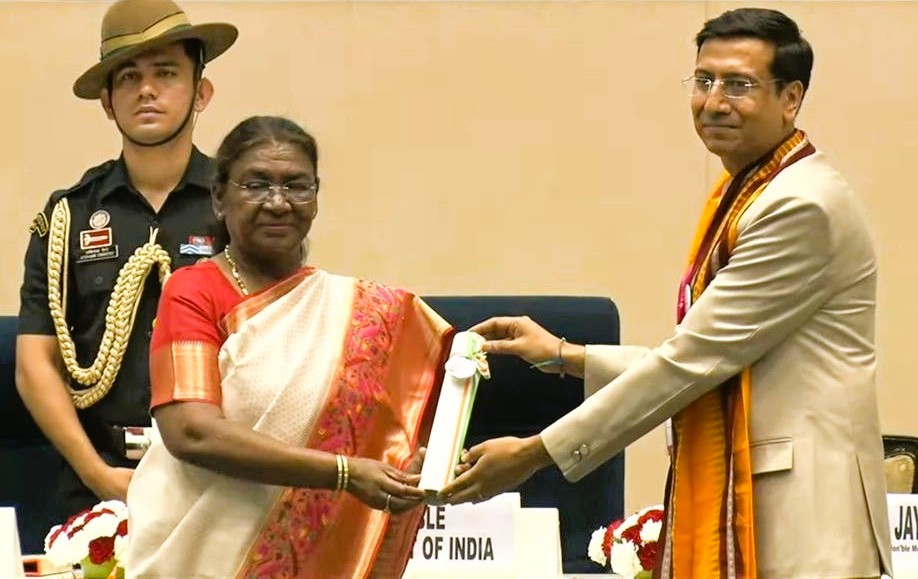
Prof. Kapil Ahuja is a Full Professor in the Department of Computer Science & Engineering at the Indian Institute of Technology Indore (IIT Indore), where he heads the Mathematics of Data Science and Simulation (MODSS) research lab. After completing dual Master's degrees and a Ph.D. from Virginia Tech (USA) followed by postdoctoral work at the Max Planck Institute in Germany, he has held visiting positions at UT Austin, IMT Atlantique, Sandia National Labs, TU Dresden, and TU Braunschweig. His administrative roles include founding Dean of International Affairs and former Head of Computer Science & Engineering at IIT Indore. Education: Ph.D. in Mathematics, Virginia Tech (2011) M.S. in Mathematics, Virginia Tech (2009) M.S. in Computer Science, Virginia Tech (2007) B.Tech. in Mechanical Engineering, IIT (BHU) Varanasi (2001) Research Focus: Prof. Ahuja's work bridges theoretical advances with real-world applications, emphasizing machine learning algorithms for plant/cancer studies, game-theoretic poverty reduction models, exascale climate modeling solvers, and drone trajectory optimization. His interdisciplinary approach integrates numerical linear algebra with network science to solve complex systems problems across healthcare, agriculture, and climate science, supported by 4.85 Crores INR in external funding. Publication Trends: Recent work demonstrates growing emphasis on AI-driven optimization for physical systems (drones, climate models) and biomedical applications (cancer classification). His publications increasingly feature cross-disciplinary collaborations between computer science, biology, and economics, with notable contributions in explainable AI for healthcare and resource allocation algorithms for social networks. Scientific Recognition: National Teacher's Award (2024) from the President of India Five-time recipient of IIT Indore's Best Teacher Award (2013-2023) Best Poster Award at International Workshop on Game Theory & Networks (2019) Steeneck Graduate Research Fellowship (Virginia Tech, 2011) Multiple SIAM travel awards for international conferences Mentorship & Service: Prof. Ahuja has graduated 5 Ph.D. and 4 M.S. (Research) students while mentoring 75 B.Tech. projects. He serves as Associate Editor for Applied Intelligence Journal (Springer Nature) and Knowledge and Information Systems, organizes international conferences, and reviews for 35+ academic sources. His administrative leadership significantly expanded IIT Indore's global partnerships through the Research Park initiative. Research Infrastructure: The MODSS lab maintains active collaborations with Oak Ridge National Lab, Sandia National Labs, and European institutions. Current projects include AI-optimized drone swarms for agricultural monitoring and game-theoretic models for poverty intervention, utilizing high-performance computing resources for large-scale simulations.
Kees Goossens is Full Professor of Real-time Embedded Systems in the Electronic Systems group at Eindhoven University of Technology (TU/e). He leads the CompSOC Lab focused on predictable and composable embedded systems. His research spans composable virtualization, real-time systems, low-power design, and FPGA-based dynamic partial reconfiguration. Previously at NXP Semiconductors, he pioneered networks-on-chip research including the Aethereal NoC architecture. His research interests include: Composable and predictable embedded systems Real-time networks-on-chip (NoC) Memory management and controllers FPGA reconfiguration Hardware verification Low-power electronic design Publication analysis shows consistent focus on real-time systems, networks-on-chip, memory controllers, and embedded systems design, with recent expansion into machine learning applications for networking and error-correction coding. His work frequently addresses automotive and industrial control applications. Editorial contributions include: ACM TODAES editorial board (since 2009) Associate editor for Springer DAEM journal (since 2006) Guest editor for multiple NoC special issues He leads the CompSOC laboratory developing virtualized execution platforms for mixed-criticality systems. Current educational activities include courses on Systems-on-Chip, Embedded Systems, and Computer Architecture.