Laurent Charlin is an Associate Professor at HEC Montréal and holds an adjunct appointment in Computer Science at Université de Montréal. His research focuses on machine learning for decision-making with applications in recommender systems, reinforcement learning, and optimization.
Nicholas Bambos is the R. Weiland Professor in the School of Engineering at Stanford University, holding a joint appointment in the Department of Electrical Engineering and the Department of Management Science & Engineering. He served as the Fortinet Founders Department Chair of the Management Science & Engineering Department from 2016 to 2020. His academic career spans over three decades, with previous positions as an assistant professor (1989-1995) and tenured associate professor (1995-1996) at UCLA before joining Stanford in 1996. Prof. Bambos's primary research interests focus on the architecture and high-performance engineering of computer systems and networks, along with data analytics emphasizing medical and health-care applications. His work spans multiple domains including networking and the Internet, cloud computing, multimedia streaming, computer security, and digital health. Methodologically, his contributions extend to network control, online task scheduling, routing and distributed processing, and machine learning and artificial intelligence. His research has resulted in over 300 peer-reviewed publications that demonstrate a strong interdisciplinary approach, bridging theoretical computer science with practical healthcare applications. The trajectory of Prof. Bambos's recent publications reveals a strategic expansion from traditional networking and systems research into healthcare analytics, particularly opioid use prediction and digital health monitoring. His work increasingly integrates machine learning techniques with domain-specific medical knowledge, showing a clear evolution toward solving complex societal challenges through technological innovation. Many publications demonstrate collaborative work across engineering, medical, and data science disciplines, reflecting the growing importance of interdisciplinary research in addressing modern healthcare challenges. His significant scientific achievements have been recognized through numerous prestigious awards: R. Weiland Professorship in Engineering (2016-present) Eugene L. Grant Teaching Award (2014) IBM Faculty Award (2002) Cisco Systems Faculty Scholar (1999-2003) National Young Investigator Award from NSF (1992-1997) Prof. Bambos has graduated over 40 doctoral students who have gone on to leadership positions in academia, Silicon Valley industries, technology startups, finance, and venture capital. His research has been supported by significant funding, including a $30 million Stanford Networking Research Center which he directed from 1999 to 2005. Beyond traditional academic roles, he has served on various editorial boards, scientific committees, and as a consultant and co-founder of technology startups, demonstrating his commitment to translating academic research into real-world impact. He leads the Computer Systems Performance Engineering Lab (Perf-Lab) at Stanford, which comprises doctoral students and industry visitors engaged in various research projects. His lab serves as an interdisciplinary hub connecting theoretical computer science with practical applications in healthcare, energy, and networking domains. The lab's collaborative environment fosters innovation across traditional academic boundaries, reflecting Prof. Bambos's broader research philosophy of addressing complex problems through integrated, multi-disciplinary approaches.
Cristina Stângaciu is a Lecturer at the Department of Computer and Information Technology, Politehnica University of Timisoara. Her research focuses on embedded systems, real-time systems, IoT, and energy-efficient computing. She has contributed to mixed criticality task scheduling and wireless sensor networks. PhD in Real-Time Systems (2015) Scientific Secretary of Department Involvement in projects: Bright Cityscapes - Synthia, CloudPUTing, TEEFIOS Her research interests span real-time task scheduling, embedded operating systems, and smart sensing systems. Recent work explores IoT security and multicore scheduling techniques. Key article trends include real-time scheduling frameworks, IoT protocol optimization, and energy-efficient embedded systems. Topics like lightweight cryptography and CAN FD improvements are prominent in her 2024-2025 publications. Merit Diplomas (2021, 2022) Merit Awards 2025 As advisor to PhD students, she contributes to advancements in real-time systems through grants and collaborative projects like SCMUPT 2025. Her work integrates practical and theoretical aspects of sensor networks and cloud platforms.
HeeSun Choi, Ph.D. is an Assistant Professor in the Department of Psychological Sciences at Texas Tech University. She directs the Applied Cognition and Safety Lab , focusing on human augmentation technologies and their cognitive/behavioral impacts, particularly among older adults and industry workers. Academic Affiliation: Texas Tech University Department: Psychological Sciences Academic Rank: Assistant Professor Lab: Applied Cognition and Safety Lab Contact: heesun.choi@ttu.edu Research Focus : Dr. Choi investigates attentional and cognitive processes during interaction with advanced technologies including extended reality (VR/AR), industrial exoskeletons, and robotic systems. Her work addresses: Cognitive changes during prolonged technology use Technology safety assessment User perception metrics XR-based cognitive training Workplace ageism mitigation Neural correlates of attention Article Trends : Recent publications examine exoskeleton cognitive tradeoffs (2025), XR safety metrics (2025), wearable robot perception (2024), and technology validation frameworks (2023). Common subfields include human-robot interaction, ergonomics, cognitive assessment, and safety outcomes. Lab Affiliation : The Applied Cognition and Safety Lab is part of the Human Factors program at Texas Tech University, conducting research on technology-enhanced human performance and safety outcomes.
Prof. Dr. Gülin Feryal Ural is a Professor of Industrial Engineering at Baskent University's Faculty of Engineering. With a PhD in Industrial Engineering from Kocaeli University (2013), she has established herself as a prominent researcher in ergonomics, risk assessment, and multi-criteria decision making. Her academic journey includes a Master's in Business Administration (2006) and BSc in Industrial Engineering (2004), both from Kocaeli University. Dr. Ural's educational background is deeply rooted in Industrial Engineering, with a PhD from Kocaeli University in 2013, followed by a Master's degree in Business Administration in 2006 and her undergraduate degree in Industrial Engineering in 2004, all from the same institution. This strong foundation has enabled her to bridge theoretical knowledge with practical applications in her research and teaching. Her research interests span multiple domains within Industrial Engineering, with a strong focus on Ergonomics and Human Factors Management , Risk Assessment and Management , and Multi-Criteria Decision Making methodologies. Dr. Ural has pioneered approaches integrating various decision-making techniques like KEMIRA-M, DEMATEL, and Entropy methods to address complex problems in occupational safety, usability evaluation, and production systems. Her work often bridges theoretical frameworks with practical industrial applications, particularly in healthcare, manufacturing, and educational settings. Analysis of Dr. Ural's extensive publication record reveals a clear trajectory toward increasingly sophisticated risk assessment methodologies and ergonomics applications. She has consistently advanced the integration of multiple decision-making techniques to create holistic assessment frameworks. Her research shows particular strength in adapting these methods to specific industry contexts, from healthcare to manufacturing, and increasingly incorporating machine learning approaches for risk prediction. The interdisciplinary nature of her work is evident in publications spanning engineering, healthcare management, and educational research domains. Dr. Ural has actively contributed to academic service through editorial roles, including membership on the editorial board of the International Journal of Intelligent Computing and Cybernetics and serving as an editor for the International Journal of Lean Six Sigma since 2023. Her teaching portfolio is extensive and reflects her research expertise, covering courses such as Ergonomics and Human Factors Management, Work Study, Lean Production, Occupational Health and Safety, Risk Analysis and Risk Management, and Special Topics in Industrial Engineering. This comprehensive teaching approach ensures her students receive both theoretical foundations and practical applications of Industrial Engineering principles.
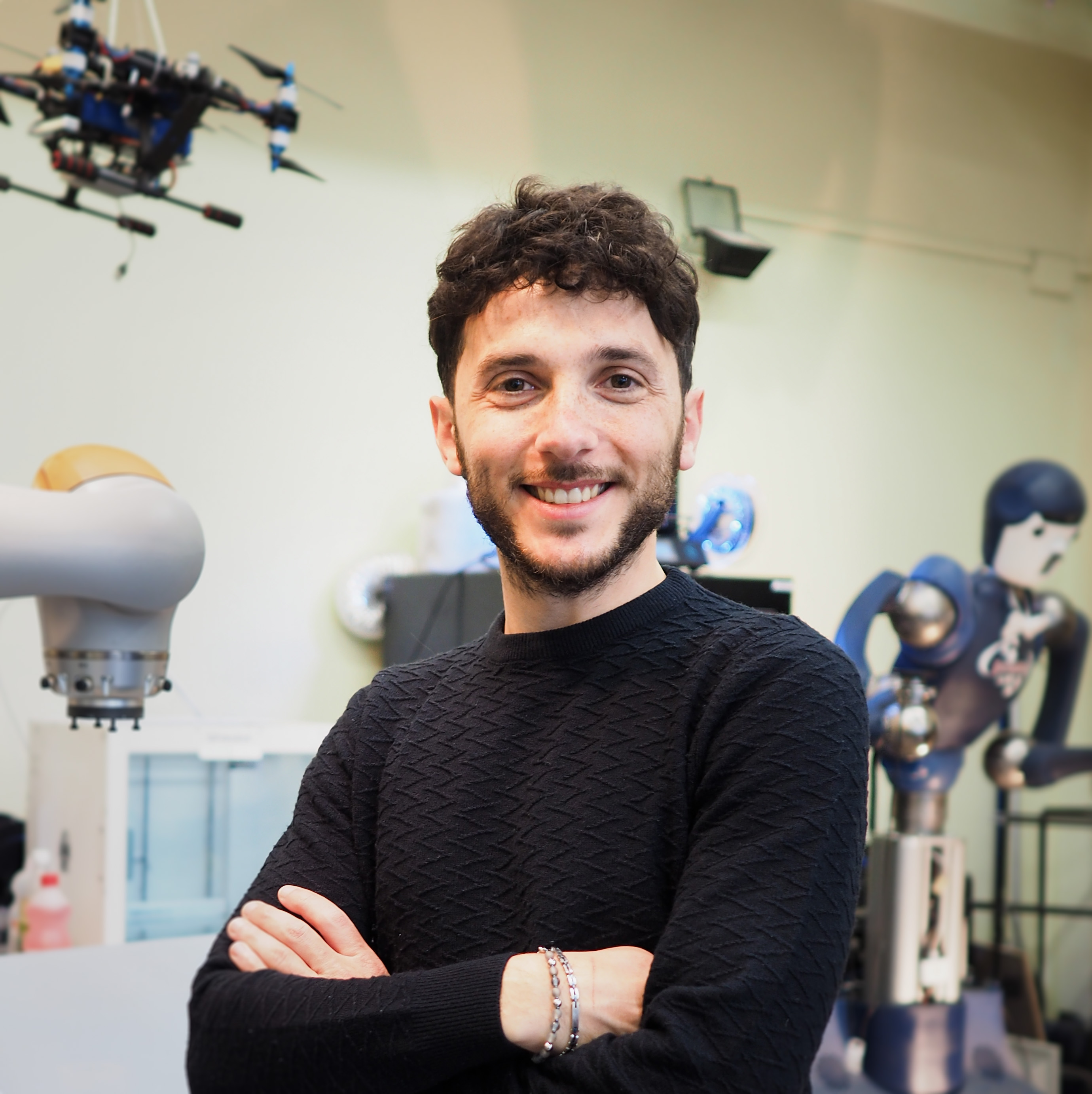
Mario Selvaggio is an Assistant Professor at the Department of Electrical Engineering and Information Technology, University of Naples Federico II. He actively contributes to robotics research through his involvement with PRISMA Lab and ICAROS , while co-founding spinoff companies BeyondShape and Herobots . His academic background includes a Ph.D. in Information Technology and Electrical Engineering (2020) under Prof. Bruno Siciliano, with previous degrees in Mechanical Engineering (2013, 2015). Ph.D. in Information Technology and Electrical Engineering (2020) Bachelor's and Master's in Mechanical Engineering (2013, 2015) His research interests focus on shared control/autonomy, robot teleoperation, passivity-based control, soft robotics, and robotic surgery. He has developed innovative solutions including: Shared-control teleoperation for soft growing robots Non-prehensile object transportation frameworks Advanced modeling of cable-suspended dual-arm systems Medical robotics with force-sensor equipped tools Virtual reality-based teleoperation architectures Recent publications (2021-2025) span topics from semi-autonomous aerial manipulation to cyber-physical measurement systems, with emphasis on human-robot interaction and industrial applications. He serves as Associate Editor for several IEEE conferences and journals. Scientific Awards IEEE RAS Technical Committee on Haptics grant ($2500, 2018) Second prize at Bioengineering Congress (2018) Finalist for 'Fabrizio Flacco' Best Paper Award (2020) Prof. Selvaggio teaches the Master's Course in Automation Engineering and Robotics (2024/2025) using Robot Operating System (ROS) curriculum. He actively collaborates with international research groups at IRISA/INRIA Rennes , Rainbow team , and University of California Santa Barbara (mechanical engineering department). His research combines theoretical advancements with practical implementations, demonstrated through extensive validation in simulated environments and real robotic platforms including KUKA LWR IIWA manipulators, dVRK systems, and humanoid platforms.
Mohammed Hossny is a Senior Lecturer at the University of New South Wales (UNSW), specializing in the application of Artificial Intelligence to human factors and performance. With a strong academic background including a PhD from Deakin University's Institute for Intelligent Systems and Research Innovation (IISRI), he has established himself as a leading researcher in markerless motion capture, biomechanics, and AI applications in human performance analysis. Dr. Hossny's research expertise spans several key areas: Artificial Intelligence applications in human factors Biomechanics and human performance analysis Markerless motion capture technologies Machine learning for human-computer interaction Computer vision for movement analysis His scholarly output includes 30 journal articles, 75 conference papers, 3 book chapters, and 1 preprint, demonstrating a prolific research career focused on bridging the gap between advanced computing techniques and practical human performance applications. Analysis of his recent publications reveals a strong trend toward deep learning approaches for motion capture, biomechanical modeling, and human performance optimization, with particular emphasis on real-world applications in automotive design, workplace ergonomics, and sports performance. Dr. Hossny has received recognition for his innovative work, including collaborations with Lockheed Martin on industrial exoskeleton development and contributions to award-winning projects such as the digital mannequins system that won Engineering Gold for IISRI in 2016. His research has practical applications across multiple industries including defense, automotive, and mining. As a research supervisor, Dr. Hossny has guided students in areas of Machine Learning and Artificial Intelligence, with a focus on practical applications that address real-world human performance challenges. His work with the Motion.Lab and Centre for Intelligent Systems Research (CISR) at Deakin University has resulted in several notable projects including Vox Lumen at White Night Melbourne.
Professor Krassen Stefanov Stefanov is a researcher at the Faculty of Mathematics and Informatics (FMI), Sofia University "St. Kliment Ohridski", with over 30 publications and leadership roles in 15 European Commission RTD projects. He holds a PhD in Computer Science from Sofia University and is a Cisco Certified Academy Instructor. 2003–2004: Cisco Certified Network Professional (CCNP) Instructor, Birmingham, UK 2002: Euro Innovation Manager certification, Brno University of Technology 2000–2001: Cisco Certified Academy Instructor (CCAI and CCNA) 1996–1997: MSc in Educational and Training Systems Design, University of Twente 1977–1982: MSc in Mathematics and Computer Science, Sofia University His research focuses on Technology Enhanced Learning , Semantic Knowledge Systems , Mobile Applications , and Open Development Platforms . He specializes in designing educational programs, modeling social processes, and consulting SMEs on ICT adoption. His publications from 2010–2012 emphasize digital libraries , metadata repositories , serious games , and cloud-based learning networks , with a strong emphasis on lifelong competence development and ICT standardization . Scientific Awards Best Paper Award, 5th International ePortfolio 2007 Conference He has led projects like the Share.TEC portal and weSPOT cloud platform , contributing to teacher training, SME consulting, and European RTD initiatives. His work involves designing competence assessment models and service-oriented e-learning infrastructures . Labs & Teams Professor Stefanov is affiliated with FMI Researchers and has collaborated extensively in the TENCompetence network, developing open-source infrastructures for lifelong learning. He co-created the Share.TEC portal for educational resource sharing and contributed to the I*Teach methodology for teacher training.
Ryan Marcus is an Assistant Professor in the Department of Computer and Information Science at the University of Pennsylvania. His research focuses on integrating machine learning into data management systems to create adaptive tools that optimize hardware utilization, invent novel processing strategies, and interpret user intentions. Currently based in Office 407, Amy Gutmann Hall, he actively explores query optimization, index structures, intelligent clouds, programming language runtimes, program synthesis for data processing, and reinforcement learning applications to systems challenges. Key research themes include machine learning for databases , learned query optimization , intelligent cloud systems , and blockchain adaptability . Scientific achievements include the Best Paper Award at SIGMOD '21 for the Bao system and the development of AutoSteer, a cross-database learned query optimizer. Notable PhD advisees co-advised include Peizhi Wu (with Zack Ives), Jeffrey Tao (with Andrew Head), and Zixuan Yi (with Zack Ives). His recent work, presented at venues like VLDB and SIGMOD, emphasizes scalable LLM-augmented data systems (ScaleLLM), robust cardinality estimation, and adaptive Byzantine fault-tolerant consensus (BFTBrain). For full system evaluations, he created testing environments such as BFTGym. Contact: rcmarcus@seas.upenn.edu
Dr. Michael E. Miller is a Professor of Systems Engineering at the Air Force Institute of Technology (AFIT) , where he leads the Human Systems specialization within the Department of Systems Engineering and Management. His expertise bridges Human-Agent Teaming , Human Digital Twins , and Human-System Integration . Doctor of Philosophy in Industrial and Systems Engineering, Virginia Tech (1993) Master of Science in Industrial and Systems Engineering, Ohio University (1989) Bachelor of Science in Industrial and Systems Engineering, Ohio University (1987) Dr. Miller’s research focuses on: Human-Agent Teaming – Modeling intent, coordination, and cognitive processes in mixed human-AI teams Digital Imaging and Display Systems – Lifetime modeling for OLED displays and visual search optimization Human Digital Twins – Developing metrics and unified frameworks for digital human representations His recent publications emphasize interdisciplinary applications in Systems Engineering , Cognitive Science , and Military Technology , particularly for defense and aviation contexts. Notable awards include: Southwestern Ohio Council for Higher Education Faculty Excellence Award (2017) Multiple Best Paper awards (2012-2016) from the Industrial and Systems Engineering Research Conference C.E.K. Mees Award, Eastman Kodak (2004) With over 100 US patents and 50 peer-reviewed articles , Dr. Miller has advanced human-machine integration in digital imaging during his 15-year tenure at Eastman Kodak prior to joining AFIT in 2010. He co-leads a NATO Research Specialists' Meeting on Human Digital Twins (December 2024).
Elizabeth M. Daly is a Research Scientist at IBM Research Laboratory, Dublin, and an Adjunct Assistant Professor at Trinity College Dublin's School of Computer Science and Statistics. Her work focuses on interactive AI , human-centered design , and fairness in algorithmic systems . She contributes to AI governance and LLM safeguarding through projects like AutoFair and Granite Guardian. Ph.D. in Computer Science (2007), Trinity College Dublin Thesis: Social Network Analysis for Routing in Disconnected Delay-Tolerant MANETs Her research interests span: Interactive AI : Facilitating AI-human negotiation for common objectives Trustworthy AI : Addressing fairness, accountability, and transparency in industrial applications Explainable AI : Developing tools like AIMEE for model exploration and editing She serves on the program committees of top conferences (RecSys, IUI, WWW, UMAP, ICWSM) and the Royal Irish Academy’s committee on Engineering and Computer Science. Notable scientific award: ACM Distinguished Member . Projects: AutoFair : Human-compatible automation of fairness in AI AIMEE : AI model explorer and editor tool Usage Governance Advisor : Translating AI intent into governance frameworks She leads the Interactive AI Group at IBM Research Europe - Ireland.
Dr.-Ing. Jakob Reinhardt is a postdoctoral researcher at the Chair of Ergonomics (Technical University of Munich) since May 2025, leading the Robotics for Life and Healthcare research group. His interdisciplinary work bridges robotics and medical technology. Human-robot interaction Motion planning Data analysis for user-centered product development Robotics in medical applications His research focuses on developing legible robot movements through data-driven methods, analyzing emergency service device usage, and enhancing user trust in autonomous systems. Publications span robotics, psychology, and ergonomics , addressing topics like motion identity and cooperative automation in transportation. He mentors students in human factors engineering and engages in dynamic mock-up lab projects.
Ditte Høgsgaard serves as Assistant Professor at the Department of Regional Health Research, University of Southern Denmark, with dual affiliation at IRS - Næstved, Slagelse, Ringsted Hospitals (NSR) and the Research Unit of Physiotherapy and Occupational Therapy in Slagelse. Her academic position focuses on bridging clinical practice and research in cross-sectoral healthcare systems. Her research centers on multimorbidity management through integrated care models, with emphasis on healthcare professional competencies in virtual consultations, stratification tools for elderly patients, and digital interventions for self-harm. Methodologically, she specializes in action research, scoping reviews, and reflexive thematic analysis to address systemic challenges in chronic disease management and emergency care. Analysis of her recent publications reveals a cohesive trajectory toward co-created solutions for cross-sectoral patient pathways, particularly examining how technology-mediated interventions transform clinical workflows. Key themes include maturity-onset diabetes of the young, mental illness comorbidities, and task-shifting dynamics between hospital and municipal healthcare sectors. Høgsgaard leads the 'Co-creation of models for user involvement in cross-sectoral patients’ pathways' project as Principal Investigator and contributes to the SAFE-App initiative for self-harm intervention. Her press engagements consistently advocate for municipal leadership in healthcare data platforms and warn against siloed implementation of chronic disease management programs.
Thomas LaToza is an Associate Professor in the Department of Computer Science at the George Mason University, School of Computing . His research focuses on the intersection of software engineering and human-computer interaction, exploring how developers interact with code and designing novel software development methodologies. He has pioneered crowdsourced programming environments and microtask programming frameworks, with notable projects including RulePad for checkable design rules and Hypothesizer for hypothesis-based debugging. His work emphasizes empirical studies of developer behavior, tool impact analysis, and integration of AI assistants in software development. His recent publications highlight trends in AI-driven development , debugging mental models , and developer information seeking . He has received recognition including the George Mason University Teacher of Distinction award and has served on the editorial board of Empirical Software Engineering . His advising includes PhD students Ruochen Wang, Mainul Hossain, and alumni Abdulaziz Alaboudi, Emad Aghayi, David Samudio, Sahar Mehrpour, and Maryam Arab. He co-founded the OurCode developer tools startup, translating academic research into industry applications.
Leonardo Banh is a Researcher at the University of Duisburg-Essen within the Faculty of Computer Science and its Chair of Business Information Systems and Software Engineering . M.Sc. in Business Information Systems (University of Duisburg-Essen, 2022) B.Sc. in Business Information Systems (University of Duisburg-Essen, 2020) Semester abroad at Instituto Superior Técnico, Lisbon (2021) His research focuses on Generative AI and its socio-technical implications, particularly in Machine Learning and Deep Learning applications. He explores intersections with NeuroIS , Smart Tourism , and E-commerce Ecosystems , emphasizing sustainability and digital transformation. Recent publications analyze Generative AI in Software Engineering , AI in Music Sentiment Analysis , and AI-Based Sign Language Translation . His work often involves design science research and grounded theory frameworks. Best Paper in Track Award (ICIS 2024) Nominated for Best Paper Award (ICIS 2024) Outstanding Reviewer (ICIS 2024) As advisor, he supervises theses on topics including AI-Based Mental Health Chatbots , Generative AI in HR , and Smart Tourism Applications . He also contributes to the Institute of Computer Science and Information Systems and serves on appointment/habilitation committees.