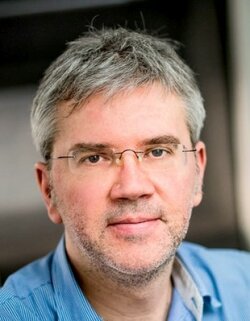
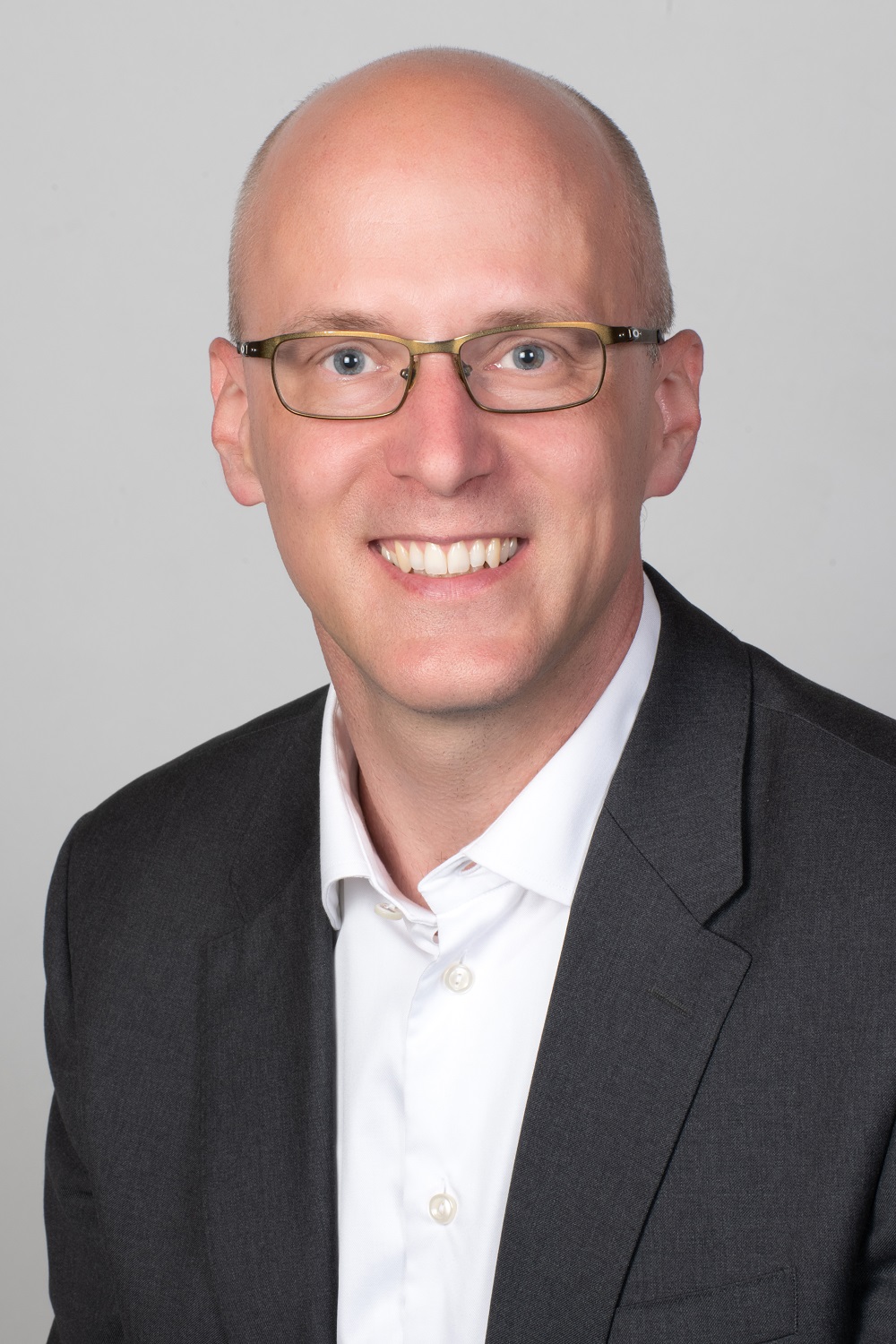
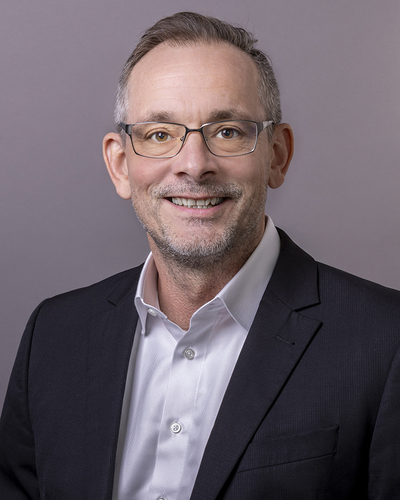
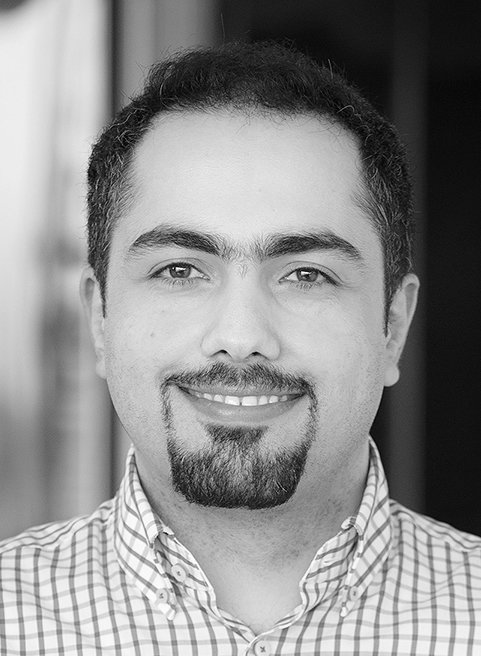
Steffen Maurer is a researcher focused on automated driving technologies , human-computer interaction , and vehicle safety systems , with publications in conferences like AutomotiveUI and MUM . His work bridges computer science , engineering , and psychology to address challenges in driver override mechanisms , ethical AI , and gamification for safety . Key Collaborators: Rainer Erbach, E. Rukzio, Petra Grimm Research Themes: Automated driving ethics, driver behavior modeling, gamification in simulators, and real-time navigation cues via quadcopters His studies, such as "Challenges for Creating Driver Overriding Mechanisms" (2017), highlight discrepancies in user perspectives on automated driving. In "Playing Guardian Angel" (2019), he explores mitigating overconfidence bias in manual driving through gamified interventions.
Prof. Dr. Christian Klaes leads the KlaesLab at the Ruhr-University Bochum 's Department of Neurotechnology , focusing on advanced neuroprostheses and assistive devices for paralysis rehabilitation. His work integrates neuroscience , machine learning , and virtual reality to decode brain signals for controlling exoskeletons and BCI systems . Key research areas: Brain-Computer Interfaces , Neural Implants , VR-based Neurorehabilitation , and AI-driven Medical Diagnostics Collaborations with Caltech , German Primate Center , and University of Madeira expand his interdisciplinary impact. Recent publications highlight advancements in EEG decoding accuracy , spike sorting algorithms , and somatosensory feedback systems , demonstrating his lab's contributions to neural signal processing and embedded AI platforms for future implants. Current projects include developing smart upper-limb exoskeletons , exploring terahertz brain imaging , and pioneering phantom touch illusions for sensory augmentation in VR environments.
Prof. Dr. Matthias Tichy is a Full Professor and head of the Institute of Software Engineering and Programming Languages at Ulm University, Germany, since 2015. His research focuses on domain-specific languages (DSLs), model-driven engineering (MDE), self-adaptive software , and cyber-physical systems , with an emphasis on safety-critical applications and graph transformation formalisms. He employs empirical research methods to evaluate technical contributions and human factors in software engineering. University: Ulm University Role: Professor & Institute Head Research Interests span domain-specific languages for mechatronic systems, collaborative modeling , performance prediction in model transformations, and software evolution in industrial contexts. His work often bridges graph transformations and safety assurance for self-adaptive systems. Recent Publications highlight trends in model versioning (e.g., operation-based caching), DSL design (e.g., flowR for R code analysis), and automotive software testing (e.g., clustering test case specifications). He frequently collaborates with international institutions on topics like cyber-physical systems and IoT resilience . Key Collaborations include projects with Chalmers University, University of Gothenburg, and industrial partners like dSPACE GmbH. His grants and industry partnerships focus on automotive software , robotics , and self-healing systems .
Aria Adli is a Professor of Linguistics at the Department of Romance Studies , University of Cologne, where he has been tenured since April 2014. He serves as Head of the Sociolinguistic Lab and is a principal investigator in the CRC 1412 (Register: Language-Users’ Knowledge of Situational-Functional Variation). Research focus: Grammatical variation, syntax in speech contexts, information structure, social stratification (Bourdieu), and register analysis Education: Habilitation from University of Freiburg (2011); PhD in Romance Linguistics (Tübingen 2004); Double MA in Linguistics/Psychology His work combines cross-cultural analysis (French, Spanish, Catalan, Persian) with empirical methods including fieldwork, corpus analysis, acceptability judgments, statistics, and computer simulations . He leads the Sociolinguistic Lab Cologne and has organized international workshops like the Flexible and Multiple Plural Marking in Language Contact (2022) and Sounds and Structure in Language and Music (2016). Scientific grants include CRC 1412 (2020-2027), DAAD EduVenTure (2020-2021), CRC 1252 (2017-2020), and DFG grants for projects like The Relation between Grammar and Usage (2013-2017). He has supervised 15+ students including PhDs by Amalia Canes Nápoles and Eric Engel.
Georg Stadtmann is a Professor of Macroeconomics at the Faculty of Economics and Business Administration (Wiwi) at Europa-Universität Viadrina Frankfurt (Oder). He serves as Vice Dean of the Chair of Economics and is part of the Dean's team. His research spans macroeconomics, monetary policy, and behavioral economics, with a unique focus on digital markets and eSports economics. Position: Vice Dean of the Chair of Economics (Macroeconomics) Department: Department of Economics Location: University Complex August-Bebel-Straße (AB 220), Frankfurt (Oder), Germany Research Interests: Macroeconomic modeling and policy analysis Monetary policy dynamics and central banking Behavioral economics applied to digital markets Structural comparisons of traditional sports and eSports Labor market responses to global crises (e.g., COVID-19) Cross-cultural economic behavior and creativity assessment Recent Article Trends: His 2025–2021 publications explore intersections between macroeconomics and digital culture, including the B/Orders in Motion framework applied to sports and gaming, cognitive biases in free-to-play games, and impacts of pandemics on labor markets. He also investigates ethical challenges in eSports and pricing mechanisms in virtual economies like Fortnite. Contact: Email: stadtmann@europa-uni.de Phone: +49 335 5534 2700
Dr. Nils Habich is a researcher at the Institute of Technology within the Faculty 4: Mathematics, Natural Sciences, Economics and Computer Science at the University of Hildesheim. His work focuses on lighting technology, smart home systems, and semiconductor technology , with significant contributions to educational technology and teacher training . Develops digitalization projects for classroom implementation Organizes continuing education for non-specialist teachers Coordinates university examination systems and maintains eCampus infrastructure Participates in study regulation development and IdeenExpo events Current research emphasizes adaptive lighting systems and technology integration in education , with recent publications on display blue light control and digital classroom tools. He also contributes to engineering pedagogy through robotics projects and technical workshops. His projects span practical applications like weather balloon experiments , quadcopter development , and smart home technologies , reflecting interdisciplinary approaches across physics, computer science, and engineering education.
Prof. Ulrich Büker is a faculty member at TH OWL since 2022, leading the Intelligent Systems research group at inIT (Institute for Industrial Information Technology). He became deputy head of inIT in 2024 and Vice Dean of Department 5 in 2025. His work bridges academic research and industrial applications in intelligent systems. Education : Diploma in Computer Science (University of Paderborn), Doctorate and Habilitation in Electrical Engineering and Information Technology (University of Paderborn). Research Interests include: Application-oriented artificial intelligence for automation and mobility systems. Autonomous driving with focus on scenario generation and vision-based control. Computer vision for robotics and industrial applications. Embedded systems in battery electric vehicles. Article Trends demonstrate expertise in autonomous systems, computer vision, and industrial applications, spanning from foundational 2000s work on hybrid object models to recent LLM-driven autonomous driving scenario generation . Key sub-fields include neural networks, image processing, and vehicle energy management. Professional Contributions include: Industrial leadership roles at Aptiv , Delphi , and Hella . Membership in German Informatics Society (GI) and German Society for Pattern Recognition (DAGM) . Patents in image segmentation (DE000010250781, EP000001416441).
Dr. Damian Backes leads the Energy Management and Drives research group at RWTH Aachen University's Institute of Automotive Engineering. His research focuses on thermal systems and energy efficiency in automotive applications, particularly for electric and fuel cell vehicles. Contact: +49 241 80-25420, office@ika.rwth-aachen.de. Research Focus: Dr. Backes investigates innovative solutions across these key areas: Thermal management of fuel cells and electric drivetrains Predictive energy optimization strategies for vehicles Human thermal comfort modeling in vehicle cabins Development of energy-efficient heating/cooling systems Smart materials for thermal regulation Research Trends: His recent publications (2015-2021) demonstrate consistent focus on improving vehicle energy efficiency through thermal innovations. Major themes include: predictive thermal management algorithms, human comfort optimization, integrated component design, and experimental validation of thermal systems. The work bridges fundamental thermodynamics with practical automotive applications. Laboratory Leadership: Dr. Backes heads the Energy Management and Drives research group, developing solutions for next-generation vehicle thermal systems. The group utilizes RWTH Aachen's testing facilities including specialized benches for combined acoustic-thermal analysis.
Dr. Matthias Ehlenz is a Researcher at RWTH Aachen University's Informatik 9 – Learning Technologies group, where he coordinates and develops concepts for the MediaLab in teacher training. He holds a Dr. rer. nat. (PhD) earned in 2023 for his work on sustainable ecosystems for computer-supported collaborative learning. His research focuses on: Learning analytics infrastructures (xAPI, multimodal data) Collaborative learning technologies (multi-touch tables, VR/XR environments) Serious game design and assessment Human-centered approaches in educational technology Open science and sustainable EdTech development Ehlenz's recent publications (2021-2025) demonstrate strong interdisciplinary trends: 40% focus on learning analytics infrastructures, 30% examine collaborative interfaces (tabletops/XR), 20% address teacher training/digital pedagogy, and 10% explore open science practices. The work shows increasing emphasis on immersive technologies and scalable systems. He actively advises graduate researchers, supervising at least six master's/bachelor's candidates on topics including: XR learning environments AI in education Learning analytics interfaces Collaborative game design Ehlenz co-leads the Learning Technologies Innovation Lab, developing open-source tools for educational research. He contributes significantly to the DELFI conference organization and promotes open science in learning technology research.
Prof. Ofer Shayevitz is a faculty member at the School of Electrical Engineering , Tel Aviv University , holding the academic rank of Professor . He is affiliated with the Department of Systems and leads interdisciplinary research at the intersection of information theory , statistical inference , and data science . His research explores theoretical challenges in interactive communication , machine learning , and quantum information , with applications to communication complexity , graph analysis , and non-stationary environments . Notable work includes advances in high-dimensional regression , entropy estimation , and memory-constrained algorithms . The trends in his recent publications highlight information-theoretic bounds , statistical inference under constraints , and interactive protocols . His group has made significant contributions to quantum key distribution , planted graph detection , and guesswork analysis . Scientific awards include the Best Student Paper Award at ISIT 2020 . His research is supported by major grants from the Israel Science Foundation (ISF) , ERC Starting Grant , and Israel Innovation Authority . Prof. Shayevitz advises current PhD students Assaf Ben-Yishai , Uri Hadar , and Shahar Stein Ioushua , as well as M.Sc. students Inbar Pinsly and Oz Ben Hamo . Former advisees include faculty members at institutions like Kyushu University and University of British Columbia .
Dr. Wael Yakti is a scientific collaborator at the Albrecht Daniel Thaer Institute of Agricultural and Horticultural Sciences under the Faculty of Life Sciences at Humboldt University of Berlin . His research spans sustainable waste management, edible insect rearing, and plant-microbe interactions, with a focus on optimizing insect-based biorecycling systems. Current research trends include: Developing standardized protocols for insect feed trials Analyzing microbial synergy in black soldier fly rearing Investigating hemp waste valorization through solid-state fermentation Comparative studies of nutrient recycling pathways His work bridges agricultural science and biotechnology, particularly through the Urban ecophysiology of plants research group located at Lentzeallee 55-57, Room 17.
Rahul Chaudhari is a Senior Researcher at the Chair of Media Technology, Technical University of Munich (TUM), where he has been working since August 2019. He is affiliated with the Munich Institute of Robotics and Machine Intelligence (MIRMI) and contributes to research in human-computer interaction, particularly in human activity understanding. Dr. Chaudhari earned his doctoral degree (Summa cum Laude) in Communications and Signal Processing from TUM in 2015, following a Master's degree in Communications Engineering from TUM in 2009 and a Bachelor's degree in Electronics and Telecommunications from the University of Pune, India. His academic journey reflects a strong foundation in communications engineering and signal processing that has evolved into interdisciplinary research spanning haptics, computer vision, and artificial intelligence. His research focuses on Human Activity Understanding using Computer Vision, Sensor Fusion, and AI techniques. His current work centers on understanding Human-Object Interactions using camera data (RGB and Depth) recorded in indoor environments, with potential integration of wearable sensors or environmental sensors. His work has significant applications in improving human well-being, comfort, and convenience through intelligent environments and ambient assisted living systems. Dr. Chaudhari's publication record shows a clear evolution from foundational work in haptic communications to cutting-edge research in human-object interaction and 3D pose estimation. His recent publications demonstrate expertise across multiple domains including computer vision for activity recognition, synthetic data generation for training models, and neurosymbolic approaches to human-AI collaboration. This interdisciplinary approach reflects the increasingly connected nature of modern AI research. Best student paper award for Yujun Wang (2025) LMT Spin-off Wins Third Place at euRobotics Technology Transfer Award 2025 LMT featured in Süddeutsche Zeitung (2025) Diego Fernandez Prado selected as finalist for IEEE CASE Best Paper Award (2024) Dr. Chaudhari actively supervises student research, including Master's theses on advanced topics such as 'Simulation and Optimization for 6G Network Planning using Digital Twins.' His supervision work involves guiding students through complex technical challenges in simulation software evaluation, digital twin implementation, and network optimization. He also serves on thesis committees and provides mentorship to students working on related research topics. His research group operates within the broader context of TUM's initiatives in robotics and machine intelligence, contributing to projects like the Centre for Tactile Internet with Human-in-the-Loop (CeTI) and 5G Testbed Bayern. The group maintains a strong focus on both theoretical foundations and practical implementations, with research that bridges the gap between academic innovation and real-world applications in intelligent environments.
Prof. Dr. Simon Nestler is a Professor for Human-Computer Interaction at Technische Hochschule Ingolstadt (THI) since 2019, previously at Hochschule Hamm-Lippstadt (HSHL) (2011-2019). He holds a Diploma in Computer Science and a Ph.D. in Human-Computer Interaction from Technische Universität München (TUM) and International Graduate School of Science and Engineering (IGSSE) , supervised by Prof. Gudrun Klinker . Educated: TUM (Diploma), IGSSE (Ph.D.) Affiliations: THI (2019-present), HSHL (2011-2019), Intraworlds (User Experience Engineer) Research Interests focus on applying HCI principles to safety-critical systems , particularly in emergency scenarios . He designs interfaces for car drivers , disaster response teams , and crisis management , addressing challenges like mental workload , collaborative problem-solving , and RFID patient tracking . His work includes developing virtual reality crisis simulations and mobile disaster apps . Teaching includes courses like Masterpraktikum GAMES and FAR Oberseminar . He also offers digital accessibility training , UX workshops , and keynotes on digitalization through his Prof. Nestler Akademie , which has trained 5000+ learners and delivered 100+ corporate trainings .
Babak Naderi is a Researcher at the Quality and Usability Lab of Technical University of Berlin , where he has been employed since August 2012. He holds a Dr.-Ing. (PhD) from 2017 for his dissertation on Motivation of Workers on Microtask Crowdsourcing Platforms , a master's degree in Geodesy and Geoinformation Science from TU Berlin (2017), and a bachelor's in Software Engineering . His research focuses on subjective quality assessment , speech quality evaluation in crowdsourcing environments, and motivation theory applied to microtask platforms. He developed the Crowdwork Motivation Scale based on Self-Determination Theory and has worked on standardization efforts within the P.CROWD work program of the ITU-T Standardization Sector . His publications demonstrate expertise in crowdsourcing for speech quality assessment, statistical modeling of worker behavior, and text complexity analysis . He has contributed to IEEE and ITU-T venues while serving as a reviewer for conferences like WWW and journals including International Journal of Human-Computer Studies . Awarded BMBF training program (2013-2015) Leader of the CrowdMAQA project
Prof. Dr. Artur Widera is a Professor at RPTU Kaiserslautern in the Department of Physics, where he leads a research group focused on quantum physics and ultracold atoms. He has held this position since 2010 and previously served as a scientific assistant in the group of D. Meschede in Bonn (2007-2010). His academic background includes a PhD from University Mainz (2003-2007) under I. Bloch, a diploma thesis with T.W. Hänsch in München (2002-2003), and studies in physics at University Würzburg (1997-2002). Prof. Widera's research spans quantum physics, ultracold atoms, quantum thermodynamics, quantum information, and atomic physics. His work explores quantum gases in optical lattices, quantum simulation, quantum sensing with nitrogen-vacancy centers, and quantum thermodynamics. He has made significant contributions to understanding quantum phase transitions, quantum transport phenomena, and quantum metrology. His publication record shows a consistent output of high-impact research, with recent work focusing on quantum sensing applications, quantum thermodynamics, quantum education, and multiqubit quantum systems. The publications demonstrate a trend toward increasingly interdisciplinary research, connecting fundamental quantum phenomena with practical applications in sensing and quantum information processing. Teaching award of the state Rhineland-Palatinate (2020) APS Outstanding Referee (2020) Teaching award of the state Rhineland-Palatinate (2016) Teaching award of TU Kaiserslautern (2013) ERC Independent Starting Researcher Grant (2011) Prof. Widera has supervised numerous PhD students including Daniel Adam, Sian Barbosa, and Jennifer Koch. His research has been supported by significant grants including an ERC Starting Grant in 2011 and leadership of an independent research group funded by the state of Northrhine-Westphalia (2009-2010). He serves as Dean of Studies for the physics department and chairs the committee for the international Master's program 'Advanced Quantum Physics' at RPTU Kaiserslautern. His workgroup at RPTU Kaiserslautern includes researchers focusing on quantum gases, quantum sensing with NV centers, quantum thermodynamics, and quantum information processing. The team maintains strong collaborations with other institutions in Germany and internationally, particularly in the areas of quantum simulation and quantum metrology.