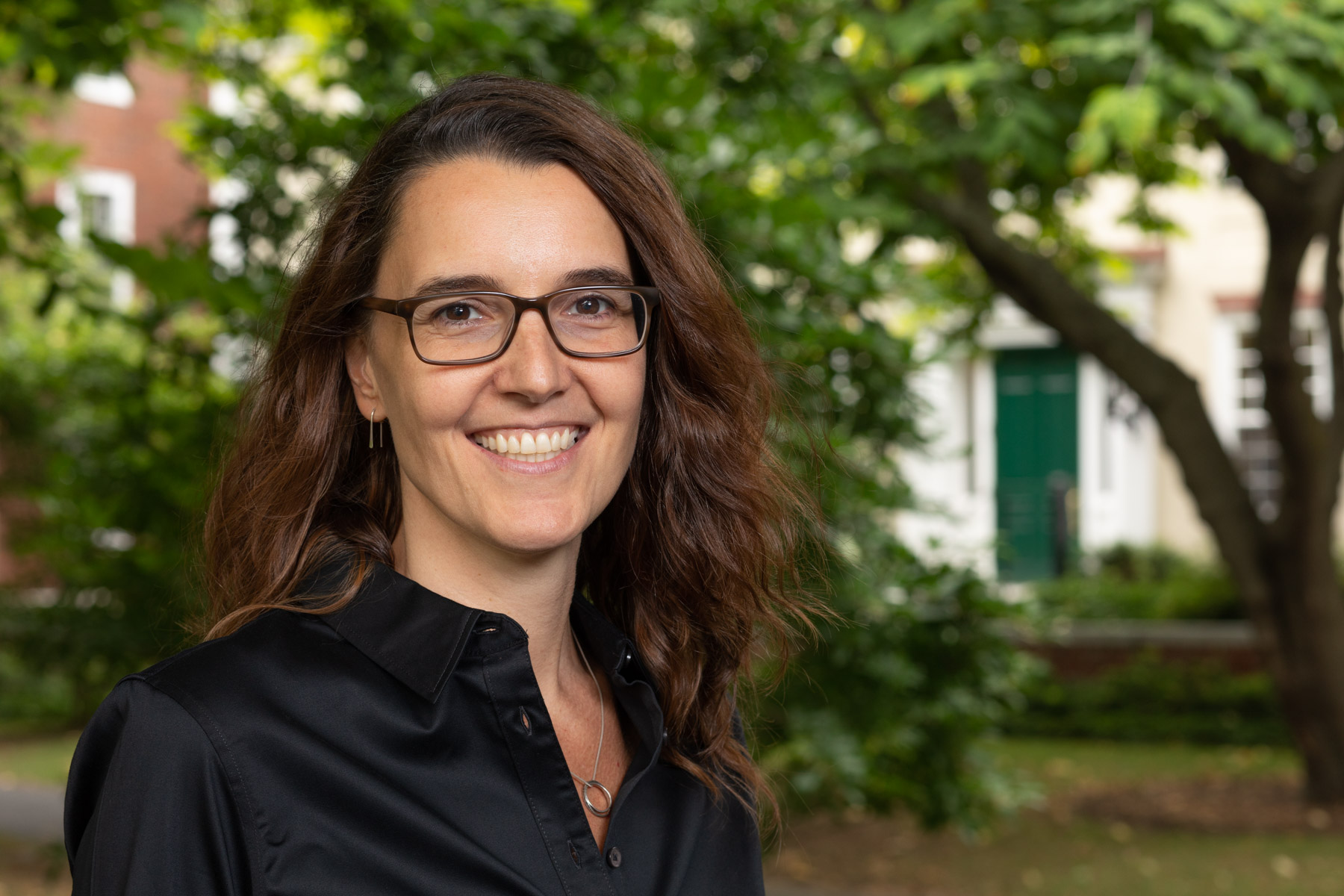
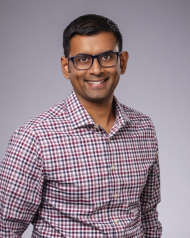
Eva Ascarza is a Professor of Business Administration in the Marketing Unit at Harvard Business School (HBS) . She co-founded the Customer Intelligence Lab at HBS's D 3 Institute, focusing on responsible and effective customer data utilization. Research Interests include: Customer retention and churn analysis Algorithmic bias in marketing AI Field experimentation (A/B testing) for targeting optimization Customer lifetime value (CLV) modeling Dynamic personalization strategies Scientific Awards and Recognitions: 2023 Weitz-Winer-O'Dell Award (winner) 2022 Paul E. Green Award (PNAS publication) 2020 Marketing Science Institute (MSI) Scholar 2019 Erin Anderson Award for Emerging Female Scholar 2018 Paul E. Green Award (JMR publication) 2014 Frank M. Bass Outstanding Dissertation Award Her articles demonstrate cutting-edge applications of statistical modeling , Bayesian methods , and fair AI frameworks in modern marketing challenges.
Jakob Schoeffer is a tenure-track Assistant Professor in the Artificial Intelligence department at the Bernoulli Institute for Mathematics, Computer Science and Artificial Intelligence, Faculty of Science and Engineering, University of Groningen (Netherlands). His work focuses on the intersection of human decision-making and artificial intelligence, particularly in high-stakes contexts where fairness, transparency, and appropriate human-AI collaboration are critical. Dr. Schoeffer's research interests center on responsible and explainable AI, with specific focus areas including: Human-AI collaboration dynamics in decision-making processes Fairness perceptions and interventions in AI systems Appropriate reliance on AI recommendations Explainable AI techniques for high-stakes domains Transparency mechanisms that improve human-AI team performance Label indeterminacy issues in medical AI applications His recent publications (2023-2025) reveal a strong trend toward applying AI research in critical domains like healthcare (particularly neurological recovery prediction), while maintaining a rigorous focus on the human aspects of AI deployment. His work spans both theoretical foundations of human-AI interaction and practical implementations, often employing mixed-methods approaches that combine technical AI development with behavioral studies. Dr. Schoeffer actively collaborates with researchers across institutions including the University of Texas at Austin and has made significant contributions to top conferences in AI ethics, fairness, and human-computer interaction. His research has been featured in multiple news outlets and policy discussions, indicating real-world impact of his work on responsible AI development. Prior to his current appointment, Dr. Schoeffer was a Postdoctoral Research Fellow at the University of Texas at Austin. He received his PhD from the Karlsruhe Institute of Technology (KIT) in Germany with a dissertation titled "On the Interplay of Transparency and Fairness in AI-Informed Decision-Making." He also holds a master's degree in Operations Research from Georgia Tech and industry experience as a Senior Data Scientist at IBM.
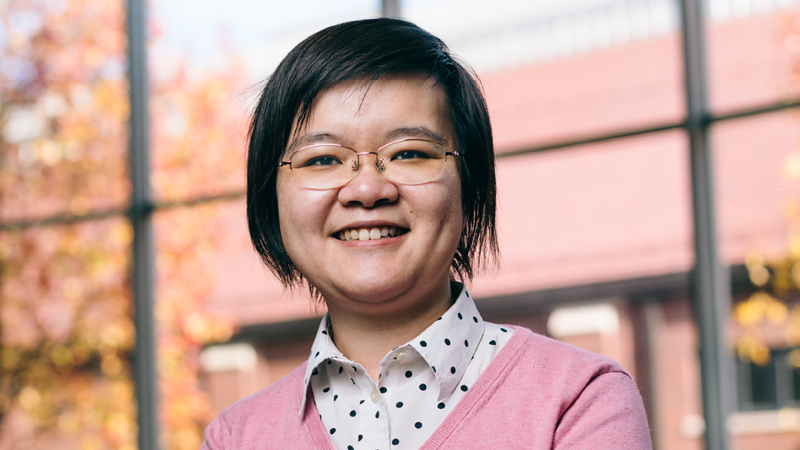
Ming Yin is an Associate Professor in the Department of Computer Science at Purdue University. Her research bridges human-computer interaction, applied artificial intelligence, computational social science, and behavioral sciences. She focuses on leveraging human behavior data to design intelligent systems that balance machine efficiency with human understanding, trust, and engagement. Education : PhD in Computer Science (Harvard University, 2017), B.E. in Computer Software (Tsinghua University, 2011) Previous Roles : Postdoctoral researcher at Microsoft Research New York City (2017–2018) Teaching : Courses on AI, Human-AI Interaction, Data Mining, and Human-Centered Computing Research Interests center on social computing, crowdsourcing, human-AI interaction, and ethical AI. She employs experimental and computational methods to study how human behavior can improve AI systems' design, fairness, and user trust. Her work has significant implications for gig economy platforms, decision support systems, and algorithmic accountability. Scientific Contributions include over 15 recent articles in top venues like CHI, IJCAI, and ACL. These works explore topics such as LLM-driven trust calibration, adversarial social influence, and ethical AI design. Her research has been recognized with the NSF CAREER Award Siebel Scholar (Class of 2017) Multiple Best Paper and Honorable Mention Awards at CHI, CSCW, and HCOMP Teaching Expertise spans courses like Introduction to Artificial Intelligence (CS 471), Human-AI Interaction (CS 592-HAI), and Data Mining (CS 573). She emphasizes project-based learning and designing systems for real-world problems, such as "learning in a new era" in her 2025 HCI course.
Brendan O'Connor is an Associate Professor in the Manning College of Information and Computer Sciences (CICS) at the University of Massachusetts Amherst. His research focuses on computational social science and natural language processing (NLP), particularly exploring how social factors influence language technologies and using text analysis to understand societal trends. His work includes studies on racial bias in NLP, political event analysis, and social media linguistics. He holds a PhD in Machine Learning from Carnegie Mellon University (2014) and dual MS/BS in Symbolic Systems from Stanford University (2006). Education: PhD in Machine Learning, Carnegie Mellon University (2014) MS in Symbolic Systems, Stanford University (2006) BS in Symbolic Systems, Stanford University (2006) Research interests span AI ethics, social media analysis, and computational methods for studying language and society. Notably, he investigates racial disparities in NLP systems, linguistic variation in African American English, and event detection in news and social media. His work has been recognized with NSF CAREER and Google Faculty awards, and his research has been cited thousands of times. His lab, the Statistical Social Language Analysis Lab, develops tools for analyzing large-scale text data. He is affiliated with the Center for Data Science, Center for Intelligent Information Retrieval, and Computational Social Science Institute. Recent projects include analyzing global news coverage of critical events and developing frameworks for zero-shot argument explication. Awards and Honors: NSF CAREER Award Google Faculty Research Award Best Paper Award Advising and Grants: O'Connor has advised projects on social media polling representativeness and demographic analysis. His grants include collaborative research on sociopolitical event extraction and bias mitigation in AI systems. He has also contributed to platforms like Rookie for news archive exploration and ezCoref for coreference resolution. Labs/Teams: Leads the Statistical Social Language Analysis Lab and collaborates with the UMass NLP Group and Harvard Institute for Quantitative Social Science. His work bridges NLP with social science methodologies, emphasizing transparency in algorithms and causal inference using text data.
John Gallagher is Associate Professor in English and Information Sciences at UIUC. His research examines how writers adapt to participatory audiences in digital environments, including social media interactions and AI writing tools. Using case studies and computational methods, he explores algorithmic audiences, ethical implications of AI, and technical communication in institutional contexts. He teaches courses in professional writing, digital rhetoric, and research methodologies. Recent projects analyze content creators' narratives about platform algorithms, inclusive emoji design, and academic integrity challenges posed by generative AI.
Dr. Muhammad Abdul-Mageed is an Associate Professor in the School of Information at The University of British Columbia, with joint appointments in Linguistics and an associate membership in Computer Science. He holds the Canada Research Chair in Natural Language Processing and Machine Learning. His research focuses on deep learning, socio-pragmatics, and speech/language technologies, particularly for Arabic and African languages. He leads the UBC Deep Learning & NLP Group and co-directs SSHRC-funded grants like I Trust AI and Ensuring Full Literacy. He is a founding member of the Center for Artificial Intelligence Decision making and Action and a member of the Institute for Computing, Information, and Cognitive Systems. His work spans automatic speech recognition, machine translation, computational socio-pragmatics, and low-resource language technologies. Notable projects include developing Arabic speech recognition systems, multidialectal Arabic benchmarks, and tools for African language processing. He has authored over 100 peer-reviewed papers and leads initiatives like the NADI Arabic Dialect Identification shared task and the NileChat project for culturally-aware LLMs. His research aims to create equitable, socially-aware AI systems for health, social media, and information management.
Janne Lindqvist is an Associate Professor at the Department of Computer Science, Aalto University. His research bridges security engineering, human-computer interaction (HCI), and privacy, with a focus on making security systems usable and user-centric. University: Aalto University Department: Department of Computer Science Rank: Associate Professor Email: janne.lindqvist@aalto.fi Lindqvist’s work spans security engineering , privacy systems , and user research , emphasizing practical authentication methods, password management, and human behavior in security contexts. He explores how users interact with systems like TPM APIs, gesture passwords, and mobile authentication mechanisms. Recent publications highlight trends in authentication systems , ubiquitous computing security , and mobile user behavior . Key themes include biometric authentication, gesture-based security, and balancing usability with cryptographic robustness. CHI'25 Honorable Mention Award CHI'24 Best Paper Award His research integrates empirical studies with technical implementations, such as analyzing password forgetting patterns and developing acoustic sensing for vehicle detection (e.g., Auto++, BO-Ear). Collaborative efforts span machine learning, psychology, and embedded systems.
Arvind Narayanan is a Professor of Computer Science at Princeton University and Director of the Center for Information Technology Policy (CITP). His research focuses on the societal impact of digital technologies, particularly artificial intelligence, with emphasis on policy implications, fairness, and privacy. He leads interdisciplinary efforts connecting technical research with real-world policy challenges. Dr. Narayanan earned his Ph.D. from the University of Texas, Austin in 2009. His academic journey has established him as a leading voice in the critical examination of AI systems and their societal consequences. Narayanan's research spans multiple domains where technology intersects with society. His work on AI includes critical analysis of AI capabilities versus marketing claims (AI Snake Oil), fairness in machine learning systems, and the reproducibility crisis in ML-based science. In privacy research, he led the Princeton Web Transparency and Accountability Project which uncovered how companies track users online, developing the OpenWPM tool used in over 100 studies. His early work demonstrated fundamental limits of de-identification techniques and how machine learning reflects cultural stereotypes. His recent publications reveal a consistent focus on demystifying AI capabilities while identifying genuine opportunities and risks. Narayanan's work bridges technical computer science with policy relevance, emphasizing the importance of evidence-based approaches to AI governance. His research increasingly addresses the limitations of prediction systems, the challenges of evaluating AI systems, and the need for transparency in foundation models. Presidential Early Career Award for Scientists and Engineers (PECASE) Privacy Enhancing Technologies Award (twice recipient) Privacy Papers for Policy Makers Award (three-time recipient) TIME's inaugural list of 100 most influential people in AI 2025 Graduate Mentoring Award Narayanan is recognized as an exceptional mentor, receiving Princeton's Graduate Mentoring Award in 2025. His policy engagement extends to congressional testimony, advisory roles, and frequent media commentary. He has secured significant research funding supporting his work on web transparency, AI policy, and cryptocurrency analysis. His research group has produced influential tools like OpenWPM for web privacy studies and contributed to foundational textbooks on cryptocurrencies and fairness in machine learning. At Princeton, Narayanan leads the Web Transparency and Accountability Project, a major research initiative that has conducted large-scale measurements of online tracking across millions of websites. He also co-founded and directs the CITP's AI Policy Initiative, which brings together researchers from multiple disciplines to address pressing AI governance questions. His work frequently involves collaboration with social scientists, legal scholars, and policymakers to develop practical solutions to technology governance challenges.
Matthew Kay is an Associate Professor in the Department of Communication Studies at Northwestern University's School of Communication, with a secondary appointment in Computer Science. He serves as Co-Director of Graduate Studies for the PhD in Technology and Social Behavior program. His research focuses on human-computer interaction and information visualization, specializing in uncertainty communication, usable statistics, and personal informatics. He employs mixed-method approaches including behavioral analysis, interactive system development, and visualization technique evaluation to address real-world data interpretation challenges. Analysis of his recent publications reveals dominant themes in visualization literacy development, uncertainty representation for decision-making, and health informatics applications. His work consistently bridges theoretical frameworks with practical implementations, particularly in educational assessment tools and election forecast visualizations. Professor Kay co-directs the Midwest Uncertainty Collective (MU collective), a research group advancing uncertainty communication methodologies. Previously faculty at the University of Michigan School of Information, he maintains active contributions to visualization tool development including the ggdist R package for uncertainty visualization.
Ali Vakilian is a Research Assistant Professor at the Toyota Technological Institute at Chicago (TTIC), with a strong academic background in theoretical computer science and algorithms. He will join the Department of Computer Science at Virginia Tech as an Assistant Professor in Fall 2025. His research bridges algorithmic theory and machine learning, focusing on scalable, fair, and efficient algorithms for massive data. Education: Ph.D. in EECS, Massachusetts Institute of Technology (MIT), advisors: Erik Demaine and Piotr Indyk M.S. in Computer Science, University of Illinois at Urbana-Champaign (UIUC), advisor: Chandra Chekuri B.S. in Computer Engineering, Sharif University of Technology Research Interests: Ali Vakilian's work centers on the algorithmic foundations of machine learning and data science. He develops streaming, sketching, and sublinear-time algorithms for massive datasets, and pioneers learning-augmented algorithms that use machine learning predictions to improve performance while maintaining worst-case guarantees. His research in trustworthy ML includes algorithmic fairness, fair clustering, and learning with strategic agents. He also contributes to combinatorial optimization and approximation algorithms for network design, set cover, and low-rank approximation. His recent publications (2023–2025) show a consistent focus on fair clustering (individual and group fairness), streaming graph algorithms , learning-augmented methods , and frequency estimation . These works appear in top venues such as NeurIPS, ICML, SODA, and ICALP, often with recognitions like oral or spotlight presentations. Scientific Awards: Outstanding Student Paper Highlight Award, AISTATS 2024 Notable-top-25% paper, ICLR 2023 Oral presentation, AISTATS 2024 Spotlight presentation, NeurIPS 2023 Advising and Grants: Ali Vakilian mentors several students and interns, including summer interns at TTIC and Fatima Fellows. His research is supported by the National Science Foundation (TRIPODS program), as noted in the press coverage of his work on LearnedSketch. He actively contributes to the academic community through advising, organizing workshops (e.g., Algorithms with Predictions, Learning-Augmented Algorithms), and serving on program committees (e.g., NeurIPS, ICML, AISTATS). Labs and Teams: He is affiliated with the theory and algorithms group at TTIC and collaborates with researchers at MIT, UIUC, and other institutions. His work on learning-augmented algorithms has led to influential workshops and collaborations with leading figures such as Piotr Indyk and Erik Demaine.
Marta Kwiatkowska is a Professor of Computing Systems at the University of Oxford and a Fellow of Trinity College. Her research focuses on probabilistic verification , quantitative model checking , and formal methods for complex systems including autonomous robots, medical devices, and biological systems. She leads the development of the PRISM and PRISM-games probabilistic model checkers. Key research areas: Probabilistic systems, formal verification, autonomous robotics, medical device analysis, systems biology Grants: ERC Advanced Grant VERIWARE, EPSRC Programme Grant Mobile Autonomy Awards: 2024 ETAPS Test-of-Time Tool Award for PRISM Students: Current and former advisees in topics spanning formal methods, robotics, and quantitative verification The PRISM-games extension enables verification of stochastic multi-player games with applications in network protocols, autonomous systems, and game theory. Her work bridges theory, algorithms, and practical implementation, with real-world applications in ubiquitous computing and nanotechnology.
Kora DeBeck is a Distinguished Professor of Substance Use and Drug Policy in the School of Public Policy at Simon Fraser University, a CIHR Applied Public Health Chair, and Dorothy Killam Fellow. She is also a Research Scientist with the BC Centre on Substance Use and Principal Investigator of the At-Risk Youth Study (ARYS), a longitudinal cohort tracking over 1,200 street-involved youth. Her research focuses on substance use policy, health services for marginalized populations, and the structural drivers of drug-related harms. She has published over 200 peer-reviewed articles challenging ineffective drug enforcement models and advocating for policy reforms. Recent publications analyze trends in opioid use, harm reduction during the COVID-19 pandemic, drug decriminalization, and youth-focused interventions. Her work consistently addresses social inequities through data-driven approaches to the toxic drug crisis. CIHR Applied Public Health Chair Dorothy Killam Fellow Michael Smith Health Research BC Scholar Award Distinguished SFU Professorship She has secured over $50 million in research funding, including $21M as principal investigator for ARYS. Her lab collaborates with healthcare providers, community organizations, and policymakers to translate research into practice.
Associate Professor Joyce Nip is a member of the University of Sydney's Discipline of Media and Communications and Department of Chinese Studies. Her research focuses on media dynamics in Chinese societies, particularly the political and social implications of digital platforms like social media. She has held visiting roles at the University of Hong Kong and the University of Maryland, and received the 2020 Taiwan Fellowship. Education and Professional Background: Joyce has over 20 years of experience in journalism, teaching, and research. She was a Fulbright Scholar at the University of Maryland (2004–2005) and has held academic roles in Hong Kong before joining the University of Sydney in 2010. Research Interests: Her work spans journalism studies, civic media use, and diasporic Chinese communities. Current projects include studies on online public opinion in Greater China and China’s external news communication strategies. Grants and Awards: Joyce has secured grants from the Chiang Ching-Kuo Foundation for projects on Chinese social media and public opinion. Her 2020 Taiwan Fellowship reflects her expertise in cross-strait communication. Teaching and Supervision: She teaches courses on Chinese media in global contexts and supervises research on topics like Taiwanese public communication and diasporic media. Past students include Liang Xia (PhD) and Weiwei Xu (PhD). Labs and Collaborations: Joyce contributes to the Sydney Southeast Asia Centre and serves on editorial boards for Asian Journal of Communication , Digital Journalism , and Journalism Practice .
Jessica Lin is an Associate Professor in the Department of Computer Science at George Mason University, with a focus on data mining and time series analysis. She has published extensively on topics including motif discovery, anomaly detection, clustering, and symbolic representation of time series data. Ph.D., M.S., and B.S. in Computer Science from UC Riverside (2005, 2002, 1999) Her research spans efficient algorithms for mining massive time series datasets, extending to multimedia data like images and texts. She has developed tools such as GrammarViz and SAX for pattern visualization and symbolic analysis. Recent publications highlight advancements in variable-length motif discovery, interpretable classification frameworks, and anomaly detection. Her work appears in top conferences like AAAI, ICDM, and SDM, as well as journals including Knowledge and Information Systems and Data Mining and Knowledge Discovery . Dr. Lin has advised numerous Ph.D. students, many of whom have taken academic or industry positions. She has served on editorial boards and program committees for conferences such as KDD, ICDM, and ECML-PKDD.
Dr. Kenneth Joseph is an Associate Professor in the Department of Computer Science and Engineering at the University at Buffalo , part of the School of Engineering and Applied Sciences . He serves as Associate Director of the Institute for Artificial Intelligence and Data Science and leads the Computation and Equity Lab (cubelab) , focusing on social inequality through computational measures and models. Education: PhD, MS, and BS in Societal Computing from Carnegie Mellon University (2016, 2012, 2010) Research Interests: Computational Social Science, Network Science, Gender Studies, and AI for Social Good Notable Work: Gender disparities in academia, predictive modeling for foster care and urban policy, and social media rumor analysis Awards: UB Exceptional Scholar—Young Investigator Award (2021) Advising: Mentored students like Yuhao Du, Jason Yan, Arjunil Pathak, and Navid Madani on projects spanning Twitter bios, foster youth services, and algorithmic fairness.