Professor Michael Ramage is a Senior Lecturer in the Department of Architecture at Cambridge University , where he directs the Centre for Natural Material Innovation . He is also a fellow of Sidney Sussex College and co-founder of Light Earth Designs . His academic background includes architecture studies at MIT and professional experience at Conzett Bronzini Gartmann in Switzerland. His research focuses on low-energy structural materials , natural material innovation , and sustainable housing in developing regions, with particular emphasis on engineered timber and bamboo . The 15 most recent publications highlight trends in modular timber construction , 3D printed earthen materials , and climate action in the building sector . Key subfields include circular economy , resource optimization , structural testing , and behavioral impacts on decarbonization . He has secured research funding from the Leverhulme Trust , Engineering and Physical Sciences Research Council (EPSRC) , Royal Society , and British Academy .
Daniel Cardoso Llach is an Associate Professor at Carnegie Mellon University's School of Architecture , where he chairs the Master of Science in Computational Design program and co-directs the CoDe Lab . His scholarship merges history, science and technology studies (STS), and computational design , focusing on the cultural and socio-technical dimensions of design automation. Education: PhD and MS in Architecture: Design and Computation from MIT , BArch from Universidad de los Andes Research Grants: Supported by the Graham Foundation for historical CAD exhibitions and by the Alexander Von Humboldt Foundation for postwar computational design research in Germany His work interrogates the politics of software, the materiality of computational systems , and the ethical implications of AI/robotics in architectural practice. Recent projects include reconstructing early CAD systems and analyzing data-driven urban technologies. Scientific awards include: Alexander Von Humboldt Fellowship (2024–2025) ACM CSCW Methods Mention for emulation-based software research (2021)
Pierre Marquis is a distinguished Professor of Computer Science at Université d'Artois , affiliated with the Centre de Recherche en Informatique de Lens (CRIL-CNRS, UMR 8188) . Since December 2024, he has served as the vice-president for research and doctoral studies at Université d'Artois. His research focuses on Artificial Intelligence , particularly knowledge representation , automated reasoning , inconsistency handling , and knowledge compilation , with recent emphasis on Explainable AI (XAI) . Research Interests: Marquis's work spans foundational AI topics including abduction , induction , belief revision , and preference modeling . He has pioneered knowledge compilation techniques to optimize AI tasks and developed frameworks for reasoning under inconsistency through paraconsistent logics and argumentation. His EXPEKTATION chair (2020-2026) under France's national AI program drives his current focus on interpretable machine learning models. Scientific Awards: 2025: CNRS Silver Medal 2022: AAIA Fellow 2017: Senior Member of Institut Universitaire de France (IUF) 2009: EurAI (ECCAI) Fellow Doctoral Students: Mentoring Clément Lens (critical patient monitoring systems) and Mehdi Sabiri (data-knowledge integration for AI explanations). Collaborating with students like Louenas Bounia (formal XAI models) and Romain Wallon (pseudo-Boolean constraints). Grants & Projects: Leads the EXPEKTATION research chair (2020-2026) and participates in ANR PING/ACK (2019-2023), ANR THEMIS (2021-2025), CNRS IRP MAKC (2020-2024), and H2020 TAILOR (2020-2024). Previously led PIA4 MAIA (2023-2032) and Pint (2022-2023). Labs & Teams: Active in CRIL-CNRS, contributing to PyXAI (Python XAI library) and d4 (model counting), while mentoring teams on consensus belief merging and dynamic constraint processing .
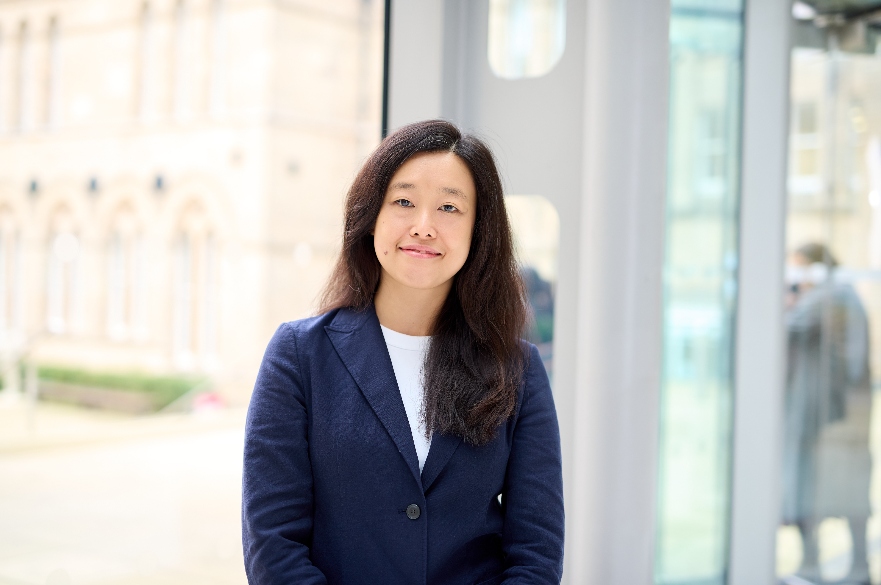
Dr. Elaine Chen serves as Senior Lecturer in Business Analytics and Course Leader for the MSc Business Analytics and Artificial Intelligence at Nottingham Business School, Nottingham Trent University. Her teaching emphasizes practical applications of data and AI technologies for business decision-making, with dedicated focus on accessibility for diverse student backgrounds across technical and strategic domains. Her academic credentials include: PhD in Computing Science MSc in Business Information Technology Postgraduate Certificate in Academic Practice BTech (Hons) in Business Information Systems Chen's research bridges educational and business contexts through data-AI integration: Generative AI adoption in higher education, particularly for neurodivergent/disabled students Human-AI collaboration frameworks in organizational settings SME applications for AI-driven efficiency and competitiveness Workforce analytics and talent management systems Her work consistently connects technical AI capabilities with real-world implementation challenges. Publication analysis (2023-2025) reveals accelerating focus on generative AI's educational impact and business strategy integration, evolving from her foundational work in social recommender systems (2014-2020) which established methodologies now applied to contemporary AI challenges in business contexts. Her professional recognition includes: Senior Fellow of the Higher Education Academy (HEA) Chen actively supervises PhD candidates in AI education, human-AI collaboration, and workforce analytics domains. Her pedagogy leadership includes designing accredited business analytics curricula and securing teaching innovation projects with documented outcomes in student engagement metrics. Prior industry experience as an automation engineer at Intel informs her practical approach to AI implementation. Current initiatives focus on generative AI ethics frameworks and longitudinal SME adoption studies, extending her established research trajectory into emerging business technology challenges.
Dr. Jason Bennett Thatcher is a Professor at Temple University in the Department of Management Information Systems at the Fox School of Business. He holds additional faculty appointments at the Technical University of Munich, Information Technology University-Copenhagen, and Hong Kong Polytechnic University. His research bridges human behavior and information technology, focusing on cybersecurity, strategic alignment, and digital innovation. 20-year track record in top FT50 journals Top 35 active IS researcher by productivity Senior Editor roles at MIS Quarterly , Information Systems Research , and Journal of the AIS Research spans three pathways: strategic IT decisions (firm performance, governance), IT workforce management (job satisfaction, turnover), and post-adoption IT innovation (technostress, IT identity). 2022 publications emphasize digital commerce, social media ethics, and technostress mitigation. Awards include: Clemson's 2008 Undergraduate Teaching Award KPMG Foundation Circle of Compadres Top Associate Editor recognition by Information Systems Research Multiple productivity rankings Teaching spans undergraduate to Ph.D. levels with global mentorship experience. Editorial leadership roles include Senior Editor positions and former editorial board memberships. Productivity metrics highlight 12,000+ Google Scholar citations and consistent publication in FT50 journals since 2002.
Dr. Gianluca Demartini is a leading researcher in Human-in-the-loop AI Systems with significant contributions to Crowdsourcing , Information Retrieval , and Generative AI applications. His work bridges Machine Learning and Human-Computer Interaction , focusing on Bias Management , Fact-Checking , and Ethical AI . Major Affiliations : L3S Research Center, ScienceWISE platform, and collaborations with institutions like University of Queensland and University of Padua Over 15 years, his research has explored Crowdsourcing Quality Control (Mechanical Cheat 2012), Entity Ranking (2008-2013), and Semantic Search . Recent work (2024-2026) focuses on Generative AI Impacts in domains like Media Literacy , Data Curation , and Visual Analytics . Scientific Recognition : Best Paper Award (Top 1.4%) at ICTIR 2023 Best Short Paper Award (Top 0.6%) at ECIR 2020 Honorable Mention (Top 2%) at CSCW 2020 Best Demo Award at ISWC 2011 3rd Best Paper at LA-WEB 2008 His 15 most recent publications (2024-2026) demonstrate expertise in LLM-based Content Moderation , Immersive Data Visualization , and Trustworthy AI Systems . He has pioneered methods for Bias Detection in Wikipedia (2013), Entity Ranking (2008-2013), and Human-AI Collaboration frameworks. His work consistently addresses ethical challenges in AI for Social Good and Responsible Data Science .
Giomara Lárraga Maldonado is a Postdoctoral Researcher at the Faculty of Information Technology within the University of Jyväskylä , Finland. She contributes to the Multiobjective Optimization Group and is affiliated with the Decision Analytics utilizing Causal Models and Multiobjective Optimization (DEMO) thematic research area. Research Focus: Interactive Multiobjective Optimization, Evolutionary Computation, Explainable AI Key Areas: Preference integration, Decomposition-based methods, Human-Computer Interaction for decision support Her recent work explores explainability frameworks (e.g., LIME integration), phase-specific algorithm configuration, and semantic distance studies for visualization. She collaborates with researchers like Kaisa Miettinen and Giovanni Misitano. She has contributed to conferences such as GECCO, PPSN, and AAMAS, with publications emphasizing open-access availability. The R-XIMO framework (2022) highlights her work on explainable systems.
David Lo is the OUB Chair Professor of Computer Science at Singapore Management University's School of Computing and Information Systems, where he directs the Information Systems and Technology Cluster and the Center for Research on Intelligent Software Engineering. An ACM Fellow, IEEE Fellow, and ASE Fellow, his research focuses on AI for Software Engineering (AI4SE), leveraging machine learning, data mining, and NLP to enhance software analytics and automation. Research Highlights: AI4SE, code LLMs, human-AI synergy in software engineering, software reliability, and empirical studies of practitioner pain points Awards: IEEE TCSE Distinguished Service Award, university-wide Teaching Excellence Award, Outstanding Graduate Supervisor Award, 2 Test-of-Time Awards, and 11 ACM SIGSOFT/IEEE TCSE Distinguished Paper Awards Leadership: General Chair of ASE'16 and MSR'22, PC Co-Chair for ASE'20, FSE'24, and ICSE'25, ACM SIGSOFT Executive Committee member His work has received over 20 awards, 37,000 citations, and an H-index of 100. As an educator, he has mentored trainees who became faculty and R&D experts globally.
Anson Kahng is an Assistant Professor in the Department of Computer Science and the Goergen Institute of Data Science at the University of Rochester. He previously held postdoctoral positions at the University of Toronto and completed his PhD at Carnegie Mellon University under the supervision of Ariel Procaccia, focusing on computational social choice. PhD, Computer Science, Carnegie Mellon University Undergraduate degree, Computer Science, Harvard College His research explores the intersection of computer science and democracy, developing frameworks like virtual democracy and liquid democracy while analyzing fairness in participatory budgeting and voting systems. He combines theoretical analysis with empirical methods, emphasizing interdisciplinary collaboration. Recent work includes advancements in ranked choice voting optimization, fairness metrics for elections, and structural analysis in cryo-electron tomography. He has published in top venues such as IJCAI, AAAI, NeurIPS, and ACM Transactions on Economics and Computation. NeurIPS 2019 Spotlight Presentation (top 2.5% of submissions) Kahng advises PhD students Alina Chadwick and Joe Saber, and has mentored multiple undergraduate researchers. He teaches courses on algorithmic game theory and computational statistics at the University of Rochester.
Leah Macfadyen is an Associate Professor of Teaching in the Department of Language & Literacy Education at the University of British Columbia (UBC), Faculty of Education. She serves as Coordinator for Curriculum & Instruction in the Master of Educational Technology (MET) program. With interdisciplinary training in experimental sciences and humanities, she bridges analytical rigor with cultural theory in her research on digital education and learning analytics. Her research spans learning analytics , digital literacies , and critical intercultural communication . Key projects include developing UBC’s Introduction to Global Citizenship online course (2005) and co-authoring MET program courses like ETEC 542. She explores ethical dimensions of ‘big data’ in education and data literacy challenges. Recent publications (2020–2023) focus on institutional learning analytics frameworks, curriculum NLP analysis, and ethical codes for practitioners. Collaborative work with Shane Dawson and others has been published in journals like Journal of Learning Analytics , Computers & Education , and Journal of Genetic Counselling . Key Themes : Intercultural communication in digital spaces, systems thinking for educational analytics, ethical implications of data-driven learning Courses Developed : ETEC 500, 520, 542, 543, 581, and 590
Cornelius Puschmann is a Professor of Communication and Media Studies at the University of Bremen's ZeMKI, leading the Digital Communication and Information Diversity (DCID) Lab. He has held affiliations with institutions including Zeppelin University, the Alexander von Humboldt Institute for Internet and Society, and the Leibniz Institute for Media Research / Hans Bredow Institute. His research focuses on computational communication, digital media usage, hate speech, and algorithmic impacts on digital communication. Current projects: Informed by Influencers? (INDI), Political Polarization and Individualized Online Information Environments (POLTRACK) Member of Deutsche Gesellschaft für Publizistik- und Kommunikationswissenschaft (DGPuK), European Communication Research and Education Association (ECREA), and International Communication Association (ICA) His recent publications explore topics such as alternative news consumption, political polarization, and communicative AI. He has also contributed to open-source methodologies like the RPC-Lex dictionary for analyzing right-wing populist discourse. Notable affiliations include visiting scholar roles at the Oxford Internet Institute, Berkman Klein Center for Internet and Society, and University of Amsterdam's Department of Media Studies.
Sophie Isaksson Hallstedt is a Full Professor at Chalmers University of Technology, conducting research in Sustainable Product Development (SPD) with a focus on strategic sustainability integration in product innovation. She holds appointments at both Chalmers and Blekinge Institute of Technology, and serves on international Design Society committees. Key Research Areas: Strategic socio-ecological sustainability, digital decision support tools, circular value chains, and sustainability in emerging technologies. Notable Projects: SUSTAIN (aerospace sustainability), Circular Design Nexus (user behavior analysis), and Digital Materials Ecosystems. Awards & Recognition: Featured in Royal Swedish Academy of Engineering Sciences (IVA) 100-list (2020, 2023). Publications: Over 80 peer-reviewed works demonstrating methods for sustainability maturity assessment, impact evaluation, and progress visualization. Teaching & Education: Developed master's programs and PhD courses in sustainability-driven product development. Collaborates extensively with industry partners like GKN Aerospace and VINNOVA. Current work examines predictive models for user behavior and sustainability implications of additive manufacturing.
Nikos Aletras is a Professor of Natural Language Processing at the University of Sheffield's School of Computer Science, where he serves as Head of the Natural Language Processing research group and is co-affiliated with the Machine Learning group. His academic journey began with a Bachelor's degree in Computer Science from the University of Crete, followed by a PhD in Natural Language Processing at the University of Sheffield. Prior to his current position, he worked as a research scientist at Amazon (Core ML and Alexa) and as a research associate at UCL's Department of Computer Science. Aletras' research spans multiple domains within AI, with particular emphasis on Natural Language Processing applications across social science, legal contexts, and data science. His work demonstrates a consistent focus on practical implementations of NLP techniques to solve real-world problems, especially in computational social science and legal technology. He has developed innovative text analysis methods that bridge traditional disciplinary boundaries, creating tools applicable across multiple scientific domains. His recent publications reveal a strong trend toward efficient and responsible AI, with significant work on model compression, hallucination mitigation in language models, and ethical considerations in computational social science research. The publications also show deep engagement with multilingual NLP challenges, explainable AI, and applications of NLP to social media analysis and legal contexts. Area Chair Award: Society and NLP (2023) Aletras has secured substantial research funding as both Principal Investigator and Co-Principal Investigator, including grants from EPSRC, ESRC, Leverhulme, EC Horizon 2020, and industrial partners like Amazon. His current projects focus on efficient deployment of large language models, addressing socio-technical limitations of LLMs for medical and social computing, and developing speech and language technologies. He actively supervises PhD students and collaborates with researchers across multiple disciplines. He leads the Natural Language Processing research group at Sheffield, which focuses on advancing NLP methodologies while applying them to diverse domains including computational social science, legal informatics, and healthcare technologies. The group maintains strong industry connections, particularly with technology companies working on language technologies, and collaborates with legal scholars and social scientists on interdisciplinary projects.
Matthew Turk is an Assistant Professor at the University of Illinois' School of Information Sciences and holds a Research Assistant Professor appointment in the Department of Astronomy. His work bridges computational astrophysics and data science, focusing on data analysis tools, human-computer interaction, and the social structures of scientific software communities. PhD in Physics from Stanford University (2009) Postdoctoral work at University of California, San Diego NSF Fellowship in Transformative Computational Science at Columbia University Turk's research centers on data visualization , reproducibility in scientific workflows , and computational infrastructure for astrophysics . He has developed tools like yt, a widely-used astrophysical simulation analysis toolkit, and explores how researchers interact with data through software and visualization techniques. His recent publications highlight trends in scientific software sustainability , machine learning applications in cosmology , and interdisciplinary data sonification . Turk's work demonstrates a consistent focus on integrating computational methods with human-centric approaches to scientific discovery. NSF Fellowship in Transformative Computational Science Turk contributes to scientific education through courses like Data Visualization (IS445ACG) and Independent Study (IS589MJT). His involvement in grants and collaborative projects, including the yt toolkit development and the Data Storytelling Toolkit for Libraries (DSTL), showcases his commitment to expanding computational literacy across domains.
Carolyn Conner Seepersad serves as the J. Mike Walker Professor of Mechanical Engineering at the University of Texas at Austin and directs the Center for Additive Manufacturing and Design Innovation. She holds membership in the U.T. System Academy of Distinguished Teachers and maintains active leadership in the additive manufacturing community through roles such as co-organizer of the Solid Freeform Fabrication Symposium and ASME Design Engineering Division Executive Committee membership. Her academic credentials include: PhD in Mechanical Engineering from Georgia Tech (2004) MA/BA in Philosophy, Politics and Economics from Oxford University (1998, Rhodes Scholar) BS in Mechanical Engineering from West Virginia University (1996) Dr. Seepersad's research centers on computational design methodologies and additive manufacturing innovation , with particular expertise in simulation-based design of complex systems, environmentally conscious product development, and materials engineering. Her work bridges theoretical design frameworks with practical manufacturing applications, emphasizing sustainability and performance optimization across aerospace, automotive, and energy systems. Current projects explore reactive extrusion additive manufacturing, negative stiffness materials, and machine learning integration for process-aware design. Analysis of her 15 most recent publications reveals a dominant focus on process innovation in additive manufacturing (70%), particularly stereolithography and selective laser sintering, with growing emphasis on data-driven design approaches (20%) and sustainable engineering applications (10%). Her work demonstrates consistent progression from fundamental material design toward integrated system optimization and industrial scalability. Her scientific recognition includes: International Outstanding Young Researcher Award in Freeform and Additive Manufacturing (2009) UT System Regents’ Teaching Award (2010) ASME Design Automation Committee Outstanding Young Investigator Award (2010) ASEE Outstanding New Mechanical Engineering Educator Award (2013) Multiple ASME and ASEE best paper awards U.T. System Academy of Distinguished Teachers membership Dr. Seepersad maintains an extensive advising portfolio with 48 graduate students (16 PhD, 24 MS, and 8 current) plus 2 postdoctoral researchers, reflecting sustained research productivity and educational impact. Her Product, Process, and Materials Design Lab fosters interdisciplinary collaboration between mechanical engineering, materials science, and computational design teams.