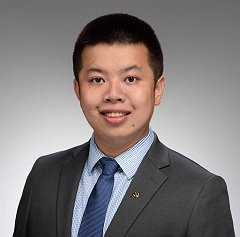
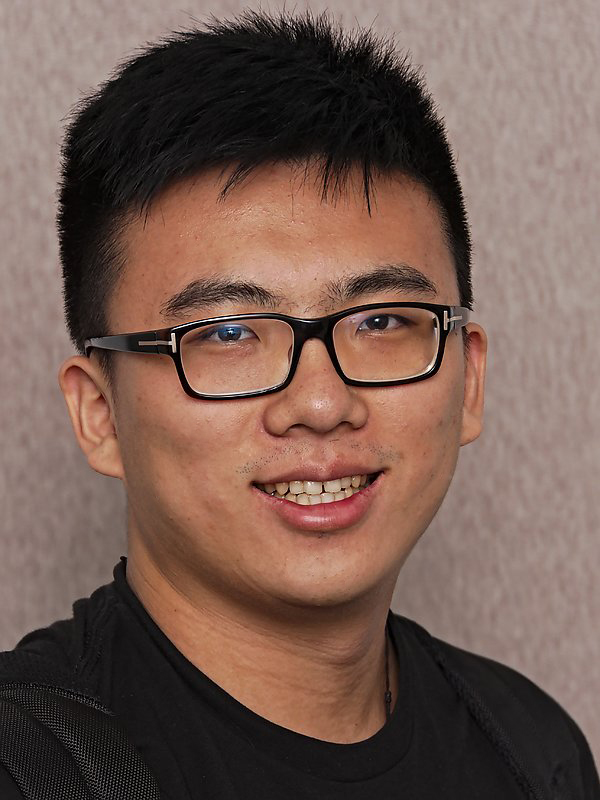
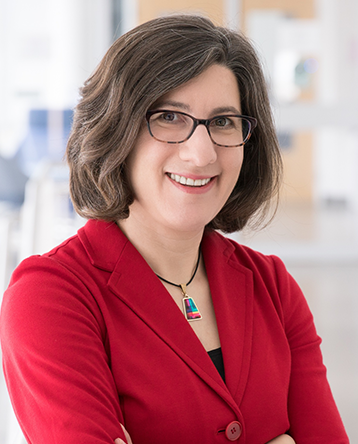
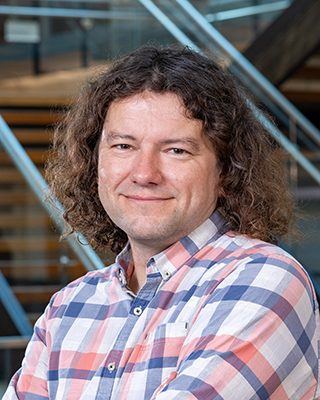
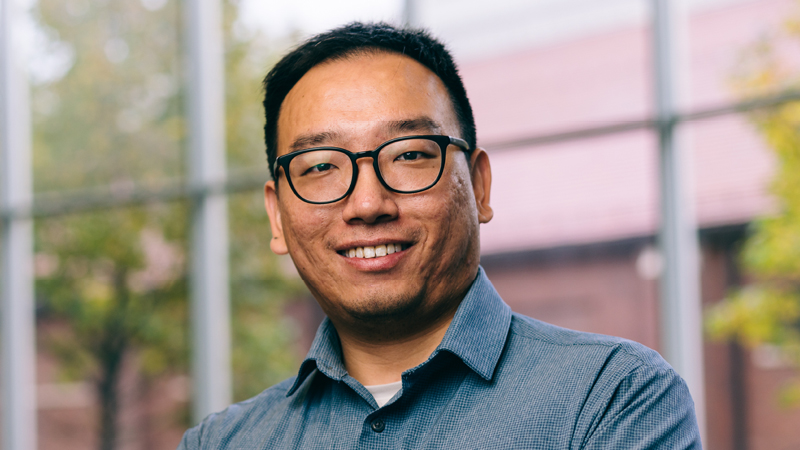
Wenhu Chen is an Assistant Professor at the University of Waterloo's Computer Science Department and a CIFAR AI Chair at the Vector Institute. He also holds a part-time role as a Senior Research Scientist at Google DeepMind (20% allocation). His research focuses on natural language processing, deep learning, and multimodal reasoning, with contributions to models like MAmmoTH, OpenCoderInterpreter, and VISTA. He received awards including the Canada CIFAR AI Chair (2022) and the UCSB CS Outstanding Dissertation Award (2021). Education: PhD in Computer Science from the University of California, Santa Barbara (under William Wang and Xifeng Yan). Research interests include complex reasoning, controllable GenAI, and multimodal benchmarks like MEGABench and MMMU. Grants include CIFAR AI Chair Funding (2022-2027), NSERC Discovery Fund (2023-2028), and multiple NRC Canada grants. He directs the TIGER Lab, advancing generative models in text, images, videos, and music. Recent talks include presentations on multimodal reasoning at Apple and NeurIPS workshops.
Yuvraj Agarwal is a Professor in the School of Computer Science at Carnegie Mellon University , where he leads the SYNERGY Labs . His research focuses on Systems and Networking with emphasis on Embedded Systems , Security , and Energy Efficiency in computing environments. He has been recognized with the NSF Expeditions in Computing Award for Computational Decarbonization research and multiple best paper awards. Education : PhD in Computer Science from University of California, San Diego Research Leadership : Founder/Director of SYNERGY Labs; Executive Director of NSF Expeditions in Variability (2010-2013) Research Trajectory : Recent publications highlight his work on Privacy-preserving smart classroom systems (EduSense, ClassID) IoT security labeling frameworks Audio privacy protection mechanisms Computational decarbonization of infrastructure His research combines hardware-software co-design with societal impact considerations. Scientific Recognition : NSF Expeditions in Computing Award for CoDec (2024) Ubicomp/IMWUT Distinguished Paper Award (2024) CHI Best Paper Honorable Mention (2022) Advising & Collaboration : Mentors students in IoT systems , privacy research , and green computing . Collaborates with institutions including University of Massachusetts Amherst and industry partners like Johnson Controls. Grants include NSF funding for multi-university research initiatives.
Parastoo Abtahi is an Assistant Professor in the Computer Science Department at Princeton University. She leads the Situated Interactions Lab (Ψ Lab) as part of the Princeton HCI Group, focusing on AR/VR and spatial computing. Prior to Princeton, she worked at Meta Reality Labs Research. PhD in Computer Science from Stanford University BSc in Electrical and Computer Engineering from University of Toronto (Engineering Science program) Her research explores wearable interactive technologies that augment human intelligence in physical contexts through: Input on-the-go: Low-effort, privacy-preserving multimodal interfaces Intelligent output: Timely, minimal multisensory systems Situated AI: Personalizable, predictable, safe physical-digital interaction Recent publications analyze: Drone-based haptic illusions for AR/VR Microgestures for mobile AR input Interactivity in explainable AI systems Temporal dynamics in VR haptics Awards include: 2025 Google Research Scholar Award CHI 2019 & 2018 Honorable Mentions She teaches courses like: COS 436: Human-Computer Interaction COS IW: AR Meets AI
Toby Jia-Jun Li is an Assistant Professor in the Department of Computer Science and Engineering at the University of Notre Dame, where he leads the SaNDwich Lab. He also serves as the Director of the Human-Centered Responsible AI Lab in the Lucy Family Institute for Data & Society and is a Faculty Fellow at the Institute for Educational Initiatives (IEI). Previously, he was affiliated with Carnegie Mellon University's Human-Computer Interaction Institute (HCII) and GroupLens Research. Dr. Li's research spans the intersection of Human-Computer Interaction (HCI), End-User Software Engineering, Machine Learning (ML), and Natural Language Processing (NLP), with recent work focusing on addressing societal challenges in the future of work through human-AI collaborative approaches. His work has resulted in over 40 publications at premier venues including CHI, UIST, CSCW, ACL, and ICSE, with 8 papers winning Best Paper or Honorable Mention awards. His recent publications demonstrate a strong focus on human-AI collaboration across various domains, including code understanding, privacy, accessibility, and creative tools. The work shows a trajectory toward increasingly sophisticated integration of human-centered design with AI capabilities, particularly using large language models to enhance human productivity and address societal challenges. Google Research Scholar Award recipient Recipient of Yahoo! Fellowship ($100,000/year) Best Paper Award at UIST 2020 Best Paper Honorable Mention Award at CHI 2021 Best Paper Award at CSCW 2024 Best Paper Award at CHI 2025 Dr. Li actively mentors Ph.D. students and has established collaborations with Google, Microsoft Research, IBM Research, Adobe, Verizon, and J.P. Morgan. His research has been supported by NSF, Google Research Scholar Program, AnalytiXIN Initiative, Yahoo! InMind project, and J.P. Morgan. He is currently recruiting Ph.D. students and undergraduate researchers for his SaNDwich Lab, which focuses on developing interactive systems to empower individuals to create, configure, and extend AI-powered computing systems.
Tiancheng Zhao is a principal researcher at the Binjiang Institute of Zhejiang University and founder of the Om Artificial Intelligence Laboratory (Om AI Lab), dedicated to frontier open multimodal AGI research for building next-generation agents that transform work and life through advanced human-machine interaction. His academic credentials include: Ph.D. in Computer Science from Carnegie Mellon University (2016-2019) under Prof. Maxine Eskenazi, Prof. Louis-Philippe Morency, Prof. William W. Cohen, and Dr. Dilek Hakkani-Tur, with pioneering dissertation “Learning to Converse With Latent Actions” in end-to-end generative conversational models M.S. in Computer Science from Carnegie Mellon University (2014-2016) B.S. in Electrical Engineering from UCLA (2010-2014) with Summa Cum Laude, focusing on speech signal processing under Prof. Abeer Alwan Dr. Zhao’s research centers on multimodal foundation models and agents, tackling three core challenges: Multimodal Models for cross-modal representation learning in high-dimensional data, Learning to Learn for effective skill acquisition from diverse signals (supervised labels, rewards, meta-learning), and AI Agents for open-world understanding and complex decision-making. His work bridges computer vision, natural language processing, and real-world applications including healthcare analytics and remote sensing. Analysis of his 50+ publications reveals accelerating innovation in multimodal large language models (2024-2025), with emphasis on stable vision-language architectures (VLM-R1), agent orchestration frameworks, and domain-specific applications in geospatial analysis and healthcare. Key trends include solving long-tail distribution challenges in satellite imagery, developing human-like zooming capabilities for multimodal LLMs, and creating unified benchmarks for autonomous GUI testing. His scientific recognition includes: National Breakthrough Technology Award by Ministry of Science and Technology (2021) Microsoft Research Best & Brightest PhD (2018) BEST PAPER AWARD at SIGDIAL 2018 Best Paper Nomination at SIGDIAL 2016 Top 1 Outstanding Bachelor of Science Award at UCLA (2014) As Om AI Lab founder, Dr. Zhao leads research teams developing computational building blocks for human-AI collaboration. While specific student mentorship details aren’t public, his extensive publication record with junior co-authors indicates active research supervision. Current projects focus on practical system implementations for real-world multimodal agent deployment across diverse domains.
Professor Kay O'Halloran serves as Chair Professor and Head of Department of Communication and Media within the School of the Arts at the University of Liverpool since August 2019. She concurrently holds the position of Co-Director for the Digital Media and Society Institute (DMSI), demonstrating significant leadership across academic and research domains. Her career spans prestigious institutions including Curtin University (2013-2019) and National University of Singapore (1998-2013), where she directed the Multimodal Analysis Lab and served as Deputy Director of the Interactive & Digital Media Institute. PhD from Murdoch University (1996) Postdoctoral position at Martin Luther University (1997-1998) Visiting Distinguished Professor at Shanghai Jiaotong University (2017-2020) Professor O'Halloran's research focuses on multimodal discourse analysis, particularly the interaction of language with visual and mathematical resources. Her pioneering work in systemic functional multimodal discourse analysis (SF-MDA) has significantly impacted mathematics education and digital communication studies. Current research emphasizes digital tools for multimodal analysis and mixed methods approaches to big data analytics, addressing contemporary challenges in misinformation and public health communication. Her recent publications reveal strong thematic concentration in pandemic-related communication analysis, misinformation resistance mechanisms, and multimodal argumentation across social and cultural contexts. The 15 most recent articles demonstrate consistent application of multimodal frameworks to urgent societal issues including public health crises, political discourse, and digital literacy challenges. Founding editor of Routledge Studies in Multimodality book series (57+ volumes) Over 150 publications in leading international journals 50+ plenary/keynote presentations globally Competitive funding from National Research Foundation, MOE Singapore, US Air Force, ARC, NHMRC, and others Professor O'Halloran has directed interdisciplinary research teams comprising social scientists, computer scientists, and designers. Her leadership extends to developing commercial multimodal analysis software (Multimodal Analysis Image and Video) adopted internationally. Current projects include Eurovision 2023 wellbeing evaluation and COVID-19 misinformation immunity development, demonstrating continued relevance to contemporary societal challenges.
Sean Welleck is an Assistant Professor at Carnegie Mellon University's School of Computer Science, Language Technologies Institute, leading the L3 Lab. His research focuses on bridging informal and formal reasoning with AI, spanning machine learning for mathematics and code, inference algorithms, and AI agents. PhD in Computer Science from New York University (advised by Kyunghyun Cho) Postdoctoral work at University of Washington (advised by Yejin Choi) His work explores AI-driven formal methods for mathematics and code generation, test-time compute scaling, and algorithms enabling AI improvement over time. Recent publications analyze reasoning evaluation, premise selection, and automated proof optimization in systems like Lean. Key article trends include neural theorem proving, code generation, and inference-time compute optimization. Awards: NVIDIA AI Labs Pioneering Research Awards (2017, 2018), NAACL 2025 Best Paper. Current advisees include PhD students Pranjal Aggarwal, Weihua Du (co-advised with Yiming Yang), Andre He (co-advised with Daniel Fried), and Seungone Kim (co-advised with Graham Neubig). He co-organizes workshops like Autoformalization for the Working Mathematician (ICERM 2025) and VerifAI: AI Verification in the Wild (ICLR 2025), and teaches Advanced NLP at CMU.
Lorrie Faith Cranor is the Director and Bosch Distinguished Professor in Security and Privacy Technologies at the CyLab Security and Privacy Institute, and the FORE Systems University Professor of Computer Science and Engineering and Public Policy at Carnegie Mellon University. She also directs the CyLab Usable Privacy and Security Laboratory (CUPS) and co-directs the MSIT-Privacy Engineering master’s program. She previously served as Chief Technologist at the U.S. Federal Trade Commission and is a co-founder of Wombat Security Technologies. Carnegie Mellon University – CyLab Security and Privacy Institute School of Computer Science – Department of Computer Science College of Engineering – Department of Engineering and Public Policy PhD Program in Societal Computing Human-Computer Interaction Institute (affiliate) Heinz College (affiliate) Dr. Cranor’s research centers on usable privacy and security, privacy engineering, and technology policy. Her work spans authentication systems, privacy policies, IoT security, and human behavior in digital environments. She has pioneered research on password usability, privacy labels (e.g., 'nutrition labels' for privacy), and privacy decision-making. Her interdisciplinary approach integrates computer science, public policy, and behavioral science to create systems that are both secure and user-friendly. Her recent publications reflect a strong focus on privacy interfaces, consent mechanisms, IoT security labels, and user comprehension of digital privacy. Trends include evaluating the usability of privacy controls across platforms, designing tools for developers to generate accurate privacy disclosures, and understanding user behavior in online tracking and advertising contexts. Her work frequently appears in top venues such as CHI, SOUPS, and PETS. ACM CHI Academy inductee ACM Fellow IEEE Fellow 2018 ACM CHI Social Impact Award 2018 International Association of Privacy Professionals Privacy Leadership Award 2018 IEEE Cybersecurity Award for Practice Alumni Achievement Award, McKelvey School of Engineering Top 100 Innovator under 35, Technology Review Dr. Cranor has advised numerous PhD students in interdisciplinary programs including Societal Computing, Engineering and Public Policy, and Human-Computer Interaction. Her research has been supported by grants from the National Science Foundation, DARPA, and industry partners. She serves on the boards of the Computing Research Association, Center for Democracy and Technology, and Electronic Privacy Information Center. She is a frequent media commentator on privacy and security issues. She leads the CyLab Usable Privacy and Security Laboratory (CUPS), a multidisciplinary research group that includes faculty and students from computer science, policy, and HCI. The lab focuses on making privacy and security systems more intuitive, effective, and user-controlled. Key projects include the Usable Privacy Policy Project, privacy nutrition labels, and the Personalized Privacy Assistant Project.
Jan Oliver Borchers is a full professor of computer science and head of the Media Computing Group at RWTH Aachen University, where he holds the endowed Chair in Media Informatics and Human-Computer Interaction (Computer Science 10). He established his research group in 2003 and pioneered modern HCI academic research and teaching in Germany, becoming a leading lab in terms of archival publications at CHI, the top international conference in HCI. Before joining RWTH, he held faculty positions at Stanford University and ETH Zurich. His research focuses on Human-Computer Interaction with particular interest in new user interfaces for soft robotics, textile user interfaces, 3D printing and personal fabrication, augmented reality, wearable and tangible computing, interfaces for software development, deceptive patterns, and interactive guides and exhibits. He opened Germany's first Fab Lab in 2009 and has been instrumental in advancing digital fabrication and maker culture in academia. His work bridges theoretical HCI research with practical applications, as evidenced by his consulting for major companies including AirBus, Apple, ARD, Bayer, Children's Museum Boston, Daimler, Handelsblatt, OTIS, Scout24, TEDx, and Deutsche Telekom. His recent publications show a strong focus on deceptive patterns in UI design, textile interfaces, and the intersection of AI with human interaction. The research demonstrates consistent innovation in tactile interaction techniques, with numerous honorable mentions at top conferences like CHI. His lab has produced significant contributions to eyes-free interaction, textile computing, and the ethical implications of dark patterns, particularly regarding children's experiences with deceptive designs. IDC 2025 Best Work in Progress for research on children's assessment of deceptive designs CHI'25 Student Games Competition Winner for The Deceptive Dungeon RWTH-Wissenschaftsnacht 2024 Best Science Slam for Usability: 4 Prinzipien guter User Interfaces Multiple CHI Honorable Mentions spanning from 2008-2021 Best Note and Best Demo awards at ITS and UIST conferences Borchers has served in numerous leadership roles including heading the Computer Science Department's Examination Board (2015-2025), coordinating the department's public relations since 2010, and organizing the weekly Faculty Lunch since 2003. He is an active member of the ACM, SIGCHI, SIGCHI Germany, and GI, and introduced the Interactivity format to the CHI conference in 2005. His PhD thesis, A Pattern Approach to Interaction Design, became the first book to bring design patterns to HCI. The Media Computing Group under his leadership has developed significant expertise in physical computing, textile interfaces, and fabrication technologies, with a strong emphasis on both theoretical contributions and practical applications. His lab continues to push boundaries in interactive technologies while maintaining a strong ethical stance on user experience, particularly regarding deceptive design patterns.
Shigeru Uesugi is Professor in the School of Creative Science and Engineering, Faculty of Science and Engineering, Waseda University. He directs interdisciplinary research that fuses mechanical engineering, human–robot interaction, and philosophy of technology to create co-creative interfaces, sports-assist devices, and mediated communication systems. Education: Ph.D. in Engineering, Waseda University Research Interests: Uesugi’s work centres on Human Interface & Interaction Design , Mediated Communication , and Being Design . He explores how technology can extend human bodily perception and foster co-creative relationships between users and machines, merging insights from robotics, sports science, and philosophy. Recent articles analyse embodied interaction in shared virtual spaces, remote collaboration via tangible interfaces such as networked “Lazy Susan” tables, and full-body rocking systems that create a sense of togetherness over distance. His publications reveal a steady focus on designing hardware–software hybrids that make remote partners feel co-present. Scientific Awards: 14th Okawa Thesis Award, Honorable Mention (2004) Human Interface Society Paper Award (2004) Grants & Projects: JSPS KAKENHI (A) “Comprehensive research on the relationship between scientific/technological innovation and human society” (2023-2026) JSPS KAKENHI Challenging Research “Transformations of intentionality and responsibility via artifacts” (2022-2025) JSPS KAKENHI “Fascia tension-propagation suit for motor-function enhancement” (2020-2023) Labs & Teams: He leads the Human-being Design Engineering Laboratory whose members develop co-creative interfaces, sports-training devices, and rehabilitation tools. The group maintains the website www.wesugi.mech.waseda.ac.jp and collaborates with the Waseda Research Institute for Science and Engineering.
François Guimbretière is a Professor in the Department of Information Science at Cornell University, with affiliations to the Department of Design & Technology. He holds a PhD in Computer Science from Stanford University and previously served on the faculty at the University of Maryland before joining Cornell in 2009. His research centers on human-computer interaction, human-robot interaction, and interface design, with a strong emphasis on hardware/software co-design to create seamless, sustainable, and innovative interactive systems. His work spans multiple domains including interactive fabrication, remote collaboration, and low-power interfaces. Guimbretière's recent research explores novel fabrication methods such as interactive printing and yarn-based electronics, as well as immersive remote embodiment systems that reduce reliance on physical travel. These efforts reflect a broader trend toward sustainable and accessible interaction technologies. His publications demonstrate consistent contributions to top-tier venues in HCI and ubiquitous computing, focusing on tangible, wearable, and environmentally conscious interfaces. Scientific Recognition: He advises graduate and undergraduate researchers in the development of next-generation interactive systems. His lab supports projects in digital fabrication, remote presence, and sustainable design, often involving interdisciplinary collaboration. While specific grants are not listed, his research trajectory suggests sustained funding in human-centered technology innovation. He leads a research group focused on building practical, user-centered systems that bridge the digital and physical worlds through creative engineering and design. The lab emphasizes hands-on prototyping, real-world deployment, and the integration of traditional craft with advanced technologies.
James Fogarty is a Professor at the Paul G. Allen School of Computer Science & Engineering, University of Washington. He serves as a core member of the DUB Group (Design. Use. Build.), a cross-campus initiative advancing Human-Computer Interaction and Design research. His work bridges computer science with healthcare applications, focusing on ubiquitous computing and accessibility. Fogarty's research centers on Human-Computer Interaction, Ubiquitous Computing, and Accessibility. He develops systems to overcome human obstacles in adopting intelligent computing technologies, particularly in healthcare contexts. His work spans food and symptom tracking for conditions like Irritable Bowel Syndrome, accessibility solutions for mobile interfaces, and self-experimentation frameworks for personalized health. Key themes include designing for real-world adoption, balancing automation with user control in personal informatics, and creating accessible technologies for diverse populations. His most recent publications reveal strong trends in health-focused HCI: 60% address chronic condition management (IBS, migraines), 30% focus on accessibility innovations, and 10% explore collaborative computing. Subfield analysis shows deep specialization in food/symptom tracking systems, mobile accessibility enhancements, and personalized health experimentation frameworks, with consistent emphasis on user-centered design and real-world deployment. Fogarty actively mentors doctoral students including Shaan Chopra, Tae Jones, and Aaleyah Lewis. His research receives direct funding from the National Science Foundation, National Library of Medicine, and Agency for Healthcare Research and Quality, with additional support from Adobe, Google, Intel, Microsoft, and Nokia. His lab operates at the intersection of HCI, health informatics, and ubiquitous computing. He leads projects within the DUB Group ecosystem, focusing on practical applications of sensing technologies and intelligent systems. Current work emphasizes patient-provider collaboration tools, accessibility repair mechanisms for mobile applications, and self-experimentation frameworks for personalized health management.
Prof. April Wang is an Assistant Professor in the Department of Computer Science at ETH Zurich. Her work focuses on Educational Technology, Human-Computer Interaction, and AI-driven tools for programming education. She is affiliated with the Professur Educational Technology group and teaches courses such as Human Computer Interaction and Ethics in Computing. Her research explores interactive learning environments, collaborative data science workflows, and AI-augmented educational systems. Her research interests span computational notebooks, live coding interfaces, and human-AI collaboration in software development. Notable contributions include frameworks like DBox for algorithm learning and EDBooks for interactive programming narratives. She also investigates challenges in real-time collaboration tools and automated documentation systems for data scientists. Recent work emphasizes understanding user needs in automated copilot systems and resolving conflicts in collaborative notebook environments. Her projects often bridge theoretical HCI principles with practical educational tools, aiming to enhance both instructor efficacy and student engagement. Prof. Wang’s teaching portfolio includes courses on user-centered interface design and ethical scientific practices. She actively contributes to advancing interdisciplinary computational literacy through initiatives like datAR, which uses everyday objects to teach data concepts.
Tianyi Zhang is a Tenure-Track Assistant Professor in the Department of Computer Science at Purdue University, part of the College of Science. He leads the Human-Centered Software Systems Lab, focusing on AI-driven systems that synergize human expertise with machine intelligence to enhance programming productivity and software reliability. Prior to Purdue, he was a Postdoctoral Fellow at Harvard University under Dr. Elena Glassman and earned his Ph.D. from UCLA (2019) and B.Sc. from Huazhong University of Science and Technology (2013). Education: Ph.D. in Computer Science, University of California, Los Angeles (2019) Bachelor's in Computer Science, Huazhong University of Science and Technology (2013) Research Interests: His work spans Software Engineering, Human-Computer Interaction, and AI. Key areas include program synthesis, interactive debugging tools, autonomous driving system testing, and mitigating biases in AI models. He develops systems like Interpretable Program Synthesis and SQLucid to bridge human and machine intelligence. Recent Trends in Publications: Recent work emphasizes human-in-the-loop AI, including mixed-initiative systems for data wrangling (Dango), interactive program repair, and bias analysis in text representations (STILE). He also explores challenges in autonomous driving testing and LLM-based code generation errors. Awards & Grants: NSF Career Award (2024) Amazon Research Award Showalter Trust Research Award for pre-diabetes research $1.5M NSF grant for software supply chain security Best Paper Honorable Mentions at CHI and VAHC Advising & Teams: Supervises 12+ PhD/Master's students and 30+ research interns. Notable advisees include Bonan Kou (API misuse studies) and Yuan Tian (text-to-SQL systems). Collaborates with Harvard Medical School on healthcare data analysis. Labs & Initiatives: Directs Purdue's Human-Centered Software Systems Lab. Co-founded the Societal Impact Fellows program. Active in open-source projects like Examplore for API usage visualization and JShrink for Java debloating.
Miao Zhengjie serves as an Assistant Professor in the School of Computing Science at Simon Fraser University (SFU), joining in October 2023 after a research scientist position at Megagon Labs. His work centers on enhancing data science pipelines through innovations in database systems and artificial intelligence. His academic foundation includes: Ph.D. in Computer Science from Duke University (2022) M.S. in Computer Science from Columbia University (2016) B.S. in Computer Science and Technology from Peking University (2015) Dr. Miao's research spans Database Systems , Data Management , Data Curation , and Data Provenance , with emphasis on AI-driven solutions for data pipeline efficiency. His methodology bridges theoretical database concepts with practical data science applications through novel algorithm development. Analysis of his 15 most recent publications reveals persistent focus areas: query explanation systems (35% of works), data augmentation frameworks (27%), and human-AI collaboration tools (20%). These contributions appear consistently in premier venues including SIGMOD, VLDB, and CHI, demonstrating methodological evolution from foundational query debugging (2019) to LLM-integrated annotation systems (2024). He actively participates in the SFU Data Science Research Group , contributing to interdisciplinary initiatives in large-scale data processing. Current information indicates no formal advisees or grant details are publicly documented in his institutional profile.