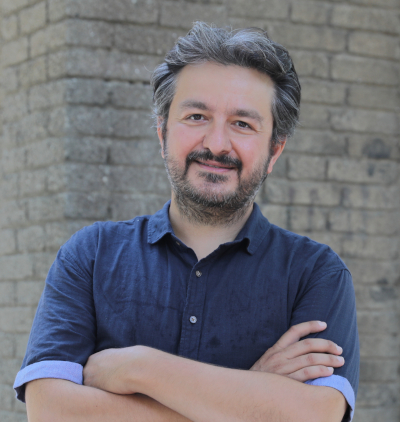
Prof. Dr. Nuri Başoğlu is a Professor at Izmir Institute of Technology (IYTE). His educational background includes a BSc in Industrial Engineering from Boğaziçi University, and both MSc and PhD in Production Management from Istanbul University. Research Focus His research spans interdisciplinary domains with emphasis on: Technology Adoption : Healthcare systems, mobile services, and education. Innovation Processes : Sociotechnical systems, product design, and decision support. Information Systems : Strategic implementation and human-computer interaction. Recent publication trends (2010–2013) highlight technology diffusion in healthcare, including telemedicine, health informatics, and e-learning. Cross-cultural studies on mobile services and ERP optimization in manufacturing also feature prominently. No awards, grants, or supervised students are documented in the provided materials.
Prof. Dr. Kumru Didem Atalay is a distinguished academic at Başkent University, specializing in Industrial Engineering . With a PhD in Statistics from Ankara University (2007), she has made significant contributions to Operations Research , Fuzzy Logic , and Decision Support Systems . Her work bridges statistical analysis with real-world applications in healthcare logistics, pandemic response, and manufacturing optimization. Education: PhD (2007), MS (2000), BS (1998) in Statistics from Ankara University Current Role: Professor in Industrial Engineering at Başkent University Her research focuses on stochastic processes , fuzzy modeling , and healthcare operations , particularly in pandemic-era service quality and microchannel manufacturing. She has developed innovative methods for project scheduling , risk analysis , and multi-criteria decision-making . Recent publications examine Covid-19's impact on education quality and fuzzy linear programming for project scheduling . She applies intuitionistic fuzzy models to optimize manufacturing systems and hesitant fuzzy regression for pandemic death count estimation. Scientific recognition includes a Runner-up Prize at the 15th ICMSEM (2021) and a Bronze Medal at ISIF21 (1970). She supervises advanced research on topics like multi-trip home healthcare routing and fuzzy quality function deployment .
Ayşenur Akyüz Birtürk serves as a Lecturer in the Department of Computer Engineering at Middle East Technical University (METU), Ankara, where she has taught since February 1994. Her academic career spans foundational programming courses to advanced graduate seminars in AI and Computational Linguistics, reflecting 30+ years of institutional commitment. She earned all her degrees from METU, culminating in a 1998 Ph.D. focused on Turkish language computational analysis. Her educational journey includes: B.S. in Computer Engineering (1985) M.S. in Computer Engineering (1988) with thesis on “A Model for Representing Concepts: Conceptual Dependency Theory” Ph.D. in Computer Engineering (1998) with thesis on “A Computational Analysis of Turkish using the Government-Binding Approach” Dr. Birtürk’s research centers on Artificial Intelligence and Natural Language Processing , with pioneering work in Turkish language parsing evolving into modern Recommender Systems . She integrates semantic relations and multi-domain data to build hybrid engines for movies, books, and music, emphasizing user modeling through knowledge representation and data mining techniques. Analysis of her 2010-2015 publications reveals two dominant threads: adaptive recommender systems (80% of output) using semantic similarity and dynamic clustering, and renewable energy analytics (20%) applying machine learning to wind/hydrological data. This pivot from NLP to energy forecasting demonstrates methodological versatility while maintaining core AI expertise. Her scientific recognition includes: TUBITAK scholarships throughout education (1977-1988) Multiple national contest awards in high school (1979-1980) Leadership in TUBITAK-funded energy and healthcare projects Dr. Birtürk has supervised 17 Master’s theses in NLP and recommender systems while securing competitive grants including METU-ISTEC #17435 (2006-2008; 504,000 YTL) and HASAT (2010-2013; 601,637 YTL). Her industry consultancy spans medical form design (FormAnalitik), question-answering systems, and retail intelligence platforms, translating academic research into real-world tools.
Prof. Dr. Çiğdem Kaya is a distinguished academic at Istanbul Technical University's Faculty of Architecture, Department of Industrial Product Design. She has held significant roles such as Department Chair (2024–present) and Dean of the Department of Industrial Design. Her research focuses on the historical, cultural, and social contexts of design, theory and methodology in industrial design, and product design innovation. Kaya has led numerous research projects, including studies on sustainable design practices, maker cultures, and design education. She has been awarded the ODTÜ Prof.Dr. Mustafa Parlar Foundation Research Incentive Award (2020) and is a member of Marie Curie Alumni Association and the Design Research Society. Education: She earned her PhD in Industrial Product Design from Istanbul Technical University (2011) and holds master's and bachelor's degrees in Industrial Design from the same institution. Her academic journey includes international research experiences, such as a visiting scholar at Sheffield Hallam University (2009–2010). Research Interests: Kaya explores intersections between design and culture, sustainability, and collaborative practices. Notable projects include investigations into craft knowledge transfer, maker ecologies, and the impact of remote collaboration during the pandemic. Her work bridges theoretical frameworks with practical applications, emphasizing socially responsible design. Grants & Projects: She has secured funding for projects like 'Afet Sonrası İyileşme Sürecinde Sürdürülebilir Sosyal Girişimcilik' (2023) and 'Trans-making' (EU Horizon 2020), focusing on placemaking and cultural democratization. Over 20+ research outputs span journals like Futures , Design Issues , and Journal of Consumer Behaviour . Labs/Teams: Kaya leads design studios and collaborative research teams, fostering innovation in product design and educational methodologies. Her supervision of over 15 graduate theses highlights her commitment to mentoring next-generation designers.
Hakan Urey is a Professor of Electrical Engineering at Koç University, where he has held academic roles since 2001. He previously served as a visiting professor at Cambridge University (UK) and Boğaziçi University (Turkey). He obtained his BS from Middle East Technical University (1992), and MS/PhD from Georgia Institute of Technology (1996–1997). His professional experience includes roles at Microvision Inc., Bilkent University, and Georgia Tech Research Institute. He has pioneered developments in wearable AR displays, MEMS technologies, and biomedical sensors, earning over 60 patents and founding five tech startups. His research focuses on augmented reality systems, 3D displays, micro-optics, and sensor innovations. Education includes: Ph.D., Electrical and Computer Engineering, Georgia Institute of Technology (1997) M.Sc., Electrical and Computer Engineering, Georgia Institute of Technology (1996) B.Sc., Electrical Engineering, Middle East Technical University (1992) Research interests span Augmented Reality , MEMS , 3D displays , and biomedical sensors . His work bridges optics, electronics, and healthcare, with notable contributions to holographic displays, implantable devices, and virtual reality applications. He has published over 200 papers and secured prestigious grants like the ERC Advanced Investigator Grant. Scientific awards include the Sedat Simavi Award (2019), Elginkan Foundation Science Award (2020), and multiple TÜBA/TUBITAK recognitions. His laboratories at Koç University develop cutting-edge technologies for wearable AR, medical diagnostics, and next-generation optical systems. Pioneering projects include MaR-T (mixed reality for preschool math education) and biomedical sensor platforms like biofeedback VR games for pediatric patients. His startups commercialize research outcomes in areas such as holographic displays and implantable electronics.
Hasan ÖZGÜR is an Associate Professor at Trakya University, Faculty of Education, Department of Computer and Educational Technologies. He currently serves as Department Head since February 2022 and is a Member of the University Rectorate Board of Directors since September 2024. His academic career at Trakya University spans over 18 years, progressing from Education Expert in 2006 to Associate Professor in 2023. His educational background includes a PhD in Engineering Education from Trakya University (2011), a Master's Degree in Educational Sciences from Marmara University (2005), and a Bachelor's Degree from Marmara University Atatürk Faculty of Education (2002). Dr. ÖZGÜR's research focuses on educational technology, human-computer interaction, and digital media effects on learning. His work examines cyberbullying, internet safety, gamification in education, technology integration in teaching, and internet parenting styles. He investigates how digital technologies impact student learning, teacher effectiveness, and adolescent development in the digital age. His research often involves scale development and validation for Turkish educational contexts. His publication record shows consistent research output since 2009, with increasing focus on practical applications of technology in Turkish education. Recent work emphasizes gamification trends, social media integration in learning, and psychological impacts of digital technology on students and teachers. His research bridges theoretical frameworks with practical educational applications, addressing both K-12 and higher education contexts. Dr. ÖZGÜR has contributed significantly to teacher training programs, focusing on developing digital competencies for educators. His administrative roles demonstrate leadership in shaping educational technology policy and implementation at the institutional level. He has collaborated extensively with colleagues including F. Akgün, C. Çuhadar, and F. Arıkan on numerous research projects examining technology adoption challenges within the Turkish educational system.
Mehmet BÜYÜK is an Associate Professor at the Department of Electrical and Electronics Engineering, Faculty of Engineering, Adıyaman University. He serves as Vice Dean of the Faculty since August 2023. He holds a PhD from Çukurova University (2019) and has been an IEEE member since 2015. Education: BSc (2007-2012), MSc (2015), PhD (2019) in Electrical and Electronics Engineering from Çukurova University. Professional roles include Research Assistant (2015-2020), Research Lecturer (2020-2022), Assistant Professor (2022-2023), and current Associate Professor status. Research focuses on renewable energy systems, electric vehicles, power electronics converters, and grid integration challenges. Notable projects include wireless power transfer systems, V2G/V2H interfaces, and smart home energy management. Publications emphasize power quality solutions, inverter topologies, and fuel cell applications. Awards include multiple TÜBİTAK incentives and a Wiley Top Cited Article recognition. Active in reviewing for top journals like Renewable and Sustainable Energy Reviews. Current activities include leading the faculty as Vice Dean, supervising student projects, and collaborating on TÜBİTAK-funded research projects addressing renewable energy challenges and emergency power systems.
Dr. Muhammed Maruf is an Assistant Professor at the Faculty of Economics and Administrative Sciences , Kırşehir Ahi Evran University since 2019, with prior roles at Şırnak University (2017-2019) and Dokuz Eylül University (2011-2017). He holds a PhD in Business Administration (2013-2017) and an MSc in Management Science (2011-2013) from Dokuz Eylül University, and a BSc in Business Administration (2002-2005) from Erciyes University. Licenses : YÖKDİL (2017, 82), ÜDS (2011, 71) Administrative Roles : Research Application Center Director (2019-), Deputy Department Head (2019-), Head of Department (2018-), Dean Assistant (2018-), Faculty Council Member (2017-) His research focuses on Operations Research and Multiple Criteria Decision Making , applying advanced methods like CRITIC , MAIRCA , DEA , and Fuzzy Logic to analyze performance in municipal governance, tourism websites, banking transformation, and political participation. Collaborative work spans 13 co-authors, notably with Kadir Özdemir (6 publications) and Bekir Gündoğmuş (5 publications). Key Trends : 15+ journal articles (2021-2025), 4 books, 4 book chapters Methodological Expertise : CRITIC-MAIRCA integration, Fuzzy DEA, Grey System Theory Project Leadership : 2 projects (2020-2021, 2022-2024), 2 as co-researcher Academic Impact : Google Scholar h-index 8 (157 citations), YÖKSİS h-index 6 (365 total points). His 43+ total publications include 28 journal articles and 9 conference proceedings.
Zühal Aslan Akyol is a Lecturer at the Department of Computer Technologies within Cide Rifat Ilgaz Vocational School at Kastamonu University, Turkey . She has been serving full-time since 2013 and was promoted to Department Head in 2025. Her academic journey includes a PhD in Information Systems (2018-2023) and a Master's in Electronics and Computer Education (2010-2013) from Gazi University , and a BSc in Computer Engineering (2017-2021) from Kastamonu University . PhD: Gazi University, Informatics Institute, Information Systems (2018-2023) Master's: Gazi University, Informatics Institute, Electronics and Computer Education (2010-2013) BSc: Kastamonu University, Faculty of Engineering and Architecture, Department of Computer Engineering (2017-2021) Her research focuses on Computer Science and Optical Engineering , particularly in fiber optic systems , database management , and programming education . Her publications emphasize data mining applications in optical amplifiers, remote laboratory design , and software tools for engineering education . She has contributed to projects like the Real-Time Remote Accessible Fiber Optic Systems Laboratory and the Bilgisayar Donanımı Mobil Destekli Eğitim Simülatörü (BDMES) . While she has co-authored articles on topics like noise figure enhancement in EDFA and temperature-dependent gain analysis , no explicit scientific awards are listed in the provided data.
ÖNDER ÇANGAL is an Associate Professor at Gaziantep University Faculty of Education Department of Turkish and Social Sciences Education since 2024. He previously served as Associate Professor (2022-2024) and Lecturer (2015-2022) at Gaziantep University Turkish Language Teaching Center. His international experience includes teaching Turkish at Yunus Emre Institutes in Belgrade (2021), Algeria (2019-2020), and Bosnia (2012-2015), as well as Turkic studies at Emir Abdulkadir Islamic Sciences University (2019-2020). PhD in Teaching Turkish as a Foreign Language (Hacettepe University, 2016-2020) MSc in Turkish Language Education (Gazi University, 2011-2013) BSc in Turkish Language Teaching (Gazi University, 2007-2011) His research focuses on Turkish as a Foreign Language (TFL) pedagogy, digital language tools, cultural context in language learning, and technology integration in education. With over 27 articles and 20 book chapters, his work examines social media applications, grammar acquisition challenges, and specialized Turkish curricula for migrants and professionals. Scientific recognition includes the 2024 Ziya Gökalp Başarı Ödülü and 2022 Kurtuluş Bilim Ödülü . He designed online Turkish learning portals under national projects and developed cultural immersion programs for Serbian students. His publications analyze Turkish language teaching methods across 18 countries and address writing skill challenges for Syrian and Bosnian learners.
Leman Figen Gül is a Professor at the Department of Architecture , Istanbul Technical University 's Faculty of Architecture. She also serves as Head of the Game and Interaction Technologies Program and Coordinator of the Graduate Informatics in Architectural Design Program. Her academic career spans institutions like Newcastle University, University of Sydney, International University of Sarajevo, TOBB University of Economics and Technology, and MacQuarie University. PhD (2007) - University of Sydney, thesis: "Understanding Collaborative Design in Different Environments: Comparing Face-to-Face Sketching to Remote Sketching and 3D Virtual Worlds" Master's (2003) - University of Sydney, Digital Media Program Master's (1996) - Mimar Sinan University, Urban Conservation Program Licence (1993) - Mimar Sinan Fine Arts University, Department of Architecture Her research explores intersections between architecture, technology, and cognition, focusing on collaborative design , virtual/augmented reality , and AI integration in architectural education . Current projects investigate AI-driven co-design interfaces, gamification of cultural heritage, and material innovation in design pedagogy. Recent publications highlight trends in design technology and empathy in architecture . Her work combines theoretical inquiry with practical implementations in digital fabrication and immersive environments. Scientific Awards Academic Performance Award (ITU, 2024) Academic Performance Award (ITU, 2022) QHT Prize 3rd & People's Prize 2nd (University of Westminster, 2017) As principal investigator, she directs projects funded by TÜBİTAK and BAP , including AI collaboration systems and mixed reality heritage interpretation. She leads the Kumio Lab and participates in EU Horizon Project evaluations.
Emre Ugur is an Associate Professor in the Department of Computer Engineering at Bogazici University, where he serves as the head of the Cognition, Learning and Robotics (CoLoRs) laboratory. His research focuses on bridging the gap between continuous sensorimotor experiences and discrete symbolic representations in robotics. Funded by major international sources including the European Commission's Horizon 2020 program and TUBITAK, his work has significant implications for cognitive robotics and autonomous systems. Education: PhD in Computer Engineering from Middle East Technical University (METU, Turkey) Ugur's research interests center on cognitive and developmental approaches to robotics, with particular emphasis on neuro-symbolic integration, affordance learning, and symbol emergence. His work explores how robots can autonomously develop high-level cognitive capabilities through continuous interaction with their environment, similar to human cognitive development. His approach combines machine learning, cognitive science, and robotics to create systems that can learn, predict, and reason about their actions. His recent publications reveal a strong trajectory toward neuro-symbolic robotics, where he develops methods for extracting discrete symbolic representations from continuous sensorimotor experiences. This work enables robots to perform complex planning and reasoning tasks while maintaining connection to physical reality. There is also significant focus on social robotics, particularly in human-robot interaction, social navigation, and embodied cognition. Scientific Awards: The Young Scientist Award by the Science Academy (BAGEP) The Excellence in Teaching Award by the Faculty of Engineering (2023) As Principal Investigator of major projects including INVERSE (EU Horizon 2025), DEEPPLAN (TUBITAK), and previously DEEPSYM and IMAGINE, Ugur has established a robust research program that bridges theoretical advances with practical applications. He has supervised numerous PhD and Master's students who have made significant contributions to the field. His leadership extends to organizing major workshops at top robotics conferences including IROS, RSS, and ICRA. At the Cognition, Learning and Robotics (CoLoRs) lab, Ugur leads research on cognitive robotics, developmental robotics, and neuro-symbolic AI. The lab explores fundamental questions about how robots can develop understanding of their actions, learn from interaction, and form abstract representations necessary for high-level cognition. Current projects focus on symbolic reasoning, prediction, and planning in robotic systems.
Prof. DİDEM ÇATAL serves as Professor and Head of the Graphic Design Department at Canakkale Onsekiz Mart University's Faculty of Fine Arts since 2011, while holding additional roles including University Executive Board Member (2021-present) and Faculty Council Member. Her academic journey began with Competence in Art from Hacettepe University (2003-2008) where she completed her dissertation on children's e-books. Education: Competence in Art, Hacettepe University (2003-2008) Postgraduate: Hacettepe University (1992) Her research spans Social Sciences, Communication, Art, and Design Studies with specialized focus on digital design media. ÇATAL's work examines responsive web design, experimental typography, social media's impact on visual communication, and interactive e-catalog applications for educational institutions. She actively investigates how digital technologies transform traditional design practices and educational methodologies in fine arts. Analysis of her publication trends reveals consistent exploration of digital transformation in design fields, particularly focusing on interactive media applications (2023), pandemic-driven virtual exhibition adaptations (2021), and foundational typography research (2015-2020). Her work bridges theoretical design principles with practical implementations in educational and promotional contexts. YÖK Araştırma Bursu scholarship recipient (2011-present) ÇATAL has supervised three graduate theses including research on digitalization's impact on painting (2021), Turkish creation myth visualizations (2019), and motion graphics in new media design (2016). She coordinates multiple international projects including the 'Birlikte Sanatla' initiative (2024) and previously managed the university's Erasmus Program (2008-2021). Her leadership extends to international exhibitions and conferences, notably organizing the 7th Çanakkale Biennial 'Constellation' poster exhibition (2021) and participating in over 50 international design events including Dubai's International Fine Arts Conference (2023) and Poland's 'Plant - Perceptions II' exhibition (2022). She maintains active roles in professional organizations including the Communication Designers Professional Association and Istanbul Exlibris Society.
Prof. Dr. Tolga Ovatman is a faculty member at the Department of Computer Engineering, Istanbul Technical University , where he has been serving as Head of Department since 2024. His academic career spans roles from Research Assistant (2004-2012) to Associate Professor (2019-2023) and full Professor (2023-present). He previously held administrative roles such as Vice Dean (2018-2022) and Deputy Head of Department (2016-2018). PhD in Computer Engineering (2005-2011) MS in Computer Engineering (2003-2005) BSc from Hacettepe University (1999-2003) His research focuses on model checking , replicated state machines , cloud computing , and object-oriented software . Recent work addresses computation offloading in 6G networks , collaborative text editing data structures , and energy-efficient environmental monitoring systems . Key projects led include Design of a Multiplexed State Machine Storage System for Edge Computing (2022-2024) and Microservice Compatible Symphony Infrastructure Research (2020). He has supervised numerous theses on topics ranging from collaborative text editing to AI applications in watershed management . Publications span IEEE Transactions , Springer , and conferences like CSCE and CLOSER .
Prof. Dr. Yaşar Güneri ŞAHİN serves as the Dean of the Faculty of Engineering and Computer Sciences at Izmir University of Economics, where he also holds a professorship in the Department of Software Engineering. With over two decades of experience in both academia and industry, he has established himself as a prominent figure in software engineering, real-time systems, and educational technologies. His academic journey began with a Bachelor's degree in Computer Engineering from Middle East Technical University in 1994, followed by a Master's in Computer Education from Gazi University in 1999, and culminated with a Ph.D. in Industrial Technology from Gazi University in 2005. Prior to joining Izmir University of Economics in 2008, he served as a faculty member at Yaşar University starting in 2005, and before that, he gained nearly a decade of industry experience in high-level management roles overseeing numerous software projects for both public and private sectors. Prof. ŞAHİN's research spans several interconnected domains with a strong emphasis on practical applications. His work in software engineering focuses on project management methodologies, team building models for educational contexts, and database systems. In real-time systems, he has made significant contributions to forest fire detection technologies using innovative approaches like animal-based biological sensors and radio-acoustic sounding systems. His educational technology research addresses challenges in nursing education, special education for individuals with autism, and internet resource utilization by university students. Notably, his interdisciplinary approach bridges computer science with healthcare applications, particularly in medical informatics where he has developed public health information systems and tools for medical data entry. His scholarly output demonstrates a consistent trajectory of innovation across multiple domains, with particular concentration in the period from 2007-2013. While his early work focused on foundational software engineering concepts and database systems, his research evolved to address pressing societal challenges including forest fire detection, healthcare information systems, and educational technologies. This evolution reflects his ability to identify emerging technological needs and apply software engineering principles to diverse real-world problems. His contributions have been recognized through multiple prestigious awards: TÜBİTAK Scientific Publication Awards (2008-2012) İzmir University of Economics Scientific Publication Awards (2008-2011) As an academic advisor, Prof. ŞAHİN has supervised doctoral and master's theses on diverse topics including heart failure management, triage algorithms for multiple injuries, and software project selection metrics for small and medium enterprises. His administrative leadership extends beyond his deanship to include serving on juries for national art, design, and architecture competitions, as well as evaluating research projects for TEYDEB and TÜBİTAK. His grant activities include serving as a project reviewer and monitor for various technology development initiatives including "Bulut," "ARAGES," "SADE," and "SWH-ATLANTIS." Prof. ŞAHİN maintains an active research laboratory environment focused on real-time systems and software engineering applications. His work often involves interdisciplinary collaboration, particularly with medical professionals on health informatics projects and with education specialists on technology-enhanced learning initiatives. Current research directions appear to focus on the intersection of software engineering principles with healthcare applications and environmental monitoring systems.