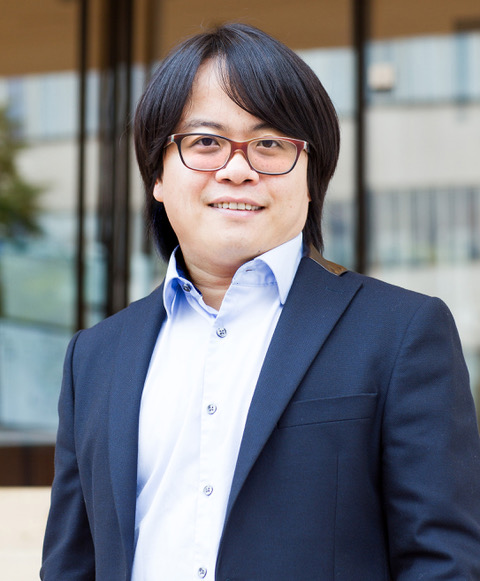
Ralf Bierig joined Maynooth University's Computer Science Department in 2017, teaching topics including information retrieval, software testing, interaction design, and virtual reality. He is the programme director of the Higher Diploma in Human-Computer Interaction (HCI) and User Experience (UX). He earned his BSc (2002) from University of Furtwangen and PhD (2008) from Robert Gordon University. Research Interests His work spans information retrieval, interactive information retrieval, personalisation, information search behavior, usability (UX), and virtual reality (VR). Recent publications focus on multimodal concept indexing, hybrid IR approaches, and contextual adaptation in search systems. Publication Trends His research combines statistical semantics, graph modeling, and multimodal data analysis across academic collaborations in Austria, Germany, and international venues like ECIR and SIGIR.
Yves-Alexandre de Montjoye is an Associate Professor of Applied Mathematics and Computer Science at Imperial College London, where he leads the Computational Privacy Group. He holds a joint affiliation between the Department of Computing and the Data Science Institute. His roles include serving as a Special Adviser on AI and Data Protection to the EC Justice Commissioner Didier Reynders, a Parliament-appointed Commissioner for the Belgian Data Protection Agency, and a Special Adviser to EC Competition Commissioner Margrethe Vestager, co-authoring the 'Competition Policy for the Digital Era' report. He earned his PhD from MIT in 2015 under Alex 'Sandy' Pentland. His master's degrees include an M.Sc. in Applied Mathematics from UCLouvain, an M.Sc. (Centralien) from École Centrale Paris, and an M.Sc. in Mathematical Engineering from KU Leuven. He also holds a B.Sc. in Engineering from UCLouvain. His research interests focus on computational privacy, anonymization techniques, AI safety, and machine learning attacks. He develops methods to 'red team' AI systems and create privacy-preserving mechanisms. His work addresses vulnerabilities such as membership inference, attribute inference, and re-identification risks in datasets, with applications to location tracking, synthetic data, and LLMs. His articles analyze adversarial attacks against privacy systems, emphasizing robustness and practical guarantees. He advocates for privacy-by-design approaches in big data analytics and has explored ethical AI, competition policy in digital markets, and humanitarian uses of mobile data. While no scientific awards are explicitly listed, his contributions have been widely covered in media. He is currently recruiting motivated PhD students for his group at Imperial College. His advising and grants narrative includes work on privacy-preserving technologies and policy implications of AI, with collaborations across academia and public institutions. He is affiliated with the Computational Privacy Group and contributes to platforms like OPAL for privacy analytics. His office is in the ACE Extension building (ACEX 259), accessible via Exhibition Road.
Norman Sadeh is a Professor in the School of Computer Science at Carnegie Mellon University (CMU), where he has made significant contributions to cybersecurity, privacy, and AI research. He has co-founded and co-directed several groundbreaking graduate programs at CMU, including the Privacy Engineering Program (2012-present), the Ph.D. Program in Societal Computing (2003-2013), and the MBA track in Technology Strategy and Product Management (2005-2017). Carnegie Mellon University, School of Computer Science Software and Societal Systems Department CyLab Security and Privacy Institute Manufacturing Futures Institute Dr. Sadeh received his Ph.D. in Computer Science at CMU with a major in Artificial Intelligence and a minor in Operations Research. He holds an M.Sc. in computer science from the University of Southern California and a BS/MS degree in electrical engineering and applied physics from the Free University of Brussels (Belgium) as 'Ingénieur Civil Physicien.' Professor Sadeh's research spans cybersecurity, online privacy, Human-AI Interaction, AI governance, mobile computing, the Internet of Things, user-oriented machine learning, and language technologies. He is particularly known for his pioneering work on AI-based privacy enhancing technologies, including privacy assistants, automated privacy compliance tools, and NLP-based privacy solutions. His work has influenced the design of privacy features at major technology companies including Apple, Google, and Facebook/Meta, as well as privacy policies at regulatory agencies like the Federal Trade Commission and the California Office of the Attorney General. Analysis of his recent publications shows a strong focus on practical privacy solutions, particularly in mobile and IoT contexts, with an emphasis on making privacy more usable and understandable for end users. His work bridges technical innovation with policy implications, addressing both the technological and human aspects of privacy protection. 2018 Outstanding Entrepreneur of the Year award from the Pittsburgh Venture Capital Association Test of time award by the AAAI Conference on Web and Social Media (ICWSM) Gartner Group's Magic Quadrant leader in Security Awareness Computer-Based Training for 4 consecutive years Deloitte's Technology Fast 500 recognition for 3 consecutive years Professor Sadeh has advised numerous students, including PhD candidates like Aerin (Shikhun) Zhang, whose dissertation focused on understanding diverse privacy attitudes. His research has been funded through various grants, including NSF SaTC projects, and has resulted in technologies that protect tens of millions of users worldwide. He also founded Wombat Security Technologies, which was acquired by Proofpoint in 2018 and whose technologies are used by over 75% of Fortune 100 companies. Professor Sadeh leads several research initiatives including the Privacy Engineering Program, the Usable Privacy Policy Project, the Personalized Privacy Assistant Project, and CMU's Privacy Infrastructure for the Internet of Things. His Mobile Commerce Lab and E-Supply Chain Management Lab have produced influential research that has been commercialized by major organizations including IBM, Raytheon, Boeing, and the U.S. Army.
Cristian Danescu-Niculescu-Mizil is an Associate Professor at the Department of Information Science , Cornell University . His research focuses on computational frameworks for social behavior analysis through large-scale natural language data , particularly in online communities and crisis counseling contexts. Recipient of WWW Best Paper Award (2013) and Yahoo! Key Scientific Challenges Award Co-developer of ConvoKit , a comprehensive conversational analysis toolkit Principal investigator in NLP for mental health , antisocial behavior detection , and linguistic coordination studies His work spans computational social science and human-centered AI , with recent publications in EMNLP 2025 , ACL 2025 , and CSCW 2025 focusing on conversation dynamics modeling , pivotal moment detection , and talk-time equity analysis . He has advised multiple PhD students who became faculty at Harvey Mudd , University of Michigan , and Thompson Reuters . Key scientific contributions : 2013 : WWW Best Paper - Power dynamics through linguistic coordination 2016 : IJCAI NLP & Journalism Best Paper - Gender bias quantification 2017 : ICWSM Best Paper - Trolling behavior analysis He teaches NLP and Social Interaction (INFO/CS 6742) and Language and Information (INFO/CS 4300) , with teaching resources including the Politeness Web App and ConvoWizard interactive tool featured in NPR's Weekend Edition . His work has been covered by New Scientist , NBC Today Show , and New York Times .
Robin Kravets is a Professor in the Department of Computer Science at the University of Illinois at Urbana-Champaign, where she leads the Mobius research group. She earned her Ph.D. in Computer Science from the Georgia Institute of Technology in August 1999. Her office is located at 3114 Siebel Center for Comp Sci, and she can be contacted via email at rhk@illinois.edu or phone at (217) 244-6026. Courses Taught: CS 438 (ECE 438) - Communication Networks CS 498 WN3 (CS 498 WN4) - Wireless IoT Lab CS 591 PH2 (CS 591 PHD) - PhD Orientation Seminar CS 591 SCH - PhD Job Search Prep CS 591 WN - Wireless Networking Seminar ECE 439 (CS 439) - Wireless Networks ENG 572 - Professional Practicum Research Focus: Dr. Kravets specializes in wireless and mobile systems, with emphasis on IoT security, energy-efficient networking, and privacy-preserving protocols. Her work addresses challenges in dense network environments, vehicular communication, and low-power devices, often leveraging probabilistic models and adaptive protocols to enhance system resilience. Publication Trends: Her recent articles (2016-present) predominantly explore wireless IoT security (e.g., MAC randomization defenses, BLE optimization) and practical applications in environmental sensing/retail. Earlier work (2007-2015) established foundations in vehicular networks, disruption-tolerant communication, and energy-aware protocols. Leadership: She directs the Mobius Group, which develops solutions for mobile and IoT systems, including projects like IVP (Illinois Vehicular Project) and contributions to standards in pervasive computing.
Ji Hwan Park is an Assistant Professor in the School of Interactive Games and Media at RIT's Golisano College of Computing and Information Sciences (GCCIS). He holds a PhD from Stony Brook University under Prof. Arie Kaufman. His research focuses on accessible data visualization, digital twins, human-AI collaboration, and VR/AR applications. Notable contributions include developing tools for ADHD-friendly visualizations and interactive protein motif identification. He has received funding from the Department of Defense for biomedical research and earned an Honorable Mention at CHI 2024. Current teaching includes courses on game design and advanced algorithms. Research activities span medical imaging analytics (e.g., CMed framework for crowd-sourced diagnostics), climate modeling through Bayesian deep learning, and creative visualization techniques like Graphoto. His work bridges technical innovation with human-centered design principles, particularly in healthcare and neurodivergent accessibility contexts.
Kathleen M. Carley is a full professor at Carnegie Mellon University's School of Computer Science with courtesy appointments in Engineering and Public Policy, Heinz School, and Electrical and Computer Engineering. As director of the Center for Computational Analysis of Social and Organizational Systems (CASOS) and the Center for Informed Democracy and Social-Cybersecurity (IDeaS) , she leads interdisciplinary research at the intersection of network science, cognitive modeling, and cybersecurity. Ph.D. in Sociology from Harvard University SB degrees in Economics and Political Science from MIT Her research focuses on Dynamic Network Analysis (DNA) and Social-Cybersecurity (SC) , developing tools like ORA (network analysis), AutoMap (semantic mining), Construct (influence simulation), and BotHunter (bot detection). She has over 400 publications and 15+ active research projects addressing disinformation, cognitive security, and organizational resilience. Recent work examines LLM-powered bots , multi-platform misinformation dynamics , and public health analytics . As an IEEE Fellow, she contributes to standards in computational social science while teaching courses on network analysis and complex socio-technical systems.
Greg W. Marshall serves as the Charles Harwood Professor of Marketing and Strategy at Rollins College, with an extensive publication record cited over 11,600 times. His academic career spans more than two decades with continued scholarly output through 2020. Dr. Marshall's research focuses primarily on sales force management, workplace isolation among field sales professionals, and the impact of technological advancements on selling environments. His work examines critical issues such as sales strategy development, organizational commitment among salespeople, and the evolution of traditional sales methodologies in digital contexts. He has made significant contributions to understanding how virtual work arrangements affect sales performance and employee engagement. His publication trends reveal a consistent focus on sales management with increasing attention to technology's role in selling processes. Early work examined foundational sales concepts like the seven steps of selling, while more recent research investigates social media's impact on sales environments and the psychological effects of workplace isolation in virtual sales teams. Co-author of the 13th edition of Sales Force Management (2020), considered a contemporary classic in the field Extensive research on workplace isolation and its effects on sales performance Pioneering work on technology adoption in sales force environments Marshall has collaborated extensively with leading scholars in sales research including Mark Johnston, William Moncrief, and Juan Pablo Mulki. His research has practical implications for sales organizations navigating digital transformation and virtual work arrangements, with applications across multiple industries that rely on field sales forces.
Professor Alisdair Gillespie is a faculty member at Lancaster University in the School of Law . His primary academic role is as a Professor , and he also serves as the University Academic Dean . Cybercrime Child Sexual Exploitation Legal Systems and Evidence Covert Surveillance Sexual Offences Professor Gillespie’s research focuses on cybercrime , particularly child sexual exploitation , including child pornography , grooming , and solicitation . His work extends to covert surveillance and legal systems , emphasizing evidence law and criminal justice . He has acted as an expert advisor to the UN, Council of Europe, EU , and UK government bodies , influencing policy on child protection and cybercrime . Projects like Designing a Model of Restorative Justice for Victims of Online Child Abusive Images (2021–2023) and Tackling Child Sexual Exploitation (2013) highlight his practical engagement. His PhD supervision interests cover Criminal Law, Sexual Offences, Covert Policing , and Criminal Justice (including Evidence ). Contact details include email : a.gillespie@lancaster.ac.uk and office : D23, D - Floor, University House .
Hui Pan is a distinguished academic holding dual positions as Nokia Chair in Data Science and Professor of Computer Science at the University of Helsinki, and Chair Professor of Computational Media and Arts at the Hong Kong University of Science and Technology (HKUST). His research spans networking, mobile computing, augmented reality, and computational social science. He earned his Ph.D. in Computer Science from the University of Cambridge in 2007. His work bridges social networks with mobile systems, pioneering fields like mobile social networks and opportunistic forwarding algorithms. Research interests include data science, complex networks, and innovative applications of augmented reality. His recent publications focus on low-latency AR frameworks, blockchain for computation offloading, and mobile web visualization. He has received prestigious awards, including IEEE Fellow (2018), ACM Distinguished Scientist (2016), and the Nokia Chair Endowment (2017). He has supervised over 15 PhD and 12 MPhil graduates, with 13 current Ph.D. students and 2 MPhil students. His editorial roles include Associate Editorships at IEEE Transactions journals and guest editorships at top venues like IEEE JSAC and ACM Transactions. He has organized conferences such as WWW Track Chair and ExtremeCom General Chair.
Hamid Mansoor is an Assistant Professor in the Department of Computer Science at the University of Manitoba. He holds a PhD in Computer Science from Worcester Polytechnic Institute under Prof. Emmanuel Agu, and was part of the DARPA-funded WASH project. His research focuses on data visualization, digital health, and smartphone-based behavioral analysis. He previously served as a Postdoctoral Fellow at the VIXI Lab, University of Victoria, Canada, under Prof. Miguel Nacenta. Education: PhD in Computer Science, Worcester Polytechnic Institute Research Interests: Interactive data visualization frameworks for health monitoring Mobile and ubiquitous computing for behavioral analysis Smartphone-sensed human behavior and health informatics Visual representation of text-based and sensor data Publications highlight trends in visual analytics for healthcare, including tools like ARGUS and INPHOVIS for detecting bio-behavioral disruptions and smartphone-based phenotyping. His work integrates machine learning with visualization to address challenges in health data interpretation. Awards: Best short paper honorable mention (EuroVis 2020) His contributions span academic collaborations in health informatics and mobile computing, with a focus on bridging theory and practical applications in healthcare technology.
Luigi Acerbi is an Associate Professor in the Department of Computer Science at the University of Helsinki, where he leads the Machine and Human Intelligence research group. He is also an active member of the Finnish Center for Artificial Intelligence (FCAI) and ELLIS (European Laboratory for Learning and Intelligent Systems). His research focuses on probabilistic machine learning and computational neuroscience, particularly on developing efficient methods for statistical inference, Bayesian models of perception, and resource-constrained rationality. His work bridges machine learning and cognitive science, with applications in Bayesian optimization, simulation-based inference, and image completion. The recent publications highlight a strong trend toward unifying probabilistic conditioning across diverse tasks using transformer-based meta-learning frameworks like the Amortized Conditioning Engine (ACE). These works emphasize amortized inference, flexible latent variable modeling, and the integration of prior knowledge at runtime, enabling efficient and scalable Bayesian methods for complex problems. Scientific Affiliations: University of Helsinki, Department of Computer Science Finnish Center for Artificial Intelligence (FCAI) ELLIS (European Laboratory for Learning and Intelligent Systems) Education: PhD in Computational Neuroscience, Doctoral Training Centre, Edinburgh, UK Advisor: Sethu Vijayakumar and Daniel Wolpert Visiting work at Computational and Biological Learning Lab, Cambridge Postdoctoral Experience: Alex Pouget’s lab, University of Geneva, Switzerland Wei Ji Ma, New York University, USA Collaboration with the International Brain Laboratory Luigi Acerbi mentors PhD students including Daolang Huang and Nasrulloh Loka, and collaborates widely with researchers such as Samuel Kaski. He has contributed to open-source tools like PyVBMC and is involved in community initiatives such as the EurIPS conference. His work is supported by grants from the Research Council of Finland, Business Finland, and the UKRI Turing AI World-Leading Researcher Fellowship. He leads a research lab focused on amortized probabilistic inference, with ongoing projects including PriorGuide and Stacked VBMC, aiming to make Bayesian methods more practical and accessible for real-world scientific and engineering applications.
Stephane Cotin is a Research Director at Inria and leader of the MIMESIS team, specializing in real-time physics-based medical simulations. His work focuses on surgical training, planning, and image-guided therapy, with over 200 scientific articles and the development of the open-source SOFA framework. He co-founded InSimo, Twinical, and EVE, and previously held roles at Harvard Medical School and Mitsubishi Electric Research Lab. Cotin’s research bridges imaging, robotics, and medicine to improve healthcare outcomes, emphasizing patient-specific biophysical modeling and real-time computation. His awards include the Academy of Sciences Award (2018) and Dirk Bartz Medical Prize (2015). He has advised numerous PhD students and led projects like MediTwin and PREMYOM, advancing digital twin technologies for precision medicine.
Linda Onnasch is an Assistant Professor at Humboldt Universität zu Berlin in the Department of Engineering Psychology since 2017. She specializes in human-automation and human-robot interaction, focusing on function allocation, automation reliability, anthropomorphism, and RoboEthics. She holds a PhD in Psychology from Technische Universität Berlin (2014) and a Diplom in Psychology from the same institution (2009). PhD in Psychology (2009-2014), Technische Universität Berlin Diplom in Psychology (2002-2009), Technische Universität Berlin Her research explores the impact of anthropomorphic robot design on trust and attention, flexible automation concepts, and ethical implications of human-robot collaboration. Recent work examines social loafing with robots, taxonomy development for interaction models, and the role of system transparency in trust recovery. Linda’s publications emphasize automation bias, human error identification, and empirical validation of human-robot interaction paradigms. She has contributed to journals like ACM Transactions on Human-Robot Interaction and Science Robotics , with a 2021 meta-analysis on anthropomorphism in robotics. HFES Europe Chapter Best Paper Award She has served as an ad-hoc reviewer for journals like IEEE Transactions on Human-Machine Systems and is a member of organizations including the Human Factors and Ergonomics Society Europe Chapter and the German Association of University Professors and Lecturers (DHV).
Samuel Jean Bassetto is an Associate Professor in the Department of Mathematics and Industrial Engineering at Polytechnique Montréal. He serves as Director of the Continuous Improvement Laboratory (LABAC) and holds membership in multiple prestigious research groups including the Research Group on Globalisation and Management of Technology (GMT), Poly-Industries 4.0 Laboratory, Interuniversity Research Centre on Enterprise Networks, Logistics and Transportation (CIRRELT), and Institute for Data Valorization (IVADO). Dr. Bassetto's research spans multiple disciplines, focusing on continuous improvement through the integration of engineering, artificial intelligence, cognitive science, psychology, and design. His primary sphere of excellence is in New Frontiers in Information and Communication Technologies, with secondary expertise in Modeling and Artificial Intelligence and Human Health. He develops tools that place humans at the center of technology to enhance organizational performance while respecting human rhythms and cognitive limitations. His recent publication portfolio reveals a strong interdisciplinary approach, with research bridging industrial engineering, cognitive neuroscience, and AI ethics. His work addresses practical challenges in lean manufacturing assessment, racial bias in medical AI systems, cognitive data collection in natural environments, and condition monitoring for industrial machinery. The research consistently demonstrates a commitment to developing practical solutions that integrate human factors with technological innovation. NSERC Synergy Prize for Innovation recipient Principal investigator on multiple research grants from NSERC, FRQ, and MITACS Collaborations with over a dozen institutions across multiple countries Supervision of over 150 highly qualified personnel throughout his career Dr. Bassetto teaches specialized courses including CAP7011 (Creativity in Research), IND8444 (Continuous Improvement), IND8203 (Industrial Launch), and previously taught IND8178 (Production). His teaching philosophy emphasizes practical application, with courses featuring hands-on exercises, real-world scenarios, and gamification techniques to enhance learning. His supervision portfolio includes numerous Ph.D. and Master's students working on topics ranging from human-technology collaboration to reinforcement learning for production management. Through LABAC, Dr. Bassetto leads research initiatives focused on developing human-centered tools for continuous improvement in organizational settings. The laboratory conducts projects related to industrial IoT applications, cognitive aspects of process improvement, and the development of practical frameworks for organizations to enhance performance while maintaining respect for human rhythms and cognitive capabilities.