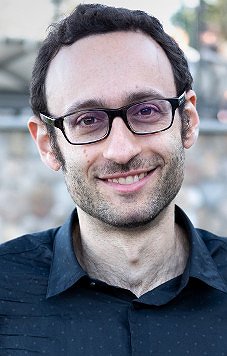
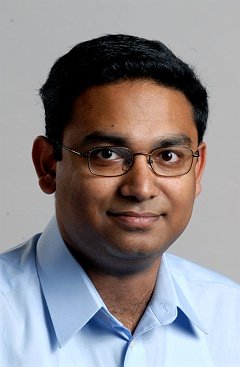
Pino Alexandros is a Lecturer in the Department of Informatics and Telecommunications at National and Kapodistrian University of Athens (NKUA), affiliated with the School of Sciences. He has held roles including Laboratory Teaching Staff (EDIP) since 2014 and researcher in the Voice and Accessibility Lab since 1997. His expertise spans Human-Computer Interaction, Assistive Technologies, and Web Accessibility. Educations: PhD (2012): NKUA, Topic: Open Source Software for AAC Applications. MSc (2003): NKUA, Major: Communications and Networks. BEng (1995): Democritus University of Thrace, Field: Energy Engineering. Research Interests: Development of assistive technologies for motor and sensory impairments. Accessibility of digital content (web, eTextbooks, cultural heritage). Human-Computer Interaction design for inclusive systems. Gesture-based interfaces and real-time signal processing. Grants & Projects: EU-funded projects (e.g., InSIDE, HERMOPHILOS) focusing on inclusive education and accessible technologies. National initiatives on assistive tech inventory systems and web accessibility frameworks. Labs/Teams: Active contributor to the Voice and Accessibility Lab, leading work on AAC systems and assistive tech evaluation.
Avraam Hatzopoulos is an Assistant Professor at the Department of Industrial Design and Production Engineering of the University of West Attica. His academic work focuses on Embedded Automation, Mechatronics Systems, and Educational Autonomous Robotic Systems within the broader field of Industrial Production Systems. He leads the Industrial Systems and Mechatronics Applications Research Laboratory. Mechanical Automation Degree Master of Telematics Project Management (Danube University of Krems, Austria) Master of Information and Communication Technologies for Education (National and Kapodistrian University of Athens) PhD in Industrial Systems (University of West Attica) His research spans multiple domains including: Embedded systems with automation emphasis Industrial mechatronics applications Small-scale educational robotics STEM education methodologies Predictive maintenance techniques IoT applications in agriculture and smart homes His recent publications analyze trends in: Open-source drone development for engineering education Big data in pharmaceutical sector optimization Low-cost robotics platforms using Arduino Technology Acceptance Model (TAM) evaluations Predictive maintenance with neural networks IoT agricultural education tools Scientific achievements include: Patent on polymorphic robotics testing base (2005) Founder of University of Piraeus Robotics Academy (2017) Contributor to Mechatron educational platform (since 2000) Teaching portfolio includes: Undergraduate: Microcontroller Design, Mechatronics, Robotics, Automotive Design Postgraduate: UAV Applications, Embedded Systems, Production Automation
Komninos Andreas is an Assistant Professor in the Computer Engineering & Informatics Department at the University of Patras, specializing in Mobile and Pervasive Computing, Internet of Things, and Human-Computer Interaction. His research spans intelligent environments, context awareness, and virtual reality applications. His research focuses on mobile text entry systems, psycho-cognitive modeling of human behavior, and accessibility for visually impaired users. Key areas include large language model applications for text entry evaluation, pseudo-haptic feedback in VR, and spatial multimodal alerts for industrial environments. He develops simulation tools like RoboType for realistic text entry evaluations and open-source cognitive models. Notable achievements include a Best Paper Award at the ACM Greek SIGCHI Chapter (2023) for VR text entry research. He serves as co-general chair for EICS'26 and holds leadership roles in MobileHCI'24 and UbiComp/ISWC'24 as Workshops & Tutorials Chair and Student Competition Chair respectively. Best Paper Award at ACM Greek SIGCHI Chapter (2023) Co-General Chair for EICS'26 Workshops & Tutorials Chair for MobileHCI'24 Student Competition Chair for UbiComp/ISWC'24 His publications demonstrate strong emphasis on empirical validation of text entry systems, with recent work integrating LLMs for affective phrase generation and psycho-cognitive modeling. He actively promotes open data practices in HCI research and has contributed to digital twin systems for environmental education and maritime industry applications.
Mattia Fazzini is an Assistant Professor in the Department of Computer Science & Engineering at the University of Minnesota's College of Science and Engineering. His primary academic appointment focuses on software engineering research and teaching, with active involvement in major conferences including ASE, ISSTA, ICSE, and MOBILESoft where he has served in leadership roles such as General Co-chair (MOBILESoft 2023) and Program Committee Co-chair. His research centers on software testing, maintenance, and security , with particular emphasis on mobile applications. Key research themes include: Developing techniques for automated Android testing and maintenance Addressing API compatibility issues across Android versions Creating tools for test oracle generation and bug reproduction Investigating security vulnerabilities in mobile ecosystems Optimizing test suites through test double analysis His recent publications (2021-2025) reveal strong focus on Android-specific challenges, with recurring themes in compatibility testing, automated test generation, and security analysis. Over 60% of his work involves tool development for practical testing scenarios, particularly targeting mobile platforms. Notable recognitions include: IEEE TCSE Distinguished Paper Award (2024) for work on test suite optimization ACM Distinguished Paper Award (2022) for COVID-19 app analysis As an educator, he advises multiple PhD and Master's students while teaching undergraduate and graduate courses including CSCI 3081W (Program Design) and CSCI 5802 (Software Engineering II). His service contributions span conference organization (MOBILESoft, ISSTA, ICSE) and extensive program committee work across top software engineering venues. He leads research projects focused on practical testing solutions with real-world applicability in mobile software development.
Shachar Itzhaky is an Associate Professor in the Department of Computer Science at Technion - Israel Institute of Technology, Haifa. His research spans multiple areas of programming languages, formal methods, and software engineering, with a focus on making program development and verification more accessible and efficient. He has served on program committees for numerous prestigious conferences including PLDI, POPL, SPLASH, and ICFP. Dr. Itzhaky's research interests center around program synthesis, automated reasoning, and formal verification. His work in program synthesis explores techniques for automatically generating programs from high-level specifications, with applications in end-user programming and software development. In automated reasoning, he has made significant contributions to e-graph based reasoning, invariant inference, and property-directed verification. His research in formal methods focuses on practical applications for program verification, particularly for data structures and security properties. An analysis of his recent publications reveals a strong focus on leveraging advanced formal techniques for practical program understanding and generation. His work consistently bridges theoretical foundations with practical applications, particularly in program synthesis, verification, and end-user programming tools. The trend shows increasing integration of machine learning techniques with traditional formal methods, as well as expanding applications to security and privacy domains. ACM SIGPLAN John C. Reynolds Doctoral Dissertation Award Dr. Itzhaky has been actively involved in the programming languages research community, serving on numerous program committees and contributing to the advancement of formal methods and program synthesis. His work has practical implications for software development tools, security analysis, and end-user programming environments. While specific grant information isn't detailed in the provided text, his extensive publication record in top-tier venues suggests successful funding for his research endeavors. His work on projects like Object Spreadsheets and Lifty demonstrates a commitment to creating practical tools that address real-world programming challenges. Dr. Itzhaky's research is conducted within the vibrant programming languages and formal methods group at Technion's Computer Science department. His work intersects with multiple research threads including program synthesis, verification, and security, suggesting collaboration across these areas within the department. His tools like EPR-based Verification, PDR∀, and VeriCon represent significant technical contributions that likely form the basis of ongoing research projects with students and collaborators.
Adam Chlipala is a Professor at the Massachusetts Institute of Technology working at the intersection of programming languages, formal methods, and computer systems. His research focuses on building practical verified systems with end-to-end machine-checked proofs, particularly using the Coq proof assistant. His educational background includes a Computer Science undergraduate degree from Carnegie Mellon University (2003) and a PhD in Computer Science from the University of California, Berkeley (2007). Following a postdoctoral position at Harvard University through 2011, he joined MIT as faculty. Chlipala's research spans multiple domains with strong emphasis on dependent types , verified compilation , and hardware-software co-verification . His work consistently bridges theoretical foundations with practical implementation, as evidenced by his development of the Ur/Web programming language and his focus on creating clean-slate hardware-software stacks with formal guarantees. Key research thrusts include cryptographic constant-time verification, side-channel security, and verified tensor compilation. His recent publications (2020-2025) reveal a clear trajectory toward increasingly complex verified systems, with growing emphasis on hardware-software integration, cryptographic implementations, and performance-critical applications. The work consistently leverages Coq for machine-checked proofs while addressing real-world constraints like timing channels and hardware interfaces. Chlipala is the author of the influential textbook Certified Programming with Dependent Types , which serves as a primary educational resource for Coq at numerous institutions worldwide. His professional activities include significant service to the PL community through program committees for major conferences including PLDI, POPL, ICFP, and CPP. He leads research initiatives connecting hardware and software verification, most notably through the DeepSpec project which aims to build fully verified computing stacks. His current work focuses on practical applications of dependent types for business applications through Ur/Web and verified cryptographic implementations.
Koushik Sen is a Professor in the Department of Electrical Engineering and Computer Sciences at the University of California, Berkeley. His academic career spans major contributions to software engineering and programming languages research through active participation in premier conferences including PLDI, ICSE, and ISSTA. His research focuses on Software Engineering , Programming Languages , and Formal Methods , with particular emphasis on developing software tools that enhance programmer productivity and software quality. Key research thrusts include automated test generation , symbolic execution , fuzzing techniques , and program synthesis . His work bridges theoretical foundations with practical tool development for real-world software verification challenges. Analysis of his publication record reveals consistent contributions to automated testing methodologies, with recent work integrating machine learning (particularly large language models) into traditional program analysis techniques. His research shows strong continuity in improving software reliability through innovative input generation and vulnerability detection approaches. As an active academic leader, he has served as General Chair for MAPL (2020), Program Chair for ISSTA (2017), and committee member for numerous top-tier conferences including PLDI, ICSE, and SPLASH across multiple years. His academic advising manifests through collaborative publications with students on topics like test corpus expansion (Bonsai Fuzzing), visualization synthesis (VizSmith), and smart contract auditing (ItyFuzz), though specific student names aren't listed in the source material. His research has been supported through conference participations and likely associated grants given his extensive publication record.
Partarakis Nikolaos serves as an Assistant Professor in the Department of Applied Informatics at the University of Macedonia. His teaching responsibilities include core courses such as Data Structures (AIC205), Human-Computer Interaction (AIC401), and Multimedia Technologies & Graphics (CSE706). His research program pioneers human-centered computing across intelligent environments and immersive technologies, with emphasis on inclusive design and real-world applicability. Key thematic areas include: Interaction in Intelligent Environments Novel HCI approaches and tools User Experience Design, Methods and Tools e-Accessibility, Design for All and Universal Access Representation of tangible/intangible Cultural Heritage X-Reality continuum interaction Adaptive User Interfaces With 11 books, 49 journal articles, and 39 conference publications, his scholarly output demonstrates sustained contributions to HCI theory and practice, particularly in accessibility frameworks and XR interface innovation. The publication trajectory reveals growing emphasis on cultural heritage digitization and motion-understanding systems since 2020.