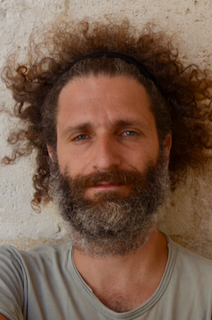
Andreas Vlachos is a Professor of Natural Language Processing and Machine Learning at the Department of Computer Science and Technology, University of Cambridge, and holds the Dinesh Dhamija Fellowship at Fitzwilliam College. His research spans dialogue modeling, automated fact-checking, imitation learning, semantic parsing, biomedical text mining, and trustworthiness in AI systems. PhD in Computer Science, University of Cambridge (supervised by Ted Briscoe and Zoubin Ghahramani) Lecturer at University of Sheffield Postdoctoral roles at UCL, University of Cambridge (NLIP group, Stephen Clark), and University of Wisconsin-Madison (Mark Craven) Current research focuses on evaluating and mitigating biases in language models, advancing fact-checking methodologies, and improving model robustness through interpolation, reinforcement learning, and causal reasoning. His work integrates natural logic, knowledge graphs, and multimodal evidence for verification tasks. Recent publications address uncertainty quantification, temporal planning benchmarks, and ethical framing of NLP artifacts. Grants from ERC, EPSRC, Facebook, Google, and the Alan Turing Institute fund his research team. Collaborations include Sebastian Riedel, Stephen Clark, and Mark Craven. Key projects explore disinformation detection, long-form generation, and confidence calibration in AI systems.
Professor Andrew Chadwick is a leading scholar in political communication and digital media studies at Loughborough University, where he directs the Online Civic Culture Centre (O3C). He holds a BSocSc from Birmingham, MSc and PhD from the London School of Economics. His research focuses on hybrid media systems, disinformation dynamics, and digital politics. Key contributions include conceptualizing hybrid media events and analyzing misinformation in personal messaging platforms. His work has been recognized with prestigious awards, including the APSA Best Book Award. He supervises numerous PhD students exploring topics like social media influence, public opinion, and digital disinformation. Current projects include the Leverhulme-funded Everyday Misinformation Project examining numerical disinformation on messaging apps. His media engagements span BBC Radio 4 to The Washington Post. Research highlights include studies on misinformation warnings' ineffectiveness, vaccine hesitancy, and the role of celebrities in political representation. O3C serves as a hub for interdisciplinary research on digital civic culture. Chadwick’s academic leadership includes roles in editorial boards for top journals and international conference keynotes.
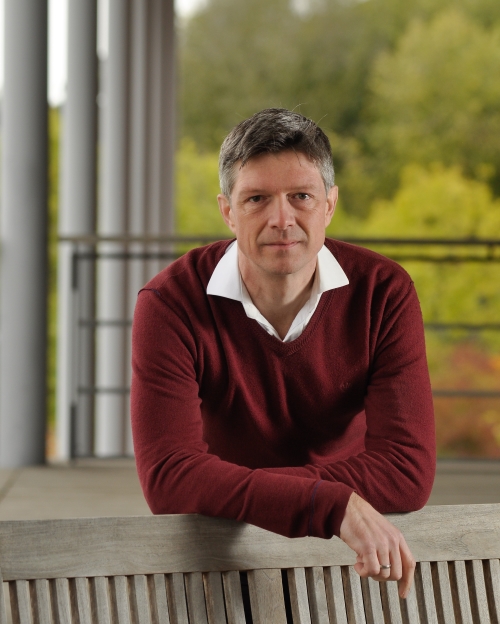
Dr. Emma Li is a Senior Lecturer in Responsible & Interactive Artificial Intelligence at the University of Glasgow's School of Computing Science. She directs the Interactive and Trustworthy AI Lab, developing secure human-robot collaboration frameworks for applications in healthcare, industry, and nuclear decommissioning. Her research pioneers behavioral biometric authentication methods that verify users through robotic motion patterns, enhancing security in teleoperation systems. Recent projects include cyber-physical teleoperation for nuclear decommissioning funded by the RAICo Programme. Li leads the Understandable Autonomous Systems research theme and contributes to the UKRI Centre for Doctor Training in Socially Intelligent Artificial Agents. Her publications demonstrate consistent innovation in human-robot trust establishment, adversarial robustness, and secure communication for robotic systems operating in sensitive environments.
Ivan Flechais is an Associate Professor in Software Engineering at the Department of Computer Science, University of Oxford. His work focuses on the intersection of security engineering and human factors, developing approaches that balance technical security requirements with usability considerations in real-world contexts. Dr. Flechais earned his BSc and PhD in Computer Science from University College London. He holds dual French-British nationality and was educated in France until university level. His academic journey reflects an international perspective that informs his research on security systems across different cultural contexts. Flechais's research centers on developing methods for creating secure systems that account for real-world usability constraints. His work addresses the complex challenge where security competes with other system requirements like functionality, usability, and efficiency. He is particularly known for developing the AEGIS design methodology, which provides a cost-effective approach to security design that incorporates usability considerations. His current research explores socio-organizational factors in secure systems design, with recent work focusing on smart home security and privacy, remote work security challenges, and the intersection of security culture with technical implementation. His publication record shows a strong trajectory in usable security research, with recent work (2020-2024) increasingly focused on smart home environments, privacy in domestic settings, and the security challenges of remote work. His research demonstrates consistent attention to the human element in security systems, examining how users interact with security mechanisms in real-world contexts across different cultural settings and technological domains. Smart home security and privacy challenges User experience of security mechanisms Socio-organizational aspects of security implementation Cross-cultural security and privacy considerations Security for distributed and remote work environments Dr. Flechais has supervised numerous PhD and Master's students, including Sarah Alromaih, Varad Vishwarupe, George Chalhoub, and Martin J. Kraemer, among others. His supervision work often focuses on the practical application of security principles in emerging technologies, with students frequently examining security challenges in smart homes, IoT devices, and remote work contexts. His research has been supported through various projects including webinos and Sponstaneous Security, which address security challenges in distributed mobile applications and ad-hoc network environments.
Michael Goldsmith is a Senior Research Fellow at the Department of Computer Science and Worcester College, University of Oxford. He holds multiple leadership positions including Director of the Oxford Martin Programme on AI Threat Detection, Associate Director of the Cyber Security Centre, and Co-Director of the Centre for Doctoral Training in Cybersecurity. His research bridges formal methods, concurrency theory, and practical cybersecurity applications. Goldsmith's research focuses on cybersecurity analytics including threat detection, risk management, and trust frameworks. He pioneered automated cryptoprotocol analysis and investigates multidisciplinary projects spanning mathematical models to socio-technical systems. His core interests include formal verification, AI threat landscapes, privacy architectures, and security protocol design. Analysis of his recent publications reveals strong emphasis on practical cybersecurity challenges: 63% focus on threat detection (especially insider threats), 22% on trust/risk frameworks, and 15% on formal methods applications. His work consistently integrates technical security mechanisms with human factors and organizational contexts. He currently advises Ahmed Salman and has supervised 10+ students including Mary Bispham, Rodrigo Carvalho, and Elizabeth Phillips. His research teams collaborate on projects funded by Technology Strategy Board, government agencies, and industry partners. Goldsmith leads the Oxford Martin Programme on AI Threat Detection and co-directs the Centre for Doctoral Training in Cybersecurity. His research group develops tools for security visualization (CyberVis), trust metrics, and identity management frameworks.
Prof. Ivan Martinovic is a Professor of Computer Science at the University of Oxford's Department of Computer Science, holding a Fellowship at the institution. He specializes in cyber-physical systems security, wireless network security, and behavioral biometrics. His research focuses on authentication mechanisms, intrusion detection, and trade-offs between security and performance in systems like satellite communications, EV charging infrastructure, and aviation networks. Education: PhD (TU Kaiserslautern); MSc (TU Darmstadt, Germany). Prior roles include postdoctoral research at UC Berkeley (2011) and UC Irvine (2009–2010), supported by a Carl-Zeiss Foundation Fellowship (2009–2011). He has also been an associate lecturer at TU Kaiserslautern. Research Interests: Cyber-physical systems security, wireless networks, behavioral biometrics (e.g., continuous authentication via physiological signals), robust communication protocols, and analysis of security vs. performance trade-offs in distributed systems. Technologies include software-defined radios, NFC/RFIDs, and EEG/eye-tracking devices. Scientific Awards: Carl-Zeiss Foundation Fellowship (2009–2011). Advising & Grants: No explicit student listings; however, his work involves interdisciplinary collaborations and has been funded by government and industrial grants. His research spans labs and teams focused on satellite cybersecurity, smart infrastructure security, and biometric systems. Labs/Teams: Engages with groups exploring satellite communication security, EV charging infrastructure vulnerabilities, and behavioral authentication systems, though specific lab names are not disclosed in the text.
Alastair Beresford is Professor of Computer Security and Head of the Department of Computer Science and Technology (The Computer Laboratory) at the University of Cambridge. He is also the Robin Walker Fellow in Computer Science at Queens' College, Cambridge. His leadership spans both academic administration and research innovation within one of the world's leading computer science departments. Professor Beresford's research focuses on the security and privacy of large-scale distributed computer systems, with particular emphasis on networked mobile devices such as smartphones, tablets, and laptops. His work examines both device-level security and the privacy implications of interactions between mobile devices and cloud-based services. His methodological approach combines critical evaluation of existing products, development of novel prototype technologies, and empirical measurement of human behavior in security contexts. His recent publications reveal a strong focus on confidentiality computing, anonymity networks, mobile security, and secure group communication. Notable projects include Pudding (private user discovery in anonymity networks), CoverDrop (secure whistleblower-journalist communication), and research on the practical viability of anonymity networks on smartphones. His work consistently bridges theoretical security concepts with practical implementations that have led to real-world security improvements in iOS, Android, and OpenSSH. Scientific Awards: Andreas Pfitzmann Best Student Paper Award (PETS 2022) for work on secure initial contact between whistleblowers and journalists Professor Beresford leads several major collaborative research initiatives including the Centre for Mobile, Wearable Systems and Augmented Intelligence (co-directed with Prof Cecilia Mascolo), the Cambridge Cybercrime Centre, and the Raspberry Pi Computing Education Research Centre. He also serves as technical director for the Isaac Learning Platform, which has supported over 500,000 users making more than 120 million question attempts since 2015. His research has practical impact, with findings leading to security fixes in major commercial products including iOS 12.2 (CVE-2019-8541), watchOS 5.2, Android 11, and OpenSSH 9.8 (CVE-2024-39894).
Stephanie Wilson is a Professor of Human-Computer Interaction at City St George's, University of London, and Co-Director of the Centre for HCI Design (HCID). She co-founded the EPSRC Centre for Doctoral Training in Diversity in Data Visualization (DIVERSE CDT) and contributes to the Institute for Creativity and AI. Her research emphasizes inclusive interaction design, data visualization, co-design, and innovative digital technologies for healthcare, particularly for people with aphasia. She has supervised 17 PhD students to completion and led significant projects like EVA Park and INCA, which explore accessible virtual worlds and digital tools for aphasia. Her work has earned multiple awards, including ACM SIGCHI Honorable Mention Awards and the Tech4Good Accessibility Award Finalist. Stephanie has secured over £10 million in research funding, including grants from EPSRC and Innovate UK, and actively contributes to academic governance through roles like Chair of the Research Degrees Committee and establishing the Women++ group. She advocates for participatory design and ethical research practices in healthcare technology.
Mustafa A. Mustafa is a Senior Lecturer (Associate Professor) in the Department of Computer Science at The University of Manchester, where he leads the Trusted Digital Systems Cluster as part of the university-wide Centre for Digital Trust and Society. His academic journey spans prestigious institutions including The University of Manchester, where he completed his PhD, and KU Leuven in Belgium, where he served as a post-doctoral research fellow. Dr. Mustafa earned his educational qualifications through an impressive academic path: a B.Sc. in communications from the Technical University of Varna, Bulgaria (2007), an M.Sc. in communications and signal processing from Newcastle University, UK (2010), and a Ph.D. in computer science from The University of Manchester, UK (2015). His doctoral research focused on "Smart Grid Security: Protecting Users' Privacy in Smart Grid Applications," laying the foundation for his subsequent research career. Dr. Mustafa's research expertise centers on information security, data privacy, and applied cryptography with particular focus on smart grid systems, smart city applications, e-health, and IoT. His work addresses critical challenges in securing peer-to-peer electricity trading markets, smart metering infrastructure, electric vehicle charging systems, and health data management. He has developed innovative solutions for keyless car sharing systems, frictionless authentication mechanisms, and privacy-preserving protocols for data collection and distribution. His scholarly contributions demonstrate a consistent trajectory toward increasingly sophisticated privacy-preserving techniques applied across multiple domains. Recent work shows a growing integration of artificial intelligence and machine learning approaches with traditional cryptographic methods, particularly in federated learning systems and large language model verification. His research bridges theoretical cryptography with practical implementations in energy systems and healthcare applications. Dr. Mustafa's scientific achievements have been recognized with several prestigious awards: Winner of the Student Video Competition at IEEE SmartGridComm 2017 for "Secure and Privacy-friendly Local Electricity Trading" Best Paper Award at SECURWARE 2017 Distinguished Achievement Award as Postgraduate Research Student of the Year nominee by the School of Computer Science of The University of Manchester (2015) Dame Kathleen Ollerenshaw Research Fellowship (2018-2023) As an academic supervisor, Dr. Mustafa has mentored numerous graduate students through their PhD and Master's research, with a particular focus on privacy and security challenges in emerging technologies. His current supervision portfolio includes research on privacy-friendly multi-agent systems for smart grids, security for IoT in e-health, vulnerability detection in IoT cryptography, and bot detection systems. He has secured significant research funding through multiple competitive grants including EnnCore: End-to-End Conceptual Guarding of Neural Architectures (EPSRC, 2020-2024), SCorCH: Secure Code for Capability Hardware (EPSRC, 2019-2023), and SNIPPET: Secure and Privacy-friendly Peer-to-peer Electricity Trading (FWO-SBO project, 2019-2023). Dr. Mustafa leads the Trusted Digital Systems Cluster within the Centre for Digital Trust and Society at The University of Manchester. His research group comprises PhD students, postdoctoral researchers, and collaborators working on cutting-edge security and privacy solutions. The team maintains strong international collaborations, particularly with KU Leuven in Belgium, and contributes to standards development as evidenced by Dr. Mustafa's role as an expert in the IEC/SYC/WG 3 "IEC Smart Energy Roadmap."
Professor Marios C. Angelides is a full-time faculty member at Brunel University London , serving as Professor of Computing and Divisional Lead within the College of Engineering, Design and Physical Sciences . He leads the Creative Computing Research Group under the Institute of Digital Futures and contributes to the Digital Media department at Brunel Design School. BSc (First Class Honours) and PhD in Computing from the London School of Economics (LSE) Chartered Engineer (CEng) and Chartered Fellow of the British Computer Society (FBCS CITP) His research focuses on Creative Computing , specifically applying Machine Learning , Serious Gaming , and Cognitive Modeling to develop Smart IoT Applications . His work spans autonomous drone fleets for environmental monitoring, cybersecurity middleware for Android systems, wearable technology for lifestyle recommendations, and historical analysis of Alan Turing’s legacy in modern AI. Recent publications highlight trends in deploying Machine Learning for: IoT systems optimization Autonomous aerial/underwater vehicle coordination Deepfake detection using Turing’s Imitation Game Energy allocation in CubeSats via gaming mechanics Scientific recognition includes being Deputy Editor of The Computer Journal and runner-up for the 2016 Oxford University Press Wilkes Award . He has supervised PhD students in topics like Smart Android Middleware for Cybersecurity and Wearable Recommendation Systems , with active involvement in editorial boards and international conferences.
Professor Steven J. Murdoch is a leading figure in cybersecurity and privacy-enhancing technologies at the Department of Computer Science , University College London . His work bridges computer science and law, focusing on payment system security, electronic evidence reliability, and dispute resolution mechanisms. Head of Information Security Research Group at UCL (2022–present) Director at Open Rights Group (2022–present) Research spans payment security , privacy protocols , and legal implications of computer evidence . Key contributions include analyzing EMV protocol flaws, designing secure authentication mechanisms, and improving Tor's anonymity. Publications cover privacy-preserving federated learning , time-lock puzzles , and malware ecosystem analysis Awards include Fellowships from the Institution of Engineering & Technology and British Computer Society , and a Royal Society University Research Fellowship . Teaches COMP0055 Computer Security II and COMP0061 Privacy Enhancing Technologies at UCL
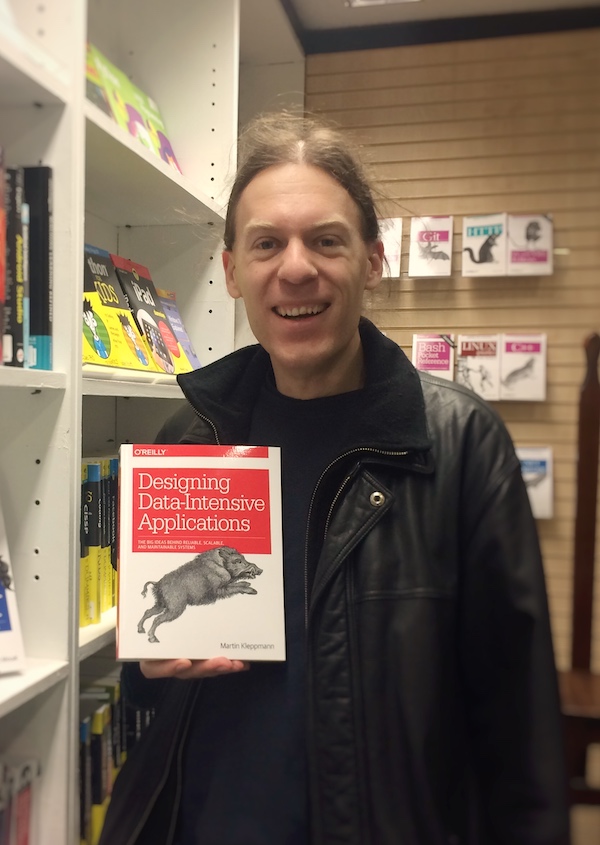
Dr. Martin Kleppmann is an Associate Professor at the University of Cambridge, specializing in local-first software and security protocols . He leads research in distributed systems, focusing on decentralized architectures, collaborative editing tools, and cryptographic methods. As a key contributor to the Automerge open-source project, he bridges academic innovation with real-world applications. Formerly a research fellow at TU Munich (2022–2023) and Cambridge (2015–2022), he has also worked as a software engineer and startup founder, including LinkedIn (acquired 2012). Research Interests span Distributed Systems Security , Conflict-Free Replicated Data Types (CRDTs) , Collaborative Software , and Cryptography . His work addresses challenges in decentralized social networks, privacy-preserving protocols, and efficient data synchronization. Recent projects include Kintsugi (end-to-end encrypted key recovery) and Pudding (private user discovery for anonymity networks). Publications emphasize Collaborative text editing (2025: Eg-walker, 2023: The Art of the Fugue) CRDTs for JSON and trees (2021, 2017) Privacy in decentralized systems (2024: Pudding, 2025: Emission Impossible) Scientific Awards include Gilles Muller Best Artifact Award (EuroSys 2025) Distinguished Paper & Artifact Awards (OOPSLA 2017) Best Presentation Awards (Security Protocols Workshop 2018, PaPoC 2025)
Dr Wasim Ahmad is a Lecturer in Marketing at the Department of Marketing, Lancaster University Management School (LUMS), having joined the institution in January 2024. His prior academic appointments include Monash University, Florida State University, Teesside University, and Fujian University of Technology, where he conducted research, taught undergraduate/postgraduate modules, and led curriculum development. Education: Ph.D. in Marketing, University of International Business and Economics PostDoc, Florida State University Research Interests: Dr Ahmad investigates consumer behaviour with emphasis on negative emotions (brand hate, betrayal) and extreme responses to brands across cultural contexts. His work spans sustainability-oriented innovation in B2B firms, eco-brand strategy, and cross-cultural CSR implementation—particularly during crises like the pandemic. He employs quantitative methodologies including experimental designs and meta-analysis, frequently examining digital marketing phenomena such as virtual influencers, travel apps, and dark patterns in online interfaces. Publication Trends: His 2023-2025 output reveals concentrated research on brand hate consequences in B2B relationships, sustainability innovation linked to triple-bottom-line performance, and cross-cultural digital behaviour (e.g., social media addiction, travel app usage). Key journals include Journal of Business Research , Industrial Marketing Management , and Annals of Tourism Research , demonstrating interdisciplinary reach across marketing, sustainability, and tourism. Scientific Awards: No specific awards, prizes, or fellowships mentioned in source materials Advising and Grants: Dr Ahmad actively supervises PhD candidates in green marketing topics (product sustainability, eco-brand orientation) using quantitative approaches. He teaches core modules including International Marketing (MKTG101), Strategic Marketing (MKTG301), and Marketing Research (MKTG212). No grant funding details were provided in the directory. Labs and Teams: No dedicated research labs or teams specified in current affiliation Collaborative work evident in B2B sustainability studies with international co-authors
Soteris Demetriou is a Senior Lecturer of Computer Systems Security at Imperial College London's Department of Computing, within the Faculty of Engineering. He leads the Applications, Platforms, and Systems Security (APSS) Research Lab and directs the Academic Centre of Excellence in Cyber Security Research (ACE-CSR). His research focuses on securing mobile, IoT, and cyber-physical systems through techniques like explainable AI, reverse engineering, and trusted computing. Notable contributions include tools for privacy preservation in machine learning models, detection of LiDAR spoofing attacks, and securing Android's middleware. Education: PhD and MSc in Computer Science (University of Illinois at Urbana-Champaign), Diploma in Electrical and Computer Engineering (University of Patras). Research Interests: Mobile/IoT security, AI security, trusted computing, and vulnerability analysis. Key areas include privacy in generative models, adversarial attacks on autonomous systems, and large-scale distributed systems. Publications: Over 50 peer-reviewed papers in top venues like NDSS, CCS, and SOSP. Recent work addresses privacy in speech generation, LiDAR security for autonomous vehicles, and hyperscale serverless architectures at Meta. Awards: Distinguished Paper Award at NDSS 2018, Best Paper at SafeThings 2024, and multiple travel grants. Served on technical committees for PETS, CCS, and AutoSec. Grants & Collaborations: SPRITE+ grant for Bio-IoT security, collaboration with Meta on distributed systems, and leadership in ACE-CSR. Labs: APSS Lab focuses on systems and AI security, with interdisciplinary projects in healthcare and autonomous systems.
Frank Stajano is a Full Professor of Security and Privacy at the University of Cambridge, leading the Academic Centre of Excellence in Cyber Security Research. He is a Fellow of Trinity College, where he collaborates with Nobel laureates. His research focuses on security, privacy, and usability in ubiquitous computing, IoT, and digital finance. He holds a PhD from Cambridge and a Laurea in Electronic Engineering from La Sapienza University. Frank's work includes the Pico project (ERC-funded), aiming to replace passwords with secure, usable alternatives. He co-founded Cambridge Cyber, offering cybersecurity consulting. Notable achievements include the Resurrecting Duckling authentication protocol and contributions to location privacy (Mix Zones). He has authored over 50 refereed publications and a research monograph on ubiquitous computing security. His awards include the Toshiba Fellowship (2000) and an ERC Starting Grant (2017). Frank teaches cybersecurity and lectures globally via his YouTube channel. Beyond academia, he is a 5th-dan kendo practitioner and a scholar of Disney comics.