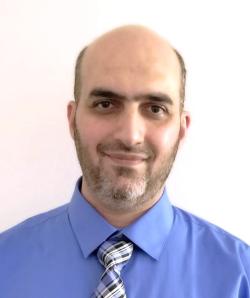
Rick Hoyle is a Professor of Psychology and Neuroscience at Duke University, where he serves as Associate Chair of the Department of Psychology and Neuroscience. He is also a Faculty Network Member of the Duke Institute for Brain Sciences. His academic career spans decades, with significant contributions to understanding self-regulation and adolescent development. Dr. Hoyle earned his B.A. from Appalachian State University (1983), followed by an M.A. (1986) and Ph.D. (1988) from the University of North Carolina, Chapel Hill. He progressed from Assistant to Associate to Full Professor at the University of Kentucky from 1989 to 2003 before joining Duke University. His research focuses on how adolescents and emerging adults manage goal pursuit through self-regulation, taking a broad view that accounts for personality, environment, cognition, emotion, and social influences. He employs longitudinal methods with repeated assessments, sometimes spanning years with data collection multiple times per year, or intensive studies with assessments several times daily. His lab develops innovative measurement tools including self-report measures of self-control and grit, as well as unobtrusive approaches using mobile phones and wearable devices to track goal pursuit in natural settings. His recent publications reveal a strong focus on self-regulation in digital contexts, adolescent substance use, socioeconomic influences on development, and innovative measurement approaches. His work increasingly integrates technology (social media analysis, wearable devices) with traditional psychological research methods to understand real-world behavior. Fellow, Association for Psychological Science (2013) Dr. Hoyle has secured numerous research grants totaling millions of dollars, including the current Real-Time and Randomized Tests of Social Media and Mental Health Links in Early Adolescence (2024-2029), NCCU Duke - Substance Use Research & Education (2024-2029), and Mid-Life Health Inequalities in the Rural South: Risk and Resilience (2023-2028). His grant portfolio demonstrates sustained funding for research on adolescent development, substance use, self-regulation, and health disparities. He teaches advanced courses including Applied Structural Equation Modeling and Psychology and Neuroscience Grant Writing, mentoring the next generation of researchers in quantitative methods and research design. His work through the Center for the Study of Adolescent Risk and Resilience (2008-2025) has established a significant research infrastructure for longitudinal studies of adolescent development. Current projects examine social media effects on mental health, substance use patterns, and the impact of environmental factors on adolescent well-being using innovative digital tracking methods.