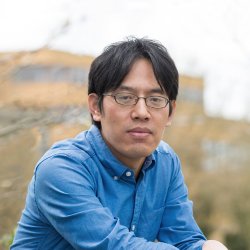
Ge Tiffany Wang is an incoming Assistant Professor at the University of Illinois Urbana-Champaign, Department of Computer Science (starting Aug 2025), with research focusing on Human-Computer Interaction , Human-Centered Artificial Intelligence , and Usable Security & Privacy . She leads the OATS Lab (Openness, Autonomy, Trust in Supportive AI), which investigates how AI systems can better support user agency, particularly for vulnerable populations like children. Education : D.Phil. in Computer Science, University of Oxford MSc in Information Science, University College London BSc in Physics, University of Oxford Her research includes designing systems like CHAITok (for children's data control) and the KOALA Hero Toolkit (for educating families about data risks). She will complete a postdoctoral fellowship at Stanford HAI (2024-2025) before joining UIUC. Her work bridges technical design with ethical considerations, emphasizing child development and algorithmic accountability. Scientific Contributions : 15 most recent articles focus on decentralized social media, AI ethics for children, and data autonomy tools Key trends: algorithmic transparency, child-centered AI, and family data literacy
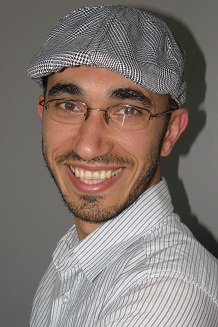
Ivan Flechais is an Associate Professor in Software Engineering at the Department of Computer Science, University of Oxford. His work focuses on the intersection of security engineering and human factors, developing approaches that balance technical security requirements with usability considerations in real-world contexts. Dr. Flechais earned his BSc and PhD in Computer Science from University College London. He holds dual French-British nationality and was educated in France until university level. His academic journey reflects an international perspective that informs his research on security systems across different cultural contexts. Flechais's research centers on developing methods for creating secure systems that account for real-world usability constraints. His work addresses the complex challenge where security competes with other system requirements like functionality, usability, and efficiency. He is particularly known for developing the AEGIS design methodology, which provides a cost-effective approach to security design that incorporates usability considerations. His current research explores socio-organizational factors in secure systems design, with recent work focusing on smart home security and privacy, remote work security challenges, and the intersection of security culture with technical implementation. His publication record shows a strong trajectory in usable security research, with recent work (2020-2024) increasingly focused on smart home environments, privacy in domestic settings, and the security challenges of remote work. His research demonstrates consistent attention to the human element in security systems, examining how users interact with security mechanisms in real-world contexts across different cultural settings and technological domains. Smart home security and privacy challenges User experience of security mechanisms Socio-organizational aspects of security implementation Cross-cultural security and privacy considerations Security for distributed and remote work environments Dr. Flechais has supervised numerous PhD and Master's students, including Sarah Alromaih, Varad Vishwarupe, George Chalhoub, and Martin J. Kraemer, among others. His supervision work often focuses on the practical application of security principles in emerging technologies, with students frequently examining security challenges in smart homes, IoT devices, and remote work contexts. His research has been supported through various projects including webinos and Sponstaneous Security, which address security challenges in distributed mobile applications and ad-hoc network environments.
Michael Goldsmith is a Senior Research Fellow at the Department of Computer Science and Worcester College, University of Oxford. He holds multiple leadership positions including Director of the Oxford Martin Programme on AI Threat Detection, Associate Director of the Cyber Security Centre, and Co-Director of the Centre for Doctoral Training in Cybersecurity. His research bridges formal methods, concurrency theory, and practical cybersecurity applications. Goldsmith's research focuses on cybersecurity analytics including threat detection, risk management, and trust frameworks. He pioneered automated cryptoprotocol analysis and investigates multidisciplinary projects spanning mathematical models to socio-technical systems. His core interests include formal verification, AI threat landscapes, privacy architectures, and security protocol design. Analysis of his recent publications reveals strong emphasis on practical cybersecurity challenges: 63% focus on threat detection (especially insider threats), 22% on trust/risk frameworks, and 15% on formal methods applications. His work consistently integrates technical security mechanisms with human factors and organizational contexts. He currently advises Ahmed Salman and has supervised 10+ students including Mary Bispham, Rodrigo Carvalho, and Elizabeth Phillips. His research teams collaborate on projects funded by Technology Strategy Board, government agencies, and industry partners. Goldsmith leads the Oxford Martin Programme on AI Threat Detection and co-directs the Centre for Doctoral Training in Cybersecurity. His research group develops tools for security visualization (CyberVis), trust metrics, and identity management frameworks.
Dr. Jiahong Chen is a Lecturer in Law at the University of Sheffield School of Law . His research focuses on the intersection of law and technology, particularly Data Protection Law , Cybersecurity Law , Law and AI , and Internet Regulation . He serves as Departmental EDI Director and Deputy LLM Programme Director. PhD, University of Edinburgh LLM, China University of Political Science and Law LLB, China University of Political Science and Law His research examines regulatory challenges in smart homes , large language models , and data ethics . Current projects include the ESRC-funded "The Internet of Tactical Engagement (IoTE)" and RAI UK's "Addressing Socio-technical Limitations of Large Language Models" . Publications span GDPR interpretation, health data regulation, and smart device accountability. He teaches modules on Information Technology Law , Data Privacy and Governance , and Consumer Law .
Frank Stajano is a Full Professor of Security and Privacy at the University of Cambridge, leading the Academic Centre of Excellence in Cyber Security Research. He is a Fellow of Trinity College, where he collaborates with Nobel laureates. His research focuses on security, privacy, and usability in ubiquitous computing, IoT, and digital finance. He holds a PhD from Cambridge and a Laurea in Electronic Engineering from La Sapienza University. Frank's work includes the Pico project (ERC-funded), aiming to replace passwords with secure, usable alternatives. He co-founded Cambridge Cyber, offering cybersecurity consulting. Notable achievements include the Resurrecting Duckling authentication protocol and contributions to location privacy (Mix Zones). He has authored over 50 refereed publications and a research monograph on ubiquitous computing security. His awards include the Toshiba Fellowship (2000) and an ERC Starting Grant (2017). Frank teaches cybersecurity and lectures globally via his YouTube channel. Beyond academia, he is a 5th-dan kendo practitioner and a scholar of Disney comics.
Shujun Li is a Professor of Cyber Security and Head of the Cyber Security Research Group at the School of Computing, University of Kent. He also holds a Visiting Professorship at the Department of Computer Science, University of Surrey. His research focuses on cyber security, privacy, AI applications, and human-centric computing. He leads the Institute of Cyber Security for Society (iCSS), a university-wide interdisciplinary research centre. Education: PhD in Information and Communication Engineering (Xi'an Jiaotong University, 2003), followed by postdoctoral research at City University of Hong Kong, Humboldt Research Fellowship at FernUniversität in Hagen, and a 5-year Zukunftskolleg Research Fellowship at Universität Konstanz. Research interests include cyber security (usable security, digital forensics, misinformation), AI safety, human factors, and socio-technical systems. He has published over 100 papers, with awards including the IEEE Guillemin-Cauer Best Paper Award and EPSRC recognition. Awards: Includes IEEE Transactions Best Paper Awards, EPSRC peer review recognition, and multiple conference best paper awards. Active in interdisciplinary projects like MACRO (cyber risks in mobility systems) and ACCEPT (reducing human-related cyber risks). Labs/Teams: Directs iCSS, co-founded Kent & Medway Cyber Cluster, and leads the Kent Interdisciplinary Research Centre in Cyber Security (KirCCS). Collaborates with industry and government agencies on cyber resilience and AI ethics.
Dr. George Chalhoub is a Lecturer (Assistant Professor) in Human-Computer Interaction at the UCL Interaction Centre (UCLIC), Department of Computer Science, University College London (UCL). He is also an Associate Member at the Department of Computer Science, University of Oxford, and a 2024–2025 Berkman Klein Fellow at the Berkman Klein Center for Internet & Society, Harvard Law School, Harvard University. His multidisciplinary research bridges cybersecurity, privacy, and human-centered computing, focusing on real-world technology use. DPhil in Cyber Security, University of Oxford (supported by Information Commissioner’s Office) MSc in Computer Science, University of Southampton (supported by Lloyd’s Register) BS in Computer Science, Lebanese American University His research centers on the security, privacy, and safety of digital technologies through a user-centered lens. Key areas include AI-powered systems (e.g., LLMs, smart assistants), emerging technologies in the wild (e.g., smart homes, IoT), embedded devices (e.g., routers), marginalized communities, data workers in AI, and online content creators. His work integrates UX principles to improve data protection in healthcare (e.g., NHS records) and children’s apps, with implications for GDPR compliance and responsible AI innovation. The analysis of his recent publications reveals a consistent focus on empirical studies of user experience in security and privacy, particularly in smart homes and data-intensive applications. His work spans design interventions, ethical frameworks, and policy-relevant findings, published in top venues like CHI, CSCW, SOUPS, and IJHCS. Themes include consent design, communal privacy, vulnerability patching, and developer support for privacy. UK Global Talent Visa recipient, UK Research and Innovation 2024–2025 Berkman Klein Fellow, Harvard University Dr. Chalhoub has advised on research projects related to secure networking by design and responsible AI (e.g., EWADA, RoboTIPS). He has received grant support from the Information Commissioner’s Office for his doctoral work. He is available for consultancy, collaborative research, grant assessment, and supervision of research degrees. His professional experience includes internships at Microsoft Research (Calc Intelligence) and Nokia Bell Labs (Social Dynamics), contributing to projects in AI and social computing. He is affiliated with research groups including the Human-Centered Computing group at Oxford, the UCL Interaction Centre (UCLIC), and the Berkman Klein Center at Harvard. His work is supported by tools and frameworks developed in collaboration with interdisciplinary teams focused on cybersecurity ethics, data governance, and platform accountability.
Professor M. Angela Sasse FREng holds the position of Professor of Human-Centred Security at Ruhr University Bochum (Germany) and retains an appointment at University College London (UCL). Her research focuses on designing technologies that align with human behavior to enhance security, privacy, and societal well-being. She leads the UK's Research Institute for Science of Cyber Security (RISCS), a multidisciplinary initiative funded by EPSRC and GCHQ. Previously at UCL's Department of Computer Science, she pioneered studies on usability challenges in security mechanisms since 1996, emphasizing frameworks for understanding human interactions with security systems. She serves on high-profile committees, including the Royal Society's Cyber Security Research Steering Committee and the Royal Academy of Engineering's Diversity Committee. Awarded multiple honors, including Fellow of the Royal Academy of Engineering and Chartered Engineer status, she has also secured Intel Faculty Awards in 2012 and 2013. Her advisory roles include the Simply Secure board and the Information Security Specialists Group. She has supervised numerous PhD students, focusing on topics like usable encryption, security decision-making, and privacy behaviors. Her work bridges academia and industry, addressing real-world challenges such as insider threats and mass-marketing fraud prevention. Current research emphasizes multidisciplinary approaches to cyber security in digital societies.
Dr. Panagiotis Andriotis is a Lecturer in Computer Science at the School of Computer Science, University of Birmingham, within the College of Engineering and Physical Sciences. He is also a GIAC Certified Forensic Examiner (GCFE, GASF) and a Senior Fellow of the Higher Education Academy (SFHEA). His interdisciplinary research spans Cyber Security, Human Factors, and Mobile and Ubiquitous Computing. He teaches courses in Computer Science, Cyber Security, and Digital Forensics. His educational background includes a PhD in Computer Science from the University of Bristol (2016), an MSc with Distinction in Computer Science from the same institution (2011), and a BSc in Mathematics from the National and Kapodistrian University of Athens (2004). Dr. Andriotis’s research interests focus on user-centered security, particularly in mobile environments. He investigates how users interact with Android’s permission systems, develops novel authentication mechanisms like Bu-Dash, and explores adversarial machine learning in cybersecurity. His work bridges technical and human aspects, aiming to improve both system robustness and user experience. His recent publications reflect a strong trend in adversarial machine learning, mobile malware detection, usable privacy, and the societal implications of AI in education. He has contributed to high-impact journals such as IEEE Transactions on Cybernetics, ACM Transactions on Privacy and Security, and Elsevier’s Journal of Information Security and Applications. Best Paper Award at HCI International 2020 Impact Award, UWE Bristol Student Union GIAC Certified Forensic Examiner (GCFE) GIAC Advanced Smartphone Forensics (GASF) SANS Lethal Forensicator Coin Dr. Andriotis has advised PhD students, including Andrew McCarthy, and has been involved in funded research projects such as those related to fuzzing, software security, and critical infrastructure protection in collaboration with Airbus. He has served as an External Examiner at Cardiff Metropolitan University and is currently on the editorial boards of Digital Threats: Research and Practice (ACM) and the Journal of Responsible Technology (Elsevier). He has held visiting roles at the National Institute of Informatics in Tokyo, including as a JSPS Fellow and Toshiba Fellow. He leads research in digital forensics and security, with a lab focus on mobile ecosystems, behavioral modeling, and AI-driven threat detection. His team explores both technical and human dimensions of cybersecurity, contributing to tools and frameworks that enhance mobile security and user awareness.
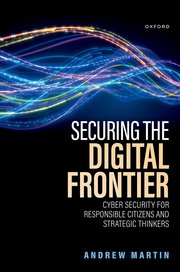
Professor Andrew Martin is a leading academic in Systems Security at the Department of Computer Science, University of Oxford, and a Governing Body Fellow at Kellogg College. His research focuses on trusted computing, cybersecurity, and secure distributed systems, with applications in cloud computing, IoT, and smart grids. He has been instrumental in advancing secure architectures using hardware-based trust mechanisms such as Intel SGX and Trusted Platform Modules. Research Interests: His work spans Systems Security , Trusted Computing , Confidential Computing , Secure Multi-Party Computation , and Privacy in Distributed Systems . He investigates how hardware-enforced security can mitigate risks in large-scale environments, particularly where privacy and trust are paramount. Publication Trends: His recent publications reveal a strong focus on Trusted Execution Environments (TEEs), remote attestation, and secure cloud architectures. He critically examines the feasibility of using hardware enclaves for both defensive and offensive security, emphasizing architectural soundness and real-world applicability. Scientific Awards: No specific awards mentioned in the provided text. Advising and Grants: Professor Martin has supervised numerous PhD and Master’s students in cybersecurity and systems research. His projects include CRANE , Trustworthy Logging , webinos , TCLOUDS , and Secure Networking by Design (SNbD) . He has secured funding for research in trusted computing and secure distributed systems, contributing to both theoretical foundations and practical implementations. Labs and Teams: He leads a research group focused on systems security and trusted computing, collaborating with industry and academic partners on large-scale security challenges. His team works on developing secure middleware, analyzing vulnerabilities in consumer devices, and designing privacy-preserving protocols for smart infrastructure.
Professor Steven J. Murdoch is a faculty member at the University College London (UCL) in the Department of Computer Science . He holds a Royal Society University Research Fellow position and leads the Information Security Research Group . He is affiliated with Christ’s College as a bye-fellow, and is a Fellow of the Institution of Engineering and Technology (IET) and the BCS . His work bridges security engineering , privacy-enhancing technologies , and legal-technical intersections . Academic Leadership : Program chair and general chair for major conferences like Privacy Enhancing Technologies Symposium and Financial Cryptography . Research Contributions : Notable for exposing vulnerabilities in EMV protocols , designing blockchain-based fair exchange protocols , and analyzing malware delivery ecosystems . Scientific Awards : Received the IRTF Applied Networking Research Prize 2020 for internet-wide scanning methodologies. Professional Impact : Active in Tor Project and critical infrastructure analysis, including the Post Office Horizon scandal . Email: s.murdoch@ucl.ac.uk .
Thais Webber is a Lecturer in Software Engineering and Cybersecurity at Aston University's School of Computer Science and Digital Technologies. Her research focuses on developing secure, user-centered healthcare systems through participatory approaches and longitudinal studies. Recent work explores personalized authentication paradigms, non-invasive diagnostic technologies for conditions like endometriosis, and simulations of healthcare resource allocation during disruptions. Her publications demonstrate strong interdisciplinary collaboration, bridging computer science with clinical healthcare challenges. Methodologies include statistical modeling, system verification, and stakeholder engagement frameworks to address vulnerabilities in medical data systems and improve care delivery efficiency.
Sadie Creese is Professor of Cybersecurity in the Department of Computer Science at the University of Oxford. She serves as Director of the Global Cyber Security Capacity Centre at the Oxford Martin School and Director of the Oxford Martin Programme on AI Threat Detection. Additionally, she is a Governing Body Fellow at Worcester College and Chair of Examiners for the MSc in Computer Science. Professor of Cybersecurity, Department of Computer Science, University of Oxford Director, Global Cyber Security Capacity Centre, Oxford Martin School Director, Oxford Martin Programme on AI Threat Detection Governing Body Fellow, Worcester College Chair of Examiners for MSc in Computer Science Sadie Creese holds a DPhil in Computer Science from the University of Oxford, an MSc in Computation, and a BSc (Hons) in Mathematics and Philosophy. Her academic background bridges theoretical computer science with practical applications in security. Her research spans multiple domains of cybersecurity including cyber situational awareness, visual analytics for cybersecurity, predicting organizational cyber-value-at-risk, agent-based simulations for malware propagation, threat modeling and detection, network defense, and cyber-resilience strategies. She also studies national cybersecurity capacity, working with countries and international organizations worldwide. Her interdisciplinary approach integrates insights from computer science, social sciences, and policy studies to address complex security challenges in an interconnected digital world. Analysis of her recent publications reveals a consistent focus on practical cybersecurity applications with strong emphasis on human factors in security systems. Her work bridges technical security mechanisms with organizational and human elements, particularly in areas like insider threat detection, risk communication, and security operations. The research demonstrates a trajectory toward more integrated security frameworks that consider both technical vulnerabilities and human behaviors within complex systems. Sadie Creese has been recognized as one of The 50 most influential women in cyber-security UK . Her work with the Global Cyber Security Capacity Centre has influenced national cybersecurity strategies worldwide, and she actively contributes to policy discussions through platforms like the World Economic Forum's AI Governance Alliance. The 50 most influential women in cyber-security UK Professor Creese has supervised numerous PhD and Master's students including Mary Bispham, Rodrigo Carvalho, Elizabeth Phillips, Marcel Stolz, and Meredydd Williams. Her research has been supported by significant grants including AXIS-sponsored projects on cyber-risk modeling, World Economic Forum collaborations on cybersecurity futures, and Lloyds Register Foundation funding for cyber security research related to the Industrial Internet of Things. She leads major interdisciplinary projects that bridge technical security research with policy implications. Principal Investigator on AXIS-sponsored project 'Analysing Cyber-Value-at-Risk, Residual Risk and models for Systemic Cyber-Risk' Collaboration with World Economic Forum's Shaping the Future of Cybersecurity Platform Co-Chair of Lloyds Register Foundation sponsored Foresight review of cyber security for the Industrial Internet of Things Professor Creese founded and directs the Global Cyber Security Capacity Centre (GCSCC) at the Oxford Martin School, which conducts research into national cybersecurity capacity. She was also the founding Director of Oxford's Cybersecurity Network (now CyberSecurity@Oxford), established in 2008. Her team includes senior researchers like Ioannis Agrafiotis, Louise Axon, and Michael Goldsmith, who collaborate on projects spanning cyber analytics, security protocols, and identity management. The GCSCC works with governments and international organizations to build cybersecurity capacity globally, while the Oxford Martin Programme on AI Threat Detection focuses on emerging security challenges posed by artificial intelligence technologies.
Mark Warner is a Lecturer in Information Security at University College London (UCL), part of the Information Security Research Group. His work bridges computer science with psychology and sociology to address online harms such as cyberbullying, misinformation spread, and child abuse. Previously, he held roles in digital forensics and policing over 10 years. He supervises PhD students researching topics like online privacy and community-based surveillance. Current projects include developing triage tools for police and investigating usable privacy in female health apps (Google Faculty Award-funded). His research also explores HIV status disclosure in dating apps and the impact of non-disclosure in social platforms. Education : PhD in Computer Science (UCL, 2020), MSc in Security Management (University of Portsmouth, 2016). Key Research Interests : Social computing technologies, technology-crime intersections, online privacy, and proactive content moderation systems. He has secured grants from ESRC (£550k), REPHRAIN, and Google. Publications : Focus on online behavior, privacy, and harm reduction in digital spaces. Recent work analyzes toxicity detection algorithms and misinformation dynamics within families. Awards : Google Faculty Award (2023), multiple REPHRAIN and ESRC grants. Grants & Projects : Includes the TRIAGE project (ESRC), UseCRT (REPHRAIN), and CSAC dataset development. He also chairs CHI Understanding People committees.
Dr. Siamak Shahandashti is a Senior Lecturer in the Department of Computer Science at the University of York, UK. He leads the Cyber Security & Privacy Research Group and is actively involved in academic governance roles including Chair of the Physical Sciences Ethics Committee and Programme Lead for the MSc Cyber Security programme. His research focuses on applied cryptography, privacy-preserving technologies, electronic voting systems, and blockchain applications. He holds a PhD in Computer Science and has contributed to over 40 peer-reviewed publications. Education: PhD in Computer Science, MSc in Telecommunications Engineering, BSc in Electrical Engineering. Professional qualifications include a PGCert in Academic Practice. Research interests span cyber security fundamentals, usable security mechanisms, and the intersection of cryptography with real-world systems. Notable projects include verifiable electronic voting systems and DoS-resilient blockchain protocols. He has led funded projects on e-voting scalability and contributed to standards reviews for ISO/IEC protocols. Award-winning educator in cyber security curriculum development, with active roles in admissions and academic ethics compliance. His work bridges theoretical cryptography with practical implementations, emphasizing user-centric security design principles. Labs/Teams: Cyber Security & Privacy Research Group (lead), Departmental Ethics Team (lead). Collaborations include institutions in Australia, France, and across Europe.