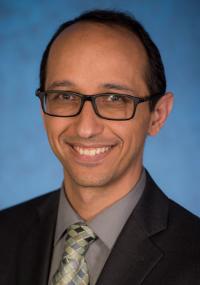
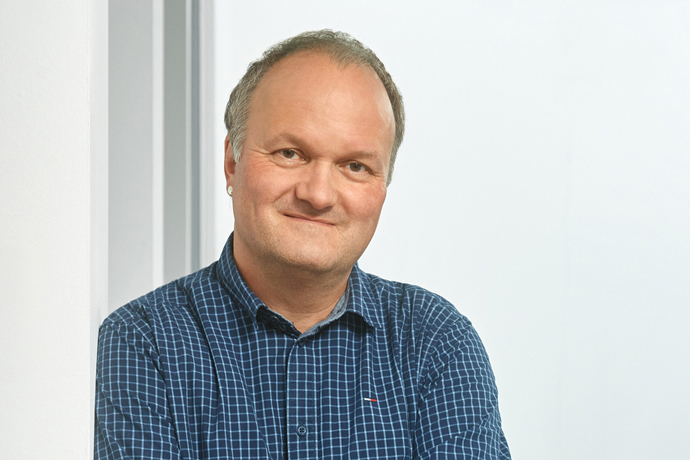
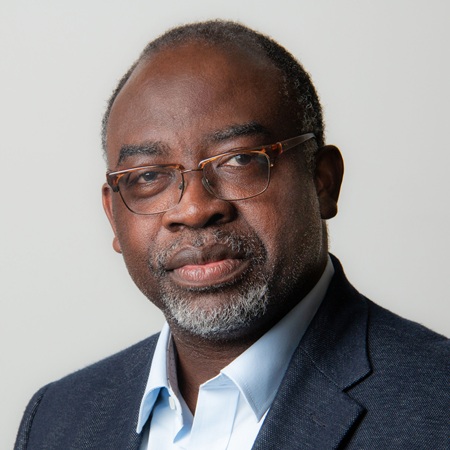
Professor Khin Than Win is a leading academic in health informatics and digital health at the University of Wollongong (UOW), holding appointments as Professor in the School of Computing and Information Technology, Head of Postgraduate Studies, and Deputy Head (Research). She also serves as Academic Program Director for UOW's Master of Health Informatics and Graduate Certificate in Health Analytics programs. Her research focuses on applying information technology to healthcare, particularly in behavior change support systems, persuasive technology, and ethical AI applications. She has supervised over 20 PhD students and holds leadership roles including Deputy Chair of UOW's Health and Medical Research Ethics Committee, and membership in international committees like the Persuasive Technology Steering Committee. Education: MBBS from Rangoon University, Master's and PhD in IT from Assumption University (Bangkok) and UOW (Australia) Research Interests: Health data analytics, AI in healthcare, privacy/security of health systems Leadership: Program/General Chair roles at ACIS and Persuasive Technology conferences Awards: Best Paper Awards (2023, 2018) Her extensive funding portfolio includes ARC grants and NHMRC projects, totaling over 24 funded initiatives. Current research explores blockchain in medical passports, AI ethics, and culturally tailored health interventions.
Lorrie Faith Cranor is the Director and Bosch Distinguished Professor in Security and Privacy Technologies at the CyLab Security and Privacy Institute, and the FORE Systems University Professor of Computer Science and Engineering and Public Policy at Carnegie Mellon University. She also directs the CyLab Usable Privacy and Security Laboratory (CUPS) and co-directs the MSIT-Privacy Engineering master’s program. She previously served as Chief Technologist at the U.S. Federal Trade Commission and is a co-founder of Wombat Security Technologies. Carnegie Mellon University – CyLab Security and Privacy Institute School of Computer Science – Department of Computer Science College of Engineering – Department of Engineering and Public Policy PhD Program in Societal Computing Human-Computer Interaction Institute (affiliate) Heinz College (affiliate) Dr. Cranor’s research centers on usable privacy and security, privacy engineering, and technology policy. Her work spans authentication systems, privacy policies, IoT security, and human behavior in digital environments. She has pioneered research on password usability, privacy labels (e.g., 'nutrition labels' for privacy), and privacy decision-making. Her interdisciplinary approach integrates computer science, public policy, and behavioral science to create systems that are both secure and user-friendly. Her recent publications reflect a strong focus on privacy interfaces, consent mechanisms, IoT security labels, and user comprehension of digital privacy. Trends include evaluating the usability of privacy controls across platforms, designing tools for developers to generate accurate privacy disclosures, and understanding user behavior in online tracking and advertising contexts. Her work frequently appears in top venues such as CHI, SOUPS, and PETS. ACM CHI Academy inductee ACM Fellow IEEE Fellow 2018 ACM CHI Social Impact Award 2018 International Association of Privacy Professionals Privacy Leadership Award 2018 IEEE Cybersecurity Award for Practice Alumni Achievement Award, McKelvey School of Engineering Top 100 Innovator under 35, Technology Review Dr. Cranor has advised numerous PhD students in interdisciplinary programs including Societal Computing, Engineering and Public Policy, and Human-Computer Interaction. Her research has been supported by grants from the National Science Foundation, DARPA, and industry partners. She serves on the boards of the Computing Research Association, Center for Democracy and Technology, and Electronic Privacy Information Center. She is a frequent media commentator on privacy and security issues. She leads the CyLab Usable Privacy and Security Laboratory (CUPS), a multidisciplinary research group that includes faculty and students from computer science, policy, and HCI. The lab focuses on making privacy and security systems more intuitive, effective, and user-controlled. Key projects include the Usable Privacy Policy Project, privacy nutrition labels, and the Personalized Privacy Assistant Project.
Michael Goldsmith is a Senior Research Fellow at the Department of Computer Science and Worcester College, University of Oxford. He holds multiple leadership positions including Director of the Oxford Martin Programme on AI Threat Detection, Associate Director of the Cyber Security Centre, and Co-Director of the Centre for Doctoral Training in Cybersecurity. His research bridges formal methods, concurrency theory, and practical cybersecurity applications. Goldsmith's research focuses on cybersecurity analytics including threat detection, risk management, and trust frameworks. He pioneered automated cryptoprotocol analysis and investigates multidisciplinary projects spanning mathematical models to socio-technical systems. His core interests include formal verification, AI threat landscapes, privacy architectures, and security protocol design. Analysis of his recent publications reveals strong emphasis on practical cybersecurity challenges: 63% focus on threat detection (especially insider threats), 22% on trust/risk frameworks, and 15% on formal methods applications. His work consistently integrates technical security mechanisms with human factors and organizational contexts. He currently advises Ahmed Salman and has supervised 10+ students including Mary Bispham, Rodrigo Carvalho, and Elizabeth Phillips. His research teams collaborate on projects funded by Technology Strategy Board, government agencies, and industry partners. Goldsmith leads the Oxford Martin Programme on AI Threat Detection and co-directs the Centre for Doctoral Training in Cybersecurity. His research group develops tools for security visualization (CyberVis), trust metrics, and identity management frameworks.
Ivan Flechais is an Associate Professor in Software Engineering at the Department of Computer Science, University of Oxford. His work focuses on the intersection of security engineering and human factors, developing approaches that balance technical security requirements with usability considerations in real-world contexts. Dr. Flechais earned his BSc and PhD in Computer Science from University College London. He holds dual French-British nationality and was educated in France until university level. His academic journey reflects an international perspective that informs his research on security systems across different cultural contexts. Flechais's research centers on developing methods for creating secure systems that account for real-world usability constraints. His work addresses the complex challenge where security competes with other system requirements like functionality, usability, and efficiency. He is particularly known for developing the AEGIS design methodology, which provides a cost-effective approach to security design that incorporates usability considerations. His current research explores socio-organizational factors in secure systems design, with recent work focusing on smart home security and privacy, remote work security challenges, and the intersection of security culture with technical implementation. His publication record shows a strong trajectory in usable security research, with recent work (2020-2024) increasingly focused on smart home environments, privacy in domestic settings, and the security challenges of remote work. His research demonstrates consistent attention to the human element in security systems, examining how users interact with security mechanisms in real-world contexts across different cultural settings and technological domains. Smart home security and privacy challenges User experience of security mechanisms Socio-organizational aspects of security implementation Cross-cultural security and privacy considerations Security for distributed and remote work environments Dr. Flechais has supervised numerous PhD and Master's students, including Sarah Alromaih, Varad Vishwarupe, George Chalhoub, and Martin J. Kraemer, among others. His supervision work often focuses on the practical application of security principles in emerging technologies, with students frequently examining security challenges in smart homes, IoT devices, and remote work contexts. His research has been supported through various projects including webinos and Sponstaneous Security, which address security challenges in distributed mobile applications and ad-hoc network environments.
Kambiz Ghazinour is a Professor and Chair of the Department of Cybersecurity at SUNY Canton, where he directs the Advanced Information Security and Privacy (AISP) Lab. He holds a PhD in Computer Science from the University of Calgary (2012) and a Postdoctoral Fellowship from the University of Ottawa and Children's Hospital of Eastern Ontario (2014). Previously, he served as an Assistant Professor at Kent State University (2015-2019) and earned a Master's in High Performance Scientific Computing from the University of New Brunswick (2007). Research Focus: Data Security and Privacy, Privacy Enhancing Technologies, Usable Security, Healthcare Systems, and Social Media. Key Projects: DigitalPASS—patented simulation-based privacy education tool for social media safety. His recent publications span Cybersecurity , Deep Learning , and Health Informatics , including works on cryptocurrency price prediction, Alzheimer's detection via eye tracking, and privacy-preserving surveillance. He has received multiple teaching awards such as the Best Teaching Award at the University of Calgary (2008). Faculty Recognition Award, Kent State University (2015, 2016) University Teaching Certificate (2009) Dr. Ghazinour's teaching portfolio includes graduate courses in Data Mining, Digital Forensics, Cryptography, and undergraduate instruction in cybersecurity fundamentals and programming.
Sauvik Das is an Associate Professor at Carnegie Mellon University's Human-Computer Interaction Institute (HCII), directing the SPUD Lab. His research focuses on the intersection of HCI, AI, and cybersecurity, emphasizing user agency over personal data online. He previously held roles at Georgia Tech and co-founded FuguUX, an early-stage startup improving web usability. Key research areas include socially-aware cybersecurity, privacy collective action, and physically-intuitive privacy interfaces. Notable contributions include work on seed phrase management for cryptocurrency users, anti-surveillance RFID systems, and tools like Purpose Mode to combat social media distractions. His work has received accolades such as a CHI Best Paper (2024) and a USENIX Security Distinguished Paper (2024). He has secured grants from NSF, CMU, and industry partners, and his research is covered in outlets like The Atlantic and Dark Reading. Current projects include designing subversive AI systems against surveillance, exploring ethical agent simulations, and advancing privacy governance through collective action frameworks.
Mauro Conti is a Full Professor at the University of Padua, Italy, where he serves as Editor-in-chief of IEEE TIFS, UniPD Academic Advisor for Entrepreneurship Development, Study Program Coordinator of the MSc degree in Cybersecurity, Head of the SPRITZ Security and Privacy Research Group, and Director of the UniPD node of CINI Cybersecurity National Lab. He also maintains affiliations with TU Delft (NL) and the University of Washington (USA). Additionally, he is the CEO and co-founder of CHISITO and co-founder of DYALOGHI. His research focuses on security and privacy for wireless resource-constrained mobile devices (WSNs, RFIDs, and smartphones), computer system security, computer forensics, access control, and distributed and networked systems. Professor Conti has published extensively in top security venues including ACM CCS, IEEE S&P, NDSS, and USENIX Security, with recent work covering topics such as battery authentication, federated learning privacy, private set intersections, USB peripheral fingerprinting, and ATM PIN inference. He has received numerous prestigious awards including IEEE Fellow, Young Academy of Europe Fellow, EU Marie Curie Fellow, and DAAD Fellow. Professor Conti has advised over 100 students at various levels including PhD, MSc, and BSc, many of whom have gone on to successful careers in academia and industry. His research has been supported by multiple European Commission projects, university grants, and industry collaborations with companies like Cisco and Intel.
Jon M. Peha is a Full Professor in the Department of Engineering and Public Policy and the Department of Electrical and Computer Engineering at Carnegie Mellon University's College of Engineering. He serves as Founder and Director of the Center for Executive Education in Technology Policy (CEE-TP) and maintains affiliations with the CyLab Security and Privacy Institute and the Information Networking Institute. His career uniquely bridges government service (as FCC Chief Technologist, White House OSTP Assistant Director, and congressional advisor), industry leadership (as CTO for three tech startups), and academic research. Education: Ph.D. in Electrical Engineering, Stanford University (1991) M.S. in Electrical Engineering, Stanford University (1986) B.S. in Electrical Engineering and Computer Science, Brown University (1984) Peha's research spans the technical and policy dimensions of information networks, with particular focus on spectrum management, broadband Internet architecture, wireless communications, cybersecurity, and communications for emergency response. His work integrates engineering principles with economic and regulatory analysis to address real-world challenges in telecommunications infrastructure. Current projects examine connected vehicle communications, spectrum sharing models, and consumer-centric broadband labeling systems that emerged from his large-scale user studies. His research publications demonstrate consistent leadership in both technical innovation and policy analysis, with recent work addressing satellite interference mitigation, V2X communications, and pandemic-era internet performance. The breadth of his scholarship reflects his unique position at the intersection of engineering practice and policy formulation. Scientific Awards: IEEE Fellow AAAS Fellow FCC Excellence in Engineering Award IEEE Communications Society TCCN Publication Award Brown Engineering Medal AAAS Featured Science and Technology Policy Fellow (40@40) Peha actively engages with policymakers through congressional testimony, FCC consultation, and White House advisory roles. His government service has directly informed his academic work on spectrum policy, network neutrality, and public safety communications. He has supervised numerous graduate students across EPP, ECE, and INI programs, with research spanning vehicular networks, spectrum sharing, and emergency communications systems. As Director of CEE-TP, he leads executive education initiatives that bridge technical expertise and policy decision-making. His work with CyLab focuses on cybersecurity and privacy challenges in broadband systems and connected vehicles. Current projects include developing cost-effective spectrum sharing models for intelligent transportation systems and analyzing the economic implications of multi-network access architectures in 5G networks.
Pardis Emami-Naeini is an Assistant Professor of Computer Science at Duke University, with joint appointments in the Sanford School of Public Policy and the Department of Electrical and Computer Engineering. She serves as the Director of the Duke Interdisciplinary Security, Privacy, and Interaction Research (InSPIre) lab and is a Duke Science and Technology Scholar. Her interdisciplinary work bridges computer science, public policy, and electrical engineering, with a focus on developing usable privacy and security solutions that empower individuals from diverse sociodemographic backgrounds. Dr. Emami-Naeini earned her Ph.D. in Computer Science from Carnegie Mellon University in 2020, followed by postdoctoral research at the University of Washington (2020-2022). Her research sits at the intersection of security, privacy, and human-computer interaction, with particular expertise in IoT security, technology-enabled abuse, reproductive health privacy, and smart city security. She has published extensively at flagship venues including IEEE S&P, CHI, CSCW, and SOUPS, with her work covered by major media outlets such as Wired and The Wall Street Journal. Her recent publications reveal a clear trajectory toward examining the human dimensions of security and privacy in emerging technologies, from LLM chatbots for mental health to social robots and period-tracking apps in the post-Roe v. Wade landscape. Her work consistently emphasizes the need for privacy-aware design that accounts for diverse user needs and contexts, particularly for vulnerable populations. Google Systems and ML Research Gift Award (2025) Google AI Research Scholar Program Award (2024) Top 5% Instructor in Duke Trinity College (2024) ORAU Ralph E. Powe Junior Faculty Enhancement Award (2023) Duke Science and Technology Scholar (2022) IEEE S&P paper highlighted in IEEE Security and Privacy Magazine (2021) CyLab Presidential Fellowship (2019) Dr. Emami-Naeini actively mentors several Ph.D. students including Jabari Kwesi, Jessie Cao, and Hiba Laabadli, as well as undergraduate and master's students. Her research has influenced key organizations including the National Institute of Standards and Technology (NIST), Consumer Reports, and the World Economic Forum in creating usable security and privacy labels for smart devices. She serves on numerous program committees including USENIX Security and CHI, and has participated in NSF grant review panels, demonstrating her growing leadership in the security and privacy community. Her InSPIre lab conducts user-centered research to uncover security and privacy needs of diverse stakeholders, with a particular focus on marginalized communities. The lab's work spans multiple domains including intimate partner violence, reproductive health, virtual reality, and smart cities, always with a strong emphasis on translating research findings into practical tools and policy recommendations.
Dr. Jiahong Chen is a Lecturer in Law at the University of Sheffield School of Law . His research focuses on the intersection of law and technology, particularly Data Protection Law , Cybersecurity Law , Law and AI , and Internet Regulation . He serves as Departmental EDI Director and Deputy LLM Programme Director. PhD, University of Edinburgh LLM, China University of Political Science and Law LLB, China University of Political Science and Law His research examines regulatory challenges in smart homes , large language models , and data ethics . Current projects include the ESRC-funded "The Internet of Tactical Engagement (IoTE)" and RAI UK's "Addressing Socio-technical Limitations of Large Language Models" . Publications span GDPR interpretation, health data regulation, and smart device accountability. He teaches modules on Information Technology Law , Data Privacy and Governance , and Consumer Law .
Yasemin Acar is a Professor of Computer Science at Paderborn University in Germany and holds a concurrent appointment as Research Assistant Professor at The George Washington University in Washington, DC. She has previously co-led the GWUSec lab at GWU and directed the Human Factors in Security and Privacy Group at the Max Planck Institute for Security and Privacy in Bochum, Germany. Her research integrates human-computer interaction with cybersecurity , focusing on usable security and privacy , password management , web security , and human factors in secure software development . By studying how real users interact with security mechanisms, she aims to design systems that are both secure and intuitive. Awards and honors recognizing her impact include: Best Student Paper Award , IEEE Symposium on Security and Privacy 2021, for "They Would do Better if They Worked Together: The Case of Interaction Problems Between Password Managers and Websites". Best Scientific Cybersecurity Paper 2016 , awarded by the NSA, for "You Get Where You're Looking For: The Impact of Information Sources on Code Security". John Karat Usable Security and Privacy Student Research Award 2018 . Prof. Acar welcomes collaboration inquiries and research-related correspondence, encouraging interested scholars and students to reach out.
Steffi Haag is a Professor of Digital Innovation and Entrepreneurship at the Institute of Computer Science , Heinrich Heine University Düsseldorf (HHU) . She bridges the Faculty of Mathematics and Natural Sciences and Faculty of Business Administration and Economics , collaborating with the Center for Entrepreneurship Düsseldorf (CEDUS) to inspire tech startups. Her research focuses on sustainable information systems, digital experiences, and business models. Steffi Haag’s research integrates Shadow IT , Usable Cybersecurity , and Digital Idea Management . Her work emphasizes theoretical , quantitative , qualitative , and mixed-methods research , including experimental and survey methodologies. Steffi Haag’s publications (2018–2024) span Information Systems , Cybersecurity , Digital Twins , and Sustainable Design . Common themes include Shadow IT dynamics , user behavior in security , and innovation management . Hermann Gutmann Award for special scientific achievements (2023) Schöller Fellow (2020) HMD Best Paper Award (2018) Research Award in Data Protection and Data Security (2017) Dissertation Prize (2017) Steffi Haag has secured grants such as the TU Darmstadt Postdoctoral Fellowship for Female Researchers (2016–2018) and Deloitte Foundation Fellowship (2009–2011). She actively moderates conferences and serves as Associate Editor of Business & Information Systems Engineering .
Yang Wang is a Professor of Information Science and Computer Science (courtesy) at the University of Illinois at Urbana-Champaign (UIUC), where he co-directs the SALT lab and is part of the Interactive Computing group and Security and Privacy Research at Illinois (SPR@I). He holds affiliations with the Institute of Software Research (ISR) at UC Irvine and advises Conviva. His research spans AI governance, privacy, security, and inclusive technologies, focusing on marginalized populations such as people with disabilities and non-Western communities. Education: Ph.D. from the University of California, Irvine (UCI), under advisors Dr. Alfred Kobsa, Dr. André van der Hoek, and Dr. Gene Tsudik. Previous roles include Assistant Professor at Syracuse University and Research Scientist at Carnegie Mellon University’s CyLab. He has collaborated with institutions like Alcatel-Lucent Bell Labs, Intel Research, and Tsinghua University. Research interests include AI safety for children (aisafety4kids.org), inclusive privacy mechanisms, accessible authentication for visually impaired users, and policy implications of AI. Notable projects include Inclusive.AI (funded by OpenAI), privacy in smart homes, and drone privacy studies. Awards and grants include NSF SaTC awards, NSF CAREER, and industry partnerships with Meta/Facebook, Google, and OpenAI. His work has been featured in outlets like the New York Times and Wall Street Journal. Current PhD advisees include Smirity Kaushik and Yaman Yu, with notable alumni such as Dr. Yaxing Yao (now at Johns Hopkins) and Dr. Tanusree Sharma (Penn State). Labs/Teams: Co-director of the SALT lab, part of SPR@I and the Interactive Computing group at UIUC. Collaborates with industry and policy bodies, including the FTC.
Sebastian Möller is a Professor at the Faculty for Electrical Engineering and Computer Science at Technical University of Berlin and leads the Speech and Language Technology research department at the German Research Center for Artificial Intelligence (DFKI) since 2017. His work bridges speech technology, natural language processing, and quality engineering, with a focus on usable security, virtual reality applications, and ethical AI. Born in 1968, studied electrical engineering at Ruhr University Bochum, Université d'Orléans, and University of Bologna Doctorate in 1999 from Ruhr University Bochum on speech quality prediction Adjunct Professor at University of Technology Sydney since 2018 His research spans speech signal processing, quality assessment of AI systems, and ethical challenges in medical AI applications. Recent work includes fairness in clinical AI decision-making, audio deepfake detection using self-supervised learning, and collaborative approaches to natural language explanation generation. All three 2025 publications reflect his focus on AI quality assessment and ethical implementation across domains: medical AI fairness, audio deepfake detection, and collaborative explanation frameworks. These works demonstrate expertise in natural language processing, speech technology, and model interpretability. Johann-Philipp-Reis-Prize (2009) Heisenberg Scholarship (2005) Lothar Cremer Prize (2003) VDE ITG Prize (2001) Geers Foundation award (1998) Möller has held leadership roles at TU Berlin including Vice Dean for Research (2015-2017) and Dean (2017-2019). He contributes to international standardization through ITU-T (since 1997) and has served in key positions at DEGA, VDE, and ISCA, including ISCA presidency (2021-2023).
Dr. Adegboyega Ojo is a Professor at the School of Public Policy and Administration (SPPA), Carleton University , holding the prestigious Canada Research Chair (Tier 1) in Governance and Artificial Intelligence since 2014. His work bridges digital government , AI governance , and smart city development , with a focus on public sector innovation and policy analytics . Research Interests Smart Cities and Urban Digital Infrastructure Open Government Data and Transparency Blockchain Applications in Public Administration AI Ethics and Algorithmic Governance Electronic Participation and Citizen Engagement Publication Trends : His research emphasizes interdisciplinary approaches to digital governance, often involving data-driven policy analysis , smart city frameworks , and open data platform design . Collaborations span institutions in Ireland, Poland, and the U.S., with citations exceeding 5,200. Scientific Awards : Canada Research Chair in Governance and AI (Tier 1) Labs & Teams : Collaborates with the Insight Centre for Data Analytics (Ireland), Delft University of Technology , and United Nations University on projects like OpenGovIntelligence and BOLD (Big and Open Linked Data).