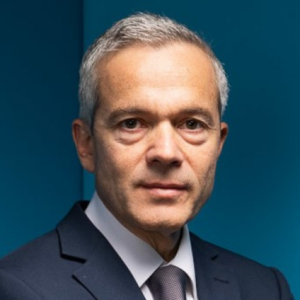
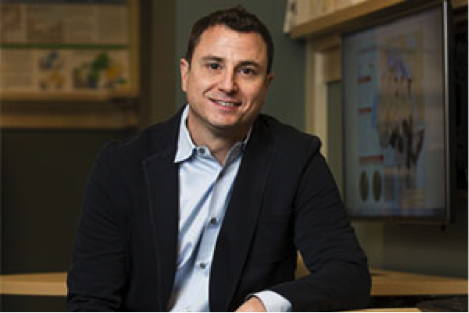
Prof. Dr.-Ing. André Nitze is a faculty member at the Brandenburg University of Technology in the Department of Economics . His research focuses on Internet of Things (IoT) , Digital Business Models , Software Architectures , Cloud Computing , Mobile Computing , and Predictive Analytics . He leads research projects on municipal LoRaWAN infrastructure, rural on-demand transport systems, and user-centered digitalization for sustainable development. Area of Expertise: IoT Applications, Software Engineering, Digital Transformation Current Research: Sustainable Municipal LoRaWAN, Rural Mobility Solutions Projects: risKI - KatKomm (2024-2026): Protocol development for disaster communication InNoWest (2023-2027): Subproject leader for digital sustainability OSLO (2023): Rural on-demand transport software architecture Awards: Best Paper Award at ICDS 2024 for work on LoRaWAN infrastructure Education & Supervision: M.Sc. and B.Sc. in Business Informatics Supervised over 15 theses including topics on GIS analysis, sensor networks, and AI applications
Toby Murray is a Professor in the School of Computing and Information Systems at the University of Melbourne, where he serves as Director of the Defence Science Institute and Co-Lead of the Computer Science Research Group. His work bridges formal methods, cybersecurity, and practical system security, with significant contributions to verified security and vulnerability detection. Murray's research focuses on building highly secure computing systems cost-effectively, with expertise in formal verification, information flow security, and vulnerability detection. His current research projects include Verisimilar (Verified, Secure Machine Learning), EDEFuzz (Detecting excessive data exposure in web applications), COVERN (Proving information flow security of concurrent programs), and Time Protection (Proving timing channel freedom for seL4). His work combines theoretical rigor with practical implementation, resulting in multiple open-source tools including SecC, Legion, and Underflow. Murray's recent publications demonstrate a consistent focus on verified security properties across diverse domains, from neural networks to concurrent systems. His work often bridges the gap between formal methods and practical security concerns, with increasing attention to machine learning security and policy implications of technical security measures. His publications span top venues in security, formal methods, and software engineering. Distinguished Paper Award at ICSE 2024 for EDEFuzz work on detecting excessive data exposure in web applications Extensive media commentary on cybersecurity issues including CrowdStrike outage analysis and social media regulation Regular contributions to The Conversation and Pursuit on cybersecurity policy matters Murray has advised numerous PhD students to completion, including Lianglu Pan (EDEFuzz), Zhiyuan Zhang, Mo Zhang, and Renlord Yang. He currently supervises multiple PhD students working on security verification, machine learning security, and web application security. His service includes being Program Chair for CSF'25, Associate Editor for IEEE Security & Privacy and ACM TOPS, and membership in IFIP's WG 1.7 and WG 2.3. His research group has developed multiple significant software tools including SecC (Verified Security for Concurrent C Programs), Legion (Principled Automatic Test Case Generation), and Underflow (Compositional Vulnerability Detection for C Programs), all available under open source licenses. Murray's work often involves discovering and reporting bugs in security analysis tools during his research, demonstrating the practical impact of his verification approaches.
Ioannis Stamelos is a Professor of Software Engineering at the School of Informatics, Aristotle University of Thessaloniki (since 2015, research/teaching staff since 1997). He serves as Director of the Postgraduate Master Course in Interactive Hardware & Software Technologies. Major Research Areas: Open Source Software, Software Effort/Quality Estimation, Agile Methods, Enterprise Information Systems Key Projects: Deep Blue/AUTH Research Hub (2018-2022), BlockAdemic (blockchain-based micro-credentials), European Commission Open Source Policy Studies Research Trends from recent publications include: Process mining in library information systems Reusability metrics for software assets Bayesian networks in software project management Impact of design patterns on gaming software defects Technical debt assessment via structural metrics Blockchain applications in supply chain management Scientific Awards: Best Paper Award at IEEE DEST’09 Best Student Paper Award at ICSR 2012 Best Paper Award at QUATIC2012 Education & Leadership: PhD in Computer Science (1988), Diploma in Electrical Engineering (1983). Led numerous EU-funded projects (IST, ERASMUS, FP7) and national initiatives (ΓΓΕΤ, ΕΠΕΑΕΚ). Supervised PhD/MSc students in software reuse, OSS quality, and agile practices.
Prof. Dr. Hartmut Heinrich is a Professor of Business Informatics at Brandenburg University of Technology's Department of Economics, where he has served since 1995 and as Dean of the Faculty of Business and Economics from 2002-2013. His career bridges academic research and industrial application in enterprise systems. His educational background includes: Diplom-Informatiker (Computer Science) from Technische Universität Berlin Dr.-Ing. (Doctor of Engineering) from Technische Universität Berlin Heinrich's research centers on ERP systems implementation , particularly SAP solutions , with significant contributions to mobile business processes , security management , and ICT adoption in SMEs . His work uniquely connects vocational education transitions with corporate workforce development, emphasizing practical applicability through industry partnerships. Current projects focus on real-time in-memory computing and cloud-based enterprise architectures. Analysis of his 15 most recent publications reveals evolving research trajectories from foundational ERP system comparisons (2000) toward cutting-edge in-memory computing (2012), consistently addressing industry pain points in system integration, mobile accessibility, and security. His editorial work on SAP ecosystems demonstrates sustained leadership in enterprise software evolution. His scientific recognition includes: Technologie-Transfer-Preis des Landes Brandenburg (2nd Prize, 2004) for mobile SAP R/3 integration with ZF Brandenburg Heinrich has supervised 62+ Master's theses (1998-2013) through partnerships with SAP, Volkswagen, and ZF Getriebe, focusing on practical ERP implementations. His grant portfolio includes BMBF-funded ANKOM (2012-2015) on vocational-to-academic transitions and Land Brandenburg's Innopunkt project (2009-2012). Industry collaborations span commsult AG (co-founded 2000), webXells GmbH, and the Berlin-Brandenburg SAP Forum (active since 2001). His innovation ecosystem includes the KomSiB Security Research Center (2008-2011) and leadership in the IHK Potsdam Innovation Expert Team since 2008, driving technology transfer between academia and regional industry.
Luis Velez Quintero is an Assistant Professor at Stockholm University within the Department of Computer and Systems Sciences (DSV) . He is affiliated with the Data Science Research Group and the Stockholm Technology & Interaction Research (STIR) group, focusing on Human–Computer Interaction. His research spans adaptive immersive systems, affective computing, and physiological signal analysis in extended reality (XR) environments. Education & Background : Holds a PhD in Computer and Systems Sciences from Stockholm University (2023), MSc in Health Informatics from Karolinska Institutet (2019), and BSc in Electronics Engineering from the National University of Colombia (2015). He has led the startup PortalSense since 2018, developing VR solutions for real estate visualization. Research Interests : Combines data science and ML with XR technologies to create context-aware systems for healthcare, education, and professional training. Key themes include: Adaptive VR/AR systems using real-time physiological and behavioral signals Biosignal integration for personalized user experiences Immersive technologies for cognitive assessment and skill development Publications : Over 20 peer-reviewed articles, including work on affective databases (AVDOS-VR), biosignal frameworks (Excite-O-Meter), and XR applications in cybersecurity education. Recent efforts explore third-person locomotion in VR and early-stage Alzheimer’s detection via spatial navigation tasks. Awards & Grants : Wallenberg Foundation Grant (2023-2025): Analyzing non-verbal communication in psychotherapy Swedish Institute Scholarship (2017-2019): Fully funded Master’s and PhD studies Seed funding for PortalSense from Fondo Emprender SENA Colombia (2022-2023) Advising & Projects : Lead researcher in projects like AVDOS-VR and CS:NO . Co-designed the Excite-O-Meter open-source plugin for real-time physiological analysis in VR. Active in industry collaborations for scalable health interventions and immersive training systems. Labs & Teams : Collaborates with multidisciplinary teams at STIR and DSV, advancing human-centered AI and adaptive XR technologies.
Professor Diomidis Spinellis is a renowned academic in Software Technology at Athens University of Economics and Business (AUEB). He specializes in software engineering practices, code quality, AI ethics, and system architecture. His work bridges theoretical advancements with practical applications in industry, emphasizing reproducibility and empirical methods. Recipient of the IEEE Computer Society's prestigious 'Distinguished Contributor Recognition,' Spinellis is the sole Greek scientist to achieve this honor. His research spans software evolution, security, and open-source ecosystems, with a focus on methodologies like refactoring, static analysis, and debugging strategies. Key research interests include AI-generated content detection, modular data analytics, and incident management systems. His studies often leverage large-scale datasets (e.g., Unix evolution, Linux supercomputing analysis) to uncover patterns in software behavior and development practices. Publications frequently address emerging technologies' societal impacts, such as energy-efficient computing and ethical AI deployment. He advocates for reproducible research through tools like the Alexandria3k framework and contributes to open-source initiatives.
Carsten Schürmann is a Professor of Theoretical Computer Science at IT University of Copenhagen, where he serves as Center Manager for the Center for Information Security and Trust. His research spans information security, cryptographic voting protocols, identity management, and digital democracy, with significant contributions to security ceremonies and formal verification of protocols. Professor, Department of Computer Science Center Manager, Center for Information Security and Trust Principal Investigator for multiple DIREC projects through 2025 Active researcher with 64 publications and 20 projects listed His research focuses on the intersection of theoretical computer science and practical security challenges, particularly in voting systems and security ceremonies. Schürmann has developed formal methods for analyzing security protocols, with emphasis on human factors in security implementations and cryptographic voting systems. His work bridges logical frameworks with real-world security applications, addressing both technical and socio-technical aspects of security. Analysis of his recent publications reveals a strong emphasis on voting security, with multiple papers on risk-limiting audits, receipt-free voting, and election integrity. His work increasingly incorporates formal logical frameworks to verify security properties, while also addressing human factors in security ceremonies. The research spans theoretical foundations in linear logic to practical applications in election systems. As Principal Investigator, Schürmann leads several major projects funded by the Innovation Fund Denmark, including DIREC initiatives focused on Capacity Building, PhD School, Voting, and Entrepreneurship (2020-2025). He has also established working groups in Adversarial AI and Machine Learning. Organized workshops on Code Scanning (2014) and Verifying Security Protocols in Tamarin (2016) Active media commentator on security issues with 311 media appearances through 2025 Principal Investigator for 7 ongoing and 13 completed research projects Schürmann directs the Center for Information Security and Trust, which serves as a hub for interdisciplinary security research connecting theoretical computer science with practical security applications. His center focuses particularly on voting systems security and security ceremonies, bringing together researchers from multiple disciplines to address complex security challenges.
Dr. Damien Masson is an Assistant Professor in Human-Computer Interaction at the Université de Montréal, affiliated with Mila (Quebec AI Institute) and IVADO. He leads the Montréal HCI group and focuses on intelligent systems, document augmentation, and interactive visualization tools. His work bridges HCI, AI, and data science to improve how humans interact with complex information. Education: PhD in Computer Science (University of Waterloo, 2023), MSc from Université de Lille (2018). His research includes systems like Chameleon (interactive documents), ChartDetective (data extraction), and Textoshop (AI-based text editing). He has published at top venues like CHI and UIST, winning multiple awards including the 2023 Bill Buxton Dissertation Award. He actively mentors students across PhD/master's/undergraduate levels and develops open-source tools like Statslator.js and DirectGPT. His lab explores future directions in adaptive interfaces, multimodal interaction, and AI-driven document systems.
Patrick Florance is the Director of Research Technology at Tufts University, where he leads Tufts Technology Services’ support for High-Performance Computing, research storage, scientific instrumentation, and data science. He is concurrently an affiliate of the Department of Urban & Environmental Policy & Planning in the School of Arts and Sciences and a senior instructor at the Fletcher School of Law and Diplomacy. Education Bachelor of Arts, University of Oregon, Eugene, United States Master of Arts, Geography – Geographic Information Science, City University of New York – Hunter College, New York, United States Research & Scholarly Interests Florance’s scholarship and service converge on the design, deployment, and governance of open-source geospatial infrastructures. His work encompasses: Global and humanitarian mapping, crisis mapping, and geospatial support for disaster response Development of the Open Geoportal (OGP) Federation — a Sloan-funded collaborative platform for sharing geospatial data across universities 3D GIS, remote sensing, UAV/drone workflows, and spatial data infrastructures for urban modeling Digital humanities, natural language processing, and data-mining approaches to historical and textual geodata Geospatial pedagogy, open-data advocacy, and capacity-building in the developing world Publications & Intellectual Trajectory Across more than two decades, Florance has authored or co-authored scholarly articles, software reviews, and special journal issues that advance both technical architectures and sociotechnical practices for geospatial information curation. His writings trace a trajectory from foundational concerns of GIS collection development in academic libraries to contemporary challenges of real-time, open, and ethical crisis mapping. Scientific Awards & Grants Alfred P. Sloan Foundation – Open Geoportal Cloud (OGP) Federation (US$ grant, 2013) University Service & Leadership Patrick chairs or serves on multiple university committees driving data-intensive research strategy: Data Analytics Steering Committee, School of Arts & Sciences Digital Humanities Steering Committee, Tufts University Data-Intensive Scholarship Center (DISC) Advisory Committee on Infrastructure and Services (ACIS) GIS Steering Committee Research Data Services Committee Labs, Teams & Infrastructure He directs the Tufts Data Lab , a campus hub for GIS, statistics, visualization, and machine-learning services, and oversees the Open Geoportal Project , a multi-institutional consortium providing federated discovery and access to geospatial data sets. His team supports thousands of researchers university-wide with high-performance compute clusters, research storage arrays, and discipline-specific scientific instrumentation.
Anya Helene Bagge is an Associate Professor in the Department of Informatics at the University of Bergen, where she is a researcher at the Bergen Language Design Laboratory. Her work focuses on programming languages and software language engineering, with strong ties to education and tool development. Research Interests: Programming language design and implementation Software language engineering Semantics of programming languages Domain-specific languages and language extensions Program transformation using Rascal, MPL, and Stratego/XT Aspect-oriented programming, especially Domain-Specific Aspect Languages Her recent publications reflect a consistent focus on software language engineering, refactoring, microservice security, and programming education. Themes across her work include language design, program analysis, and the development of educational tools and methodologies. Scientific Awards: The Realist Committee's Teaching Award 2016/17 Lecturer of the Year in Computer Science (Spring 2015) Anya Bagge actively supervises students, including PhD and Master’s candidates such as Tero Hasu, Kristoffer Haugsbakk, and Nina Andersen. She has been involved in numerous academic activities, including organizing the OOPSLE workshop and serving on program committees for conferences like SLE, HILT, and WCRE. She has also taught core courses including INF101, INF225, and INF328, demonstrating a strong commitment to both research and teaching. Labs and Teams: She is affiliated with the Bergen Language Design Laboratory , collaborating with researchers such as Magne Haveraaen, Eva Burrows, and Tero Hasu.
Lizbeth Olivia Escobedo Bravo is an Assistant Professor in the Faculty of Computer Science at Dalhousie University, where she conducts research at the intersection of Human-Computer Interaction, Ubiquitous Computing, and Cognitive Assistive Technology. Her work focuses on developing and evaluating technology to improve the quality of life for vulnerable populations, particularly children with autism, pregnant women, and individuals with cognitive disabilities. Her educational background includes a BS and PhD from Universidad Autónoma de Baja California (UABC), an MSc from Centro de Investigación Científica y de Educación Superior de Ensenada (CICESE), and a postdoctoral fellowship in Biomedical Informatics at UC San Diego. BS – Universidad Autónoma de Baja California (UABC) PhD – Universidad Autónoma de Baja California (UABC) MSc – Centro de Investigación Científica y de Educación Superior de Ensenada (CICESE) Postdoc – University of California, San Diego (Biomedical Informatics) Her research interests include Human-Computer Interaction (HCI), Ubiquitous Computing, Cognitive Assistive Technology (CAT), Mobile Technologies, Accessible Computing, and Children-Computer Interaction. She emphasizes interdisciplinary collaboration across computer science, psychology, education, medicine, and design. The 15 most recent articles reflect a consistent focus on assistive technologies for neurodevelopmental and cognitive challenges. Key themes include early detection of developmental delays (ActEarly), handwriting assessment (PenSando), autism support (MOBIS, MOSOCO, FarmerKeeper, SATORI), maternal health (PREGO), and ADHD assistance (SmarTasko). These works span mobile, augmented reality, and sensor-based systems, with strong emphasis on usability, accessibility, and real-world deployment across diverse cultural and economic contexts. Scientific contributions and recognitions include: Active research leadership in multiple assistive technology projects Interdisciplinary collaborations with institutions such as Georgia Tech, UC Irvine, UC San Diego, MSU, Chapman University, and CREATE-NET Industry partnerships with IMSS, Pasitos A.C., ClubLia Kinder, EdNinja Inc., and others Focus on technology for social good and inclusive design She is actively involved in mentoring and advising, currently recruiting PhD and Master’s students for her research group. Her work has been supported through academic and industry collaborations, though specific grants are not listed. She previously worked in the software industry as a project manager and COO, bringing leadership experience to her academic role. Lizbeth leads a dynamic research lab focused on developing and deploying accessible, user-centered technologies. Her team works on projects such as ActEarly, PenSando, and SATORI, often involving cross-border studies and community engagement. The lab emphasizes real-world impact, ethical design, and scalability of solutions, particularly for underserved populations in Latin America and North America.
Rafael Pereira Pires is a Lecturer and researcher at École polytechnique fédérale de Lausanne (EPFL) , affiliated with the Scalable Computing Systems Laboratory (SACS) and IC-SIN units. His research focuses on systems solutions at the intersection of privacy, efficiency, and machine learning in distributed environments. Education PhD in Computer Science (2019, University of Neuchâtel, Switzerland) Professional Master in Mechatronics (2014, IFSC, Brazil) Master in Computer Science (2009, UFSC, Brazil) His work explores privacy-preserving decentralized learning , trusted execution environments , and resource-efficient distributed systems . Recent publications address techniques like model fragmentation, approximate caching, and secure aggregation in decentralized learning contexts. Key trends in his 2023-2025 publications include: Advancements in federated learning and Mixture-of-Experts (MoE) models Applications of Trusted Execution Environments (SGX) to decentralized systems Optimization techniques for energy-aware and low-cost learning Scientific recognition includes the 2019 Léon Du Pasquier et Louis Perrier award for his PhD thesis. He has contributed to open-source tools like DecentralizePy and served as reviewer/PC member for top conferences including NeurIPS , Middleware , and ICDCS .
Prof. Dr. Stefan Brönnimann serves as a Professor and Unit Leader of Climatology at the Institute of Geography, University of Bern. His extensive research portfolio spans historical climatology, climate dynamics, and atmospheric circulation reconstruction, with particular focus on the past 400 years. He plays a leadership role in major international climate initiatives including the IPCC assessment reports and various climate reanalysis projects. Brönnimann's research centers on reconstructing historical weather and climate patterns through the innovative combination of early instrumental data, proxy records, and climate models. His work examines large-scale climate variability, interannual-to-decadal atmospheric circulation patterns, volcanic eruption effects on climate, and climate-society interactions. His methodologies often involve transforming historical documents into usable climate datasets and applying advanced machine learning techniques to weather reconstruction challenges. Recent publications reveal a strong emphasis on European climate patterns, hydroclimate extremes, and the development of novel datasets and tools for climate research across high-impact journals in climate science, paleoclimatology, and climate informatics. Notable scientific achievements include: Lead author for Chapter 2 of the IPCC Working Group I 5th Assessment Report President of the Commission 'Atmospheric Chemistry and Physics' (ACP) of sc.nat Editorial leadership for multiple prestigious journals including Meteorologische Zeitschrift, Climate of the Past, and Geographica Bernensia Leadership roles at the Oeschger Centre for Climate Change Research Active participation in international initiatives like the Twentieth Century Reanalysis Project and Atmospheric Circulation Reconstructions over the Earth (ACRE) Brönnimann has secured substantial funding through numerous national and international projects including SNF, NCCR Climate, EU FP-7, HORIZON2020, COST, and ERAnet.RUS. He has organized multiple international workshops on weather and climate extremes, atmospheric circulation variability, and historical climate events like the Tambora eruption. His work connects closely with the Oeschger Centre for Climate Change Research at the University of Bern, where he leads Work Package 2 and serves on the Steering Group, demonstrating his significant institutional leadership within Bern's climate research community.
John Paparrizos is an Assistant Professor of Computer Science and Engineering at The Ohio State University's College of Engineering, where he directs The DATUM Lab (Data Analytics, Understanding, Mining, and Management Lab). He maintains an adjunct affiliation with the School of Informatics at Aristotle University of Thessaloniki. His research spans databases, data science, machine learning, and artificial intelligence , with focus areas including: Time-series analysis (clustering, anomaly detection) Scalable data mining for structured/unstructured data Adaptive algorithms for resource-constrained environments Foundational technologies for data-intensive applications His work addresses real-world challenges across relational, time-series, multimedia, text, graph, web, and IoT data domains. Notable recognition includes: 2025 ACM SIGMOD Test-of-Time Award for k-Shape time-series clustering 2023 IEEE TCDE Rising Star Award ACM SIGMOD Research Highlight Award NetApp Faculty Award His research has been featured in New York Times (front page), Washington Post , Forbes , and adopted by Fortune 500 companies (Exelon, Nokia) and the European Space Agency. He actively serves on program committees for premier conferences including ACM SIGMOD, VLDB, IEEE ICDE, ACM SIGKDD, and NeurIPS. His open-source tools have exceeded 100,000 downloads and are integrated into academic curricula at Brown, Columbia, Purdue, and University of Chicago.
Yuvraj Agarwal is a Professor at Carnegie Mellon University's School of Computer Science, where he founded and directs the SYNERGY Lab. He previously served as Executive Director of the NSF Expeditions in Variability (2010-2013) and was affiliated with UCSD's Microelectronic Embedded Systems Lab (MESL) and Systems and Networking Group (SysNet). Research Themes : Systems & Networking, Embedded Systems, Mobile Computing, with focus on energy efficiency and privacy. Leadership : Director of SYNERGY Lab, Co-PI in NSF CoDec expedition, Brick Consortium member. His research bridges hardware-software systems with societal impact, including smart building energy optimization using occupancy sensing, mobile privacy tools like ProtectMyPrivacy, and IoT security labeling frameworks . Recent work includes the Computational Decarbonization NSF expedition ($12M over 5 years) to reduce carbon footprints in societal infrastructure. Scientific Awards : 2024: Promoted to Full Professor 2012: UCSD Outstanding Faculty Award for Sustainability 2016: Google Faculty Research Award Advising : Guided 11 PhD students to completion (now in academia/startups) and mentored 10+ MS/undergraduate researchers. Current advisees include 4 PhD students in Carnegie Mellon's Societal Computing program. Grants : NSF Expeditions in Variability (2010-2013), NSF #1564009 (2016), NSF #1526237 (2015), NSF #1513957 (2015), DARPA BRANDEIS program (2015), and Google research funding (2015). Labs & Collaborations : SYNERGY Lab at CMU focusing on IoT and smart campus systems. Key collaborations with the Brick Consortium (Johnson Controls, Schneider Electric), Microsoft Research, Intel Research, and academic institutions including UCSD and UMass Amherst.