David Lo is an OUB Chair Professor and Director at the Information Systems and Technology Cluster , School of Computing and Information Systems , Singapore Management University . His research spans the intersection of Software Engineering , Cybersecurity , and Data Science , focusing on improving software quality, security, and developer productivity through socio-technical analysis and artifact evaluation. He has over 15 international Scientific Awards , including ACM Fellow (2023), IEEE Fellow (2022), and ASE Fellow (2021). His work has been funded by NRF , MOE , NCR , and AI Singapore . David leads the Software Analytics Research (SOAR) group and has mentored numerous PhD students , many of whom hold faculty positions or work in tech giants like Microsoft. He actively engages in service , chairing conferences like ICSE 2025 and ESEC/FSE 2024 , and serves on editorial boards of journals such as IEEE Transactions on Software Engineering . His recent keynotes address critical topics like AI for safer systems and LLM applications in software architecture , reflecting his vision for integrating AI into software engineering practices.
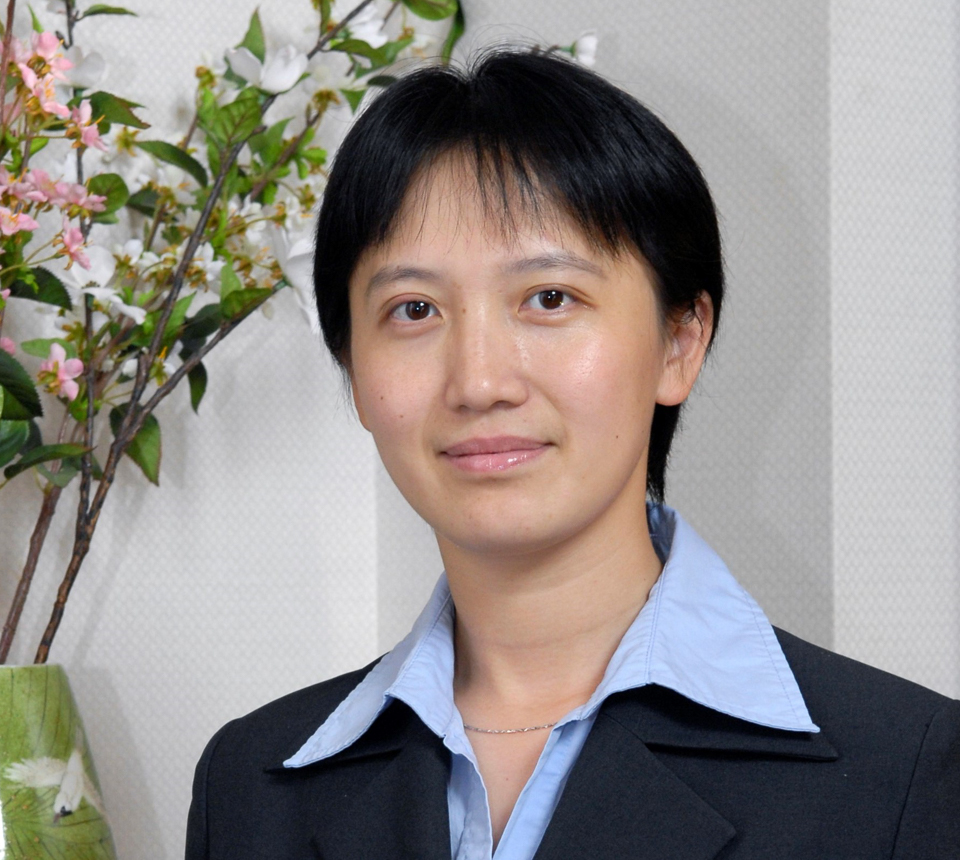
Dr. Yurong Yao serves as Chair and Professor of Information Systems and Operations Management at Suffolk University. Her research focuses on information system adoption, technology innovation, electronic government, and healthcare IT. She has over 20 years of industry experience with SAP China and actively integrates real-world insights into teaching. Education: PhD and MS from Louisiana State University; BS and MS from Shanghai Jiao Tong University. Research interests include enterprise systems, business intelligence, and the intersection of technology with political and healthcare sectors. She explores topics like blockchain applications in supply chains, digital participation in e-government, and hospital IT innovation. Her work appears in journals like European Journal of Information Systems and Communications of the AIS. Professional roles include Board Member and Director of Communication for the New England Association for Information Systems (NEAIS). Teaching responsibilities span Management Information Systems, ERP systems, and Business Intelligence courses.
Vincenzo Deufemia is a Full Professor at the Department of Computer Science of the University of Salerno . His work focuses on cybersecurity, IoT security, data analytics, machine learning, and end-user development in smart environments. He has been actively involved in interdisciplinary research spanning database systems, human-computer interaction, and ethical AI applications. Key research interests include: Automation rule security and coherence Unsupervised learning for IoT interference detection End-user customization of smart systems Functional dependency discovery in data streams Social media analysis for geopolitical perception studies Recent work has explored leveraging generative AI for ethical phishing defense mechanisms and developing tools like EFESTO-5W for non-expert security rule specification. His contributions also include visualization frameworks for dependency analysis and spatial integrity constraints verification. No formal awards are explicitly listed in the provided material, though his extensive publication record indicates significant contributions. His research has practical applications in both academic and industrial contexts, particularly in improving end-user security awareness and system usability in smart environments.
Aditya Johri is a tenured Professor of Information Sciences & Technology in the College of Engineering & Computing at George Mason University (GMU). He directs the Technocritical Research on AI, Learning & Society Lab (trailsLAB) and is an affiliate faculty in multiple departments, including Computer Science and Civil Engineering. His research focuses on how technology shapes learning in formal and informal settings, with a strong emphasis on AI ethics, algorithms, and data ethics in engineering education. Affiliations: School of Computing, College of Engineering & Computing; GMU's Institute for Digital InnovAtion (IDIA). Educational Background: PhD (Learning Sciences & Technology Design, Stanford University), MS (Georgia Tech), MA (University of Georgia), BE (Delhi College of Engineering). Research Contributions: Editor of the International Handbook of Engineering Education Research (2023) and co-editor of the Cambridge Handbook of Engineering Education Research (2014), which won a 2015 Best Book Award. His work is funded by NSF grants, including an Early CAREER Award and projects on AI ethics and generative AI in education. Awards & Recognition: 2022 University Teaching Excellence Award (High Impact Teaching), Fulbright-Nokia Distinguished Chair (2021–2022), and multiple best paper awards. He also led the NSF-funded project creating role-play case studies for AI ethics education. Grants: Over $20M in NSF/USDA funding for the AI Institute for Resilient Agriculture (AIIRA), and leadership in projects like COALESCE (context-aware cyber-agricultural systems). Advising & Mentorship: Supervised over 20 PhD and MS students, with notable advisees including Dr. Yinan Sun (Postdoc) and graduates like Dr. Hon Jie Teo (CUNY). His mentorship earned the 2022 OSCAR Mentoring Excellence Award. Labs & Collaborations: trailsLAB explores AI ethics, learning technologies, and societal impacts. Collaborations include Aalto University (Finland), Technical University of Munich, and the Leverhulme Center for the Future of Intelligence (Cambridge).
Charlotte Collins is an Assistant Professor at Coventry University's School of Mechanical Aerospace & Automotive, with over 9 years of experience at the university. She holds a Senior Fellowship of the Higher Education Academy (HEA) and is currently completing her PhD in Human Factors of Active Stick Technology. Her roles include Associate Head of Department and Course Director for the BEng Aerospace Technology program. Education: BEng in Aerospace Technology (2009), MScR in Flight Simulation of Micro Air Vehicles (2010), PGCert in Higher Education (2010), and ongoing PhD by Portfolio. Research focuses on human factors in aviation, flight deck systems, and human-machine interaction. Projects include an Innovate UK grant ('Open Flight Deck') and collaborations with industry partners like Bugatti Trust and Bertrandt. Key interests include workload evaluation, interface design, and simulation analysis. She has contributed to over 5 peer-reviewed publications, with recent work emphasizing haptic augmentation and gaze behavior in flight deck interfaces. Awards include HEA Senior Fellowship. Teaching spans undergraduate and master's programs, alongside professional development for organizations like the Light Aircraft Association (LAA).
Louise Moody is a Professor and Director of the Centre for Arts, Memory and Communities at Coventry University. She co-leads the Methodological Innovation Theme at the NIHR HealthTech Research Centre Devices for Dignity and serves in the AHRC Peer Review College . Her work bridges Health Design , Human Factors , and Assistive Technology , with a focus on user-centered approaches to improve health outcomes. BSc (Joint Honours) in Psychology and Sports Science from the University of Birmingham PhD in Electronic and Electrical Engineering (Ergonomics) from the University of Birmingham Moody’s research explores co-creation and person-centered design to address unmet health needs, particularly in newborn screening and digital health interventions . Recent projects focus on smart materials for aging populations , XR/VR applications in healthcare education , and genomic sequencing ethics . Her publications highlight interdisciplinary collaborations across 2002-2025 , emphasizing technology acceptance and stakeholder engagement . Moody’s funded work spans Innovate UK , NIHR , MRC , and Horizon Europe . She has held leadership roles at Coventry University, including Associate Head (Research) and Acting Head of the School of Art and Design . Her Devices for Dignity contributions (2017-2023) and MATUROLIFE project (2018-2020) reflect expertise in smart textiles and robot-assisted living for older adults.
James Nicholson is a Senior Lecturer in the School of Computer and Information Sciences at Northumbria University, specializing in human-centred cybersecurity research. His work bridges the gap between technical security systems and user experience, with a particular focus on making security more accessible and effective for diverse user groups including older adults, children, and organizational employees. Dr. Nicholson holds a BSc in Information Systems from Newcastle University (2008), an MRes in Psychology from Northumbria University (2009), and completed his PhD in Psychology in 2012. His doctoral research explored user authentication in the context of older adults under the supervision of Professor Lynne Coventry and Professor Pam Briggs. He is a Fellow of the Higher Education Academy (FHEA). His research interests center around usable authentication systems, social engineering defenses, and cybersecurity awareness across different demographics. Nicholson's work examines how to improve cybersecurity behaviors through embedding knowledgeable peers in communities, understanding user mental models of security threats, and developing practical tools to protect users against phishing and other social engineering attacks. His research spans multiple contexts including older adult communities, young people, organizational settings, and cross-cultural environments. Analysis of his recent publications reveals a strong focus on community-based security approaches, with particular attention to older adults' cybersecurity needs and experiences. His work increasingly explores digital legacy management, post-mortem data access, and the security implications of emerging technologies like smart homes and generative AI. A consistent theme throughout his research is understanding how different user groups perceive and interact with security systems, and how these insights can inform the design of more effective security solutions. Dr. Nicholson currently supervises PhD student Mayowa Tijani, whose research focuses on "Leveraging Artificial Intelligence for Combating Misinformation and Disinformation in Africa" (started March 2024). His previous research includes work on the Cybersecurity Across the Lifespan (cSALSA) project, Choice Architecture for Information Security (ChAISe), Digital Economy Research Centre (DERC), and the Horizon 2020 project CYBECO. Before joining Northumbria, he worked at Open Lab, Newcastle University on the TEDDI and SiDE projects. Based in the Ellison Building (Room B113) at Northumbria University in Newcastle upon Tyne, Nicholson continues to advance research that makes cybersecurity more accessible and effective for diverse populations through human-centered design approaches.
Yehoshua Perl is a Professor of Computer Science and Director of the Structural Analysis of Biomedical Ontologies Center at New Jersey Institute of Technology (NJIT). His research focuses on biomedical ontologies, semantic networks, and quality assurance methodologies for medical terminologies. He leads projects funded by the National Institutes of Health and U.S. National Library of Medicine, including frameworks for auditing biomedical ontologies and developing interface terminologies to improve EHR usability. His work integrates computational methods like large language models and convolutional neural networks with ontology engineering to address challenges in medical informatics. Key research interests include ontology evolution visualization, SNOMED CT refinement, and the application of abstraction networks for knowledge summarization. He has pioneered methodologies for auditing complex concepts in ontologies such as ChEBI, NCIt, and Gene Ontology. Recent projects emphasize improving patient comprehension of EHRs through AI-driven simplification and clinical entity recognition systems. Federal Grants: Family-Based Framework Of Quality Assurance For Biomedical Ontologies (NIH, 2015–2019) Taxonomies Supporting Orientation, Navigation and Auditing of Terminologies (NLM, 2007–2011) His publications span ontology design patterns, semantic type assignments, and visualization tools like BLUSNO for SNOMED CT. He collaborates internationally on standards for ontology reuse and has contributed to the CIDO coronavirus ontology. Current work includes leveraging generative AI for hierarchical relationship prediction and EHR annotation frameworks tailored to cardiology and other specialties.
Giana Carli Lorenzini is an Assistant Professor at the Technical University of Denmark within the Department of Engineering Technology and Didactics Innovation Processes and Entrepreneurship. Her work bridges engineering technology, healthcare innovation, and user-centered design, focusing on practical applications for vulnerable populations. Her research spans Design Research, Healthcare Innovation, Knowledge Management, Gerontechnology, Pharmaceutical Packaging, Patient-Centered Care, and Welfare Technology. She employs qualitative methodologies including semi-structured interviews, thematic analysis, diary studies, and photography to investigate user experiences in healthcare contexts. Key themes include agency in technology use, participatory design with older adults, and sustainable care solutions that address real-world challenges in aging populations. Analysis of her 15 most recent publications (2019-2025) reveals two dominant research trajectories: welfare technology in home care settings and patient-centered pharmaceutical packaging. The welfare technology studies examine user agency, implementation successes, and challenges through the lens of care recipients and staff. The pharmaceutical packaging research focuses on usability, patient experiences, and industry perspectives, consistently applying participatory methods with older adults. Both streams emphasize inclusive design, sustainability, and the translation of user insights into practical healthcare innovations that align with UN Sustainable Development Goals for health and well-being.
Prof. Dr. Erol ÖZÇELİK is a Professor of Psychology at Atılım University's Faculty of Arts and Sciences. He holds a Ph.D. in Cognitive Sciences from Middle East Technical University and has been a full-time faculty member since 2009. His academic roles include serving as Bologna Coordinator and Chair of the Fun Science Center Management Board. His research focuses on cognitive psychology, educational technology, and neuroscience applications in learning environments. He has advised over 15 master’s students in topics ranging from emotional arousal effects on memory to surgical simulation training. Education: Ph.D. (2008) in Cognitive Sciences from Middle East Technical University, M.Sc. (2002) in Computer and Instructional Technology Education, B.Sc. (1999) in Computer Science. Research Interests: Cognitive mechanisms of learning and memory Impact of emotional arousal on educational outcomes Human-computer interaction in learning environments Neuroscience-based instructional design Simulation-based surgical education Eye-tracking methodologies for cognitive assessment Grants & Projects: Lead investigator on TÜBİTAK-funded projects including 'Küçük Dahiler Bilgisayar Kullanıyor' (Robotics Education) and 'Endoscopy Training Simulation Validation'. Developed the ECE surgical simulation platform validated through 3 published studies. Awards: Recognized for contributions to educational technology and cognitive research through institutional awards at Atılım University and TÜBA grants. Labs/Teams: Active in the Fun Science Center and Educational Computer-Based Environment (ECE) research group. Collaborates with neuroimaging teams at Hacettepe University and computer science groups at Middle East Technical University.
Toqeer A Israr is an Associate Professor and Coordinator of Computer and Information Technology at the School of Technology, Eastern Illinois University. His research focuses on Software Engineering, Distributed Systems, and Performance Analysis, with emphasis on modeling complex systems using paradigms like UML and analyzing their behavior and performance. He has developed methodologies for quantifying delays in black-box systems and improving web service usability. Education: PhD in Electrical and Computer Engineering (University of Ottawa, 2014), MASc in Electrical and Computer Engineering (Carleton University, 2005), and BEng in Computer Systems Engineering (Carleton University, 2002). Research interests include distributed system performance modeling, security analysis in UML models, and usability of smart home technologies. His work bridges theoretical modeling and practical applications in distributed computing and web services. Professional memberships include the Association for Computing Machinery (ACM), IEEE, and IEEE Communications Society. He has contributed to conferences such as the IAJC-ISAM International Conference and published widely on system performance and collaboration frameworks. He has advised at least one student and participated in robotics competitions, showcasing interdisciplinary collaboration.
Mathieu LEGA is a Researcher at the Department of Decision Sciences and Information Systems, Faculty of Economics, Social Sciences and Business Administration, University of Namur. His work focuses on Business Intelligence adoption models, governance data culture, and mitigating information overload in public policy contexts. He holds a Master in Business Engineering (2020) and a Doctorate in Sciences (2024) from the same institution. His research bridges academic contributions with practical applications in local government and business decision-making systems. Key research interests include dashboard design impacts on user cognition, data-driven prioritization frameworks, and fostering data literacy in public sectors. Recent work explores cognitive load theory applied to Business Intelligence tools and conceptual models for local government data culture. He has contributed to journals like Transforming Government: People, Process and Policy and Data and Knowledge Engineering . Lega actively participates in academic conferences including the International Conference on Research Challenges in Information Science (RCIS) and the European Big Data Management Summer School. His interdisciplinary approach addresses both technical and organizational challenges in data utilization, particularly within Belgian public institutions.
Mideth B. Abisado is an active researcher in the fields of machine learning, data science, and natural language processing. Their work focuses on applications such as pedestrian re-identification, recommendation systems, sentiment analysis, federated learning, and privacy-preserving techniques. Key contributions include enhancing deep learning models for computer vision tasks, optimizing feature selection algorithms, and developing systems for citizen participation and education policy evaluation. Research Interests Machine Learning & Deep Learning Computer Vision & Image Processing Natural Language Processing (Sentiment Analysis, Text Classification) Federated Learning & Privacy-Preserving Methods Data Science Applications in Social & Educational Systems Notable Trends in Publications Recent work emphasizes hybrid deep learning architectures, multimodal data analysis, and real-world applications of AI in education and smart infrastructure. There is consistent focus on improving model accuracy through attention mechanisms, feature engineering, and optimization algorithms. Labs/Teams Collaborations involve interdisciplinary teams addressing challenges in digital systems, citizen participation platforms, and sustainable education systems through data-driven approaches.
Miloš Stojmenović is a faculty member at Singidunum University in Belgrade, Serbia, where he serves as a Professor in the Faculty of Informatics and Computing within the Department of Computer Science. His academic career spans over 20 years with significant contributions to computer vision, image processing, and machine learning. Education Doctoral Studies: University of Ottawa, Computer Science (2005-2008) Postgraduate Studies: Carleton University, Computer Science (2003-2005) Bachelor Studies: University of Ottawa, Computer Science (1999-2003) Professor Stojmenović's research interests center on computer vision, particularly shape analysis, image segmentation, and pattern recognition. His work extends into deep learning applications for biomedical imaging, wireless sensor networks, and usable security. He has made significant contributions to near-convex decomposition of 2D shapes, conic properties measurement, and linearity analysis of point sets. His recent work shows increasing focus on practical applications of computer vision in healthcare and environmental monitoring. Analysis of his 15 most recent publications reveals a strong trend toward interdisciplinary research, particularly in biomedical applications of computer vision. Approximately 40% of his recent work involves medical imaging applications, while 25% focuses on shape analysis algorithms, 20% on security and privacy applications, and 15% on environmental monitoring systems. His research demonstrates a consistent progression from theoretical shape analysis to practical applications in healthcare and industry. Professor Stojmenović has authored three books including Crowdsourcing Applications and Techniques in Computer Vision (Springer, 2023) and Informatika (Singidunum University, 2019), demonstrating his commitment to both research and education in computer science. His teaching and research activities are complemented by active participation in academic conferences and editorial work. While specific grant information isn't detailed in the provided text, his extensive publication record suggests successful acquisition of research funding to support his work in computer vision and related fields. Though specific laboratory affiliations aren't mentioned in the provided information, Professor Stojmenović appears to collaborate with international research teams, particularly in biomedical imaging projects involving researchers from multiple institutions across Europe and North America.
Dr. Michael O'Grady is a Senior Research Fellow at University College Dublin’s School of Computer Science. He holds a Grad Dip in University Teaching & Learning from UCD. His research focuses on smart technologies, including pervasive health, energy management, climate-smart agriculture, and participatory citizen science. He has led over 200 publications, achieving a H-index of 28, and contributed to EU initiatives like ISEED and Interreg AGEO. He serves on editorial boards and conference committees, including co-chairing Mobihealth 2020. His research interests emphasize transdisciplinary approaches to citizen observatories, smart city governance, and Responsible Research and Innovation (RRI). Notable contributions include the MÉRA Data Extraction toolkit for meteorological data and the development of the Citizen Observatory platform for community-based environmental monitoring. He has also explored edge computing’s role in smart agriculture and healthcare applications like wearable IoT-enabled health monitoring systems. Recent work addresses challenges in citizen science data practices, including surveys of citizen scientist experiences and open science principles. His articles highlight innovations in sensor technology, activity recognition, and participatory disaster risk reduction. Professional memberships include the European Alliance for Innovation (distinguished member), ACM, and IEEE (senior member). Teaching interests include problem-based learning in computing education and reflective pedagogical practices. He has coordinated modules at undergraduate and postgraduate levels, emphasizing transformative learning for sustainable development. Grants include the MAIA project (2003–2005), exploring mobile adaptive interface agents. Current collaborations involve COST action PARQ (cardiac arrest prediction) and EU citizen science initiatives. His work bridges technology, policy, and societal needs, with a focus on participatory frameworks for sustainable development.