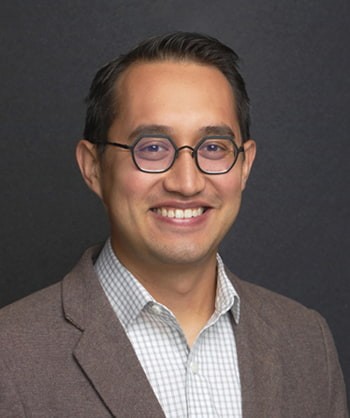
Kasper Hornbæk is a Professor at the Department of Computer Science, University of Copenhagen, specializing in Human-Centred Computing. He conducts research in human-computer interaction (HCI), usability, eye tracking, visualization, and software engineering. Primary Fields: Human-Computer Interaction, Usability Research, Eye Tracking, Visualization, Software Engineering Recent Collaborations: International (country/territory-level) partnerships in HCI and AI Research Outputs: 228 publications focusing on multimodal interaction, VR, and causal modeling His work explores audio-tactile integration, theoretical frameworks in HCI, and principles for user interface design through empirical studies and meta-analyses. Recent projects include heartbeat resonance interfaces and critiques of experimental methodology. Contact: kash@di.ku.dk | Research Website
Anna Mavroudi is an Associate Professor at the Department of Education , University of Oslo , with a focus on ICT in Learning , Learning Analytics , and University Pedagogy . She previously held positions at Norwegian University of Science and Technology (NTNU) and Royal Institute of Technology (KTH), Sweden. Education: PhD in Technology-Enhanced Learning (Open University of Cyprus, 2009–2015) Awards: Best Paper at ICALT (2018) and EDUCON (2018) Research Interests: Learning Analytics, Adaptive Learning, Ethical AI in Education Her recent publications address AI ethics , synthetic data generation , and higher education pedagogy . She contributes to STEM education , digital literacy , and teacher professional development through empirical studies and design frameworks. Projects: BraStart, PATHWISE, Use of Digital Technology in Higher Education She is affiliated with the Living and Learning in the Digital Age (LiDA) research group and serves as a peer reviewer for journals like Nordic Journal of Digital Literacy and Interactive Learning Environments .
Nicole Marsh is a researcher specializing in vascular access devices, infection control, and patient safety in healthcare settings. She has contributed extensively to clinical trials and systematic reviews in emergency medicine, oncology, and critical care. Key Research Areas : Vascular Access, Infection Control, Medical Device Efficacy, Nursing Practice, Patient Safety, Clinical Trials Recent Publications focus on optimizing peripheral and central venous catheter designs, evaluating securement methods, and analyzing risk factors for device failure. Her work spans collaborations with multidisciplinary teams across Australia. Collaborations include institutions like Griffith University and Queensland University of Technology through co-authorships with leading researchers in nursing and clinical epidemiology.
Stefan Axelsson is an Associate Professor at NTNU (Norwegian University of Science and Technology) in Gjövik, Norway, and a Senior Lecturer at Blekinge Institute of Technology in Sweden. His research focuses on computer security, digital forensics, and applications of machine learning in intrusion detection and data analysis. He holds a PhD in Computer Science from Chalmers University of Technology (2005), with a thesis on intrusion detection visualization. His work bridges academia and industry, including collaborations with Ericsson. Research interests span forensic file systems analysis (NTFS/ReFS), fraud detection in financial systems, and visualization techniques for security data. Notable contributions include the Bayesvis intrusion detection tool and fraud simulation frameworks like PaySim. He has published extensively in venues like Digital Investigation, DFRWS, and IFIP conferences. Key achievements include a best paper award at EMSS 2013 for forensic agent-based simulation work. His software contributions focus on practical tools for security professionals, emphasizing usability and visualization of complex data patterns.
Stephanie Tulk Jesso is an Assistant Professor at the School of Systems Science and Industrial Engineering at Binghamton University. Her research focuses on human-centered design principles applied to healthcare technology, human-AI interaction, and social robotics. She holds a joint appointment in systems engineering and has collaborated extensively with clinical partners to address real-world healthcare challenges. Her work emphasizes translational research, aiming to bridge gaps between technological innovation and practical healthcare applications. Key research themes include improving patient-clinician interactions through AI tools like VizTrust, reducing hospital fall risks via human-centered robotics, and evaluating clinician involvement in AI development. She has pioneered studies on trust dynamics in human-AI/robot interactions using experimental methods in virtual environments and healthcare settings. Notable projects include co-designing AI chatbots with hospitals and exploring ethical implications of autonomous medical robotics. Her multidisciplinary approach integrates insights from social cognition, behavioral economics, and engineering design. Recent work examines how perceived competence and context influence human-AI collaboration, with implications for healthcare system design. She actively participates in translational research initiatives to ensure technologies are developed with end-user needs central to the process. Dr. Jesso's research trends show strong focus on: (1) Healthcare technology adoption challenges, (2) Ethical frameworks for AI/robotics in medicine, (3) Quantitative evaluation of human-technology collaboration, and (4) Co-design methodologies involving clinicians and patients. Her work frequently appears in top journals addressing human factors, medical informatics, and robotics applications. In advising, she mentors students working at the intersection of technology and healthcare ethics. Her lab collaborates with regional hospitals and tech companies to develop practical solutions for clinical environments. Current projects include AI-driven patient monitoring systems and designing intuitive interfaces for collaborative surgical robots.
Benjamin Tag is an Adjunct Senior Research Fellow at Monash University's Department of Human Centred Computing, focusing on adaptive computing systems that enhance user experience and well-being through emotion and cognition analysis. He holds external roles including Senior Lecturer at the University of New South Wales (from 2024), Honorary Research Fellow at the University of Melbourne (since 2022), and Associate Researcher positions at Keio University and Osaka Metropolitan University (ongoing). His research explores ubiquitous computing and affective computing via commodity devices like smartphones, emphasizing context-aware systems and Human-AI Interaction. Benjamin holds a Ph.D. in Human-Computer Interaction from Keio University (2019), an M.A. in Media Design from Keio (2014), and a B.A. in English Language and Literature from Freie Universität Berlin (2009). His work aligns with UN Sustainable Development Goals, particularly in education and innovation. Research interests include emotion sensing, cognitive state assessments via physiological signals, and designing adaptive interfaces. He actively contributes to conferences such as ACM CHI, IEEE PerCom, and IEEE ISMAR, where he has organized workshops and served on program committees. His recent projects span safety in construction sites using AR, VR emotion datasets, and global power system transformation research. Benjamin has received multiple recognitions, including the ACM CHI Honorable Mention Award (2021 and 2023), ACRA Fellowship (2022), and Australia-Germany Joint Research Cooperation Scheme distinction (2022). He collaborates across disciplines and institutions to advance technology for human-centered applications.
Dr. Arjun Khara is an Associate Professor and Deputy Head of School (Academic and Innovation) at the School of Design, University of Leeds. He holds a PhD in Information Design from the University of Reading and a Valedictorian MA in Computer Games Art and Design from Goldsmiths, University of London. His dual academic-industry career includes leadership roles at Quantico CCIL Singapore and extensive EPSRC-funded research on AI ethics in design. Education: PhD (University of Reading), MA (Goldsmiths), BA (University of South Australia) Roles: Deputy Head of School, AI Working Group Lead, PACE Associate Director Expertise: Fairness Design, AI Ethics, Branding, Digital Government Communication Research focuses on: - Fairness Design : Ethical frameworks for digital government forms - AI in Design : Cross-disciplinary applications and pedagogy - Care Aesthetics : Human-centered design philosophies Recent projects include MAVIS (AI visualization for machine learning models) and co-authored works on urban inclusion in favelas. His teaching integrates industry tools like Unity/Unreal Engine with academic rigor. Awards: 2024 Teacher of the Year (University-Wide), Early Career Excellence Award Grants: EPSRC-funded AI visualization research (£2.5M+) He leads the Professional Academy for Creative Enterprises (PACE) and manages AI policy development at Leeds. Active in Singapore's design community through Quantico's training programs and Silent Heroes Awards.
John Grundy is a Professor of Software Engineering at Monash University and an Australian Laureate Fellow. He holds academic leadership roles, including former Senior Deputy Dean of the Faculty of Information Technology. His expertise spans software tools, model-driven engineering, and human-centric systems. He leads projects like RAISE: Creating Responsible AI Software Engineering and contributes to national cybersecurity initiatives. Grundy has held roles at Deakin University and Swinburne University, directing research centers and departments. He is a Fellow of multiple organizations, including IEEE and Automated Software Engineering. His research focuses on improving software quality through human-centric approaches, addressing issues like accessibility, usability, and cultural alignment. He actively collaborates with industry partners and has over 580 publications. Education: BSc (Hons), MSc, PhD, and DSc in Computer Science (University of Auckland) Awards: ACM SIGSOFT Distinguished Service Award, Australian Laureate Fellow, Fellow of Engineers Australia Research Themes: Model-driven engineering, domain-specific languages, healthcare software, AI ethics Key Projects: Multi-Hazard public information platforms, Optimal Ageing training center
Affiliations & Roles Prof. Dr. Stefan Alexander Schneider holds a professorship in Autonomous Driving and Driver Assistance Systems at the Faculty of Electrical Engineering of Kempten University of Applied Sciences. He also serves as Program Coordinator and Academic Advisor for the Master's program in Driver Assistance Systems. Additionally, he is a Visiting Professor at Shibaura Institute of Technology (Tokyo, Japan) . Education & Academic Background He completed his doctoral thesis "Adaptive Solution of Elliptic Partial Differential Equations by Hierarchical Tensor Product Finite Elements" in 2000, laying groundwork for his later research in computational methods. Research Focus His work centers on autonomous driving technologies , including: Simulation methodologies for vehicle systems Safety validation of driver assistance systems Human-machine interface design for elderly mobility solutions Standardization of testing frameworks (e.g., Open Simulation Interface) Key Contributions Recent projects include: ZuMoBe: Exploring autonomous electric vehicles in mountain valleys Development of Virtual Systems Prototyping frameworks for automotive innovation Cross-border collaboration via the VIVID German-Japanese initiative Teaching & Mentorship As a leader in one of the world's few Master's programs dedicated to ADAS/AV technologies, he mentors students in cutting-edge topics like monocular depth estimation, trajectory modeling, and interface design. His advisees have produced impactful works on autonomous scooter usability, localization algorithms, and motion planning validation.
Waylon Brunette is an Assistant Professor in the Department of Computer & Cyber Sciences at Augusta University. His research focuses on mobile computing, computing for development, ubiquitous computing, and edge computing, with an emphasis on creating systems that integrate seamlessly into users' environments to support global health and humanitarian efforts in resource-constrained settings. He leads the development of the Open Data Kit (ODK) framework, designed to simplify mobile application development for disconnected environments. Education: Ph.D. (Computer Science, University of Washington, 2020), MS (Computer Science, UW, 2012), BSE (Computer Engineering, UW, 2002). Research interests include wireless sensor networks, sensor-enhanced systems, and frameworks for non-programmers to deploy robust applications in low-resource areas. He serves as Chair of the Research Computing Infrastructure Committee (RCIC) and Editor for the ACM Journal on Computing and Sustainable Societies. Previously, he was a co-founder of the ODK Project at UW's Allen School. Service activities include mentoring junior researchers and organizing the Southeastern Collegiate Penetration Testing Competition. His work emphasizes practical, deployable solutions for global challenges in healthcare, logistics, and international development.
Prof. Jörg Thomaschewski is a Professor of Media Informatics with a focus on Internet technologies at the University of Applied Sciences Emden/Leer since 2000. He leads the 'Agile Software Development and User Experience' research group and is a prominent author of educational modules, including the 'User Experience' module for the Virtual University (VFH). His expertise spans usability training, agile methodologies, IT analysis, and consulting. Research Interests: Thomaschewski's work centers on Agile UX integration, user experience measurement (e.g., UEQ+, UEQ-S frameworks), and human-computer interaction. He emphasizes practical tools like the UEQ Data Analysis Tool and has pioneered methods for UX management in agile environments. His contributions include validating UX questionnaires, analyzing demographic impacts on UX perception, and exploring voice assistant usability. Professional Roles: He serves as an Associate Editor for the International Journal of Interactive Multimedia and Artificial Intelligence (IJIMAI) . His work extends to public administration digitization projects, emphasizing agile transformation in e-government. He advocates for lean user research practices and UX benchmarking. Key Achievements: Development of modular UX questionnaires (UEQ+), process models for agile requirements engineering, and frameworks for UX factor prioritization across product categories. His research bridges theoretical UX principles with practical industry applications.
Bryan Ranger is the Ferrante Family Assistant Professor in the Department of Engineering at Boston College, with a courtesy appointment in the William F. Connell School of Nursing and affiliation with the Global Public Health and the Common Good Program. He leads the Biomedical Imaging and Instrumentation Lab, focusing on ultrasound imaging, AI/ML algorithms, and global health applications. B.S.E., University of Michigan, Ann Arbor M.S.E., University of Michigan, Ann Arbor Ph.D., Massachusetts Institute of Technology (NSF Graduate Research Fellow) His research spans biomedical imaging, AI-driven diagnostics, and low-cost medical device development for resource-limited settings. Key themes include human-centered design, bioreactor monitoring, ultrasound elastography, and educational ultrasound platforms. Collaborations include Brigham and Women's Hospital, Jimma University (Ethiopia), Ahmedabad University (India), and Boston College departments like Computer Science and Nursing. Selected publications demonstrate expertise in musculoskeletal imaging, phantom development, and ultrasound education. Awards include Google Research Scholar (2022), Google Award for Inclusion Research (2023), ATIG Grant (2023), and SI-RITEA Grant (2023). Funded projects involve Gates Foundation support for maternal nutrition assessment and NIH mHealth Training Institute (2025). Google Award for Inclusion Research (2023) Google Research Scholar Program Award (2022) ATIG Grant (2023) SI-RITEA Grant (2023) NSF Graduate Research Fellow (PhD period) He teaches first-year engineering labs and courses in biomedical imaging, emphasizing societal responsibility in engineering education. His lab includes student researchers like Hayoung Cho, who received the Finnegan Award, and has presented at conferences including BMES, IEEE GHTC, and KEEN workshops.
Michaela Bačíková is an Assistant Professor at the Faculty of Electrical Engineering and Informatics (FEI) of the Technical University of Košice (TUKE). Her research focuses on Human-Computer Interaction (HCI), domain usability, and domain analysis, with an emphasis on graphical user interfaces (GUIs), domain-specific languages (DSLs), and gesture-driven interaction. She leads the development of the DEAL tool, a domain analysis framework for extracting domain models from software systems. Her teaching includes courses on component-based programming, web technologies, and user interface design. Research Projects: DEAL (Domain Extraction ALgorithm) : A tool for analyzing GUIs to generate DSLs, ontologies, and usability metrics. EU Project: 'Evolving Architectural Knowledge in the Edge-to-Cloud Continuum' (participant). Educational initiatives: Integrating gesture-driven IDEs and social networks for mentoring in programming courses. Research Interests : Automated domain usability evaluation using DEAL. DSL-driven GUI generation and feature modeling. Innovations in teaching software development and user experience design. Grants & Labs : Recipient of FEI TUKE Grant no. FEI-2015-16 for domain usability metrics research. Active in the FEI lab developing DEAL and related tools.
Ajay Gupta is the Director of Computer Research in the Department of Computer Science at Old Dominion University. His roles include overseeing computational research initiatives and contributing to academic and technical advancements in computer science. He holds an M.B.A. in Business Administration (Old Dominion University, 1996), an M.S. in Computer Science (Old Dominion University, 1983), and a B.E. in Electronics Engineering (Bangalore University, 1981). Additionally, he earned an Oracle Master certification from Oracle Corporation in 1999. His research focuses on distance education systems, software engineering, and networking technologies. Key projects include the development of Java-based distance education platforms (e.g., IRI-h) and software configuration management systems. He has secured significant grants, such as the $239,000 Oracle Financials integration project (2002–2003) and a $359,000 software configuration management initiative (2000). Publications highlight contributions to interactive distance learning, multimedia collaboration tools, and network performance analysis. His work bridges theoretical computer science with practical educational and software engineering applications. No scientific awards are explicitly mentioned, but his grants reflect impactful research. As a director, Gupta collaborates across interdisciplinary teams and contributes to the university’s strategic initiatives in technology and education.
Cristiano Storni is an Associate Professor in the Department of Computer Science & Information Systems at the University of Limerick. He is a member of the Interaction Design Centre and Lero – the Irish Software Research Centre. His work focuses on participatory design methodologies, digital health technologies, and sociotechnical systems. Recent research emphasizes sustainable development through non-human stakeholder inclusion, pandemic response technologies, and ethical frameworks for healthcare innovation. Key research themes include participatory design, self-care technologies, data protection in health systems, and the application of Actor-Network Theory to journalism and healthcare. His contributions span over 39 peer-reviewed publications, with notable work on digital contact tracing apps during the pandemic and participatory design landscapes in Ireland. Current projects explore reworlding practices for environmental challenges and the role of technology in chronic disease management. His work bridges theoretical frameworks like ANT with practical applications in healthcare, education, and public policy.