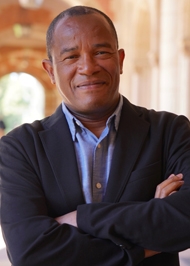
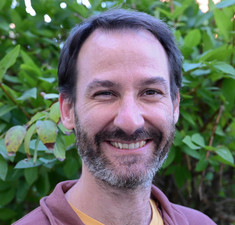
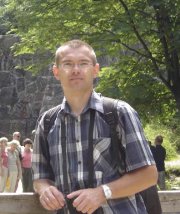
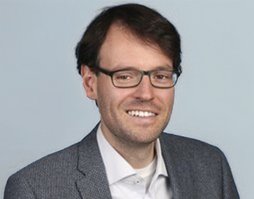
Aomar Boum is a Professor in the Department of Anthropology at the University of California, Los Angeles (UCLA), holding the Maurice Amado Endowed Chair in Sephardic Studies. His research focuses on socio-cultural anthropology with an emphasis on Jewish-Muslim relations, Holocaust studies in North Africa, and the historical representation of ethnic/religious minorities. Education: Ph.D. in Anthropology from the University of Arizona (2006) Key research areas include the anthropology of religion, history, youth, festivals, Moroccan sociology, and North African/Middle Eastern studies. His work spans colonial and postcolonial narratives, historiography, and cultural preservation. Recent publications address Holocaust experiences in North Africa, Moroccan Jewish communities, and digital identity formation. He has contributed to encyclopedic works on camps and ghettos. Awards: Maurice Amado Endowed Chair in Sephardic Studies
Christoph Schunko is an Associate Professor at the Institute of Organic Farming within the University of Natural Resources and Life Sciences, Vienna (BOKU) . His research focuses on local knowledge systems related to wild plant gathering, emphasizing biocultural diversity , ecological and socio-political sustainability , and human-plant relationships in both European and non-European contexts. Key research areas include: Biocultural diversity of wild plant uses Value chains of organic wild plant products Participatory research and citizen science Climate change impacts on indigenous communities His recent publications highlight urban wild food foraging, stewardship practices, and climate change adaptation strategies. He has supervised numerous theses on topics like organic certification, rice agroecosystems, and wild plant commercialization. Schunko actively contributes to peer review for journals such as Environmental Research Letters and Human Ecology , and organizes sessions at international conferences including the Tage der Biodiversität .
Prof. Dr. Christian Huck holds the Professorship for Cultural and Media Studies at the English Department of Kiel University, where he conducts research and teaching on British Cultural Studies, Ireland, culture-nature and culture-technology relations, and popular culture. His academic career spans from doctoral studies at the University of Tübingen to postdoctoral research at the Graduate School Cultural Hermeneutics and the London College of Fashion. Huck's research interests focus on the historical and theoretical dimensions of Cultural Studies, with particular attention to transatlantic cultural transfers, the relationship between media and materiality, and the intersection of technology with cultural practices. His work bridges literary studies, media theory, and social philosophy, examining how cultural phenomena shape and are shaped by technological developments and social structures. He has made significant contributions to understanding how popular culture travels across borders, as evidenced in his publications on the transatlantic transfer of cultural forms. Huck's scholarly output reveals consistent engagement with documentary film theory, fashion history, and the philosophical underpinnings of cultural analysis. His publications span from monographs on British Cultural Studies to edited volumes on cultural appropriation and system theory. His recent work increasingly addresses digital culture, examining phenomena like social media, digital shadows, and the material dimensions of networked culture. As an academic leader, Huck has contributed to the institutional development of Cultural Studies in Germany, including the foundation of the German Association for the Study of British Cultures. His scholarly activities extend to radio appearances and public engagement, particularly through Deutschlandfunk Kultur where he has discussed topics ranging from cover versions to digital culture.
Sayeh S Nikpay is an Associate Professor in the Department of Health Policy and Management at the University of Minnesota. Her work focuses on Medicaid and Medicare policy, 340B drug pricing, and healthcare access for underserved populations. Key research areas: Medicaid, Medicare, 340B Program, rural health equity Active grants: NIH, Commonwealth Fund, Laura and John Arnold Foundation Collaborations: National Cancer Institute, NHLBI, state health departments Recent publications analyze interfacility transfer networks, 340B program impacts, and insurance transitions in cancer care. Her work contributes to UN Sustainable Development Goals related to poverty reduction and healthcare equity.
Nilüfer NEGİZ is a Professor in the Department of Political Science and Public Administration at Süleyman Demirel University. Her academic work bridges Public Administration , Urban Studies , and Gender Research , with a focus on municipal governance, sustainable cities, and women's roles in urban environments. Education: PhD and MA in Public Administration from Süleyman Demirel University, BA in Archaeology and Public Administration. Her research explores gender dynamics in urban development, post-pandemic city resilience , and local government policies . She leads TÜBİTAK-funded projects on women's urban visibility and pandemic-era municipal strategies. Recent publications highlight her work on urban circular economy practices , gender equality in municipal councils , and urban-rural transformations . She serves as an editor for international scientific books and journals, including Interdisciplinary Women and Under the Influence of the Digital Age . She supervises doctoral theses, notably Göçoğlu İpek Didem's research on Turkey's sustainable development goals. Her teaching includes Environmental Science , Urban History , and Local Government Relations .
Dr. Kashif Majeed Salik is a Research Fellow at the Sustainable Development Policy Institute (SDPI) , specializing in climate change impacts, human-environment interactions, and policy design. He holds a PhD in Human Geography from the University of Southampton, UK, and has spent over two decades working with governmental and international organizations. His research focuses on climate-smart agricultural technologies climate-induced migration and adaptation resilience-building in semi-arid regions policy integration for disaster risk reduction climate justice and diplomacy He employs mixed-method approaches to analyze rural livelihoods and migration dynamics. Dr. Salik leads collaborative projects across Asia and Africa, with over 40 publications including journal articles and policy briefs. He serves as an Associate Editor for Earth Systems and Environment Journal and has contributed to agencies like FCDO, IDRC, and IOM.
Yann Scioldo-Zürcher-Levi is a CNRS Researcher affiliated with the School for Advanced Studies in the Social Sciences - Historical Research Centre (CRH), specifically within the Jewish Studies group. His research focuses on Migration History , particularly post-colonial repatriation of French Algerian populations and Jewish migrations to Israel from North Africa and France. Research Leadership: Leads studies on Israeli migration geohistory (1948-1962), 1950s migration policy , and French repatriate compensation (1961-1967) Teaching: Conducts research seminars at Tel Aviv University's French Department Publications: 15+ peer-reviewed articles and book chapters on Moroccan Jewish migrations , colonial memory , post-colonial policy , and digital humanities applications to migration studies Collaborations: Works with scholars like Marie-Antoinette Hily, William Berthomière, and Sylvie Steinberg on migration projects His recent work includes a 2024 publication on Marseille's post-1962 repatriate integration and a 2025 conference on digital influence networks in migration research. He contributes to editorial boards of Revue Européenne des Migrations Internationales and L'Atelier du CRH .
Prof. Szymon Kazusek at Jan Kochanowski University's Faculty of Humanities serves as a leading expert in 16th-18th century socio-economic history. His Department of Cultural Transformation Research and Science work focuses on Polish-Lithuanian Commonwealth trade systems, Vistula rafting logistics, and Jewish economic participation. Trade pattern quantification Customs system documentation Disaster impact analysis His extensive publication record reveals systematic analysis of regional markets, forest exploitation permits, and archival merchant correspondence. Research spans transnational trade with Habsburg territories, Ottoman border commerce, and Baltic-Black Sea corridor comparisons. Prof. Kazusek leads the Humanities Section at UJK's Doctoral School while coordinating the 19th-century Polish Diaries Research Team. His methodological innovations combine statistical analysis with historical geography.
Florian Spitzer is a behavioral economist at the Institute for Advanced Studies (IHS) , Vienna, since 2018 and a member of the Research Group Social Sustainable Transformation . He previously served as a University Assistant at the University of Vienna and the Vienna University of Economics and Business. He studied Economics in Heidelberg and Copenhagen and earned his PhD in Economics from the University of Vienna in 2018. Education PhD in Economics, University of Vienna (2018) Studies in Economics, University of Heidelberg and University of Copenhagen Spitzer's research examines how institutional settings shape human behavior, particularly in promoting sustainable actions (e.g., environmentally sustainable mobility, financial health-related decisions). He employs a mix of methods: laboratory, field, and online experiments, alongside qualitative approaches. His work bridges behavioral economics with practical applications for sustainability. His selected publications analyze ESG investments, active mobility policies, behavioral interventions for vaccination compliance, and family policy design. He also explores the impact of medical insurance on patient overtreatment through experimental economics. These studies reflect his focus on behavioral mechanisms in financial, health, and environmental domains. Spitzer contributes to continuing education programs for policymakers, emphasizing behavioral science applications in governance. His funded projects include: Das „Betreute Konto“ aus verhaltensökonomischer Perspektive (ERSTE Stiftung) Finanzberatung optimal gestalten (OeNB Jubiläumsfonds) He is affiliated with the Social Sustainable Transformation research group, leveraging interdisciplinary methodologies to address individual and societal sustainability challenges.
Professor Heather Brown is a leading academic at Lancaster University within the Department of Health Research . Her work focuses on applied econometrics and health inequalities , examining structural and policy-driven disparities across generations and the life course. Research Areas: Health Inequalities, Policy Evaluation, Applied Econometrics, Intergenerational Disparities, Environmental Determinants, Life Course Inequalities External Roles: Member of the NIHR PRP Core Committee, Lead Convenor of the Teaching Health Economics Group (International Health Economics Association), Member of the Health Economics Study Group Her recent publications address health policy evaluation (Universal Credit, Minimum Income Guarantee), food environment regulation (dark kitchens, fast food restrictions), and mental health disparities (maternal mental health, youth mental health). She frequently employs Difference-in-Differences and longitudinal analysis methodologies. Current projects include: Healthy Food Access: Co-produced community-centered sustainable food initiatives Dark Kitchens: Monitoring impacts on food environments and data gaps Universal Credit: Evaluating mental health effects and policy outcomes Climate Change: Exploring local authority mitigation strategies for health inequalities Professor Brown actively supervises students in health inequalities research and collaborates across disciplines to make quantitative data accessible to stakeholders.
Giovanni Peri is the C. Bryan Cameron Distinguished Professor in International Economics at the University of California, Davis , affiliated with the Department of Economics in the College of Letters and Science . He also serves as a Research Associate at the National Bureau of Economic Research and as Founding Director of the UC Davis Migration Research Cluster. Education : Ph.D. in Economics (UC Berkeley, 1998), Doctoral Degree in Economics (Bocconi University, 1997), Laurea in Economics and Social Sciences (Bocconi University, 1992) Professor Peri specializes in Labor Economics , Urban and Regional Economics , and International Migration with over 20 years of expertise in analyzing migration impacts on labor markets, productivity, and economic integration. His work spans migration policy, labor market matching, and post-crisis economic adaptation. Recent publications (2023-2025) explore political polarization and migration , refugee integration , low-skilled immigration effects , and automation-labor dynamics , reflecting a consistent focus on empirical migration economics and labor policy analysis. Scientific Awards : Steven M. Sheffrin Award (2012) International Prize in Economic Journalism 'Gozzo d'Agrento' (2011) IZA Research Fellow nomination (2011) Ifo Research Professor (2011) Kiel Institute Fellow nomination (2011) As an instructor in Intermediate Microeconomics and Labor Economics , he also supervises the Honors Thesis Program . His affiliations include NBER, Ifo Institute, and Kiel Institute, supporting cross-institutional migration research.
Linda S. Adair is a Professor in the Department of Nutrition at the University of North Carolina at Chapel Hill (UNC-CH) and an Honorary Professor at the School of Clinical Medicine, University of the Witswatersrand, South Africa. Her research focuses on maternal and child health in low- and middle-income countries, emphasizing early life nutrition, growth patterns, and their lifelong implications. Primary Affiliation: University of North Carolina at Chapel Hill Secondary Affiliation: University of the Witswatersrand, School of Clinical Medicine Adair's work employs longitudinal methods for life-course analysis, primarily through the Cebu Longitudinal Health and Nutrition Survey (CLHNS), a 35-year population-based cohort. This research has informed global health policies, including the Lancet's maternal nutrition series and the "1000 Days" framework for early intervention. She has led NIA-funded studies on aging trajectories in women and clinical trials in Kenya addressing anemia through hormonal contraceptives. Her recent publications span multi-ancestry genetic studies of diabetes, lipid loci, and growth patterns. Key Research Themes: Maternal and child nutrition Developmental origins of adult diseases Healthy aging in diverse contexts HIV-related nutritional outcomes Genetic and metabolic epidemiology Collaborations: Extensive partnerships in Africa and Asia, including former CPC trainees. Grants: NIA funding for CLHNS aging studies.
Steven McGreevy serves as an Assistant Professor in the Department of Governance and Technology for Sustainability, with research expertise spanning sustainability science, food systems, and climate governance. His work emphasizes transdisciplinary approaches and regional focus on Japan, contributing to UN Sustainable Development Goals including Climate Action (SDG 13) and Sustainable Cities (SDG 11). His core research interests include: Food Systems and Sustainable Agriculture Climate Change Adaptation and Mitigation Governance and Policy for Sustainability Urban Sustainability and Circular Economy Stakeholder Engagement and Citizen Science Japan Studies and East Asian Sustainability McGreevy employs innovative methodologies such as backcasting workshops, serious games, and participatory foresight to explore sustainable food systems and climate governance. His research integrates social practice theory with ecological perspectives, focusing on transformation pathways in urban-rural contexts. Analysis of his recent publications (2022-2024) reveals concentrated work on climate science advancements, sustainable food system design through transdisciplinary methods, and governance transformations. His output shows increasing productivity since 2021, with recurring themes of Japanese case studies, anticipatory governance, and participatory approaches to sustainability transitions. No scientific awards were documented in the provided information. His academic activities include conference presentations such as "The School Lunch 2050 Project" (2022), demonstrating engagement with practical sustainability challenges. No information was available regarding student advising, grant funding, or laboratory affiliations.
Sofia Nannini is a Fixed-term Assistant Professor in architectural history at the Department of Architecture and Design (DAD) at the Polytechnic University of Turin. She previously served as a Postdoctoral Research Fellow at the University of Bologna (2021-2023) and held adjunct professor positions at the University of Bologna, Florence, Pavia, and the Italian Institute for Design/IAAD. Her academic work spans architectural history, construction history, environmental history of architecture, and the history of technology. Dr. Nannini's research focuses on the relationship between building materials, society, and culture in nineteenth- and twentieth-century Europe, with particular expertise in Icelandic architecture, Fascist-era Italian architecture, and the history of intensive animal farming architecture. She has extensively studied concrete construction history across Northern Europe and has published significant work on architectural responses to historical events like the oil crisis of the 1970s. Her scholarship reveals how buildings serve as material manifestations of cultural values, political ideologies, and technological developments. Her publications demonstrate a consistent pattern of examining architecture at the intersection of material culture, political history, and environmental contexts. Nannini's work often explores how buildings reflect societal transformations, whether through the adoption of new construction technologies like concrete in Iceland, the political symbolism of Fascist architecture in Italy, or the industrialization of animal farming spaces. Her research methodology combines archival investigation with theoretical frameworks from material culture studies and architectural history. Learning to Teach (L2T) badge from Polytechnic University of Turin (June 6, 2024) Research support from Canadian Centre for Architecture (2023) Research support from Paul Mellon Centre for Studies in British Art (2024) Dr. Nannini actively supervises PhD students, including Eugenio Lux who is researching 'Architecture and politics in Social Democratic Sweden of folkhemmet (1932-1976)'. She has secured significant research funding that has supported her investigations into architectural history across multiple European contexts. Her teaching portfolio at the Polytechnic University of Turin includes courses on Environmental History of Architecture and Architectural History and Design Theory. As an active member of the academic community, Dr. Nannini serves on the editorial boards of Architectural Histories and Studi e ricerche di storia dell'architettura, contributing to the scholarly discourse in her field through peer review and publication guidance.
Constantine Patestos is a Professor at the Department of Architecture and Design (DAD) of the Polytechnic of Turin , Italy. He also served as Full Professor at Democritus University of Thrace (2012-2013) and Visiting Professor at the National Technical University of Athens (2009-2010). Patestos is an Effective Member of the PRO-ARCH Scientific Society since 2017 and participated in the 2011 Vitruvio Network International Congress as a Program Committee member. His research focuses on Architecture , Contemporary Architecture , Public Space Design , and Collective Building Design , with an emphasis on Analysis and Critical Theory . He has contributed to the PE8_3 ERC sector (Civil Engineering, Architecture) and aligns with SDG Goal 11 (Sustainable Cities and Communities). Patestos' recent publications explore themes such as modernity in architecture, urban composition, and the integration of historical elements into contemporary design. His work includes books and journal articles analyzing architectural projects and theories related to Italian and Greek contexts.