Prof. Dr. habil. Matthias Gross is a Full Professor of Environmental Sociology at the University of Jena , with a joint appointment at the Helmholtz Centre for Environmental Research - UFZ , where he leads the Department of Urban and Environmental Sociology. His work bridges sociology, environmental science, and technology studies. Education : PhD in Sociology (Bielefeld University, 2001); M.A. in Sociology (Bielefeld, 1998); Graduate studies in USA (1995-1996). Research focuses on alternative energy systems , microplastics , ignorance studies , and science-technology-society interfaces . Key projects include the DFG-funded Harvesting Wind and Stealing Heat (2021-2024) and the REGREEN NBS Handbook (2024) on nature-based urban resilience. His recent work explores property chains in wind energy and UV weathering of plastics. Current collaborations span the PFAS Competence Cluster and Microplastics Competence Cluster . He co-founded the journal Nature + Culture and serves on advisory boards for environmental sociological associations.
Charles Lenay is a Researcher at Université de Technologie de Compiègne (UTC), affiliated with the Costech laboratory's Cognitive Research and Enactive Design (CRED) department. He specializes in perceptual substitution systems, enactive cognition, and technology's role in disability accessibility. As a section editor for 'Perceptual substitution and social cognition,' he contributes to interdisciplinary research at the intersection of philosophy, cognitive science, and engineering. His work focuses on haptic interfaces, sensory supplementation for visually impaired individuals, and the ethical implications of technological mediation. Key research areas include tactile interaction design, enactive perception theory, and the sociotechnical dynamics of innovation in agriculture and urban planning. Lenay has co-authored influential studies on perceptual crossing experiments, technical mediation, and the legacy of philosophers like Bernard Stiegler. He is a leading figure in developing assistive technologies that bridge sensory gaps, emphasizing user-centered design principles. His recent collaborations include the Tactos project for tactile web access and the Intertact system for remote tactile communication. He also explores the philosophical foundations of technology's impact on human cognition and societal structures, contributing to debates on ethics of care in technical systems.
Emmanuelle Andreani is a renowned architect and urban planner, co-founder of [siz'-ix] Architects since 1998. She holds a DEA in Sociology & Landscape from EHESS and a top-ranked architecture diploma from ENSAIS (Strasbourg). Her academic roles include teaching at INSA Strasbourg (1999–2016) and lecturing at universities in Egypt and Ukraine. She has served on prestigious architectural juries, including the École Spéciale d'Architecture and multiple national schools of architecture. Education DEA, 'Gardens, Landscapes, Territories' (EHESS/Paris la Villette, 1997) Architecture Diploma (ENSAS, 1993, top of class) Higher Mathematics (Lycée du Parc, Lyon, 1987–1989) Research Focus Her work bridges urban planning, sustainability, and sociology, emphasizing eco-quartiers , rural-urban dynamics, and participatory design. Key themes include territorial regeneration, cultural dialogue, and integrating nature into urban spaces. Awards & Recognition 2008 Sustainable Housing in Savoie Prize 1994 Best French Architecture Diploma BMW Foundation & UNESCO Awards Professional Impact Her agency’s projects blend innovation with social responsibility, such as the Vaulx-en-Velin church (2013) and eco-housing in Savoie. She has organized international workshops and contributed to EU-funded Euro-Mediterranean initiatives.
Steve Chillrud is a Lamont Research Professor at Columbia University’s Lamont-Doherty Earth Observatory (LDEO) and Adjunct Professor in International and Public Affairs. His work focuses on environmental geochemistry, with emphasis on chemical contaminants in air, water, and sediment. He leads the Exposure Assessment Core Facility at Columbia’s Center for Environmental Health in Northern Manhattan, developing innovative air sampling technologies and supporting global projects in low-resource settings. Notable contributions include identifying subway commuting as a major source of airborne metal exposure for NYC adolescents and advancing remediation strategies for groundwater contaminants like arsenic and uranium. Chillrud’s research bridges geoscience and public health, addressing issues like climate impacts on birth outcomes, cookstove interventions in Ghana, and environmental justice in urban settings. His expertise spans analytical chemistry, sediment core analysis, and community-engaged environmental monitoring. Recent studies explore gentrification’s air quality effects, maternal cardiovascular risks from household pollution, and uranium mobility in groundwater systems. He collaborates extensively with interdisciplinary teams and advocates for policy-driven solutions through actionable data.
Dr. Xuemei Bai is a Distinguished Professor of Urban Environment & Human Ecology at the Fenner School of Environment & Society, Australian National University (ANU). She joined ANU in 2011, previously serving as a Senior Principal Research Scientist at CSIRO, a visiting professor at Yale University, and a senior researcher in Japan. She is also a Visiting Professor at the University of Tokyo. Her research focuses on urban sustainability science and policy, including urbanization drivers, socio-ecological systems, urban metabolism, climate change, and policy governance. She has authored/co-authored over 200 publications, including 20+ in Nature , Science , and Nature Research journals. She has held leadership roles in global initiatives like the IPCC, IPBES, and the Earth Commission, where she co-leads cross-scale translations of planetary targets. Education: B.Sc. (Peking University), M.Eng. and PhD (University of Tokyo), FASSA Fellow (2017). Awards: Volvo Environment Prize (2018), Global Economy Prize (2021), ARC Laureate Fellow (2023). Roles: Deputy Editor of Global Sustainability ; member of Earth Commission, Future Earth, and IPCC. Her advisory contributions span urban climate resilience, low-carbon transitions, and global environmental justice. She leads projects on science-policy interfaces and sustainability experiments in cities worldwide.
Rasa Pranskūnienė is a Researcher at Vytautas Magnus University's Faculty of Bioeconomy Development, specifically affiliated with the Department of Business and Rural Development Management. She also serves as the head of a Museum and is associated with the Bioeconomy Research Institute. Her academic work spans multiple departments within the university, reflecting her interdisciplinary approach to research. Dr. Pranskūnienė earned her Doctor of Social Sciences degree in 2013, with her dissertation focusing on 'Submerging interactivity' in museum education using grounded theory methodology. Her academic journey demonstrates a strong foundation in qualitative research methods and cultural studies. Her research interests center around smart tourism , sustainable tourism , cultural education , heritage interpretation , interactivity , and qualitative research methodologies including grounded theory and critical theory . She explores how cultural heritage can be transformed and communicated effectively in tourism contexts, with particular attention to place identity and community engagement. Her work often bridges the gap between theoretical frameworks and practical applications in sustainable development. Analysis of her recent publications reveals a strong focus on heritage transformation, sustainable tourism development, and the application of grounded theory in understanding place and cultural dynamics. Her research increasingly addresses contemporary challenges such as climate change impacts on coastal areas, pandemic adaptations in urban spaces, and the development of bioeconomy practices. She frequently collaborates with international researchers across Europe, demonstrating the global relevance of her work. Dr. Pranskūnienė is actively involved in significant research projects, including the Erasmus+ project 'The GreenCool – 'Let me influence your green self!'' which focuses on skill development for environmental awareness. Her work contributes to both theoretical advancements in tourism and cultural studies as well as practical applications for sustainable community development. She leads research in museum education and cultural heritage interpretation, particularly examining how interactive approaches can enhance visitor experiences while preserving cultural significance. Her work on the Cold War Museum in Lithuania represents an important contribution to dark tourism studies and the interpretation of difficult heritage.
Stacey Scott is a Professor and Director of Graduate Studies at the University of Guelph 's School of Computer Science. With a focus on Human-Computer Interaction and User-Centred Design , her research explores interface design for emerging technologies in entertainment and agriculture. She leads the Collaborative Systems Laboratory (CSL), which operates in both Guelph's School of Computer Science and Waterloo's Department of Systems Design Engineering . Her interdisciplinary work spans: Precision Livestock Farming (digital technologies for animal welfare) Animal-Computer Interaction (designing interfaces for non-human species) Multi-Display Environments (collaborative spaces with digital tabletops/walls) Global Fan Experiences (K-pop live streaming interfaces) Recent publications demonstrate expertise in cross-device interaction , awareness systems , and collaborative workflows . She is actively seeking students with backgrounds in psychology, sociology, or animal behavior who possess strong technical capabilities.
Andres Kurg is a Professor and Senior Researcher at the Institute of Art History and Visual Culture , Estonian Academy of Arts , specializing in Soviet and Eastern European architecture from the 1960s–1980s. His work examines intersections of technological changes, everyday life, and alternative art practices. PhD in Art History (2014, Estonian Academy of Arts) MA in Architectural History (University College London, 2001) His research focuses on late Soviet architectural transformations , emphasizing how technological advancements reshaped urban spaces and daily routines. He connects this period to broader themes like postmodernism , design marginalities , and experimental architectural practices . Recent publications and exhibitions, including Forecast and Fantasy: Architecture without Borders (2023) and Centrifugal Tendencies (2017), highlight transnational architectural dialogues and Cold War-era design innovations. His 15 most recent articles span topics like paper architecture , mass housing critique , and visual culture , with keywords in urban politics, environmental design, and post-socialist theory. Estonian Academy of Arts Award for Best Research Publication (2015) Estonian Cultural Endowment Architecture Foundation Yearly Award (2002) Sirp Cultural Weekly Award (2000) He has held visiting positions at the Getty Research Institute , Yale University , and Friedrich Schiller University Jena . Currently, he serves as a European Architectural History Network Councillor and contributes to editorial boards like ArtMargins .
Anita Engels is a Professor of Sociology, especially Globalization, Environment, and Society, at the University of Hamburg , Faculty of Economics and Social Sciences, Department of Social Sciences. She is a leading figure in environmental sociology and climate change research, with a focus on carbon governance, societal transformation, and the social plausibility of climate futures. She has been a key contributor to major interdisciplinary research clusters such as CliSAP and CLICCS, and co-edits the Hamburg Climate Futures Outlook. W3 Professorship since 2009 Junior Professorship 2005–2009 Postdoc at Stanford University (1999–2001) PhD from Bielefeld University Her research examines the interplay between scientific knowledge, public perception, and policy action in climate governance. She investigates corporate decarbonization, urban climate labs, and the role of institutions and individuals in sustainability transitions. Her work integrates economic sociology, science-policy interfaces, and transdisciplinary methodologies. Her recent publications analyze the social plausibility of deep decarbonization, corporate accountability, and co-produced governance in cities like Hamburg and São Paulo. She emphasizes the need for systemic change over individual behavior alone and critically engages with carbon markets and financialization of environmental policy. Anita Engels is actively involved in public discourse and policy advising. She serves on the Hamburg Climate Council and the German Science Platform for Climate Protection. She frequently contributes to media discussions, podcasts, and public lectures on climate justice, urban sustainability, and the social dimensions of climate change. Advisory roles in climate policy Regular media engagement (NDR, WDR, Tagesspiegel, etc.) Public lectures and panel discussions Contributions to expert statements and policy papers She leads and participates in numerous transdisciplinary projects, including real-world laboratories in urban settings, and fosters international collaborations, particularly with Brazil and France. Her work bridges academic research and societal transformation, advocating for equitable and feasible climate futures.
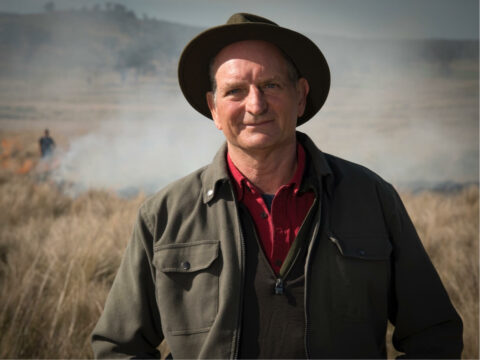
Professor David Bowman is a leading academic in pyrogeography and fire science at the University of Tasmania, where he holds a research chair in the School of Natural Sciences. His work bridges human, physical, and biological dimensions of fire across scales, with a focus on transdisciplinary approaches. He earned a PhD (1984) and DSc (2001) from the University of Tasmania, and has held fellowships at institutions like Harvard and Oxford. Bowman directs the Fire Centre, a research hub addressing wildfire impacts and management. His research spans field ecology, molecular techniques, and social analysis, emphasizing adaptation to climate-driven fire regimes. Notable contributions include studies on fire regimes, peatland recovery, and community resilience. He has secured over $36M in funding, leading projects on fire behavior, health impacts of smoke, and Indigenous fire practices. Bowman advises governments and media, and his publications span high-impact journals like Science and Nature. His work aims to improve fire management policies globally.
Larissa Calancie is an Assistant Professor at the Friedman School of Nutrition Science and Policy at Tufts University. Her research focuses on eliminating nutrition-related health disparities across the life course, with a particular emphasis on glucose and insulin dynamics during pregnancy and the role of community coalitions in fostering healthy, sustainable communities. She employs both qualitative and quantitative methods, including systems science approaches, to address public health challenges. Dr. Calancie holds a PhD in Nutrition from the Gillings School of Global Public Health at UNC Chapel Hill, where she also completed a postdoctoral fellowship at the Center for Health Equity Research. Prior to academia, she worked in nutrition biochemistry at Columbia University and gained agricultural experience in France, Italy, and Turkey. Her research interests include: Development of personalized prenatal care models Impact of taste perception genetics on dietary interventions Systems approaches to multi-sector collaborations for child health equity Food policy councils' roles in improving food access Her recent publications examine interventions for hyperglycemia in pregnancy, food policy impacts during crises like the pandemic, and the effectiveness of community-based strategies for obesity prevention. She teaches NUTB 211 Theories of Behavior Change at Tufts Friedman School.
N.Q. Emlen is an Assistant Professor of Language & Culture at Campus Fryslân, University of Groningen. His research focuses on sociolinguistics, historical linguistics, and cultural anthropology with a regional specialization in South America. He investigates Indigenous languages (Quechua, Aymara, Puquina), multilingualism in Andean-Amazonian borderlands, and socio-cultural dynamics around migration and commodity economies like coffee production. Key research areas include language contact processes, colonial linguistic documentation, and the intersection of genetic/linguistic patterns in Amazonian communities. His work bridges anthropology and linguistics through interdisciplinary methods such as historical reconstruction, ethnographic fieldwork, and genetic data analysis. Recent publications explore the Quechua-Aymara language relationship, sociolinguistic interfaces between Andean and Amazonian cultures, and the revitalization of extinct Andean languages. He has contributed to major handbooks like the Oxford Guide to the Languages of the Central Andes (2024) and published in journals such as Interface Focus and International Journal of American Linguistics .
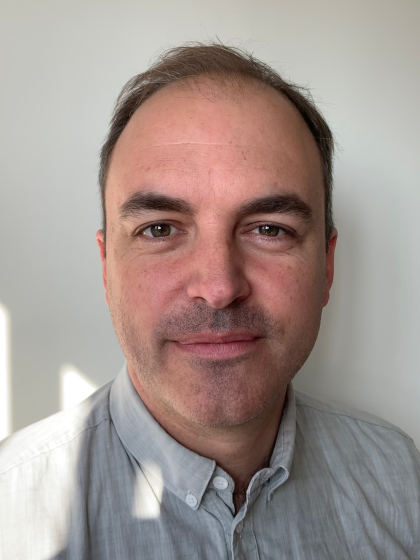
Andreas Buttinger-Kreuzhuber is affiliated with the Department of Engineering Hydrology at TU Wien. His research focuses on advanced hydrodynamic modeling, GPU-accelerated flood simulations, and integrating geospatial data for flood risk assessment. He contributed to projects like HORA 3.0, a national flood risk mapping initiative, and developed frameworks for high-resolution simulations of urban and rural flash floods. His work bridges computational science and environmental engineering, emphasizing real-world applications in disaster management and urban planning. Education: Dipl.-Ing. (FH) in Civil Engineering, Dr.techn. (PhD) in Technical Sciences, and BSc in a related field. Notable research themes include shallow-water schemes optimization, interactive visualization tools for flood management, and nanopore fluid dynamics. His interdisciplinary approach combines hydraulic modeling with geomatics and computational fluid dynamics. Collaborations include work with Prof. Günter Blöschl and the Network Lab at TU Wien. Recent efforts focus on accelerating hydrodynamic simulations using GPU technology and improving regional-scale flood modeling accuracy.
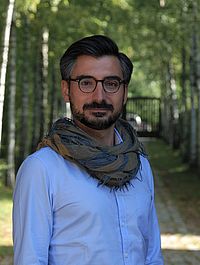
Nikolaos Olma is a Research Fellow at the Leibniz Centre for Modern Oriental Studies (ZMO) in Berlin since 2020, with concurrent lecturing appointments at Martin Luther University of Halle-Wittenberg (2019-present) and Free University of Berlin (2021). His career includes research affiliations at the Max Planck Institute for Social Anthropology and academic training across four countries. Educational Background PhD in Cross-Cultural and Regional Studies, University of Copenhagen (2018) Research Master in Social Sciences, University of Amsterdam (2012) MA in International Conflict Studies, King's College London (2009) BA in Mediterranean Studies, University of the Aegean (2008) His research focuses on environmental (un)knowledge in post-Soviet contexts, particularly examining uranium mining legacies in Kyrgyzstan and urban transformation in Uzbekistan. Fieldwork sites include Mailuu-Suu (Kyrgyzstan) and Tashkent. Research Themes Post-Soviet environmental remediation Urban mobility and informal economies Memoryscape analysis in contaminated spaces Normalization of health risks Material culture of industrial ruins Toponymic politics and wayfinding Scientific Contributions 2022 Irene Hilgers Memorial Prize winner Published in Geoforum , Central Asian Survey , and City & Society Developed conceptual framework for 'environmental (un)knowledge' in post-industrial contexts Academic Engagement Organized workshops on urban research methods Co-organized panels on Central Asian minorities and urban politics Teaches courses on economic anthropology and post-Soviet urbanism
Francesca Frassoldati is an Associate Professor at Politecnico di Torino's Department of Architecture and Design (DAD), where she serves as Deputy Coordinator of the PhD School of Architecture, History and Design and is a member of the FULL Interdepartmental Center - Future Urban Legacy Lab. Her academic career spans multiple teaching roles across undergraduate, master's, and doctoral programs, with consistent involvement in the Architecture, History and Design PhD program since the 33rd cycle (2017/2018). Her research focuses on rural-urban interaction, urban decay, and urban transformations, with significant contributions to understanding urban dynamics in both European and Chinese contexts. Dr. Frassoldati's scholarly work explores critical perspectives on urbanization, heritage site management, and the intersection of political power with urban form. Her publications reveal a strong interest in architectural education methodologies and the challenges of designing for sustainability amid demographic shifts and environmental crises. Analysis of her recent publications shows a consistent trajectory examining the relationship between urban form and political power, with increasing focus on comparative studies between Italian and Chinese urban contexts. Her work bridges theoretical urban studies with practical design interventions, particularly evident in her research on UNESCO heritage sites, Chinese urban development, and educational frameworks for urban design. As an academic supervisor, Dr. Frassoldati mentors numerous PhD students working on diverse topics including Chinese architectural landscapes, urban morphology, cultural landscapes, and urban-rural transformations. Her research projects include significant contributions to the ResQ - Re-school initiative addressing school spaces during pandemic conditions and the European ROCK project involving Turin's brownfield sites. Her scholarly activities are closely aligned with sustainability goals, particularly UN SDG 11 (Sustainable Cities and Communities), SDG 13 (Climate Action), and SDG 15 (Life on Land), reflecting her commitment to environmentally conscious urban development and preservation of cultural landscapes.