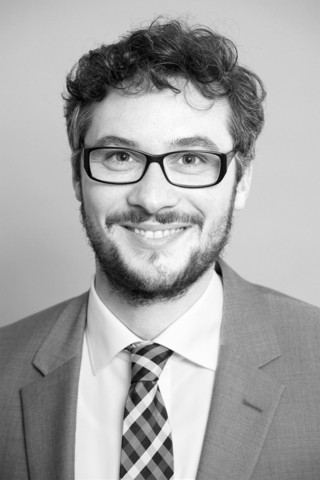
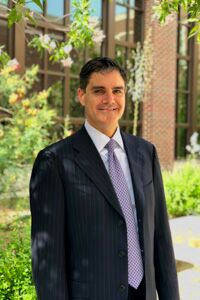
Christopher Storie is a Professor of Geography at the University of Winnipeg, specializing in GIS, Remote Sensing, and Urban Geography. He holds an office in Lockhart Hall (5L03) and teaches courses such as Introduction to GIS, Remote Sensing, and Urbanization in the Developing World. His research focuses on Deep Learning applications for automated land use/land cover mapping, informal settlement mapping, and urban-rural fringe detection. Key research interests include leveraging neural networks for geospatial analysis, urban dynamics in regions like Mexico City, and collaborative international fieldwork. He has contributed to over 20 peer-reviewed articles since 2000, emphasizing satellite imagery analysis and environmental monitoring. His work bridges technical geospatial methods with socio-environmental challenges in urban and developing regions.
Mi Shih is an Associate Professor and Director of the Urban Planning and Policy Development Program at the Edward J. Bloustein School of Planning and Public Policy, Rutgers University. She holds a Ph.D. from the same institution and prior academic roles include Assistant Professor at the University of Alberta (Canada) and postdoctoral research fellow at the University of Technology Sydney (Australia). Her research focuses on Chinese urbanization, land politics, displacement, and social conflicts arising from urban development. She employs ethnographic and mixed-method approaches to analyze state roles in urban-rural dynamics, planning regulations, and value capture mechanisms. Key themes include land development rights, property rights, and the socio-spatial impacts of urban policies in Taiwan and China. Publications highlight critical topics such as TDR systems, urban governance, and the commodification of land. Her work bridges legal geography, urban sociology, and policy analysis, offering insights into global urban challenges. Education: B.S. and M.S., National Taiwan University Ph.D., Planning and Public Policy, Rutgers University Teaching includes graduate courses on international urbanization and planning methods, and undergraduate courses on global urban systems.
Hyung Min Kim is an Associate Professor in Urban Planning at the University of Melbourne's Melbourne School of Design. His research focuses on globalisation's urban impacts, including FDI spatial dynamics, smart cities, liveability, and Asia-Pacific urbanisation. Before joining Melbourne in 2016, he worked at RMIT University (Australia), Xian Jiaotong-Liverpool University (China), and Korea Appraisal Board. He holds a PhD from the University of Melbourne, supported by an Endeavour Postgraduate Award. His work examines global cities' economic and spatial transformations, emphasizing FDI, international real estate investments, and urban policy in Korea, China, and Vietnam. Key themes include urban renewal strategies, land value capture mechanisms, and the interplay between ICT and urban development. Notable research areas include: Global urban governance and expertise export Spatial mismatch in FDI distribution Pedestrian-centric city design Smart city frameworks for productivity and sustainability Historical urban trajectories in North Korea His publications span 20+ countries, analyzing urban phenomena from Hanoi to Suzhou. Current projects explore FDI-urban growth linkages in Southeast Asia and the role of land readjustment in creating walkable cities. He advises on international urban development strategies and has collaborated with governments on smart city implementation frameworks.
Nik Luka is an Associate Professor at the School of Architecture, McGill University, with a joint appointment in Urban Planning. He holds a Ph.D. from the University of Toronto, an M.Arch. from Laval University, and a B.A.A. from Toronto Metropolitan University. His roles include Associate Director of the Centre for Interdisciplinary Research on Montréal and associate memberships in the Department of Equity, Ethics, and Policy and the Bieler School of Environment. Ph.D. (Toronto) M.Arch. (Laval) B.A.A. (Toronto Met.) Luka specializes in ethnography, landscape studies, and critical design/planning research, focusing on REURBANISM—the transformation of (sub)urban landscapes through collaborative design and participatory governance. His work bridges natural processes and human culture, emphasizing narrative, discourse, and policy-led urbanism. His recent publications highlight trends in recreational mobilities, densification, transit-oriented development, and periurban landscape dynamics. Themes span urban walkability, public space design, and transdisciplinary approaches to sustainability. SSHRC Partnership Grant with Canada Mortgage and Housing Corporation Collaborative projects in Sweden and continental Europe Champ des Possibles partnership in Montreal Luka engages with community organizations such as the Montreal Urban Ecology Centre, Convercité, and Suspicious Fish, blending academic research with civic practice. His affiliations include the Trottier Institute for Sustainability in Engineering and Design and international collaborations on landscape connectivity.
Alister Scott is a Professor at Northumbria University in the Geography and Environmental Sciences Department , specializing in landscape and environmental planning. His work bridges the built and natural environments, focusing on multifunctional landscapes and policy integration. Education: PhD (awarded 1987) Research Themes: Landscape planning, ecosystem services, green/blue infrastructure, peri-urban dynamics, sustainability assessment, and policy translation. Collaborations: Active in UK-based and international projects, including EU PERFECT and ESRC-funded initiatives. Recent publications emphasize the role of cultural ecosystem services, participatory mapping in Green Belt areas, and reconciling urban growth with environmental protection. His work addresses the integration of nature-based solutions into planning systems and evaluates policy impacts on health, wellbeing, and biodiversity. Networks: Executive Member of the North East Nature Partnership (since 2016) Contributor to the UK National Ecosystem Assessment Follow-on projects
Giulia Fini is an associate professor of Urban Planning and Techniques at the Polytechnic Department of Engineering and Architecture (DPIA), University of Udine. She teaches Urban Planning in the Master's Degree Program in Architecture and Urban Planning and the Bachelor's Degree Program in Civil and Environmental Engineering. Fini serves on the Board of Directors of INU Friuli Venezia Giulia, the Scientific Committee of Urbanpromo, and is the editor of Planum, The Journal of Urbanism. Her research bridges urban and territorial planning with a focus on regeneration of tertiary-directional districts, sustainable cities, smart urban policies, and urban-rural fringe dynamics. She explores the spatial implications of ICTs on labor, the transformation of industrial/service spaces, and the integration of luxury developments into public strategies. Recent publications address transcalar interventions in urban regeneration and comparative studies of European cities like Antwerp and Amsterdam. Giulia Fini's scholarly work spans themes such as micro-gentrification, public space privatization, peri-urban park design, and post-crisis urban revitalization. Her articles analyze the interplay between urban functionalism, territorial continuity, and the evolving role of urban planners in addressing socioeconomic dynamics. She has contributed extensively to architectural anthologies and critical urban studies, particularly on Bernardo Secchi's methodologies. Affiliated with institutions like the University of Udine and collaborating on projects in Antwerp, Milan, and Amsterdam, Fini's work emphasizes design devices for habitability, attractiveness, and territorial coherence. Her research integrates theoretical reflections with practical case studies, offering frameworks for regenerating fragmented urban landscapes and managing contemporary spatial challenges.
David López-Carr is a Professor of Geography at the University of California, Santa Barbara (UCSB), where he directs the Human-Environment Dynamics Lab (HED) and serves as Associate Dean of the University of California Education Abroad Program (UCEAP). He holds a PhD from the University of North Carolina (2002) and completed an NIH postdoctoral fellowship in Biostatistics. His research focuses on the interplay between population dynamics, health, rural livelihoods, and environmental conservation, with fieldwork in over 70 countries. He speaks five languages and has authored over 230 publications, supported by $10M+ in grants from NASA, NSF, NIH, and others. Education: PhD in Geography (UNC, 2002); Postdoc in Biostatistics (UNC School of Public Health). Research interests include climate change adaptation, schistosomiasis control via ecological interventions, and land degradation monitoring for UNCCD. He has pioneered studies linking dams to schistosomiasis outbreaks and developed frameworks for planetary health innovation in Africa. Awards include the 2024 ESA Sustainability Science Award, AAAS Fellowship (2014), and multiple mentoring/teaching accolades. His grants fund projects in Guatemala’s Maya Biosphere Reserve, sub-Saharan Africa, and California’s Central Valley. He advises graduate students Lívia Machado Costa and Nusrat Zahan Jarin. Labs/teams: Human-Environment Dynamics Lab (HED), leading interdisciplinary research on socio-ecological systems.
Devran BENGÜ is a Lecturer in the Department of Architecture at the Faculty of Architecture. Her research focuses on spatial dynamics, public space design, and sustainable human development through participatory approaches. She explores themes such as urban phenomenology, radical sustainability, and the intersection of culturevation with urbanism. Her research interests emphasize the integration of social infrastructure into urban planning, leveraging participatory design methodologies to enhance community resilience and publicness. She investigates how cultural practices, such as alternative theater stages and urban agriculture, transform metropolitan spaces and foster social equity. Her recent work includes theoretical models for post-disaster spatial integration, radical sustainability frameworks, and critical analyses of urban policy tools. Notable studies examine Kadıköy’s urban dynamics and the role of culturevation in shaping public spaces. While no academic awards or grants are explicitly listed, her active publication record demonstrates engagement with cutting-edge urban discourse. No student advising or lab affiliations are mentioned in the provided materials.
Lisbeth Funck is a Professor at the Oslo School of Architecture and Design (AHO), where she maintains an active research and teaching profile centered on architectural theory and practice. Her work critically examines the interplay between built environments, infrastructure, and socio-ecological systems, with particular emphasis on rural landscapes and climate change adaptation. Funck's research traverses architecture, infrastructure, and sustainability through the lens of lived abstraction and craft. She investigates how architectural interventions produce spatial presence and meaning, often focusing on marginal territories and river systems as sites of transformation. Her methodology blends theoretical inquiry with practical design investigations, emphasizing materiality and sensory experience in the production of architectural space. Analysis of her 2022-2024 publications reveals a pronounced trajectory toward climate-responsive design in rural contexts, exemplified by projects like the river Sambre investigations. This work destabilizes conventional spatial understandings through collaborative, site-specific interventions that merge speculative futures with immediate environmental challenges, demonstrating architecture's capacity as a medium for socio-ecological adaptation. Scientific Awards No awards or fellowships were documented in the provided information. Advising and Grants While the text lists extensive publications, it does not specify doctoral advisees or grant funding. Funck's collaborative research with Matthew Anderson and others suggests active participation in academic teams, though formal supervisory roles remain unmentioned. Labs and Teams Funck co-founded Studio B3 at AHO, which conducted the influential 'Architecture as Infrastructure' research project (2008-2010). This studio produced international exhibitions including the Venice Biennale and Beijing presentations, exploring architecture's role as fundamental infrastructure through design experiments and theoretical discourse.
Andrew Wiese is Professor of U.S. Urban and Environmental History in the Department of History at San Diego State University, part of the College of Arts and Letters. His work bridges historical scholarship with civic engagement, focusing on suburbanization, race, housing, environmental planning, and social justice. Education: Ph.D. in History, Columbia University, 1993 M.Phil. in U.S. History and Urban Planning, Columbia University, 1990 B.A. in Literature, Science and the Arts, University of Iowa, 1987 Wiese's research centers on the intersections of race, space, and power in American urban and suburban development. He is renowned for his work on African American suburbanization and environmental politics in California. His scholarship has redefined urban-suburban studies by highlighting the diversity of suburban experiences and the role of marginalized communities in shaping urban landscapes. He emphasizes the application of historical insight to contemporary planning and policy. His recent publications focus on environmental activism, local politics, and sustainability in San Diego, using oral history and archival research. Themes across his work include community planning, environmental justice, housing equity, and the historical roots of urban crises. His research demonstrates a consistent commitment to interdisciplinary and public-facing scholarship. Scientific Awards and Honors: Best Book in North American Urban History, Urban History Association John G. Cawelti Prize for Best Book in American Culture Studies, American Culture Association Best Scholarly Article in 1999, Urban History Association Best Scholarly Article of 1998-99, Oral History Association Lead Article in Special Issue 'Bringing the City Back In?', Journal of Urban Affairs Wiese is actively involved in community planning and environmental stewardship, contributing policy reports and advocacy writings. He mentors students through his teaching and research, though specific advisees are not listed. His work has been supported by sustained scholarly engagement and institutional collaboration. He has also contributed to public discourse on civic education and the role of history in public life. He is associated with community-based research initiatives in San Diego, particularly through projects like the University Community Planning Group and environmental advocacy efforts such as Friends of Rose Canyon. His work integrates academic rigor with real-world impact, reflecting a deep commitment to engaged scholarship.
Tobin LeBlanc Haley is an Assistant Professor of Sociology in the Department of Social Science at the University of New Brunswick's Faculty of Arts. She holds a PhD from York University, with prior degrees from UNB. Her research focuses on disability justice, socio-economic poverty, and housing precarity through critical policy ethnography and arts-based methods. She co-hosts the political TV show NB Debrief and leads externally-funded projects on housing and disability. Education: BA (Hons) and MA from University of New Brunswick; PhD from York University. Research interests include intersections of disability, poverty, and housing, with a commitment to community-engaged scholarship. Her work critiques neoliberal policies and advocates for marginalized groups through innovative methodologies. Recent projects analyze rental market policies, youth homelessness, and Indigenous education frameworks. Teaching emphasizes anti-racist and accessible pedagogy, encouraging student experiential learning. Current initiatives include the NB Housing Summit and studies on renoviction dynamics. Her research bridges academic rigor with practical impact, aiming to inform equitable social policies. Grants and collaborations underscore her focus on transformative knowledge mobilization.
Dr. Carsten Butsch serves as a Privatdozent (PD) at the Institute of Geography, University of Cologne, and is an active Associated Member of the Global South Studies Center (GSSC). His work bridges German academic institutions with field research in South Asia, particularly focusing on urban transformations in Indian megacities and transnational migrant communities. His research centers on peri-urban dynamics in India, examining water access, livelihood systems, and health impacts within rapidly urbanizing zones like Pune and Mumbai. Concurrently, he investigates transnational practices of the Indian diaspora in Germany, analyzing how migrants maintain cultural and economic ties across borders. Key projects include the H2O initiative on urban fringe livelihoods and health surveillance systems in Indian cities, reflecting his interdisciplinary approach combining geography, public health, and migration studies. Analysis of his 15 most recent publications reveals consistent thematic threads: peri-urban water governance (28% of works), health-urbanization linkages (22%), Indian megacity development (19%), and transnational migration (15%). His 2024 output shows heightened focus on environmental health crises like e-waste impacts and colonial legacies in Kolkata's urban fabric, indicating evolving research toward sustainability challenges in post-colonial contexts. Dr. Butsch actively collaborates with German-Indian research consortia, evidenced by projects like the Pune health surveillance study and transnational migrant network analyses. His leadership in the H2O urban fringe initiative demonstrates sustained engagement with third-mission activities, though specific grant amounts aren't documented. The Institute of Geography provides his primary academic base, with the GSSC facilitating cross-disciplinary Global South research networks.
Dr. Elizabeth Taylor is a Senior Lecturer in Urban Planning & Design at Monash University's Department of Architecture (Faculty of Art, Design and Architecture). Her research focuses on urban planning conflicts, housing markets, car parking policy, and spatial analysis using GIS/remote sensing. Key areas include the historical legacies of zoning regulations, industrial land use, and urban sustainability. Taylor has authored the book Dry Zones: Planning and the Hangovers of Liquor Licensing History (2018) and contributed to projects like 'Australia’s New Cities' and 'Metropolitan Vegetation Monitoring'. She holds the 2012 Brian McLaughlin Award and a 2017 DAAD scholarship, and co-hosts the This Must Be the Place podcast. Her work bridges academic research with policy咨询 for local governments on parking and urban renewal. Education Background: Previously held postdoctoral fellowships at RMIT University (Centre for Urban Research) and the University of Melbourne (McKenzie Fellowship). Prior experience includes government research and consultancy roles. Research Interests: Combines historical analysis with contemporary urban challenges, particularly car parking’s role in urban space conflicts, industrial zoning evolution, and equitable urban expansion. Current projects address new city development, public housing renewal evaluations, and sustainable transport options in growth areas. Awards & Engagement: Recognized for contributions to urban studies; actively involved in policy consultations and public discourse through media commentary and podcasting.
J.H. Cullum Clark is an Adjunct Professor of Economics at Southern Methodist University (SMU) and Director of the Bush Institute-SMU Economic Growth Initiative. He holds a Ph.D. in Economics from SMU (2017), an A.M. in Political Science from Harvard University (1993), and a B.A. in History from Yale University (1989). His research focuses on macroeconomic policy, economic geography, urban economics, and modern economic history, with recent work emphasizing housing policy and regional growth strategies. Prior to academia, Clark spent 25 years in the investment industry, including roles as President of Prothro Clark Company (2002–2018) and portfolio manager at firms like Brown Brothers Harriman and Warburg Pincus. He has served on SMU’s Investment Committee since 2008 and chairs the Tate Lecture Series Board. His volunteer leadership extends to boards of Uplift Education, the Eugene McDermott Foundation, and Yale University Art Gallery. Clark’s recent publications analyze urban housing crises, regional economic disparities, and policy solutions for sustainable growth. His work bridges economic theory with practical governance, emphasizing data-driven approaches to urban development and fiscal strategy.
Anthony McCosker is a Professor of Media and Communication at Swinburne University of Technology, affiliated with the School of Social Sciences, Media, Film and Education. He holds dual roles as Director of the Social Innovation Research Institute and Chief Investigator in the ARC Centre of Excellence for Automated Decision-Making and Society (ADM+S). His research focuses on digital inclusion, technology adoption inequalities, health/wellbeing, automation, and AI ethics, with an emphasis on community-driven data practices. Research Projects: Includes the Impact Evaluation of Be Connected program, digital equity projects with Red Cross and Telstra, and initiatives addressing rural mental health service gaps. Publications: Over 160 outputs including books like Everyday Data Cultures and peer-reviewed articles on topics such as digital social ecosystems and AI literacy. Grants: Lead investigator on projects funded by ARC, Department of Education, and international collaborations (e.g., Australia-India Net Zero AI initiative). His work bridges academia and practice, collaborating with NGOs, governments, and tech firms to address digital divides and ethical AI applications. Supervises PhD/Master’s students in areas like AI ethics, social connection technologies, and digital health interventions.