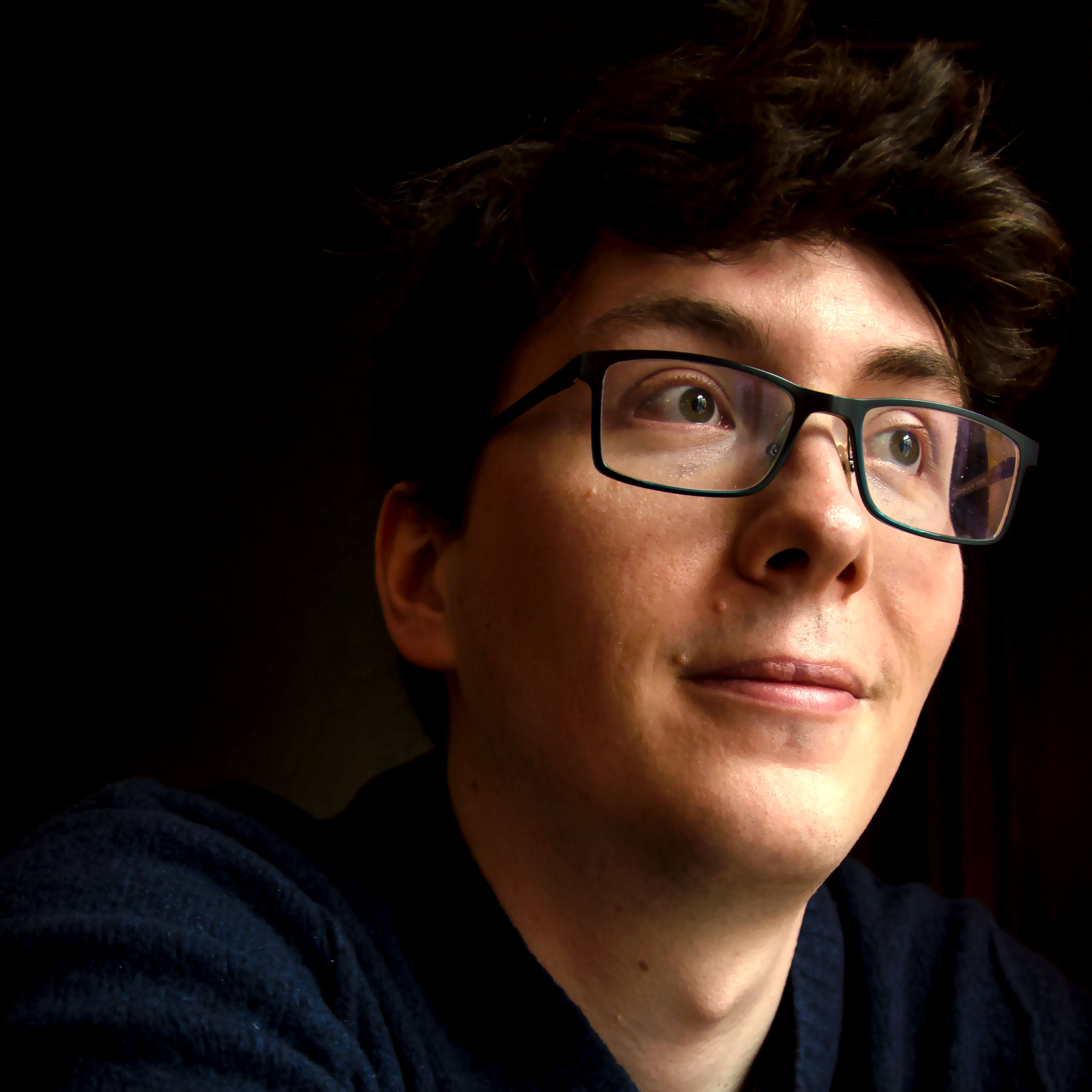
Christian Rupprecht is an Associate Professor at the Department of Computer Science, University of Oxford, specializing in computer vision and machine learning. His research focuses on unsupervised learning, 3D reconstruction, and visual understanding. His work includes contributions to conferences such as GCPR'25, ICCV'25, and CVPR'25, with papers spanning topics like correspondence estimation, animal pose modeling, and synthetic data generation. He leads projects within the prestigious Visual Geometry Group (VGG). Notably, his paper VGGT received the Best Paper Award at CVPR'25. His research integrates deep learning and geometric modeling, emphasizing robustness and generalization in visual systems. Best Paper Award at CVPR'25
Higher School of Aeronautical Techniques and Automotive ConstructionFrance
Amine MEHEL is a Research Professor at ESTACA's Mechanics and Environment Center (MSCE) since 2010, specializing in air quality and pollution control in transport systems. His work bridges experimental and numerical studies of turbulent flow interactions with pollutants and nanoparticles. Research Axes : CQA (Characterization of Air Quality) and EDP (Spatiotemporal Dynamics of Pollutants) Key Projects : CEPARER (2022-2025), AmCoAir (2020-2023), CAPNAV (2019-2022), CAPTIHV (2015-2018) His expertise includes experimental facilities like wind tunnels, PIV/LDV measurements, and CFD simulations using Eulerian-Lagrangian approaches. He supervises PhD students and coordinates teaching projects like PIRATE and PRI. Recent publications focus on ultrafine particle dispersion in vehicle wakes, brake emissions in underground stations, and cabin air quality characterization.
Chao Liu is a Research Scientist at CNRS (French National Center for Scientific Research) since 2008, affiliated with the DEXTER team and the Department of Robotics, LIRMM at University of Montpellier, France. He earned his Ph.D. in Electrical & Electronic Engineering from Nanyang Technological University, Singapore (2006). Current research focuses on surgical robotics , haptics , teleoperation , and nonlinear control theory with applications in computer vision. His work addresses challenges in robotic-assisted telesurgery, including: Stable and transparent human-robot interaction through wave variable compensators and passivity filters Physiological motion compensation using spatio-temporal LSTM and dual Kalman filters EMG-based motion recognition for surgical skill assessment 3D soft-tissue reconstruction with stereo-endoscopes and deep learning Dr. Liu leads European and French projects like: TS2RT (CNRS-funded): Safer teleoperation with motion compensation ROBACUS (ANR-funded): Needle positioning with MPC control HaTUMoCo (CNRS-funded): Haptic teleoperation with uncertainty handling ARAKNES (EU-funded): Microrobotic systems for endoluminal surgery Scientific honors include Senior Member of IEEE and Member of Sigma Xi . He supervises Ph.D. and Master's students working on topics such as concentric tube robot optimization, haptic teleoperation, and EMG-based force estimation. Dr. Liu serves on IEEE Technical Committees for Telerobotics and Haptics , and as Technical Editor of IEEE/ASME Transactions on Mechatronics.
Natacha Lapeyroux is a researcher affiliated with the Faculty of Humanities and the CHUS (Centre d'histoire urbaine de la Sarthe) team. Her work focuses on gender representations in sports media, with collaborations including Sarah Bourcier and Claire Pelgrims. Université Paris 3 Sorbonne Nouvelle (PhD, 2021) Université de Lorraine Universitat de València Research interests include: Gender norms in televised sports coverage Intersection of urban mobility and gender performance Socio-semiotic analysis of media discourses Ambivalence in national identity representation Recent publications analyze 2025 bicycle-cyclist assemblages , 2024 Roland Garros broadcasting evolution , and 2023 World Championships coverage . Collaborations span Belgium, France, and Italy, with methodologies combining quantitative data and qualitative interviews. Professional affiliations : CHUS Research Team Laboratoire MICA (Université Paris 3) International Gender Institute (Toulouse)
Thierry Badard is an Associate Professor at the Department of Geomatics Sciences , Université Laval, where he also serves as Director of the Center for Research in Geospatial Data and Intelligence (CRDIG) . With over 28 years of experience in geospatial science, he leads research initiatives at the intersection of GeoAI , LiDAR processing , and smart city technologies . Director, CRDIG (2016-2022) Steering Committee Member, Big Data Research Centre (CRDM) Researcher, Institute for Intelligence and Data (IID) Research Expertise spans geospatial big data, GeoNLP, and IoT applications for digital twins. His work addresses flood risk modeling , 3D urban analytics , and environmental monitoring through AI-driven solutions. Recent publications focus on contrastive learning for LiDAR segmentation and geospatial ontologies for early warning systems. Grant Leadership includes collaborative projects on smart insurance analytics (2018-2025), Arctic bioaerosol research (2019-2025), and Quebec-Morocco digital twin partnerships (2022-2023). He has advised 15+ graduate students in geomatics and related fields.
Jacques Gautier is an Assistant Professor in Geovisualization at LASTIG, part of the French National Geographic Institute (IGN France) since September 2020. He is a member of the GEOVIS research team focusing on advanced geovisualization techniques for spatio-temporal data analysis. Prior to his current position, he served as a Postdoctoral Researcher at LASTIG working on the Urclim European project, developing geovisualization methods for climate data in urban environments. His educational background includes a PhD in Geography from Université Grenoble Alpes (2015-2018), where his dissertation focused on "GrAPHiST: An exploratory analysis approach for identifying the dynamics of spatio-temporal phenomena," and an Engineering degree in Geographical Information Science from ENSG (2009-2012). Dr. Gautier's research focuses on innovative approaches to visualize complex spatio-temporal data across multiple domains. His expertise spans meteorological data visualization, epidemiological data visualization, 2D/3D geovisualization techniques, and exploratory data analysis of spatio-temporal phenomena. He has developed specialized methods for identifying cyclic patterns in time-series data, visualizing uncertainty in ensemble forecasting systems, and creating interactive visualization environments for domain experts in urban planning, public health, and emergency response. Analysis of Dr. Gautier's publication record reveals a consistent focus on developing visualization techniques that bridge theoretical advances with practical applications. His work spans urban climate analysis, pandemic response (particularly during COVID-19), and mountain rescue operations. A distinctive aspect of his research is the integration of harmonic analysis with visual exploration to identify cyclic patterns in spatio-temporal data, as demonstrated in his GrAPHiST framework. Dr. Gautier has been actively involved in several significant research projects including ORACLES (focusing on ensemble forecasts of marine submersion), Urclim (aiming to develop integrated Urban Climate Services), and Choucas (an interdisciplinary project to assist mountain rescue operations). These projects highlight his ability to translate visualization research into practical decision-support tools for critical situations. As a member of the GEOVIS research team, Dr. Gautier contributes to advancing geovisualization methodologies through both theoretical development and practical implementation. His work on mixed temporal diagrams, helical time representations, and uncertainty visualization has provided new approaches for exploring complex spatio-temporal datasets across multiple disciplines.
Jon Crowcroft is the Marconi Professor of Communications Systems in the Department of Computer Science and Technology at the University of Cambridge, and serves as the Chair of the Programme Committee at the Alan Turing Institute. He is also a Fellow of Wolfson College, Cambridge, and a visiting professor at the Department of Computing at Imperial College London. With a career spanning over three decades in computer networking research, Professor Crowcroft has made seminal contributions to the development of the Internet and continues to be highly active in cutting-edge research areas. His educational background includes: BA in Physics from Trinity College, University of Cambridge (1979) MSc in Computing from University College London (1981) PhD from University College London (1993) Professor Crowcroft's research spans multiple domains in computer networking and distributed systems. He has worked in Internet support for multimedia communications for over 30 years, with three main focus areas: scalable multicast routing, practical approaches to traffic management, and the design of deployable end-to-end protocols. His current research focuses on opportunistic communications, social networks, and techniques to scale infrastructure-free mobile systems. He is particularly known for his 'build and learn' paradigm for research and has recently been exploring decentralized digital identification systems, smart cities, and edge computing. His work often bridges theoretical foundations with practical implementations, emphasizing privacy-preserving approaches and sustainable network architectures. Professor Crowcroft has received numerous prestigious awards recognizing his contributions to the field, including: Election as Fellow of the Royal Society (2013) ACM SIGCOMM Award (2009) ACM Fellow (2002) Fellow of the Royal Academy of Engineering IEEE Fellow (2004) Chartered Fellow of the British Computer Society Throughout his career, Professor Crowcroft has advised numerous PhD students, including Mark Handley and Pan Hui, who have themselves become influential researchers in the networking community. He has authored several influential books that have been adopted internationally in academic courses, such as 'TCP/IP & Linux Protocol Implementation,' 'Internetworking Multimedia,' and 'Open Distributed Systems.' His research has been supported by various grants and collaborations with both academic institutions and industry partners, contributing to successful startup projects and influencing Internet standards. Professor Crowcroft is actively involved in several research initiatives, including serving on the Scientific Council of IMDEA Networks Institute since 2007 and the advisory board of the Max Planck Institute for Software Systems. He is also a director of the Matrix Foundation, which develops open network protocols. His current research group focuses on privacy-preserving analytics, decentralized systems, and the future of Internet architecture.
Michael Benzaquen is a CNRS Research Scientist and accredited research director (HDR) based at École Polytechnique, where he founded and currently holds the Chair of Econophysics & Complex Systems. He is affiliated with LadHyX (UMR CNRS 7646), a research laboratory focused on hydrodynamics and complex systems at the intersection of physics, economics, and social sciences. Dr. Benzaquen's research spans multiple interdisciplinary fields, with primary interests in: Statistical physics of complex systems Hydrodynamics at interfaces Econophysics and quantitative finance Socio-physics and behavioral modeling Applications of physics to economics and social sciences Physical approaches to market microstructure and price formation His work demonstrates a unique methodology applying physical principles to understand complex phenomena in financial markets, social dynamics, and ecological systems. Dr. Benzaquen has made significant contributions to understanding market impact, price formation, and the statistical properties of economic systems from a physics perspective, while also maintaining strong research in fundamental fluid dynamics and interfacial phenomena. Analysis of Dr. Benzaquen's extensive publication record reveals a consistent trend toward interdisciplinary integration, with recent work increasingly bridging statistical physics, econophysics, and complex systems theory to address real-world problems. His publications span from fundamental research on ship wakes, liquid crystals, and thin films to applied studies in quantitative finance, ecological economics, and social dynamics, demonstrating remarkable breadth while maintaining methodological coherence through statistical physics approaches. As an accredited research director (HDR), Dr. Benzaquen supervises PhD students and postdoctoral researchers, leading an active research group focused on econophysics and complex systems. His group maintains strong collaborations across disciplines and regularly publishes in high-impact journals spanning physics, finance, and interdisciplinary sciences. The group's work is supported by various research funding sources enabling ambitious projects at the intersection of physics and social sciences. Dr. Benzaquen's laboratory at LadHyX brings together researchers from diverse backgrounds including physics, mathematics, economics, and computer science to tackle complex problems using quantitative approaches. His research has practical applications in financial market regulation, ecological conservation, and materials science, reflecting the real-world impact of his interdisciplinary methodology.
Houmam Saad is a Syrian archaeologist and researcher affiliated with the École Pratique des Hautes Études - PSL , where he is supported by the PAUSE program. He previously led archaeological efforts in Syria as head of the Excavations and Archaeological Studies Department at the General Directorate of Antiquities and Museums since 2019. His work focuses on Syrian cultural heritage, particularly in Damascus and Palmyra. Education: Master’s in Islamology from EPHE-PSL (2016), International Diploma in Heritage Studies (INP-Paris, 2012), PhD in Archaeology (Damascus, 2013). Dr. Saad’s research spans archaeology , cultural heritage preservation , and Digital Humanities , including 3D digitization and satellite-based damage monitoring. His current projects involve publishing 20 years of Damascus excavations, documenting conflict-related heritage loss, and teaching at the Master’s program in "History of Art and Archaeology." He has contributed to high-profile initiatives like the 3D digitization of Palmyra and the Krak des Chevaliers with ICONEM, showcased in exhibitions at the Grand Palais and Cité de l'Architecture. His scientific work emphasizes the universal value of cultural heritage amid war, regime changes, and looting. Scientific Awards: PAUSE fellowship (2025). Dr. Saad is actively involved in heritage safeguarding, leading the PROCLAC unit, and preparing publications on Byzantine mosaics and Crusades-era artifacts. He also trains students on conflict-induced challenges in archaeology.
Sidonie Christophe is a Senior Researcher (Directrice de Recherche, DR1) at UMR LASTIG, a joint research unit of Université Gustave Eiffel, IGN-ENSG, and EIVP. She serves as co-director of the LASTIG laboratory and leads research in geovisualization, map design, and interactive spatial data exploration. She also holds a part-time advisory role (60%) at the French Ministry of Higher Education and Research in the domain of digital technology, environment, climate, and sustainable urban development. PhD in Geographic Information Sciences Senior Researcher, DR1, MTECT Co-Director, LASTIG Laboratory (since 2021) Former Team Leader, GEOVIS (Geovisualization, Interaction, and Immersion) Advisor, Environment and Urban Climate, French Ministry of Higher Education & Research Her research centers on innovative methods for 2D/3D and nD geospatial data visualization, with a focus on enabling spatio-temporal understanding through visual and non-visual spatial thinking. Her work integrates principles from geographic information science, human-computer interaction, and computer graphics. Key areas include urban climate visualization, tactile and augmented reality for accessibility, expressive cartographic rendering, and cognitive aspects of map design. She investigates how aesthetic and semiotic choices impact map comprehension and utility. The 15 most recent publications reflect a strong trend in interactive and accessible geovisualization, particularly for urban and environmental applications. Topics include neural map style transfer, 3D urban climate analysis, tactile maps for the visually impaired, augmented reality in geography, and visual analytics for crisis and climate data. There is a consistent emphasis on user-centered design, interdisciplinary integration, and the development of tools for decision-making under uncertainty. Scientific Recognition and Service: Invited speaker at major conferences (IEEEVIS, AGILE, ICC, CPGIS) Co-organizer of international workshops (e.g., GeoVIS, ISPRS AR/VR sessions) Leader of national research projects (ANR ORACLES, ANR ACTIVmap, ANR ECOCIM) Recipient of international mobility grants (AMICI I-SITE FUTURE) Contributor to national glossaries and research strategy (e.g., French photogrammetry glossary) Advising and Grants: Sidonie Christophe actively supervises PhD students and postdoctoral researchers, including Markie Jiang, Maria-Jesus Lobo, and Alexandre Mielniczek. She leads or participates in multiple funded research projects such as ANR ORACLES (marine flooding visualization), ANR ACTIVmap (tactile 3D maps), and ANR ECOCIM (eco-design of city information models). Her advisory role at the MESR involves shaping national research strategy in digital and environmental sciences. Labs and Research Teams: She is a core member of the GEOVIS team (Geovisualization, Interaction, and Immersion) at LASTIG and previously served as its leader. As co-director of LASTIG, she plays a central role in the leadership and strategic direction of the entire laboratory, which comprises over 100 researchers across four teams: ACTE, GEOVIS, MEIG, and STRUDEL.
Luisa Arango is an Associate Professor at the Institute of Ethnology, Faculty of Social Sciences, University of Strasbourg, where she also serves as Director of Studies for the Bachelor's program in Anthropology and Ethnology in Distance Learning (EàD). She is based at the MISHA building and is affiliated with the SAGE Laboratory (UMR 7363). Her academic work spans research, teaching, and interdisciplinary collaboration, with a strong focus on urban anthropology and environmental issues. Her research centers on urban environments, water and land resource management, identity dynamics in cities, and the anthropology of techniques, with fieldwork conducted in the Nile Valley (Sudan) and the Colombian Caribbean. She explores themes such as urbanization processes, spatiality and power, local perceptions of climate change, and alternative ethnographic methods. Her work often engages with political ecology, interdisciplinary environmental research, and the social dimensions of nature and resources. Luisa Arango’s recent publications (2013–2024) reflect a consistent focus on hydrosocial systems, urban water governance, land appropriation, and knowledge production in Africa and Latin America. Her articles appear in journals such as Canadian Journal of African Studies , Espaces et Sociétés , Autrepart , and Sources . She has also contributed to interdisciplinary dialogues on climate change, artistic ethnography, and field drawing as research tools. Knowledge about nature in Africa Urban water management in Khartoum and Cartagena Land rights and ethnic identity in Colombia Interdisciplinary approaches to climate and urban planning Ethnographic and artistic methodologies Luisa Arango is actively involved in research networks such as WATERLAT-GOBACIT and GAIA (University of Antioquia, Colombia). She has supervised academic projects and contributed to methodological innovations in ethnographic research. She teaches courses on ethnographic methods, urban anthropology, and research forums for distance-learning students. Her work emphasizes the political dimensions of resource access, the transformative power of collective action, and the importance of integrating social and material realities in understanding urban and environmental change. She has no listed scientific awards in the provided text, but her sustained publication record and leadership roles indicate significant scholarly impact. She is also engaged in public-facing research, including graphic works and documentaries on anthropological practice.
Noel Crespi is a Professor and Director of Studies at Telecom SudParis, part of Institut Polytechnique de Paris. He leads research in the NeSS group and is affiliated with SAMOVAR, a prominent research laboratory focusing on networks, systems, and services. His work spans multiple domains in telecommunications, networking, and smart systems. His primary research interests include digital twins for smart cities, blockchain technologies, Internet of Things (IoT) security and applications, 5G/6G networking, and machine learning applications in network management. He has published extensively on these topics, with over 100 publications in top-tier journals and conferences. His recent work shows a strong focus on digital twin applications for urban management, particularly in traffic and air quality monitoring. He has developed modular frameworks for smart city digital twins that integrate real-time data from multiple sources. His research also explores blockchain applications for network security, access control, and service provisioning in next-generation cellular networks. Dr. Crespi has received significant recognition for his work on digital twins, with his 2020 paper "Digital twin in the IoT context" in Proceedings of the IEEE being highly cited. His current research explores the integration of AI with digital twin technologies for sustainable urban development. He has supervised numerous PhD students and collaborates extensively with researchers across Europe and internationally. His work often involves interdisciplinary approaches, bringing together computer science, networking, urban planning, and environmental science. Dr. Crespi has been instrumental in developing frameworks for network digital twins, with applications in traffic management, air quality monitoring, and resource allocation in smart cities. His research demonstrates practical implementations in cities like Madrid, showing measurable improvements in urban management.
WU Jian is a Professor of Finance at NEOMA Business School, serving ten years as Head of the Economics and Finance Department. She teaches investment, financial risk management, and sustainable finance across undergraduate and executive programs. Her research focuses on financial engineering, banking regulation, corporate governance, and ESG integration. Notable contributions include studies on green bonds' impact on manufacturing, carbon pricing mechanisms in EU countries, and the diffusion of corporate social responsibility through board interlocks. Education: Holds a Doctorate in Management Sciences with specialization in Finance. Professional activities include organizing seminars on banking capital structure and presenting at global conferences such as EFMA, AFFI, and ATINER. Recent work emphasizes sustainability topics like smart agriculture evaluation and carbon subsidy effectiveness in Chinese cities. Her publications span journals like Renewable Energy , Economics Letters , and Bankers, Markets & Investors , reflecting expertise in both theoretical finance (e.g., exotic options) and applied sustainability research. Active in international academic networks, she contributes to bridging financial innovation with real-economy applications.
Elodie GUILLON is a Research Fellow at Université Toulouse-Jean Jaurès, affiliated with the Patrimoine, Littérature, Histoire (PLH) research unit within the Faculty of Arts and Humanities. Since October 2017, she has coordinated and co-directed the ERC Mapping Ancient Polytheisms project (MAP - 741182), a significant European research initiative. Previously, from September 2015 to August 2017, she held a post-doctoral position within the Idex project in Toulouse, ATS Patrimoine 2014, focusing on "PPI. Phoenicians and Punics in Ibiza, 7th-2nd century BC. Archaeological heritage and spatial modeling." She completed her doctorate in Ancient Sciences in November 2013 with Highest Honorable Mention and congratulations from the jury. Her research spans multiple interconnected fields: History of Phoenicia and Phoenician territories of expansion, spatial modeling applied to ancient data, computer analyses of ancient historical and archaeological data, reception and valorization of archaeological heritage, reception of Semitic antiquity by Moderns (particularly 19th and 20th centuries), and rural and territorial archaeology. GUILLON has pioneered the integration of digital humanities methodologies with traditional historical and archaeological research, creating innovative approaches to studying ancient religious systems and territorial organization. Her scholarly output demonstrates a clear trajectory from traditional historical and archaeological research toward increasingly sophisticated digital methodologies. The Mapping Ancient Polytheisms project represents the culmination of this evolution, combining spatial analysis, database design, and digital mapping to create comprehensive visualizations of ancient Mediterranean religious systems. Her work bridges the gap between traditional humanities scholarship and cutting-edge digital tools, making significant contributions to both fields. GUILLON has received recognition through her coordination of the prestigious ERC MAP project, though specific awards aren't detailed in the available information. Her collaborative work, particularly with Corinne Bonnet and other international scholars, demonstrates her standing within the global academic community focused on Mediterranean antiquity and digital humanities. She has taught various courses including Introduction to Historical Sciences - Antiquity (Bilingual L1, 2016-2019), Written and Oral Scientific Communication (Master's, 2012, 2014), Introduction to Research in History (Master's 2 MEEF, 2014), Introduction to Ancient History (L1, 2010, 2013), and Commerce and Exchanges in Antiquity (L2, 2011). Her teaching reflects her interdisciplinary approach, connecting traditional historical methods with contemporary digital practices. GUILLON's research is centered around the Mapping Ancient Polytheisms project, which represents a significant collaborative effort to digitally map ancient Mediterranean religious systems. This work involves creating sophisticated digital tools and methodologies for analyzing the spatial distribution of divine epithets and religious practices across the ancient Mediterranean world.
Mario Alviano is a Full Professor in Computer Science (INF/01) at the University of Calabria, Department of Mathematics and Computer Science. He leads the LAIA lab (Laboratorio di Applicazioni dell'Intelligenza Artificiale) and serves as co-PI in the PRIN project PRODE ('Probabilistic Declarative Process Mining'). Current projects: FAIR ('Future AI Research'), Tech4You ('Technologies for climate change adaptation'), SERICS ('SEcurity and RIghts in the CyberSpace'), CAL.HUB.RIA , RADIOAMICA , and STROKE 5.0 His research focuses on Answer Set Programming (ASP), particularly in optimization, nonmonotonic reasoning, and applications to logistics, healthcare, and cybersecurity. He has authored over 120 publications in top venues like AIJ, AAAI, and IJCAI. Recent academic contributions includes work on: Temporal Many-valued Conditional Logics Weighted Knowledge Bases with Typicality Explainable AI via xASP and ASP Chef Defeasible Reasoning Scalability Notable awards: Artificial Intelligence Award 'Marco Somalvico' (2017) ICLP Best Paper Awards (2015, 2016) LPNMR Best Paper Award (2022) CILC Best Paper Award (2023)