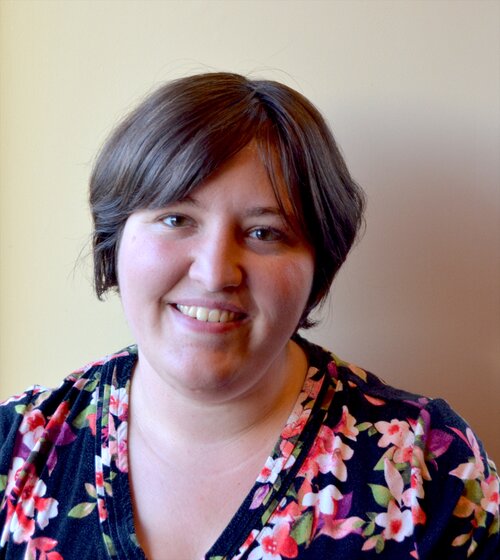
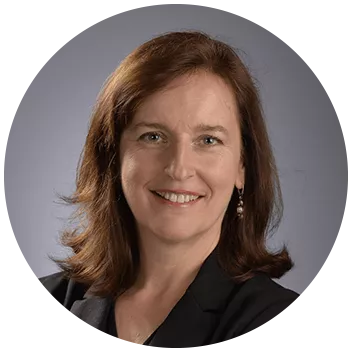
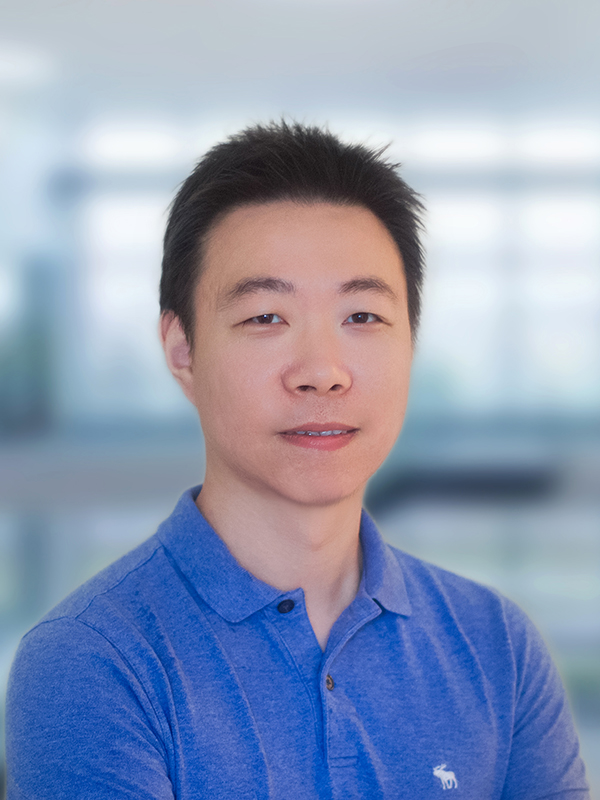
Vidya Samadi is a Research Professor at Clemson University, leading the Hydroinformatics Research Group. Her work bridges cyberinfrastructure, data analytics, and water resources management across interdisciplinary domains, including the College of Agriculture, College of Engineering, and School of Computing. She focuses on creating sophisticated, user-friendly software to address complex water management challenges. Her research interests span Machine learning for hydrology and flood prediction Deep learning architectures (e.g., Transformers, recurrent networks) Reinforcement learning applications in irrigation and reservoir management Cyberinfrastructure development for water science Uncertainty quantification in hydrological models Explainable AI for environmental decision-making Recent publications highlight trends in applying cutting-edge ML/DL models (N-BEATS, N-HiTS, Transformers) to soil moisture prediction, flood analytics, and irrigation optimization. Her work integrates physics-informed neural networks, probabilistic frameworks, and multimodal data (e.g., satellite imagery, sensor networks) for scalable water management solutions.
Jong Sung Lee serves as Deputy Associate Director at the National Center for Supercomputing Applications (NCSA) and holds a Lecturer position in the Department of Urban and Regional Planning at the University of Illinois at Urbana-Champaign. His work bridges computational science and disaster resilience, focusing on infrastructure systems and decision-support frameworks. Research interests center on community resilience to natural hazards, structural health monitoring, and open-source cyberinfrastructure development. His contributions include the IN-CORE modeling environment for interdependent infrastructure analysis and the CoverCrop Analyzer decision support system. Recent scholarship emphasizes quantitative approaches to seismic resilience, disaster risk mitigation, and physical activity patterns analysis. Lee collaborates with multidisciplinary teams across engineering, urban planning, and public health sectors. His work has been featured in Structural Engineering International, Resilient Cities and Structures, and AGU Fall Meeting Abstracts. The IN-CORE project has garnered significant attention with over 100 Mendeley readers and 11 policy mentions.
Eleanor Leist is a PGT Project Tutor at the School of Computing Sciences, University of East Anglia, holding a Doctor of Philosophy degree. Her research focuses on educational technology, public policy, and accessibility in information systems. She has contributed to studies on agile methodologies in teaching, the societal role of public libraries, and e-government accessibility challenges. Education: PhD in Computing Sciences (University of East Anglia). Research Interests: Eleanor explores innovative teaching practices using agile frameworks, evaluates the transformative impact of public libraries on communities, and examines digital accessibility barriers in government services. Her recent work emphasizes reflective learning strategies and regional library value assessment. Publications & Trends: Recent publications (2023-2024) highlight her shift toward education innovation and civic infrastructure analysis, while earlier work (2014) established her expertise in digital accessibility within public services. Awards: No scientific awards explicitly mentioned. Advising/Grants: No advisees or grant details provided. Collaborated on multi-author reports like the East of England library study.
David Micklos serves as Executive Director of the Dolan DNA Learning Center at Cold Spring Harbor Laboratory, a position he has held since founding the center in 1988. Previously, he directed Public Affairs & Development at CSHL from 1982-1988. His career uniquely bridges biology, journalism, education, and social sciences, with a central focus on democratizing DNA science education for teachers and students worldwide. His educational background includes: D.Sc. Biological Sciences, Honoris causa from Cold Spring Harbor Laboratory (2009) M.A. in Journalism from University of Maryland, College Park (1982) B.S. in Biology from Salisbury University (1975) Micklos's research interests center on making advanced genetic techniques accessible through innovative educational frameworks. He pioneered DNA barcoding methodologies for classroom use and developed cyberinfrastructure platforms like DNA Subway that enable genome analysis for non-experts. His work emphasizes citizen science applications, particularly in urban biodiversity assessment, and focuses on creating course-based undergraduate research experiences that bridge authentic scientific inquiry with educational practice. He has significantly shaped national biotechnology education through NSF-funded initiatives like InnovATEBIO. His recent publication record reveals a consistent trajectory toward developing accessible tools for DNA analysis and bioinformatics education. The articles demonstrate increasing integration of cloud computing with molecular biology education, creating pathways for students and citizen scientists to engage in authentic genomic research. His work consistently addresses the challenge of translating complex laboratory techniques into classroom-appropriate protocols while maintaining scientific rigor. Micklos has received significant recognition for his educational contributions: Charles A. Dana Award (1990) for his book DNA Science Genetics Society of America Elizabeth W. Jones award for excellence in education (2012) As an educational leader, Micklos has secured substantial NSF funding for biotechnology education initiatives and has trained thousands of teachers in DNA science techniques. His grant-funded projects emphasize collaborative development of educational resources and the creation of national networks for biotechnology education. He has mentored numerous educators and researchers through the DNA Learning Center's programs, fostering a community of practice around DNA science education. Under Micklos's leadership, the Dolan DNA Learning Center has developed innovative educational platforms including DNA Barcoding, DNA Subway, and involvement in the CyVerse cyberinfrastructure project. His team has created nationally recognized models for science education centers that integrate laboratory research with educational outreach, engaging students, teachers, and citizen scientists in authentic DNA analysis projects across diverse settings from classrooms to urban parks.
Samuel Rund is a Research Assistant Professor at the University of Notre Dame, jointly appointed in the Center for Research Computing and the Department of Biological Sciences, and is a faculty affiliate of the Eck Institute for Global Health. His work bridges chronobiology, vector ecology, and data cyberinfrastructure, with a focus on mosquito vectors of human disease. Ph.D. in Biological Sciences, University of Notre Dame Postdoctoral training in chronobiology and entomology His research centers on circadian and seasonal rhythms in mosquitoes, particularly how light, temperature, and time-of-day influence biting behavior, physiology, and malaria transmission. He explores these rhythms at molecular, physiological, and ecological levels, with recent field studies in Ghana and across the U.S. His work has shown that artificial light at night increases biting in Aedes aegypti , and that temperature cycles modulate daily activity in Anopheles stephensi . His recent publications reflect a strong emphasis on data integration and standardization in vector biology. He leads or contributes to major data initiatives such as VectorByte, VEuPathDB, and MIReAD, promoting FAIR data principles and open science. His work spans modeling vector abundance, biocuration, and global surveillance, with applications to malaria and arboviral disease control. His scientific awards include the Newton International Fellowship from The Royal Society, UK. He is a co-PI on major grants from the NSF, USDA, Bill & Melinda Gates Foundation, and NIH. Collaborative Research: CIBR: VectorByte (NSF) Mosquito Distributions and Seasonal Abundance (USDA) VectorAtlas (Gates Foundation) He advises on the VectorAtlas project and serves on the advisory board of the UK One Health Vector-Borne Diseases Hub. He actively promotes training and data literacy through workshops and open-access platforms. He has no listed advisees in the provided text but collaborates widely across institutions including Virginia Tech, University of Florida, Oxford, and Imperial College London. He maintains active research labs focused on mosquito chronobiology and data cyberinfrastructure, with ongoing field and computational projects in the U.S., Africa, and beyond. Future work includes expanding continental-scale mosquito surveillance and refining predictive models for vector abundance and disease risk.
Dr. David Tarboton is a Sant Endowed Professor of Water Resources Engineering at the Utah Water Research Laboratory and in the Department of Civil and Environmental Engineering at Utah State University. His work bridges hydrology and information technology, developing tools and models for hydrologic prediction and water resource management. Dr. Tarboton earned his Sc.D. and M.S. in Civil Engineering (Water Resources and Hydrology) from the Massachusetts Institute of Technology in 1989 and 1987, respectively. He also holds a Diploma in Datametrics (Computer Science) from the University of South Africa (1984) and a B.Sc. Eng in Civil Engineering from the University of Natal in South Africa (1981). His research focuses on advancing hydrologic prediction capabilities through the development of models that leverage new information and process understanding enabled by technology. Dr. Tarboton's work synthesizes modeling and numerical analysis with field observations and hydrologic information systems, tailoring software and computing systems to hydrologists' needs. He has made significant contributions to terrain analysis in hydrology, hydrologic modeling, and snowmelt processes. His research crosses the disciplinary interface between hydrology and information technology, with particular emphasis on hydrologic information systems and stochastic hydrology. Dr. Tarboton's recent publications demonstrate a strong focus on collaborative hydrologic information systems, with particular emphasis on HydroShare, a platform he leads the development of for sharing hydrologic data and models. His work increasingly integrates machine learning, cloud computing, and reproducible research methodologies into hydrologic modeling. The research spans applications from the Colorado River Basin to the Great Salt Lake, with growing attention to climate change impacts on water resources. Lifetime Achievement Award, 2025, International Society for Geomorphometry D. Wynne Thorne Career Research Award, 2023, Utah State University David R Maidment Award for Exemplary Contributions to Water Resources Data and Information Systems, 2020, American Water Resources Association Fellow, 2018, American Geophysical Union Multiple Outstanding Researcher awards from Utah State University (2002, 2005, 2015, 2018) Dr. Tarboton has mentored over 30 graduate students throughout his career, including numerous PhD candidates in Civil and Environmental Engineering. His research is supported by significant grants from federal agencies including NSF, USGS, and USDA. He serves as Principal Investigator for major projects including the HydroShare platform, the Institute for Geospatial Understanding through an Integrative Discovery Environment (I-GUIDE), and research on the Colorado River Basin's future hydrology. Dr. Tarboton leads the development of HydroShare (www.hydroshare.org), a hydrologic information system for sharing hydrologic data and models operated by the Consortium of Universities for the Advancement of Hydrologic Science, Inc. (CUAHSI). His research group has developed and supports several open source software packages, including the Terrain Analysis using Digital Elevation Models (TauDEM) package and the Utah Energy Balance snowmelt model.
Xufei Yang is an Assistant Professor in the Department of Agricultural and Biosystems Engineering at South Dakota State University (SDSU), concurrently serving as an SDSU Extension Environmental Quality Engineer. His work bridges environmental engineering and agricultural systems, focusing on air quality solutions for livestock operations and precision agriculture innovations. He teaches Agricultural Waste Management and leads research in bioaerosol mitigation, sustainable waste-to-resource systems, and cyberinfrastructure development for smart farming. Education: Ph.D., University of Illinois; M.S. & B.S., Tsinghua University. His professional experience includes roles in environmental management outreach targeting South Dakota livestock producers, emphasizing practical solutions for reducing emissions and optimizing resource use. Research Interests include: Development of cost-effective air quality monitoring technologies for agricultural environments Optimization of algal-based bioremediation systems using photobioreactors Cybersecurity frameworks for agricultural IoT systems Wastewater nutrient recovery and energy-efficient treatment processes Grant Activities: Current projects include a $500k FFAR-funded study on bioaerosol characterization in swine facilities, a $250k SD Cyber-Ag-Law initiative for LPWAN-based precision systems, and multiple industry collaborations addressing feed waste reduction and soybean byproduct utilization. Past work includes noise exposure studies in forestry operations and UAV-based methane monitoring systems. Labs/Teams: Leads SDSU's Agricultural Environment and Energy Lab, collaborating with interdisciplinary teams on biofilter design, microbial fuel cell sensors, and smart agriculture infrastructure. Active in extension programs delivering environmental management training to producers across South Dakota.
Yuqin Jiang is an Assistant Professor in the Department of Geography at the University of Hawai'i at Mānoa, leveraging spatial big data to advance understanding of human mobility and human-environment interactions for sustainable urban development. Her research bridges data science and social sciences through quantitative methods addressing real-world societal challenges. Her academic credentials include: Postdoctoral Fellowship in Geography and Environmental Studies, Texas State University (2023-2024) Postdoctoral Fellowship in Civil and Environmental Engineering, Texas A&M University (2022-2023) PhD in Geography, University of South Carolina (2022) MS in Geography, University of South Carolina (2017) BA in Geography, University at Buffalo, SUNY (2014) Dr. Jiang's research program focuses on extracting actionable insights from massive spatial datasets to address critical urban challenges. Key areas include: Modeling human mobility during disruptive events like hurricanes and pandemics Developing equity-centered frameworks for post-disaster recovery Mapping healthcare accessibility and transportation dynamics Quantifying environmental impacts through activity-based carbon footprint analysis Creating cyberGIS tools for democratizing geovisual analytics Her recent publications (2020-2025) demonstrate consistent innovation in spatial big data applications, with increasing emphasis on methodological rigor and societal impact. Notable trends include the integration of diverse data sources (taxi GPS, mobile devices, social media) to uncover urban system patterns, growing attention to spatial inequality in environmental outcomes, and pioneering work in AI-assisted disaster response. She has developed novel approaches like entropy-based trip distribution measurements and sensor-based event detection systems. Dr. Jiang teaches GEO 388: Introduction to GIS Research and actively pursues interdisciplinary collaborations to expand the real-world applicability of her work in urban sustainability and disaster resilience.
Varun Chandola is an Associate Professor in the Department of Computer Science and Engineering at the University at Buffalo (SUNY Buffalo), affiliated with the Institute for Computational and Data Sciences (ICDS). He holds a PhD from the University of Minnesota and a B.Tech from IIT Madras. His research focuses on scalable anomaly detection, data mining for big graphs, and spatiotemporal data. He leads the UB Data Science Research Group and directs the ICDS/CDSE PhD program. Currently on temporary leave as a Program Director at the National Science Foundation’s Office of Advanced Cyberinfrastructure, he will resume academic advising post-leave. Key contributions include the 'Anomaly Detection: A Survey' paper, which ranked among the top-cited in computer science. Awards include the UB Teaching Innovation Award (2020), SEAS Early Career Teacher of the Year (2016), and NASA WorldWind Europa Challenge recognition (2014). Research spans healthcare informatics, energy-water nexus analysis, and applications in civil engineering. Collaborations include the Center for Hybrid Rocket Exascale Simulation Technology (CHREST) and the CS4G group for socially impactful projects.
Rebecca (Becky) Vandewalle is a Researcher at the University of Illinois, affiliated with the School of Earth, Society & Environment and the Department of Geography & Geographic Information Science. She collaborates closely with Dr. Shaowen Wang on high-performance agent-based models addressing human behavior in natural hazards contexts. Her work integrates CyberGIS tools to advance computationally intensive geospatial research. Education: MSc in GIS & Archaeology, University of Edinburgh (2015) Post-Baccalaureate in Classics, University of Pennsylvania (2012-2014) BA in Greek & Roman Studies, Rhodes College (2012) Research Interests: Becky focuses on agent-based modeling, parallel computing, and natural hazards analysis. Her work emphasizes spatial decision support systems, human-environment interactions, and network analyses to model complex socio-environmental systems. She applies these methods to pandemic studies, emergency evacuation simulations, and archaeological spatial analysis. Advising & Grants: Advised by Dr. Shaowen Wang, Becky contributes to CyberGIS-Jupyter development and high-performance computing initiatives. No specific grants are highlighted in the provided texts. Labs/Teams: Active in the CyberGIS Center at UIUC, advancing geospatial software ecosystems through collaborative research projects.
Ewa Deelman is a Research Professor in the Department of Computer Science at the University of Southern California (USC) and a Principal Scientist at the USC Information Sciences Institute. She also directs Science Automation Technologies, a research group focused on automating scientific processes through advanced workflow management solutions. Her work is foundational in enabling complex scientific computations across distributed computing environments. Deelman's research centers on scientific workflow automation, including resource provisioning, data management, and job scheduling in distributed systems. She pioneered workflow planning for distributed computations and leads the development of the Pegasus Workflow Management System. Current interests extend to anomaly detection using machine learning, quantum-classical hybrid workflows, and edge-to-cloud continuum integration. Her group's work bridges theoretical advances with practical tools for domain sciences like seismology and molecular dynamics. Analysis of her recent publications reveals a strong emphasis on enhancing workflow robustness through machine learning and emerging technologies. Key trends include LLM-based scheduling optimization, pandemic-driven resilience studies, and quantum workflow integration. Her work increasingly addresses cross-cutting challenges in data-intensive science, particularly in managing computational workflows across heterogeneous infrastructures from edge devices to cloud platforms. As Director of Science Automation Technologies, Deelman oversees a team that has made Pegasus a cornerstone tool in scientific computing. The system handles complex workflow orchestration for projects like CyberShake (seismic hazard analysis) and molecular dynamics simulations, automating data movement, execution, and error recovery across campus clusters, supercomputers, and cloud resources.
Susan Winter is a Professor at the University of Maryland’s INFO College, where she serves as Associate Dean for Research. Her work explores the co-evolution of technology and work practices, focusing on ethical issues in civic technologies, smart cities, and data reuse challenges within sociotechnical systems. PhD, University of Arizona MA, Claremont Graduate University BA, University of California, Berkeley Dr. Winter’s research spans three core areas: the Future of Work (examining technology’s role in organizational practices), Information Justice and Technology Ethics (addressing digital equity and ethical design), and Smart Cities (analyzing civic data systems and urban innovation). Her recent publications highlight trends in AI ethics, sociotechnical policy, and data bias in municipal services. At UMD, she leads projects like KNEXT (Library Knowledge Extensions for data-driven innovation) and the SCC-CIVIC-PG Track B initiative on civic technology visualization. Previously, she held leadership roles at the National Science Foundation, including Science Advisor and Acting Deputy Director of the Office of Cyberinfrastructure, shaping policies for interdisciplinary collaboration in computational science. Her work has been funded by the National Science Foundation and the Institute of Museum and Library Services, emphasizing the intersection of technology, ethics, and organizational strategy.
Dr. Lei Zou is an Assistant Professor at Texas A&M University , affiliated with the Hazard Reduction and Recovery Center . He leads the GEAR Lab (Geospatial Exploration and Resolution Research Group), focusing on disaster resilience, urban digital twins, and geospatial AI. His research integrates big data, GeoAI, and cyberGIS to address challenges in disaster management, public health, and socio-environmental sustainability. Dr. Zou has secured funding from the NSF and Texas A&M , and serves on editorial boards including the International Journal of Digital Earth and Big Earth Data . Education : Ph.D. in Environmental Sciences, Louisiana State University (2018) M.S. in Geographic Information Sciences, Chinese Academy of Sciences B.E. in Remote Sensing, Wuhan University Research Interests : GIScience, GeoAI, Social Sensing, Digital Twins, Disaster Resilience, Health GIS, and Socio-Environmental Modeling. His work emphasizes spatial thinking to address global challenges like climate change and urban sustainability. Key Contributions : Developed algorithms for disaster damage assessment using social media and satellite data (e.g., VictimFinder ). Advanced frameworks for modeling community resilience in coastal regions and pandemic response. Recipient of the 2022 Global Young Scientist Award and multiple NSF-funded projects. Lab & Team : The GEAR Lab recruits students in GIScience, GeoAI, and resilience computation. Dr. Zou mentors 5 PhD and 1 master’s students , offering training in cutting-edge technologies and international conference participation.
Kincho Law is Professor of Civil and Environmental Engineering at Stanford University. His research focuses on computational and information science applications in engineering, including AI, structural dynamics, cloud computing, and smart infrastructure systems. His work bridges computational mechanics with emerging technologies for engineering solutions. Education includes: PhD in Civil Engineering from Carnegie Mellon University (1981) MS in Civil Engineering from Carnegie Mellon University (1979) B.Sc in Civil Engineering from University of Hawaii (1976) BA in Mathematics from University of Hawaii (1976) Research interests center on developing computational frameworks for engineering challenges, particularly in infrastructure monitoring, manufacturing automation, and urban systems. His recent publications show strong emphasis on machine learning applications for additive manufacturing quality control, urban crowd modeling, and infrastructure assessment. Article trends reveal extensive use of deep learning for computer vision tasks (defect detection, building segmentation) and graph-based analysis for urban systems. Research consistently addresses real-world implementation challenges in industrial and civil infrastructure contexts.
Jeff Horsburgh is a Professor in the Civil and Environmental Engineering department at Utah State University , affiliated with the Utah Water Research Laboratory . He specializes in hydroinformatics , focusing on environmental sensor networks, data management systems, and watershed processes. His research integrates Geographic Information Systems (GIS) and cyberinfrastructure to advance hydrologic data analysis and modeling. He has led developments in platforms like HydroShare and ODM2 for collaborative water data sharing and semantic interoperability. His work emphasizes high-frequency water quality monitoring , open-source tools , and reproducible research practices. Recent publications highlight trends in environmental data science , sensor network integration , and hydrologic modeling frameworks. Notably, he explores web services , machine learning , and edge computing applications for water systems. Scientific awards include: 2024 Outstanding Researcher, USU 2023 Reproducibility Author Award 2019 Outstanding Teacher, USU 2014 Early Career Excellence Award 2008 AWRA Presentation Award As a mentor, he has guided numerous graduate students, including Riya Kadel , Sabin Panta , and Camilo Bastidas in topics spanning smart metering , stormwater analysis , and hydrologic cyberinfrastructure . Current projects involve collaborations with institutions like University of Utah and University of South Carolina under NOAA/USGS CIROH initiatives.