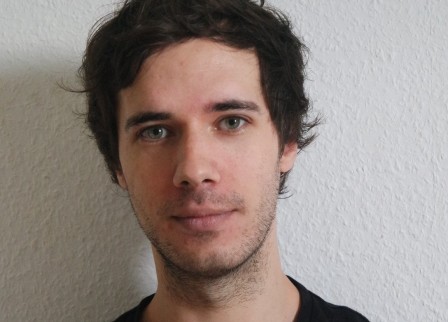
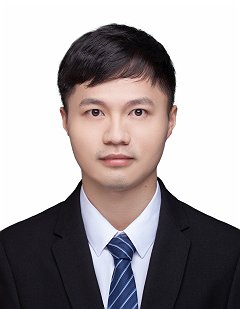
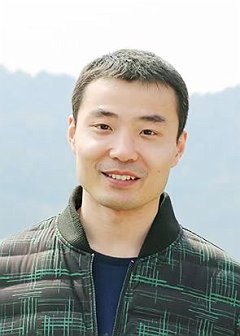
Prof. Dr. Andreas Wübbeke is a Professor of Software Engineering at the Faculty of Electrical Engineering, University of Applied Science Southern Westphalia (since 2022). With extensive industry experience in tech leadership roles at CLAAS E-Systems and Wincor Nixdorf, his research bridges academic rigor and practical applications. Research Focus: His work spans Agile methodologies, VR application testing, digital agriculture, and cloud systems. Recent projects include AI-driven classification of agricultural operations and sustainable energy solutions. He leads the South Westphalia Software Engineering Lab, mentoring thesis students through structured programs. Professional Engagement: Active in academic communities, he serves on committees for conferences (PROFES, GIL) and journals. His invited keynotes address topics like smart farming connectivity and agile transformations. Education & Background: PhD in Computer Science (Databases/Information Systems), University of Paderborn (2010) Business Computer Science degree, University of Paderborn (2007)
Prof. Dr. Thomas Kopinski is a Professor at the Faculty of Engineering and Economics, South Westphalia University of Applied Sciences in Meschede, Germany. He leads the AI Safety and Collective Intelligence Lab, focusing on cutting-edge research in machine learning applications for industrial and automotive systems. His work bridges academic research and industry collaborations, notably with BMW AG. Research Focus: His team explores: Deep learning architectures for real-time gesture recognition and automotive HMI AI safety protocols and collective intelligence frameworks Industrial applications including predictive maintenance and anomaly detection 3D programming and sensor fusion techniques Team & Students: Current advisees include PhD candidates working on: Bayesian deep learning for predictive maintenance (Felix Neubürger) Generative models for image synthesis (Yasser Saeid) Object recognition in crash test videos (Daniel Gierse) Key Projects: Actively directs WiTraPres and Core Transformer initiatives, with upcoming R&D in AI Safety launching in 2025. Industrial collaborations focus on automotive safety systems and manufacturing optimization.
Lina Gong is an Associate Professor at the School of Computer Science and Technology, Nanjing University of Aeronautics and Astronautics, China. She holds a Ph.D. in Computer Software and Theory from China University of Mining and Technology (2020) and completed a research visit at Queen's University's Software Analysis and Intelligence Lab (SAIL) under Prof. Ahmed Hassan (2019-2020). Her research focuses on leveraging machine learning to extract insights from software repositories, with emphasis on: ML-enabled defect prediction techniques Code pre-trained models for vulnerability detection Identifier normalization and issue classification Empirical studies of software quality attributes Her recent publications (2023-2025) demonstrate strong trends in applying transformer architectures to code analysis, with increasing focus on supply chain security and cross-platform UI translation. Key venues include IEEE TSE, ACM TOSEM, and ASE. Scientific recognition includes: National Natural Science Foundation of China (2022-2025) Natural Science Foundation of Jiangsu Province (2022-2025) Key National Laboratory Foundation (2022-2023) Excellent Ph.D. Student Award (CUMT) She actively mentors graduate students (14 advisees: 1 doctoral, 13 master's) and serves on program committees for ASE, APSEC, and SANER. Her research is supported by multiple competitive grants focusing on ML applications in software engineering.
Xiao Yu is a Research Fellow (Assistant Research Professor) at the State Key Laboratory of Blockchain and Data Security, Zhejiang University, Hangzhou, China. Previously, they were a Postdoctoral Researcher at Huawei under Prof. Xin Xia. They hold dual PhD degrees: from Wuhan University's School of Computer Science (December 2020) supervised by Prof. Jin Liu, and from City University of Hong Kong's Department of Computer Science (March 2021) supervised by Prof. Qing Li and Prof. Jacky Wai Keung. Research focuses on three interconnected domains: LLMs Data Governance and Evaluation addressing hallucination phenomena and task-specific LLM evaluation in software engineering; Intelligent Software Engineering leveraging deep learning for code generation, annotation, and maintenance; and Software Security and Reliability investigating vulnerability detection, log anomaly identification, and security bug classification. Their work bridges theoretical advancements with industrial applications, particularly in blockchain and data security contexts. Recent publications demonstrate strong trends in realistic LLM evaluation (RealisticCodeBench), vulnerability detection using semi-supervised learning, and industrial anomaly detection. Key thematic areas include effort-aware defect prediction, code smell detection, and the practical application of large language models in software engineering tasks, with increasing emphasis on data quality and privacy considerations. Xiao Yu actively contributes to the academic community through extensive service roles including journal reviewing for ACM Transactions on Software Engineering and Methodology, IEEE Transactions on Dependable and Secure Computing, and serving on program committees for major conferences like APSEC 2025 and ASE 2025. They have supervised numerous graduate students as evidenced by authorship patterns in publications. Based at Zhejiang University's State Key Laboratory of Blockchain and Data Security, their research operates at the intersection of academic rigor and industrial relevance, with strong collaborations spanning multiple institutions including Huawei, Wuhan University, and City University of Hong Kong.
Qing Huang is an Associate Professor in the School of Computer and Information Engineering at Jiangxi Normal University in Nanchang, China. His academic career focuses on bridging software engineering with artificial intelligence, particularly through the application of large language models to enhance software development processes. His research interests span multiple interconnected domains: Software Engineering Knowledge Graphs Human-Computer Interaction Programming Languages Artificial Intelligence applications in software development Dr. Huang's recent work demonstrates a strong focus on leveraging large language models (LLMs) to address fundamental challenges in software engineering. His research explores how AI can enhance code generation, API understanding, software testing, and knowledge representation in programming contexts. A significant portion of his work investigates the intersection of knowledge graphs and LLMs to create more intelligent software development tools. His publications reveal a consistent pattern of innovation in applying cutting-edge AI techniques to practical software engineering problems, with particular emphasis on improving developer productivity through better tooling and knowledge management. Dr. Huang has made notable contributions to the field of prompt engineering for software development tasks, exploring how natural language interfaces can serve as "APIs" for human-AI interaction. His work on AI Chains represents a novel approach to connecting human developers with LLM capabilities through structured knowledge representations. Additionally, he has conducted significant research on smart contract analysis, code reuse, and type inference in partial code contexts. His scientific contributions have been recognized through publications at major software engineering conferences including ASE and ICSE, with multiple papers accepted across different tracks (Research Papers, Journal-First, Tool Demonstrations). Dr. Huang serves as a Program Committee member for ASE 2025 in the Research Papers track, demonstrating his standing in the software engineering research community. Dr. Huang collaborates extensively with researchers from various institutions, including Data61 (Australia), Nanyang Technological University, and other Chinese universities. His work demonstrates strong interdisciplinary connections between traditional software engineering and emerging AI technologies.
Gabriele Gühring serves as Professor at Esslingen University of Applied Sciences with dual appointments in the Faculty of Basic Sciences (since 2008) and Faculty of Computer Science and Information Technology (since 2021). She currently holds the executive position of Vice President for Research and Transfer (since September 2022), concurrently directing the Department of Research and Transfer while serving on the Science Commission and Honours Committee. Her academic foundation includes: Mathematics and Physics studies at University of Tübingen (1991-1996) Doctoral research on nonautonomous differential equations (1997-1999) Part-time Master's in Mathematical Finance at University of Oxford (2002-2004) Prof. Gühring's research centers on practical AI applications , specializing in anomaly detection systems for industrial infrastructure and multimodal learning for technical documentation. Her work bridges theoretical mathematics with real-world implementations in renewable energy, urban mobility, and medical diagnostics, demonstrating consistent evolution from pure mathematics to cutting-edge machine learning. Analysis of her 14 publications (1999-2023) reveals a strategic pivot from theoretical differential equations to industrial AI solutions. Recent work (2020-2023) focuses on anomaly detection in energy systems (power plants, vehicle fleets), multimodal neural networks for product analysis, and mobility data anonymization , with methodologies spanning spiking neural networks, graph-based approaches, and Bayesian deep learning. While no scientific awards are documented, her leadership in the BMBF-funded Anomob project demonstrates active grant acquisition in data privacy. Administrative responsibilities likely encompass significant mentorship, though no formal advisees are listed in the provided materials. Her research operates through Esslingen's Department of Research and Transfer, fostering cross-disciplinary collaborations between computer science, engineering faculties, and industrial partners in energy, transportation, and healthcare sectors.
Dr. Gregor Wiedemann serves as a Senior Researcher in Computational Social Science at the Leibniz Institute for Media Research (Hans Bredow Institute) since September 2020, co-heading the Media Research Methods Lab (MRML) with Sascha Hölig. His work bridges computer science and social sciences through methodological innovation in empirical media research. Wiedemann holds a doctorate in computer science from Leipzig University (2016), where his dissertation focused on automating discourse analysis using text mining and machine learning. His educational background combines political science and computer science studies at Leipzig University and the University of Miami, followed by postdoctoral work in Language Technology at the University of Hamburg under Prof. Chris Biemann. His research centers on natural language processing and text mining applications for social and media analysis, with significant contributions in hate speech detection, argument mining, and cross-platform misinformation tracking. Recent work demonstrates a strategic shift toward building research infrastructures for sensitive data handling, including the Community Data Trust model for extremism research and the Social Media Observatory open-science platform. His methodology development specifically targets unsupervised information extraction from large document corpora to support investigative journalism and social science inquiry. Wiedemann's publication trends reveal deepening specialization in computational infrastructure development, with 7 of his 11 most recent works (2024-2025) focusing on data trust frameworks, cross-platform methodologies, and AI-driven analysis systems. His projects consistently intersect computational linguistics with pressing social issues including election integrity, climate discourse, and child safety in digital spaces. He has secured major funding through the German Research Foundation (DFG) for the FAME project on argument mining and evaluation, and leads collaborative initiatives including NOTORIOUS (mis- and disinformation tracking) and ComAI (communicative AI impact studies). His work with state media authorities on family influencing content demonstrates applied policy relevance. As co-director of the Media Research Methods Lab, Wiedemann oversees a dynamic team developing cutting-edge computational approaches for media analysis. The lab functions as an interdisciplinary hub connecting computer scientists with social researchers, with current projects spanning TikTok political campaigning analysis, right-wing extremism data infrastructure, and ethical AI applications in public discourse monitoring.