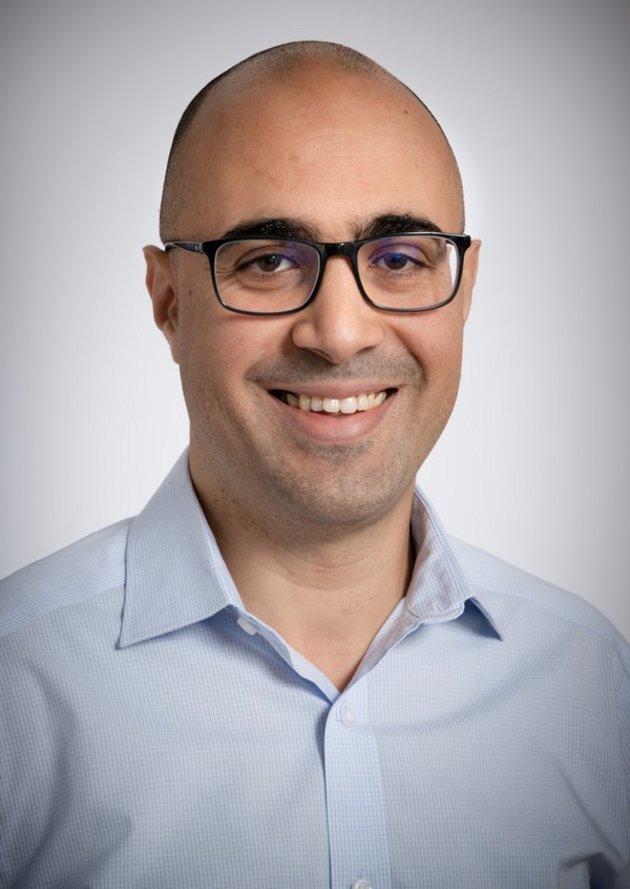
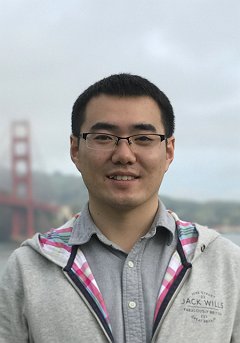
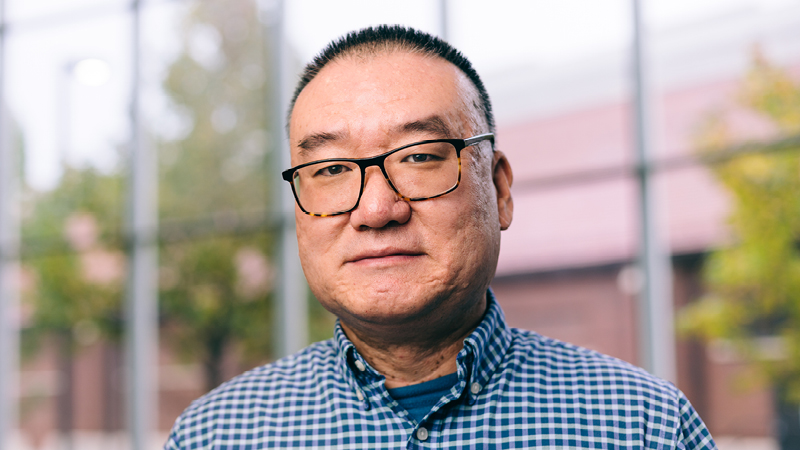
Lennart Svensson is a Professor at Chalmers University of Technology in the Signal Processing research group. His work focuses on nonlinear filtering, multi-object tracking, Bayesian statistics, and deep machine learning with applications in autonomous systems and sensor fusion. Research Interests Nonlinear Filtering and Bayesian Inference Multi-Object Tracking and Sensor Fusion Deep Learning for Autonomous Systems Performance Metrics (GOSPA, T-GOSPA) Lidar-Camera Fusion and Radiance Fields 5G SLAM and mmWave Sensing Publications Trends Recent work emphasizes uncertainty-aware multi-object tracking metrics, trajectory estimation using Poisson Multi-Bernoulli Mixtures, and sensor fusion techniques for autonomous driving. His research integrates Bayesian methods with deep learning for applications in automotive radar, lidar, and 5G positioning systems. Contact Email: lennart.svensson@chalmers.se
Prof. Alfred Stein is a Full Professor in Spatial Statistics and Image Analysis at the Department of Earth Observation Science, Faculty ITC, University of Twente. He earned his MSc in Mathematics and Information Science from Eindhoven University of Technology and a PhD in Spatial Statistics from Wageningen University. His career spans roles at Wageningen University (1988–2002), ITC (2002–present), including leadership positions as department head, vice-rector research, and portfolio holder for education. Education: MSc (Eindhoven University of Technology), PhD (Wageningen University) Leadership: Department Head (Earth Observation Science), Vice-Rector Research (2008–2012), Portfolio Holder Education (2012–) His research focuses on Spatial and Spatio-Temporal Statistics , emphasizing Bayesian inference , data quality , image analysis , and fuzzy techniques . Key application domains include agriculture, health, urban land use, coastal systems, hazards, and wildlife. He has mentored over 30 PhD students since 1998, with 11 currently under supervision. Recent research trends highlight AI-driven remote sensing for glacier mapping, urban livability, and disease modeling. Publications span Deep Learning for SAR tomography, Bayesian hierarchical models for health data, and multitemporal SAR analysis for environmental monitoring. Awards include the Best Paper Award (2019) and ISARA Founder's Award (2020) . Scientific Awards Best Paper Award (2019) ISARA Founder's Award (2020) As Editor-in-Chief of Spatial Statistics and associate editor for multiple journals, he leads academic discourse. Collaborations include the University of Cape Town and University of Pretoria as Honorary Professor. His work contributes to UN Sustainable Development Goals, particularly in climate action and sustainable cities.
Professor Donna Slonim is a leading computational biologist at Tufts University with dual appointments in the Department of Computer Science and Department of Immunology , and membership in the Genetics, Molecular and Cellular Biology program. She holds a Ph.D. from MIT (1996) and focuses on integrating genomic data with algorithmic approaches to advance disease diagnosis and treatment. Education Ph.D., MIT, 1996 M.S., University of California, Berkeley, 1991 B.S., Yale University, 1990 Research Interests include: Algorithm development for biological network analysis Precision medicine applications in human development Pharmacogenomics and drug discovery Temporal gene expression modeling Machine learning for biomedical data Scientific Awards : Best Student-Led Paper Award at ACM-BCB 2022 Academic Leadership : Teaches courses like Computational Biology , Statistical Bioinformatics , and Biological Networks Co-leads the BCB Group at Tufts On sabbatical during 2025-26 but remains active in research
National Research Institute for Mathematics and Computer ScienceNetherlands
Krista H. Lagus serves as Professor of Digital Social Science at the University of Helsinki's Faculty of Social Science, where she co-founded and directed the Center for Social Data Science (CSDS) starting in 2019. Her interdisciplinary work bridges computational methods with social science inquiry to analyze complex societal behaviors through digital footprints. Her educational foundation includes an M.Sc. in Computer Science (1996) and Ph.D. in Computer and Information Sciences (2000), both earned at Helsinki University of Technology (now Aalto University). This technical background enabled her transition into pioneering computational social science methodologies. Lagus's research integrates artificial intelligence and social science through signature projects: WEBSOM for visualizing large text corpora via self-organizing maps, Citizen Mindscapes for gauging public opinion through digital communication analysis, and Morfessor , a groundbreaking unsupervised morphological segmentation algorithm widely adopted in natural language processing. Her work demonstrates how machine learning can decode societal patterns from digital traces. Her scientific recognition includes: Academy Research Fellow, Finnish Academy of Sciences (2006-2012) Lagus actively supervises graduate students in AI and digital social science while contributing to academic governance as an Editorial Board Member for PeerJ Computer Science. Her research leadership is anchored in the Center for Social Data Science, which she established to foster cross-disciplinary collaboration between computational and social scientists. The Center for Social Data Science (CSDS) operates as her primary research ecosystem, driving initiatives that apply artificial intelligence to contemporary societal challenges. Through CSDS, Lagus cultivates methodological innovations that transform how social phenomena are observed and interpreted in the digital age.
Andrey Vladimirovich Savchenko is a prominent researcher and educator in computer vision and artificial intelligence at the National Research University Higher School of Economics (HSE) in Nizhny Novgorod. He holds multiple positions including Professor at the Faculty of Informatics, Mathematics, and Computer Science, Leading Researcher at the Faculty of Computer Science and Institute of Artificial Intelligence and Digital Sciences, and Academic Director of the "Artificial Intelligence and Computer Vision" educational program. His educational background includes: 2016: Doctor of Technical Sciences from Nizhny Novgorod State Technical University 2015: Academic title of Associate Professor 2011: Candidate of Technical Sciences 2008: Specialist degree in Applied Mathematics and Computer Science Savchenko's research focuses on computer vision, pattern recognition, and artificial intelligence, with particular emphasis on facial recognition, emotion analysis, and efficient deep learning algorithms. His work bridges theoretical foundations with practical applications, especially in mobile computing environments where computational resources are limited. He has developed innovative methods for making AI systems more efficient without significant loss in accuracy. His recent publications demonstrate a strong trend toward multimodal analysis, combining visual, audio, and textual data for more robust recognition systems. There's a clear emphasis on making AI systems more efficient, especially for mobile devices, and on developing methods that can work with limited computational resources while maintaining high accuracy. His work spans fundamental research on neural network architectures and practical applications in education, healthcare, and human-computer interaction. Among his notable scientific achievements: Gratitude from the Governor of Nizhny Novgorod region (2022) Multiple gratitude awards from HSE (2021-2022) Best Teacher Award (2018-2019) Leaders of IT Industry Award from NEYMARK IT Campus (2023) Academic Success Bonus at HSE (2011-2013) Savchenko has successfully supervised numerous master's students and currently mentors PhD candidates working on cutting-edge topics like large language models for recommendation systems and document analysis. He has secured significant research funding, including projects with Huawei, Sberbank, and the Russian Science Foundation, totaling millions of rubles. His laboratory focuses on developing efficient algorithms for computer vision and multimodal data analysis. He leads the Laboratory of Theoretical Foundations of Artificial Intelligence Models and has established strong industry partnerships that ensure his research has practical impact. His NVIDIA Deep Learning Institute certification demonstrates his commitment to staying current with the latest AI technologies.
Amine Trabelsi serves as an Assistant Professor in the Department of Computer Science at the University of Sherbrooke, specializing in socially impactful AI research. His work bridges technical NLP innovations with real-world applications in public health, climate action, and social behavior analysis, with direct relevance to Canadian policy contexts. His educational background includes: M. Sc. in Computer Science from Université de Montréal Ph. D. in Computing Science from the University of Alberta Research focuses on unsupervised analysis of unstructured text, detection of dubious content in social media, antisocial behavior identification, and emotion recognition in conversational systems. Current projects address brain tumor data capture for cancer registries, corporate alignment with clean energy transitions, and climate empowerment through community network mapping in Canada. His methodology emphasizes explainable AI systems for social good applications, particularly in multilingual Canadian contexts. Dr. Trabelsi maintains active industry engagement through Twitter and LinkedIn, with primary contact via email Amine.Trabelsi@USherbrooke.ca (office D4-1022-1, phone 819-821-8000 ext. 62031). No formal advising or grant structures are detailed in current public profiles.
Max Planck Institute for Security and PrivacyGermany
Yuhong Nan is an Associate Professor in the School of Software Engineering at Sun Yat-sen University, China, specializing in software security and privacy leakage analysis for emerging platforms including IoT, mobile systems, and blockchain. Previously a Post-doctoral Research Associate at Purdue University under Prof. Dongyan Xu, she builds practical security tools to detect and mitigate vulnerabilities in real-world systems. Dr. Nan earned her PhD from Fudan University in 2018 supervised by Prof. Min Yang. Her academic journey spans rigorous research in security engineering with emphasis on empirical validation and tool development for complex platform ecosystems. Her research program focuses on uncovering systemic security flaws through innovative analysis techniques. Key contributions include vulnerability detection in smart contracts (e.g., state dependencies, reentrancy), privacy leakage analysis in mobile/IoT ecosystems, and countermeasures against deceptive UI patterns. She employs hybrid approaches combining static/dynamic analysis, machine learning, and large-scale empirical studies to develop deployable security solutions. Analysis of her 15 most recent publications (2023-2025) reveals dominant themes in blockchain security (60%), particularly smart contract/DApp vulnerabilities, with significant work in mobile privacy (30%) and cross-platform threats (10%). Her methodology consistently leverages fine-grained static analysis, semantic enrichment, and feedback-driven fuzzing, yielding tools like SmartAxe and Midas that have influenced industry practices. Dr. Nan actively mentors graduate researchers with 17 advisees including Tencent-employed graduates, and serves as a trusted reviewer for premier journals (IEEE TDSC, TMC, TOPS) and conference committees (ASIACCS, ICICS). Her leadership in security communities bridges academic research with practical defense mechanisms. At Sun Yat-sen University, she directs a high-output research group that collaborates with industry partners to address evolving threats in decentralized systems, maintaining her position among top publishing authors in USENIX Security, CCS, and NDSS venues through rigorous technical innovation.
Fredrik Johansson is an Associate Professor in the Department of Data Science and AI at Chalmers University of Technology. His research focuses on developing machine learning methods for healthcare applications, causal inference, and handling imperfect data. He leads multiple funded projects including WASP AI/MLX and research on causal machine learning for healthcare applications. Johansson's core research interests include: Machine learning for clinical decision support and healthcare analytics Causal inference methods for observational data Handling missing values and data quality issues Interpretable and robust ML models Domain adaptation and transfer learning Reinforcement learning for treatment policies His recent publications demonstrate strong focus on clinical ML applications (dermatology, rheumatology, Alzheimer's) and methodological work on causal inference. Frequent themes include handling missing data, model interpretability, and healthcare policy optimization. Collaborative work spans multiple medical domains using registry data, proteomics, and medical imaging. He leads significant research projects including: Kausalitet och sidoinformation för effektiv maskininlärning (VR-funded) Maskininlärning för kausal inferens från observationsdata (Wallenberg) Förutsättningar för inlärning av överförbara koncept (Wallenberg) Fattigdomsfällor i Afrika (Formas-funded)
Nuremberg Institute of Technology Georg Simon OhmGermany
Christian Winkler is Professor for AI-based UX optimization and general business administration at Nuremberg Institute of Technology since 2022. With over 25 years of experience spanning entrepreneurship, enterprise architecture, and academia, he brings substantial industry expertise to his academic role. His career includes founding multiple technology companies including an internet service provider (WWL Internet AG) that went public in 1999, Querplex GmbH through management buyout in 2003, and datanizing GmbH as an NLP SaaS provider in 2017. Professor Winkler's research focuses on practical applications of artificial intelligence in business contexts, with particular expertise in natural language processing, user experience optimization, and data-driven marketing strategies. His work bridges theoretical AI research with real-world business applications, emphasizing accessibility of complex technologies. He has published extensively on language models (including BERT and LLaMA implementations), text analysis techniques, and social media data analysis for business insights. Recent publications reveal a strong trend toward optimizing large language models for practical deployment, with significant focus on analyzing user-generated content from social platforms like Instagram and WallStreetBets. His work demonstrates how NLP can extract valuable business intelligence from unstructured data sources while making advanced AI techniques accessible to non-technical business professionals. Winkler teaches E-Commerce, International Marketing Tools - Quantitative Methods, Applied User Experience, and Communication Management, reflecting his interdisciplinary approach that combines technical AI knowledge with business administration expertise. He is an active contributor to the data science community through conference presentations at events like m3 Konferenz, MLsummit, and data2day, as well as educational content for Heise Academy on Python and NLP topics.
Ninghui Li is the Samuel D. Conte Professor and Associate Department Head in the Department of Computer Science at Purdue University. He holds a B.S. from the University of Science and Technology of China and a Ph.D. from New York University. His research focuses on information security, privacy, and database systems, with notable contributions to differential privacy and secure data publishing. He has authored over 200 papers, including influential works like the 2007 t-Closeness paper, and has received multiple awards, including being named an ACM and IEEE Fellow. Li’s academic roles include Editor-in-Chief of ACM Transactions on Privacy and Security (TOPS) and leadership in organizations like ACM SIGSAC. He advises over 30 graduate students and has been instrumental in coaching Purdue’s ICPC teams to top global rankings. His current projects include NSF-funded initiatives like the Center for Distributed Confidential Computing (CDCC) and privacy-focused AI research. Key contributions span privacy-preserving data synthesis, federated learning security, and cybersecurity for IoT systems. He actively contributes to conferences as a program chair and through editorial roles, ensuring advancements in both theoretical and applied security domains.
Ashley Villar is an Assistant Professor of Astronomy at the Center for Astrophysics at Harvard University. Her research focuses on the intersection of astrophysics and machine learning, particularly in the study of supernovae, transient phenomena, and circumstellar interactions. She is actively involved in time-domain surveys and the development of advanced algorithms for classifying and analyzing astronomical transients. Current Position: Assistant Professor of Astronomy Affiliation: Harvard University Center for Astrophysics Her work integrates observational data from facilities like the Hubble Space Telescope (HST), James Webb Space Telescope (JWST), and the Vera C. Rubin Observatory to study supernova progenitors, explosion mechanisms, and circumstellar environments. Key research areas include pulsational pair instability models, binary progenitor systems, and the application of neural networks for rapid transient classification. Dr. Villar has pioneered methods such as the SPLASH classifier, Superphot+, and Maven framework to enhance automated analysis of transient events. Her contributions to the Young Supernova Experiment (YSE) have resulted in large-scale datasets and photometric classifications of over 1,500 supernovae. Notable Projects: YSE DR1 Data Release, Rubin Observatory Target-of-Opportunity programs, LIGO/Virgo follow-up campaigns Her research also addresses kilonova light-curve interpolation, gravitational wave follow-up strategies, and the detection of anomalies in variable star catalogs. She collaborates widely on multimessenger astronomy and next-generation survey strategies for transient detection.
George Dasoulas is a Postdoctoral Researcher at Harvard University's Department of Biomedical Informatics, affiliated with the Zitnik Lab. He holds a PhD in Computer Science from École polytechnique in Paris, France, and previously worked at Huawei Technologies France. His research focuses on graph machine learning, particularly in biomedical applications and telecommunications, with contributions to graph neural networks (GNNs), attention mechanisms, and topological deep learning. Education: Ph.D., Computer Science (DaSciM group, LIX, École polytechnique); Diploma in Electrical & Computer Engineering (National Technical University of Athens). His work includes developing Lipschitz-normalized attention layers, parametrized graph shift operators, and modularity-aware graph autoencoders. He has been recognized with the 2022 Wojcicki and Troper Fellowship from Harvard's Data Science Initiative. Key Research Themes: Graph Representation Learning, Topological Neural Networks, Equivariant Learning, Multimodal Learning Applications: Biomedical Informatics, Telecommunications, Sustainable AI His articles emphasize scalable GNN architectures, graph-based unlearning strategies, and multimodal protein phenotyping. He has contributed to open-source projects like LipschitzNorm and PGSO, and actively publishes in top conferences (ICML, ICLR, NeurIPS).
Ben Ward-Cherrier is a Senior Lecturer in Robotics at the University of Bristol's School of Engineering Mathematics and Technology. His research focuses on biomimetic tactile sensing, neuromorphic systems for robotics, and haptic interfaces. He develops artificial tactile systems inspired by biological sensory mechanisms for applications in prosthetics, robotic manipulation, and human-robot interaction. Key research areas include neuromorphic tactile sensors that mimic biological afferents, real-time texture and edge classification algorithms, incipient slip detection for stable grasping, and vibrotactile feedback systems. Recent work integrates spiking neural networks with tactile hardware for efficient sensory processing. Publications demonstrate advancement in tactile sensing capabilities, including braille recognition in noisy environments, psychophysics-inspired benchmarking, multi-modal texture/velocity classification, and industrial applications like composite defect detection. Research bridges computational neuroscience with practical robotic systems.
Diego Klabjan is a Professor at Northwestern University within the Department of Industrial Engineering and Management Sciences. He serves as the Founding Director of the Master of Science in Machine Learning and Data Science Program and Director of the Center for Deep Learning. Ph.D. in Algorithms, Combinatorics, and Optimization from Georgia Institute of Technology (1999) B.S. in Applied Mathematics from University of Ljubljana (1994) His research focuses on machine learning, deep learning, and analytics with applications in finance, transportation, sports, and bioinformatics. Key contributions include federated learning algorithms, reinforcement learning for cryptocurrency trading, and neural network applications in impact mechanics. Recent publications highlight advancements in blockchain-based federated learning, second-order policy gradient convergence, and ensemble deep reinforcement learning. His work bridges theoretical foundations with industrial applications across diverse sectors. Preseren’s Award for the Best Undergraduate Thesis (1994) Transportation Science Section Dissertation Prize (2000) Intel's Outstanding Researcher Award (2019) Jack Meredith Best Paper Honorable Mention (2022) Klabjan has advised notable students including Luis Guimarães (2015 APDIO/IO Award winner) and Young Woong Park (2015 INFORMS Computing Society Best Student Paper recipient). His collaborations span Fortune 500 companies and startups in analytics-driven domains.
Will Townes is an Assistant Professor in the Department of Statistics and Data Science at Carnegie Mellon University's Dietrich College of Humanities and Social Sciences. He joined CMU in 2022 after completing a postdoctoral fellowship in computer science at Princeton University with Barbara Engelhardt. His academic journey includes a Ph.D. in biostatistics from Harvard University under Rafael Irizarry's supervision, an M.S. in math and statistics from Georgetown, and earlier work in tropical ecology fieldwork in the Philippines. Dr. Townes specializes in applied statistics with primary focus areas in biomedical and public health domains. His research centers on wastewater-based epidemiology, wearable devices, and auxiliary signals for infectious disease tracking and forecasting as part of the Delphi research group. He has developed normalization, feature selection, and dimension reduction methods for single cell RNA-Seq and spatial transcriptomics data analysis. His broader research interests span biostatistics, epidemiology, genomics, time series forecasting, and theoretical aspects of Tweedie distributions. His recent publications reveal a strong emphasis on wastewater surveillance methodologies, single-cell data analysis techniques, and infectious disease forecasting models. The research demonstrates a consistent focus on computational scalability and efficiency through approximate inference techniques. Dr. Townes approaches statistical problems with a pragmatic perspective, comfortable with probabilistic (Bayesian) models while drawing inspiration from diverse statistical perspectives. Member of DELPHI Lab Group at CMU Active contributor to genomics and biostatistics research Focus on computational efficiency in statistical methods Dr. Townes mentors several students including Gabrielle Thivierge (PhD candidate working on infectious disease forecasting methods), Julia Elrod, and Anna Rosengart. He teaches data science courses at CMU, including a field course in Costa Rica where students work with community partners on real-world data projects involving water quality indicators, spring flow rates, and ecological monitoring.