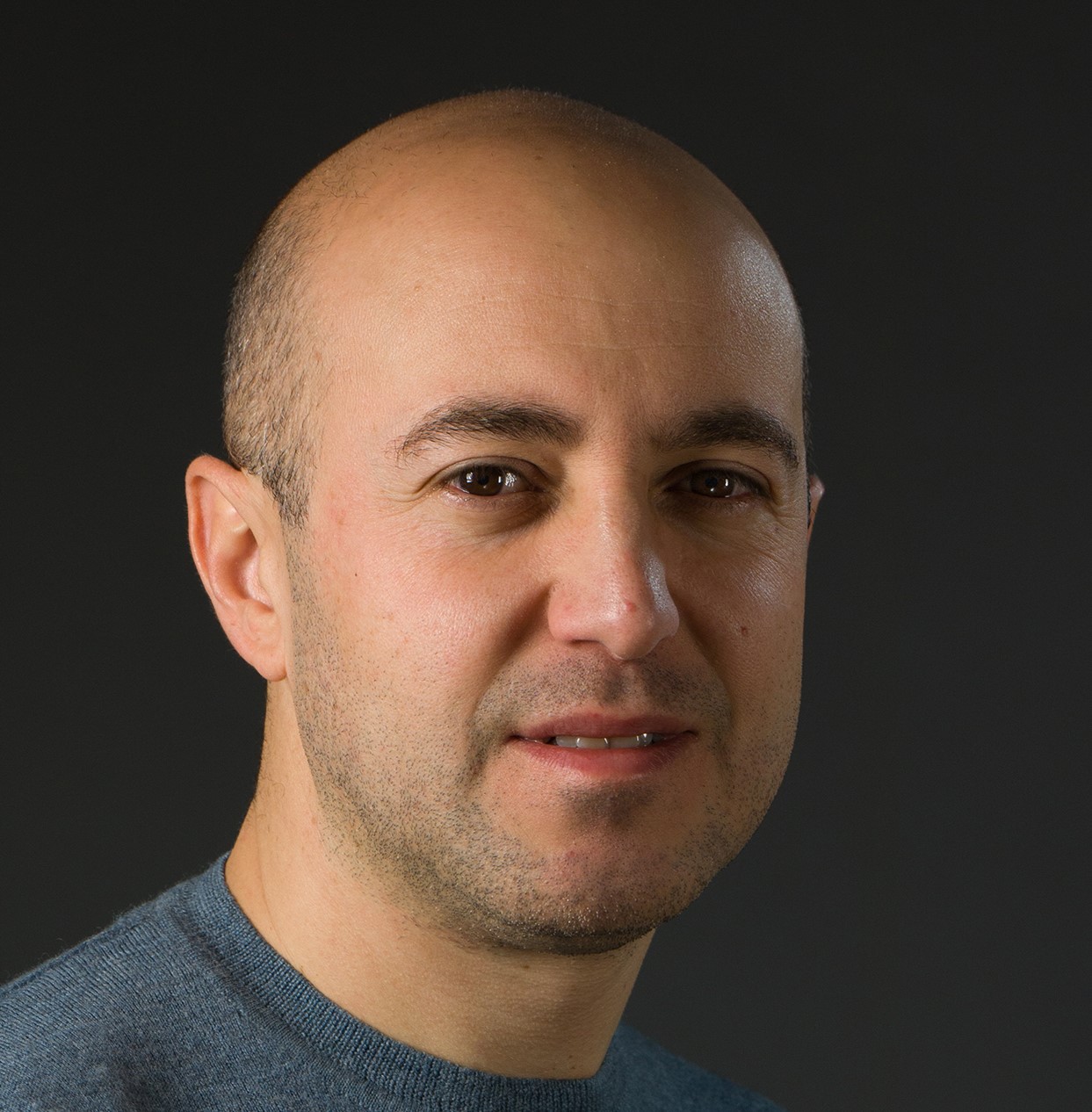
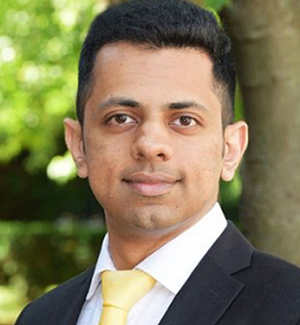
Yonghao Xu is an Assistant Professor at the Department of Electrical Engineering , Linköping University , and affiliated with the Computer Vision Laboratory (CVL) and the Wallenberg Autonomous Systems Program (WASP) . His research bridges remote sensing , machine learning , and AI security . Research Trends Xu's recent publications focus on adversarial attacks and defenses in remote sensing, domain adaptation for semantic segmentation, and benchmark dataset creation (e.g., Sen2Fire). His work addresses challenges in urban sustainability , geospatial data analysis , and deep learning robustness . Labs & Programs He is associated with the Computer Vision Laboratory (CVL) , contributing to autonomous systems through the Wallenberg Autonomous Systems Program (WASP) , a major Swedish initiative in AI and robotics.
Daswin De Silva is a Full Professor of AI and Analytics at La Trobe University, Australia, and Deputy Director of the Centre for Data Analytics and Cognition (CDAC). He also holds an Adjunct Professor position at Lulea University of Technology, Sweden. His expertise spans AI ethics, algorithm development, and applications in healthcare, energy, and education. He leads major initiatives like the La Trobe Energy AI Platform for net-zero emissions and the OptusU AI Micro-credentials program. Education: PhD in AI (Monash University, 2011). Awards include the Australian Awards for University Teaching (2021), Vice-Chancellor’s Teaching Award (2019), and Mid-Career Research Excellence Award (2018). Editor of five journals including IEEE Transactions on Industrial Informatics and Springer Discover AI. Research focuses on generative AI, ethical AI systems, and vector symbolic architectures. Recent work includes AI applications in healthcare diagnostics, energy efficiency, and smart cities. He has secured AU$14M in research funding and supervised 15 PhD completions with 10 current students. Leadership roles include Deputy Chair of La Trobe’s Research & Graduate Studies Committee and chairmanship of IEEE committees on Responsible AI and Web/Information Systems. Keynote speaker at global conferences like IEEE HSI, INDIN, and ETFA. Media engagements include ABC News, Forbes, and The Conversation.
PD Dr. Kaspar Riesen is the Head of the Pattern Recognition Group at the Institute of Computer Science, University of Bern. His research focuses on graph-based methods for pattern recognition, with applications in document analysis, environmental modeling, and healthcare. Key interests include graph matching, neural networks, and spatio-temporal modeling. His work spans structural pattern recognition, graph embeddings, and keyword spotting in historical documents. Recent projects involve river network analysis using graph regression and hypoglycemia prediction via LSTM-GNN hybrid models. Publications emphasize graph theory advancements, such as normalized graph compression and geometric similarity learning. Collaborations include developing specialized algorithms for automated error detection and improving decision-making in simulated sports. Labs/Teams: Pattern Recognition Group (PRG) at the University of Bern.
Prof. Athina Tzovara is a Professor at the University of Bern, leading the Cognitive Computational Neuroscience (CCN) research group within the Institute of Computer Science (Faculty of Science) with a dual affiliation in the Department of Neurology (Faculty of Medicine). Her research integrates computational modeling, machine learning, and neural recordings to study cognitive processes and neurological conditions. Key areas include sleep dynamics, coma prognosis, AI-driven healthcare solutions, and neural mechanisms underlying consciousness. Education: BEng in Electrical & Computer Engineering (National Technical University of Athens, 2009), PhD in Neuroscience (University Hospital Centre Lausanne, 2012). Postdoctoral roles at University of Zurich and University College London preceded her current position. Research focuses on: (1) Sleep-wake disorders using EEG and causal inference approaches, (2) Predictive neural coding models for auditory processing in coma patients, (3) Ethical AI frameworks for automated medical diagnostics, and (4) Data-driven phenotyping of neurological conditions. Recent work emphasizes translating computational neuroscience insights into clinical tools - such as EEG-based coma outcome prediction and bias-aware sleep scoring algorithms. Her lab collaborates internationally on initiatives like SPHYNCS (narcolepsy cohort study) and Brain Mappers for open neuroscience communication. Advocates for inclusive scientific practices through gender bias mitigation strategies and multilingual dissemination efforts. Active in Open Science initiatives like Open Humans platform development.
Louis Ohl is a Research Fellow and Postdoc at the Division of Statistics and Machine Learning (STIMA) within the Department of Computer and Information Science (IDA) at Linköping University. His research focuses on unsupervised learning methods, particularly clustering algorithms and PU learning, with applications to medical data (e.g., aortic stenosis phenogroups) and material science (e.g., MAX-phase to MXen structure changes). He holds a PhD from Côte d'Azur University (France) and Laval University (Canada), where he developed discriminative clustering techniques for cardiac disease analysis. Education: PhD in Computer Science from Côte d'Azur University and Laval University (France/Canada). Research interests include: Unsupervised and semi-supervised machine learning Clustering algorithm development Medical informatics applications in cardiology Material science computational modeling PU learning frameworks His recent work emphasizes bridging theoretical advancements in clustering with practical applications in healthcare and materials research. Collaborations include projects on aortic stenosis progression prediction and computational studies of structural phase transitions in materials. No scientific awards listed. Active in advising and research grants related to his current projects at STIMA. Associated with the STIMA division's international master's program in Statistics and Machine Learning.
Trang Vu is a Lecturer in the Department of Data Science & AI at Monash University's Faculty of Information Technology. Her research focuses on trustworthy NLP methods, cultural-aware machine translation, and efficient ML techniques like active and transfer learning. She holds a PhD in AI and Machine Learning from Monash University, awarded in 2022. Education: Doctoral of Philosophy (AI and Machine Learning) - Monash University (2022) Research Interests: Safe and trustworthy NLP methods for LLM alignment and hallucination mitigation Cultural-aware machine translation systems Efficient NLP techniques including active learning and semi-supervised methods Recent Projects: TMLGenAI (2023-2026): Developing safe and aligned foundation models Knowledge-Intensive Multimodal ASR research (2024) Collaborations: International collaborations in generative AI and multilingual NLP Team leader roles in multiple large-scale AI projects
Lorenzo Sani is a PhD student in the Department of Computer Science and Technology at the University of Cambridge, supervised by Prof. Nicholas D. Lane and part of the CaMLSys research group. His work focuses on federated learning, edge computing, and privacy-preserving machine learning algorithms for large-scale distributed systems. Education: He holds a Bachelor's Degree in Physics from the University of Bologna (2019) and a Master's Degree in Applied Physics from the same institution (2021), with a thesis on unsupervised clustering of MDS data using federated learning. During his studies, he contributed to the GenoMed4All project and collaborated with the CaMLSys group on the Flower Framework. Research Interests: Sani's research emphasizes optimizing federated learning efficiency, privacy in distributed machine learning, and the application of federated techniques to large language models. His work addresses challenges in communication efficiency, client collaboration, and ethical data usage in decentralized systems. Teaching: He serves as a Teaching Assistant for the Principles of Machine Learning Systems (L46) and Federated Learning: Theory and Practice (L361) courses, and supervises students at Jesus College for Algorithm and Artificial Intelligence modules. Publications: His recent work includes innovations in federated optimization (DES-LOC, SparsyFed), LLM unlearning (LUNAR), and global federated training systems (Photon, Worldwide federated training). The 2020 Flower Framework paper established a foundational research tool for federated learning experimentation.
Shuangning Li is an Assistant Professor of Econometrics and Statistics at the University of Chicago's Booth School of Business. He holds a Ph.D. from Stanford University's Department of Statistics, advised by Professors Emmanuel Candès and Stefan Wager, and a Bachelor of Science from the University of Hong Kong. Prior to his current role, he was a postdoctoral fellow in Statistics at Harvard University. His research focuses on causal inference, machine learning, and statistical methodology with applications in econometrics, networks, and genomics. **Education:** Ph.D. in Statistics, Stanford University (Advisors: Emmanuel Candès, Stefan Wager) Bachelor of Science, University of Hong Kong **Research Interests:** Causal inference in complex systems (e.g., networks, high-dimensional data) Statistical methods for experimental design and robustness Machine learning applications in genomics and reinforcement learning Randomization-based testing and knockoff filters **Recent Work Trends:** His articles emphasize methodological innovations in causal effect estimation, network interference modeling, and transfer learning. Recent work addresses challenges in stochastic congestion, multi-environment analysis, and cooperative learning frameworks. His 2024 paper advances covariate shift correction for conditional randomization tests, while his 2023 studies explore robustness in model-X inference and dyadic reinforcement learning dynamics. **Advising & Academic Background:** His doctoral training under Candès and Wager shaped his focus on rigorous statistical foundations. He has not yet listed advising relationships in available materials, but his research collaborations span academia and industry.
Reza Bosagh Zadeh is an Adjunct Professor at the Institute for Computational and Mathematical Engineering (ICME) at Stanford University. His research focuses on machine learning, deep learning, and their applications in video classification, healthcare analytics, and distributed algorithms. He specializes in developing scalable computational methods for real-time data processing and has contributed to advancements in neural networks and optimization techniques. Reza's work spans theoretical and applied domains, with notable contributions to TensorFlow frameworks, video summarization systems, and medical imaging analysis. His research often integrates interdisciplinary approaches, leveraging both academic and industrial collaborations. Notable projects include developing machine learning models for glaucoma detection and creating efficient algorithms for large-scale data processing in environments like Apache Spark. His publications emphasize real-time video stream analysis, distributed computing architectures, and practical implementations of deep learning. Reza holds a strong presence in both academic and tech sectors, with contributions to platforms like Twitter's Who-to-Follow system and innovations in edge computing for video surveillance.
Frédéric Pascal is a Full Professor at CentraleSupélec, part of the University of Paris-Saclay, and a member of the Laboratoire des Signaux et Systèmes (L2S). His research focuses on statistical signal processing, machine learning, and robust estimation techniques, with applications in radar detection, covariance matrix estimation, and information geometry. He has held roles including Coordinator of AI activities at CentraleSupélec and Head of the "Signals and Statistics" group at L2S. His academic journey includes a PhD from University Paris X – Nanterre (2006) and an HDR (2012) from University Paris-Sud. His work emphasizes adaptive signal processing in non-Gaussian environments, with contributions to robust covariance estimation, M-estimators, and applications in radar systems and biomedical signal processing. He has authored over 100 journal/conference papers and serves as an Associate Editor for IEEE Transactions on Signal Processing and Elsevier Signal Processing. Current research interests include AI transparency, data-driven methods for industry 4.0, and health-related signal analysis.
Slim Essid is a Full Professor at Télécom Paris, leading the Audio Data Analysis and Signal Processing (ADASP) group. He holds a Doctorat (Ph.D.) and Habilitation from Université Pierre et Marie Curie (UPMC). With 15+ years of research experience, he has advised 15 PhD graduates and currently co-advises 10 others. His work focuses on machine learning, signal processing, and multimodal systems, publishing over 150 peer-reviewed papers. He serves as a reviewer for top journals/conferences (e.g., IEEE Transactions) and research funding agencies. Education: State Engineering Degree, École Nationale d’Ingénieurs de Tunis (2001) M.Sc. (D.E.A.) in Digital Communication Systems, École Nationale Supérieure des Télécommunications, Paris (2002) Ph.D., Université Pierre et Marie Curie (2005) Habilitation (HDR), UPMC (2015) Research Interests: Multimodal learning, self-supervised representations, audio-visual segmentation, music structure analysis, domain generalization, and speech enhancement. Recent publications highlight innovations like TACO (training-free sound-prompted segmentation) and CLOUDS (domain-generalized semantic segmentation framework using foundation models). His work bridges audio processing with vision and language models, emphasizing unsupervised/zero-shot approaches. Key achievements include state-of-the-art methods in sound event detection, speaker diarization, and music segmentation. He collaborates with 14 post-docs and leads projects funded by French/EU agencies.
Vedhus Hoskere is an Assistant Professor in the Department of Civil and Environmental Engineering at the University of Houston. His research focuses on interdisciplinary areas at the intersection of civil engineering, computer science, and robotics, emphasizing automated infrastructure inspection, machine learning, and AI-driven solutions for structural health monitoring. He holds the Liu Huixian Earthquake Engineering Scholarship (2018) for his work on automated post-earthquake building inspections. Key research areas include image analysis, machine learning, robotics, scientific computing, and visualization. His work integrates computer vision with civil infrastructure challenges, such as flood modeling, structural damage assessment, and autonomous inspection systems using drones and robotics. Notable projects include developing digital twin frameworks for bridges, synthetic environment testing for inspection algorithms, and semi-supervised learning for disaster damage analysis. His recent publications highlight advancements in transformer networks for instance segmentation, physics-informed generative models for damage assessment, and AI-driven hurricane resilience strategies. Hoskere collaborates on platforms like InstaDam for automated damage segmentation and explores Bayesian neural networks for quantifying uncertainties in infrastructure monitoring. Key Awards: Liu Huixian Earthquake Engineering Scholarship (2018) Advising & Labs: While no specific student names or grant details are provided, his research group likely focuses on robotics, computer vision, and AI applications in civil engineering. He contributes to open-source tools like the InstaDam platform and collaborates with institutions like the University of Illinois and USACE.
Mahsa Salehi is a Senior Lecturer in the Department of Data Science & AI at Monash University’s Faculty of Information Technology. She holds a PhD in Computer Science from the University of Melbourne and previously served as a postdoctoral researcher at IBM Research Australia. Her research focuses on data mining, machine learning, and time series analysis, with applications in healthcare, cybersecurity, and smart grids. Education: PhD in Computer Science, University of Melbourne (2016) MSc in Software Engineering, Amirkabir University of Technology (2009) BSc in Information Technology & Computer Engineering, Amirkabir University of Technology (2008/2006) Her key research interests include multi-dimensional time series analysis, anomaly detection, brain-inspired machine learning, and non-stationary data learning. She has led or contributed to over 40 research outputs, including high-impact papers on anomaly detection frameworks (e.g., CARLA) and EEG representation learning (EEG2Rep). Her work bridges theoretical advancements with practical applications, such as detecting urinary anomalies in seniors and securing smart grid systems against cyberattacks. Dr. Salehi has secured significant grants, including AU$246K from ARENA (2019–2021) and AU$30K from Emotiv Research (2022–2024). She is an Associate Editor of the ACM Transactions on Knowledge Discovery from Data and has been recognized with awards like the ICDM 2022 Best Paper Runner-Up and IBM’s Manager’s Choice Award (2016). Grants & Projects: Privacy-Preserving Machine Learning (CSIRO Next Gen, 2023–2027) AI for Clean Energy & Sustainability (Monash, 2023–2027) Deep Learning for Brain EEG Analysis (PhD Top-Up, 2022–2025) Her contributions extend to editorial and patent activities, including roles at IBM Research and collaborative projects with industry partners like Emotiv.
Yasmeen George is a Senior Lecturer in the Department of Data Science & AI at Monash University's Faculty of Information Technology. She holds a PhD in Medical Image Processing from the University of Melbourne (2018) and a Master's in Computer Science from the University of Ain Shams (2013). Her research focuses on AI applications in healthcare, particularly medical image analysis for conditions like cancer, glaucoma, and psoriasis. She co-founded the AIM for Health Lab at Monash IT and is a research affiliate at the Victorian Institute of Forensic Medicine. Education: PhD (Medical Image Processing), University of Melbourne (2018); Master of Computer Science (Medical Image Analytics), University of Ain Shams (2013). Research interests include AI-driven medical image analysis, machine learning, and cross-domain healthcare analytics in radiology, dermatology, and ophthalmology. Her work addresses challenges in automated disease detection, lesion segmentation, and severity assessment across modalities like 2D/3D imaging and text data. Recent articles focus on kidney segmentation, glaucoma detection, federated learning for breast cancer, and AI frameworks for hazardous waste policy. Her research has led to patents with IBM and grants from MRFF and NHMRC. Awards: Recipient of the 2023 Heidelberg Laureate Foundation Alumni Award. Collaborations include projects on clean energy sustainability and hazardous waste management through advanced AI techniques. She actively advises PhD students and engages in interdisciplinary research teams across Monash and industry partners. Labs/Teams: Co-founder of the AIM for Health Lab, affiliated with the Victorian Institute of Forensic Medicine.
Anton Akusok is a Part-time Lecturer in the Big Data Analytics Master's program at Arcada University of Applied Sciences. He holds a BSc in IT from Moscow (2011), MSc in ML and Data from Aalto University (2014), and a DSc in ML from the University of Iowa, USA (2016). His research focuses on Extreme Learning Machines (ELM), hardware acceleration for ML on mobile devices, and real-time geospatial predictions. He has developed libraries like HPELM and Scikit-ELM, and created the HaSuRiski app for acid sulfate soil prediction in Finland. Research Interests: ELM applications in environmental modeling, federated learning security, mobile edge computing, and geospatial visualization. Key projects include real-time mapping apps with iOS integration and open-source ML tools. Publications (2021-2024) highlight work on federated learning privacy, acid sulfate soil detection, signature verification, and distributed ELM algorithms.