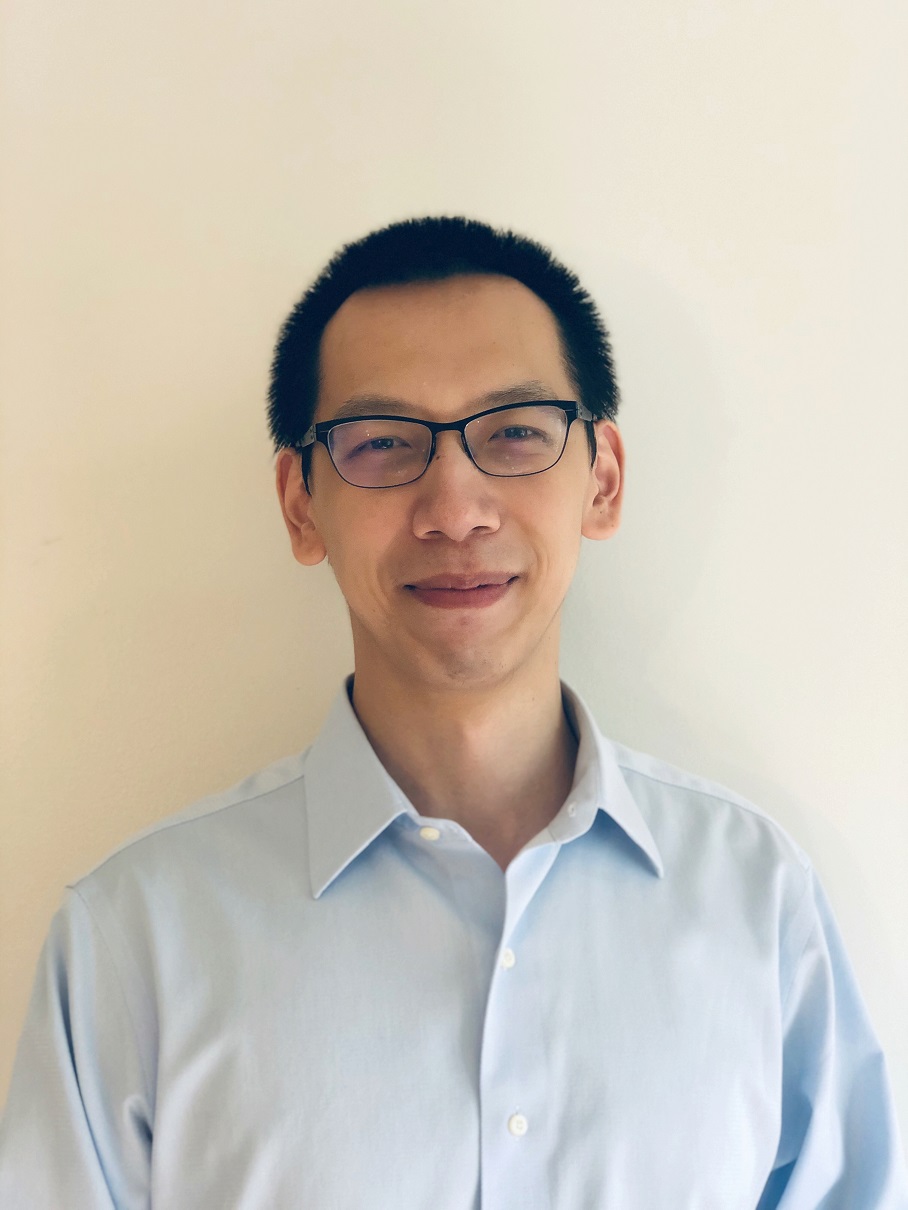
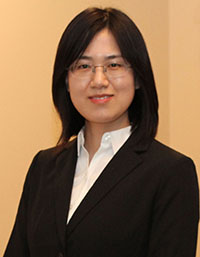
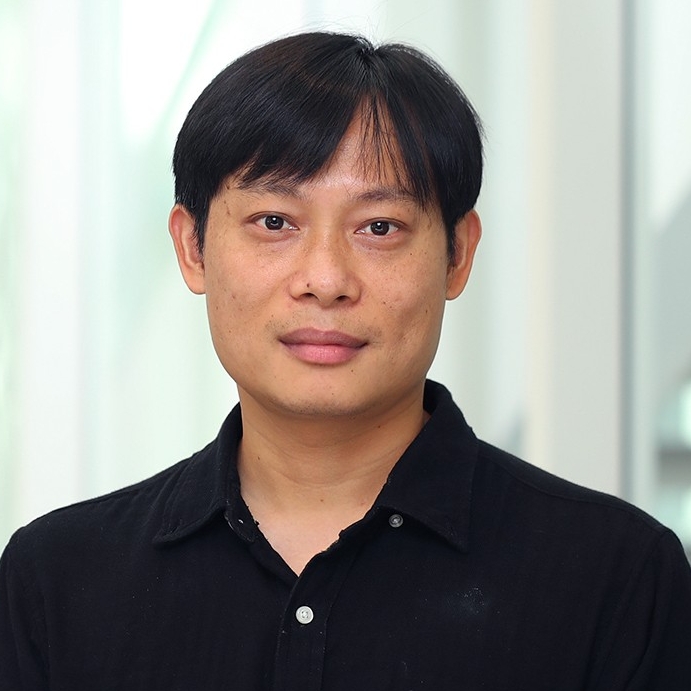
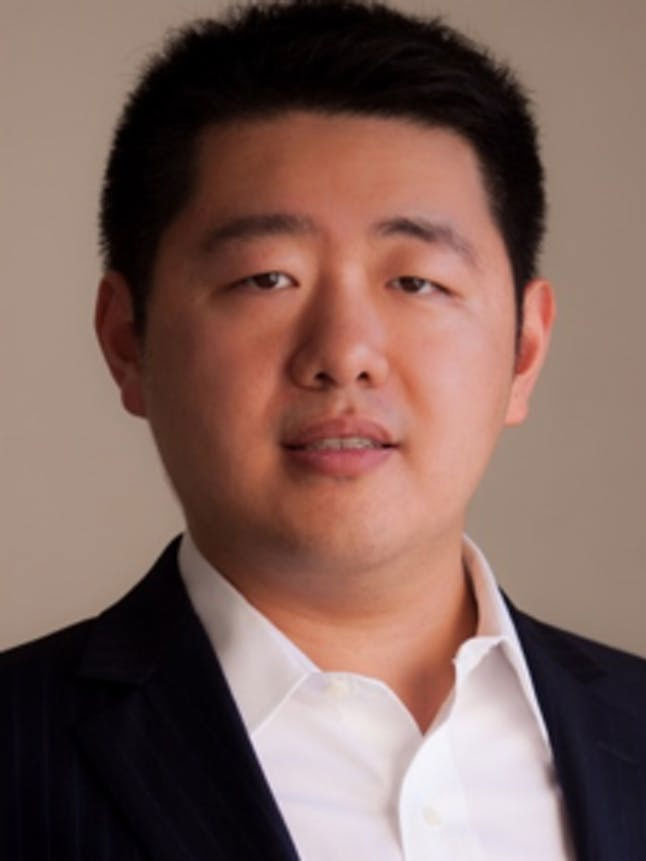
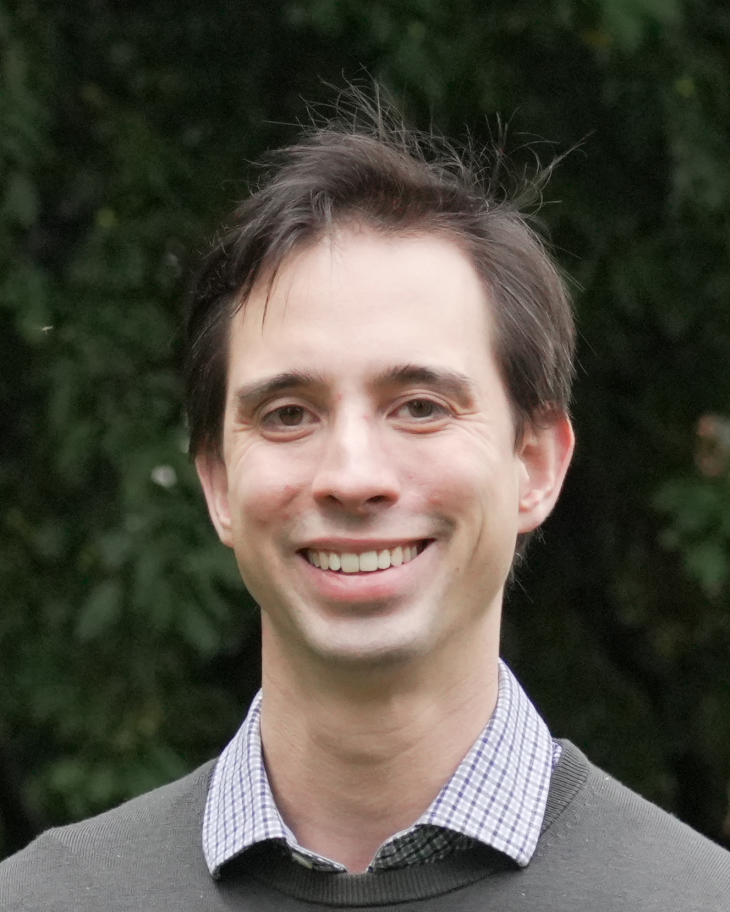
Xiaowei Jia is an Assistant Professor in the Department of Computer Science at the University of Pittsburgh. He holds a Ph.D. from the University of Minnesota (supervised by Prof. Vipin Kumar) and B.S./M.S. degrees from the University of Science and Technology of China (USTC) and SUNY Buffalo. His research focuses on integrating scientific theory with machine learning to address societal and environmental challenges, such as climate modeling, hydrology, and fairness in AI. Education: Ph.D., University of Minnesota (2020) M.S., State University of New York at Buffalo B.S., University of Science and Technology of China (USTC) Research Interests: Knowledge-Guided Machine Learning Spatiotemporal Data Mining Fairness in AI for Social Good Applications in Environmental Science and Healthcare Publications showcase his work on physics-integrated neural networks, spatiotemporal modeling (e.g., water temperature prediction), and fairness-aware algorithms. His work has been recognized with Best Paper awards at SIAM SDM (2022, 2023). Awards include the Best Applied Data Science Paper Award at SIAM SDM in 2022 and 2023. He teaches advanced machine learning courses, emphasizing theory integration with real-world applications.
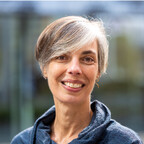
Sara Stymne is a Senior Lecturer in Computational Linguistics at the Department of Linguistics and Philology, Uppsala University, where she has been working since 2012. She initially joined as a post-doc (2012-2015), then worked as a researcher (2015-2017), and served as an assistant professor (2017-2023) before her current position as Senior Lecturer. Prior to Uppsala, she was a researcher at Linköping University's Department of Computer and Information Science. Dr. Stymne earned her PhD in Computational Linguistics from Linköping University in 2012 with the thesis 'Text Harmonization Strategies for Phrase-Based Statistical Machine Translation,' following a Licentiate degree in Computational Linguistics (2009) and a Master's degree in Cognitive Science (2006), both also from Linköping University. During her doctoral studies, she spent the autumn of 2010 and spring of 2009 at Xerox Research Centre Europe in Grenoble, France. Her primary research interests focus on cross-lingual natural language processing and digital humanities, with particular emphasis on multilingual dependency parsing. Dr. Stymne is passionate about applying computational linguistics to solve research questions in other fields, including language history, literary analysis, and political science. Her earlier work concentrated on machine translation, with specific interests in discourse-aware translation, compound processing, and error analysis. She has made significant contributions to the development of language technology tools for analyzing dialogue, narrative, and stylistic features in literature. Analysis of Dr. Stymne's recent publications reveals a strong focus on cross-lingual and cross-domain natural language processing. Her work spans multiple subfields including dependency parsing across genres and topics, discourse relation analysis in low-resource languages like Egyptian Arabic, direct speech identification in Swedish literature, and causality detection in governmental documents. A notable trend is her application of NLP techniques to digital humanities problems, particularly in analyzing literary texts and historical language change. Her research often involves creating and utilizing specialized datasets for specific linguistic phenomena across multiple languages. Dr. Stymne actively supervises graduate students, having guided numerous master's and bachelor's theses on topics ranging from speech recognition to multilingual parsing and causality detection. She leads or participates in several research projects including 'Fictional prose and language change' (funded by VR, 2021-2023) and 'Enabling climate-resilient development' (funded by Marianne and Marcus Wallenberg Foundation, 2023-2027), demonstrating her commitment to interdisciplinary research with practical applications. Her work has resulted in several notable software resources including uuPronPred for cross-lingual pronoun prediction, uuparser for dependency parsing, and Docent for document-level machine translation. Within the Computational Linguistics and Language Technology group at Uppsala University, Dr. Stymne contributes to multiple research initiatives focused on developing language technology tools for digital humanities applications. Her team works closely with literary scholars and historians to create computational methods for analyzing large corpora of literary texts, particularly focusing on Swedish literature across different historical periods. Her research bridges the gap between theoretical computational linguistics and practical applications in the humanities, creating new methodologies for quantitative analysis of literary and historical texts.
Tom Rainforth is an Associate Professor of Statistical Machine Learning at the University of Oxford's Department of Statistics, leading the RainML Research Lab (rainml.uk). He holds a Tutorial Fellowship at Mansfield College and is Principal Investigator of the ERC Starting Grant 'Data-Driven Algorithms for Data Acquisition' (2024–2029). Previously, he held roles including a postdoc under Yee Whye Teh (2017–2019), Junior Research Fellow at Christ Church College (2019–2019), and Florence Nightingale Bicentennial Fellow (2020–2024). He earned his MEng in Mechanical Engineering from the University of Cambridge and his D.Phil from Oxford under Frank Wood and Michael Osborne, focusing on probabilistic programming and Monte Carlo methods. He briefly worked in Ferrari's Formula 1 team. Research Interests : Bayesian experimental design, probabilistic and data-efficient machine learning, active learning, deep learning (with a focus on probabilistic approaches), probabilistic programming, and Monte Carlo methods. His work emphasizes statistical efficiency and adaptive algorithms. Publications : Recent contributions span modern Bayesian experimental design, adaptive importance sampling (Daisee), and applications of probabilistic methods in LLMs and generative models. His research bridges theory and practice, addressing challenges in scalability and robustness. Awards : ERC Starting Grant (2024–2029), highlighting his leadership in foundational AI research. Advising & Grants : Supervises 15 graduate students, including work on Bayesian neural networks, generative flows, and experimental design. His ERC grant supports cutting-edge data-driven algorithm development. Labs & Teams : Directs the RainML Lab, which develops scalable Bayesian methods and probabilistic AI systems.
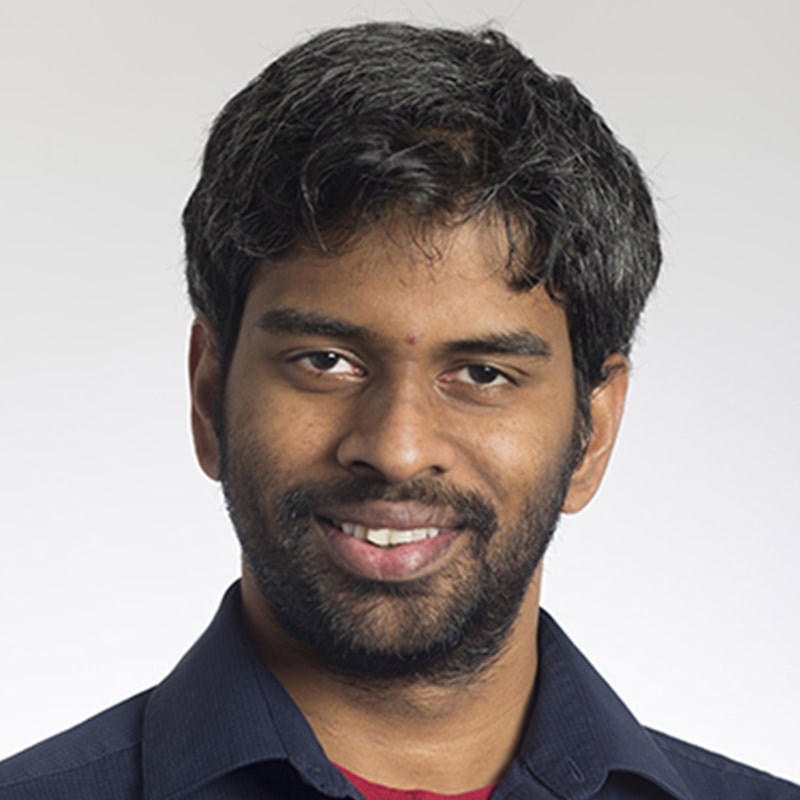
Siva Balakrishnan is an Associate Professor at Carnegie Mellon University with a joint appointment in the Department of Statistics and Data Science and the Machine Learning Department . He holds an affiliation with the Dietrich College of Humanities and Social Sciences. Previously, he was a postdoctoral researcher at UC Berkeley's Department of Statistics, advised by Martin Wainwright and Bin Yu, and earned his Ph.D. in Computer Science from CMU's Language Technologies Institute under Jaime Carbonell. His research focuses on statistical machine learning, causal inference, and high-dimensional statistics, with notable contributions to domain adaptation, optimal transport, and robust statistics. Education: Ph.D. in Computer Science, Carnegie Mellon University (Language Technologies Institute) Postdoctoral Researcher, University of California, Berkeley (Department of Statistics) Research Interests: His work bridges theoretical foundations and algorithmic development, emphasizing robust statistical methods and their applications in causal inference, public policy, and machine learning. Key areas include nonparametric methods, optimization, and high-dimensional data analysis. He has pioneered techniques in domain adaptation, such as the RLSbench framework for relaxed label shift scenarios. Awards & Grants: Amazon Research Award (2021) Google Research Scholar Award (2021) NVIDIA Pioneer Award (2018) IMS Lawrence D. Brown Student Award (2020, 2022) National Science Foundation Grants (CCF-1763734, DMS-1713003, etc.) Professional Activities: He serves as an Associate Editor for JASA and on the editorial boards of Foundations and Trends in Statistics . His work has been featured in top venues like NeurIPS, ICML, and the Annals of Statistics. He currently holds a sabbatical at UC Berkeley's Department of Statistics (Spring 2025). Labs & Collaborations: He actively participates in the Statistics and Machine Learning Reading Group and the Causal Inference Working Group , fostering interdisciplinary research in CMU's vibrant academic community.
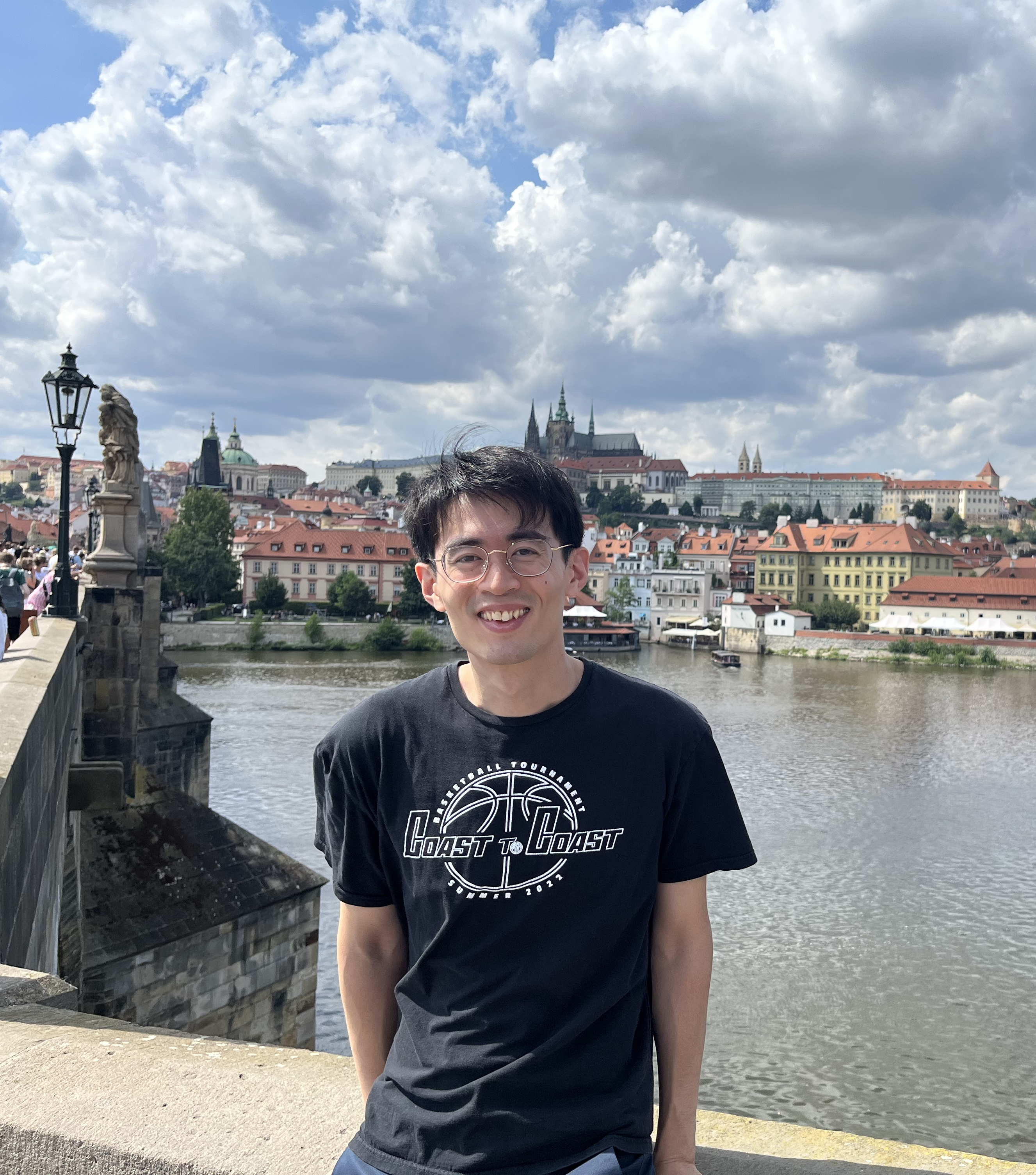
Wengong Jin is an Assistant Professor at the Khoury College of Computer Sciences, Northeastern University, and a visiting research scientist at the Eric and Wendy Schmidt Center at the Broad Institute. He holds a PhD from MIT CSAIL, advised by Prof. Regina Barzilay and Prof. Tommi Jaakkola. Research Interests: His work focuses on geometric and generative AI models for drug discovery, biology, and chemical engineering. Key areas include equivariant neural networks (e.g., FAFormer), diffusion models for binding energy prediction, antibody/enzyme design (RefineGNN, SurfPro), and molecular design through graph neural networks (Junction Tree VAE). He also explores domain generalization and systems for autonomous molecular discovery. Publications: His research has been published in top venues like NeurIPS, ICLR, ICML, Nature, Science, and Cell. Recent breakthroughs include discovering novel antibiotics using explainable AI and designing synergistic drug combinations for cancer treatment. Awards: He has received the BroadIgnite Award, Dimitris N. Chorafas Prize, and MIT EECS Outstanding Thesis Award for his contributions to computational biology and AI-driven drug discovery. Teaching: Currently teaches a PhD seminar on AI for Science, focusing on integrating machine learning into scientific discovery processes.
Ruihong Huang is an Associate Professor in the Department of Computer Science and Engineering at Texas A&M University, part of the College of Engineering. She holds a Ph.D. from the University of Utah (2014) and completed a postdoctoral fellowship at Stanford University. Her research focuses on Natural Language Processing (NLP) with emphasis on information extraction, event recognition, media bias analysis, and ethical AI applications. She teaches courses like Information Storage and Retrieval (CSCE 470), Natural Language Processing (CSCE 638), and has advised numerous PhD, Master’s, and undergraduate students. Key research contributions include work on event coreference resolution, discourse analysis, and detecting media bias through event relation graphs. Huang has developed benchmark datasets like UAL-Bench and EMONA, and her work spans applications in disaster management, fake news detection, and moral reasoning in LLMs. She is a recipient of the NSF CAREER Award and serves on program committees for top conferences like ACL and EMNLP. Her academic service includes roles as Area Chair for ACL 2024 and Senior Area Chair for EMNLP 2024. She maintains an active lab group focusing on NLP fundamentals and real-world applications, with projects involving propaganda identification, polarity calibration for opinion summarization, and multimodal dialog act classification. Huang has published over 80 papers in top-tier venues such as NAACL, EMNLP, ACL, and NeurIPS.
Yi Fang is an Associate Professor of Computer Engineering and an affiliated Associate Professor of Computer Science at New York University Abu Dhabi (NYUAD), and a Global Network Associate Professor at NYU Tandon. He is a core faculty member in the Division of Engineering, specializing in Electrical and Computer Engineering. His research is centered at the intersection of Embodied AI, Robotics, and AI-driven assistive technologies, with strong support from agencies such as the US NSF, UAE ADEK, and ASPIRE. PhD, Purdue University Yi Fang's research interests span 3D Computer Vision, Multimedia Processing, Machine Learning, Deep Learning, and Embodied AI . He focuses on AI-driven perception, learning, and real-world applications, particularly in engineering, medicine, and accessibility. His lab, the Embodied AI and Robotics (AIR) Lab, develops intelligent robotic systems that integrate perception, learning, and decision-making to solve complex societal challenges. His work emphasizes large-scale visual computing, deep visual learning, and cross-domain/multimodal foundation models , with recent innovations in assistive AI for the Deaf and Hard-of-Hearing community. The 15 most recent publications reflect a consistent focus on 3D vision, sketch-based 3D retrieval, point cloud learning, and assistive computer vision . His work leverages deep learning, adversarial training, metric learning, and generative models to bridge modalities such as sketches, depth images, and 3D models. There is a clear trend toward cross-modal understanding, unsupervised representation learning, and real-world assistive applications , especially for visually impaired individuals. Yi Fang actively contributes to the academic community as an Area Chair for top-tier conferences including CVPR, ECCV, ICCV, IJCAI, and IROS. He also serves in peer review and mentoring roles, shaping the future of AI and robotics research. As a dedicated educator, he teaches foundational and advanced courses such as Computer Vision, Applied Machine Learning, Data Structures, and Capstone Design . He mentors students through research seminars and honors projects, fostering innovation and technical excellence. His research is supported by major grants from US NSF, UAE ADEK, and ASPIRE, enabling high-impact interdisciplinary collaborations. He founded and directs the Embodied AI and Robotics (AIR) Lab at NYU Abu Dhabi, a dedicated research space for developing intelligent systems that seamlessly integrate perception, learning, and decision-making. The lab promotes interdisciplinary collaboration across engineering, medicine, and social sciences, advancing the frontiers of Embodied AI.
Sanjay Purushotham is an Assistant Professor in the Department of Information Systems at the University of Maryland Baltimore County (UMBC), with a PhD in Electrical Engineering from the University of Southern California (USC) and a postdoctoral background in Computer Science at USC's Integrated Media Systems Center (IMSC). His research focuses on machine learning, data mining, and their applications in biomedical informatics, social network analysis, and multimedia data mining. Key contributions include survival analysis models using pseudo values and federated learning frameworks for healthcare data. He has received awards including the Best Paper Award at SIGSPATIAL 2014 and a Best Poster Runnerup at SCMLS 2016. Education: PhD in Electrical Engineering (USC), Postdoc in Computer Science (USC) His work spans interdisciplinary areas such as domain adaptation for remote sensing, thermal face translation, and interpretable neural networks for medical applications. Recent projects include federated survival analysis models and climate-informatics frameworks for cloud property retrieval. He teaches courses in artificial intelligence, healthcare informatics, and statistical learning at UMBC. Research highlights include developing MedFuseNet for multimodal medical question answering and VDAM for multi-sensor cloud data analysis. His work on fair survival analysis models addresses algorithmic bias in healthcare predictions. Current grants include a NSF CAREER award for trustworthy federated learning in computational healthcare.
Prof. Bernt Schiele is a Max Planck Director at the Max Planck Institute for Informatics and holds a Professorship at Saarland University. His research focuses on understanding multimodal sensor data, with key areas in computer vision, 3D object recognition, and machine learning. He leads the Computer Vision and Machine Learning group, addressing challenges in sensor fusion, scene understanding, and human activity recognition. Schiele has held academic roles at TU Darmstadt, ETH Zurich, and MIT, and contributes to top journals like IEEE Transactions on PAMI and conferences like ECCV. His work emphasizes robust models, interpretability, and domain adaptation for real-world applications. Education: PhD (1997, Grenoble), MSc (1994 Karlsruhe/1993 Grenoble) Key Positions: MIT (1997-2000), ETH Zurich (1999-2004), TU Darmstadt (2004-2010) Research interests span 3D scene understanding, multimodal sensor processing, and machine learning techniques for large-scale data. His recent work advances robust object detection, explainable AI, and domain-invariant training methods. He also chairs major conferences like ECCV 2018 and co-chairs ICCV 2011. Publications highlight innovations in interpretable vision transformers, certified explanations, and test-time adaptation. Despite no listed awards, his contributions shape foundational areas of computer vision and multimodal AI.
Yanzhi Wang is a Professor in the Department of Electrical and Computer Engineering at Northeastern University , affiliated with the Institute for Experiential AI and the Institute for the Wireless Internet of Things . He holds a PhD from the University of Southern California (2014). His research focuses on real-time AI systems, deep neural network compression, neuromorphic computing, and non-von Neumann architectures. Notable projects include NSF-funded initiatives on age-inclusive urban design, superconducting computing (DISCoVER), and edge device optimization (PatDNN). He has received prestigious awards such as the Army Research Office Young Investigator Award and the Constantinos Mavroidis Translational Research Award. His work emphasizes algorithm-hardware co-design for energy efficiency, with grants from NSF, ARO, and industry partners like Google. Recent research trends reflect his focus on accelerating vision transformers, diffusion models, and large language models for edge computing. He has pioneered methods like AutoViT and Fastcar, addressing latency and resource constraints in mobile platforms. Collaborations span academia and industry, driving innovations in superconducting circuits and neuromorphic systems.
Shai Ben-David is a Professor and University Research Chair at the Department of Computer Science, University of Waterloo. He is affiliated with the Cheriton School of Computer Science and can be reached at shai@uwaterloo.ca . His office is located in DC 2643. Education: Ph.D., Hebrew University, Jerusalem, Israel (1987) M.Sc., Hebrew University Jerusalem, Israel (1979) B.Sc., Hebrew University Jerusalem, Israel (1978) Research interests focus on foundational aspects of machine learning theory, including unsupervised learning (clustering), domain adaptation, fairness, interpretability, and alternative approaches to worst-case computational complexity. He also explores logic applications in computer science theory. His research trends emphasize theoretical challenges in machine learning, particularly clustering, fairness in representations, and the interplay between computational feasibility and learnability. He investigates how unlabeled data and sample compression techniques impact learning robustness and efficiency. No scientific awards are listed. His advising record shows no formal advisees listed here. Grants and funding details are not provided in the text. He has contributed to organizing events like the Dagstuhl Seminar on Foundations of Unsupervised Learning (2017) and co-edited MFCS 2016 proceedings. His work addresses both theoretical questions and practical gaps in ML implementation.
Raquel Fernández is Full Professor of Computational Linguistics and Dialogue Systems at the University of Amsterdam, where she leads the Dialogue Modelling Group at the Institute for Logic, Language & Computation (ILLC). As Vice-Director for Research at ILLC and a Fellow of the ELLIS Society, she bridges computational linguistics, cognitive science, and artificial intelligence through her research on language use in multimodal and conversational contexts. PhD in Computational Linguistics from King's College London Prior research positions at University of Potsdam and Stanford University's CSLI Her work explores how cognitive constraints, social interaction, and perception shape language use, with a focus on: Visually-grounded language processing Multimodal dialogue modeling Model uncertainty and calibration Language grounding in multimodal data Language learning and semantic change Dialogue reference resolution Recent publications analyze multimodal reasoning limitations, cross-lingual knowledge consistency, and uncertainty modeling in dialogue systems. She has received multiple accolades including an ERC Consolidator Grant , NWO VENI/VIDI/Aspasia fellowships , and EMNLP/GenBench awards . Outstanding Paper Award (EMNLP 2023) Best Data Award (GenBench Workshop 2023) ELLIS Society Fellow ERC Consolidator Grant #819455 recipient NWO VENI/VIDI/Aspasia awardee As a leader in academic service, she serves on the SIGDAT Executive Committee and chairs multiple conference committees. Her lab develops models for multimodal dialogue, visual storytelling, and grounded language understanding.
Olga Fink is a Tenure Track Assistant Professor at the École Polytechnique Fédérale de Lausanne (EPFL), affiliated with the Department of Intelligent Maintenance and Operations Systems (IMOS) within the School of Architecture, Civil and Environmental Engineering (ENAC). She also holds roles in PhD program committees for Civil and Environmental Engineering (EDCE) and Robotics, Control, and Intelligent Systems (EDRS). Her research focuses on machine learning for infrastructure monitoring, predictive maintenance, and physics-informed AI models. She teaches courses on machine learning, data science for infrastructure, and advanced deep learning topics. Fink advises multiple PhD students and is involved in interdisciplinary projects such as ThermoNeRF (multimodal 3D thermal modeling) and physics-informed neural networks for fault diagnostics. Her work bridges AI and engineering with applications in smart infrastructure, energy systems, and industrial IoT. Education: PhD in Engineering (inferred from role) Affiliations: IMOS Lab, ENAC-SGC, EPFL PhD Committees (EDCE, EDRS) Key Research Themes: Explainable AI, Digital Twins, Structural Health Monitoring, Domain Adaptation Her publications (2023–2025) emphasize robust AI for industrial systems, including fault detection in high-voltage equipment, multimodal data fusion, and physics-consistent models. She collaborates on EU and industry-funded projects, focusing on real-world applications like predictive maintenance and energy efficiency.
Eamonn Keogh is a Professor in the Computer Science and Engineering Department at the University of California, Riverside. His pioneering work centers on the Matrix Profile, a transformative approach to time series data mining enabling efficient solutions for motif discovery, anomaly detection, and similarity search. His algorithms (STAMP, STOMP, SCRIMP, DAMP, SCAMP) offer exact, parameter-free, and scalable solutions across domains like seismology, bioinformatics, and industrial IoT. Research areas include: Development of ultra-fast algorithms for time series joins and motif discovery at unprecedented scales (breaking the 100 million barrier) GPU acceleration for time series mining Domain-agnostic methods for semantic segmentation and anomaly detection Novel primitives like Time Series Chains, Snippets, and Consensus Motifs His work is highly cited and recognized by industry and academia, with applications ranging from NASA's Cassini mission to detecting BGP anomalies in computer networks.
Dylan Campbell is a Lecturer in Computing at the Australian National University (ANU), affiliated with the ANU College of Systems & Society. His research focuses on computer vision, optimization, and robotics, particularly in 3D vision and deep learning applications. He has held prior roles as a Research Fellow at the University of Oxford’s Visual Geometry Group and ANU’s Australian Centre for Robotic Vision. Campbell holds a PhD from ANU (2018) and a BE in Mechatronic Engineering from UNSW (2012). Research interests include geometric sensor alignment, neural radiance fields, and differentiable optimization layers. He actively supervises students (7 PhD/DPhil, 3 MEng, 9 honours) and teaches advanced courses in computer vision and robotics. Notable awards include the Marr Prize Honourable Mention (2017) and the IEEE Australia Council Postgraduate Student Paper Competition (2018). He has organized workshops at ECCV and CVPR, served as a reviewer for top conferences like CVPR/ICCV/ECCV, and contributed to datasets like SEED4D and RefRef. His work emphasizes efficient training of neural networks and leveraging symmetries in data for long-range connections.