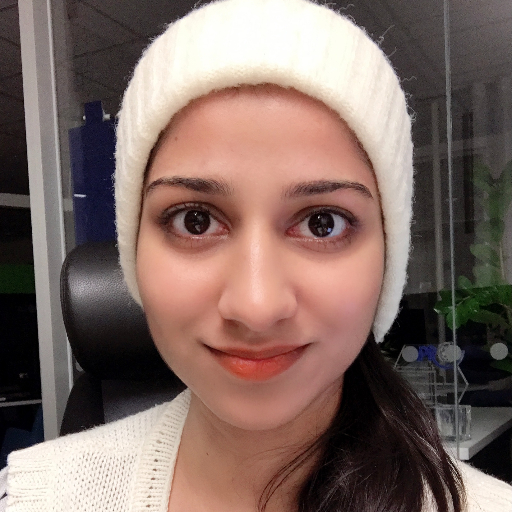
Yael Feldman Maggor is a Postdoctoral Fellow at KTH Royal Institute of Technology, affiliated with the Media Technology & Interaction Design Division and the Digital Futures research center. Her work bridges educational technologies, artificial intelligence, and science education, with a focus on enhancing pedagogy through innovative tools. Research Themes: Generative AI in education, self-regulated learning, learning analytics, chemistry education, and ethical considerations in AI integration. Key Projects: Contributions to the International Journal of Science Education, development of AI-driven evaluation frameworks, and pandemic-era online teaching analysis. Methodologies: Expertise in quantitative and qualitative research, educational data mining, and design of interactive learning platforms. Recent publications emphasize cross-cultural trust in AI, generative AI applications in chemistry education, and explainable AI for teacher professional development. She co-authored studies on nanotechnology courses for educators and self-regulation strategies in online learning environments.
Cresantus Biamba is a Senior Lecturer at the University of Gävle, specializing in Educational Science. His research bridges education theory with technological advancements, focusing on teacher training, sustainability in education, and inclusive pedagogy. Researcher at University of Gävle (Education, Educational Science) Research interests include: Education for Sustainable Development (ESD) in global contexts Teacher education reform and policy analysis Inclusive classroom practices in the Global South Technological integration in educational systems Curriculum development for post-pandemic resilience Publication trends reveal interdisciplinary work combining AI, cloud computing, and IoT applications with educational challenges, particularly in African institutions. His articles address security optimization, healthcare technology, and sustainability frameworks. Academic activities involve collaborations with researchers in cybersecurity, AI, and energy systems, though specific grants or mentoring roles are not explicitly documented here.
Marcus Liwicki is a Chair Professor at Luleå University of Technology (LTU) and Senior Assistant Professor at the University of Fribourg, where he leads research in Machine Learning at the Department of Systems and Space Engineering. He serves on LTU's Vice-Chancellor's Council for Artificial Intelligence. Education: MS in Computer Science (Free University of Berlin, 2004) PhD (University of Bern, 2007) Habilitation (Kaiserslautern University of Technology, 2011) His research focuses on core machine learning (pattern recognition, neural networks) and applied AI in document analysis, quantum computing, and human-computer interaction. Recent publications demonstrate strong emphasis on generative AI models, multi-task learning optimization, and AI applications in physics/health domains. Awards: ICDAR Young Investigator Award (2015) for pattern recognition research He leads the Machine Learning Group at LTU's EISLAB, supervising multiple courses including Advanced Deep Learning, Neural Networks, and AI fundamentals.
Elias Zea Marcano is an Assistant Professor of Engineering Acoustics at the Marcus Wallenberg Laboratory for Sound and Vibration Research (MWL) at KTH Royal Institute of Technology. His research focuses on noise source separation, aeroacoustics, room acoustics, sparse signal processing, and data-driven methods. He reviews for prominent journals like the Journal of the Acoustical Society of America and serves as a Guest Editor for the Journal of Theoretical and Computational Acoustics. His work is supported by the Swedish Research Council and the European Commission. He teaches courses such as Room Acoustics and Spatial Audio and has supervised numerous graduate students and postdocs in areas like sustainable aviation noise reduction and acoustic material characterization. He actively participates in international conferences and publishes cutting-edge research on topics such as fan noise measurement and data-driven speech enhancement.
Vera Danilova is a Postdoctoral Research Fellow at Uppsala University's Department of History of Science and Ideas, specializing in computational approaches to historical text analysis. Her work bridges digital humanities and natural language processing, with a focus on extracting meaningful patterns from historical periodicals and archives. Her primary research interests include: Genre classification in historical magazines (1875-1990) Post-OCR correction using large language models Cross-genre transfer learning in dependency parsing Topic modeling for medical history periodicals Development of multilingual NLP resources Recent publications reveal a strong trajectory in applying machine learning to historical document analysis, particularly in genre identification and text restoration for German and Russian periodicals. Her work frequently addresses challenges in historical OCR output and develops specialized tools like UD-MULTIGENRE for linguistic annotation. No scientific awards were documented in the provided sources. Information regarding academic advising, grant funding, or laboratory affiliations was not present in the available materials.
Ola Knutsson is a Senior Lecturer and Associate Professor at the Department of Computer and Systems Sciences, Stockholm University, and a key member of the ReVisE Research Group. His work focuses on participatory design of digital systems, with emphasis on empowering users in educational and social work contexts. He holds a PhD in Human-Computer Interaction from KTH and serves as director of Stockholm University's bachelor programme in Interaction Design and Deputy Editor-in-Chief of Designs for Learning . Education: PhD in Human-Computer Interaction (KTH Royal Institute of Technology) Research Interests: Knutsson’s research spans participatory design, technology’s role in education, and ethical design practices. He investigates how digital tools like text chat can mediate corrective feedback in language learning, enhance self-regulation, and support shared decision-making in social services. His work also explores teachers’ design processes and the implicit pedagogy in technology use. Article Trends: His recent publications (2024–2023) emphasize ethical design (e.g., corporate responsibility in technology) and dynamic assessment (e.g., AI-driven feedback in language learning). Earlier works (2022–2020) focus on user participation in social work, pedagogical patterns , and sociocultural theory applied to digital literacy. Older articles (2019 and earlier) examine collaborative learning and mobile technology in primary education. Scientific Awards: Best Paper Award (2nd Place) for Unsupervised Evaluation of Parser Robustness (2005) Grants and Projects: Knutsson has participated in projects funded by Vinnova (2007–2009), Vetenskapsrådet (2010–2013), Forte & Kamprad Foundation (2018–2024), and Nordplus (2023–2025). These projects address participatory design in education, social work, and ethical technology frameworks.
Yael Feldman-Maggor is a Research Fellow at KTH Royal Institute of Technology’s Media Technology and Interaction Design Division within the School of Electrical Engineering and Computer Science (EECS). She is affiliated with the Digital Futures research center, focusing on AI ethics and educational technology. Her postdoctoral project examines fairness and bias in AI tools for STEM education, emphasizing cultural norms influencing educators’ trust in algorithmic recommendations. Dr. Feldman-Maggor holds a PhD in Science Education from the Weizmann Institute of Science. Her research integrates quantitative and qualitative methods, with expertise in education technologies, self-regulated learning, learning analytics, and chemistry education. She previously taught at Israel’s Open University and developed blended learning strategies in the health sector. Her ongoing project (2024–2026), co-supervised by Prof. Olga Viberg (KTH) and Prof. Teresa Cerratto Pargman (Stockholm University), explores how cultural contexts shape educators’ adoption of AI tools. She serves on the editorial board of the International Journal of Science Education and collaborates with Stockholm University and RISE Research Institutes of Sweden. Key research themes include generative AI applications in science education, trust in AI systems, and bridging educational equity gaps through culturally responsive AI design. Her work emphasizes responsible AI implementation to ensure equitable STEM education access.
Rafael Messias Martins is a Researcher at Linnaeus University, affiliated with the Department of Computer Science and Media Technology within the Faculty of Technology. He holds an MSc in Computer Science from the University of São Paulo and a PhD in Computer Science from the University of Groningen. His primary research focuses on Information Visualization and Visual Analytics, particularly emphasizing Multidimensional Data and Networks. He is a core member of the Information and Software Visualization (ISOVIS) research group and leads multiple ongoing and completed research projects, including InfraVis (a national research infrastructure for data visualization) and initiatives addressing medication risks and carbon mitigation in forestry. His work bridges theoretical advancements in visualization with practical applications in education, healthcare, and environmental science. Education MSc in Computer Science, University of São Paulo, Brazil PhD in Computer Science, University of Groningen, Netherlands Research Interests His research explores the intersection of visualization techniques with complex data analysis, emphasizing: Interactive visual analytics for high-dimensional data Machine learning interpretability through visualization Educational data analytics for K-12 institutions Applications in healthcare (e.g., medication risk prediction) and environmental science (e.g., carbon footprint reduction) Development of national visualization infrastructures (InfraVis) Recent Trends in Articles His recent work emphasizes: Enhancing trust in machine learning models through visual explanations Optimizing visualization tools for educational stakeholders Algorithmic fairness in urban planning simulations Scalable dimensionality reduction techniques for streaming data Grants & Collaborations He has coordinated projects such as IDEAL (interaction design curriculum development), TimberVis (3D timber structure visualization), and seed projects addressing carbon mitigation and medication risks. Collaborations span academic, industrial, and governmental partners in Sweden and internationally. Labs & Teams He leads the ISOVIS group, which develops open-source tools like SBGTool (student grouping analytics) and FeatureEnVi (feature engineering visualization). The group also contributes to InfraVis, a national platform for visualization resources.
Shafiullah Soomro serves as Associate Professor in the Department of Artificial Intelligence at Quaid-e-Awam University of Engineering Science and Technology, Pakistan. He completed his Ph.D. in Application Software from Chung-Ang University, South Korea (2018), where he was honored as Best PhD Graduate. Ph.D., Application Software, Chung-Ang University (2018) His research spans medical image segmentation, computer vision, and AI applications in environmental monitoring. Specializing in automatic segmentation techniques using machine learning, he combines theoretical frameworks with practical biomedical implementations. Recent work integrates Swedish National Forest Inventory data with airborne laser scanning for forest attribute prediction. Current research projects include ForestMap (global forest cartography), AI-driven tree volume measurement (Sweden-Brazil collaboration), and machine learning models for predicting mechanical properties of oxynitride glasses. Best PhD Graduate, Chung-Ang University Dr. Soomro has mentored multiple MS students across Korea and Pakistan while supervising 2 Master's and 1 PhD students currently. His teaching portfolio includes 11 undergraduate, 2 MS, and 1 PhD courses such as Artificial Intelligence, Digital Image Processing, and Advanced Image Processing/Computer Vision. He actively contributes to academic curriculum design and research community development within the Computer Science and Artificial Intelligence department.
György Kovács is a Senior Lecturer at Luleå University of Technology, Department of Computer Science, Electrical and Space Engineering, working within the Embedded Intelligent Systems LAB. His primary research focus is on Machine Learning applications, particularly in speech and language technology. His research interests span multiple areas of speech and language processing, including: Automatic Speech Recognition across diverse conditions and languages Paralinguistic Speech Processing for emotion detection and speaker state analysis Audio event classification, including medical applications like cough sound analysis Sentiment analysis in written text, with particular interest in hateful language detection Bot detection in social media analysis Kovács has supervised numerous Master's theses since 2021, with topics ranging from accent classification and sentiment analysis to AI-generated code quality assessment. Many of these supervisions have led to co-authored publications with students. His recent publications demonstrate a strong focus on applying machine learning to diverse domains including remote sensing, healthcare technology, and natural language processing. The research shows a clear pattern of interdisciplinary work connecting machine learning with practical applications across environmental monitoring, healthcare, and social media analysis. His academic contributions include co-supervising PhD students such as Sana Al-Azzawi and Nosheen Abid, whose dissertation work on Unsupervised Curriculum Learning for Earth Observation represents significant contributions to the field. Notable publications include work on cloud detection using synthetic datasets, seagrass classification, and emotion classification using EEG in healthcare settings. Kovács also teaches courses including Introduction to Artificial Intelligence (D0032E) and Machine Learning and Pattern Recognition (D0033E), demonstrating his commitment to both research and education in the field of artificial intelligence.
Nosheen Abid is a Postdoctoral Researcher at Malmö University's Faculty of Technology and Society, Department of Computer Science and Media Technology. Her research focuses on machine learning applications, particularly unsupervised curriculum learning methods for various domains including earth observation, robotics, and computer vision. Her primary research interests include: Machine Learning and Deep Learning Unsupervised Curriculum Learning Computer Vision and Image Analysis Earth Observation and Remote Sensing Human-Robot Interaction Artificial Intelligence for Environmental Applications Abid is actively involved in the project "Human-robot collaborative learning for ultralight electric utility vehicles," which aims to enhance autonomous capabilities through the integration of end-to-end imitation learning with interactive machine learning. Her publication record shows consistent output across multiple application domains, demonstrating expertise in applying advanced machine learning techniques to solve real-world problems in environmental science, neuroscience, infrastructure analysis, and social media. She is affiliated with the Sustainable Digitalisation Research Centre at Malmö University, which studies both social and technological aspects to promote sustainable digitalisation. Her collaborative work with researchers like Marcus Liwicki and others indicates strong interdisciplinary connections across multiple institutions.