Sunita Sarawagi is a Professor at Computer Science and Engineering , IIT Bombay, and a member of AI Labs@CSE . She is also associated with the Center for Machine Intelligence and Data Science (CMInDS), which she founded in 2020. Education: PhD in Computer Science from UC Berkeley (Thesis: Query Processing in Tertiary Memory Databases), BTech in Computer Science from IIT Kharagpur Research Interests span machine learning , data analytics , graphical models , and structured learning , with applications in text segmentation, sequence modeling, domain adaptation, and human-in-the-loop systems. Her publications reveal a strong focus on integrating data mining with database systems , temporal data analysis , and information extraction using probabilistic methods. Professional Activities include serving on the IEEE John Von Neumann Medal committee (2017-), VLDB 2011 Research Track Co-chair , and multiple program committee roles at top conferences like ICML, KDD, and SIGMOD. Labs & Teams : Leads the SS Lab , a research group focused on probabilistic graphical models, sequence modeling, and data integration techniques.
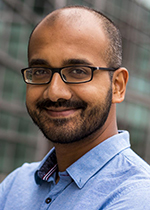
Dr. Corey T. Callaghan is an Assistant Professor in the Department of Wildlife Ecology and Conservation at the University of Florida . Based at the Fort Lauderdale Research and Education Center , his research focuses on global change ecology using big data from citizen science platforms like eBird and iNaturalist, combined with geospatial analyses and macroecological theory . Ph.D. (2019) from UNSW Sydney M.S. (2015) from Florida Atlantic University B.S. + B.S. (2013) from Canisius College His work examines urban ecology , including how species traits influence urban tolerance across birds, amphibians, and butterflies. He develops adaptive sampling frameworks to optimize citizen science data collection while addressing biases. Current projects analyze human-nature interactions through citizen science participation, secondary data in photographs, and machine learning for biodiversity monitoring. He actively contributes to conservation strategies for urban biodiversity and data-driven restoration efforts . Recent publications highlight his expertise in cross-taxa comparisons , continental-scale analyses , and ecosystem service quantification . He leads the Global Ecology Research Group at the University of Florida, emphasizing collaborative science and open-source methodologies .
Chua Tat Seng is a Professor at the School of Computing, National University of Singapore (NUS), holding the KITHCT Chair Professorship since 2009. He serves as co-Director of the NExT++ Center, a joint research center between NUS and Tsinghua University focused on Extreme Search. His academic career spans over three decades at NUS, where he has held various leadership positions including Acting Dean of the School of Computing (1998-2000) and Acting Head of the Department of Information Systems & Computer Science (1996-1998). Professor Chua's research spans unstructured data analytics , multimedia information retrieval , recommendation and conversation systems , and emerging applications in e-commerce and fintech . He established the Lab for Media Search (LMS) at the School of Computing and has been instrumental in advancing multimodal learning and search technologies. His work bridges theoretical foundations with practical applications, particularly in developing trustable AI systems for real-world deployment. His recent publications demonstrate a strong focus on large language models for recommendation systems , multimodal learning , and generative AI applications . The research trends show increasing emphasis on LLM-based recommendation, multimodal understanding, and addressing fundamental challenges in AI reliability, fairness, and efficiency. His work spans theoretical advancements in representation learning to practical applications in e-commerce, finance, and healthcare domains. ACM SIGMM Technical Achievement Award 2015 Multiple Best Paper Awards across ACM Multimedia, IEEE Transactions, and MMM conferences (2007-2020) Professor Chua has supervised 37 PhD students since 2004, establishing himself as a dedicated mentor in the academic community. His research has been supported by substantial grants including NExT++ ($12 million), Base Metals Price Forecasting ($200,000), and Multilingual Multimodal Knowledge Graph ($500,000). He maintains active collaborations with Tsinghua University, University of Southampton, and industry partners like Four Elements Capital and Singapore Press Holdings. As co-Director of the NExT++ Center, he leads a major research initiative focused on Web Intelligence and User Empowerment. His visiting professorships at Tsinghua University (2017-present) and Zhejiang University (2021-present) reflect his international impact in the field of multimedia and AI research.
Chris Atkeson is a Professor at the Robotics Institute of Carnegie Mellon University. His research focuses on achieving human-level competence in machines through humanoid robotics and human-aware environments. He explores machine learning techniques such as reinforcement learning, nonparametric methods, and memory-based learning to develop robots capable of complex tasks like manipulation, locomotion, and perception. His work emphasizes bridging the gap between simulation and real-world applications (sim2real transfer), with contributions to tactile sensing (e.g., FingerVision), dynamic walking control, and human-robot collaboration. Notable projects include participation in the DARPA Robotics Challenge with Team WPI-CMU, where his team developed reliable humanoid behavior for disaster response scenarios. Atkeson’s research spans robotics, computer vision, and control systems, with a focus on enabling robots to perceive, learn, and act in unstructured environments. His recent work includes advancements in 3D scene capture, soft robotics, and energy-based planning for compositional tasks.
Alex Wong is an Assistant Professor of Computer Science at Yale University, specializing in computer vision, robotics, and medical imaging. His research focuses on sensor fusion, unsupervised learning, 3D vision, robust perception under adverse conditions, and medical image analysis. He holds degrees from the University of California, Los Angeles (UCLA), including a B.S., M.S., and Ph.D. in Computer Science. Wong’s work bridges theoretical advances with practical applications, particularly in depth estimation, autonomous systems, and medical diagnostics. He has received prestigious awards such as the NeurIPS Outstanding Student Paper Award (2011) and the ICRA Best Paper Award in Robot Vision (2019). His research often addresses challenges in unstructured environments, emphasizing robustness and adaptability. Recent projects include developing novel frameworks for unsupervised depth completion, adversarial robustness in vision systems, and multimodal fusion techniques. His contributions span conferences like CVPR, ICCV, and ICRA, with a strong focus on advancing AI for real-world applications in healthcare and robotics. Education: B.S., Computer Science, UCLA M.S., Computer Science, UCLA Ph.D., Computer Science, UCLA Awards: NeurIPS Outstanding Student Paper Award (2011) ICRA Best Paper Award in Robot Vision (2019) His lab at Yale Engineering focuses on AI-driven solutions for perception challenges, collaborating across disciplines to advance medical imaging and autonomous systems. Current efforts explore generative models, continual learning, and vision-language integration for robust scene understanding.
Subhransu Maji is an Associate Professor in the Manning College of Information and Computer Sciences at the University of Massachusetts Amherst, and the co-director of the Computer Vision Lab. He is also affiliated with the Center for Data Science and holds a part-time role as an Amazon Scholar. His research focuses on high-level visual recognition algorithms and interdisciplinary applications in ecology and astronomy. He has received prestigious awards including the NSF CAREER Award (2018), Best Paper at WACV 2015, and the Google Graduate Fellowship (2008). Education: PhD in Computer Science from UC Berkeley (2011), BTech from IIT Kanpur (2006). Prior roles include Research Assistant Professor at Toyota Technological Institute at Chicago (2012-2014). Research Interests: Computer Vision Machine Learning AI Applications in Ecology and Astronomy 3D Shape Understanding Climate Science Grants and Funding: Supported by NSF, NASA, Climate Change AI, and industry grants from Facebook, NVIDIA, Adobe, and Dolby. Current projects include satellite imagery analysis for ecology and material science applications using deep learning. Labs and Teams: Leads the Computer Vision Lab, collaborates with interdisciplinary teams on ecological monitoring (e.g., bird migration tracking via radar data) and material property prediction (e.g., zeolite adsorption modeling).
Rana Hanocka is an Assistant Professor of Computer Science at the University of Chicago, leading the 3DL research group focused on AI-driven 3D geometry processing. She earned her Ph.D. in 2021 from Tel Aviv University under Professors Daniel Cohen-Or and Raja Giryes. Her work explores neural networks for unstructured 3D data, including mesh convolutional networks and self-priors for shape reconstruction. Key research areas include geometric deep learning, human-AI collaboration in 3D modeling, and interpretable neural networks. Notable contributions include MeshCNN (SIGGRAPH 2019) and Point2Mesh (NeurIPS 2020), advancing mesh analysis and point cloud processing. Awards include the 2023 Pazy Research Award and 2020 Rising Star in EECS. Education : Ph.D. Computer Science, Tel Aviv University (2021) Labs/Groups : 3DL Group at UChicago Grants : NSF Grant for AI-driven 3D modeling tools (2023) Research directions emphasize creative human-AI partnerships, unsupervised learning from shape collections, and explainable 3D neural networks. Ongoing projects include style-aware 3D synthesis, interactive segmentation, and multimodal shape interfaces.
Andrew Childs is a Professor at the University of Maryland, affiliated with the Department of Computer Science and the Institute for Advanced Computer Studies (UMIACS). He serves as Director of the NSF Quantum Leap Challenge Institute for Robust Quantum Simulation (RQS) and is a Fellow at the Joint Center for Quantum Information and Computer Science (QuICS). His research focuses on quantum algorithms for simulating physical systems, algebraic problems, and quantum walk protocols, with applications in quantum computing and computational complexity. University of Maryland Institute for Advanced Computer Studies (UMIACS) Joint Center for Quantum Information and Computer Science (QuICS) NSF Quantum Leap Challenge Institute for Robust Quantum Simulation Childs' research spans quantum simulation, quantum Fourier transform, phase estimation, and Hamiltonian dynamics. He has developed techniques to reduce quantum computational resources for simulating quantum systems and explored limitations of quantum computers through hidden subgroup problems and non-unitary dynamics. His publications cover diverse areas including quantum walk optimization, Hamiltonian simulation methods, and applications to cryptography and condensed matter physics. Recent works address spatial search algorithms, product formulas for commutators, and quantum routing protocols. As an educator, Childs has taught courses on quantum algorithms and information processing at both the University of Maryland and University of Waterloo, with lecture notes and materials spanning multiple years. Contact: amchilds@umd.edu | Office: ATL 3359 | Affiliated with University of Maryland's quantum research institutes.
Aditya Parameswaran is an Associate Professor in the Electrical Engineering and Computer Sciences (EECS) department at the University of California, Berkeley. He co-directs the EPIC Data Lab and the Police Records Access project, focusing on simplifying data science at scale through human-in-the-loop systems, LLM-powered tools, and scalable data systems. His research spans database systems, human-computer interaction, and machine learning, with notable contributions in tools like Lux, Modin, and DataSpread. Education : PhD in Computer Science from Stanford University (2013) BTech in Computer Science and Engineering from IIT Bombay (2007) Research Interests : Parameswaran's work centers on empowering end-users with intuitive data tools. Recent projects include LLM-powered systems for document processing (DocETL, TWIX), proactive data systems, and benchmarking frameworks. He emphasizes democratizing data science through low/no-code solutions and improving production ML workflows. Articles Trends : His recent work (2023–2025) prioritizes LLM integration into data systems, focusing on robust pipelines, assertion generation (SPADE), and debugging tools (RAGGY). Earlier contributions include visualization recommendation (Lux), scalable dataframes (Modin), and spreadsheet optimization (DataSpread). Awards : Recipient of the VLDB Early Career Award (2019), Sloan Research Fellowship (2020), NSF CAREER Award (2017), and multiple best paper/demonstration awards at top venues like SIGMOD and VLDB. Advising & Grants : Guides over 20 PhD/postdoc alumni, many now in academia (e.g., Madelon Hulsebos at CWI) and industry leadership roles. Active in securing grants (e.g., NSF, Army Research Office) and industry partnerships (e.g., Snowflake, LangChain). Labs/Teams : Leads the EPIC Data Lab, focusing on agentic data systems, and co-founded Ponder (acquired by Snowflake). Collaborates on the Police Records Access initiative, building transparency tools for public records.
Cyrill Stachniss is a Full Professor at the University of Bonn , where he heads the Lab for Photogrammetry and Robotics and is affiliated with the Lamarr Institute for Machine Learning and Artificial Intelligence . He was previously a Visiting Professor in Engineering at the University of Oxford until 2025. His academic journey includes positions at the University of Freiburg, University of Zaragoza, and the Swiss Federal Institute of Technology. University: University of Bonn School: Faculty of Engineering Department: Department of Photogrammetry Academic Rank: Professor His research spans robotics, photogrammetry, SLAM, autonomous navigation, perception systems, agricultural robotics, and unmanned aerial vehicles . He emphasizes probabilistic techniques for mobile robots and has made significant contributions to visual and LiDAR-based localization, scene understanding, and 3D reconstruction. The recent publications highlight a strong trend toward neural implicit representations, agricultural phenotyping, radar-based perception, and active learning . His team develops robust systems for real-world deployment in dynamic and unstructured environments, particularly in precision farming and autonomous vehicles. Scientific Awards: IEEE RAS Early Career Award (2013) Microsoft Research Faculty Fellow (2010) 7th EURON Georges Giralt Award (2008) Multiple Best Paper Awards at ICRA, IROS, RSS, and RAL Faculty Teaching Award, University of Freiburg He has advised numerous students and leads the DFG Cluster of Excellence PhenoRob and Research Unit FOR 1505 Mapping on Demand . His lab has co-founded three startups, reflecting strong industry and societal impact. He also runs the educational video series 5 Minutes with Cyrill , explaining key robotics concepts.
Perla Maiolino serves as an Associate Professor in Engineering Science at the University of Oxford and Principal Investigator of the Soft Robotics Lab (SRL) within the Oxford Robotics Institute. Her academic foundation includes BEng, MEng, and PhD degrees in Robotics and Automation from the University of Genoa, where she pioneered CySkin technology for distributed tactile sensing in robots—later exhibited at the Science Museum in London. She expanded her expertise during a 2017-2018 postdoctoral fellowship at Cambridge University's Biologically Inspired Robotics Lab, focusing on soft robotics and tactile perception. Dr. Maiolino's research centers on developing artificial skin systems, soft robotic actuators, and distributed sensing architectures. Her work bridges biological inspiration with engineering innovation to create robots capable of safe human interaction and dexterous manipulation in unstructured environments. Key contributions include compliant beaded-string jamming mechanisms for anthropomorphic fingers, monolithic 3D-printed soft pneumatic arms (JAMMit!), and distributed time-of-flight sensor networks for robotic self-awareness. Recent publications (2024-2025) reveal a strong convergence of tactile sensing with machine learning, featuring optical flow for gesture recognition, diffusion models for artificial skin simulation, and zero-shot sim-to-real transfer techniques. Her team has made significant advances in multi-modal sensing integration, variable stiffness actuation, and scene flow estimation for robots operating in dynamic surroundings. Scientific Awards No specific awards were documented in the provided institutional materials. Advising and Grants While her leadership of the Soft Robotics Lab implies active student supervision and grant management, detailed information about advisees or funded projects was not included in the source documentation. Labs and Teams As Principal Investigator of the Soft Robotics Lab at Oxford Robotics Institute, Dr. Maiolino directs research on tactile perception systems, soft actuation mechanisms, and sensor-integrated robotic structures. The lab's work focuses on applications requiring safe physical interaction, including healthcare robotics and human-robot collaboration scenarios, with emphasis on multi-material 3D printing and embedded sensing technologies.
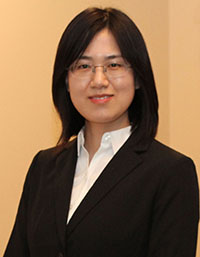
Ruihong Huang is an Associate Professor in the Department of Computer Science and Engineering at Texas A&M University, part of the College of Engineering. She holds a Ph.D. from the University of Utah (2014) and completed a postdoctoral fellowship at Stanford University. Her research focuses on Natural Language Processing (NLP) with emphasis on information extraction, event recognition, media bias analysis, and ethical AI applications. She teaches courses like Information Storage and Retrieval (CSCE 470), Natural Language Processing (CSCE 638), and has advised numerous PhD, Master’s, and undergraduate students. Key research contributions include work on event coreference resolution, discourse analysis, and detecting media bias through event relation graphs. Huang has developed benchmark datasets like UAL-Bench and EMONA, and her work spans applications in disaster management, fake news detection, and moral reasoning in LLMs. She is a recipient of the NSF CAREER Award and serves on program committees for top conferences like ACL and EMNLP. Her academic service includes roles as Area Chair for ACL 2024 and Senior Area Chair for EMNLP 2024. She maintains an active lab group focusing on NLP fundamentals and real-world applications, with projects involving propaganda identification, polarity calibration for opinion summarization, and multimodal dialog act classification. Huang has published over 80 papers in top-tier venues such as NAACL, EMNLP, ACL, and NeurIPS.
Danica Kragic is a Professor of Computer Science at the School of Electrical Engineering and Computer Science at the Royal Institute of Technology (KTH) in Stockholm, Sweden. She serves as the Director of the Centre for Autonomous Systems and leads the Robotics, Perception and Learning Lab at KTH. Her research focuses on advancing robotics capabilities through computer vision and machine learning approaches. MSc in Mechanical Engineering from the Technical University of Rijeka, Croatia (1995) PhD in Computer Science from KTH (2001) Professor Kragic's research primarily centers on robotics, computer vision, and machine learning, with particular emphasis on robotic manipulation, grasp planning, and human-robot interaction. Her work bridges theoretical foundations with practical applications, exploring how robots can understand and interact with objects in complex environments. She investigates how visual and tactile sensing can be integrated to improve robotic perception and manipulation capabilities, with applications ranging from industrial automation to assistive robotics. Her recent publications demonstrate a strong focus on advanced grasp planning techniques, tactile sensing for manipulation, and mathematical representations for robotic control. Kragic's research shows increasing integration of machine learning approaches with traditional robotics frameworks, particularly in the areas of grasp synthesis, object recognition, and human-robot collaboration. Her work spans theoretical contributions in mathematical representations of grasps to practical implementations of robotic systems capable of adapting to novel objects and situations. 2007 IEEE Robotics and Automation Society Early Academic Career Award IEEE Fellow ERC Starting Grant (2012) Member of The Royal Swedish Academy of Sciences Member of The Royal Swedish Academy of Engineering Sciences Honorary Doctorate from Lappeenranta University of Technology Professor Kragic's research has been supported by major funding bodies including the EU, Knut and Alice Wallenberg Foundation, Swedish Foundation for Strategic Research, and Swedish Research Council. While specific student names aren't listed in the provided information, her publication record suggests extensive mentorship of PhD students and postdoctoral researchers in robotics and computer vision. Her lab, the Robotics, Perception and Learning Lab, serves as a hub for interdisciplinary research connecting computer science, engineering, and cognitive science perspectives on robotic systems. As Director of the Centre for Autonomous Systems at KTH, Kragic oversees a major research initiative focused on advancing autonomous technologies. Her Robotics, Perception and Learning Lab brings together researchers working on visual perception, machine learning, and robotic manipulation, with particular emphasis on developing systems that can understand and interact with objects in unstructured environments. The lab's work spans theoretical foundations of robotic manipulation to practical implementations of systems capable of learning from experience.
Suchi Saria is the John C. Malone Associate Professor at Johns Hopkins University , with appointments in the Whiting School of Engineering (Computer Science), the Bloomberg School of Public Health (Health Policy & Management), and the Whiting School (Applied Math & Statistics). She directs the Machine Learning and Healthcare Lab and co-founded the Bayesian Health startup. Education: PhD in Computer Science from Stanford University (advisor: Daphne Koller), NSF Computing Innovation Fellowship at Harvard (2011), prior research at UMass (Barto, Madhavan), and industry experience at Aster Data Systems (acquired by Teradata). Research Focus: Saria develops statistical machine learning tools to extract insights from heterogeneous clinical data (structured/unstructured EHRs, sensor streams). Her work enables counterfactual reasoning for personalized treatment plans, dataset shift mitigation in healthcare AI, and weak supervision frameworks for mobile health apps. Key applications include sepsis prediction , Parkinson’s symptom tracking , and critical care optimization . Article Trends: Recent publications emphasize AI safety (2024-2025), addressing racial bias , transparency frameworks , and dynamic monitoring for clinical deployments. Her work spans conformal prediction , causal modeling , and policy guidelines for health AI. Scientific Awards: Sloan Research Fellowship (2018) DARPA Young Faculty Award (2016) MIT Technology Review TR35 Innovator (2017) Popular Science Brilliant 10 (2016) IEEE Intelligent Systems AI’s 10 to Watch (2015) NSF Computing Innovation Fellowship (2011) Rambus Fellowship (2004-2010) Best Paper Awards in ML, Informatics, and Medicine venues Advising & Grants: Saria mentors PhD students/postdocs in machine learning and health informatics , including funded projects like the NSF Smart and Connected Health Grant (2014) and Google Research Award (2014). Her lab’s TREWScore system (Science Translational Medicine 2015) is deployed in hospitals, while her Bayesian Health startup commercializes AI solutions for provider experience.
Kostas Bekris is a Professor in the Department of Computer Science at Rutgers University, specializing in Robotics and Artificial Intelligence. His research focuses on motion planning, autonomous manipulation, and robot control, with notable contributions to tensegrity robotics, perception-driven systems, and large-scale package handling. He leads a team conducting groundbreaking work in robotics, supported by grants from NSF, NASA, and industry collaborators like ExxonMobil. His group emphasizes interdisciplinary approaches, combining machine learning, topological methods, and differentiable physics modeling to advance robot capabilities in complex environments. Education details are not explicitly stated in the provided texts, but his academic career has included significant mentorship of PhD students and postdoctoral researchers. Key projects involve vision-driven manipulation pipelines, obstacle detection systems (PROBE), and resilient robot designs inspired by biological structures. He has been recognized for his work through prestigious awards including the NASA Early Career Grant and multiple NSF grants, as well as team achievements in robotics competitions like the Amazon Picking Challenge. Research interests span robotics subfields such as: Autonomous manipulation in cluttered environments Learning-based control for dynamic systems Topological data analysis for motion reasoning Tensegrity and soft robotics architectures Sim-to-real transfer in robotic tasks His team's work has produced open-source software tools and datasets, advancing benchmarks in manipulation and perception. Recent articles emphasize scalable solutions for industrial automation and robust navigation strategies in unstructured settings. Scientific achievements include: Development of PROBE for proprioceptive obstacle detection Advances in differentiable physics engines for tensegrity systems NSF-funded projects on robotic rearrangement and modular morphologies Advising contributions span over a decade, with current advisees focusing on topics like non-prehensile manipulation and large-scale storage optimization. Collaborations with industry (e.g., ExxonMobil) and academic partners (Yale University) reflect his commitment to applied robotics research. Labs and teams under his leadership include the Rutgers CS Robotics Group, contributing to projects like the ARIAC challenge platform and packing/industrial automation systems. Future work targets improved robot resilience in disaster scenarios and enhanced human-robot collaboration paradigms.