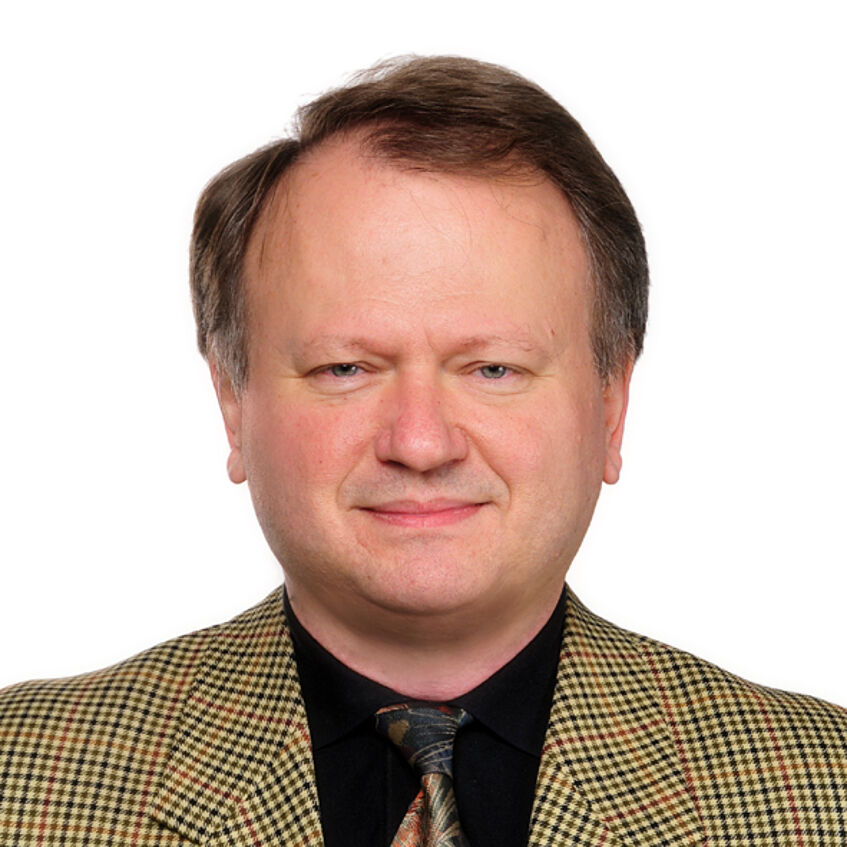
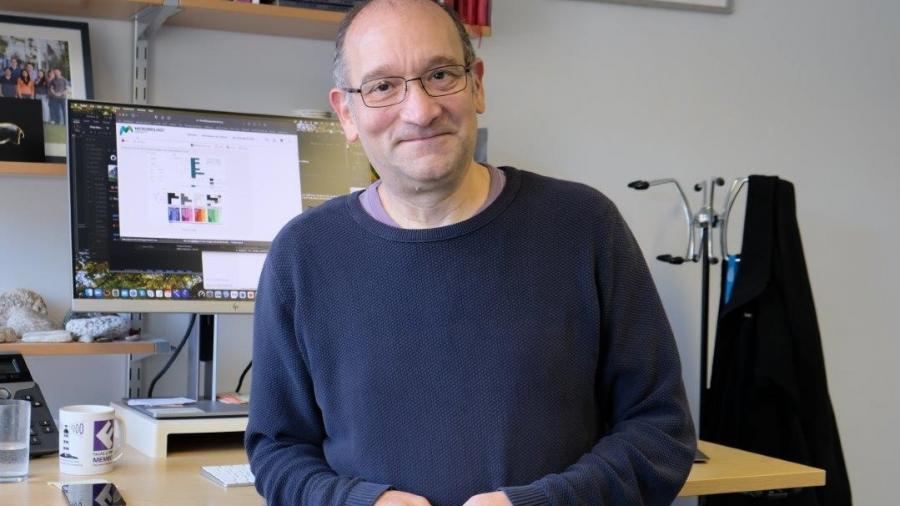
Philippe Van Parijs is a Visiting Professor at KU Leuven , affiliated with the Center for Political Philosophy and Ethics (RIPPLE) . His work focuses on Political Philosophy , Ethics , and European Citizenship , with notable contributions to Basic Income theory and Migration Studies . Current Research Areas: Social Justice, EU Integration, Post-Truth Era, Neoliberalism Recent publications (2017-2022) analyze Universal Basic Income , European Political Identity , and Ethics of Migration . His work bridges abstract theory with real-world policy debates, particularly in post-industrial societies and supranational governance. Advising: Co-supervised PhD research by Harb, S. on global justice.
Alfredo Stein Heinemann is an Honorary Research Fellow at the Department of Planning, Property and Environmental Management, School of Environment, Education and Development (SEED), University of Manchester. Previously, he served as a Lecturer at the same institution from 2008 to 2024, leading the MSc in Global Urban Development and Planning. He holds a PhD from Lund University and an MSc (Distinction) from University College London. His expertise spans urban development planning, climate change adaptation, and pro-poor housing finance in Latin America, Africa, and Asia. Education: PhD in Human Settlements Development (Lund University, 2010), MSc Urban Development Planning (UCL, 1988). Teaching: Courses on global urban development, climate change adaptation, and disaster risk management. Research focuses on climate resilience in global South cities, participatory asset planning, and socio-environmental conflicts. Key projects include the AI Climate platform for land management, asset planning in Cartagena and Pondicherry, and pro-poor adaptation strategies in Kenya and Nicaragua. He has advised UN agencies, the World Bank, and GIZ. Scientific awards include the Outstanding Teaching Award (2020) and SEED Excellence in Teaching (2014). Supervised 8 PhD students on topics like urban governance, disaster reconstruction, and climate justice. Collaborates with institutions like the Universidad Nacional Autonoma de Honduras and the Manchester Urban Institute. Current initiatives include senior advisory roles on AI Climate and dissemination of asset planning methodologies. His work aligns with UN SDGs 11 (Sustainable Cities) and 13 (Climate Action).
Linda Oleksak is a Teaching Professor in the Department of English at Western New England University. She has served as the Director of Reading Services and has been a member of the English faculty for 19 years, with over 25 years of experience as a Consulting Teacher of Reading. Education : B.A. and M.Ed. from Westfield State College Key Roles : Director of Reading Services, English Faculty, Consulting Teacher of Reading Her research and practice focus on adolescent and adult literacy , particularly addressing the reading and writing needs of incoming college freshmen. She also specializes in developing basic college writing skills and training graduate-level teachers to integrate literacy strategies into their curricula. Linda teaches courses including ENGL 130 , ENGL 131 , ENGL 132 , ENGL 139 , LA 151 , LA 175 , MAET 556 , ED 614 , and ED 616 . Her work emphasizes foundational literacy development and pedagogical innovation. Contact: linda.oleksak@wne.edu
Michelle Ko is a faculty member at the University of California, Davis , with research focusing on equity and inclusion in healthcare. Her work addresses structural racism in medicine, rural healthcare access, and socioeconomic barriers affecting students and marginalized populations. Affiliated with the Center for Poverty and Inequality Research and Center for Health Care Policy & Research , she examines systemic inequities through interdisciplinary lenses of public health, geography, and policy analysis. PhD in Medical Geography (University of Illinois, 2019) Collaborates with scholars like Arianna M. Planey, Jenny Wagner, and Vicky Vong Her research highlights how racialized communities face disproportionate travel burdens for acute care in the U.S. South, using spatial and temporal analysis to expose inequities. She critiques the medical field’s historical denial of racism and advocates for structural reforms in peer review and funding mechanisms. Key trends in her publications include: Time as a novel social determinant of health Methodological rigor in rural hospital closure studies DEI gaps in health services research leadership Basic needs insecurities among pre-health students Michelle’s work intersects with policy advocacy, emphasizing Medicaid expansion, fee waiver systems for low-income students, and dismantling the “model minority” myth in Asian American healthcare experiences.
Nemanja Vuksanović serves as an Associate Professor at the Faculty of Economics, University of Belgrade, teaching core courses in Basics of Economics and Contemporary Economic Systems. His academic credentials include a PhD in Economics of Education defended in September 2022. During doctoral studies, he enhanced his expertise through academic residencies in Lisbon and Barcelona. Dr. Vuksanović's research centers on systemic educational inequality in Serbia, examining its cyclical relationship with income distribution and intergenerational transmission of disadvantage. He investigates how unequal educational access impacts health outcomes and democratic participation, with current work focused on policy interventions to increase higher education accessibility. His methodology emphasizes evidence-based analysis of opportunity gaps across socioeconomic strata. His scientific recognition includes: Sasakawa Young Leaders Fellowship Fund Award (2020) for top doctoral candidates Sylff Research Abroad Award (2021) supporting international dissertation research As a researcher at the Foundation for the Development of Economic Sciences, he secures project funding through competitive awards while contributing to policy frameworks for equitable education systems in Serbia.
Makoto Nirei is a Professor in the Department of Economics at the Graduate School of Economics, University of Tokyo. He has held previous academic positions at Hitotsubashi University, Carleton University, and Utah State University, and served as Chief Economist at the Policy Research Institute, Ministry of Finance, Japan. His research is centered on understanding macroeconomic fluctuations through the lens of micro-level interactions, network structures, and heterogeneous agents. Ph.D. in Economics, University of Chicago, 2002 M.A. in Economics, University of Tokyo, 1996 B.A. in Economics, University of Tokyo, 1994 His primary research interests include Macroeconomics, Business Cycles, Financial Fluctuations, Income and Wealth Inequality, Innovation, and Complex Systems . He investigates how idiosyncratic shocks propagate through production and financial networks to generate aggregate volatility, and how fat-tailed distributions emerge in income, wealth, and asset prices. His work often combines theoretical modeling with empirical analysis using large-scale datasets. The recent articles reflect a strong trend toward understanding network-based propagation of shocks , fat-tailed distributions in economic variables , and the role of innovation and digitalization in inequality and growth . His publications span top journals in economics and interdisciplinary fields, showing a consistent focus on the microfoundations of macroeconomic phenomena , especially through interaction effects, threshold behaviors, and multiplicative stochastic processes. He has received the Nikkei Economic Book Culture Award Special Prize (2023) for his book Macroeconomic Dynamics: Uncovering the Origin of Business Cycles . Nikkei Economic Book Culture Award Special Prize (2023) Nirei has advised numerous researchers and co-authored with leading economists across institutions. He has been actively involved in policy research through affiliations with RIETI (Research Institute of Economy, Trade and Industry) , Bank of Japan , and CREPE (Center for Research and Policy Evaluation) . His work has informed discussions on supply chain resilience, tax policy, digital economy, and responses to economic crises such as the Great East Japan Earthquake and the COVID-19 pandemic. He has also contributed to public understanding through media articles, interviews, and open lectures. He is associated with several research units including CREPE (Center for Research and Policy Evaluation) and RIETI , where he has published discussion papers and policy summaries. His recent work continues to explore structural estimation, network effects, and the economic implications of digital transformation.
Katharine M. Broton is an Associate Professor in the Department of Educational Policy and Leadership Studies at the University of Iowa's College of Education. She is affiliated with the Center for Research on Undergraduate Education (CRUE) and holds a Certificate in Institutional Research and Effectiveness. Her research focuses on poverty, inequality, and basic needs insecurity in higher education. Her research interests include sociology of education, social stratification, education policy, and equity in postsecondary education. She investigates how poverty and inequality affect college access and success, with a particular focus on food and housing insecurity among students. Her work combines quantitative and qualitative methods to evaluate policies and programs aimed at reducing disparities. The trends in her recent publications highlight a sustained focus on student basic needs, particularly food and housing insecurity, across two-year and four-year institutions. Her research spans community colleges and broader higher education systems, often involving experimental and longitudinal designs. She examines the impact of financial aid, emergency support, and institutional interventions on student outcomes, contributing to both academic literature and practical policy solutions. Early Career Scholar of the Year, University of Iowa, 2021 Outstanding Dissertation Award, American Educational Research Association Division of Postsecondary Education, 2018 Thomas N. Urban Research Award, Iowa Academy of Education, 2018 Palmer O. Johnson Memorial Award, American Educational Research Association, 2017 Robert Dentler Honorable Mention, American Sociological Association, 2016 Dr. Broton has served as Co-Principal Investigator on significant research grants, including a National Science Foundation-funded project on the postsecondary STEM pipeline and a Kresge Foundation-supported intervention study on college food and housing security. While no formal advisees are listed, her mentorship is evident through collaborative research with graduate students and early-career scholars. Her work is deeply engaged with institutional practice and policy development. She is affiliated with the Center for Research on Undergraduate Education (CRUE), where her research contributes to understanding student success and equity in undergraduate education. Her projects often involve interdisciplinary teams and national collaborations, particularly with scholars like Sara Goldrick-Rab.
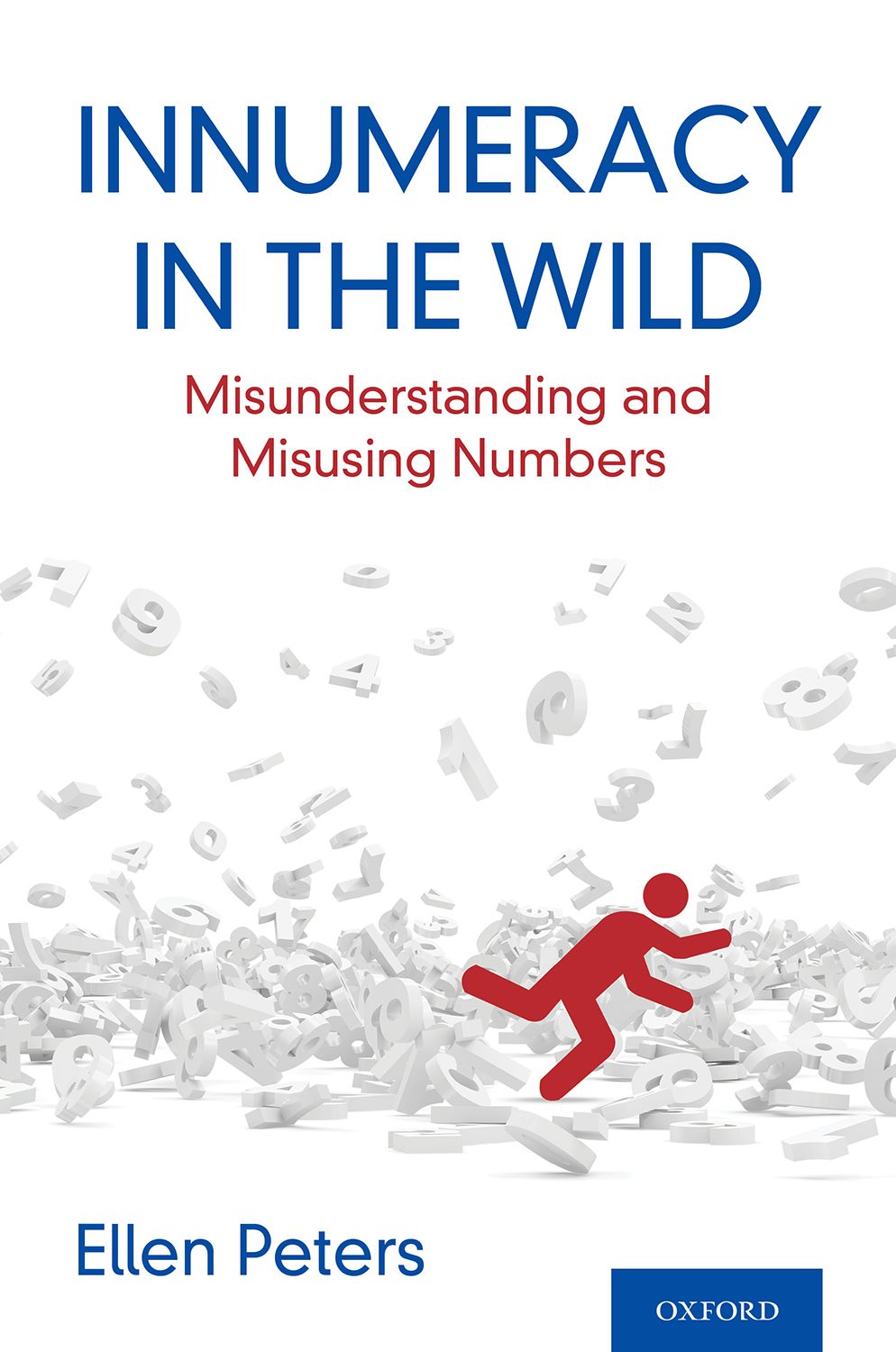
Ellen Peters is the Philip H. Knight Chair and Professor at the University of Oregon, with joint appointments in the School of Journalism and Communication (SOJC) and the Department of Psychology. She directs the Center for Science Communication Research and serves as an associate in the Phil and Penny Knight Campus for Accelerating Scientific Impact. Her research focuses on how numeracy and affect influence decision-making in health, financial, and environmental contexts, particularly across adult aging. Education: PhD and MS in Judgment and Decision Making (University of Oregon); Dual BS in Economics (Wharton School) and Systems Engineering (University of Pennsylvania) Her work bridges basic and translational research, examining how evidence-based communication can improve public understanding of science and technology. She has contributed to climate change health communication, cancer screening policies, and financial decision-making frameworks. Recent publications emphasize climate change health impacts, numeric self-efficacy, and pandemic-related statistical understanding. She holds interdisciplinary affiliations with UO’s Cancer Control Center, federal agencies like the National Cancer Institute, and the Lancet Countdown U.S. Brief Working Group. Scientific Honors: AAAS Fellow, NIH Merit Award (CASPHR Working Group), Jane Beattie Scientific Recognition Award, APA/APS/SESP Fellowships She leads the CAIDe Lab and has advised policy groups including the FDA’s Risk Communication Advisory Committee. Her book Innumeracy in the Wild (Oxford, 2020) explores the societal consequences of numeric misunderstanding.
Juan Francisco Albert Moreno is a PartTime Lecturer at the University of Valencia's Faculty of Economics, Department of Applied Economics. His work focuses on monetary policy, income inequality, social economics, and financial inclusion. He earned his PhD in 2021 with a thesis on monetary policy and inequality from an inclusive and social banking perspective. Education: PhD in Economics (University of Valencia, 2021) Research interests include analyzing monetary policy impacts on inequality, financial inclusion, climate change policy, and digital social currencies. Recent publications explore universal basic income, carbon pricing, and CBDCs in Latin America. He collaborates with research groups GLOBACTOR and CONCORDIA , focusing on globalization actors and social innovation. His work bridges macroeconomic policy with social equity and sustainability. Advisors include Dr. Rafael Chaves Ávila and Dr. Carlos Ochando Claramunt. He has contributed to studies on pandemic economic impacts, tourism demand, and household financial behaviors.
Lorna Rivera is Professor of Higher Education in the Leadership in Education Department at the University of Massachusetts Boston and Director of the Mauricio Gastón Institute for Latino Community Development & Public Policy. She is a leading scholar in Latino Studies, higher education equity, and community-engaged research. Her educational background includes a Ph.D. in Sociology from Northeastern University, an M.A. in Sociology with a concentration in Gender Studies from the same institution, and a B.S. in Elementary Education from DePaul University, along with a teaching license in Illinois. Dr. Rivera's research centers on the education of Latinx students, adult literacy, the social determinants of health, and immigrant community development. Her work bridges sociology, education, and public policy, with a strong emphasis on equity and community empowerment. She has led major research initiatives on health literacy, Latinx student success, and housing stability. Her recent publications reflect a consistent focus on Latino communities in Massachusetts, examining topics such as transfer pathways, labor market participation, small business sustainability, and the disproportionate impact of the COVID-19 pandemic. These works demonstrate a deep commitment to applied, policy-relevant scholarship that addresses structural inequities. Among her honors are the Cyril O. Houle Award for Outstanding Literature, recognition as one of the '50 Most Influential People of Color in Higher Education,' the Latinx Amplifier Award, and the Talented and Gifted Latino Champion Award. She was inducted as an Honorary Member of Alpha Lambda Delta National Honor Society in 2019. Dr. Rivera has secured significant funding from the CDC, EPA, Office of Minority Health, and major foundations. She leads the Latinx Student Success Initiative with Bunker Hill Community College and manages the Talented & Gifted (TAG) Latino and Proyecto Alerta programs, which serve bilingual Latinx students in Boston Public Schools. She also serves on multiple boards, including the Anna B. Stearns Charitable Foundation and the Inter-University Programs on Latino Research. She leads research teams focused on community health, educational equity, and immigrant organizing. Her current projects include federally funded studies on community health workers, environmental health risks in Vieques, Puerto Rico, and equitable responses to public health crises.
Heikki Hiilamo is a Professor of Social Policy at the University of Helsinki and a Research Professor at the Finnish Institute for Health and Welfare (THL). He has held key academic and research positions, contributing significantly to social policy, public health, and welfare state research in Finland and internationally. PhD in Public Health, University of Tampere (2007) VTT in Social Policy, University of Turku (2002) Hiilamo's research centers on inequality, poverty, social exclusion, family policy, tobacco control, and social security reform. His work often employs comparative and longitudinal methods to evaluate policy impacts, particularly in Nordic welfare states. He has led major research projects funded by the European Commission, Academy of Finland, and Kone Foundation. His recent publications span topics such as automation and the welfare state, child poverty, basic income models, tobacco advertising bans, and electoral behavior. The breadth of his work reflects deep engagement with both theoretical and policy-relevant dimensions of social science. Finnish State Prize for Open Science (2016) Hiilamo actively supervises doctoral students and leads research projects on social policy measures during crises, gambling regulation, and reconciliation with marginalized communities. He has also served as an expert member of the Social Security Committee and on the board of the Helsinki Deaconess Institute, demonstrating strong engagement with policy and civil society. He has conducted international expert missions in Georgia, Latvia, Cambodia, and Estonia, supporting social welfare development. His interdisciplinary collaborations span public health, political science, sociology, and disability studies.
David FJ Campbell is an Associate Professor of Comparative Political Science at the University of Vienna’s Faculty of Social Sciences. His research focuses on democracy quality, knowledge systems, higher education governance, innovation ecosystems, and artistic research. He holds dual email addresses and maintains an active Google Scholar profile. His work bridges political theory with practical governance challenges, emphasizing how democratic institutions enable innovation. He has authored/co-authored over 60 publications since 2002, including monographs on democracy measurement and edited volumes on quadruple/quintuple helix innovation frameworks. Recent work explores digital transformation impacts, pandemic-era educational adaptations, and cross-border academic collaboration models. Research emphases: democracy metrics, knowledge economies, university innovation systems, cyber governance Key contributions: Pioneered “quality of democracy” frameworks as innovation enablers Teaching: Comparative political science courses via University of Vienna’s u:find platform Dr. Campbell’s writings frequently address how institutional governance structures influence creativity and innovation across education, politics, and technology sectors. He collaborates internationally on projects analyzing higher education reforms, policy frameworks for knowledge transfer, and measuring democratic resilience in global contexts. His scholarly network extends to institutions worldwide, reflected in publications co-authored with scholars from Europe, North America, and Asia. Current research trends focus on digital transformation’s impact on democratic processes and sustainable development linkages.
Elias Weiss is a researcher at the University of Vienna's Institute of Political Science within the Faculty of Social Sciences. He holds a BA and MA in Political Science from the University of Vienna, focusing on interpretive qualitative and exploratory research methods. His bachelor's thesis examined the duration of electoral periods, specifically the extension of Austria's legislative period from four to five years. His master's work shifted to solidarity research, particularly in labor market, economic, and health policies, analyzing the GameStop incident's political-solidarity dimensions. Research Interests: Solidarity studies, labor market dynamics, health policy, universal basic income, election period analysis, and policy discourse analysis. His work bridges political theory with empirical policy evaluation, emphasizing interdisciplinary approaches to contemporary societal challenges. Articles Trends: His publications span cognitive science, health policy, and education, reflecting a focus on mental health interventions, workplace environments, and neurocognitive adaptations. Recent work includes studies on pandemic impacts, light therapy efficacy, and stroke rehabilitation. These themes underscore a commitment to applying empirical research to real-world challenges in academia, healthcare, and public policy. Advising & Grants: No specific advising roles or grants are mentioned. His contributions are primarily through research and academic publications. Labs/Teams: Associated with the CESCoS (Contemporary Solidarity Studies) research group at the Institute of Political Science, focusing on socio-political solidarity dynamics in modern contexts.
Julian Parkhill is a Professor in the Department of Veterinary Medicine at the University of Cambridge. His research focuses on the evolution and transmission of bacterial pathogens, utilizing genomic and experimental approaches to study their adaptation to hosts, antibiotics, and vaccines. He leads the Pathogen Genomics and Evolution Group, which develops bioinformatic tools for bacterial genome-wide association studies and evolutionary analysis. His work has translational applications in tracking hospital infections, global disease spread, and collaborating with health agencies. PhD in Bacterial Transcriptional Regulation (University of Bristol, 1991) Postdoctoral work on Adenovirus Transforming Proteins (University of Birmingham) Researcher at Sanger Institute (1997-2009) Research interests include genomic epidemiology , host-pathogen co-evolution , and antimicrobial resistance mechanisms . His group employs population genomics to trace pathogen origins and transmission routes, with recent work on Staphylococcus aureus , Mycobacterium abscessus , and Klebsiella pneumoniae . Publications highlight applications of transposon insertion sequencing and machine learning in resistance prediction. Scientific accolades include: Fellow of the Academy of Medical Sciences (2009) Fellow of the American Academy of Microbiology (2012) Fellow of the Royal Society (2014) Julian collaborates internationally with institutions in Low- and Middle-Income Countries, bridging basic research and clinical translation through partnerships with hospitals, health agencies, and commercial entities.
Christophe Point is a Professor at the Catholic University of Louvain (UCLouvain), Belgium, holding the Hoover Professorship of Economic and Social Ethics. He is a regular member of the Institut Supérieur de Philosophie, CRIFPE, Collectif Déphi, and serves as co-director of GREE. His educational qualifications include: Doctorate in Philosophy and Educational Sciences Professor Point's research centers on philosophy of education and history of educational ideas, with emphasis on professional teaching ethics, didactics of philosophy, education for citizenship, and concepts of authority, democracy, and vulnerability. He employs diverse methodologies including fundamental research, empirical surveys, action research, and educational engineering of training devices. His work critically examines whether ethics can be taught through philosophical dialogue and how such teaching contributes to moral and citizenship education. He actively teaches doctoral seminars on Philosophy of Education (co-organized with Hervé Pourtois) and a second-year Bachelor of Education course covering educational conceptions, social justice, autonomy, citizenship, child rights, and teaching profession ethics. His pedagogy emphasizes developing philosophical questioning and understanding the deontological framework of teaching. As a core member of the Hoover Chair, he contributes to major research initiatives including the Basic Income project, Fair Inheritance Project, ARC Pension Reform research, and Louvain-Kobe Project. He participates in long-standing seminars like Midis de l'éthique (since 1991) and Mardis intimes (since 1998), while supporting educational outreach through the Certificate in Ethics and Society (ETES9CE) and Enseigner l'éthique platform.