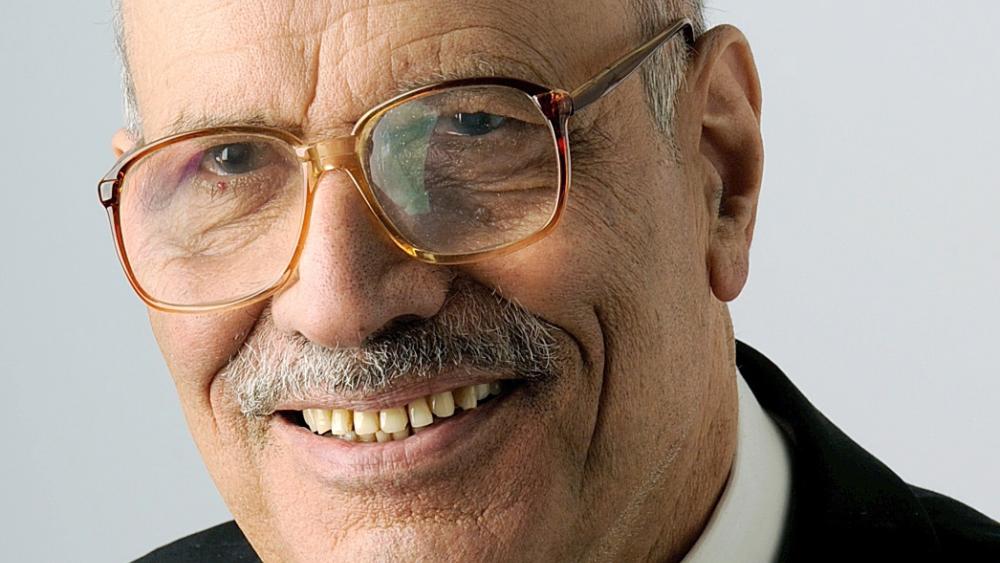
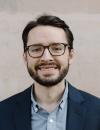
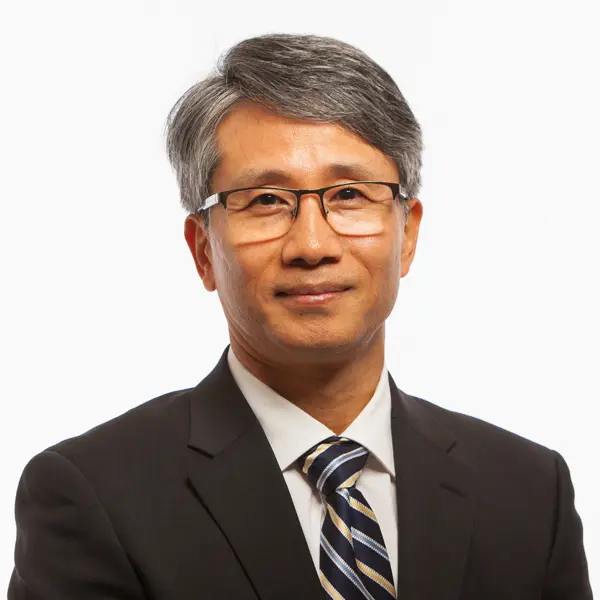
Professor Muhammad A S Abdel Haleem, OBE, is the King Fahd Professor of Islamic Studies at SOAS University of London, within the School of Languages, Cultures and Linguistics. He holds a BA from Cairo University and a PhD from the University of Cambridge (Cantab), with additional qualifications including FCIL (London). His research focuses on Quranic language, style, and translations, alongside Islamic family law and Arab society. Key interests include Qur’anic exegesis, comparative religious studies, and the intersection of scripture with contemporary issues like disability ethics and interfaith relations. Professor Haleem has supervised numerous PhD candidates exploring topics such as divine states in Sufism, gender relations in the Quran, and charitable work in multicultural societies. He has authored over 60 works, including translations of the Quran and influential studies on Quranic structure and theology. Awards: Order of the British Empire (OBE) Publications: Over 60 books and articles, including Understanding the Qur'an: Themes and Style and translations of the Quran. His work bridges academic theology with practical ethics, emphasizing contextual interpretation and intercultural dialogue. Current research continues to explore Quranic coherence, legal hermeneutics, and the Quran’s role in modern society.
Delbert Burkett is the Jaak Seynaeve Professor of Biblical Studies and Professor of Religious Studies at Louisiana State University. He specializes in New Testament studies, particularly the history, religion, and literature of earliest Christianity. His research focuses on the Synoptic Problem and early Christian textual traditions. Before joining LSU in 1996, he taught at Western Kentucky University, Appalachian State University, and Lebanon Valley College. He served as Section Head of Religious Studies (2004-2007) and Department Chair (2010-2016). Education: B.A. in Koine and Classical Greek, Abilene Christian College (1971) M.T.S., Harvard Divinity School (1973) Ph.D. in New Testament and Christian Origins, Duke University (1989) Research Interests: Burkett's work examines the literary relationships between the Synoptic Gospels, the 'Son of Man' title in the New Testament, and early Christian origins. His publications include Rethinking the Gospel Sources (multi-volume series) and The Case for Proto-Mark . Publications Trends: His recent articles address topics like Markan narrative analysis, Jewish ritual practices, and Luke-Acts theological unity. Earlier work engaged with Johannine resurrection narratives and Coptic liturgical texts. Awards: 2009-2010 ATLAS Grant 2007 Tiger Athletic Foundation Teaching Award Repeated recognition for undergraduate instruction (Alpha Lambda Delta, 1999/2003) LSU Council on Research Summer Stipends (1997, 2000) 1992 Southern Regional Education Board Travel Grant Teaching & Grants: Teaches courses such as 'A History of God' and 'Apocalyptic Literature.' His grants supported research on gospel sources and early Christian texts. No formal lab affiliations are noted, though he collaborates on initiatives like the 'AI & Religion Collaborative.'
Alyssa Ney is a leading Professor of Philosophy at Ludwig-Maximilians University Munich (LMU), holding the Chair of Metaphysics within the Faculty of Philosophy, Philosophy of Science, and Religious Studies. Her work bridges metaphysics with the philosophy of physics and mind, focusing on the interpretation of quantum theories, fundamentality, and the unity of science. Education: PhD in Philosophy (Brown University), MS in Physics (UC Davis), BS in Physics and Philosophy (Tulane University) Previous appointments: UC Davis (2019-2024), University of Rochester (2005-2019) Ney’s research explores the metaphysical implications of quantum mechanics, particularly wave function realism and its challenges in grounding macro-objects. She investigates the relationship between quantum theory and classical conceptions of space, time, and causation, with a focus on locality and nonlocality. Her work also addresses physicalism, mental causation, and the methodology of metaphysical inquiry. Recent publications include analyses of density matrix realism (“ Is the Universe Fundamentally a Density Matrix? ”), many-worlds interpretations (“ Branching (Almost) Everywhere and All At Once ”), and the metaphysical status of spacetime in quantum gravity contexts. She was awarded the 2025 Patrick Suppes Prize for her book The World in the Wave Function and the 2024 Humboldt Foundation Bessel Award. Scientific Awards Patrick Suppes Prize (2025) Friedrich Wilhelm Bessel Research Award (2024) FQxI Essay Contest Second Prize (2018) Elsie Field Dupre Prize in Physics (1999) Ney actively mentors underrepresented scholars in philosophy of science and serves on editorial boards for Philosophy of Physics and British Journal for the Philosophy of Science . She has organized workshops connecting metaphysics with philosophy of physics and quantum interpretation.
Lea Ypi is a Professor of Political Theory at the London School of Economics and Political Science (LSE) and an Honorary Professor of Philosophy at the Australian National University. She holds degrees from the University of Rome La Sapienza and a PhD from the European University Institute, followed by postdoctoral research at Nuffield College, Oxford. Her work spans political theory, the history of philosophy, Marxism, critical theory, and Kantian philosophy. Notable publications include Global Justice and Avant-Garde Political Agency , The Meaning of Partisanship (with Jonathan White), and Free: Coming of Age at the End of History . Ypi’s research has been recognized with the British Academy Prize and a Leverhulme Prize. She is a Fellow of the British Academy, Academia Europea, and the Albanian Academy of Sciences. Her research interests include revolutionary theory, Kantian philosophy, structural injustice, and global justice. Key publications address topics like Kant’s views on colonialism, the ethics of migration, and the role of partisanship in democracy. Ypi’s academic contributions bridge normative political theory with critical engagement in contemporary social and political issues. Awards include the British Academy Prize for Excellence in Political Science (2015), Leverhulme Prize (2014), and fellowships in leading academic institutions. Her interdisciplinary approach integrates historical, philosophical, and contemporary analyses to address urgent political questions.
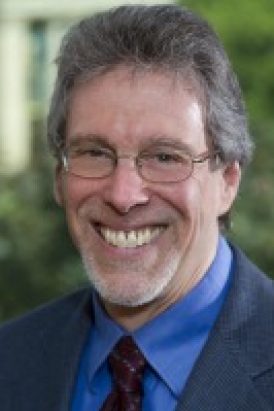
Matt Bribitzer-Stull is a Professor in the Music Department at the University of Minnesota (Twin Cities campus). His research focuses on Wagner studies, film music, and analytical approaches to composition. He has made significant contributions to the understanding of leitmotifs in both operatic and cinematic contexts. Primary Affiliation: University of Minnesota, Twin Cities Department: Music Email: mpbs@umn.edu His scholarly work explores the intersection of Wagnerian compositional techniques and modern film scoring, with a particular emphasis on harmonic associativity and thematic development. He has published extensively on topics related to Schenkerian analysis and the application of operatic motifs in non-traditional media. Research output trends indicate a strong focus on Richard Wagner's influence across multiple domains, including opera, orchestral music, and film. His 2015 book on leitmotifs synthesizes these themes, while earlier articles examine Wagnerian harmonic practices in works by Strauss and other composers.
Sophie Horowitz is an Associate Professor of Philosophy at the University of Massachusetts Amherst, where she has been a core faculty member since 2016. She currently chairs the Climate Committee and maintains active teaching responsibilities, including regular instruction in Medical Ethics. Prior to UMass, she served as an Assistant Professor at Rice University from 2014 to 2016, following her PhD completion at MIT. Her educational background includes: BA in Philosophy and Studio Art from Swarthmore College (2008) PhD from MIT (2014), with a dissertation examining the relationship between epistemic rationality and truth Horowitz's research centers on epistemology, specifically dissecting the interplay between rationality and truth through formal frameworks. She investigates higher-order evidence, permissivism (the Uniqueness Thesis), accuracy norms, and partial belief structures, while also exploring ethical dimensions of belief formation and practical rationality. Her work bridges traditional epistemological questions with mathematical precision, often utilizing epistemic utility theory to analyze truth-conducive belief practices. She has contributed influential perspectives on when evidence demands belief changes and how rational agents should handle conflicting epistemic inputs. Her publication trends reveal deep engagement with epistemic normativity across three distinct phases: early work on epistemic akrasia and rationality (2013-2015), mid-career focus on evidence aggregation and transformative experience (2015-2019), and recent contributions to permissivism debates and credal dynamics (2021-2025). Articles consistently target top philosophy journals while addressing foundational questions about truth, evidence, and rational constraints. Scientific recognition includes: 2015 Marc Sanders Prize in Epistemology for "Accuracy and Educated Guesses" Horowitz demonstrates significant teaching activity across institutions, with Medical Ethics being a recurring course at UMass. She actively shares pedagogical tools like annotated student papers and grading rubrics, indicating commitment to educational innovation. The texts confirm no formal advisees or grant projects are documented, though she co-teaches seminars and has developed specialized courses on higher-order evidence. Her academic service extends to editorial contributions, notably for the Stanford Encyclopedia of Philosophy entry on higher-order evidence. Outside academia, she maintains a documented practice as an oil painter focused on food subjects, reflecting her dual background in philosophy and studio art.
Mark S. Mizruchi serves as the Robert Cooley Angell Collegiate Professor of Sociology, Barger Family Professor of Organizational Studies, and Professor of Management and Organizations at the University of Michigan's College of Literature, Science, and the Arts. His distinguished career spans over three decades since joining Michigan as a full Professor in 1991 after rising to Associate Professor at Columbia University. Robert Cooley Angell Collegiate Professor of Sociology Barger Family Professor of Organizational Studies Professor of Management and Organizations Former Director of Organizational Studies Program (2012-2021) His research centers on the economic and political behavior of large American corporations through social network analysis, with current projects examining the changing nature of the American corporate elite, globalization of American banking, and corporate lobbying determinants. Mizruchi's work bridges sociology, organizational studies, and political economy, revealing how corporate networks shape American political life and economic structures. His publications include four influential books, with The Fracturing of the American Corporate Elite (2013) winning both the George R. Terry Award and the Distinguished Contribution to Scholarship Award. His research demonstrates significant trends toward corporate elite fragmentation and its political consequences, particularly the decline of corporate moderation in American politics. George R. Terry Award from Academy of Management Distinguished Contribution Award from ASA Political Sociology Section Guggenheim Fellowship (2011) National Science Foundation Presidential Young Investigator Award Center for Advanced Study in Behavioral Sciences Fellowship Two University of Michigan teaching excellence awards Mizruchi has advised numerous students through the Organizational Studies Program, securing Barger Leadership Institute funding for student research on corporate elites. His extensive service includes Associate Editorship at Administrative Science Quarterly , Consulting Editorship at the American Journal of Sociology , and reviewing for over 50 scholarly journals and granting agencies. He maintains active research laboratories examining corporate networks and their societal implications, with ongoing projects investigating contemporary corporate political behavior in polarized America.
Thomas Banchoff is Director of the Berkley Center for Religion, Peace, and World Affairs and serves as Vice President for Global Engagement at Georgetown University, where he holds a professorship in both the Department of Government and the Walsh School of Foreign Service. His leadership combines academic scholarship with practical global engagement initiatives that address critical contemporary challenges. Georgetown University: Professor, Department of Government and Walsh School of Foreign Service Berkley Center: Director University Administration: Vice President for Global Engagement Banchoff earned his B.A. from Yale University (1986), M.A. from the University of Bonn (1988), and Ph.D. in Politics from Princeton University (1993). His scholarly development was enriched by prestigious fellowships including Harvard's James Bryant Conant Post-Doctoral Fellowship (1997-1998) and a Humboldt Fellowship at the University of Bonn (2000-2001). His research focuses on ethical and religious dimensions of global politics, with particular expertise in Catholic Social Teaching's application to contemporary challenges. Banchoff's scholarly trajectory evolved from European politics (evidenced by early works like The German Problem Transformed ) to contemporary analyses of religion's role in global governance. His current work emphasizes Pope Francis's "culture of encounter" concept across international relations, education, and interfaith dialogue. Recent scholarship increasingly addresses democratic erosion, AI ethics from religious perspectives, and Jesuit higher education's contribution to global citizenship. Analysis of his publication history reveals thematic progression toward practical applications of religious perspectives to global challenges. His recent work demonstrates engagement with urgent issues including democratic backsliding (as seen in his moderation of the 2025 IAJU Assembly panel on Nicaragua and Lebanon), AI ethics, and interfaith collaboration in conflict zones. DAAD Prize for Distinguished Scholarship in German studies (2003) Banchoff directs the IAJU Global Citizenship Fellows Program, which engages over 2,000 students across 60+ institutions in 20+ countries. His leadership extends to significant initiatives including Catholic Social Teaching and the Global Future of Development, Faith and the Global Agenda, and Religious Pluralism in World Affairs. Upcoming engagements include "Nostra Aetate at 60" (September 2025) and "Pope Francis: A Legacy of Human Fraternity" (August 2025), reflecting the continued relevance of his work at the intersection of religion, politics, and global challenges.
Dorothea Schulz is a Professor of Anthropology at the Institute of Ethnology, University of Münster, where she has been serving since March 2018. She is a Principal Investigator in the Cluster of Excellence, a member of the Board of Directors, and a member of the General Assembly. Her research focuses on religious diversity and legal-political unity, with particular emphasis on Muslim communities in Africa. She leads two major projects: B3-48 on 'The role of social identities in interreligious arrangements' and B3-20 on 'Testing and contesting religious pluralism in Uganda'. Professor Schulz received her academic training at several prestigious institutions: 2005: Postdoctoral Degree (Habilitation), Institute of Social and Cultural Anthropology, Freie Universität Berlin 1991-1996: PhD in Anthropology, Yale University 1984-1990: Study of Anthropology, Sociology and Biology, Johannes Gutenberg-Universität Mainz 1990: Master of Arts in Anthropology, Sociology and Biology, Johannes Gutenberg-Universität Mainz 1982-1983: Study of Art History, Université Paul-Valéry, Montpellier Dorothea Schulz's research spans several interconnected fields within anthropology and religious studies. Her work primarily examines the dynamics of religious diversity, particularly focusing on Muslim communities in Africa. She investigates how religious identities intersect with political structures, social formations, and media technologies. Her anthropological approach emphasizes the lived experiences of Muslim communities, especially regarding gender relations, youth aspirations, and educational systems. Professor Schulz has made significant contributions to understanding how religious pluralism functions in contemporary African contexts, with particular attention to Uganda and Mali. Her research on media and religion explores how digital technologies reshape religious practice and authority in African Muslim communities. Professor Schulz has received numerous recognitions for her scholarly work: 2016: Fellow, Center for African Studies – Harvard University 2010: Teaching Prize – Faculty of Arts and Humanities, University of Cologne 2005: Fellow – Society for the Humanities, Cornell University 2000: Visiting Scholar – Department of Anthropology, University of Chicago 1996: Frobenius Society's Research Award – Johann Wolfgang Goethe-Universität, Frankfurt am Main Throughout her career, Professor Schulz has been actively involved in mentoring students and securing research funding for her projects. She has served on numerous academic committees and editorial boards, contributing significantly to the development of her field. Her leadership as Academic Director of the Research and Teaching Unit 'Media, Culture and Society' at the University of Cologne (2008-2018) demonstrates her commitment to interdisciplinary research collaboration. She currently oversees major research projects examining religious pluralism in African contexts, which involve international teams of researchers and provide opportunities for doctoral students. Professor Schulz co-leads research initiatives within the Cluster of Excellence, working with interdisciplinary teams to investigate religious diversity and legal-political unity. Her projects B3-48 and B3-20 bring together scholars from anthropology, religious studies, political science, and African studies to examine how social identities shape interreligious arrangements and how religious pluralism is tested and contested in specific African contexts, particularly Uganda.
Dr. Scott Chen is an Assistant Professor in the Department of Electrical & Computer Engineering at McMaster University, where he focuses on teaching and research in embedded systems, RF technologies, and biomedical sensors. He previously held roles as a lecturer at the University of Waterloo and program coordinator at Conestoga College, alongside industry experience in embedded systems engineering and sensor development. Education: B.A.Sc. (Simon Fraser University, 2007) and Ph.D. (University of Waterloo, 2015), followed by a MITAC postdoctoral fellowship. His industry experience includes roles at Thalmic Labs/North, Sober Steering Sensors, and Equustek Solutions. Research interests span embedded systems for IoT, RF biomedical sensors, cleanroom micro/nano-fabrication, and game design in Unity. Notable achievements include a 2018 US patent for ethanol sensing technologies and a 2021 teaching award nomination. Current courses taught include Principles of Programming (COMPENG 2SH4), Data Structures and Algorithms (COMPENG 2SI3), and Introduction to Electrical Engineering (ELECENG 2CI4). Awards: US Patent 9,958,444B2 (2018), nominated for Aubrey Hagar Distinguished Teaching Award (2021). His work bridges academia and industry, emphasizing practical applications in wearable sensors, quantum computing components, and interdisciplinary engineering solutions.
Ray Burbank is a Lecturer at Faith Mission Bible College (Edinburgh) and tutor at the University of Edinburgh's School of Divinity. His PhD research focuses on 19th-century evangelical conversion theology in Western India, supervised by Dr. Alexander Chow and Dr. Felicity Loughlin. He holds degrees from the University of Edinburgh (M.Th.), Southeastern Baptist Theological Seminary (M.Div.), and the University of Arkansas (B.A.). His research explores the cross-cultural transmission of theology among Scottish missionaries and Marathi Christians, examining figures like David Ganpatrao Malhar and John Wilson. Supported by the Teape Trust Fund, his work emphasizes 'horizontal' conversion models linking church, caste, and national identity. Teaching includes undergraduate courses on global Christianity and mission studies. Key conference presentations include talks on Henry Martyn’s missiology (2021), N.V. Tilak’s legacy (2019), and Indian devotional songs in theology (2018/2017). He is affiliated with the Evangelical Missiological Society and Yale-Edinburgh Group on World Christianity.
Joseph Pak is Professor of Biblical Studies at Taylor University in the Biblical Studies, Christian Ministries, Intercultural Studies & Philosophy Department . A New Testament scholar with a PhD from Dallas Theological Seminary, he invests his life in training the next generation of Christian leaders. Education PhD, New Testament Studies – Dallas Theological Seminary STM, New Testament Studies – Dallas Theological Seminary MDiv, School of Divinity – Liberty University BS, Electrical Engineering – Virginia Tech Research Interests Pak’s research centers on the New Testament , particularly the epistles of James and 2 Peter , exploring themes of self-deception in theology , wealth and poverty in early Christianity , Scriptural inspiration , and false believers . He also examines the intersection of contemporary philosophical discussions with biblical hermeneutics and theological ethics. Publications & Translations He has authored the monograph False Believers in the New Testament and the volume What the Bible Says about the Dangers of Self-Deception: An Exegetical Approach . Additionally, Pak translated six influential Christian works from English into Korean, including Daniel Fuller’s The Unity of the Bible and Everett Ferguson’s The Background of Early Christianity , thereby bridging Korean and Western evangelical scholarship. Professional Service & Outreach Regular presenter at the Evangelical Theological Society national conferences Contributed 10 New Testament introductions to The Abide Bible (Thomas Nelson, 2020) Has taught courses at Southern Baptist Theological Seminary , Liberty University , Midwestern Baptist Theological Seminary , and Taylor University Joseph Pak’s overarching passion is to know, love, and serve Jesus while equipping students to lead with biblical integrity.
Piotr Winkielman is a Professor of Psychology at the University of California, San Diego (since 2007), with affiliations at Warwick Business School (UK) and the Warsaw School of Social Sciences and Humanities (Poland). His research focuses on the interplay of emotion, cognition, embodiment, and consciousness in social cognition, employing methods from social/cognitive psychology and neuroscience. Key interests include unconscious emotion processing, facial mimicry, decision-making under emotional influence, and the neural basis of social perception. Education: PhD in Social Psychology (1997), University of Michigan MSc in Psychology (1991), University of Bielefeld, Germany BSc in Psychology (1988), University of Warsaw, Poland Research Interests: Winkielman explores how fleeting affective reactions influence behavior without conscious awareness, studying facial feedback mechanisms, emotional contagion, and the role of physiological signals in decision-making. His work bridges theories like Affect-As-Information and Facial Feedback, while challenging assumptions about the necessity of conscious processes in emotion. Grants & Funding: Supported by NSF Grant BCS-0350687 for studies on unconscious emotion and physiological feedback. Collaborations include projects on mimicry, stress effects, and cross-modal perception. Labs & Teams: Leads research at UCSD on embodied cognition and social neuroscience, with studies involving EEG, EMG, and behavioral experiments. International collaborations span UK, Poland, and Germany.
Colin Smith is a Visiting Assistant Professor in the Department of Philosophy at Ohio State University (2024–present). He previously held positions at Penn State and the University of Colorado Boulder. His research focuses on ancient Greek philosophy, particularly metaphysical questions in Plato, the Presocratics, and Aristotle. He explores how ancient concepts of being and reality inform contemporary ethical and existential frameworks. Education: PhD (2019) in Philosophy from University of Kentucky, MA (2013) from Boston College, BA (2011) in Philosophy and Classics from Temple University (summa cum laude). Research emphasizes Plato's theory of forms as metaphysical ground, Parmenides' Fragment 2, and dialectical methods in dialogues like Sophist and Meno . Current projects include a monograph on Meno 's distinction between 'being' and 'having,' and studies on Aristotle's theory of recollection and Democritus' understanding of the soul. He also examines the reception of Plato's 'unwritten teachings' in modern philosophy. Published in Ancient Philosophy , Review of Metaphysics , and edited volumes like Inquiring into Being: Essays on Parmenides (SUNY Press, 2025). Guest edited a special issue on Presocratic metaphysics ( Dialogoi 3:1, 2021). Teaching and research interests extend to medieval philosophy, German idealism, phenomenology, ethics, and philosophy of race. Committed to inclusive pedagogy and advocacy, he co-founded Penn State's Coalition for a Just University and organized free philosophy programs for underprivileged students.
Professor Peter Wilson is the Chichele Professor of the History of War at the University of Oxford and a University Academic Fellow at All Souls College since 2015. His academic journey includes roles such as the GF Grant Professor of History at the University of Hull (2007–2015) and Professor of Early Modern History at the University of Sunderland (2001–2006). He holds a BA (Hons) and PhD, and is a Fellow of the Royal Historical Society (FRHistS). His research focuses on the history of war in European and global contexts from the 17th century to 1900, with a specialization in early modern German history and the Holy Roman Empire. Notable works include Iron and Blood (2022), The Holy Roman Empire (2016), and Europe’s Tragedy (2009), which have received prestigious awards like the Wellington Medal and the Society of Military History Distinguished Book Award. Professional Roles: Principal Investigator for the European Fiscal-Military System Project (2018–2025) Editorial Board Member of War and Society Scientific Advisor to the Institute of Habsburg and Balkan Studies, Vienna Professor Wilson’s grants include an ERC Advanced Grant for the Fiscal-Military System project. His work bridges military, political, and cultural history, with a focus on statecraft, conflict dynamics, and imperial structures. He has contributed to academic events globally, including at the National War College and High Point University.