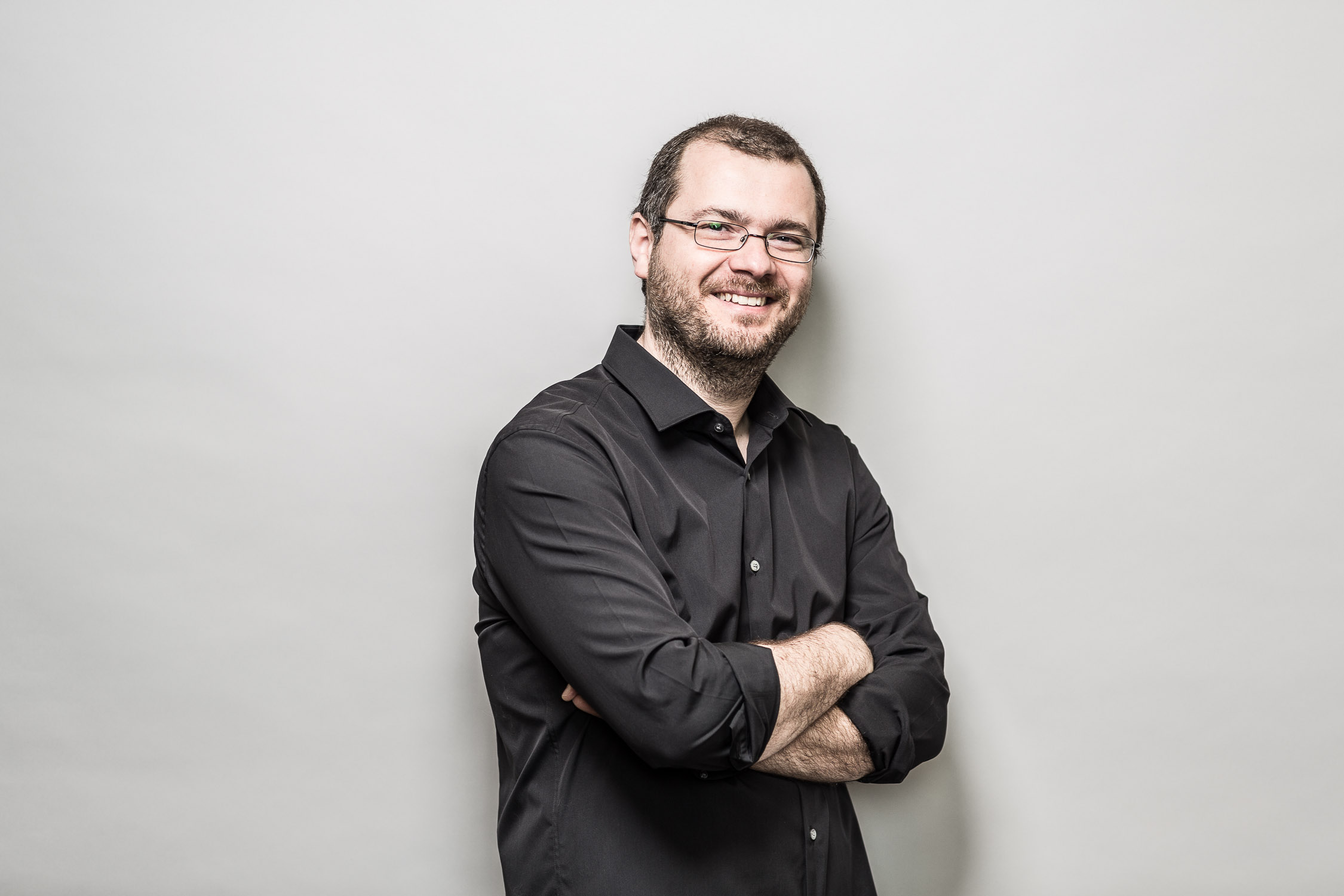
Vassilios Tzerpos is an Associate Professor at the Lassonde School of Engineering, York University, where he has been since 2001. He holds a Ph.D. in Computer Science from the University of Toronto (2001). His research focuses on audio processing for musical applications, deep learning, digital signal processing, machine listening, and software engineering education. He directs the APTLY lab exploring music-technology intersections and leads the LaSSoftE lab developing socially-oriented software solutions. Education: Ph.D. in Computer Science, University of Toronto, 2001 Research Highlights: Dr. Tzerpos' work spans music information retrieval (e.g., automatic music classification), synthetic speech detection using neural networks, and software engineering pedagogy. His recent projects include Music-STAR for audio re-instrumentation and OER-based learning path creation systems. He has pioneered methods in design pattern detection and software clustering evaluation. Grants & Labs: Leads two research groups: APTLY (music-tech) and LaSSoftE (social impact software). Active in developing adaptive cybersecurity solutions against DoS attacks and refining software architecture recovery techniques. Key Themes in Publications: Recent work emphasizes machine learning applications in music technology and cybersecurity, with foundational contributions to software clustering methodologies and design pattern detection algorithms. His work bridges theoretical computer science with practical applications in education and creative industries.
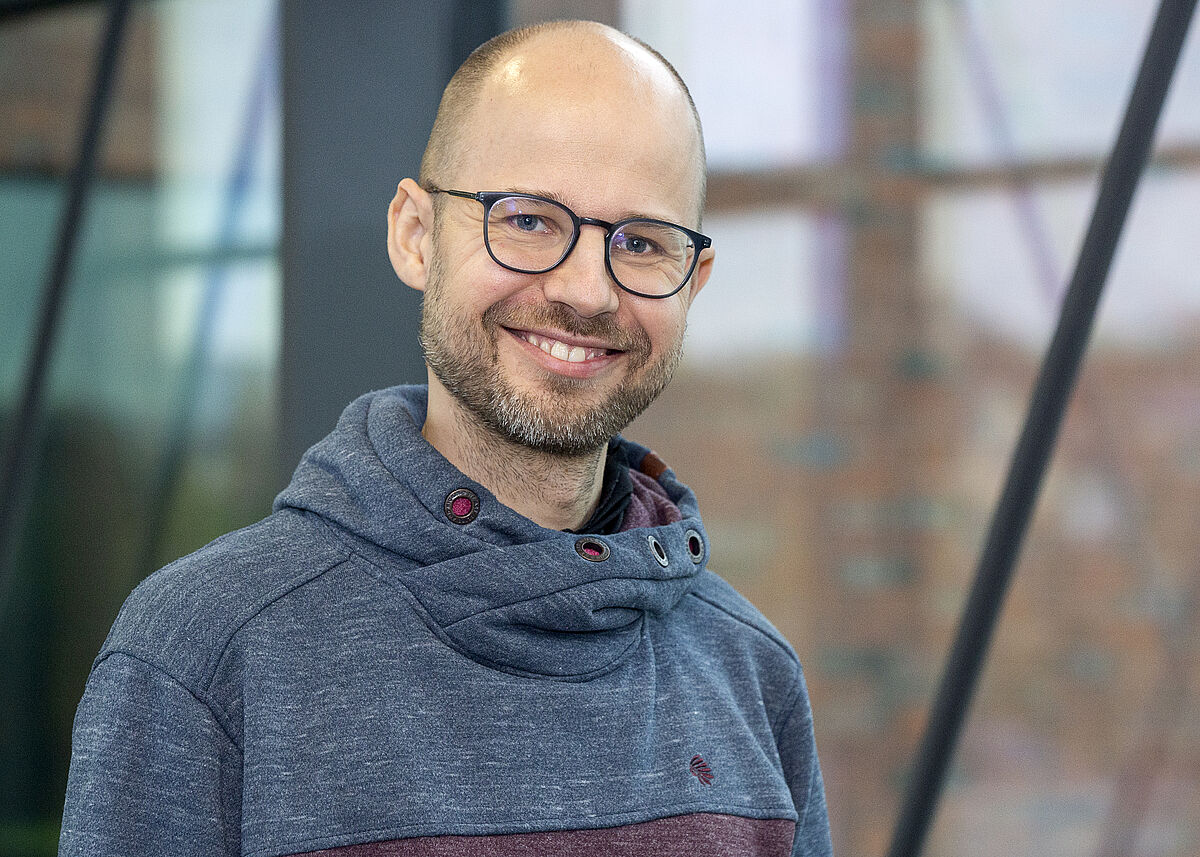
Dr. Tobias Strauß is a Lecturer at the Institute of Mathematics, Faculty of Mathematics and Natural Sciences, University of Rostock. He teaches courses such as Elementary Algebra and Number Theory and Analytical Geometry, focusing on foundational mathematical concepts and their applications. His research interests span historical document analysis, machine learning, and neural networks, with a particular emphasis on handwritten text recognition (HTR) and computational solutions for cultural heritage digitization. He actively contributes to the Mathematics Society RHO eV, supporting students in mathematics competitions and enrichment programs. Dr. Strauß’s research combines computer vision and machine learning to address challenges in document analysis, including text line detection, cursive script recognition, and keyword search in historical manuscripts. His work also explores semi-supervised learning techniques and neural network architectures tailored for HTR tasks. Through RHO eV, he promotes mathematics education through weekend seminars, district clubs, and game-based learning activities, fostering student engagement and problem-solving skills. His publications highlight advancements in HTR systems, such as the CITlab Recognition & Retrieval Engine, and address topics like regular expression-based decoding and Arabic handwriting recognition. These contributions underscore his expertise in bridging theoretical mathematics with practical applications in digital humanities and education. Dr. Strauß can be contacted via tobias.strauss@uni-rostock.de or through the university’s chat platform. No formal awards or grants are noted in the provided materials, though his involvement in international competitions (e.g., ICFHR, ICDAR) reflects his scholarly engagement.
Elias Athanasopoulos is an Associate Professor in the Department of Computer Science at the University of Cyprus. His research focuses on systems security and privacy, with particular emphasis on web application security, hardware-based defenses, and privacy-preserving technologies. He holds a Ph.D. in Computer Science from the University of Crete (2011) and a BSc in Physics from the University of Athens (2005). Prior to joining the University of Cyprus, he served as an Assistant Professor at Vrije Universiteit Amsterdam. His work has been recognized with awards such as the Best Paper Award at IEEE European Symposium on Security and Privacy 2020 and the DCSR Best Paper Award at the 23rd USENIX Security Symposium. His research spans topics including fuzzing frameworks, adversarial machine learning, and network security. Elias has published extensively in top-tier conferences like IEEE Security & Privacy, ACM CCS, and Usenix Security. His contributions include practical solutions like Lethe for data breach detection and auth.js for advanced web authentication. He has also held fellowships at Columbia University (Marie Curie) and collaborated with organizations like Microsoft Research and FORTH. His teaching and research interests integrate theoretical and applied aspects of security, emphasizing real-world impact. Current projects explore vulnerabilities in modern systems and developing robust defenses against emerging threats.
Dr. Will Robertson is a Senior Lecturer at the School of Electrical and Mechanical Engineering, University of Adelaide, within the Faculty of Sciences, Engineering and Technology. His research focuses on electromagnetics, magnetic levitation, vibration isolation, biomechanics, and sports engineering. He leads the AUMAG research group, which collaborates with industry partners on applications like wave energy conversion and maglev systems. Robertson advocates for Open Science principles to accelerate research progress. His work in biomechanics includes developing low-cost 3D scanning methods for body segment parameter estimation and musculoskeletal modeling. He teaches biomechanics and sports engineering, and supervises Honours, Masters, and PhD students in these fields. Research interests span electromagnetics (magnetic levitation systems, electromagnetic actuators) and biomechanics (human gait analysis, spinal mechanics). Recent projects include quasi-zero stiffness magnetic springs, nonlinear hydrodynamic models for wave energy devices, and gait-based person re-identification using force platforms. He has pioneered spinal load reduction techniques through braced lifting methods and developed a 3D-printed Yidaki musical instrument. His work bridges theoretical electromagnetics with practical applications in sports equipment design and healthcare. Publications reflect interdisciplinary strengths, combining electromechanical systems design with biomechanical analysis. He emphasizes reproducibility through open-source tools like the unicode-math LaTeX package and contributes to educational initiatives like Honours project assessment frameworks. Current projects explore magnetic levitation for skin friction measurement and soccer boot traction optimization.
Daniel Lemire is a full professor of computer science at the Université du Québec (TELUQ), recognized as one of the top 2% most cited scientists globally according to Stanford University's 2024 rankings. He ranks among the 0.0006% most followed programmers on GitHub, with his work adopted by major technology companies including Google, Facebook, Intel, and Shopify. Education: Ph.D. in Engineering Mathematics (University of Montreal and Polytechnique Montréal), Master's in Mathematics (University of Toronto), Bachelor's in Mathematics with High Distinction (University of Toronto) Current Role: Editor of Software: Practice and Experience journal since 2020 Professional Recognition: Co-chair of NSERC's Computer Science Discovery Grants Committee (2020-2021) Professor Lemire's research focuses on software performance optimization and data indexing techniques. His work bridges theoretical computer science with practical applications, particularly in areas where performance bottlenecks exist in real-world systems. He specializes in leveraging hardware capabilities through vectorization (SIMD instructions) to dramatically improve processing speeds for fundamental operations that have remained inefficient for decades. His approach combines deep theoretical understanding with practical implementation, resulting in algorithms that are both mathematically sound and immediately applicable in production systems. Lemire's research portfolio demonstrates a consistent pattern of identifying critical performance bottlenecks in widely used software operations and developing innovative solutions that achieve order-of-magnitude improvements. His work spans multiple domains including JSON parsing, Unicode string processing, URL parsing, base64 encoding, and bitmap indexing. A common thread through his publications is the application of hardware-specific optimizations, particularly SIMD instructions, to accelerate operations that were previously considered near-optimal. His research has evolved from foundational algorithm development to influencing major software ecosystems, with his libraries becoming integral components of industry-standard tools. Among the 2% most cited scientists globally (Stanford University, 2024) Université du Québec's Prix d'excellence 2020 for research success Most read articles at Software: Practice and Experience (2024, 2025) Best voted talk at QCon San Francisco 2019 Editor of Software: Practice and Experience journal since 2020 Numerous citations in patents held by Microsoft, LinkedIn, Oracle, and Fujitsu Professor Lemire maintains an active research group that has graduated numerous PhD students, many of whom now hold key positions at leading technology companies. He offers automatic scholarships for all students making progress on M.Sc. theses and Ph.D. programs in his lab, with tuition waivers for international Ph.D. students. His laboratory is equipped with a diverse server farm featuring multiple processor architectures (Intel Xeon, Core i7, Xeon Phi, POWER9, ARMv8) specifically designed for software performance experiments. The lab also explores virtual reality applications in data science. Lemire actively recruits students who are passionate about high-performance programming and open-source development, with special programs for Canadian undergraduate and graduate students through NSERC funding mechanisms.
Cheng Zhang is a Research Fellow in the Programming Principles, Logic, and Verification Group at University College London (UCL). He holds a PhD in Computer Science from Boston University (2024), advised by Prof. Marco Gaboardi, and a BS in Mathematics from Wheaton College (2018). His research focuses on programming languages, formal verification, and algebraic methods, with contributions to Kleene Algebra extensions, dependently typed languages, and verification frameworks. He has published in top venues such as POPL, CSL, and ICALP. Key publications include work on CF-GKAT for control-flow validation (POPL 2025), undecidability in Kleene Algebra (CSL 2025), and corrected formal methods in TopKAT (ICALP 2024). His PhD thesis explored algebraic variants of Kleene Algebra with applications to program logics. Zhang has taught courses at BU, including Principles of Programming Languages and Algebraic Algorithms. He contributes to open-source projects like Unicode Math Input for VSCode , advancing tooling for mathematical symbol insertion.
Dr. Dan Jurafsky is a Professor at the Department of Linguistics within Stanford University's School of Humanities and Sciences. His work spans computational linguistics, natural language processing, and AI ethics, with a particular focus on language model behavior, speech recognition, and ethical implications of anthropomorphism in AI systems. His recent research explores HumT for measuring human-like tone in LLMs, AnthroScore for anthropomorphism detection, and methods for improving low-resource language support through data augmentation and multilingual representation learning. He has also developed open-source tools like string2string for string algorithms. Jurafsky's publications address critical issues in NLP, including grounding gaps in conversational models, causal interpretability in linguistic tasks, and representational biases in multilingual models. His work emphasizes interdisciplinary applications, from educational NLP tools to Sumerian transliteration datasets, while advocating for rigorous statistical power analysis and ethical model evaluation.