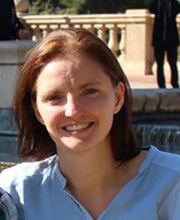
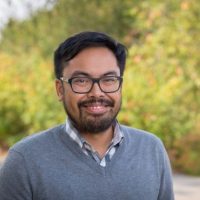
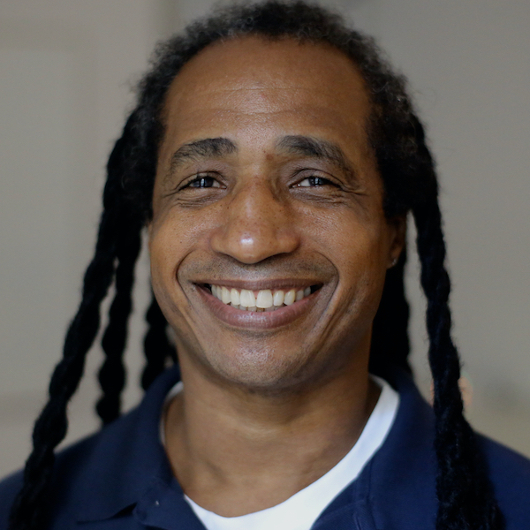
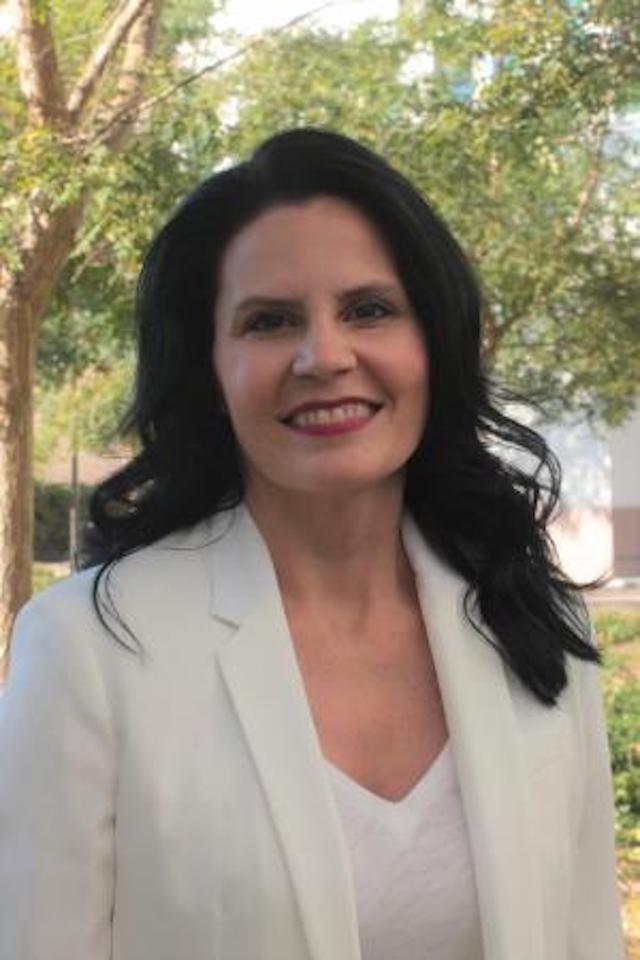
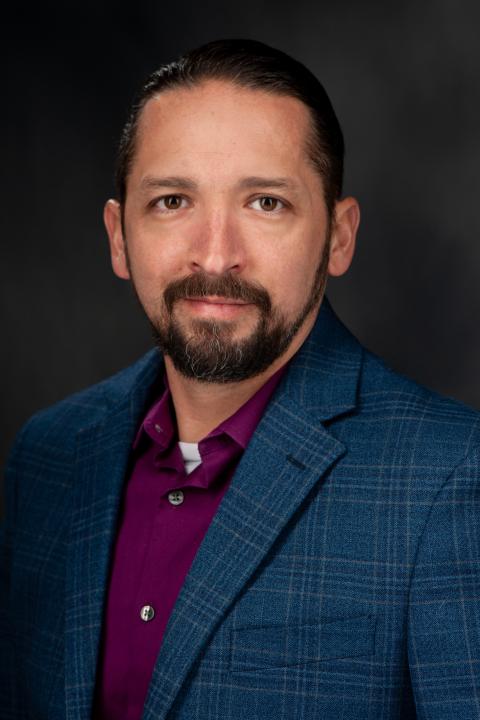
Tobias Higbie is Professor of History and Labor Studies at UCLA, researching U.S. labor history, migration, and social movements. As director of UCLA's Institute for Research on Labor and Employment (2022-2025), he leads initiatives on labor policy. His publications examine working-class intellectual life, immigrant labor, and digital labor history methods. Education includes Ph.D. from University of Illinois. Awards include Philip Taft Labor History Book Award (2004) and Best Article Prize (2014). He directs public history projects like Memory Work Los Angeles and Networks of Economic Justice , combining archival research with digital methodologies.
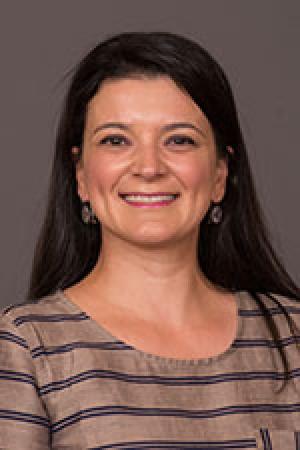
Dr. Litzy Galarza is an Assistant Professor at the University of Pittsburgh, specializing in Latina/o/x media, citizenship, and advertising studies. Her research bridges media representation, immigration law, and cultural labor, particularly focusing on how Latina/o/x identities are constructed in media narratives. She holds a PhD in Mass Communications from Pennsylvania State University and has been affiliated with institutions like the Center for Latinx Digital Media at Northwestern University. Her work examines telenovelas, corporate advertising, and cultural artifacts to explore themes of citizenship, immigration, and identity. Notable publications include analyses of Jane the Virgin ’s portrayal of citizenship and immigrant narratives, and historical intersections between advertising and popular culture. She actively contributes to academic discourse through book reviews and interdisciplinary collaborations. Dr. Galarza is associated with the Communication Research Center (COMMRC) at Pitt, emphasizing community engagement and digital media’s role in shaping Latinx narratives. Her research aligns with critical media studies, emphasizing marginalized voices and cultural mediation in global contexts.
Emiliano Aguilar is an Assistant Professor in the Department of History at the University of Notre Dame, where he became a Kellogg Institute faculty fellow in 2024. His academic credentials include a PhD in History from Northwestern University (2022), an MA in History from Purdue University Northwest (2017), and an AB in History & English from Wabash College (2015). Dr. Aguilar specializes in political and labor history of the United States with particular focus on the Latina/o Midwest. His research centers on migration, labor, and politics with an eye toward understanding the human development and democratic participation of newcomers to the United States. While his work has primarily centered on the US Midwest, he is increasingly exploring comparative global perspectives. His research interests encompass: Latina/o labor history and political participation Migration patterns and community impact Political machine dynamics in urban settings Democratic inclusion and representation Race and ethnicity in American political history Urban renewal and deindustrialization effects Dr. Aguilar is currently working on his first book manuscript titled "Building a Latino Machine: Caught Between Corrupt Political Machines and Good Government Reform," which examines how East Chicago's ethnic Mexican and Puerto Rican communities navigated political systems to secure representation. His analysis reveals the complex costs and paradoxes of political inclusion for residents and reformers. His scholarly work has appeared in The Metropole, Belt Magazine, the Immigration and Ethnic History Society's Blog, the Oxford Research Encyclopedia of American History, and the Indiana Historical Society Blog. His publications consistently analyze the historical role of Latinas and Latinos in the U.S. workforce across multiple economic sectors while highlighting their contributions to labor movements despite facing workplace marginalization. As a Kellogg Institute faculty fellow, Dr. Aguilar contributes to research on democracy and human development with implications that extend beyond U.S. borders to broader global questions of democratic participation.
Christine Crudo Blackburn, PhD, is an Assistant Professor at Texas A&M University's School of Public Health, Department of Health Policy and Management. Her work intersects public health, emergency management, and border security, with a focus on rural and underserved populations. PhD in Interdisciplinary Doctoral Program (2015), Washington State University MA in Political Science, Global Justice and Security Studies (2009) BA in Political Science, Global Politics (2008) Blackburn's research explores health access disparities, public health emergency preparedness, and migration-related health security challenges. She employs qualitative methods to address border health issues, pandemic response, and structural inequities in care delivery. Recent publications highlight trends in US-Mexico border health, Medicaid payment models, and the interplay between migration, disasters, and health system resilience. Her work often integrates case studies from Texas and global contexts like Kenya and Costa Rica. Her contact information includes email ccblackburn@tamu.edu and phone (979) 862-3469. She is based in College Station, TX.
Rita E. Urquijo-Ruiz is a Professor at Trinity University in the Department of Modern Languages and Literatures. She is the first Latina faculty member to achieve full professorship at Trinity, specializing in Chicanx/Latinx and LGBTQ+ studies. Her work bridges Mexican, Chicanx, and Latinx literatures, theater, and gender studies. Ph.D. in Literature from UC San Diego Advocate for marginalized communities through interdisciplinary teaching Founder of Global Latinx Studies major and Latinx Leadership Institute Her research focuses on borderlands culture , queer narratives , and transnational Mexican studies . She has received Trinity’s highest service award and multiple Mellon research grants. Her publications and conferences emphasize LGBTQ+ Chicanx identity , undocumented experiences , and performance as activism . She mentors under McNair Scholars and Alvarez Internship programs, while leading committees for MALCS and AJAAS conferences. Key community roles include Board of Directors at Jump-Start Performance Company and Esperanza Peace Center collaborations.
Amanda R. Cheong is an Assistant Professor of Sociology at the University of British Columbia, specializing in legal status, documentation, and their sociopolitical implications for marginalized communities. She holds a Ph.D. (2019) and M.A. (2016) from Princeton University and a B.A. (2012) from UBC. Her research examines how states use civil registration systems to exclude populations, focusing on Southeast Asia and North America. Key works include Omitted Lives , an ethnography of Malaysian statelessness, and peer-reviewed articles on bureaucratic exclusion and statelessness. Education: Ph.D. Sociology & Social Policy, Princeton (2019); M.A. Sociology & Social Policy, Princeton (2016); B.A. (Hons) Sociology, UBC (2012) Affiliations: UBC Centre for Migration Studies, Asian Canadian and Asian Migration Studies, and Centre for Asian Canadian Research and Engagement Her research interests intersect race, migration, and legal personhood, driven by her family’s statelessness in Brunei. Awards include Mellon/ACLS Fellowship and grants from SSHRC and the American Sociological Association.
Didier Fassin is the James D. Wolfensohn Professor of Social Science at the Institute for Advanced Study (Princeton) and holds a permanent chair in Moral Questions and Social Issues at the Collège de France. His roles include Director of Studies at the École des Hautes Études en Sciences Sociales (EHESS) in Paris since 1999. He previously served as Visiting Professor at Princeton University and the University of Hong Kong, and held the Annual Chair in Public Health at the Collège de France (2019–2020). Education includes a Doctorate in Medicine (1982), Master in Public Health (1986), PhD in Social Science (1988), and accreditations in Public Health and Social Sciences. His research focuses on political anthropology, public health, humanitarianism, migration, and the intersection of ethics with social institutions. Key research programs include studies on undocumented immigrants, AIDS in South Africa, and the biopolitics of crises. He coordinates global inquiries like the Nomis Foundation’s Crisis project (2018–2023). His awards include the Nomis Distinguished Scientist Award (2018), Gold Medal in Anthropology (2016), and Victor Turner Prize (2019). He frequently engages in public discourse through media and institutions, advocating for the social sciences’ role in addressing contemporary societal challenges. Advising and grants highlight his leadership in interdisciplinary projects, including the ERC-funded ‘Critical Moral Anthropology’ (2009–2012) and Mellon-funded asylum studies in South Africa. His work spans academic and applied spheres, influencing policy and public understanding of inequality, justice, and human rights.
Olivia Osei-Twumasi is an Assistant Adjunct Professor of Economics and Director of Undergraduate Initiatives in the Department of Economics at the University of California, Los Angeles (UCLA). She teaches labor economics, development economics, and principles of economics courses, utilizing updated curricula and pedagogical innovations to enhance student relevance and critical thinking skills. Education: Ph.D., University of Westminster, UK Her research centers on educational access and outcomes for underprivileged student populations, with specific focus on low-income families, undocumented students, and racial/ethnic minorities. She has published in the Harvard Educational Review and Teachers College Record , and co-edited the scholarly volume Immigrant-Origin Students in Community College: Navigating Risk and Reward in Higher Education , which analyzes challenges and successes of immigrant-origin community college students.
Ilyan Ferrer is an Associate Professor at the School of Social Work , Carleton University . With a PhD in Social Work and MSW from McGill University , their work focuses on aging within racialized immigrant communities, digital storytelling methodologies, and transformative education. They are currently on sabbatical from July 2025 to June 2026. Education : MSW, McGill University PhD in Social Work, McGill University Their research integrates intersectional life course perspectives to examine how immigration, precarious labor, and systemic racism shape aging experiences. They have pioneered podcasting as a pedagogical tool for community engagement and social justice, including the Critical Issues in Social Work Podcast and Filipino Canadian Social and Community Workers Network . Recent research trends include digital storytelling , financial inequality among older immigrants , and anti-oppressive practices in gerontological social work. Their publications span journals like Journal of Gerontological Social Work , Journal of Aging Studies , and Canadian Ethnic Studies . Selected projects include SSHRC-funded initiatives such as Kwentuhan (storytelling) with Filipino/a/x Canadian social work practitioners (2022-2023) and Multidirectional (im)migration, aging and care (2020-2022). They have also received teaching grants like the UCalgary Scholarship of Teaching and Learning Grant (2017-2019).
Marta Caminero-Santangelo is a Professor in the Department of English at the University of Kansas. Her work bridges literary criticism with social justice activism, focusing on U.S. Latinx literature, trauma narratives, and the role of storytelling in immigrant rights movements. Research: Literature’s role in social change, especially for marginalized communities Teaching: Courses on Latinx literature, social justice, and 20th-century American literature Service: Community engagement with immigrant rights organizations Her scholarship analyzes how narratives by undocumented immigrants, DREAMers, and Afro-Cubans challenge power structures and foster solidarity. She has published extensively on topics including testimonio, border-crossing trauma, and panethnic identity construction. Recent publications examine life-writing by undocumented youth, the evolution of the Sanctuary Movement, and intersections of religion with migration activism. Her work combines literary theory with empirical engagement, emphasizing the relevance of cultural analysis to real-world social struggles.
Marco Williams is a Professor in the Department of Radio/Television/Film at Northwestern University's School of Communication, where he leverages documentary filmmaking to explore critical intersections of race, history, and justice in America. An acclaimed director with over three decades of impactful work, his films serve as vital educational resources and catalysts for national dialogue on social issues. His academic foundation includes: MFA in Afro-American Studies, UCLA MFA in Producer’s Program, UCLA BA in Visual and Environmental Studies, Harvard University Williams' research centers on documentary as a tool for social change, with primary focus on African American historical narratives, civil rights legacies, and systemic inequities. His cinema verite approach combines rigorous scholarship with compelling storytelling to illuminate underrepresented perspectives and challenge dominant historical narratives. This methodology has established him as a leading voice in visual anthropology and critical race studies within media production. His filmography reveals consistent thematic evolution toward deeper examinations of institutional racism and resilience, with recent works expanding into educational equity and cultural memory. Williams' films frequently bridge academic research and public engagement through PBS broadcasts, film festival circuits, and community screenings that spark participatory dialogue. His extensive honors include: Emmy Award for Freedom Summer George Foster Peabody Award for Two Towns of Jasper Alfred I duPont Silver Baton Guggenheim Fellowship Lehman Brady Visiting Professorship at Duke/UNC National Association of Black Journalists Award Pan African Film Festival Awards Williams maintains significant academic influence through his professorship at Northwestern and previous role at NYU's Tisch School of the Arts, where he shaped emerging filmmakers' approaches to ethical storytelling and social documentation.
Tamara Afifi is the Department Chair and Professor of Communication at the University of California, Santa Barbara (UCSB). Her research focuses on family and interpersonal communication under stress, particularly examining how communication patterns like communal coping, conflict, and social support influence biological stress responses and relational health. She develops and tests theories such as the Theory of Resilience and Relational Load , integrating interdisciplinary perspectives on stress and resilience. Her work employs innovative mixed-methods approaches including surveys, longitudinal diaries, lab observations, biological markers (e.g., cortisol), and virtual reality. She studies diverse populations such as refugees, families with chronic illnesses, and undocumented immigrants. Key areas include stress contagion, information regulation, and intergenerational storytelling in Palestinian families. Dr. Afifi’s methodological contributions span data collection challenges in dementia care during pandemics, scale validation (e.g., Chronic Uncertainty scales), and the impact of modern divorce practices. Her research emphasizes practical applications, such as improving family quality of life through VR interventions and enhancing resilience in marginalized communities. Her academic affiliations include the Center for Aging and Longevity Studies (CALS) and the Neuroscience Research Institute at UCSB. She actively contributes to disciplinary discourse through reflections on 50 years of communication theory and advancing methodologies in stress communication research.
Daniel E. Chand is an Associate Professor of Political Science at Kent State University’s College of Arts & Sciences. His research focuses on nonprofits in policy processes, immigration policy implementation, and intergovernmental administration. He holds a Ph.D. in Public Policy (University of Arkansas, 2013) and an M.S. in Political Science (Illinois State University, 2005). Prior to academia, Chand worked with nonprofits, political action committees, and served as a Peace Corps volunteer in Zambia (2006–2008). His research explores topics such as immigration enforcement in sanctuary communities, public-private partnerships in immigration policy, and historical South Asian immigration to the U.S. He has published extensively in journals like Amerasia Journal , Policy Sciences , and Nonprofit Policy Forum , analyzing ICE operations, nonprofit advocacy, and intergovernmental policy challenges. His work bridges academic rigor with policy relevance, addressing contemporary issues like undocumented student support and federal-local partnerships. Chand teaches courses on Research Methods, Public Policy Analysis, and Administrative Law. He has conducted major surveys on administrative judges and immigration nonprofits, emphasizing policy implementation and institutional dynamics. Notable collaborations include studies on Secure Communities and the role of diversity in law enforcement practices. His op-eds in outlets like the Cleveland Plain Dealer and Beaumont Enterprise highlight his engagement with public discourse on immigration and democratic reforms.
Marina B. Aleixo is affiliate faculty in the Comparative and International Development Education (CIDE) program at the University of Minnesota-Twin Cities' Department of Organizational Leadership, Policy, and Development (OLPD). She serves as Director of International Initiatives and Relations at the College of Education and Human Development (CEHD), focusing on global partnerships in teacher education and research. Her work spans international collaborations, refugee education, and immigrant student experiences. Research Interests: Dr. Aleixo’s research examines immigrant/refugee student experiences, including Somali youth in Europe and Cambodian American refugees. She explores immigration policies’ impacts on education and family dynamics. Domestically, she studies the college experiences of immigrant students. Teaching: She teaches courses on immigration policy’s effects on education, including 'Borderland, Education Policy, and the Immigrant Student Experience,' which addresses historical marginalization in U.S. schools. Global Initiatives: Leads the Global Teacher Education Program (GTEP), a professional development initiative for international educators. Coordinates multi-national studies like 'Multi-national Exploration of the School Experience of Somali Immigrant and Refugee Students' and 'Supporting Refugees through Family Separation.'
Dr. Meenakshi Sarkar is a Lecturer in Human Resource Management & Diversity Management at the Leeds University Business School, University of Leeds. She specializes in decolonisation of workplaces, diversity management, and the sociological analysis of occupational segregation. Her research focuses on marginalized groups like British Pakistani taxi drivers and undocumented migrants. She currently serves as Deputy Programme Director for the MA HRM and co-leads the Decolonisation initiative at LUBS. Qualifications include a PhD (2019) and MA in HRM (2013) from the University of Leeds, alongside earlier degrees in English Literature from the University of Calcutta. She holds Fellow status with the Higher Education Academy and is a member of professional associations like BSA and BUIRA. Her teaching spans modules like Diversity Management, Strategic HRM, and Management Consulting Projects at both undergraduate and postgraduate levels. Research outputs include studies on Bourdieusian analysis of taxi driver employment patterns and comparative labor market policies in the UK and Denmark. Awardees include CERIC's 2018 poster prize, BSA's 2017 poetry award for reflective research, and numerous academic competition recognitions. Current projects include an upcoming 2027 textbook on decolonizing DEI frameworks.